Kriegsenkel

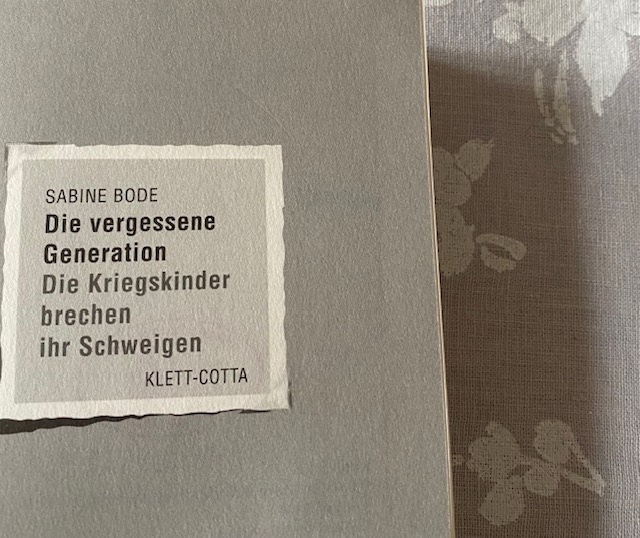
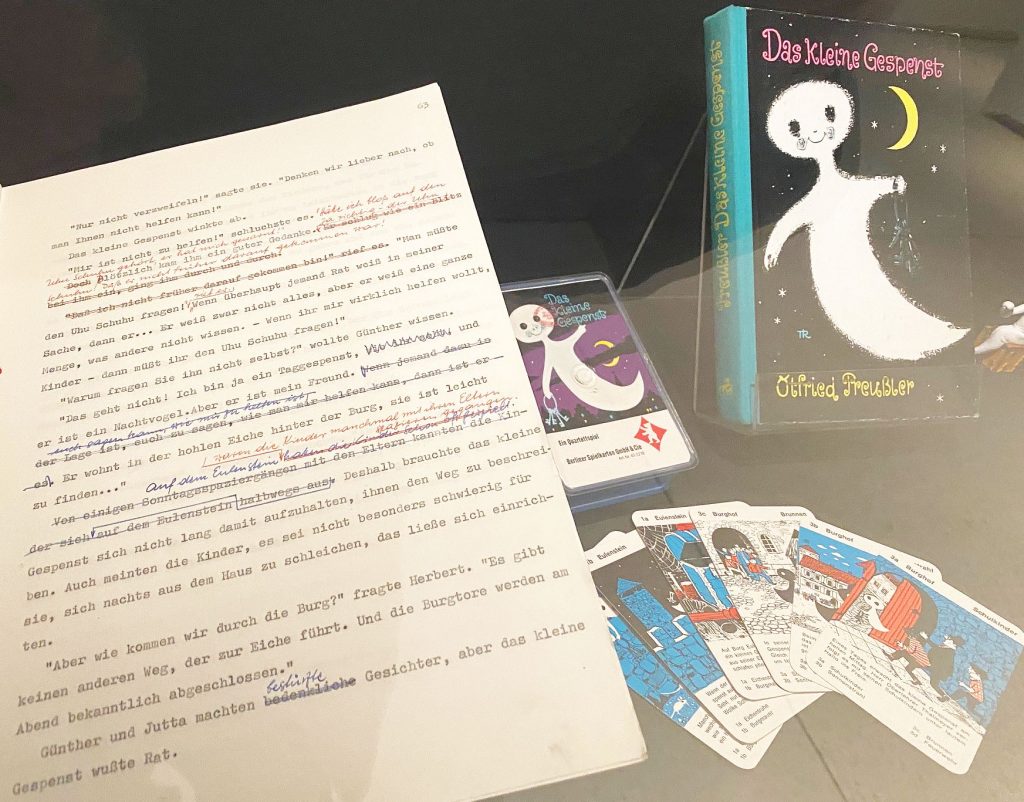
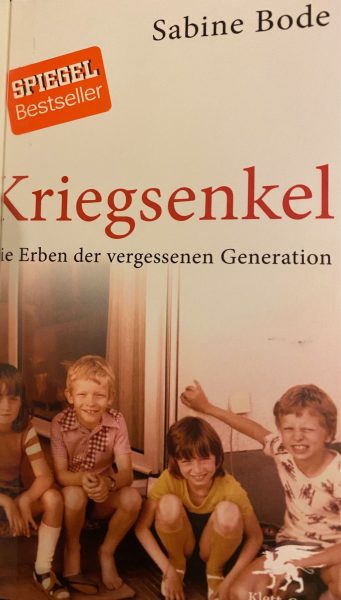
Bereits in 2009 folgte das Buch „Kriegsenkel – Die Erben der vergessenen Generation“ auf das Buch über die Kriegskinder 2004 von Sabine Bode. Im Vorwort zur 9. Auflage in 2014 wird deutlich wie sehr es weiterhin nötig ist, sich mit Familienlegenden und Familienbeziehungen zu befassen, wahrscheinlich auch wegen des lieben Familienfriedens willen. Selbst etwas überraschend berichtet Sabine Bode, dass so viele Kriegsenkel das Buch über die Kriegskinder gelesen und diskutiert haben. Es ginge dabei nicht um Schuldzuweisungen, sondern eher darum, sich über eigene Verunsicherungen, Unausgesprochenes und bisher Unbewusstes klar zu werden. Sabine Bode schreibt über die „Familiengespenster“ oder wie der Titel des ersten Kapitals heißt. „Gespenster aus der Vergangenheit“. Otfried Preussler mit seiner Mitläuferbiografie hat mit dem kleinen Gespenst versucht, eine positive Wendung für Familiengespenster, zumindest als Fiktion zu generieren. Der Versuch einer beispielhaften Immunisierung gegen NS-Versuchungen bringt dann sein etwas düsteres Buch Krabat.
Sabine Bode interviewte auch die Kriegsenkel und berichtet von einem bei vielen vorhandenen „verunsichertes Lebensgefühl“. (S.21). Sicherlich ist die sexuelle Revolution in den späten 60er und 70er Jahren viel daran beteiligt, dass die Kriegsenkel weniger und viele keine Kinder bekommen. Dennoch lässt sich nicht ausschließen, die Verunsicherung der Kriegsenkel hat ebenfalls zu dem Rückgang der Geburtenraten beigetragen. Das ist allerdings kein einfaches empirisches Unterfangen. Starke Rückgänge der Fertilität in Kriegsalliierten Nationen Japan und Italien weisen in eine vergleichbare Richtung, aber es lassen sich auch Gegenbeispiele aufführen. Verunsicherung der Identität der Eltern kann sich noch bei den Kindern als Orientierungslosigkeit äußern. Bode zitiert selbst (S.22) aus einem Theaterstück von Fehling über das Beziehungsgefälle zwischen Kriegskinder und Kriegsenkel. Die Enkelin gesteht darin etwas frustriert, Sorgen macht sich ihre Mutter gerne, „aber immer nur um sich selbst“. Anders als intrinsisches Mitgefühl eignet sich das Kriegskind lediglich die Missgeschicke der anderen an, sozusagen in der Relevanz für sie selbst. Weitere anekdotische Evidenz dazu weist auf einen hohen Wiedererkennungsgrad dieser Geschichte hin. „Risiken und Nebenwirkungen“ eben auch für die Kriegsenkel und Kriegsenkelinnen.
 

Kriegskinder

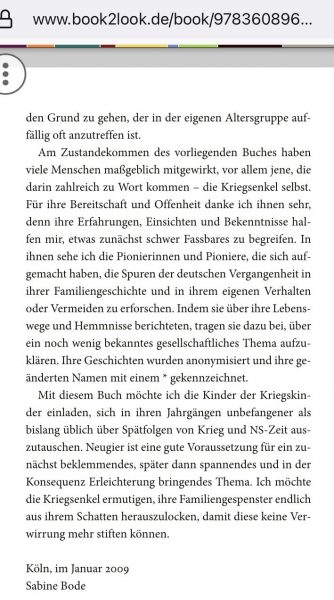
Sabine Bode hat bereits in 2004 eine ausführliche Beschreibung und Berichterstattung zu Interviews mit den Kriegskindern, den 1930-1945 geborenen, vorgelegt. Die meisten haben lange, lange geschwiegen doch es ist ihr damals gelungen, einige aufschlussreiche Gespräche zu führen. Diese lassen sich mit den sehr unterschiedlichen Schicksalen nachlesen. Die vergessene Generation als Titel könnte vielleicht sogar treffender heißen die vergessende Generation. Die Verdrängung von unangenehmen historischen Wahrheiten wurde zu einem Dogma erhoben. Sabine Bode schreibt bereits in der Einführung: „Nun ist ja bekannt, dass Kinder auch extreme Lebensumstände hinnehmen, wie sie sind. … bis es mit den Normen der Aussenwelt in Kontakt kommt.“ (S.17). Erstaunlich aus heutiger Sicht ist laut Bode auch das Festhalten an „eigentlich unpassenden Gefühlen“ auch viele Jahre sogar Jahrzehnten danach noch als normal fanden und einige noch finden.

Sehr treffend formuliert es Sabine Bode, dass es weiterhin eine äußerst beunruhigende Angelegenheit ist, über die Erfahrungen zu sprechen. „Die Antworten liegen unter der Last von Schuld und Scham begraben, als Folge der Naziverbrechen, des Holocaust.“ Oft wird eine quasi Normalität berichtet, die jedoch in keinster Weise als solche von späteren Generationen so gesehen wird. Dieser Diskrepanz sollte sich mehr Aufklärung und Literatur widmen. Philip Sand hat dazu eine gute Abhandlung verfasst, die auch die Erlebnisse der Kriegskinder einschließt. Das laute Schweigen von Millionen von Kriegskindern bis hin zum Verdrängen und Beschönigen des Verhaltens ihrer Eltern vor und während der Kriegsjahre befremdet nachwachsende Generationen. Gerade das häufigere Verbreiten von menschenverachtenden Naziparolen im 21. Jahrhundert verlangt eine entschiedenere Aufarbeitung der Verbrechen und wie es dazu kommen konnte. Schließlich wurden aus vielen dieser Kriegskinder dann die Nachkriegseltern wurden.

Taxing Europe

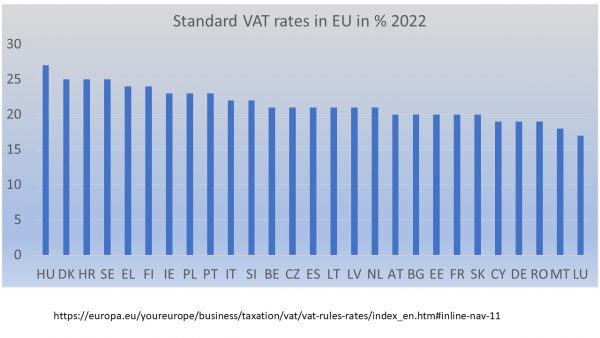
From time to time it is helpful to compare basic tax rates, for example value added tax, across the EU to understand the different economic and social policy approaches. The range of VAT from Hungary 27% to Luxembourg 17% is astonishing and it does not really feel like we are together in a common market. Okay, the illiberal, authoritarian state of Hungary is taxing the most, a clear message to visitors from another European country that this authoritarian state is relying on tax on consumption of its own people and visitors to foot the bill of state expenditure.
It is also interesting to realise that some countries with lower VAT rates have disproportionate public debates about supposed tax burdens. Tax levels are a political choice and much depends on redistributive appropriate use of tax receipts to the benefit of all or specifically those most in need. The potential for redistribution to parents, children, pensions, the poor or green investments also relies to some extent on the overall budget. The most surprising thing is the absence of a debate about tax rates, the size of the tax base and the ample exemptions or reduced rates. Of course, most of us complain about income taxes, but we all agree that it is nice to see that someone is taking care of the abundant autumn leaves or lighting of streets in the darker seasons. Even Adam Smith wrote in favour of the “night-watch state” that assures sufficient security levels. Taxing Europe to ensure that this role of the state can be taken seriously is still a common denominator across Europe.
Image: own presentation based on EU-data from 2022 LINK.

Bidenomics

Some American presidents become famous due to specific economic policies they managed to formulate, get approved and implemented them. Reaganomics, of previous U.S. president Ronald Reagan, was coined in connection with an open market doctrine, favouring monetary policy instead of fiscal stimuli. Bidenomics, of incumbent president Joe Biden, is characterised by his “produce in America”, Inflation Reduction Act, and fiscal stimulus provided for green and social investments.
Whereas Reagon sat more with bankers and central bankers, Biden is keen to stand with unionised workers even on the picket line. Investments that favour good jobs, jobs that apply pay scales agreed upon through collective bargaining are part of the Bidenomics that seems to work to raise the wages of the middle-class people. In the medium-term there might even be effects to lift the lower wages in other sectors of the economy as well. However, this is the tricky part of the equation to support the middle-classes and somehow the median voter.
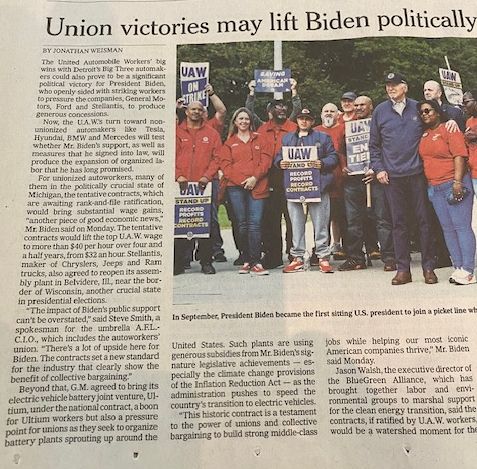
American elections are won in so-called swing states that have voted democrats or republicans by narrow margins. Many of these states are in the “Rust-belt” states that have or had a strong manufacturing base. Bidenomics works hard to make the economy work for those people in these states, who have felt threatened by declassification, job loss and undercutting of wages due to migration. Substantial wage gains from $32/h to $40/h over 4 years is a landmark achievement in the U.S (see New York Times below). Non-unionised firms like Tesla, Hyundai or BMW and Mercedes in the U.S. will be isolated if they do not follow General Motors, Ford and Stellantis in the coming months or years.
It is not just about cars and trucks and wages, but about the chances of Biden and the Democrats to stem the renewed populist tide in the U.S. German car makers appear to be in the camp with the Tesla X-Man avoiding to negotiate with trade unions in the U.S. If Biden stays on as president after the next election, Bidenomics will gain further support and production of batteries and cars will be favoured locally with good paying, unionised jobs. Despite the high interest rates currently it is astonishing to many economist that the U.S. has not fallen into recession like for example Germany in at least 2 quarters of 2023. (Image: extract of Ney York Times 2023-11-2)

Teaching Ethics

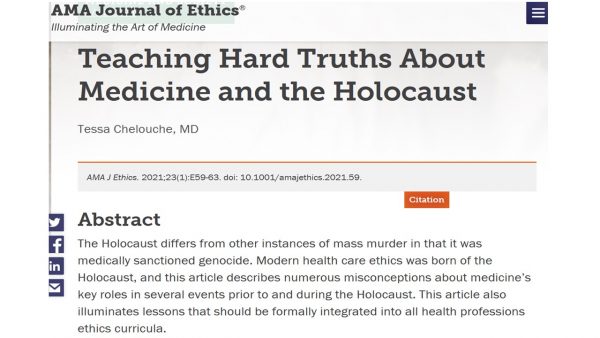
Ethics is frequently taught by referring to reference cases, moral dilemmas and readings on the evolution of the discipline as some ethical issues arise due to technological innovations. Some fundamental ethical principles pertain to professional standards or so-called codes of conduct. This is also part of the sociology of professions which includes the societal and political role professions and professionals. The medical profession has been subject to ample research already. And yet it is important to notice that there is a renewed effort to include into the teaching of ethics “The hard truths about medicine and the Holocaust”. (AMA J Ethics. 2021;23(1): E59-63. doi: 10.1001/amajethics.2021.59). Eugenics were practices well before WWII. “Legal coercive sterilization, which progressed to the notorious “euthanasia” (medically sanctioned murder) program” (p.59) were the beginning. Medical doctors were not reluctant to implement the Nazi medical doctrines. “Most joined eagerly, earlier, and in much greater numbers than other professionals” (Chelouche, 2021; Kater MH, 1989). Physicians made the horrors of Nazi ethics efficient in its implementation. Nazi physicians had a strict ethical code which priorities obedience to the state rather than to the individual.
Research and experiments conducted by medical doctors during Nazi rule is analysed by Weindling (2015). In summary he states “Nazi experiments were accepted forms of science at the time, conducted not only in concentration camps but also in hospitals and clinics across Germany”.  This concise overview of recent research by Tessa Chelouche in this field is not only important to teaching ethics in the medical and care professions, but it is of high relevance to much broader audiences and many more professions like judges. Only the awareness and guarding against a renewed failure to respect human values and human rights of the individual allow us to advance humanity. Decentralisation of power, checks and balances, professions following widely accepted principles rather than authoritarian rules can avoid another failure. Teaching about this is a “conditio sine qua non” and not a nice to have part of the curriculum in schools as well as professional colleges.

Narratives

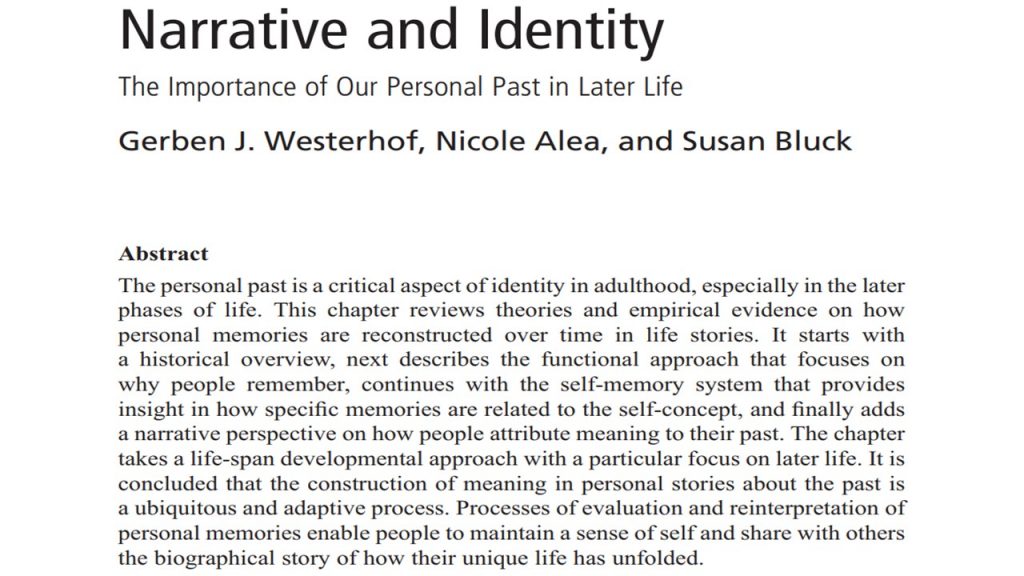
In psychology it is a long-established field to study narratives of persons as they age. To make sense of individual narratives might even be considered as one of the foundations of psychological research since its starting times. “The Cambridge handbook of cognitive aging : a life course perspective” has 2 entries that enlighten the issue of personal life stories or narratives. We have to consider the importance of our personal past to the construction and reconstruction of our personal narratives. As persons age reconstruction of narratives becomes a more frequent exercise as life experiences and new evidence continue to accumulate. The chapter on “narratives and identity” supports the view of plasticity in old age, which means that narratives and identity are an adaptive process. “Processes of evaluation and reinterpretation of personal memories enable people to maintain a sense of self”. The importance of recalling personal life events and positive self-regard is a well-established link in this research tradition. The self-memory system consists of the autobiographical memory, the self-concept and the working self as its components. It is evolving in most persons as part of the construction and reconstruction of the self, as well as narratives of it.
As persons age our brain and memory functions age as well. This starts earlier than most people expect. “Many studies in gerontology have shown that being able to remember, evaluate, and integrate personal memories and thereby dynamically maintain identity is related to mental health and well-being in later life (Westerhof et al., 2010).” (p.392). Reconstruction of narratives is a process that is hard work for our brain, therefore as people age many seem to shun away from these tasks. It is easier to clinch on to the old narratives of the self.
The chapter on emotion recognition and aging of the social brain summarises the research (p.369) by Ruffman et al. (2012, 2016) which shows that older persons were not as good as young persons to detect lies due to difficulties with emotion recognition. “Finally, we examined right-wing authoritarianism (Ruffman et al., 2016), that is, the tendency to hold conservative social attitudes (e.g., believing that women should have to promise to obey their husbands when they get married). Older adults had more pronounced right-wing attitudes than young adults, and even within the older adult group, these attitudes were entirely explained by their worse emotion recognition”.
The causal link, however, is less clear. The positivity bias in old age might be a major factor. The positivity bias describes the fact that older persons prefer to look at positive stimuli and avoid negative stimuli. The evidence is rather inconclusive about this effect. Probably persons have a positivity bias all along their life course as part of their personality traits. The other explanations of brain region decline and activation seem to receive a bit more empirical support (p.375). In any case, men seem to be even at higher risks.
Archives of personal diaries, letters, correspondence of persons are a valid additional source to study the process of the construction and reconstruction of the self. Biographical accounts of life histories serve as empirical material to analyse narratives and historical validity of narratives. The better the story, the more scepticism should be applied.

Gespenster

Passend zu dem alljährlichen Hype und Kommerz zu Halloween Ende Oktober, öffnet die Sonderausstellung zu Otfried Preußlers 100. Geburtstag. „Die kleine Hexe“, Das kleine Gespenst“, „Der Räuber Hotzenplotz“ oder seine deutsche Übersetzung des Kater Mikesch haben mehrere Generationen von Kindern und Eltern begleitet. Fantastische Geschichten haben bereits seit langer Zeit Kinder begeistert. Eine gute Hexe und ein liebenswürdiger, eigentlich ungefährlicher Räuber passen in die kindliche Vorstellungswelt. Lange vor dem Spektakel um die Meerjungfrauen, hatte Otfried Preußler den kleinen Wassermann erstehen lassen. Diese Geschichten machten Otfried Preußler zu dem erfolgreichsten deutschsprachigen Geschichtenerzähler nicht nur für Kinder. Ein Glück, dass der Nachlass seit ça 10 Jahren in der Stabi Berlin aufbewahrt wird. Es hat sich bereits ein reges Besucherinteresse eingestellt, denn die Bilder zu den Geschichten haben sich tief in das Gedächtnis von Kindern und Eltern eingegraben.
Die vielfältig zusammengestellte Ausstellung bietet abwechslungsreiches, unterhaltsames und hintergründiges Material, um den Werdegang und Schaffensprozess des Schriftstellers zu verdeutlichen. Die liebenswerten Figuren der bekanntesten Werke wurden in viele Sprachen übersetzt. Verwertungen von der Augsburger Puppenkiste bis zu den Fernseh- und Kinofilmen in späteren Jahren haben die Geschichten mit ihren liebenswerten Charakteren ein bleibendes Kulturgut werden lassen. Mit den dunkleren Kapiteln seiner Vergangenheit hat er sich ebenfalls in seiner Geschichte „Krabat“ auseinandergesetzt, die jedoch viel weniger bekannt ist. Das Verdienst dieser Ausstellung ist jenseits der emotionalen Verbindung zu den Geschichten Otfried Preußlers, Hintergründe zu beleuchten. Nach anfänglichem Misserfolg, Ablehnung eines Verlags, dann 9 Monate warten bis ein positiver Bescheid eines anderen Verlags vorliegt, entschied sich der Leiter einer Volksschule seinen Lehrerberuf in gesicherter Anstellung aufzugeben. Mit seinen Kinderbüchern hat er unzählig viele Kinder mehr erreicht.  (Link zur Ausstellung online Material)

Youth Reserve

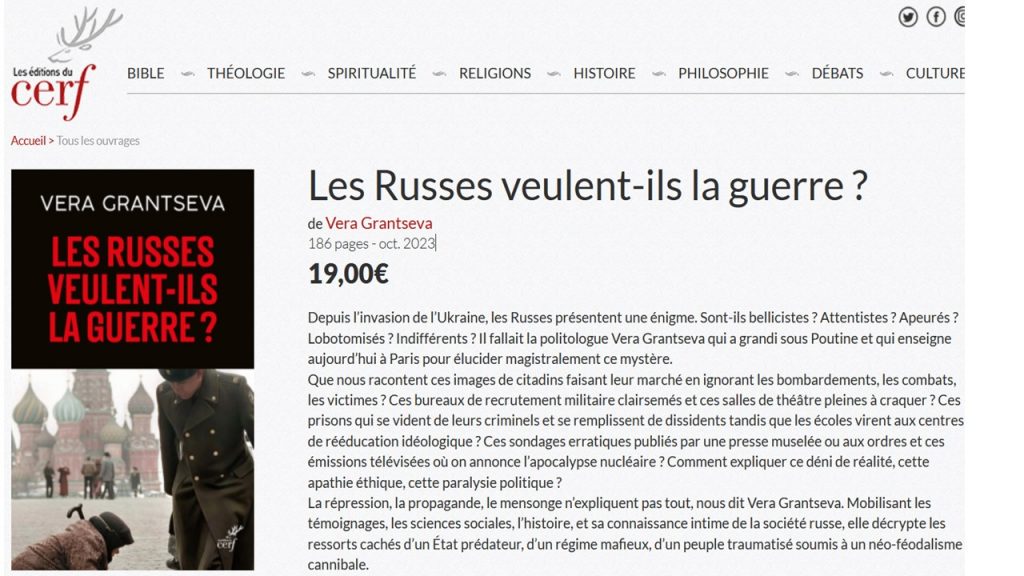
As the Russian aggression in Ukraine continues its war in Ukraine, it is important to analyse the impact of the prolonged war. Certainly, Russia underestimated the length of the war in the first place. We shall be soon in the 20th months of the aggression. It is not only an aggression on Ukraine territory and Ukrainians, but also a disaster for all those fighting on Russia’s side. Many young recruits to the army did not expect to be drawn up and be compelled to fight on front lines of a war. Most of these young people will not even really why they are risking their life. Russian imperialistic behaviour is not what they imagined to be their future role.
Putin has changed the story book of millions of youth, for those of the soldiers and those who left the country in time to evade been pulled into the horrors of war. With so many months passing while at war, each birth cohort of Russians completing their schooling and serving in the military will face existential threats to their very survival. It is likely to be a lost generation that cannot think of other opportunities rather than passing through the hierarchies of the military ranks. It was not their war at the beginning, but Putin and the old military commanders who are responsible for the mess, but youth pays the highest price in terms of foregone other professional careers and development rather than death or mutilation.
The defence by Ukrainians with better equipment arriving day by day is likely to increase the losses of the Russians, where many still do not know why they are sent to fight. The price for Russia to pay for the aggression is rising every day Ukraine manages to defend itself. Other countries in the neighbourhood of Russia were very surprised of the ruthless imperialist approach by Russia. They stepped up their defences considerably to guard against another extension of the conflict. The toll is on youth even beyond Russia and Ukraine.

Trees

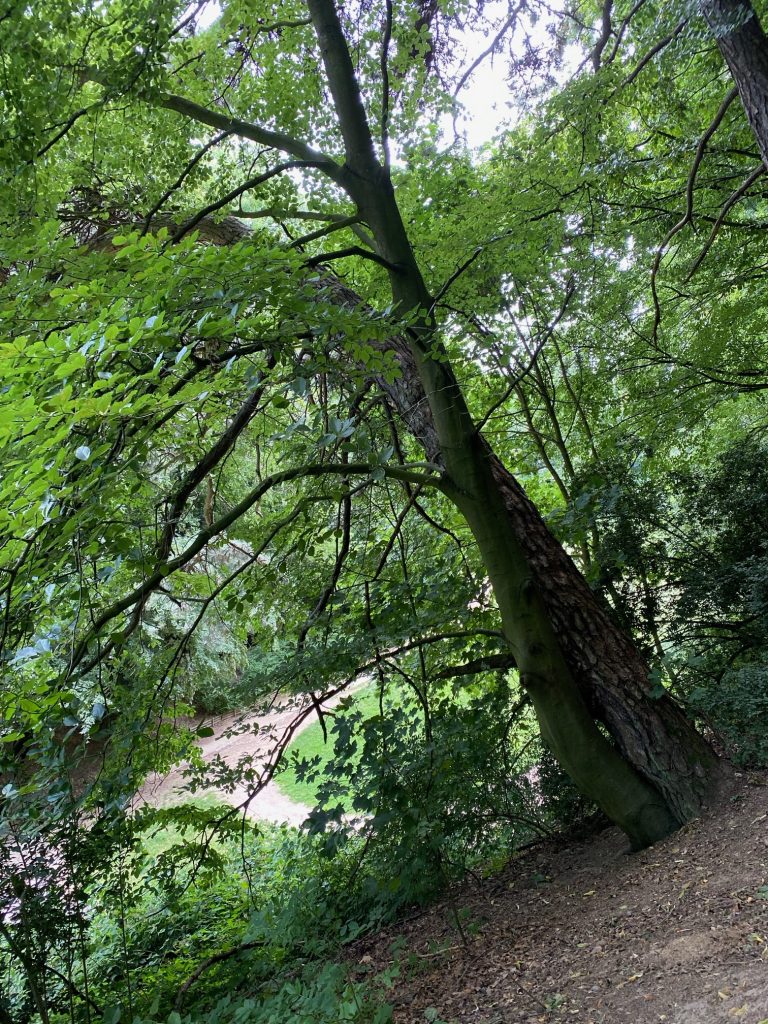
Looking at trees is relaxing. At least this is true for most of us. Some researchers, however, have a stressful time to sort out what it is exactly about trees that causes this impression, perception or feeling. Time to do a few studies on this issue (Lancet RM, 2023). Most likely it is the size or the number, maybe the surface or volume covered by trees that have an impact on us. Maybe it is the sequence of seasons that really causes the pleasant feeling about trees. Perhaps the fresh air, shadow in summertime or more the birds and squirrels or dogs that „inhabit“ the trees in neighborhoods that are important to us. More and more cities really develop sizable programs to care about their green spaces. In a simple cross-sectional study it seems the visibility of trees that is important rather than other effects. More sophisticated second round effects like oxygen levels or meeting points like in rural areas seem not to matter as much in cities currently. The study cited below invites us to devote more consideration to trees which we took for granted for far too long.

Ordóñez, C., Labib, S.M., Chung, L. et al.Satisfaction with urban trees associates with tree canopy cover and tree visibility around the home. npj Urban Sustain 3, 37 (2023). https://doi.org/10.1038/s42949-023-00119-8

Müll Klischees

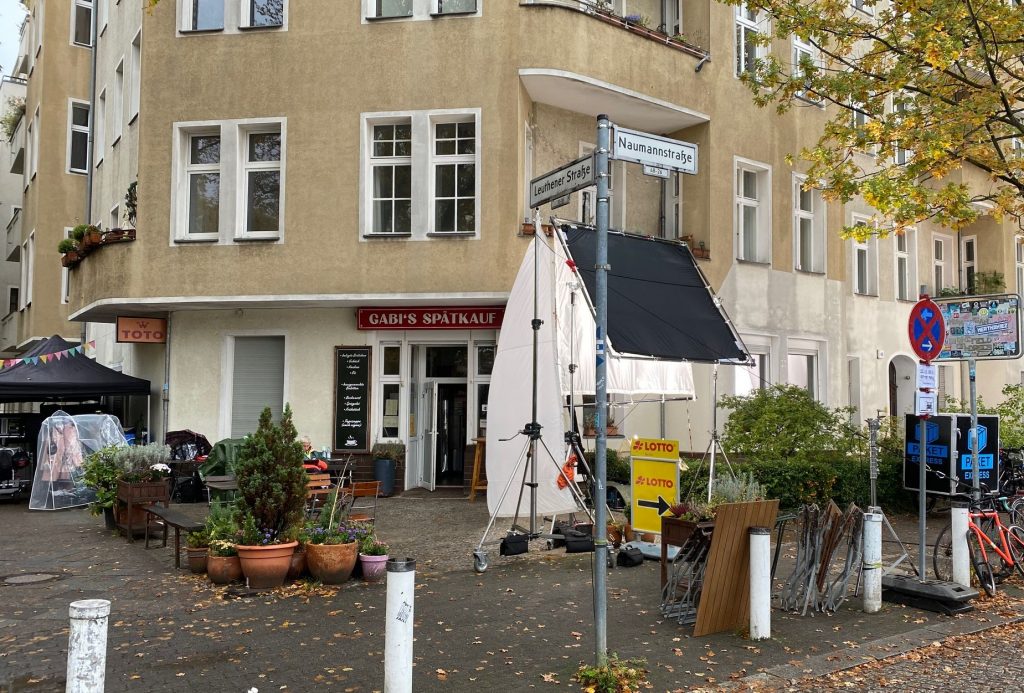
Die Deutschen lieben ihren Müll. In kaum einem anderen Land wird so liebevoll der Müll getrennt, wie hier. Wir erinnern uns alle an die sorgfältig gespülten Joghurtbecher, die in der Plastiktüte im Plastikmüllbehälter entsorgt werden. Seit der Covid-19 Pandemie haben wir ein runderneuertes Verhältnis zu den „essentiellen Berufen und Tätigkeiten“, die unsere Gesellschaft am Laufen halten, wenn sonst fast alles zum Erliegen gekommen ist. Die seit 2019 laufende Fernsehserie „Die 3 von der Müllabfuhr“ hat einen erstaunlichen Erfolg im deutschen Fernsehen. Mit „Views“, die von 3-5 Millionen Fernsehschauenden reichen ist das ein Quotenbringer im 1. Was sagt uns das außer wir lieben unseren Müll. … und das ist gut so. Für den Erfolg der Serie ist neben dem historisch angelehnten Titel „Die 3 von der Tankstelle“ von 1930 mit Heinz Rühmann wohl auch die Arbeitsatmosphäre, die menschlichen Umgangsformen und die Umgangssprache, die anschlussfähige Art der Fernsehserie. Beliebte Schauspieler, allen voran Uwe Ochsenknecht mit seiner beeindruckenden Filmografie, lassen mehrere Generationen beim Zappen dort anhalten. Dabei kann der Müllmann bei den Einschaltquoten noch nicht zu dem Bergdoktor (in Spitze 7 Mio) aufschließen. Müll ist eben doch nicht ganz so kitschig, oder so sexy, aber der Umgang unter Kollegen, zu wenig Kolleginnen übrigens, hat mich einem schlechten Image in der Gesellschaft zu kämpfen. Abzuwarten, ob sich an dem Image der Müllabfuhr durch die Medien doch etwas ändern lässt. Der körperliche Verschleiß durch die harte körperliche Arbeit macht sich meist erst in den späteren Arbeitsjahren bemerkbar. Da wird verständlich, warum die Erhöhung des Rentenalters diesen Berufsgruppen wie ein Schlag ins Gesicht vorkommen muss. Eigene organisations-, gesundheits- und arbeitswissenschaftliche Studien mit Befragungen hatten bereits vor 10 Jahren nahegelegt, dass der erhöhte Krankenstand im fortgeschrittenen Alter sich nur mit umfassenden präventiven Maßnahmen eingrenzen lässt. Gabis Spätkauf ist in der Berlin-Schöneberger Realität auch eher ein Frühstückslokal, wo es noch einige Tageszeitungen gibt. Die Verdichtung von Arbeitsprozessen und Privatisierungen in der Müllbranche setzen diese Tätigkeiten weiterem Stress aus. Das ist aber ein eher undankbares Thema für einen Freitagabend im 1. Deutschen Fernsehen entsprechend der klischeehaften Erwartung der Fernsehschauenden.