In studying the 60s we still come up with a number of remarkable ideas. Not only concerts moved the masses but also new ideas flourished. Many subcultures developed specific forms of protest. To implement new ideas, new forms of protest were applied to advance civil rights, to overcome established routines and to raise awareness for inequalities and injustices. New forms of participatory democracy were tested and some reached public attention and/or approval. Burner (1996, p.162) even goes as far as defining freedom as “continuing exercise in decision-making” which hinges on the taking-in of all voices across society. The coming together of freedom and community constitutes the cross-roads of politics. Besides terrible effects of violent abuses, peaceful forms originated in Gandhi’s peaceful resistance in 1930. Martin Luther King and later Nelson Mandela reached historical milestones through peaceful forms of protest. In 1967 in Oakland, California, the form of “action protest” took place. The basis of protest was civil disobedience going beyond sit-ins as the civil rights movement had applied. “They involved blocking roads and entrances to buildings, peacefully inasmuch as the demonstrators used no force beyond the presence of their own bodies or other obstacles to passage.” (p.163). The new feature was, that protesting persons take the risk of being a victim of violence without a violent response from themselves. The intention is to “convert temporary antagonists into permanent friends”. Through the repercussions in mass media protesting persons can reach larger audiences and touch “uninvolved or possibly sympathetic bystanders” (p.163). Such new forms of participatory democracy, acting in the public arena, are stretching the idea of peaceful protest to its limit, where the freedom of others might be impinged. Participatory democracy, therefore, is a balancing act. Some recent forms of protest, in fact, have their origins in the 1960s or the year 1968 a focal point. They continue to be influential 55 years later in many countries and at all instances where basic freedoms or minority rights are violated or threatened.
Protest has also moved online. Internet sites are not only used for simple communication, but they serve as port of entry to prepare and organise protest. High-jacking of company or political adverts in the public arena can be taken online as well. Challenges to conventional politics and media representation is enacted through webpages like www.adbusters.org or www.indymedia.org the latter page comprises a whole network of local activist groups. Brian D. Loader (2003, p.1320) has added activist approaches against particular corporations to the list of online protest forms. Through public shaming of brands these activists attempt to raise awareness of the public for abusive employment practices, cruelty towards animals, environmental disasters or fake information using online channels like social media, email-lists or chatgroups via mobile phone numbers. The funding of protesting persons is another relatively new form which ranges from crowd-funding initiatives through platforms as well as forms of corruptive practices applied by states or corporate interests. Protest against protest is online and offline the next round of activist forms of protest. Democracy, law and the police have to balance out these new forms of protest. Learning about the way democracy functions is a continuous task, some would say a continuous struggle. Evaluations of the short-term or long-term effectiveness of protests yields important insights about the functioning of democracies and autocratic regimes. New forms of protest need new forms of measuring impact as well. 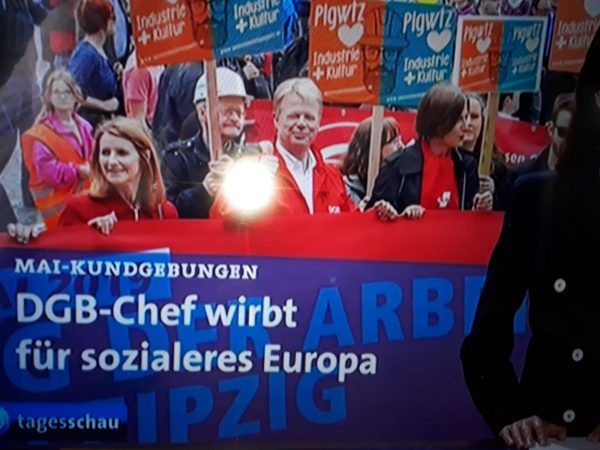
60s
“Make love, not war”, is a summary slogan of all sorts of protests that have moved the sixties. With the spread of television impressive images caught attention no longer just locally, but almost across the whole world. With the inauguration of political debates on TV between Kennedy and Nixon, reaching millions of persons at once and images travelling borders faster than to translate text, spreading of new ideas and political actions was more rapid and more emotional. Commonly the 60s are described as the sex, drug and rock-n-roll period. But there is much more to it. Yes, the sex revolution got started and access to, as well as experimenting with, drugs became more widely spread. Music became a defining moment for young people from teenage years onwards. After Rock n Roll from the 50s, came the rock music and pop culture, which were able to bring together huge crowds of several hundred thousand party-goers. The Woodstock festival and hippie gatherings became a defining moment mainly for the young. Older generations still battled for affordable housing and the “Great society”, as a large-scale anti-poverty program was called.
The phenomenon of the Beatles co-defined the 60s. The Beatles captured more than just one generation with their popular songs and iconic style. Mary Quant, attributed to have designed the mini-skirt, equally co-defined a period with a visual provocation to conservative life-styles. In parallel, the sixties saw the civil rights movement grow, Black Power succeeding with peaceful actions more widespread attention, leading to the abolition of openly racist practices. The peaceful movements and happenings, however, had to face the deadly attacks on J.F. Kennedy and Martin Luther King during the 60s. The whole decade was influential in the field of education as well. Based on a new spirit of altruism and happiness combined with, but also beyond religious feelings, new forms of living together, sharing and the common good were tried out. Anti-authoritarian educational practices were influential beyond the 60s.
Books covering the 60s are manifold. In addition to Arthur Marwick’s impressive, multi-faceted volume “The sixities”, I enjoyed the book by David Burner “Making peace with the 60s”, especially his approach to burn some received wisdoms about the 60s, namely the restriction of it to those 10 years. “The withering away of philosophy”, the beginnings of postmodernism and a theory-driven or conceptual approach to the decade, amongst other topics, is the merit of Fredric Jameson (1984, p.192). “The 60s without apology” is a programmatic title well worth thinking about seriously as the editors and authors did.
Besides the ecological disasters of the 60s already, (nuclear, oil and wars), Mini Cooper cars, Lava Lamps as well as Blow or Ball Chairs, Barbies, Frisbees, Brigitte Bardot and Pippi Longstocking (Patricia Massó, 2010), all were dressed to impress. “The 60s without apology” by a group of editors nicely summarises the review of the 60s and their lasting effects on us, for better and/or worse. 2 generations later in 2023 youth is again threatening mass mobilisation in France as depicted in LeMonde 4.2.2023. It is a kind of “déjà vu experience”. 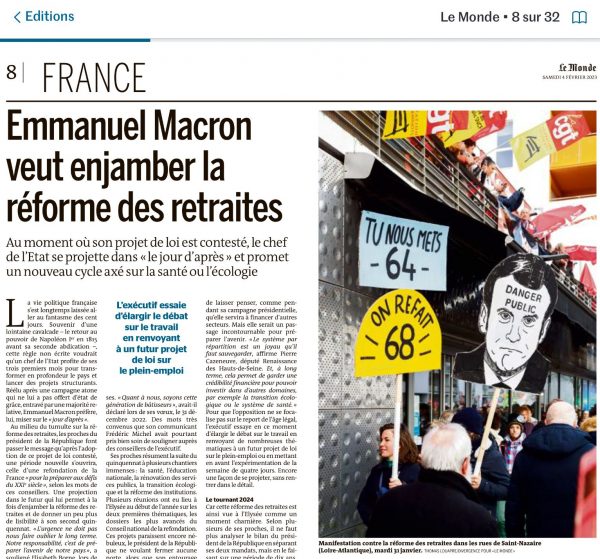
Time3
The evolution of time is fascinating as research topic. Both in theoretical as well as empirical approaches. Beyond the precise measurement of time and the use of time in measuring working time, which intensified during the industrial revolution, we witness continued struggles over the length and the organisation of working time. The 30+X hours week working time could be reorganised into a 4-days week to improve work-life balances for millions of people. The effects are not only on employees directly concerned, but also on their families and/or households involved.
The changing perception of time (as being short of time) and its evolution over time needs huge surveys collected over time (known as “Time use studies”). Inequality over the life course remains an issue with a persistent gender bias. Unhealthy and excessive overtime work is still a problem, usually negated by upper ranks in hierarchies.
Let us start to imagine different concepts of time to maybe one day overcome the shortcomings of our current understanding and use of time. Usually, time is considered a linear concept, one day follows another day and so on. Time, depicted as an arrow or a horizontal axis in graphical representations, is helpful for most processes we observe. If our aim is to explain a social process which evolves over time, we could perceive time as running with different speed in, for example, urban and rural areas of the same country. The liberalisation of women or peace movements evolved or spread with different speed in different regions. The 60s became known for many women as the decade when the control of reproduction allowed different life styles. Concerning reproductive behaviour and divorce rates a break in series compared to previous periods is observable, reduction of reproduction and diffusion of divorce throughout societies. Instead of continuous time we might speak of discrete time, in for example decades like the 60s, 70s, 80s. In retrospect “social time” seems to have passed faster in one decade than the other. We might also imagine time as growing exponentially as time². Taking into account the slowing down and successive rise again of evolution over time, the time trend might look like a rising wave (time² + time³). In econometric models testing of such hypotheses is feasible, although it is more difficult to convince reviewers of an alternative theoretical model of time.
An investigation of trends of democratic behaviour over time would need to adjust for the potential and sometime measurable return of undemocratic practices for periods. A depiction of such “social time” of democracies as an upward rising line with periodic relapses is a plausible theoretical framework. Trajectories of inwards or outwards spiralling processes are already fairly complex trends for the process of democratisation as the phenomenon to explain or the modelling of a time trend to explain the level of democratisation reached so far. Challenges of time frames for independent and dependent variables in social processes might be questioned altogether to claim that time is a spurious occurrence of events much like a process of a so-called “Brownian motion” also named white noise. In fact, not being explicit about the concept of time applied in social analyses amounts to a severe neglect. Examples of such neglect are certainly all those cross-section studies, still pervasive practice, in social sciences or opinion polls. The linear concept of time, as a chronologically processing arrow of time, is a convention useful for synchronisation of action. However, this synchronisation is already debated more forcefully with more persons being unsatisfied with the use of synchronisation as a tool to regulate our “social time” and social processes. Time zones, summer and winter times challenge our day-to-day perception of everybody living at the same time, speed or intensity. Bedtime for me, wake-up call for others, or vice versa. 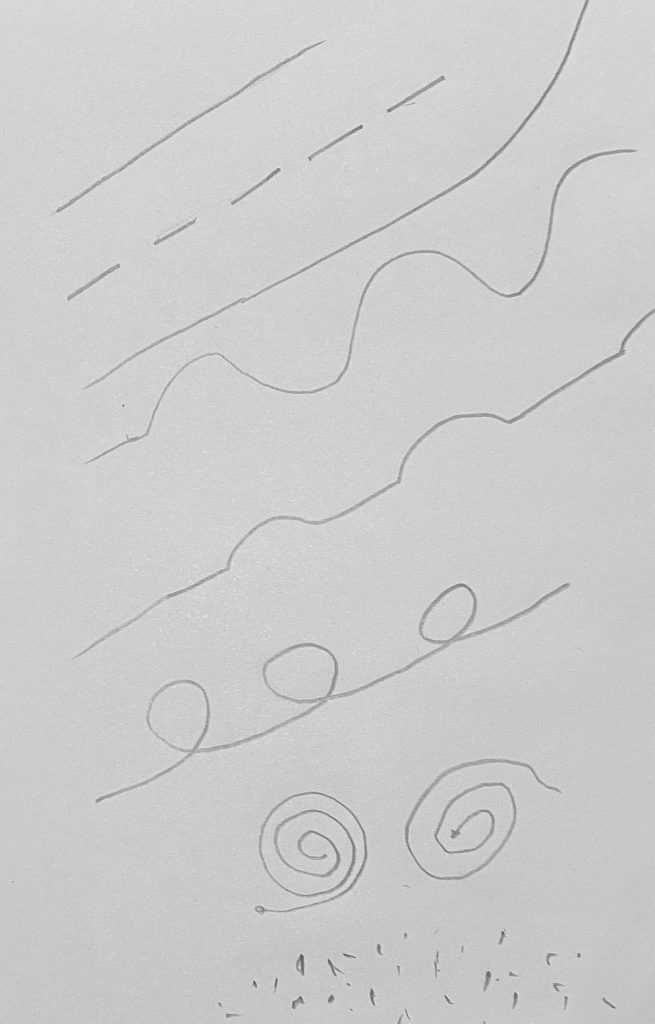
Photo
Photography has captured our imagination for years already.
It is now a daily activity of many people to “capture their experience”, if not even their existence in some photographed way. Susan Sontag (1977) coined the phrase that photography “feels like knowledge – and, therefore, like power”. You are in a relation to the world. Taking the photograph in my view is the Mephistopheles moment. You are in control of the object taken by the camera. Arranging the scenery, waiting for the perfect moment, expression, light or colours is like mastering a situation, an atmosphere, an emotion. Photographs have the power to work as a document. Editing has become easy and pervasive with digital tools. However, it was always present in the traditional technical parts of shooting and developing subsequently in the dark room.
“to be taken” on a photograph is more like the Faustian moment of realising that you are manipulated, or at risk of being made use of, for some purpose, unknown to you at that moment.
Beware, a photograph is always just an image of an image. The photographer is the intermediate person using a specific technology to transform his perception or vision of (her/his) reality into another image of it, creating some form of virtual reality.
In addition to this twofold transformation, the third transformation is historically the technical development of the negative into the print (see below). Nowadays, this is the compression and editing into a specific format. Despite these transformations, a photograph is admitted in court cases as providing evidence of guilt or to identify an illicit act (excess of speed limit). Infringements on privacy are the rule rather than the exception. Who is that person sitting next to you, and at what time of the day?
I, personally, apply photographs often like note-taking for research to capture spontaneous ideas or associations, which await further interpretation or may serve (served) as inspiration.
Compared to photography, painting has been a more elite artistic practice for many years. Taking photographs has democratised the image-taking art forms. Instead of originals, many of us have collections of photos from museums around the world. We take “photos of photos” to reveal the world around us and reflect on values. The social construction of the world is directly visible through the process of taking, collecting and curating photographs. Construct your own world or the world will construct or deconstruct you instead.
Politicians (e.g. Angela Merkel), John F. Kennedy or historical figures, all had their defining moment condensed into one or several photographs, what have been famous paintings in art history before. Susan Sontag wrote 50 years ago: “… a photograph can be treated as a narrowly selective transparency”. The third transformation of developing and/editing, shown in the images below, explains what we might learn from this citation in a technical sense. Just as courts have to evaluate, whether a proof is admittable and contributing to finding the truth; viewing photographs is a balancing act between art and truth.
“Even when photographers are most concerned with mirroring reality, they are still haunted by tacit imperatives of taste and conscience.” (Sontag, p.6). Photographs document sequences of consumption. We should frame this as CO2 footprints in the 21st century. Restricting print to a few “best of” was and is necessary to reduce the dirty footprint of photography, particularly since photos have become a mass media as much as the preferred media of masses.
With photographs we certify our own certificates, for example in case of job applications or passports. We encounter “cosmopolitans accumulating photograph-trophies” in all instagram-able locations.
Taking photos is like a “friendly imitation of work” (p.9), you do something useful in documenting the images of a world in danger of being lost. We can give importance to otherwise forgotten realities, attach importance even immortality to something or someone of our choice. We make history through it or try to make it at least. “When we are afraid, we shoot. But when we are nostalgic, we take pictures.” (p.9) Sontag defines photographs as part of the repertoire of surrealism (p.77 ff), “to finding beautiful what other people found ugly or without interest and relevance …”). We are at risk to mistake photographs as reality and experience the original as “letdown” (p.147). The return to polaroid instant photography brings us back to a proclaimed authenticity of the orginal, unique moments, with supposed unfiltered not-edited images. The true moment of having had fun or joint experience without use of photoshop to add the missing member.
“I take photos, therefore I am”, has become the mantra of modern societies. We tend to ignore that we are taken on photos a million more times than we take some ourselves (video surveillance). It is a question of power in the end. Edit yourself or you become edited.
(Image: Prix du Tirage photographique BnF 2022 Laurent Lafolie, photo below). 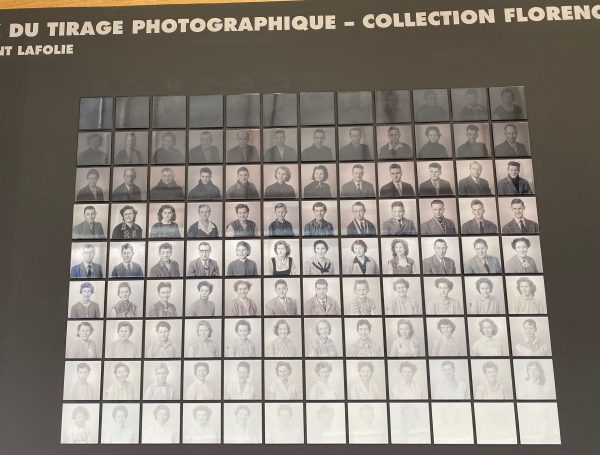
Linguistics
The urge to program human language originates for some in the quest for better explanation or understanding, for others in the improvement of communication. Both approaches have witnessed rapid evolution in recent years. Based on linguistics, psycholinguistics, sociolinguistics or neuroscientific advances, the potential of knowledge creation and communication has risen due to computational models and applications to linguistics. ChatGPT3 and Neuroflash allow us to play around with the commonly available AI-applications. Construction of a linguistically informed Glossary of political and social ideas is a specific application case. In addition to the subject/object list we may add predicates or verbs to link subjects and objects. For this purpose, we construct a basic alphabetical list below which draws mainly on action verbs and is embedded in the socio-cultural environment of the sciences in general. A categorised list of verbs, like the one from Purdue University, is helpful to draw on several relatively distinct fields. With perspective on labour market or societal relevance the list focuses on verbs related to skill sets: administrative/managerial; communication; creative, information/data; caring/helping; efficiency; research; teaching/learning; technical. The categories are not mutually exclusive and may well be supplemented by additional categories like relational skills and transformational skills. Computational psycholinguistics (Crocker, 2006 pdf-file) differentiate the “principle of incremental comprehension” (add one word at a time) from the “concentric theory of complexity” (start from complexity to specificity or vice-versa) and the “deductive sentence processor”. ChatGPT is built on the incremental approach, supposed to be the fastest and probably a more reliable computational approach. We could just attempt to use the other approaches in the simple ABC glossary of subjects, objects and predicates to test for the possibility to build no-nonsense short sentences using random choices as starting points. The Oxford handbook of psycholinguistics highlights in the final chapter the theoretical alternative of connectionism (p.811). Symbolic computation construes cognition as mental states that are symbolically represented. The sequence of operations then runs from one representation to the next one. However, the connectionist model operates more like a neural network and proceeds with the parallel processing of notions, relations or patterns. A list of predicates or verbs might do the trick: Chose a subject, chose a predicate and an object to start playing around: Subjects: action balance corruption democracy enterprise freedom god health imagination joy knowledge law memory nature optimism policy question repairing society time union value war xeno yinyang zero.
Predicates: applies broadens creates directs establishes forms generates helps induces jeopardises keeps likes moderates needs opposes prioritises qualifies represents strengthens tests uses varies weighs x-outs yields zigzags.
Objects: freedom god health imagination joy knowledge law memory nature optimism policy question repairing society time union value war xeno yinyang zero action balance corruption democracy enterprise.
Syntax
Syntax is just one of the categories of linguistics. Carl Lee Baker (1989) wrote a whole book 500 pages on just English syntax, can you imagine. I like his modesty in the introduction stating that English syntax is just a subfield of linguistics (p.12). Other languages have different structures, some might be very different from our ways to communicate even. The ways how animals or plants communicate is an exciting subfield of linguistics, psychology and biology (Carrie Fidgor, Pieces of Mind). The SPO structure of sentences is only one simple way of constructing sentences. Syntax is much more complex. The sociological aspect of linguistics and syntax lies in the “acceptability judgements”, which are present once we establish rules and sort phrases into correct or incorrect sentence structures. Norms and standardisation as well as authority to decide on correctness becomes an issue. Countries used to many dialects or multilingual populations are confronted with these issues on a daily basis. Linguistics as basis of communication is continuously present even in the mental structure. Bilingualism, tri-lingualism and their effects on minds, competences, behaviour, culture and societies are own thriving research fields. Building a sentence or a phrase, following Baker, is built around a head and their complements. Such minimal phrases are comparable to what we coin in a simplified manner the subject-predicate-object structure of a sentence. The definition of the nucleus of the structure of a sentence is also about conventions and acceptability. Staccato speech and rap-music are examples of forms of speech, which are often considered beyond the normal. Computer voices are becoming more normal as we are faced with chat bots all around us now. The image below reflects the simplified “representation of syntactic structure” (p.48 The Cambridge grammar of the English language 2002 review here). To play around with “Clause”, let us analyse the clause: I bought a shirt; I wonder what I bought. You know what I mean Klaus, it is a clause, or is it Dady gone gaga = DADA? 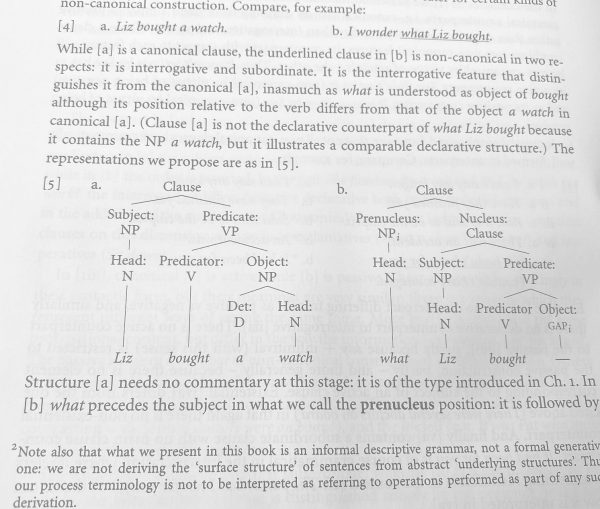
Hypertext
Linking information, explanation and entertainment is the power of the world wide web. The tool used for this is the hypertext format of texts and media in general. Wittgenstein was already dissatisfied not to be able to show the steps of his thinking more explicitly. In the “Tractatus logico- philisophicus (Link to pdf-file de/engl” he uses the a cube (5.5423) to explain that we see to different facts depending on our point of departure of our vision. Try it with the logo of www.schoemann.org you should realize how our vision swops from one way of viewing the cube to another. The white corner is once in the front of the cube and appears to be in the back, when you move your vision further up. In general this leads us to be careful with the choice of our point of departure, not only for our vision. Context, some say background, is important to determine starting points. Adding the hypertext markup language to a document, like in a blog entry, allows readers (+algorithms) to see the cognitive structure surrounding a text as well. Potentially as a reader you enter into a multidimensional space with each blog entry. Any encyclopedia, glossary or index has an apparent alphabetical order to entries, but the links between the multiple entries remain hidden at first sight. With use of hypertext this has changed and each entry is turned into a 3-dimensional space, for example. Additionally, all entries have different numbers of links to other entries including dead-end entries. With the structure of links it is interesting to learn about the self-referencing just as much as about the disciplinary locus of a text, chapters, a book or a library. This helps to still see the forest despite all those trees in front of us ,or we see the geological structure of the mountain while in the middle of the forest. Happy travelling in our new knowledge space! 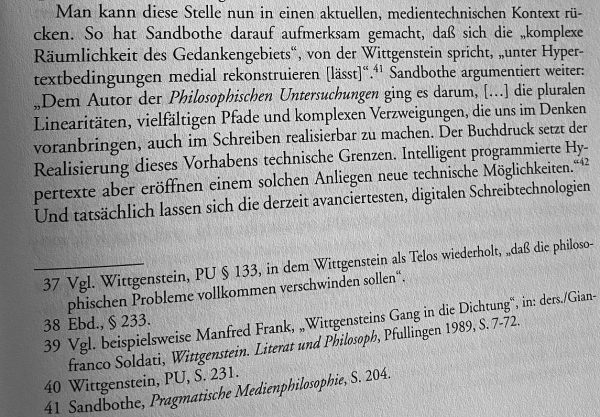
Deconstruction
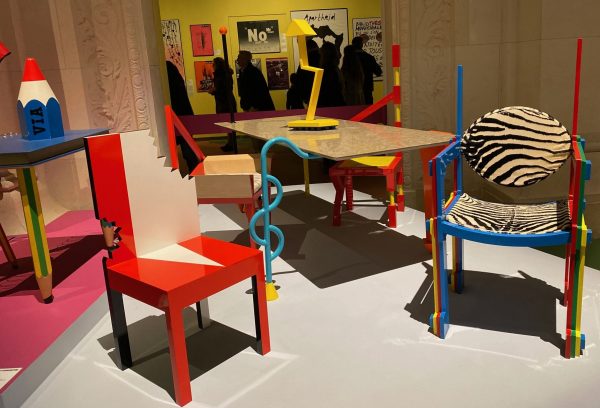
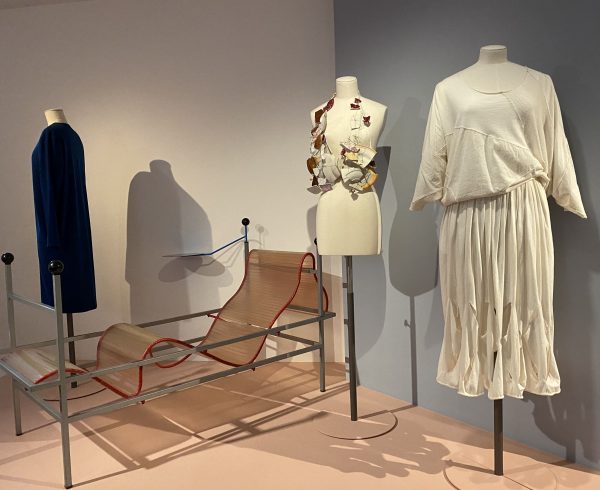
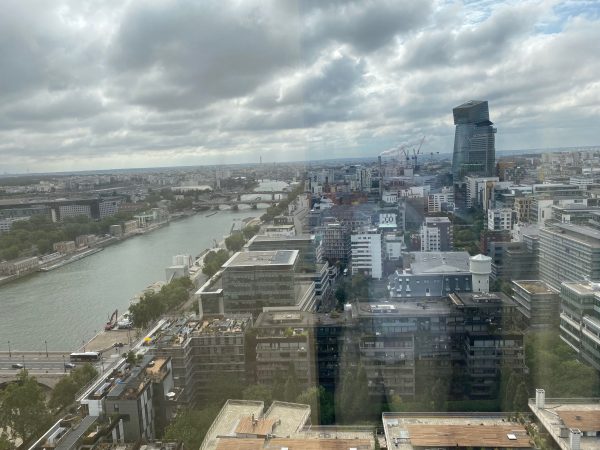
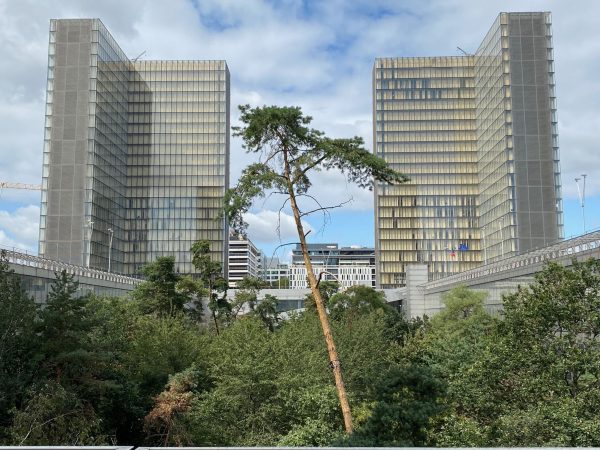
Deconstruction is a powerful tool or even method. Beyond imagineering, deconstruction in the literal sense means take to pieces. In most cases a physical object consists of several objects or parts. By deconstruction we attempt to understand the whole object as the sum of its parts. Before a new product or design is created, many scientists, engineers and artists start to deconstruct existing artefacts. Understanding how the object is assembled, for example, allows you to play around with pieces and maybe come up with an alternative way of constructing the object. The architecture of “deconstructivsm” has left us fantastic buildings. In furniture design there are also nice examples of deconstruction. Paris is a good place to study deconstruction (Explained), perhaps many still read Derrida there. It is a fruitful method beyond its engineering sense for example in law, literature or many other social science disciplines. If you are not mad yet, visit the MAD in Paris to see examples of deconstruction or construct your own deconstruction. Both have a dialectic relationship to each other anyway.
Action Verbs
Action words are in other words called action verbs. Each complete sentence has one. Hence, they are part and parcel of the basic construction of sentences.
“The purpose of an active verb is to create a clear, concise sentence. By using an active verb, you can eliminate unnecessary words and make your writing more direct. In addition to making your writing more concise, active verbs also add punch and clarity. They can make your writing more interesting and persuasive. Additionally, active verbs can create a sense of immediacy which is often useful in persuasive writing. When it comes to writing, there is nothing more important than using strong, active verbs. Not only do they make your writing more interesting and engaging, but they also convey a sense of confidence and authority. In addition to being more descriptive, active verbs also add a sense of movement and action to your writing. Rather than simply stating that something exists, you can use active verbs to show how it exists. For example, rather than saying “there is a chair in the room,” you could say “the chair sits in the corner of the room.” This may seem like a small change, but it can make a big difference in how your writing comes across. Finally, active verbs can also help to set the tone of your writing. If you want to convey a sense of wit and humour, then using playful, lighthearted verbs is a great way to do so. On the other hand, if you’re aiming for a more serious tone, then using powerful, authoritative verbs will help you achieve that.”
After the 3rd sentence this blog entry (Link) has been written by the artificial intelligence app “Neuroflash”. They promise that it is not just copy and paste, but rather written following some instructions I gave like title, table of content, style and then selected among several choices. It makes sense to me, although it is just like many other textbook entries I have found on the web. It may well serve as an introduction. Lazy journalists, priests or lawyers in case they do little research will be replaced soon by AI, who else, who is next? Big brother drafts the brave new world for us already. 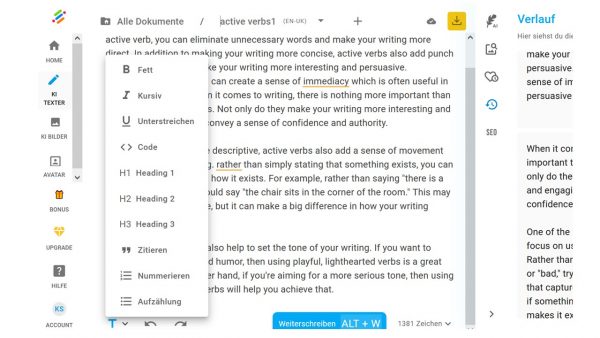
B for Balance
To reach a balance, to keep the balance or one’s balance, this highlights the process nature of balancing. Even the old tool of a balance (scale for weights) very much reflects the evening-out of the balancing process. It seems like a temporary balance most of the time. We might evolve from one level to another one. Especially imagining ourselves on a (body weight) balance in the morning and then throughout the year or years, this appears like a dynamic trajectory. The nature and/or nurture connection is evident. Beware to search for synonyms of “balance” on the internet. You get more than 3000 synonym (Link) meanings and 30 suggestions for definitions (Link) to contemplate on. I like the nice physical experience of balance and the simple (a bit nerdy) explanation of it. Economist get very excited about balance of payments and the ways to achieve equilibrium or equilibria. Balancing personal accounts can be a bit painful at times, but balancing in the arts gets our imagination going. Dancing is about balance most of the time. Playing with your own balance, the balance when 2 or more persons are in action, how not to be absorbed by such experiences. In music, the balance is a primary issue since Bach’s “wohltemperiertes Klavier” and balance and tension are the origin of much jazz. An image or photo might be balanced, certainly architecture is playing with or restricted by balancing acts. Herta Müller’s “Atemschaukel” has thrown us off balance for a while. History we study often with a concern for a balance of power. In peace and war times, the balance of power within and between countries or superpowers are a long-lasting research issue. At times when this balance is at risk or completely out-of-balance we are deeply concerned about the return of a balanced situation. Babies and children draw comfort from being balanced. Adults as well. Let’s try again (chanson). (balance22-venice -video).