Flotow Kontroversen

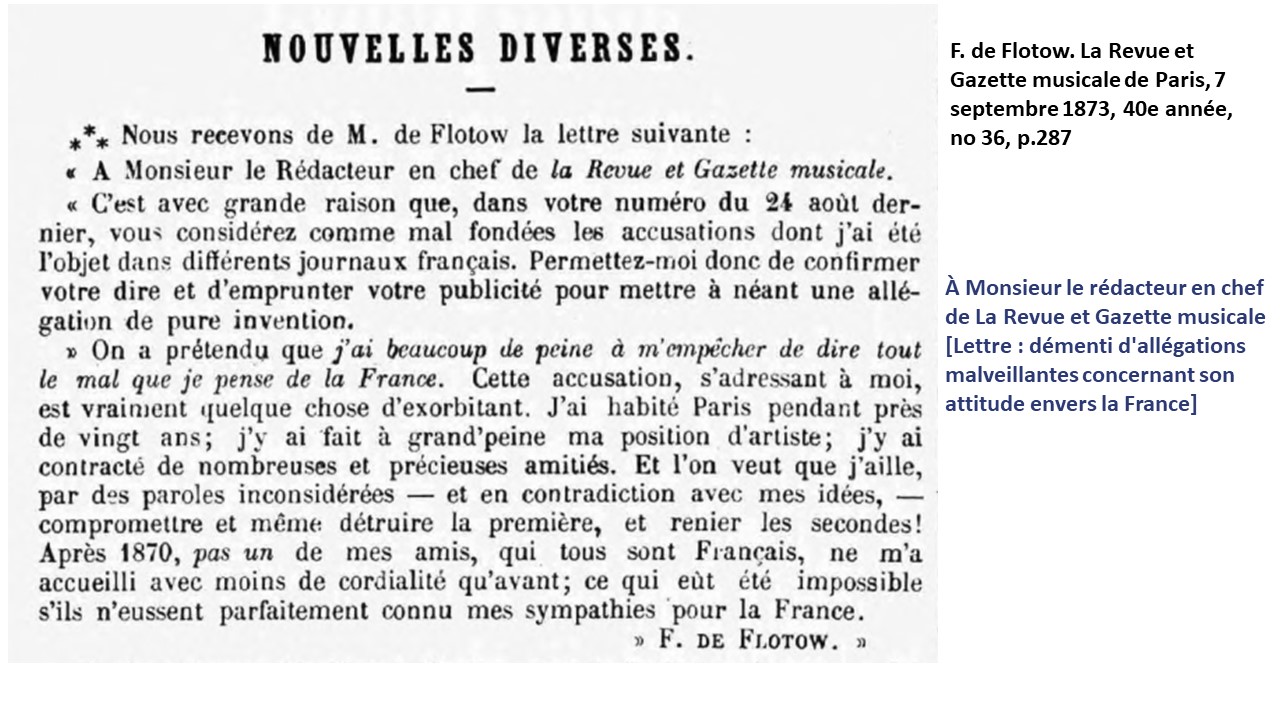
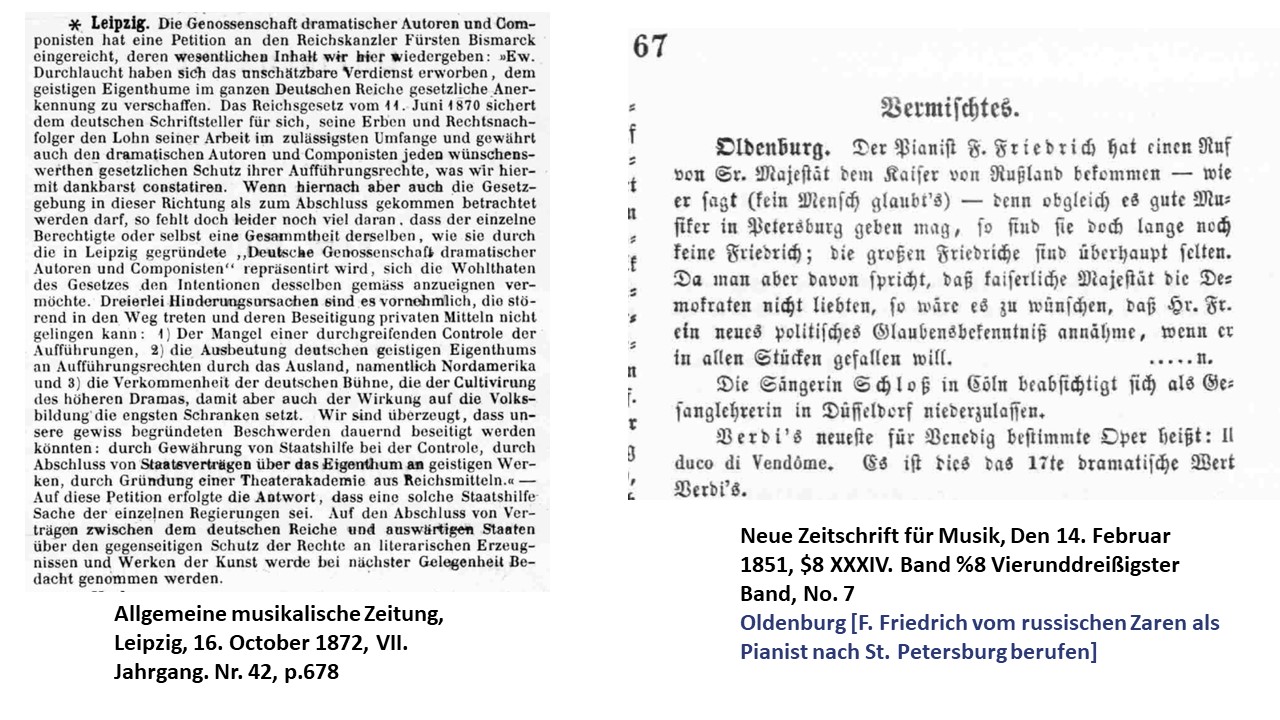
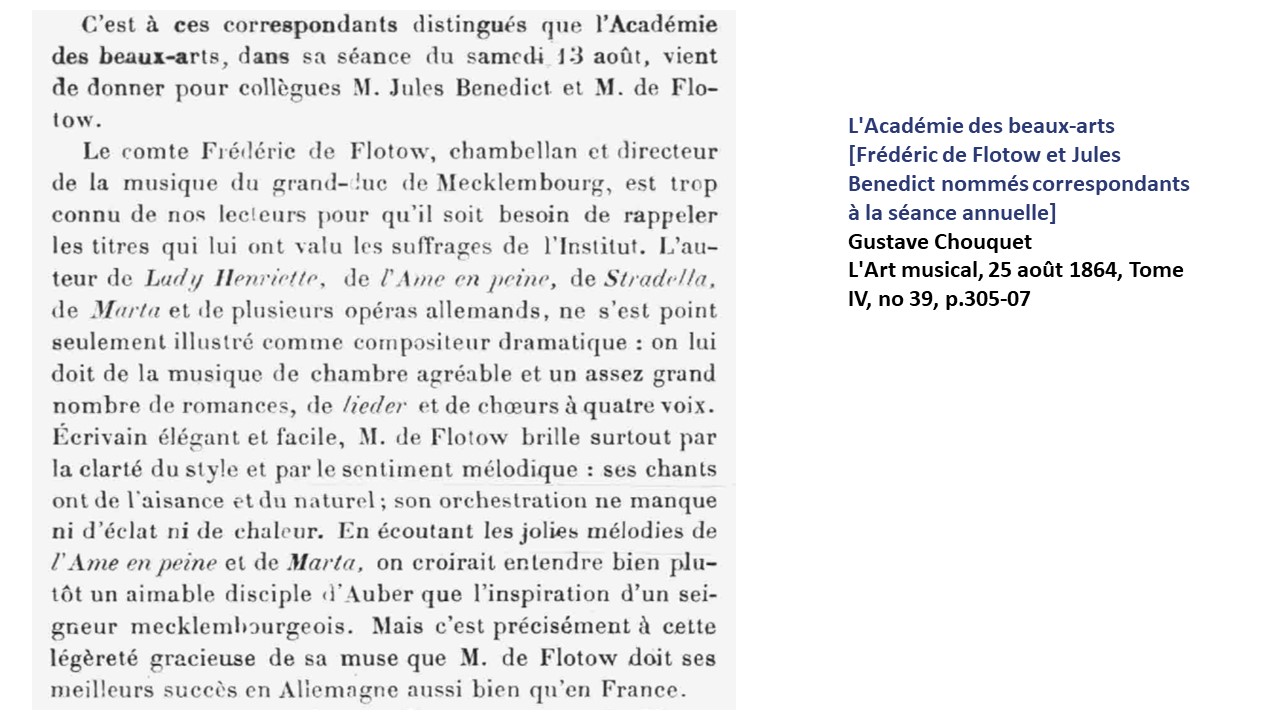
Während Flotows Lehrjahren in Paris ereigneten sich historische Ereignisse, wie zum Beispiel die Pariser Juli-Revolution 1830, Commune oder die 1848er Revolutionen in Paris und Deutschland. Später sollte der dt-frz. Krieg 1870 ein weiters einschneidendes Erlebnis darstellen. Über all diese historischen Verwerfungen hinweg sind Kunstschaffende ständig den nationalen Vereinnahmungen und Verwertungen ausgesetzt. Bei Flotow äußerst sich das in den Intrigen von unterschiedlichen Seiten, die gegen ihn gefahren werden. Von deutscher Seite mal als Demokrat verunglimpft (s.u.), wird er in Frankreich als frankreichfeindlich bezichtigt. Aktiv dagegenhalten, gehörte schon damals zum Geschäft im europäischen Raum. Mit dem Eintreten für Autorenrechte an Werken und deren Aufführungen schaffte er sich sicherlich nicht nur begeisterte Freunde in der Theaterwelt. Vergleichbar dem Disput über Patentrechte zu Hörnern, Trompeten und dem Saxophon, musste die Lebensgrundlage für viele Komponierende erst noch geschaffen werden. Eine Nominierung als Korrespondent der „Akadémie des Beaux-Arts“ ist da eine tolle Anerkennung. Die Probleme von höchst prekären Lebensverhältnissen von Kunstschaffenden im weitesten Sinne bleiben eine ständige Aufgabe und Herausforderung (Mäzene). Der kleine Fritz von Flotow hatte in seiner Kindheit mit genau diesen Einstellungen gegenüber dem oft brotlosen Beruf des Kunst– und/oder Musikschaffenden zu kämpfen. Als streitbarer Aristokrat mit demokratischen Zügen fiel er mitten in die soziale Zerrissenheit und politischen Wechselbäder des 19. Jahrhunderts.
Thucydides on War

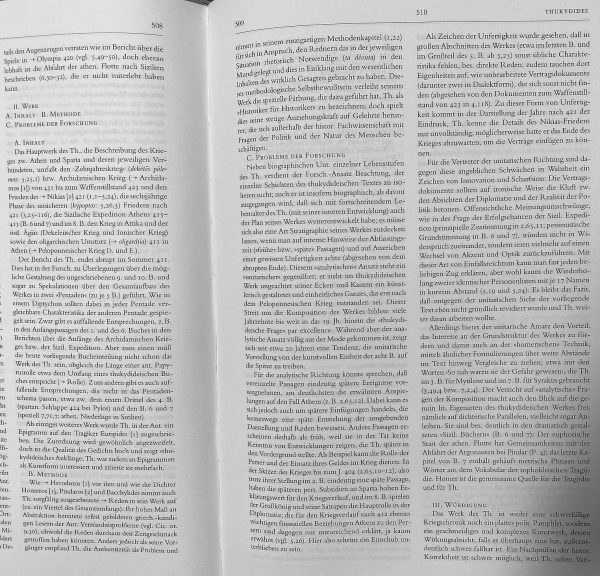
Thucydides (born around -460) has received a lot of fame for his “thick description” of the Peloponnesian War. He deserves continued praise even for inspiring statisticians. The account of events without emotions, but with lots of details, is often perceived as the beginning of historiography and history as science as well as empirical political science. The entry of “Thucydides” in the Encyclopedia of Social Measurement (2005, p.805) by P.A. Furia and A. Kohen cites the derivation of a causal or explanatory effect based on his historical account as a foundation of scientific approaches based on empirical data. “The growth of the power of Athens, and the alarm which this inspired in Lacedaemon (i.e. Sparta), made war inevitable” (Thucydides, I 23). The empirical assessment of the growth of power is subject to controversial accounts. Power may derive from population, wealth, industry, weapons, munition or general military capabilities or skills. The assessment would also need to consider relative rather than absolute strength of just a one-sided approach. Here we are in the middle of the Russian war on Ukraine from 24.2.2022 onwards. Statisticians discuss, whether it is just a single variable that has the overall explanatory power for the beginning of the war and what other intervening variables might be important to take into account to avoid a selection bias. Beyond this materialist explanation we might stress the importance of the sociological concept of “collective fear” (links to approximation through trust, xenophobia) of the strength of Athens as the underlying causation of the beginning of war. The ideation of perceived strength gives rise to the construction of many intervening processes (Coleman’s macro-micro-macro linkages), which make a simple causal attribution just to material strength an illusion or risky shortcut explanation. The Thucydidean Method (p.806) exemplifies much of the dilemma and spice of social science analyses. Scholars of diplomacy challenge the empiricist perspective in arguing that the breakdown of diplomatic discourse several decades before was at the beginning of the causal chain. Here again we can make links to the preparation of war by Russia through strategic diplomacy as well as the risks taken through a break-up of diplomatic channels of communication. The perceived strength of the opponent in war might play a decisive role at the beginning and at the end of war. The charisma of leaders, democratic decision-making and political alliances with neighbouring states, Sicily at the time of the Peloponnesian War, were further intervening processes. This is perhaps not all too different from today, if we consider the role of Belarus in the aggression of Russia against the Ukraine. In fact, Thucydides seemed to be convinced that under similar circumstances human behaviour would reproduce itself. Therefore, thick description of historical facts might still inform political leaders today and tomorrow.
(Reallexikon für Antike und Christentum, XV pp. 752,
Der neue Pauly, Enzyklopädie der Antike 12, pp.505 image below).

Ukraine Resilience

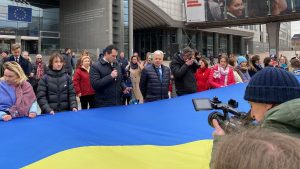
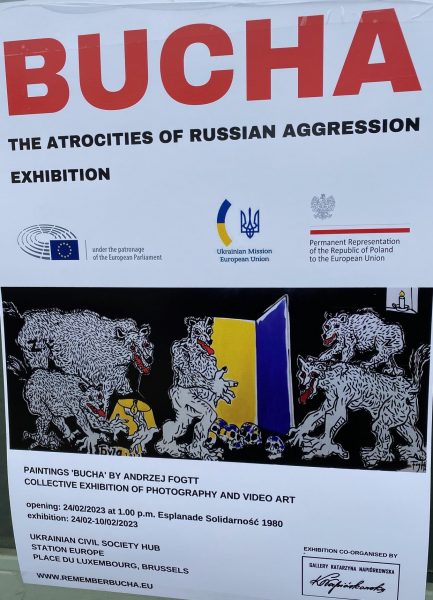
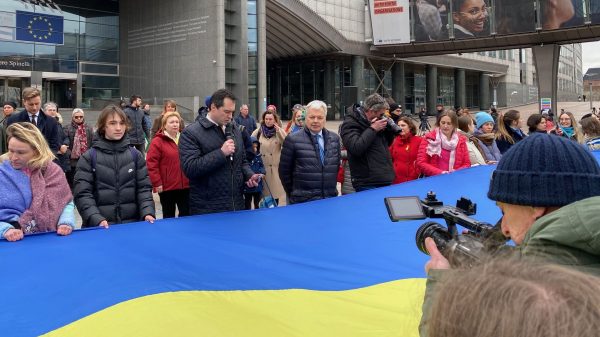
The opening of the exhibition on war crimes committed by Russian soldiers took place in front of the European Parliament today. The images frighten us as they reveal human atrocities. Destruction on a large scale with so many lifes lost will take a long time to overcome the grief. The images of the commemoration and the minute of silence show the solidarity of the whole of Europe with the Ukrainian people. The European Parliament has the patronage of the exhibition which is curated by Justyna Napiórkowskiej. Commissioner Reynders expressed the commitment of the EU to support the Ukraine 🇺🇦 in their capacity to fight back and the rebuilding of the country. Stand with Ukraine.

Berlin Wahl 2023

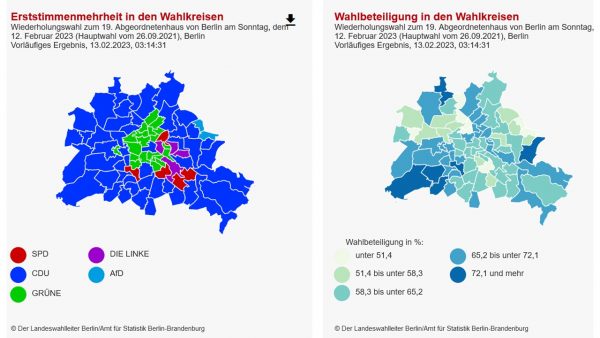
Wähle Wähler, sonst hast du die Wahl verloren. Die wiederholte Wahl geht sicherlich in die deutsche Wahlforschung ein. Murks bei der Durchführung einer Senats- oder Landtagswahl dürfte in etablierten Demokratien nicht in diesem Ausmaß vorkommen. Solche Versuche, demokratische Systeme zu delegitimieren, kennen wir aus demokratiefeindlichen Umgebungen. Die angeordnete Neuwahl hat eine um ca. 150.000 Stimmen geringere Wahlbeteiligung ergeben, bei einer Anzahl von ca. 1.500.000 abgegebenen Zweitstimmen von ca 2.500.000 Wahlberechtigten. Neuwahlen bringen also nicht unbedingt ein faireres Ergebnis im Sinne der Beteiligung an Demokratie mit sich. Im Gegenteil, Frustrationen äußern sich an Wahlurnen in Form von Denkzetteln statt Wahlzetteln. Die Summe der entschieden für Demokratie eintretenden Wählerstimmen, die im Senat vertreten sein werden liegt nur bei 1.170.905 Stimmen. Das ist keine absolute Mehrheit der Wahlberechtigten mehr. Damit sollten die demokratischen Alarmglocken klingeln. Während sich Rot-Grün-Rot im Zentrum behauptet ist der Speckgürtel deutlich schwärzer geworden. Die Neuwahl hat ca 1 von 10 Wählenden abgeschreckt. Sogar die Protestwählenden und ungültigen Stimmen sind rückläufig. Meinungsäußerung über das Parlament wird dadurch weniger repräsentativ und das kann auch gefährlich werden. Interessenvertretung findet dann mehr auf der Straße statt als im Parlament. Partikularinteressen, die Tierschutzpartei hat 36.233 Zweitstimmen gewinnen können, die FDP nicht einmal das doppelte davon, können Parlamente bereichern, in dem sie kleine Gruppenmeinungen ermöglichen. Das fordert die Koalitionsfähigkeit und den Koalitionswillen aller demokratischer Parteien heraus. Allzu knappe Wahlergebnisse von 105 Stimmen, wie zwischen den Grünen und der SPD in Berlin bei den Zweitstimmen schüren kontraproduktive Glaubwürdigkeitsdebatten. Der Gerichtsbeschluss zur Neuwahl 2-2023 ist gültig, verloren hat aber eher die Demokratie als Ganzes, die das Gericht zu schützen glaubte. Vielleicht am Überraschendsten von allem ist, dass die Skandalpresse nicht wirklich von diesem Ereignis profitieren konnte. Die noch Lesenden sind wohl auch von der belehrenden Berichterstattung dazu eher angewidert gewesen. So schreitet das Auseinanderleben der Stadt und der Gesellschaft weiter voran. Solche sozialen Prozesse sind lange bekannt. Sie heißen „Schelling’s process of segregation“. (genauer Gentrification) Eine fortschreitende Entmischung einer städtischen Bevölkerung ist die Konsequenz. Schelling’s Modell ist ein gutes Beispiel. Der Markt alleine, auch mit häufigen Wahlen,  wird die Gesellschaft nicht zusammenbringen oder zusammenhalten. Bund gegen Stadtverwaltung gegen Bezirksverwaltung bringt noch mehr Unzufriedenheit in die Stadt. Es ist Karneval und die Berliner Bären tanzen noch gemeinsam, hoffen wir mal. (Datenquelle: Wahlleiter Berlin)

Know how

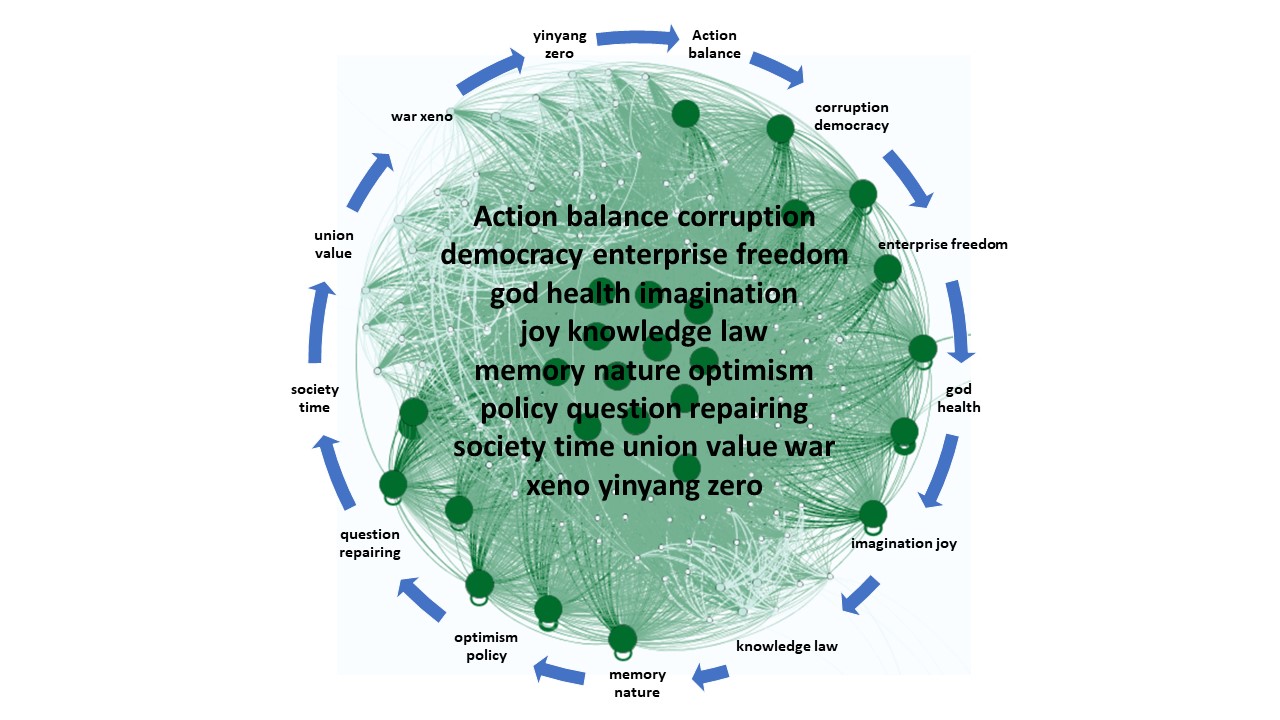
The construction of a knowledge graph is like an exercise in visual thinking or image thinking. A common method in design, visual thinking uses graphical tools to visualize ideas and develop the ideas on the basis of these visuals. So, let’s take our ABC of notions running from action … over nature … to zero. We place these notions in the core of the knowledge space and develop the satellite combined notions around the core. Visually this is easily reflected in the figure below. Content-wise a lot of thinking has to fill the combinations and check empirically this mind map of the knowledge space. Abundant complexity will let us search for digital tools to accomplish such tasks. On this webpage we find already a cloud of words that is empirically showing biggest the words with the most entries of the same key word. This shows us visually what this blog is mainly about. Europe and democracy appear fairly big. Additional analytical tools will clarify what are major or minor links to this pair of notions. “There’s something on my mind”, something which I might not even be aware of. Just an empirical question, should be easy to solve, eventually.

Flotow Potpourri

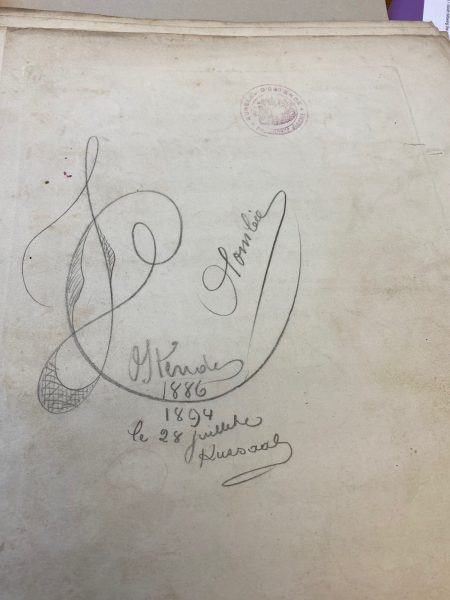
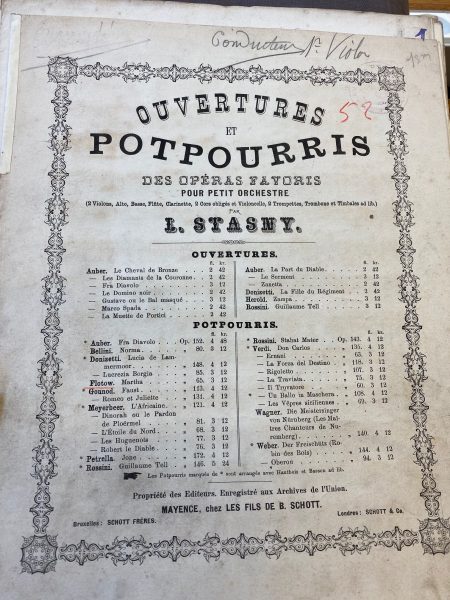
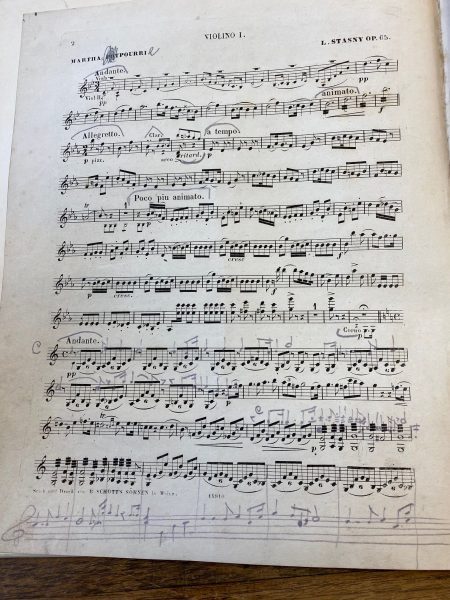
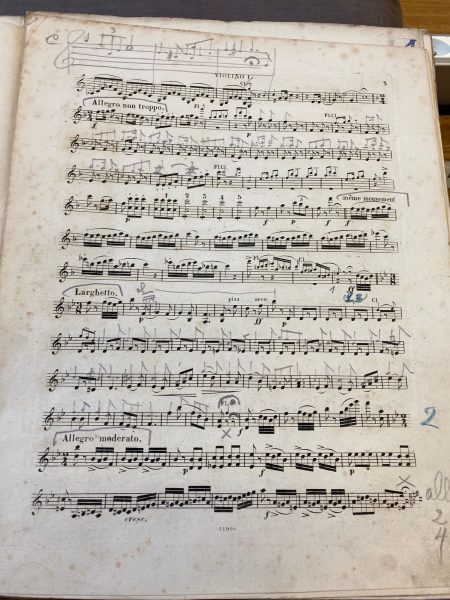
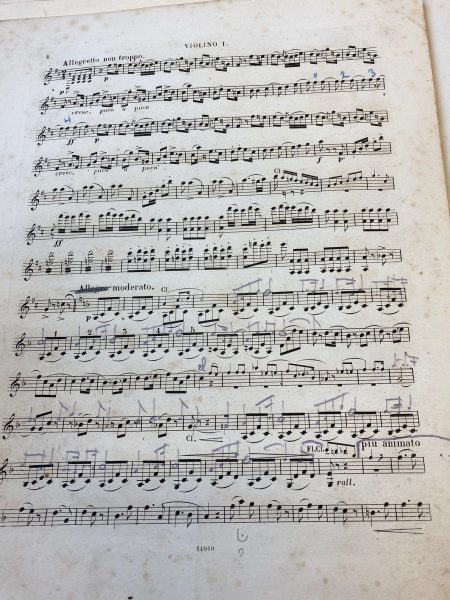
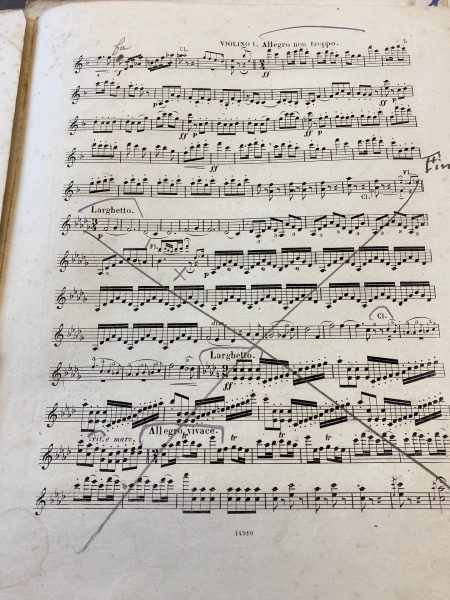
Über das musikalische Thema der Flotow Oper „Martha“ gibt es der heutigen Popmusik vergleichbar spätere verkürzte Versionen. Zu einiger Beliebtheit ist das Potpourri zu den Motiven von Martha gekommen. Kleineres Orchester und ein melodisches vereinfachtes Arrangement konnten für kurze Konzertabende verwandt werden. Der Komponist und Arrangeur Spasny Op. 65 hat Flotows Melodien aus „Martha“ publiziert (desgleichen von Wagner und Verdi). Die Kopie in der KBR Bruxelles ist ein kompletter Orchestersatz datiert von 1886 und 28.7.1894. Aufgeführt wurde das Potpourri im Kursaal von Ostende, wahrscheinlich für die Sommergäste in der Hafenstadt mit naheliegenden Erholungsgebieten und Küstenorten. Neben einigen schönen handschriftlichen Kopien für Violine (5 Seiten) oder Pauken (1 Seite, viele Pausentakte) ist die Partitur für die 1. Violino als „Conducteur“ (assisté?) ausgewiesen und sehr abgegriffen. Interessant sind die Anmerkungen und Einfügungen, wahrscheinlich zu wichtigen Parallelstimmen. Die komplette Streichung ab dem Larghetto am Ende der Partitur, anfänglich in Des-Dur, war vielleicht zu anspruchsvoll, für das zu erwartende Publikum. Ein F-Dur Abschlussakkord vorher klingt erholsamer, zumal im Urlaub nicht wahr. Der an einem Gag interessierte Musikfreund amüsiert sich an der Kritzelei am Anfang. Aus MARTHA; POTPOURRI ist Martha, Potpourrie geworden, was so viel heißt, wie „Martha verdorben“. Der Dirigent (Assistent? Es gibt noch ein sauberes Conducteurexemplar in der Mappe) hatte wohl einen schwierigen befristeten Sommerjob angenommen. Alternativ könnten wir das aber auch interpretieren als Kommentar zu der vereinfachten, aber verdorbenen Version der Flotowschen Martha als Originalstück. Genauer wollen wir das gar nicht wissen, oder?

Ukraine 360

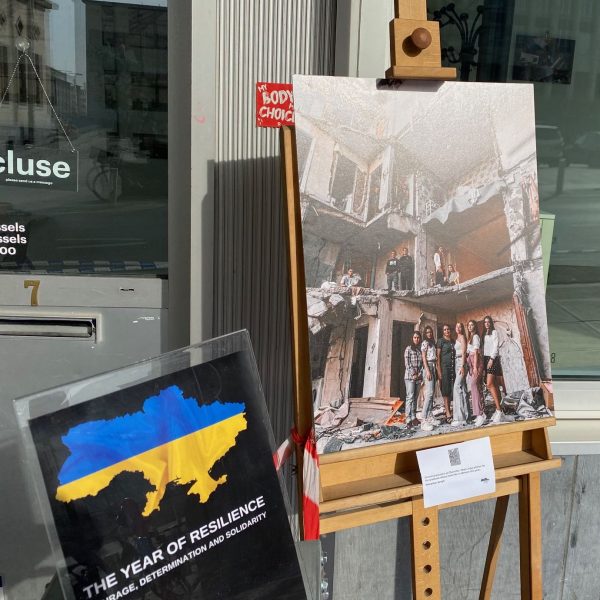
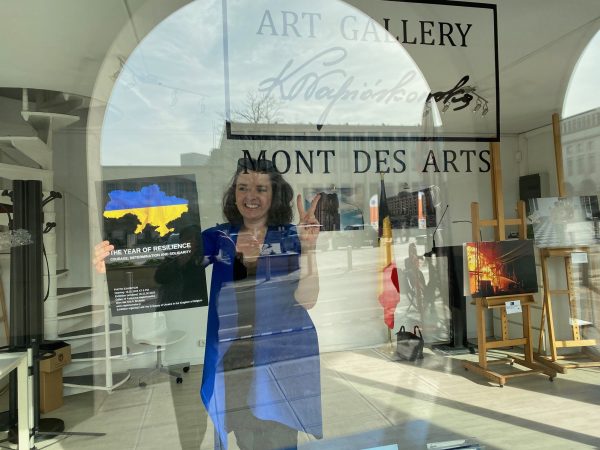
360 days of traumatising war of Russia in Ukraine. Yet, Ukrainians manage to stem the invasion this time for a year. My generation of baby boomers in Western Europe no longer knows the day to day horrors of war. A photo-realistic exhibition organised by Dr. Justyna Napiórkowsak together with the Ukrainian Embassy in Brussels brings to us more than images of destruction. The Exhibition builds on a transparent organisation. All day and night long you can feel and reflect in front of the gallery windows of what war means to people affected. Rather than passing over the daily horrific news, it is important to take in images that will last within you. Since the exhibitions excels in linking to strong own emotions, the images tell lasting stories. Communicating about war is difficult. This exposition at the “Mont des Arts 8” in Brussels, not far from the “Place des Martyres” is symbolic. Ukrainian artists are going to stay with us, showing us what “The year of resilience. courage, determination and solidarity” mean in the Europe of today. Ukrainian youth, like the whole population, demonstrates all of this in posing for their 2022 graduation photo (Stanyslav Senyk, 2022) actually within the ruins of their city. They seem to sing: “We shall build this city on rock and roll” again. Ukrainian culture is unique. Putin’s Russia is still living in the 50s state of mind. The Russian soldiers might soon have their 60s moment “make love, not war”. For persons with Russian roots in Eastern Europe it feels like what you believed or were told was a friend before is now turning around and you shooting at you including committing war crimes (Geneva convention) on you. The exposition is a “homage to Ukraine”, Ukraine’s resistance and resilience. Teaching us lessons, lessons we should like to learn fast for the survival of democracy and our way of life based on freedom not coercion. The sociology of war informs what the term “Zeitenwende” means. Look at it, rather than look away. As previous College Master at Jacobs University Bremen graduation ceremonies were very personal and emotional events meeting students, many with their families. Ukraine 3.0 will prevail eventually. Thanks, Justyna for putting images 360° and 360 days next to this optimistic message.

40s

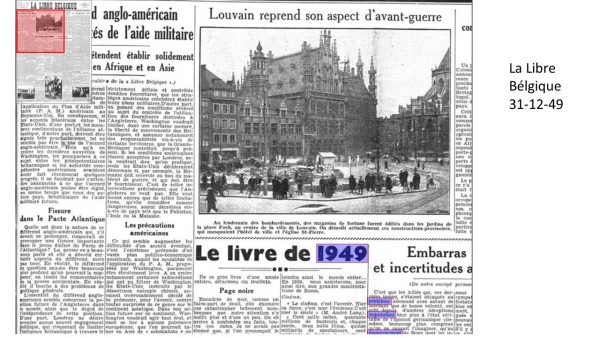
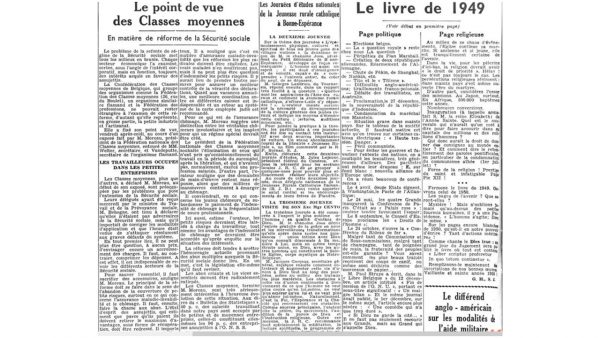
The years spanning from January 1940 to December 1949 are probably the worst to cramp into one decade. However, there are a few historians that use this approach to throw new light on a distant series of historical events in the 40s. The European perspective is dominated by war years and still has to deal with the unimaginable atrocities committed by Nazi-Germany until the end of the Second World War. From a more global historical perspective the war in the pacific also leaves lasting political changes, which are important to understand international politics and affairs of today. After a disastrous beginning with war for the USA for the decade, on the 10-12-1948 the United Nations (Charter Ratification 24-10-1945) General Assembly adopted the Universal Declaration of Human Rights. On the timeline at the end of the 40s we find the founding of NATO (4.4.1949) and (12-8-1949) the Geneva Convention which specifies internationally accepted laws of warfare. The beginning of the Cold War (Yalta and Potsdam Conferences in 1945) with strategies of containment and confrontation (Thomas Tandy Lewis, 2011 p.220), Berlin blockade determined a long-lasting concern for a balance of power across the world. The 40s were a market period of de-colonisation as well. The U.S. enabled struggles for independence to succeed with a sticks and carrots politics towards their wartime allies.  The Marshall Plan for European Recovery is the most prominent example of this period. Ronald Goldberg (2012) includes a chapter on the home front in his summary of the forties in the U.S.A. After the 2nd World War all countries had to re-establish their societies and economies that had suffered due to lack of sometimes even caring for the most basic needs. Important lessons have to be learnt from the 1940s (Dave Renton, 2000 p.144) concerning how Fascists could rise and why, for example Britain, could resist the fascist movement. Anti-fascism in Britain during the 1940s and the importance to stop beginnings of an undemocratic political movement early and with the help of the police are 2 elements of the lessons learnt. Goldberg argues that it is less the Fascist ideology that conquered the minds of people, but the organisation as a political and para-military movement that is the more important threat to democracy.

Art Un-Fair

The Brussels Art Fair (Brafa 2023) with its long tradition is certainly a major highlight in the world of art in Brussels. In view of the languages spoken at the fair, mainly French and Dutch, some English with here and there a word in Spanish or German, the international reach is probably still not at the level of before the corona crisis.
The availability of established, internationally recognized art over many centuries on the art market is remarkable. Whereas before the crisis speculators bought art to shield their fortunes from a high inflation and/or politically instable period, nowadays it seems to me, that some art is returning to the market due to the need for liquidity of speculators or risks of confiscation in case of dubious previous acquisitions or ownerships. Renowned galleries, of course, provide impeccable certificates or information on them, a tricky business in itself. Anyway, the tour on the fair is a “parcour” through the history of art, mainly through the Western or European arts across centuries rather than decades. Most persons will find splendid examples according to their preferences of art ranging from paintings, sculpture, prints or other artefacts. Beyond the impressive individual art work, the arrangements and “mise en scene” of art is another learning experience at the fair. Whereas most public museums are happy to make accessible as much as they can of their collections and archives, the private art market has another objective. Effective and convincing presentation of the artefact is likely to “enrich” the value of art work as well as the seller and the dealer. Technology allows great lighting and some otherwise “sombre” artwork becomes a shiny little piece catching eyes, hearts and wallets. For some visitors it works probably the other way round.
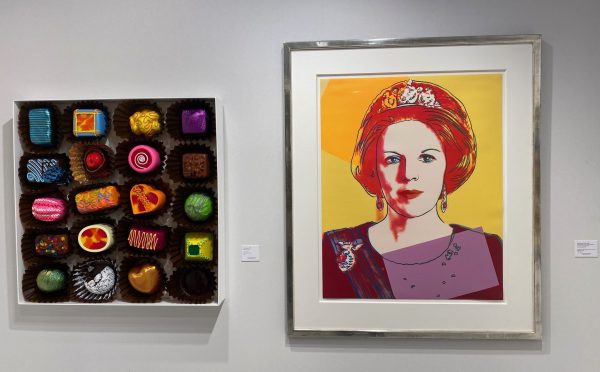
For persons overly stimulated by art, I recommend to close the actual or virtual visit with a look at the little bit cheeky artwork presenting Belgian chocolate next to royalty (Gallery Delaive, showing Peter Anton’s “Paradise Variety” next to Andy Warhal’s depiction of a Queen, see below or their Instagram presentation). A sublime moment to repeat the experience at home at moderate prices with your very own box of chocolates. At a price of 10€ each box you can enjoy roughly 2000 of them for the price of the art work. The question is: What is more healthy? Think about mental health as well. Alternative question: Art on a Fair is fair, unfair or fair traide?