Autonomy in swarm

Swarm behavior is a fascinating research area. Almost all scientific disciplines feature some interest and publication in this area. The biological origins have been associated a lot with the marvelous behavior and patterns formed by fish moving about in swarms. Some species of birds show similar patterns of collective and somehow coordinated swarm movement. It appears to be tricky to safeguard some form of autonomy in the overriding mass behavior and mass movement.
Recent advances in this field by Li, Li & Zhao (2023) model such behavior within a predator-prey framework to explain the evolution of overall swarm behavior. Whereas “prey” strategies consist in “flocking” and “swirling” to irritate predator(s), the predators make use of “dispersion”, “confusion” as well as “marginal predation tactics”. Additionally, several assumptions go into the modeling of swarm behavioral evolution: agent observation, agent dynamics, and the environment. The mixed cooperative-competitive multi-agent setting applies reinforcement learning, additionally. The framework of evolution has 5 driving forces: (1) homogeneity of a swarm (parameter sharing); (2) actor with decentralized critic network; (3) replay buffer to enhance learning; (4) rewards for predator and loss for prey; (5) learning algorithm.
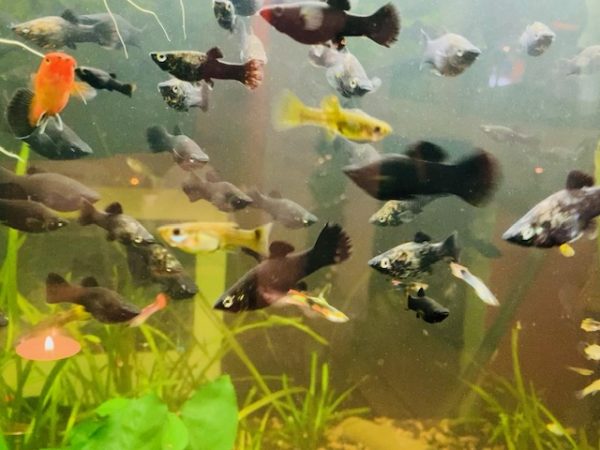
The modeling approach reveals the impact of an agent-critic network (potential of autonomous behavior) for protection of a swarm in a predator-prey scenario. (Image: fish in fish bowl 2024)
VOC for VCs

The research into VOCs (short for “volatile organic compounds”) is a busy research field in biology and environmental sciences. It might be of interest to VCs (short for “venture capitalists”) as well in the near future. VOCs are those organic compounds that orginate in animal manure as well as those emanating from plants have an impact on people working there or who are living nearby. Allergic reactions cause millions of days lost in working every spring or summer season. Long-term effects are yet another critical issue in this respect. Whereas the measurement techniques of VOCs have evolved a lot, the interaction effects of different VOCs are slowly producing interesting results that might eventually become of interest to VCs.
Abonde et al. (2026) show that there is a kind of communication between different plants via VOCs, which has an impact on growth and defence mechanisms of some plants. Amateur botanists have always wondered about the anecdotal evidence that some plants or flowers grow well next to each other, whereas other ones seem to deter each other. For crops, this mechanism has been documented and more experimental research of this kind will corroborate the potential of, for example, “natural fertilizers” in future. Remember to think of VOCs the next time you experience scents from animals, plants or flowers as a wonderful research topic with VC potential.

Dronification

In a long row from californication, gentrification, desertification and electrification, not to mention quantification, juridification or enshittification,  we have arrived at “dronification” in the 2020s. Spurred by the extremely successful use of drones by the Ukrainian army to o bring to a halt the illegal invasion of Ukraine by Putin’s Russia,  conventional weapons like tanks and artillery lost out to the widespread use of drones. Few military observers, even experts of military equipment, thought prior to 2020 this would be possible. The lower costs involved, precision targeting and different skill sets needed for the orchestration of a drone based defense and attack, have made a strong case for the dronification of warfare.
As with many innovations, there are dual-use potentials. In this case the civilian use of drones received a considerable push in technology and acceptance. Rescue robots or delivery of provisions to frontline positions are part of the “everything-drone-thinking” during war. The surveillance of frontiers and territory is applicable to agriculture, properties and urban planning. Droughts and other environmental impacts on a large scale can be monitored in a  timely fashion as well. 4D imaging becomes more feasible as well in many domains. The potential in architecture is vast as well. Public infrastructure and distribution of frequency ranges is a crucial precondition to ensure an  orderly coexistence of military, security and civilian use cases.
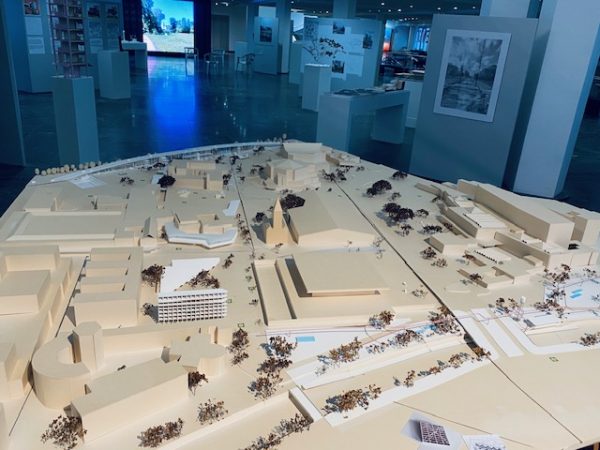
(Image: Exhibition: atelier le balto, Die Kunst des Gartens VI: FREI(B)AUM at Kulturforum Berlin 2026-1)

Mammalian Aging

Mammals share a lot of similarities with respect to aging. The researchers Alexander Tyshkovskiy and Vadim N. Gladyshev et al. (2026) spearheaded multiple research to identify similarities across humans, macaques, rodents and mice. The outcome of this overarching study of mammalian aging and mortality is a set of biomarkers that can serve to predict time to death.
Why is this interesting? With the rise of the longevity interest in the 21st century, the need increases to use robust biomarkers that can assess any presumably miraculous innovation to smooth human aging or prolong the time to death. Steps towards “universal transcriptomic signatures” including CDKN1A and LGALS3 (compare across species), which proved to be important in mortality predictions based on the large UK Biodata.
It is the accumulation of damage, which drives  processes of aging . However, “inflammation, replicative senescence, metabolic inhibition and γ-irradiation” can be attenuated or occasionally even reversed. The aging of cellular components has been demonstrated using “modular-specific clocks”.
With these biological advances in the field of biomarkers, the BPS nexus (biology-psychology-society links) could receive more attention as well in order to enlarge the society-wide research into the causes of human aging.
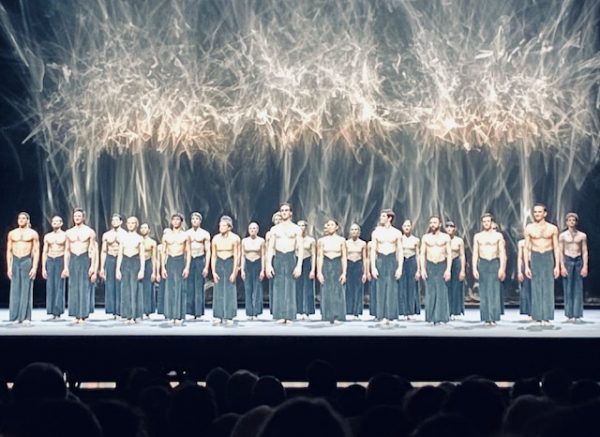
(Image: Staatsballett Berlin, Choreographie Crystal Pite, Gods and Dogs, Angels’ Atlas performed 2026-5, final applause)

Magnifica humanitas

With the “Encyclical Letter” entitled “Magnifica humanitas”, Pope LeoXIV puts himself expressively into a long historical tradition of the catholic belief to be not only a religious leader, but also an institution that puts humanitarian values on the top of its agenda. As the catholic church is a globally active institution, which covers the whole life-course of individuals based on defined doctrines, the massive changes that are under way in the field of artificial intelligence asked for some guidelines to frame the church’s understanding of this relatively new “Deus ex machina” of the 21st century. In the Encyclical, there are several mentions with respect to comparable socio-economic developments of the past. In choosing the name of “Leo”, the Pope referred, from the earliest days of his Pontificat, to Leo XIII as a particularly important predecessor for himself. The latter has made his reputation in the Christian Church with the Encyclical “Rerum novarum”, which raised awareness to the risks to humanity with an industrialization and capitalism being pursued at all costs. “Res novae” of our time, which is AI and all its fields of applications have a potential to affect the course of humanity for decades to come. Leo XIV doesn’t condemn it as the devil in machine form, but puts emphasis on the potential of AI to assist us to enhance the “Common good”. This is the task of many, not of only a few, as he refers to in his Encyclical of 2026-5-15.
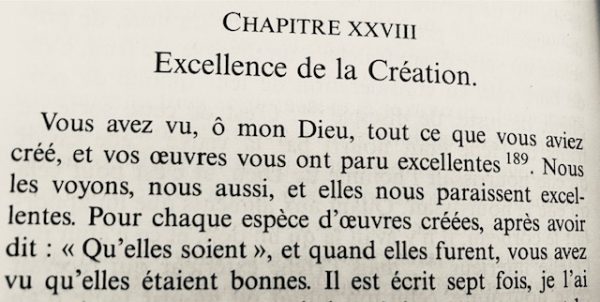
(Image: Extrait: Saint Augustin, Les Confessions, book 13, chapter 28).

Post-sacred architecture

As with our human bodies, and in many instances already, sacred architecture follows a life course pattern. The thriving religious communities build and expand their faith to larger audiences. In these expansionary phases of the faith many monumental buildings, known as sacred architecture, as well as splendid interiors or artefacts enter the “built faith”. After the peak of membership and in periods of contraction, the question of how to scale down the splendors starts to arise.
Eventually, the ceding of the sacred architecture to the non-believing communities comes into consideration. The sacred architecture needs to find its place in the evolution of societies as well as urban and rural local space. Depending on the intentions and resources of communities, post-sacred architecture has to redefine its purpose for its own survival.
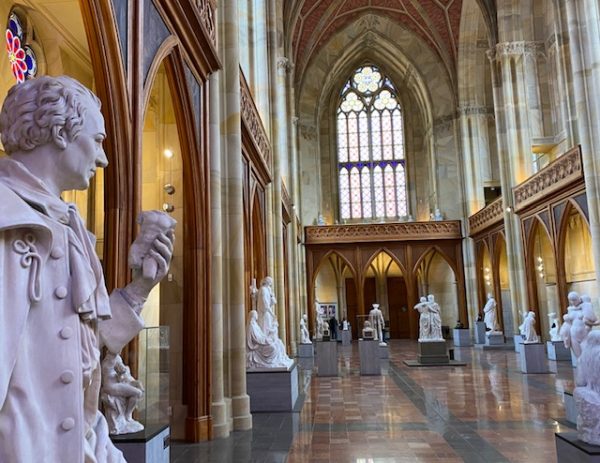
An interesting example of post-sacred architecture constitutes the “Friedrichswerdersche Kirche” in Berlin. The use as a historic exhibition space for sculptures of the 19th century works particularly well in combination with an active program on art, architecture and history. The statue by Ludwig Winckelmann (image below) depicts the reflection on and about a miniature sculpture in space. The post-sacred use of this fine and luminous architecture continues to reach an enlightened audience.

Mem-flation

A recent addition to the repertoire of inflationary pressures is inflation due to real or supposed shortages of computer memory and microchips. Contrary to other forms of inflation which are induced by supply shortages (like fossil fuels) mem-flation is due to heavy actual and even more proposed investments in data centers, server farms, cloud storage and AI-driven computing capacities. Quantities and quality of microprocessors, which are essential parts in all these devices, might not be able to follow this demand-driven inflationary tendency. The hype around AI, therefore, is a major element in this likely overshooting market reaction. The current market trend is likely to last for another year as the already announced investments of the big data companies have been announced including 2027. The producers of NVIDIA, Samsung, TSMC, SK Hynix, Micron, ST Microelectronics, Infineon, Intel and AMD have realized huge profits from this demand-driven mem-flation.

Psych-inflation

The economic narrative and measurement of inflation is incomplete without the proper account of the psychology of the price building process and mechanisms. After the 2 previous oil-crises of 1973 and 1979, the panic about not having enough oil and derivatives within the coming months, has lead to prices increases almost instantly. Despite the fact that there is enough oil floating on ships and in pipelines for 3-6 months, depending on estimates, the psychological effect of being eventually short of oil creates “Psych-inflation”. Oil markets use the “Angst of disruption” to make additional profits on people and enterprises’ hoarding behavior. There are powerful interests to exploit such potential shortages as it is a suitable time to reap some extra profits, particularly for those who knew early about a likely military conflict.

Mobile Web Search

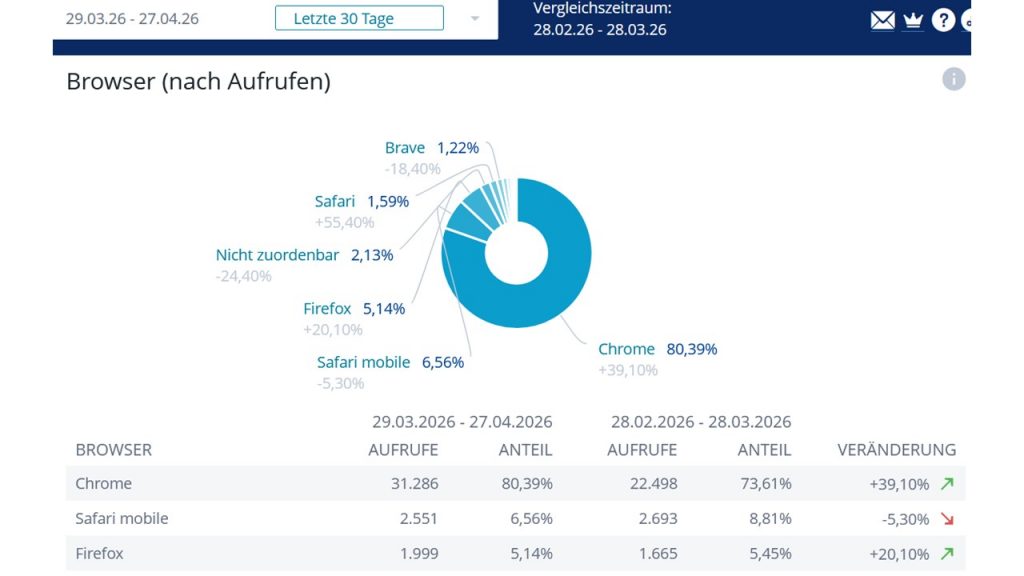
The smartphone is ruling the internet. This is probably a well-known wisdom in 2026. Just looking at the basic statistics of which browser people use to contact this webpage, it is evident that Chrome is vastly dominating search on the internet. Even the mobile version of Safari outnumbers the desktop browser access. Information gathering, viewing and reading have all moved from the desktop to the handheld smartphone, and maybe our glasses or wristwatches in the near future. For those still programming or designing webpages, the choice of “mobile access and functionality first” is an obvious choice for business, and even more so, for leisure purposes, like it or not.
Some parts of this evolution of search behavior are quite obvious, as we are more erring around cities like Paris, Berlin or Brussels than searching in front of our desktops or notebooks.

Autonomous Robot

We have been used to computers beating the average chess player and even the best players. In 2026-4 the journal “Nature” published the documentation of an autonomous robot (Ace) winning the occasional game against top-level Japanese table tennis players. Peter Dürr et al. (2026) described the robotics challenge as constructing a robot that can match the human capability and reaction time of “fast, precise and adversarial interactions near obstacles”. The high speed perception of movement is coupled with event-based vision and builds on AI-algorithms like reinforcement learning. The step ahead is remarkable.
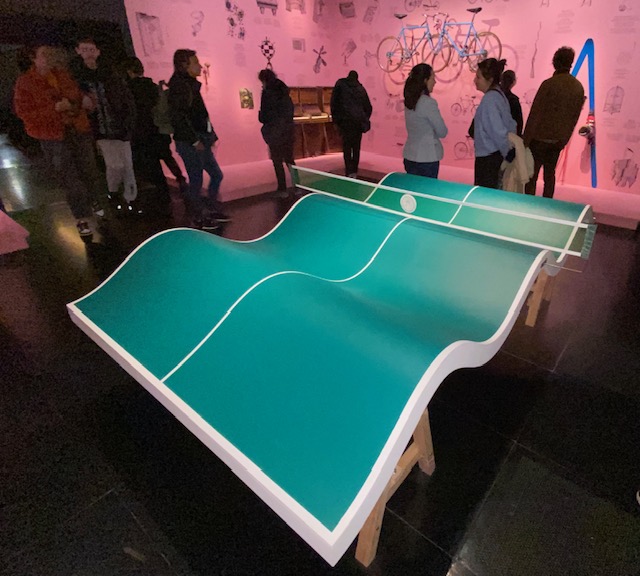
About 50 years ago, as coach in table tennis we used a machine or robot throwing balls towards us which moved from left to right in timed routine, for example. These simple robots we used to train humans. Now the robot is reactive and even interactive, learning from strategies and tactical moves. Technology can outperform us in most singular tasks in 2026. The combination of several of these skills is still quite unique to humans, but the clock is ticking for human singularity in technical matters. What was considered a “false good idea” in the Paris exhibition “Flops” at the Musée Arts et Metiers (see image below), might be an interesting response to challenge the new generation of autonomous robots.