Agentic AI Gardening

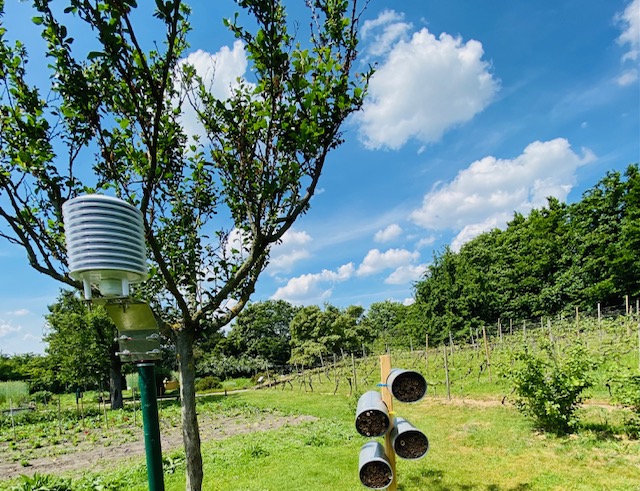
The use of AI is probably most popular for professional purposes as efficiency and economic productivity are major concerns in these fields of applications. Another whole lot of applications is rapidly developing as well, which is Agentic AI in hobbies like gardening. The use of IT in gardening has previously been reserved to landscape designers and maybe urban to rural planners. Cheap access to AI on a test basis or within your browser has widened access to computer and AI assistance for gardening purposes. Colorful designs and selection of species to enrich biodiversity are widely available now. The next step is, of course, agentic use of AI. If we have a sufficient number of sensors installed (and use weather forecast data as well), the data from the garden can easily be analyzed by AI and the mower or water pump can get going to do the job for us. This is not rocket science but only sensors, data and a couple of “if …, then” commands. The kind of pleasure will have changed accordingly shifting from the watering of plants to the satisfaction of successful programming. No value judgement here. The latter option has, however, a considerable business potential of almost industrial or agro-economic scale. 
Electric ships

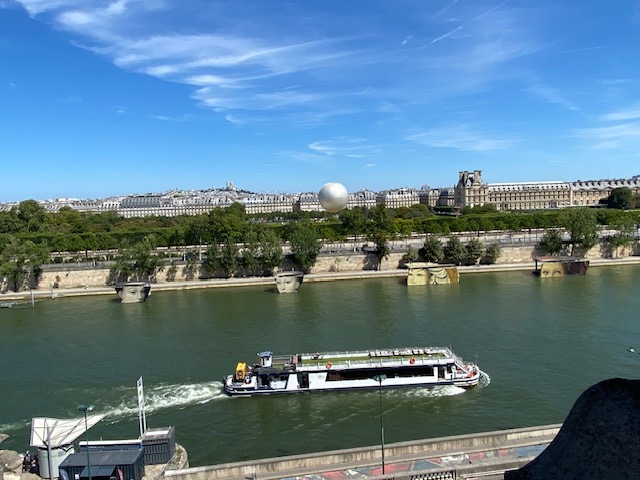
The transformation of mobility to an all electric mobility has been discussed mainly with regard to a narrow vision of the automotive sector. Beyond land based vehicles like lorries, buses, cars and bicycles or electrification of trains, shipping has been a niche market of the all electric society. The amateurs of silent shipping, sailing and surfing have explored and adopted the electric alternatives for quite some time. The professional ferry boats and river crossings have also opportunities to join the all electric society with a range of ships available for orders like from “Ampereship”. The increasing share of electric fun on water and electricity-propelled ships gives additional drive to the “All-electric-society”. 

AI Motion Sculpture

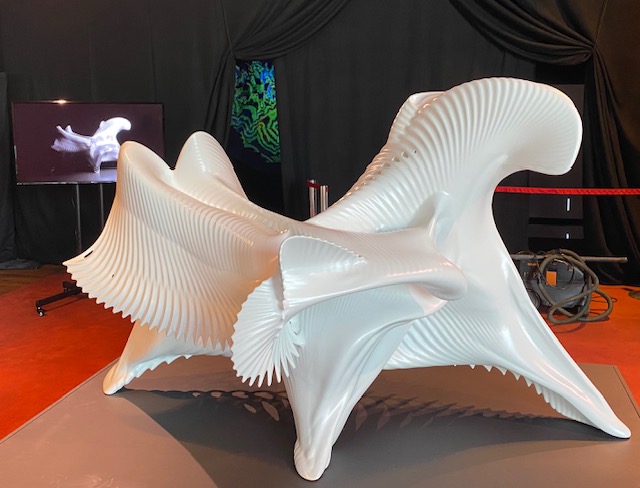
At the Festival Noûs in Paris, the collaboration of AI with artists was a major event. Based on the huge collections of the BNF in form of data bases it is possible to join the 3 worlds of library conservation, technological innovation like AI and the imagery of artists. In the preparation of the exhibits and the parallel documentation of the genesis of the exhibits of the artists, the creative potential and process becomes more evident and understandable to broader audiences. The exhibit by Tobias Gremmler, Anatomy of Motion (2026 see below), captures the motion of a dancing body in a sculpture based on a 3D printing of a series of images blended into each other. with a fast photography camera, known from sports images previously, the dynamics of a motion become a tangible sculpture. The intriguing new form is in fact a motion that has been captured or has cristalized or materialized in a permanent fashion. New technologies and materials enter into art as they offer new ways of expression as well. The collection of art and documentation centers shall enter into new phases as well. (Image: Tobias Gremmler, Anatomy of Motion (2026) at BNF 2026-4).

Critique of Maps

From a sociological perspective on maps we learn for example, that maps are also instruments to reflect property rights. This can be past claims of imperialism or recent claims of independence. A depiction as a map has historical and societal implications. Superposition of maps according to political, cultural or linguistic communities often reveal contested areas of domination and liberation movements. The specialized field of the history of maps can sharpen the senses for a critical view of maps in the 21st century. (Image:  Brankiza Zilovic, Nusquama 1984 exhibition “Cartes imaginaires’ BNF Paris).

Fact and Fiction on Maps

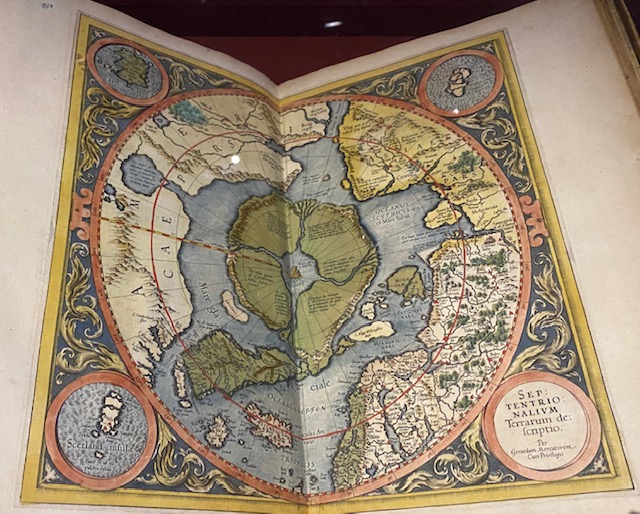
As a matter of fact, for centuries maps have played in both registers, fact and faction. In geography we expect maps to represent geographical facts, and yet based on a historical perspective on the subject, we realize that early cartographers had to brush over, at their time unknown, territories. What did many of them do? They imagined what could be the case.
In the early days of “creating a map” the artists had to rely on some sort of fiction or were intentionally creating a fictive image of the unknown world. Out of this “science and fiction” approach, a whole discipline of literature has evolved, science-fiction. The imagery of Manga-mania in the 2020s owes a lot to this drawing and mapping of fiction in form of stories.
Maps tell lots of stories. They are powerful in their neurological function, similar to mind maps that are a tool to structure our thoughts or story lines. The gesture to point at an area on a map of the Arctic, Greenland for example, can send shivers across the globe. Maps make stories and stories may lead (eventually) to shifts of attribution on maps. In the same vein: the mapping of power also reflects the power of maps, be they based on facts or fiction.
(Image: Exhibition: Cartes imaginaires, BNF Paris 2026-4-8, Gerardus Mercator, Map of North Pole 1595)

Learn from failures

It is easier said than done. Acknowledge a failure and most people will probably pretend to know better already. Don’t worry. This is not the case. Many of the best “learnings” have come from learnings from failures, be they own mistakes or of other persons, organizations or institutions. If you really want to learn from a person, try to get honest take home messages from their “best” failures. Marc Aurel has proposed this in his writings on governance and, prior to him, Aristotle compared Greek constitutions to derive the most adequate, or the best of the many failures to achieve democracy. This is a perspective if you aim to improve on the achievements of current or past actors. Incumbents can only tell you about how they got where they are currently, not about any likelihood of future occasions. Hence, current failures are a very valid source for learning.

Time dependent failure

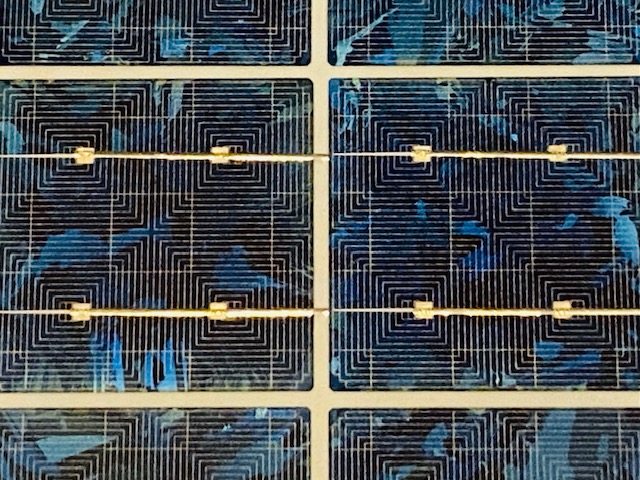
The collection of failures has an ambiguous relationship with time. Some innovations that are celebrated at a specific point in time shall be considered failures at some later point in time. The Musée des Arts et Metiers has an early version of a solar panel on display dating back to 1996 (see image below, Photowatt 1996). This example reflects the cycles of public as well as expert opinions about technical innovations that either are en vogue or at disgrace. Ecological, design and economic considerations enter into the consideration of what constitutes a failure. Claims of European energy sovereignty may additionally enter into the failure equation. The time horizon over which energy savings are generated is yet another element in the judgement. The more general perspective should take sustainability and depreciation of quality of an object into consideration. The Flops exhibition just scratches a bit on the surface of an important and rather complex issue of the relationship of society, technology and innovation.  Surely, there is more to come in terms of flops and failures, and this is okay in most cases. 

Fail collection

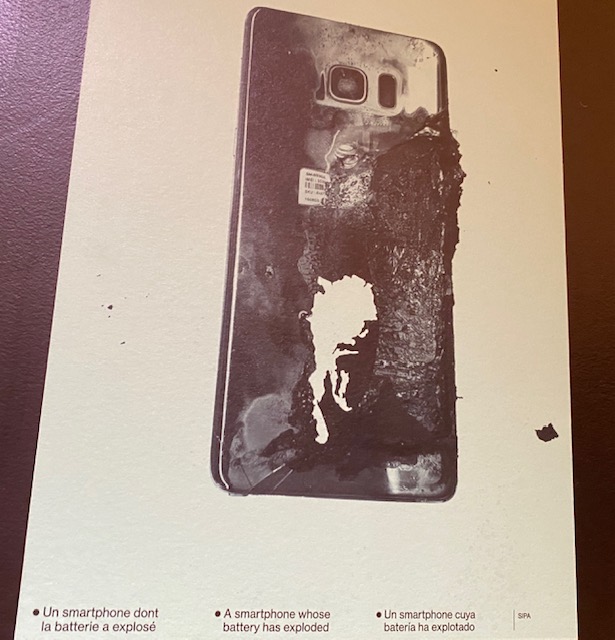
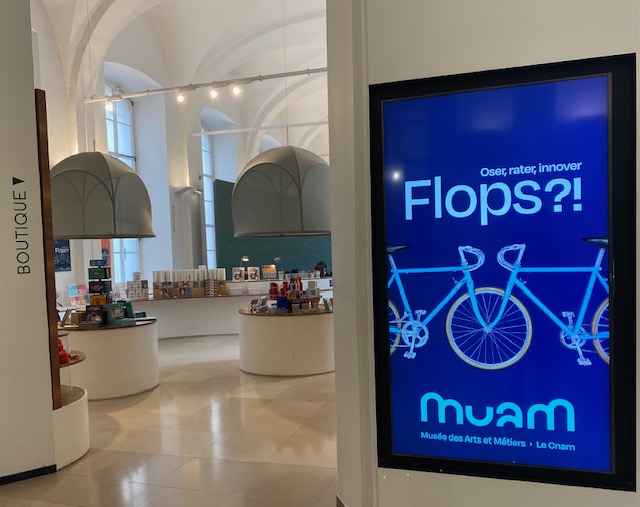
The not-so-social media have been flooded with collections of failures. The success of this short video format is mostly due to its entertainment value. A quick laugh is guaranteed if a certain intention is turned into its opposite. You want to take a witty shortcut but effectively you end up with a lengthy or painful lesson of the opposite. The fail collection of the CNAM in Paris has a similar attraction. The “Flops” exhibition in 2026 exposes a larger number of technical innovations that either did not reach the mass markets or that were “flawed good ideas”. In fact to put an innovative idea or design into practice it takes a lot in addition to engineering intelligence and professional competence and experience. The collection of documentary evidence invites us to explore the topic of what constitutes a failure and why failure is an intrinsic part of the creative process of trial and error, fail, fail again and fail better. (Image Musée Arts et Metiers 2026). 

Electricity generation

On a global scale, electricity generation based on wind and solar has been growing quite fast since the year 2010-2024. Wind and solar have outpaced nuclear energy production as well as the stagnant sector of water based energy production. The Global Electricity Review by EMBER provides the statistical evidence for this evolution in 2025.
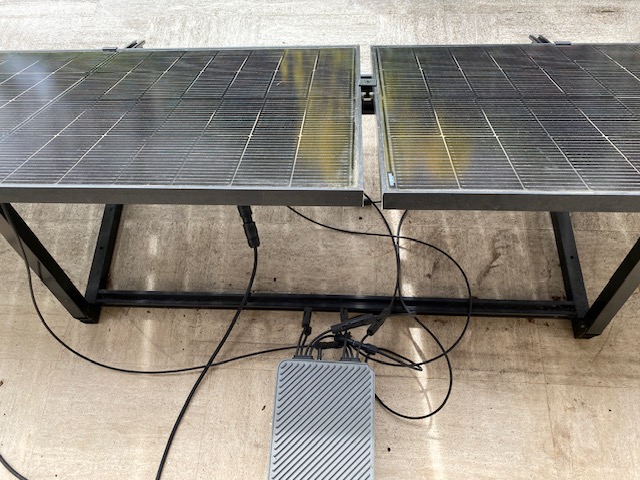
The interesting evolution arises mainly because countries with a lower level of GDP have invested heavily in solar and wind energy as this form of decentralized energy production does not need heavy investments in network infrastructure. Countries with larger population growth can keep up with electricity generation according to local needs. Local production and consumption become a key in strategies of local development. The finding that households in low-income countries use on average only 1 kWh per day is an amount that 2 small solar panels can already cater for (example image below).
Countries next to the equator have relatively constant days of 12 hours daylight across a whole year. The feasibility of no-carbon sustainable energy production is driving global growth in this sector.

AI and Social sycophancy

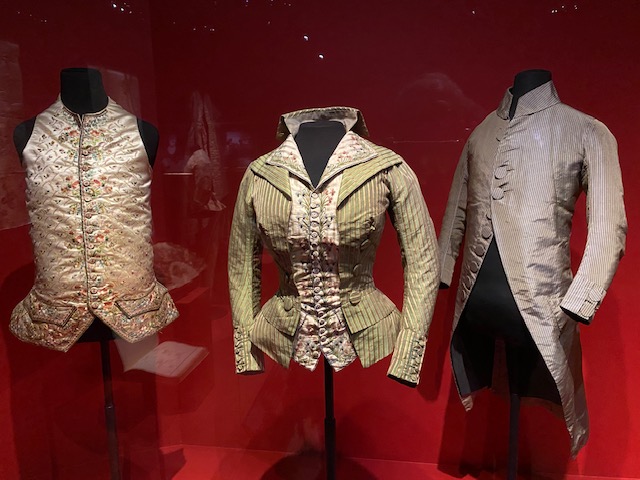
The study by Myra Chen et al. (2026) on the practical use of various AI tools demonstrates the risks of social sycophancy of these models. Maybe a large part of the initial success of AI models exactly due to sycophancy i. e. the people-pleasing, flattering and affirmative bias of these models. If users of AI just receive predominantly confirmations and reassurance of their intended behavior, they shall be less inclined to accept more outright criticism in normal interactions with real people. The more you receive flattering responses by some people, the more likely they have used AI in preparing themselves for a response. The rigorous psychological tests applied in the paper can in fact explain a large part of why we are likely to become addicted to the always flattering responses from the current versions of AI. Only the scientists will consciously seek for disapproval of their beliefs and keep challenging the AI-provided returns. Even using different AI models did not change the affirmation bias. Maybe programming a “grumpy old professor AI” as an alternative could do the trick. I shall have to think seriously about this as the alternative to current models. The critical AI is most likely not a viable business opportunity, but it might survive many other sycophantic AI unicorns. (Image: waist coat 18th century, Paris exhibit Musée de la mode 2026).