
The evolution of time is fascinating as research topic. Both in theoretical as well as empirical approaches. Beyond the precise measurement of time and the use of time in measuring working time, which intensified during the industrial revolution, we witness continued struggles over the length and the organisation of working time. The 30+X hours week working time could be reorganised into a 4-days week to improve work-life balances for millions of people. The effects are not only on employees directly concerned, but also on their families and/or households involved.
The changing perception of time (as being short of time) and its evolution over time needs huge surveys collected over time (known as “Time use studies”). Inequality over the life course remains an issue with a persistent gender bias. Unhealthy and excessive overtime work is still a problem, usually negated by upper ranks in hierarchies.
Let us start to imagine different concepts of time to maybe one day overcome the shortcomings of our current understanding and use of time. Usually, time is considered a linear concept, one day follows another day and so on. Time, depicted as an arrow or a horizontal axis in graphical representations, is helpful for most processes we observe. If our aim is to explain a social process which evolves over time, we could perceive time as running with different speed in, for example, urban and rural areas of the same country. The liberalisation of women or peace movements evolved or spread with different speed in different regions. The 60s became known for many women as the decade when the control of reproduction allowed different life styles. Concerning reproductive behaviour and divorce rates a break in series compared to previous periods is observable, reduction of reproduction and diffusion of divorce throughout societies. Instead of continuous time we might speak of discrete time, in for example decades like the 60s, 70s, 80s. In retrospect “social time” seems to have passed faster in one decade than the other. We might also imagine time as growing exponentially as time². Taking into account the slowing down and successive rise again of evolution over time, the time trend might look like a rising wave (time² + time³). In econometric models testing of such hypotheses is feasible, although it is more difficult to convince reviewers of an alternative theoretical model of time.
An investigation of trends of democratic behaviour over time would need to adjust for the potential and sometime measurable return of undemocratic practices for periods. A depiction of such “social time” of democracies as an upward rising line with periodic relapses is a plausible theoretical framework. Trajectories of inwards or outwards spiralling processes are already fairly complex trends for the process of democratisation as the phenomenon to explain or the modelling of a time trend to explain the level of democratisation reached so far. Challenges of time frames for independent and dependent variables in social processes might be questioned altogether to claim that time is a spurious occurrence of events much like a process of a so-called “Brownian motion” also named white noise. In fact, not being explicit about the concept of time applied in social analyses amounts to a severe neglect. Examples of such neglect are certainly all those cross-section studies, still pervasive practice, in social sciences or opinion polls. The linear concept of time, as a chronologically processing arrow of time, is a convention useful for synchronisation of action. However, this synchronisation is already debated more forcefully with more persons being unsatisfied with the use of synchronisation as a tool to regulate our “social time” and social processes. Time zones, summer and winter times challenge our day-to-day perception of everybody living at the same time, speed or intensity. Bedtime for me, wake-up call for others, or vice versa. 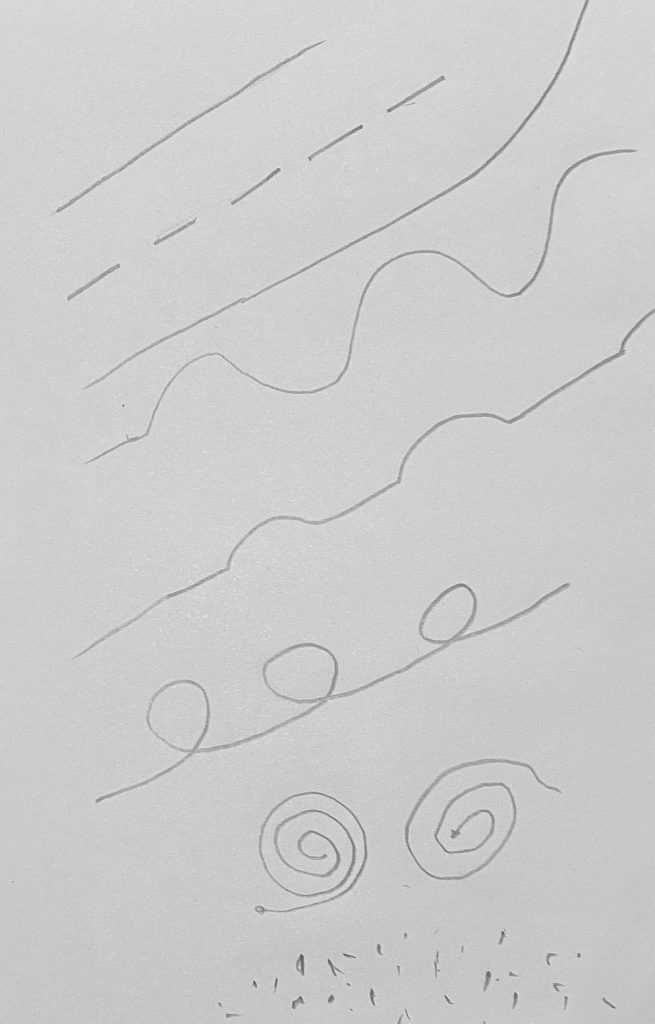
70s
In autumn 2019 the Cosmopolitan featured a headline “Stop fighting it: the ´70s are back”. At least in fashion the 70s are still with us. Platform soles, moon boots, hot pants, all had their first appearance in the 70s. We keep seeing them in fashion shows even 50 years later. In politics, the retreat of the U.S. from Vietnam in 1972, with more than 50.000 killed soldiers from the U.S. and many more Vietnamese persons, is certainly a success of the sizable activists’ peace movement of the 60s. Willy Brandt’s kneeling in Warsaw in front of the heroes monument in honour of the Warsaw ghetto marked the beginning of a reconciliation with Eastern parts of Europe.
The oil crises 1973 and 1979 caused mass unemployment and from the beginning of the 70s “Greenpeace” started its on-site activist approach against nuclear weapons, killing of whales and dumping of toxic waste. The network of independent organisations is contemporaneous to the invention of e-mail between large so-called mainframe computers using the now common address format x@y.z. The feminist movement achieved major successes with a UN resolution to ban discrimination against women. The male dominated aggressive and excessive punk movement occurred almost in parallel. New products like the Polaroid camera for instant photos and prints, video cassette recorder, the chopper bike “Bonanza” as well as the collapsible Maclaren Buggy for children defined a lifestyle around a more mobile society. Plastic furniture, bright colours with uncommon combinations brought with it a more diverse culture. Societies exploded into different lifestyles. Some taking the new Concorde, so-called supersonic speed delta airplane between Paris and New York, whereas others walked around in “wooden clogs” as a kind of folk fashion, watched Kojak the bold police inspector, listened or sang to ABBA tunes, danced like in “Saturday night fever”. In December 1979 Pink Floyd released “The Wall” which became with 23 million sales the top seller of all 70s productions (Champ Hamish p.120). Some of these artists we can still enjoy jumping up and down on stages across the world or being honoured with a Nobel prize in literature like Bruce Springsteen.
The wild 70s are remembered for the sexual revolution, the philosophy of love and peace as well as the continued spirit of the civil rights movements (Particia Massó, 2010). The sexual revolution spurred women’s liberation just as additional exploitation by thriving borderless consumption industry. Sex sells and it sold well. The cinema and print industry cashed in on the new trends and the spreading the new trends. Social relationships became much more unstable, divorce rates increased sharply in the 70s. In response, “surviving the 70s” (DeMott, 1971) a kind of survival guide tried to give advice of how to stem the tide, largely unsuccess for some decades.
Societies continued to explore new forms of life, while some niches of conservative life styles started to shield themselves from these outrageous trends. Vasarely imitating tapestry and design invited new forms of facing your own walls. Where to go on from this liberalisation? More equal rights for all, was a claim, but it took several additional decades to achieve some of the claims. Intersectionality, viewing for example violence as an across gender, social class and ethnicity as an overall mankind issue, became a claim much later only. “All in all, it was just bricks in the wall”, a huge wall it still is. We haven’t climbed it yet. 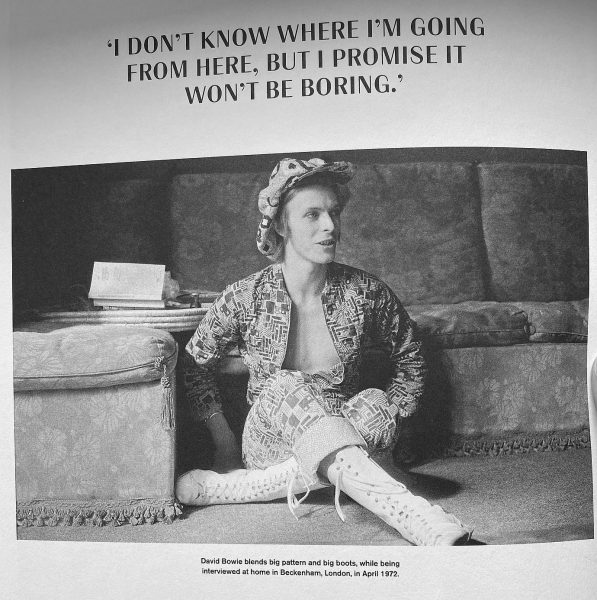
80s
The colourful 80s. That could be a summary of the years from 1980 to 1989. Certainly in fashion and design a multitude of colours dominated the 80s. Mariel Marohn (2010, Ed.) published 20 years later a visual summary of the 80s. Often thought as less spectacular than other decades, the 80s had seen some defeats to start with. John Lennon shot dead in New York December 1980. The NASA space shuttle Challenger explodes 2 minutes after the launch in 1986. Nuclear accidents (after three mile island 1979, Tschernobyl 1986,or the finding of the Titanic demonstrated not only the “limits to growth” (1972), but reminded us of deadly consequences of technological ambitions wanting to move too fast in time. Ghettoblaster, Walkman, first cell phones, facilitated a more mobile life style to more people. Overcoming the oil crises of the 70s, mobility roared ahead again. Cars, bikes, planes, CDs, windsurfing and aerobics become part of the lifestyle in these years.
Mass culture in music reached all levels of society. Music was no longer perceived as a protest movement, but a normal part of the freedom of expression. Fusion of music and dance, but also music and street art like in hip-hop music and graffiti art become part of day-to-day experiences of commuters. In the anthology of poems of the 80s we find on page 141 “Commuters” by Edward Hirsch 1983 who singles out the commuting practice as the way of life, he does not want to identify with. “Malgré lui”, in spite of himself, he finds himself in cars, trains travelling distances every day. More, faster and with more colours, time moved on. The fall of the Berlin wall 1989 was thought of as a “Zeitenwende” already. Royalty in the press with the marriage of Diana & Charles, was replaced by Madonna as the Queen of Pop and Michael Jackson as the King of Pop. The digital age entered into a new era with the Apple Macintosh desktop computer with an accessible visual interface to computing. Reaganomics and Thatcherism pushed for a revival of liberal market economies ploughing the fields for digital multinationals (GAFAM) to thrive ever since. These lasting technological changes define this period as colourful, grabbing all our senses and attention. Want to breathe a bit of the air of the 80s – visit MAD Paris. 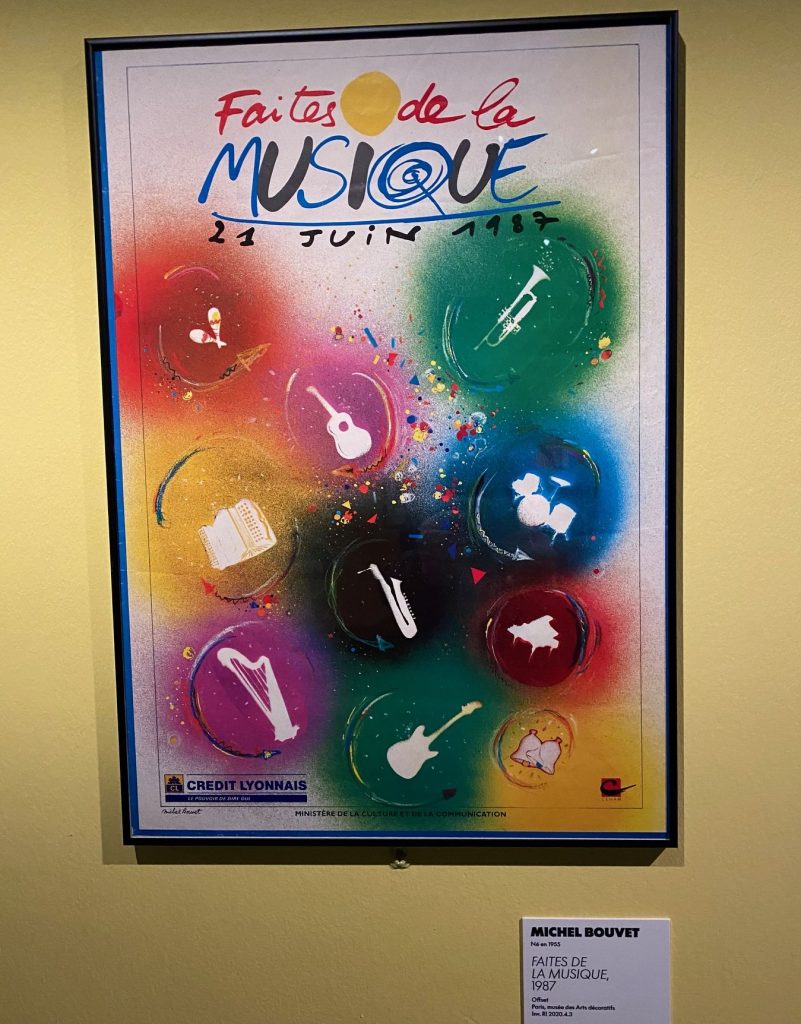
Time2
The concept of time has been dominated by “chronometry”. We used to take a look at our more or less reliable wrist watch for orientation in time. This is a cultural practice in all societies where such devices are readily available as consumer products. Before this time, even in the Europe, church bells or the sun played the role to locate people in time (Norbert Elias on civilization). Nowadays, even in remote areas of our planet the mobile phone has taken over to assist us to organize time. In the sociology of time, we observe multiple clocks. The personal time, social time – organized through laws, collective agreements, conventions or as behavioural features of us. So-called early birds have a specific awakening response of their cortisol level in their blood. For others this is delayed. We might conclude from this that different clocks are ticking within us. The societal challenge is to synchronize them. Starting time of schooling is another phenomenon of societal construction of life courses. Starting or ending time of a school day, week, month, year, adulthood, all are determined collectively and changed from time to time. Beyond points in time, there are durations in time to consider. Life spans are socially determined. Life expectancy varies a lot by social class and education levels. Therefore, at least in retrospect and keeping the duration constant across persons, life time clocks are ticking with different speeds for us as individual persons.
In the digital age and powerful search engines based on “web crawlers” we live more than ever in a global state of mind. Awareness of “global history of history” (Woolf, 2011) allows us to add perspectives from several parts of the world to our own version of history, historiographies and histories. Collective memories are continuously shaped and recreated. Due to easy reference to chronological time a perspective following decades has become a sort of collective mind map. This influences directly or indirectly through peer behaviour and preferences our own mindsets (Blanning, 2008 p.307). From a sociological point of view decades are at the crossroads of time, period and cohort effects, potentially mixing up all 3 effects. However, statistically speaking we might apply a spline function -´ to our otherwise / linear running of time. Thick description of decades like the 60s, 70s, 80s, is common practice in our communicative practices, preferences as well as behavioural features. A dialectic co-evolution of decades, one negating the other or one decade being a synthesis of 2 other decades are part of the critical assessment of lasting contributions to history through histories (Paul Ricoeur). 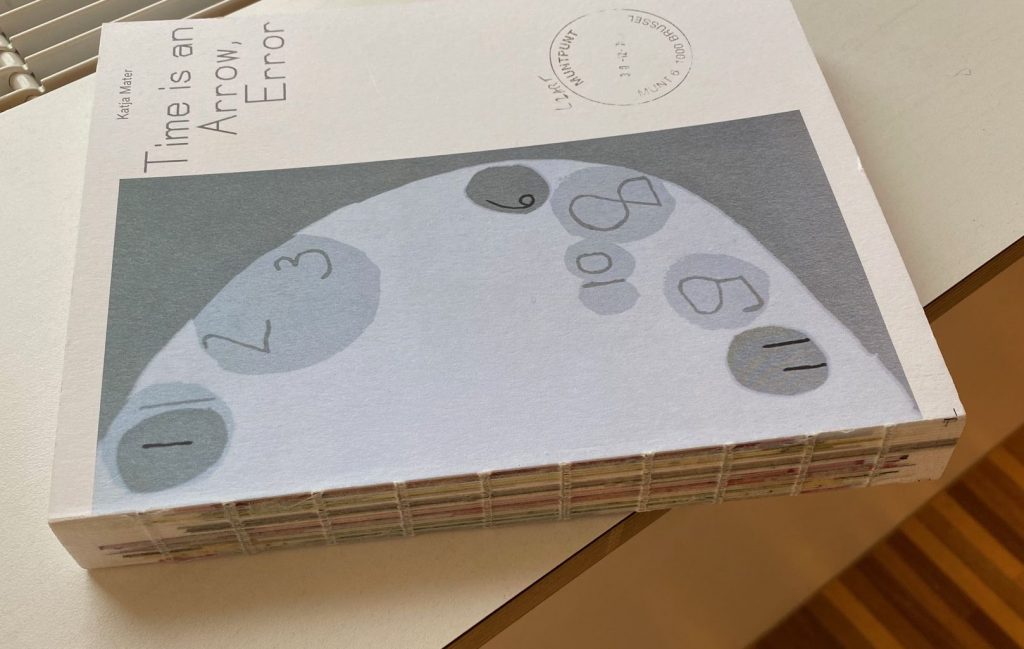
Linguistics2
Languages are simple once you understood the making of them. Take children, they learn the alphabet first, and use notions or images in alphabetical order, which you associate with this list of short words from A to Z in western cultures. From short words like “Cat” and “Dog” the learner moves on to longer ones like “Bird”, just 4 letters now. More advanced learners then use more letter words like “supercalifragilisticexpialidocious” invented for amusement in the Disney-film Mary Poppins. It sounds a bit like one of those never-ending long German words with lots of nouns just added on. This is exactly what we shall do in the following. A bit like in computational linguistics when ChatGPT is predicting the next word, we use algorithmic thining to form new combinations of an alphabetical list of notions. We start in the table below with column 1, then tell our spreadsheet to copy cells A1-01 to Z1-26 list and insert it in the second column just one cell below and insert Z2-27 at the place on the top of the list of column 2, which is A2-01. Then take this column 2 and repeat. Stop after, lets say the repeat counter is N=25.
The first 2 words combination then is “Action Zero”. Take this, enter it into Computer Search and take the top entry. “ActionZero” is an actual company name proposing actions to achieve net-zero emissions. Following this, we produce a whole encyclopedia of pretty up-to-date knowledge from the WWW with hardly any humans involved anymore. We only need to cut out duplicates and nonsense entries. That’s what most editors or teachers are used to do. Knowledge creation might no longer be reserved to the human species. Oh my God – but the machine might eventually sort this word out as nonsense concept, too. The new mantra could be ZeroGod or let us try the reset like in GodZero. In other words we move from HamletMachine to our own KnowledgeMachine. 
knowledgeable
It is the role of scientists to ask questions. “The New Scientist” asked in one of its recent editions the fundamental question of what are the limits to knowledge? Nice, they provide 5 parts of an answer to the question. (1) According to Karl Popper, the falsification guy, knowledge is only valid as long as it has not yet been falsified. Hence, a limit to knowledge exists where we cannot falsify a hypothesis or theory, i.e. for example when empirical measurement is impossible. (2) Mary Douglas’s messy problems have been claimed as another limit, or as the New Scientist puts it, “when things are outrageously complicated”. Chaos theory, applied in climate modelling leads us to learn about the potentially huge impact of tiny, little things. (3) Our tools to look into the sky have improved since Ticho Brahe‘s time before the telescope was invented. Most of our knowledge about the universe has only be as accurate as the tools to capture radiation or to observe planetary movements. Therefore, the next limit arises from the fact, “when our best tool to describe the universe may be unreliable”. (4) “When we can’t directly experience something”, we might be unable to understand the concept of colour another person or animal is experiencing. Listening to colours is possible for some, but generally we would not accept such experiences without recourse to drugs, maybe. Bats use ultrasound frequencies, especially trained blind persons use “click sounds” for orientation. Dialetheism is another branch of the philosophy of science and knowledge, a bit hard to digest, as empirical evidence may lose its importance. Its all dialectic or what? (5) If “logic itself is fatally flawed”, what are we left with to construct as knowledge, beyond logical sequences or even causality itself is in question. The Condorcet paradoxon or the impossibility theorem shown by Ken Arrow is an example where it is impossible or very tricky to arrive at a logically consistent solution to a social choice issue. Our tree of science and knowledge grows, undeniably, every second even. Where are we located in this forest now? Thinking of a tree up-side-down shows some have roots even bigger than the visible branches.
Does the Panda bear in the Berlin Zoo have a cognitive map of the cage in his mind? Do they care? Only recently they even had a baby Panda bear there. 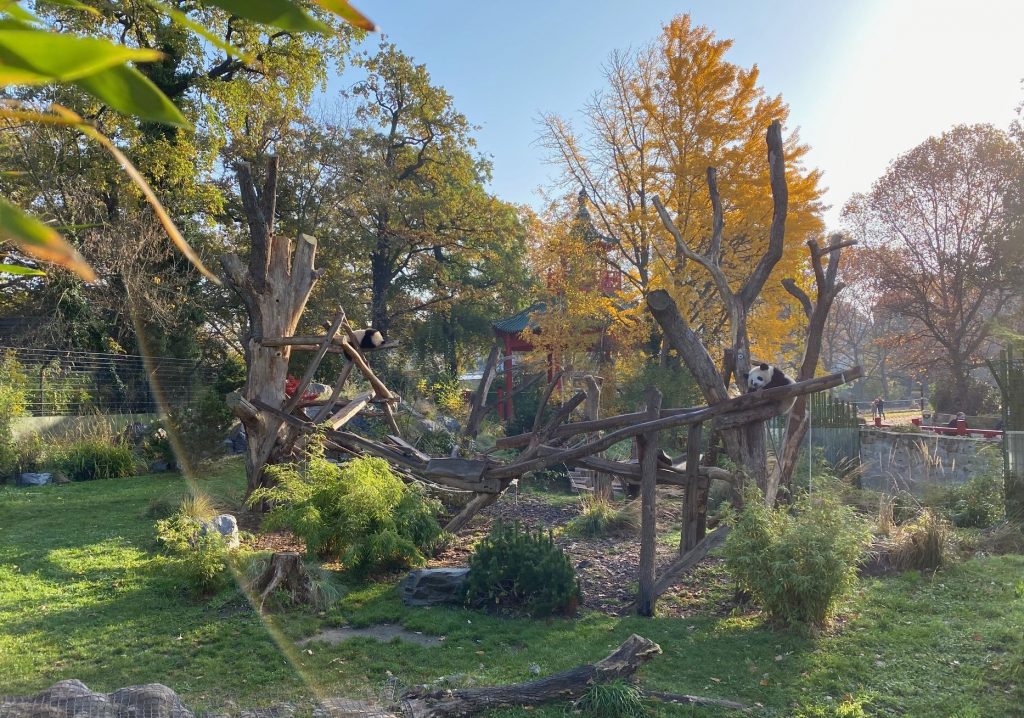
Romanatik2
Zur romantischen Periode gehören die bekannten Lieder von Schumann und Schubert. Meine Auswahl dazu liebäugelt besonders mit den Liedern zum Lindenbaum. Die Linde mit ihrem süßlichen Duft an warmen Tagen hat Malende der Romantik sowie die Dichtenden und Komponierenden betört. “Am Brunnen vor dem Tore da steht ein Lindenbaum …” kannte vor 50 Jahren jedes Kind. Etwas weniger bekannt sind die fabelhaften Rückert-Lieder von Gustav Mahler: “Ich atmet’ einen linden Duft …”. Für mich steht dabei die Atmosphäre in der Nähe der Linde im Vordergrund. “Unter den Linden” assoziieren viele nur noch mit der Verkehr in der Hauptstadt auf dem Weg zum Brandenburger Tor. Zum Reinhören und Reinversetzen in die Romantik sind die Lieder ein idealer Weg. Der Frühlingsglaube (Schubert Op.20.2) besingt die linden Lüfte und das Aufblühen der Natur. Es keimt die Hoffnung auf, dass sich alles zum Besseren wendet. Doch etwas Skepsis ist schon angebracht. Im Lied “Die abgeblühte Linde“, ebenfalls von Schubert vertont, ist dann das Altern und die Treue thematisiert. Der Zyklus der Natur und Jahreszeiten nimmt scheinbar unaufhaltsam seinen Lauf. “Nur der Gärtner bleibt ihr treu, denn er liebt in ihr den Baum”. Das weise Herz will Gärtnern und erhalten, was so viele Emotionen und Optimismus hervorgebracht hat. Wir müssen die Bäume retten, aus Pflicht die Romantik inklusiv und erlebbar zu erhalten. Dazu können wir mit den Linden ja schon einmal anfangen. 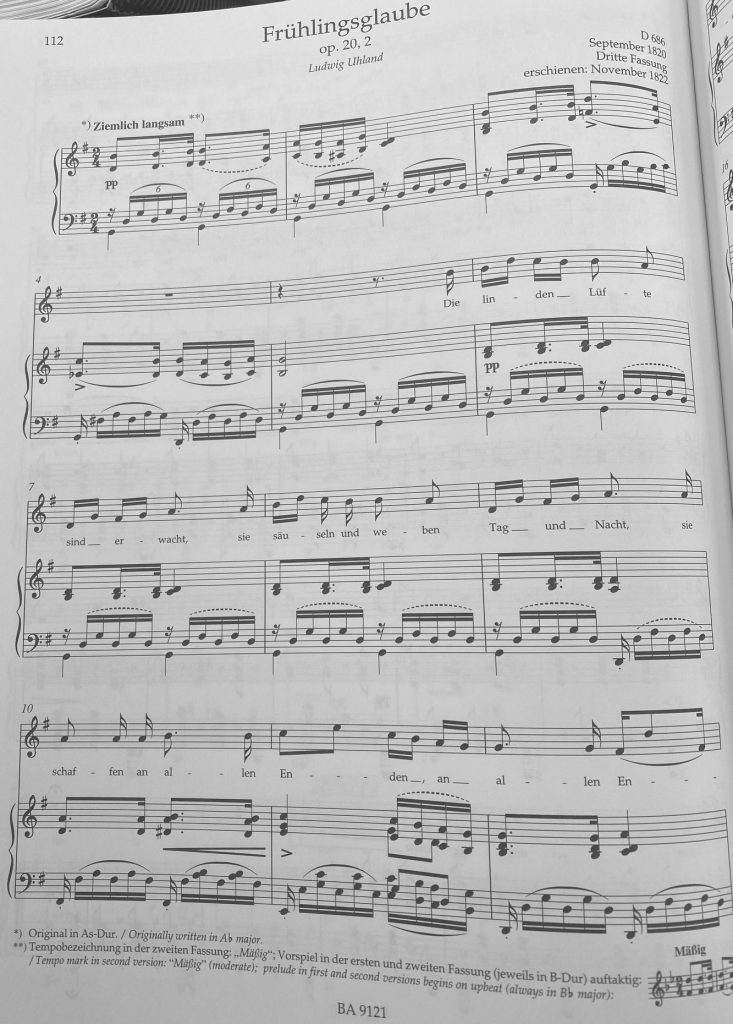
Romantik
Caspar David Friedrich gehört zum kollektiven Gedächtnis als Vertreter der Romantik und das nicht nur in Deutschland (see USA 2025). Seine stimmungsgeladenen Landschaftsgemälde und Zeichnungen sind einprägsam. Auf Rügen lässt sich nach 200 Jahren noch die Stimmung erahnen, die er einfangen wollte. Weiße Kreidefelsen, Königsstuhl und lange Strände können dort noch bewundert werden.
Große Anstrengungen sind nötig und werden bereits unternommen, um dieses Naturspektakel für die zukünftigen Generationen zu erhalten. Die brüchigen Kreidefelsen werden einer Erhöhung des Meeresspiegels und stärkeren Unwettern durch den Klimawandel nur schwer widerstehen können. Unsere kollektiven Schätze der Erinnerungen werden immer öfter mit kollektivem Versagen einhergehen, eventuell auch Denkmäler erhalten zu können.
Wie erklären wir unser kollektives Versagen einmal unseren Kindern und Enkelkindern sowie den zu erwartenden Leidtragenden des raschen Klimawandels? Die überaus erfolgreiche Entertainmentindustrie dröhnt uns schon den Kopf so zu, dass wir Bedenken verdrängen können. Romantik ist eh von gestern und nur was für nostalgisch veranlagte Menschen.
War schön sich einen Caspar-David-Friedrich-Moment gegönnt zu haben im Winterlicht bevor der alljährliche Overtourism wieder zuschlägt.


Link zu Gemälde Überblick bei www.wikiart.com

Photo
Photography has captured our imagination for years already.
It is now a daily activity of many people to “capture their experience”, if not even their existence in some photographed way. Susan Sontag (1977) coined the phrase that photography “feels like knowledge – and, therefore, like power”. You are in a relation to the world. Taking the photograph in my view is the Mephistopheles moment. You are in control of the object taken by the camera. Arranging the scenery, waiting for the perfect moment, expression, light or colours is like mastering a situation, an atmosphere, an emotion. Photographs have the power to work as a document. Editing has become easy and pervasive with digital tools. However, it was always present in the traditional technical parts of shooting and developing subsequently in the dark room.
“to be taken” on a photograph is more like the Faustian moment of realising that you are manipulated, or at risk of being made use of, for some purpose, unknown to you at that moment.
Beware, a photograph is always just an image of an image. The photographer is the intermediate person using a specific technology to transform his perception or vision of (her/his) reality into another image of it, creating some form of virtual reality.
In addition to this twofold transformation, the third transformation is historically the technical development of the negative into the print (see below). Nowadays, this is the compression and editing into a specific format. Despite these transformations, a photograph is admitted in court cases as providing evidence of guilt or to identify an illicit act (excess of speed limit). Infringements on privacy are the rule rather than the exception. Who is that person sitting next to you, and at what time of the day?
I, personally, apply photographs often like note-taking for research to capture spontaneous ideas or associations, which await further interpretation or may serve (served) as inspiration.
Compared to photography, painting has been a more elite artistic practice for many years. Taking photographs has democratised the image-taking art forms. Instead of originals, many of us have collections of photos from museums around the world. We take “photos of photos” to reveal the world around us and reflect on values. The social construction of the world is directly visible through the process of taking, collecting and curating photographs. Construct your own world or the world will construct or deconstruct you instead.
Politicians (e.g. Angela Merkel), John F. Kennedy or historical figures, all had their defining moment condensed into one or several photographs, what have been famous paintings in art history before. Susan Sontag wrote 50 years ago: “… a photograph can be treated as a narrowly selective transparency”. The third transformation of developing and/editing, shown in the images below, explains what we might learn from this citation in a technical sense. Just as courts have to evaluate, whether a proof is admittable and contributing to finding the truth; viewing photographs is a balancing act between art and truth.
“Even when photographers are most concerned with mirroring reality, they are still haunted by tacit imperatives of taste and conscience.” (Sontag, p.6). Photographs document sequences of consumption. We should frame this as CO2 footprints in the 21st century. Restricting print to a few “best of” was and is necessary to reduce the dirty footprint of photography, particularly since photos have become a mass media as much as the preferred media of masses.
With photographs we certify our own certificates, for example in case of job applications or passports. We encounter “cosmopolitans accumulating photograph-trophies” in all instagram-able locations.
Taking photos is like a “friendly imitation of work” (p.9), you do something useful in documenting the images of a world in danger of being lost. We can give importance to otherwise forgotten realities, attach importance even immortality to something or someone of our choice. We make history through it or try to make it at least. “When we are afraid, we shoot. But when we are nostalgic, we take pictures.” (p.9) Sontag defines photographs as part of the repertoire of surrealism (p.77 ff), “to finding beautiful what other people found ugly or without interest and relevance …”). We are at risk to mistake photographs as reality and experience the original as “letdown” (p.147). The return to polaroid instant photography brings us back to a proclaimed authenticity of the orginal, unique moments, with supposed unfiltered not-edited images. The true moment of having had fun or joint experience without use of photoshop to add the missing member.
“I take photos, therefore I am”, has become the mantra of modern societies. We tend to ignore that we are taken on photos a million more times than we take some ourselves (video surveillance). It is a question of power in the end. Edit yourself or you become edited.
(Image: Prix du Tirage photographique BnF 2022 Laurent Lafolie, photo below). 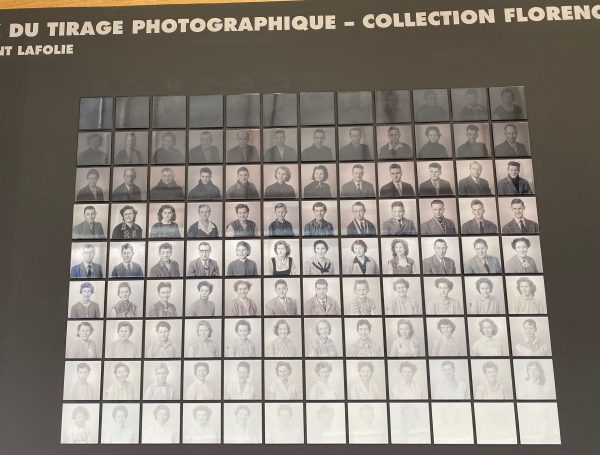
Flotow Analyse
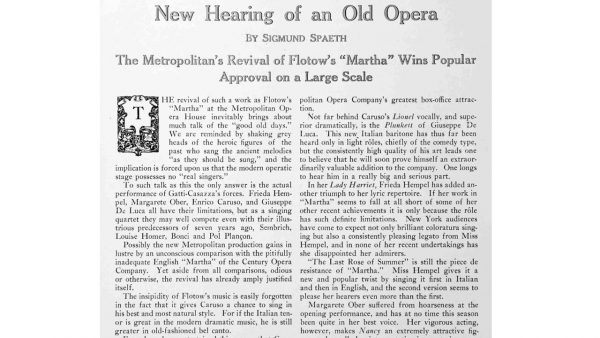
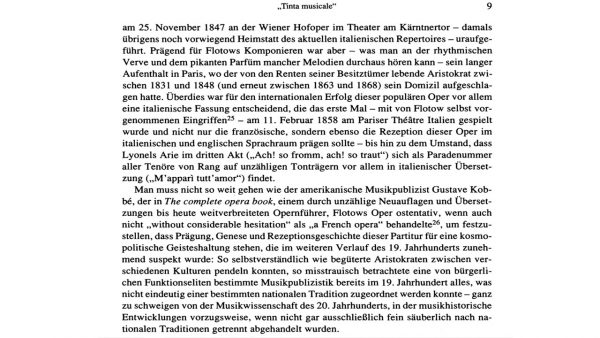
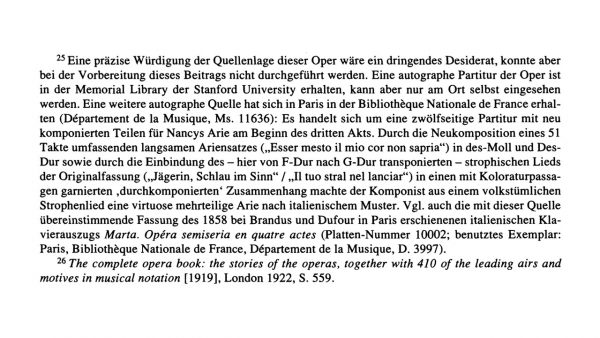
Interessant ist der Aufsatz über Flotows’ Martha, der vor einigen Jahren in einer musikwissenschaftlichen Zeitschrift erschienen ist. Anselm Gerhard ordnet die Oper unter Berücksichtigung des Werdegangs des Aristokraten Flotow dem französischen Stil der Oper zu. Das Schicksal des von Flotow war es wohl, mit seiner aristokratischen Herkunft aus Preußen, Deutschland, ein Uraufführung in Österreich, dann mit Bel Canto assoziert überwiegend auf italienisch aufgeführt zu werden (Metropolitan Opera 1914? mit Caruso), aber ein französisches Opernschema basierend auf einer irischen Volksmusik mit einer Story in England zu verbinden. Kosmopolitisch nennen wir das im 21.-ten Jahrhundert, nicht oder schwer nationalistisch verwertbar im 19. und 20.-ten Jahrhundert. Für die Handschriften ist es wohl am besten, gleich in die Bibliothèque nationale de France (BnF) zu fahren. Im Saal Richelieu ist das dazu passende kunstgeschichtliche Ambiente noch nachvollziehbar. Quelle:
Gerhard, A. (2004). „Tinta musicale“ Flotows „Martha“ und die Frage nach Möglichkeiten und Grenzen Musikalischer Analyse in Opern des 19. Jahrhunderts. Archiv für Musikwissenschaft, 61(1), 1–18.