Valuable Donations

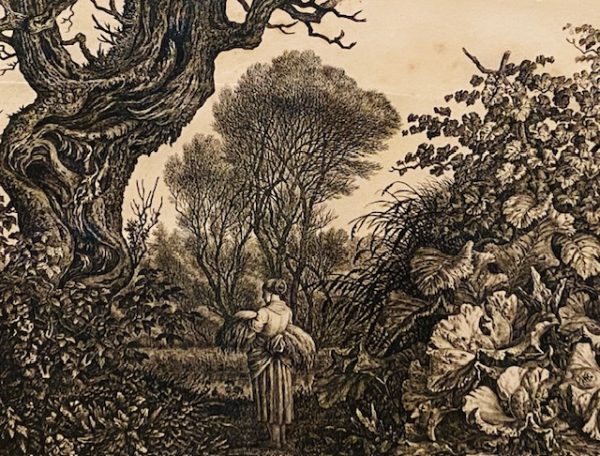
The of a donation to a national gallery is often a curse but may reveal only much later as a blessing. More galleries across the world give due credit to their generous donors. The collection of impressionist paintings by Caillebotte figures today very promising in the Musée d’Orsay in Paris. The fine collection by Chistoph Müller endowed to today‘s “Kupferstichkabinett” exposed in the Gemäldegalerie in Berlin has been on display in a small room. The „Kräuterblätter” (herbes on paper) by Kolbe 1815/1824 are fine pieces of etching with a focus on what might get lost in our biodiversity in coming years. Old trees were surely on his list (Oak trees 500+ years old). A collection of depictions of herbs and flowers a part of an ecological treasure which the generations after the painter and eventually the collector Christoph Müller began to value a lot. Some collectors are far ahead of their time by treasuring the past. (Image: Extract of „Kräuterblatt mit Schnitterin“ Kolbe 1815/24 Donation Christoph Müller shown in Gemäldegalerie Berlin 2026-5)
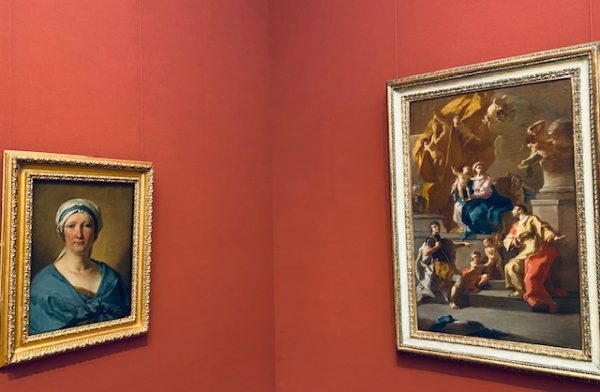
Portrait of or about

In some galleries or for curators of an exhibition, the crucial question is not only the overall message, but the best positioning of artworks in the available space. In many national galleries what hangs next to another piece is rarely seen as an opportunity for exploration and experimentation. A recent visit to the “Gemäldegalerie“ in Berlin allowed to explore the vicinity of 2 paintings, which are very different in appearance. The one (by Pierre Subleyras 1740) is just entitled “Portrait of a woman”, the other one next to it, “Virgin and Child Enthroned, with Angels and Two Saints, Domenico Mondo 1773). The former portrait has almost a modern touch to it as the beauty consists in the simplicity of the person depicted, whereas the latter painting portrays a rather empty message of splendor and power. The conscious confrontation of portraits or paintings with each other is the high art of curatorship. It is even more pointed than a guided tour of a gallery as the simultaneous rather than the sequential confrontation is the issue. 

Woman artist scandal

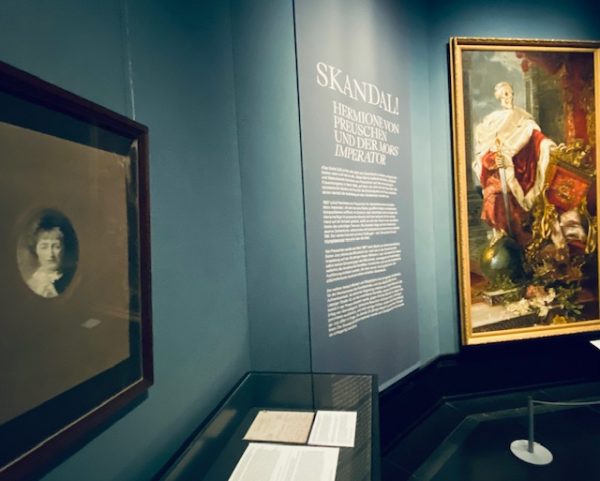
The painter Hermine Schmidt-von Preuschen, little known today, had to face strong forces in the established art community of her time. The skills and audacity she displayed at an early stage of her career as painter is epitomized in her work “Imperator Mors”. This painting dates back to 1887 and was rejected by the art academy in Berlin for their official exhibition. The woman artist was already at that time confident enough that her painting was of sufficient quality to deserve to be not only considered in the exhibition, but also to be seen by larger audiences. Similar to the refused painters of the impressionist movement, she decided to mount her own exhibition. The turnout to this proved to be quite a success according to the press cuttings presented as part of the exhibition in Berlin at the “Alte Nationalgalerie” 2026-5. Maybe it was the intended philosophical topic or message that killed the chances to be part of the art academy exhibition. “Imperator Mors” shows death or a skeleton to be the ultimate ruler of our fate. For all those who believe in some sort of life after death, this can be viewed as a “Scandal” in itself. The scandal created with such a depiction probably overshadowed the fact that the provocation came from a woman artist. Still very avantgarde for the end of the 19th century. (Image: Hermine Schmidt-von Preuschen and her painting Imperator Mors 1887)

Brancusi polyartist

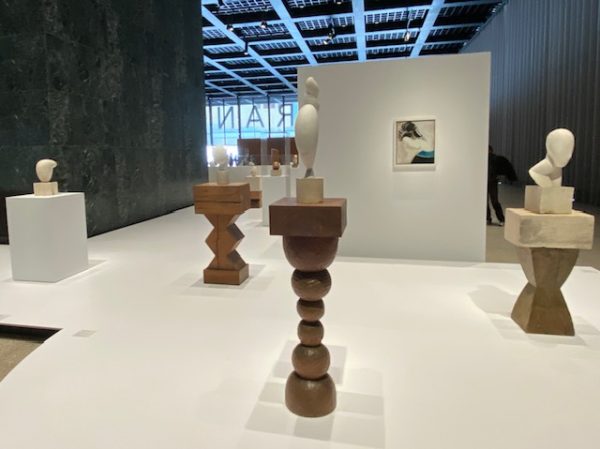
The joint exhibition by the “Neue Nationalgalerie” Berlin and the “Centre Pompidou” Paris has the simple title “Brancusi”. The name of the artist Brancusi stands for a very singular approach to take sculpture into the 20th century by way of abstraction. Brancusi used all sorts of materials like lime stone, bronze, wood and marble. Additionally, he was very conscious of the fact that especially for sculptures the “mise en scène” plays a vital role. Brancusi excelled in this in a rather unique way, mostly by confronting different materials with each other. Sculptures, for him, were architecture in miniature. Such a polyartist approach to sculpture pushed him to use photography and video to not only promote his own work, but to exploit these relatively new techniques to enhance the effect of his sculptures.
Maybe it took almost 100 years that by means of the “not-so-social media” not-instant, anytube and tikytok, this “modus operandi” would capture a whole generation of youth to follow in his footsteps without knowing it. The polyartist Brancusi is a unique milestone, not only using lime stone, on the trajectory of sculpture beyond the early 20th century. The links to other innovative artists chosing abstraction, Picasso or Modigliani, as well as musicians like Eric Satie, reflect the importance of social networks for mutual encouragement when treading new paths in art.

Beeple Deeple People

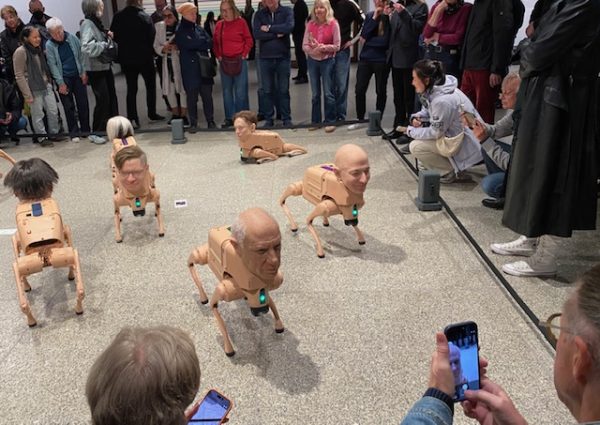
The “Neue Nationalgalerie” in Berlin hosts in 2026-5 the work by “Beeple” artist Mike Winkelmann together with the “Andy Warhol Robot K-456” by Nam June Paik. The re-interpretations of robots and the imagined effects this new media has or shall have on our lives, this is the subject of a critical projection and the artist’s chosen form for a projection into the future.
In 1994 the “Andy Warhol Robot K-456” prefigures the pervasive decoration of the human body with screens as a futuristic way of communication with others. The communication practices in 2026 have changed with software and applications like DeepL, which allow real time translations of speech to our neighbors or distant cultures.
The installation “Regular Animals” brings to our attention the power of images in our daily communication. Warhol built his art around the topic of pop culture with the visual heroes of, for example, Elvis Presley and Marilyn Monroe as the best known pop images or icons of his time. In Beeple’s work, the dog robots’ conversation is only via instant images. These images are AI-edited and distributed rapidly at random across space, the floor in a well-delimited space. Space does no longer matter as distance as it is passed instantly. Perception and reception are transformed into a power-play via images and distribution channels. We are all transformed into “Beeple Deeple People” without noticing it, aren’t we?. About time that social science or sociology of the visual recons with these not so new facts of communication in the 2020s.

Mem-flation

A recent addition to the repertoire of inflationary pressures is inflation due to real or supposed shortages of computer memory and microchips. Contrary to other forms of inflation which are induced by supply shortages (like fossil fuels) mem-flation is due to heavy actual and even more proposed investments in data centers, server farms, cloud storage and AI-driven computing capacities. Quantities and quality of microprocessors, which are essential parts in all these devices, might not be able to follow this demand-driven inflationary tendency. The hype around AI, therefore, is a major element in this likely overshooting market reaction. The current market trend is likely to last for another year as the already announced investments of the big data companies have been announced including 2027. The producers of NVIDIA, Samsung, TSMC, SK Hynix, Micron, ST Microelectronics, Infineon, Intel and AMD have realized huge profits from this demand-driven mem-flation.

Psych-inflation

The economic narrative and measurement of inflation is incomplete without the proper account of the psychology of the price building process and mechanisms. After the 2 previous oil-crises of 1973 and 1979, the panic about not having enough oil and derivatives within the coming months, has lead to prices increases almost instantly. Despite the fact that there is enough oil floating on ships and in pipelines for 3-6 months, depending on estimates, the psychological effect of being eventually short of oil creates “Psych-inflation”. Oil markets use the “Angst of disruption” to make additional profits on people and enterprises’ hoarding behavior. There are powerful interests to exploit such potential shortages as it is a suitable time to reap some extra profits, particularly for those who knew early about a likely military conflict.

Diamonds are forever

Due to the highly condensed carbon structure of diamonds, the use of diamonds has gone beyond the decorative stage. The difference between naturally grown or developed diamonds and the lab-produced diamonds has puzzled the market of the precious miniature materials. The paper by Zhang et al. 2026 has demonstrated that at the tiny size of a nano-structure the typically found hard structure of a diamond brakes down. The size-dependent softening of the diamond at the nano-size is a puzzle, but has been resolved with the explanation that on the surface the atoms remain rather stiff, only the inner structure of the cristalline core does “wobble”. Hence, diamonds are still almost forever, unless you crush them with far too much weight or power.

Light Locomotion

There are many politicians who have an innate tendency to move in the direction of any flash light or camera. Tenagers in the age of the “not-so-social media” have a similar reflex. More seriously, Science Advances, has presented a fully autonomous robot with such a behavior. In fact this form of light locomotion is named the “twirlbot”. It has been developed by Chi Chen et al. (2026) as a new kind of robot that can be directed using light impulses, as only energy source for moving towards the light source. The from of locomotion is inspired by nature (bionics) and more precisely the “tumbleweed” way of moving, better rolling forward, driven by wind energy. The tumbleweed-inspired rolling robot, short “twirlbot”, does not need mechanical devices, just energy in a specific frequency range of light, which provides the heat for the photoactive, otherwise passive, bilayer strips. The polyhedral geometry of the twirlbot allows omni-directional locomotion. It really resembles the light active politician or any posing in the spotlight while doing the “loco-motion” (Video Link performance by “Little Eva” in the early 60s or a late 80s version by Kylie Minogue).

Random randomness

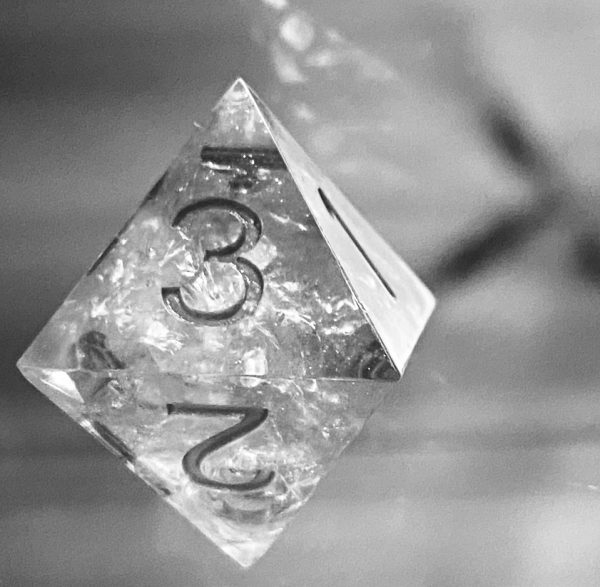
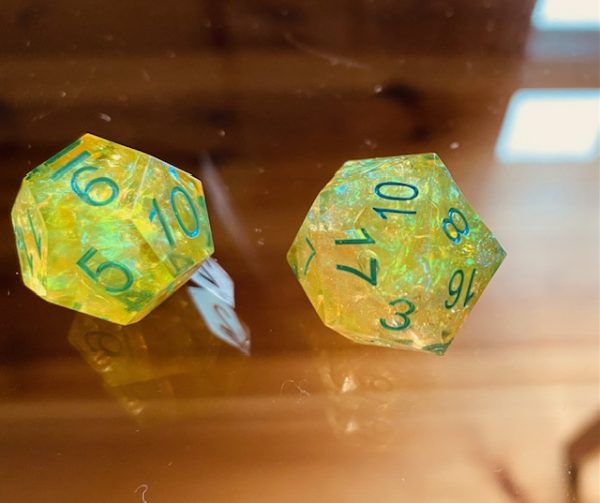
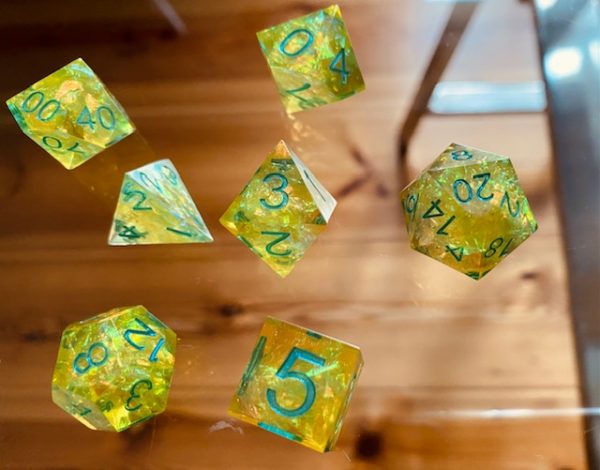
In textbooks or courses of statistics, just as ordinary experiences with throwing a dice, we assume the perfect dice. This means the dice is assumed to have equal probabilities to roll on each side. Further, each throw of the dice of a sequence has an independent equal chance for each number to come up. To determine a “fair” dice we would throw the dice a thousand times to check, whether the probability of each side is about equal. However, the world of dices is not perfect and temporary or persistent margins of deviation are part of the real world. The weekly lotteries demonstrate this over and over again. Playing around with different shapes of dices makes the issue of probability tangible. Well worth to explore further empirically as well as a topic for inspiration of new approaches to learning about statistics. (Image: Dices produced by “devinsdice” Berlin 2026-5-5)