We all have, hopefully, fond memories of children books. Sometimes authors are not so keen to tell that they are just writing books for children. This is often present in many biographies of authors of books for children. This is grossly unfair. Not only is the book market for children’s books one of the best- selling part of literature, but there are lots of interesting collaborations between authors and illustrators. Most books are expensive to produce, particularly if, additionally, translations are needed to reach more children and their parents. For small countries this might be a barrier. The Scandinavian countries have a tradition to translate and publish some selected children’s books in multiple Scandinavian languages and beyond. Therefore, it is no surprise to find a children’s book entitled “Kant” by Norwegian author Jon Fosse, illustrator Roj Friberg with the text translated into Swedish and published by the Danish Editor Carlsen, all in 1990.
The illustrations allow to understand the “bilderbok med text av Jon Fosse” using an enlightening imaginative visual language. From the cover already It is clear we deal with the universe and endless open space. There are black holes in it as well. Jon Fosse deals with “möjliga och omöjliga”, possibilities and impossibilities. Tackling such philosophical questions with children needs the best authors to address these issues. How to speak of the unspeakable, things we have hardly any words for remains a challenge. Relating to the world of dreams, appealing to children and their parents, does the trick. After all, you just need to close your eyes and you start to travel the universe and make lots of exciting encounters. The book has no page numbers, interesting. The image below is from page 25, just as an appetizer.
For more insights of how to deal with “nothingness” I refer to Friedrich C. Heller (2020) “Towards nothingness. Ideen der Reduktion in zeitgenössischen Bilderbüchern” (in Benner et al. editors 2020). Susan Sontag (2005) „die Ästhetik der Stille” (in Eugen Blume 2005, editor) will also help us along on the subject of stillness and minimalism. Maybe it is these essentials we should talk more about especially with our kids.
To continue the exploration of space and stillness just go to the webpage of the hubble telescope or the James Webb Space Telescope. The journey of your dreams will be hard to stop. 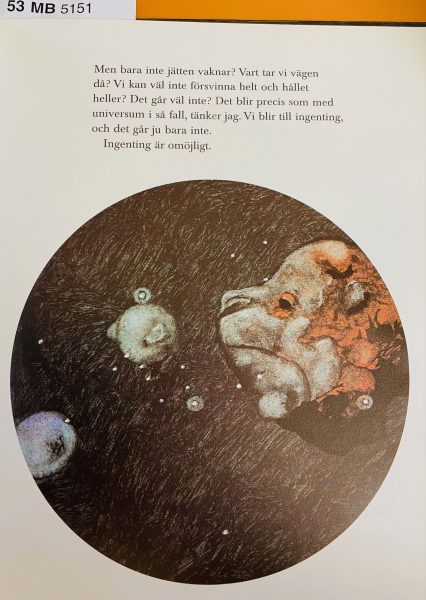
Georgia
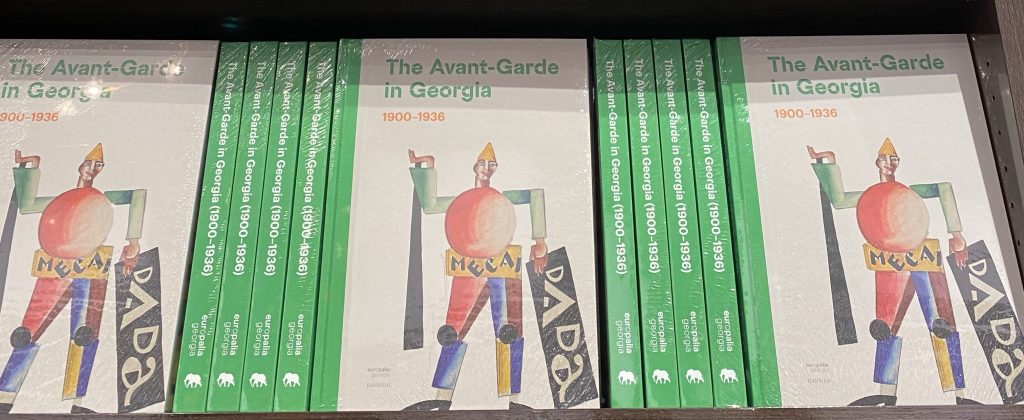
The Republic of Georgia is honored with a wide ranging program in Brussels in the series of countries presented as part of the”Europalia” events and exhibitions. The exhibition at Bozar in the center of Brussels has a focus on the years between 1900-1936. It is astonishing to look at the creative examples of adaptations from western modern art with cubism and expressionist resemblance. Many artists had travelled to western parts of Europe or trained at well-known art schools there. Own adaptations to paintings, theatre and cinema yielded a unique style of Georgian modernism before Stalinism put an end to independent artists and their creative work.
During the short spells of political independence Georgia managed to re-establish each time a remarkable will to its own culture. Unity with artistic pluralism is a core value of the European unity and union as well. We are many and happy to have a chance with Georgian people to celebrate their artistic past and future.
Taxing Europe
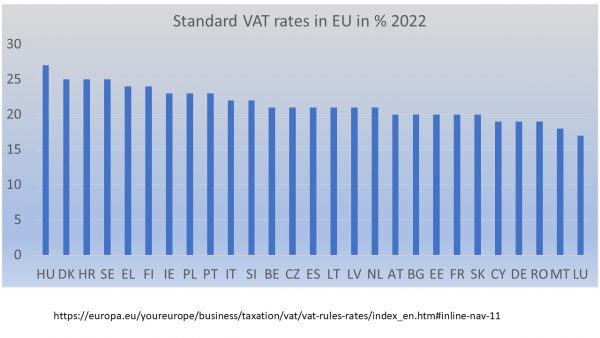
From time to time it is helpful to compare basic tax rates, for example value added tax, across the EU to understand the different economic and social policy approaches. The range of VAT from Hungary 27% to Luxembourg 17% is astonishing and it does not really feel like we are together in a common market. Okay, the illiberal, authoritarian state of Hungary is taxing the most, a clear message to visitors from another European country that this authoritarian state is relying on tax on consumption of its own people and visitors to foot the bill of state expenditure.
It is also interesting to realise that some countries with lower VAT rates have disproportionate public debates about supposed tax burdens. Tax levels are a political choice and much depends on redistributive appropriate use of tax receipts to the benefit of all or specifically those most in need. The potential for redistribution to parents, children, pensions, the poor or green investments also relies to some extent on the overall budget. The most surprising thing is the absence of a debate about tax rates, the size of the tax base and the ample exemptions or reduced rates. Of course, most of us complain about income taxes, but we all agree that it is nice to see that someone is taking care of the abundant autumn leaves or lighting of streets in the darker seasons. Even Adam Smith wrote in favour of the “night-watch state” that assures sufficient security levels. Taxing Europe to ensure that this role of the state can be taken seriously is still a common denominator across Europe.
Image: own presentation based on EU-data from 2022 LINK.
Nations Fail
Ever since Adam Smith wrote on the “Wealth of Nations” the topic concerns social scientists. The discourse around the wealth of nations has become even more fundamental these days. Beyond wealth calculated in economic terms we are convinced to add well-being of the population as well as the state of the environment into the accounting procedures like national accounts. But wait a second. Similar to the term wealth we have to widen our perspective in what is considered to be a nation. Shifting borders through wars (Russia aggression on Ukraine) or separatist tendencies of regions, (re-)unification of Germany or Korea (eventually) show that the nation is a concept in flux. Considering migrants from former colonies still as having residential rights in the colonising country shows, there is more to nations than a one size fits all nation concept.
Daron Acemoglu and James A. Robinson had published the book on “Why nations fail. The origins of power, prosperity and poverty” already in 2012. On the 3rd of October Germany celebrates its re-unification only because the Russian dominated German Democratic Republic (and the other Eastern European satellite states under Russian control) can be considered as a failed state. These Russian dominated states crushed private initiatives and build corrupt systems where party allegiance and hierarchical structures were overemphasised. Following Acemoglu and Robinson (chapter 10) the lack of diffusion of prosperity is likely to be the root cause. Even similar to the French revolution, which brought about tough measures of redistribution, the external threats to the post-revolution France demanded subscription of masses into armies to defend the young republic against aristocratic rulers in the surroundings. If monarchy in France is a failed state, the post-revolution France survives due to high identification with the republican idea. The Soviet dominated Ukraine is a failed state, but the Ukraine of today resists due to its willingness to defend its own republican ideals. To get virtuous circles of development started, inclusiveness across the board is necessary. Leave nobody behind, seems to be a shortcut summary. It is much easier said than done. Loosing younger generations in the sense that they no longer subscribe or feel part of an inclusive wealth of the nation is a highly dangerous path. Failed states have a history in failed inclusive social and economic practices. Democracies are at risks just as much as authoritarian nations. However, democracies have better institutional settings to address the lack of inclusion and in multiple ways.
When I celebrate the 3rd of October in the Federal Republic of Germany I celebrate (1) the accomplished failure of the GDR, its undemocratically elected elites, corrupt institutions and the failure of the thousands of willing collaborators of the Russia-backed regime; (2) the peaceful resistance movement, (3) the relatively short-lived humanitarian focus of the Russian leadership at the time to not send in the tanks and (4) the willingness of the FRG to support 20 million new citizens for many years to come (5) the allies of the FRG to accept the potential security threat of a strengthened Federal Republic of Germany, which might entail a shift in the balance of power in Europe.
And yet, even in 2023 we pose questions on what is the concept of failure, when authoritarian regime can still survive for sooo long and some still accomplish extensions. We keep questioning the sense of the term “nation” in modern times and across the globe. Too many wars are still fought in the name of a “nation” even if only a handful of military-supported leaders and single autocrats try to impose wars in the name of some rather vague or plainly mistaken claim of nationhood.
On the 3rd of October we celebrate that “nations can fail” opening a path into a more prosperous and inclusive society. Some nations fail, just because they were no nation in the first place. The GDR was such an artefact of international compromise as part of the overall “balance of power” and the Cold War. The result of this process gives so much hope to other divided nations (Korea) or nations under authoritarian oppressive rule. 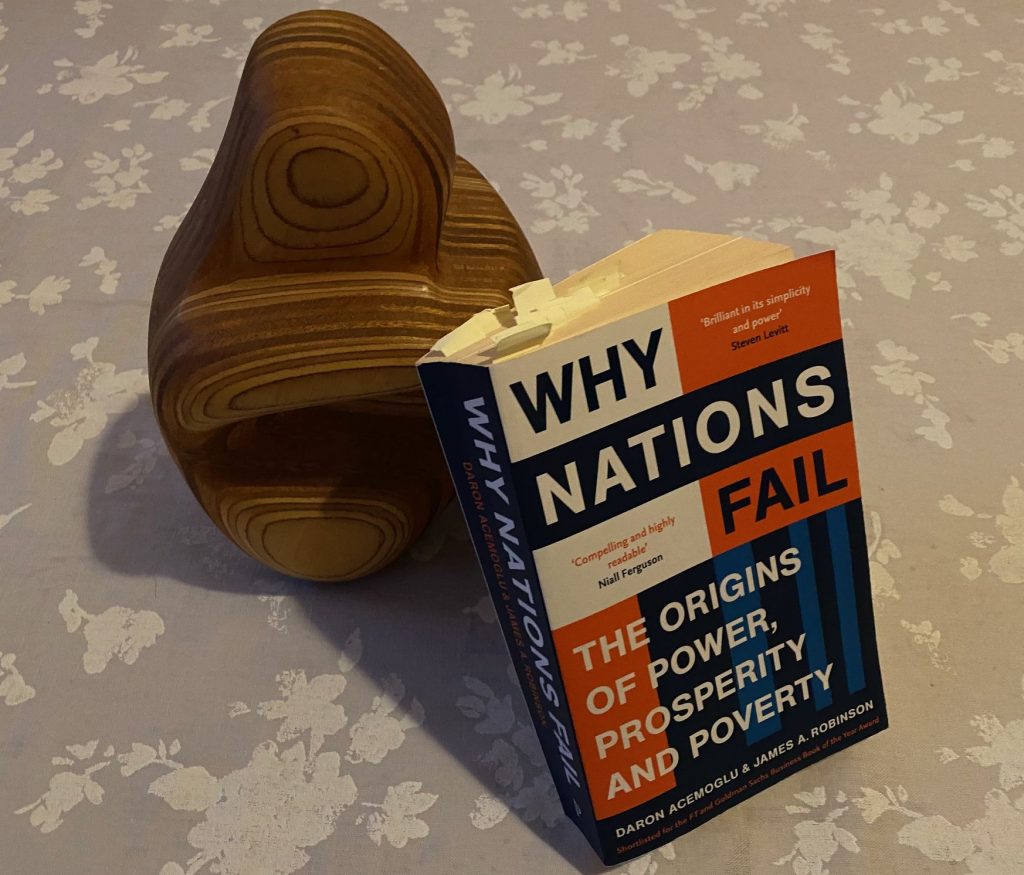
Corrupt-2
New scientific evidence on corruption and stereotypes about corruption reveals surprising behavioural responses. Social psychologist classified corruption as a behavioural trait of a person. The new evidence of a study that includes country-specific stereotypes into a corruption experiment shows there are always two sides to consider: the corrupted as well as the corrupting person. Both hold stereotypes about the likelihood another person (from a specific country background) is likely to accept a bribe.
Using a widely accepted index from Transparency International on corruption in countries the experiment uses real payouts to test the probability that a person from country X is trying to bribe a person from country Y. Rather than a personal trait, the study finds that many persons become “conditionally corrupt”. This describes the behaviour to offer a bribe to a person occurs more often if you believe the probability that the person accepts corruption is high. Dorrough, Köbis et al. (Link publication) is cited in “nautilus” explaining this by, quote, “when in Rome, do as the Romans do”. Additionally, the stereotypes on corruption prevalence leads people to act more on what they believe is common practice rather than what is the basic legal or ethical standard.
From behavioural ethics we know the urge of people to find justifications for their unethical behaviour to themselves or to others. This is called “justified ethicality”.
Following this rationale, it will be easier to accept a bribe, if the person originates from a high reputation of corruption. In order to correct for such bias due to stereotypes it is important to pursue corruption vigorously and, just as important, communicate a lot about this behavioural change so that stereotypes begin to change in the mindsets of other persons as well. There are many ways to Rome and some turn out to be quite long. 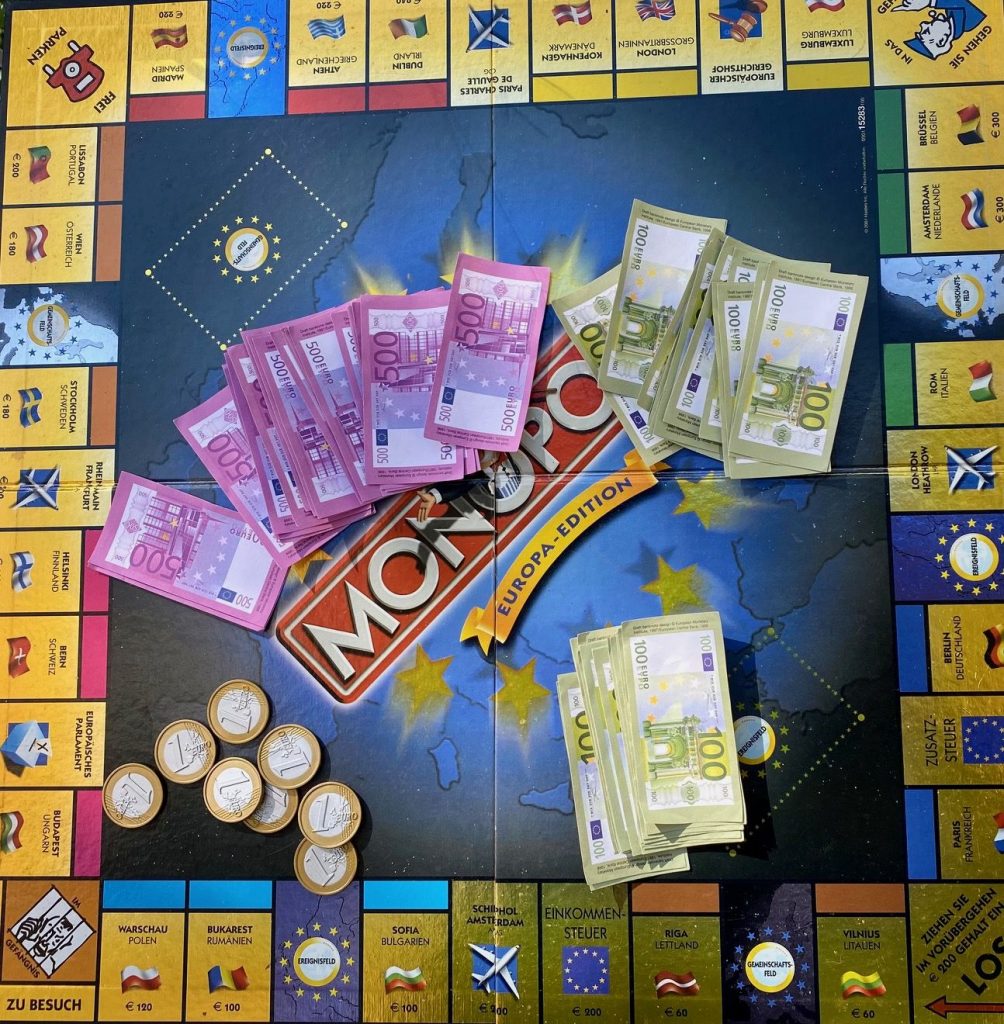
Calendar Time
We all use calendars to organize our time almost unconsciously. This is helpful to organize and synchronize our time together. Working time, family and individual time tend to use the same time structure to facilitate community. Work arrangements depend a lot on a common method to structure time. The work-life balance hinges a lot on synchronization of calendars and joint time slots. Towards the end of the annual vacation period in Europe the annualized change of calendars is still common practice despite most people going digital. Annual overviews allow to allocate and potentially synchronize calendars for major events or periods (next break, period devoted to learning, family planning etc.). A cleavage that differentiated Europe in the analogous times was that some countries like Germany use(d) chronological calendars running from 1st of January until 31st of December and counting calendar weeks (1-52). Many other countries have long ago moved on to “functionalist” calendars running based on the school year from 1st of September to 31st of August each year. Different planning horizons appear to be the obvious outcome. Whereas the former might focus on the planning of the end of the calendar year 2023, the latter functionalist calendars begin to structure the new year-long period 2023-24 including the next summer break towards the end of the next schooling year.
In France you start end of August 2023 to plan ahead until end of August 2024. This comprises the Olympic games in Paris 2024. Don’t worry, most tickets are sold out already and attributed through lotteries. When people in Germany start to buy calendars for 2024 and organize a printed calendar, this occurs traditionally around Christmas time and New Year’s celebrations.
Specific professions follow their own calendar time. Academic years or accounting years may well differ from the other annualised organisation of time through calendars. Of course, religions have established their own calendars just as migrating birds or French revolutionaries in the 18th century. Meteorological calendars or sensor-based structuring of annual sequences of seasons like in trees, plants or insects add to the impression of the existence of multiple clocks. 
A de-synchronisation of these multiple calendars increases the need to coordinate societies within or society and the economy, religion or ecology. I liked my printed calendars over the years. Now I shall print different versions for different countries and functions. I still wonder, if my life got easier or more complex. Probably, it has only become easier to organise complexity and diversity. Clock 6 video
Stilfindung
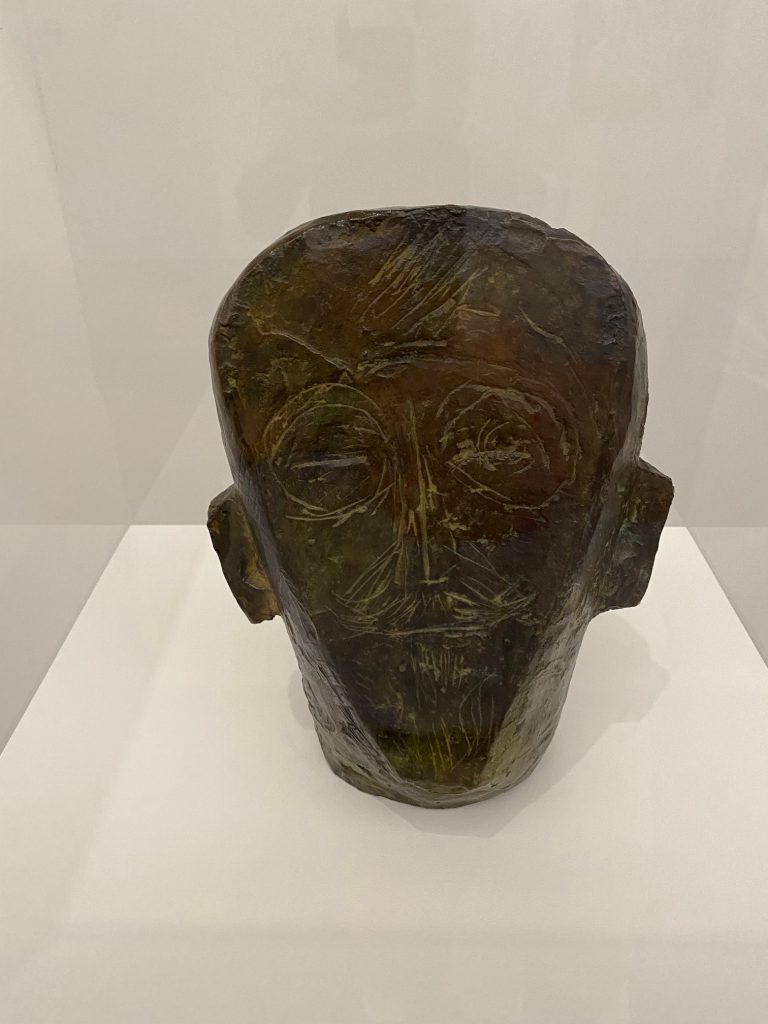
Kunstschaffende brauchen Jahre, oft auch Jahrzehnte, um ihren eigenen Stil zu finden. Das ist durchaus ein schwieriges Unterfangen. Frühes Ausprobieren verschiedener Kunstrichtungen ist dabei so etwas wie ein Experimentieren mit unterschiedlichen Werkzeugen. Da hilft es enorm, wenn schon einmal ein reichlich bestückter Werkzeugkasten im Elternhaus vorhanden ist. Das war in der Künstlerfamilie der Giacomettis der Fall. Der kleine Alberto hat mit Vater Giovannis Tinten, Federn, Ölfarben und Pinseln früh angefangen, sich auszuprobieren. Eltern, der kleine Bruder, Landschaften, Posen vieler Verwandten und Bekannten sowie jegliche Gegenstände wurden zu Objekten des Skizzierens für den Jugendlichen. Schule war nicht wirklich interessant, selbst die École des beaux arts in Paris erweiterte zwar sein Repertoire an Techniken und Sichtweisen, aber auf dem Weg der Selbstfindung scheint es nur eine Passage gewesen zu sein. Auf dem Weg der Abstraktion hat Paris allerdings die Kreativität stimuliert. Seine Skulpturen von Köpfen der Familie haben sich verallgemeinert, hin zum Universellen. Weit über seine Heimat hinaus sagen die Skulpturen des späteren Albertos uns etwas über Menschheit und Menschheitsgeschichte. Den Weg zu verstehen, den der „L‘homme qui marche“ bis zu seiner Verwirklichung beschritten hat, ist in der Ausstellung im Bündner Kunsthaus nachvollziehbar. Vielleicht mehr ein Lehrstück in Pädagogik und Kunstpädagogik, als in grandiosen Werken der Giacomettis. Welch ein Glück, dass sich Alberto von den Stilrichtungen anderer abgesetzt hat und einfach sein eigenes Ding gemacht hat. Beruf und Berufung können nahe beieinander liegen. Das ist die gute pädagogische Message.
Diplomatin
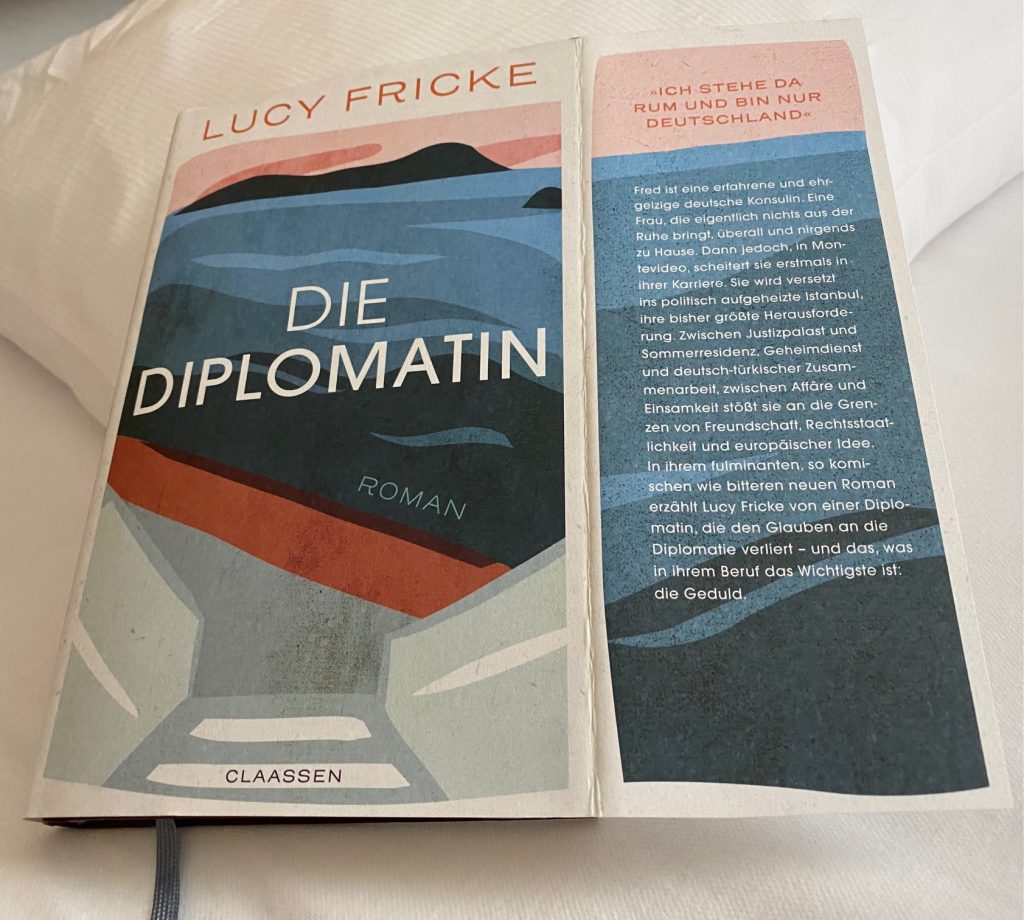
Der Roman von Lucy Fricke über Diplomatie und Diplomaten ergänzt in recht unterhaltsamer Weise die eher trockene und abstrakte Literatur zur internationalen Politik. Gute Bettlektüre für den politisch interessierten Menschen, der gerade im Urlaub ist. Diplomatie schläft nicht und macht wenig Urlaub. Urlauber dagegen machen den Diplomaten oft ganz schön zu schaffen. Die geduldigen Mittel und Wege der Diplomatie sind nun wirklich nicht jeder Frau oder Manns Sache. Wenn sich Emotionen einmischen wird die diplomatische Herausforderung zu einem nahezu unauflöslichen Konflikt. Diskretion und Verschwiegenheit sind elementar in diesem Beruf. Geduldsproben an der Tagesordnung, ständig und bei allen Dienstgeschäften. Ein nachvollziehbarer Einstieg in diese Berufswelt in Form eines Romans sollte Pflichtlektüre für alle sein, die sich diesem Berufsfeld oder der Aufgabe annehmen wollen. Gut, dass es eine Diplomatin beschreibt. Das gibt eine erfrischende neue Perspektive. Vielleicht auch Anregung über eine feministische Aussenpolitik nachzudenken.
Wenig beleuchtet werden die politischen Umstände, die nur als Staffagen für die Erzählungen herhalten müssen. Taksim Platz samt Wasserwerfer interessiert wohl nur am Rande. Das ist schade, weil es verpasste Gelegenheiten sind, Menschenrechtsverletzungen zumindest kurz anzusprechen. So kratzt die Erzählung nur an der Oberfläche von Personen und dem wirklichen Geschäft der Diplomatie. Aktion in den Vordergrund zustellen ist gut für die Story und Verfilmungen, aber der Kern der Diplomatie muss anders aussehen. Etwas Heimaturlaub konfrontiert die Diplomatin dann erneut mit der weitreichenden Gleichgültigkeit gegenüber der diplomatischen Arbeit. Leben organisieren und Aufräumen bleiben auch im Privatleben der Diplomatin eine Herausforderung der Work-life balance.
Geologie
Mehr GeologInnen braucht das Land. In der Schweiz beunruhigen derzeit zunehmende geologische Risiken. Der Klimawandel lässt Permafrost in den Höhen schmelzen, der jahrhundertelang Gestein zusammenhielt Gleichzeitig sinkt die Schweiz, nicht die Aktienkurse, selbst die Credit Suisse ist bereits untergegangen, aber rein geologisch, nüchtern betrachtet (NZZ, 2023 „Die Schweiz sinkt“). Das verlangt nun doch einige gründliche wissenschaftliche Untersuchungen. GeologInnen messen bereits mit unzähligen Messstationen die Bewegungen der Erdkrusten. In der Schweiz lässt sich sicherlich mit dem zunehmenden Abschmelzen der Gletscher und der Veränderung der (mehr) Regenfälle statt Schneefälle in den frühen Wintermonaten eine neue Gefahrensituation aufzeigen, nicht nur für den Tourismus. Die üblichen Reflexe: mehr Investieren in Schutz und neue Versicherungen wird alleine nicht mehr helfen. Biodiversität auf den unteren Skipisten ist eh Fehlanzeige, aber die Baumgrenze steigt. Das könnte genutzt werden, statt die vielfach kranken Fichten, die wegen ihrer kurzen Wurzeln kaum ein Gewitter überstehen (Ruinaulta vom 4.8.2023 S.6 und S.16-18). Diese Gewitter werden durch den Klimawandel wahrscheinlich häufiger werden. Noch mehr Versicherungen werden die Welt nicht retten können. Wir werden umdenken müssen auch wenn Verhaltensänderungen sehr schwerfallen.
Das Abbrechen von Bergspitzen, wie am Kantersteg (BE) oder der Bergsturz am Piz Cengalo 2017 in Graubünden, ereignen sich dann eher in den wärmeren Sommertagen. Die GeologInnen werden viele Arbeitsstellen haben (nicht nur im Geopark Sardona UNESCO Welterbe) und gehören zu den Berufen mit höherer Nachfrage durch den Klimawandel. 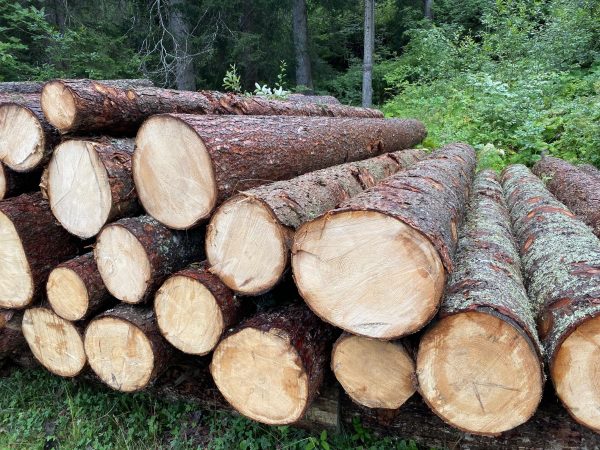
Checks and balances
The principle of checks and balances refers back to the separation of powers introduced by the French political theorist Montesquieu in his writings “De l’esprit des loix” in 1748. 40 years later in 1788 James Madison wrote as §51 in “The Federalists Papers” explicitly about the system of checks and balances as part of the constitution of the USA. For maintaining the principle of separation of powers it is necessary to install a system of checks and balances between the powers to prevent one power dominating the others. These well-known principles of democracy face, nevertheless, continuous challenges as to the balance of the powers (legislative, executive, judiciary). In order to safeguard democracy a basic scepticism towards the exercise of power is warranted. “In framing a government which is to be administered by men over men, the great difficulty lies in this: you must first enable the government to control the governed; and in the next place oblige it to control itself. A dependence on the people is, no doubt, the primary control on the government; but experience has taught mankind the necessity of auxiliary precautions.” (Federalist Papers, 1788, p. 239).
The necessity of auxiliary precautions has led modern democracies to a multiplicity additional checks and balances. Independent Anti-fraud offices, disciplinary committees within the separate powers as well as the checks and balances between the separate powers play a role in the survival of democracy. Recently, in July 2023 services like the internal service of the police to overlook the adequate execution of the force applied by police have been much in the headlines. Checks and balances apply to each branch of separate powers internally, and if they prove inadequate, they have to be corrected by other powers. This is the procedural as well as fundamental interaction within the separation of power. Presidential systems, where this system of checks and balances has major deficiencies, are very likely to fail its people through an overpowering executive. Neither the country of Montesquieu, nor of the Federalists is free of these dangers. Freedom of speech, freedom of movement and to meet with people, all contribute to strengthen checks and balances in a democracy. “A dependence on the people is, no doubt, the primary control of the government” (p.239).