Linking information, explanation and entertainment is the power of the world wide web. The tool used for this is the hypertext format of texts and media in general. Wittgenstein was already dissatisfied not to be able to show the steps of his thinking more explicitly. In the “Tractatus logico- philisophicus (Link to pdf-file de/engl” he uses the a cube (5.5423) to explain that we see to different facts depending on our point of departure of our vision. Try it with the logo of www.schoemann.org you should realize how our vision swops from one way of viewing the cube to another. The white corner is once in the front of the cube and appears to be in the back, when you move your vision further up. In general this leads us to be careful with the choice of our point of departure, not only for our vision. Context, some say background, is important to determine starting points. Adding the hypertext markup language to a document, like in a blog entry, allows readers (+algorithms) to see the cognitive structure surrounding a text as well. Potentially as a reader you enter into a multidimensional space with each blog entry. Any encyclopedia, glossary or index has an apparent alphabetical order to entries, but the links between the multiple entries remain hidden at first sight. With use of hypertext this has changed and each entry is turned into a 3-dimensional space, for example. Additionally, all entries have different numbers of links to other entries including dead-end entries. With the structure of links it is interesting to learn about the self-referencing just as much as about the disciplinary locus of a text, chapters, a book or a library. This helps to still see the forest despite all those trees in front of us ,or we see the geological structure of the mountain while in the middle of the forest. Happy travelling in our new knowledge space! 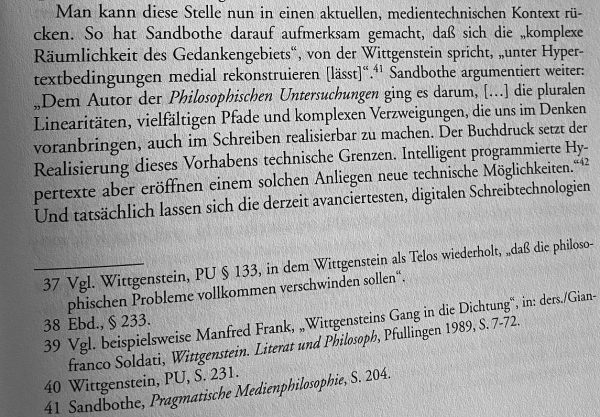
Inspiration
Artists and scientists, all have their sources of inspiration. The most beautiful way of putting this is contained in a poem by Jacques Prévert. “Moi aussi, comme les peintres, j’ai mes modèles…”. The source of inspiration varies from physically present models to imagined ones. Painters and sculptors, we imagine, have their models right in front of them and build on their specific kind of observation, view and vision, seeing more or differently from others, at least since modern times. Poets and authors are believed to draw inspiration from abstraction and imaginative description and narration. Musicians tend to rely on hearing fine-tuned or creative tensions, as much as the resolution in harmonies through sequences of sound. All seem to have a sensitivity beyond the normal and a skill to find a way to transmit to others. Photographers catch representative moments or visualize artifacts and combinations of them in new ways. Scientists are not so different as we might think. Imagination of new hypotheses in established fields is part of their skill set. The transversal skill in all these processes of inspiration is the openness to cross-discipline fertilization. So-called Polymaths reached excellence in more than one field of science, “Polyartists” touch several fields of different arts. Further new innovative combinations of disciplines like they are practices in “centres of advanced studies” are a first step to brings down walls in mindsets and disciplinary ivory tower practices. It will take only a tiny little step forward to come back to the practice of royal courts. The person called “fou du roi” had an important role to play, not only in the game of chess, but in questioning and entertaining leaders. I wish universities, science centres and ministries would allow themselves more of this kind of inspiration. Inspiration is considered here as a source of questioning your own approach from another perspective. Look at your phenomenon of interest with a different model or imagination in mind. New synapses will follow. Let us welcome them to make the world around us a better or more beautiful place. Wait, is more beautiful enough already? Is this a contradiction, better versus more beautiful, or is the latter a subset of the former, or is a tautology anyway? The catalogue of the exposition “Archives des rêves” du Musée d’Orsay gives plenty of insights into images as sources of inspiration for people of all walks of life. 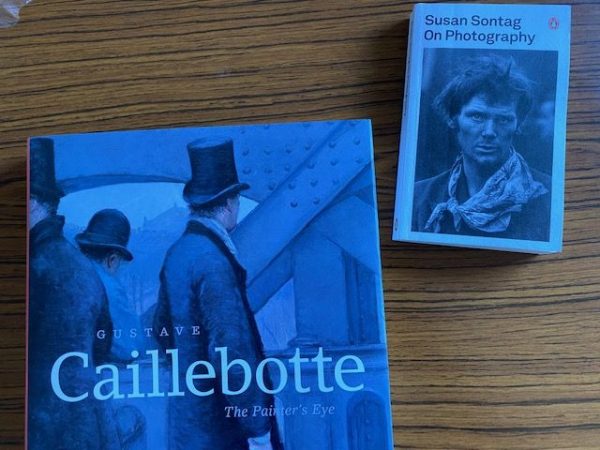
Giselle
Once upon a time, not at the Opera de la Bastille, but next it, in a small theatre called Théâtre de la Bastille, the fairy tale of “Giselle…” was performed. The world-famous ballet Giselle (Karlsruhe Programmheft) is still amongst the most frequently performed magic piece of classical ballet. What is it about? In short: sex and crime. Yes, and it sells well.
Francois Gremaud tells the classic story of excitement, love, deception, death, regret, haunting and memory in a concise and witty fashion. The exemplary dancer is at the same time the narrator of the story as well as the critic and art historian accompanied by a 4 musicians strong orchestra. The educational piece with a “womanxplainer” on stage is great entertainment, full of references, why it is still okay to like the piece in spite of its fantasy-loaded content. Modern dance (Cunningham, De Keersmaeker) has decoupled or emancipated movement from music. In classical ballet, at least, you still know what comes next and this is aesthetically appealing for most people. Besides Wilfried, no he is not part of the “Wilis” (could be an interesting variant), but in the ballet there figures “Hilarion”. He is not hilarious at all. Splendid entries are from Myrtha (close to Martha, but not quite the same) and, of course, Giselle, when she leaves her tomb and turned into a “Wili”. Then there is Albrecht in a pas de deux with Giselle, swirling between earth and space. Aldi dances like mad on impulse from Myrtha, but Giselle vanishes nevertheless. End of story, or is it? Giselle is a Wili and Aldi is the wally. Maybe the story could be retold like in the film “Billy Elliot – I will dance”, which is an emancipatory tale where dance is the liberation rather than part of the dooming fate.
Francois Gremaud with the astonishing performer and choreographer Samantha van Wissen have created a version of Giselle that is musical, aesthetic, funny and critic. For those who enjoy an epic theatre version of Giselle including its “alienation effects”, referring back to Berthold Brecht, will want to read the script as well, kindly distributed as a gift after the show. 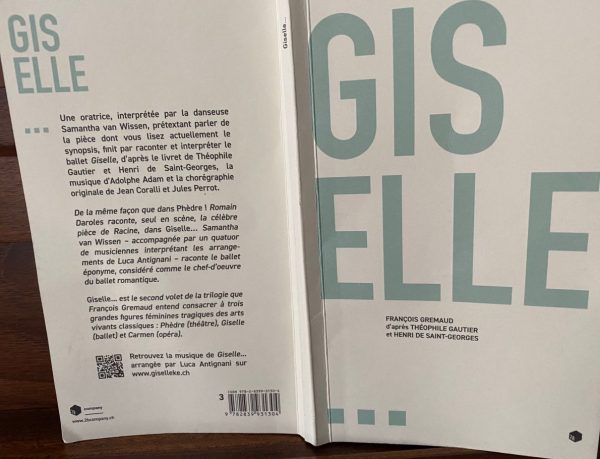
Employment
Employment is back on top of the agenda. Not as we used to think, though. Previously unemployment had dominated societal concerns. Now it is the lack of persons seeking or available for employment. What has happened? The Covid-19 crisis has demonstrated the need of persons qualified to work in the health sector. From health care and urgency care, we are short of personnel in all these fields, everywhere. 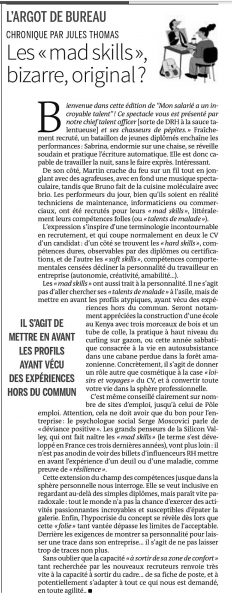 Then we discovered the role of essential services and the need to equip crucial infrastructures like ports, transport, shops, schools and ambulances with service persons resisting despite work overload. Larger cohorts leave employment to retire, some even early due to illness or burn-out. Additionally, war is back in Europe. Military personnel is in high demand again, drawing largely from younger cohorts. The need for conventional weapons. long thought to be oblivious, is forcefully back on the agenda.
Growth potentials are everywhere. However, these pre-modern facts encounter a population in the western democracies that insists on new approaches to employment. Beyond hard and soft skills, recruiters seek atypical skills, competences and trajectories. A parachute jump from an airplane, cooking and dining experiences, caring spells, periods in self-employment, all are directly or indirectly relevant for employment and teamwork. So, what is your specialty? Collecting stamps? Surely you are able to spot tiny differences in images with specific content. Fake news and fake image detection or video surveillance is in high demand, just try an application and discover the employment potential of your MAD skills. Sounds crazy? No joke. Skill needs are everywhere, just give it a start again and again. Read a serious newspaper regularly (here LeMonde 19.1.2023) for inspiration.
Invent
The nice thing about mathematics is that it asks you to invent new ways of thinking. Numbers, percentages, Venn-Diagramms, infinite series etc. have accompanied us at school. The story is far from finished. Under www.spektrum.de there is a nice introduction to the new theory of numbers, called “condensed mathematics“. Their lecture notes (pdf-file) are a tough read. My take home message simply is, the invention of new approaches to old problems, providing more general answers and/or unifying different fields are particularly rewarding. Maths is a fascinating discipline. You study abstract problems, hardly anybody else has had so far, but you are not considered strange as for example some artists at times. Imagine your new world in music, painting or the arts in more general terms or try to become a mathematician. Finding ways to communicate about your predilection and invention is the next challenge. Many scientist, inventors or artists found very few people to talk to about their new stuff. The internet and social media have changed this. Persons with interests or findings beyond the mainstream find colleagues in other parts of the world. Lighthouses from far away become visible through this. Navigation of other possible worlds turns into reality. These specialisations might turn out to be generalisations. The stretch between indepth knowledge and the polymath approach shall accompany us for a long time. Unified theories in several fields are indeed a step to be able to have an oversight about several, but not all fields. Polymaths probably start with condensed maths to move on to other fields of imagination. There is always a risk to get stuck somewhere on the road in a topological space. 
Action Verbs
Action words are in other words called action verbs. Each complete sentence has one. Hence, they are part and parcel of the basic construction of sentences.
“The purpose of an active verb is to create a clear, concise sentence. By using an active verb, you can eliminate unnecessary words and make your writing more direct. In addition to making your writing more concise, active verbs also add punch and clarity. They can make your writing more interesting and persuasive. Additionally, active verbs can create a sense of immediacy which is often useful in persuasive writing. When it comes to writing, there is nothing more important than using strong, active verbs. Not only do they make your writing more interesting and engaging, but they also convey a sense of confidence and authority. In addition to being more descriptive, active verbs also add a sense of movement and action to your writing. Rather than simply stating that something exists, you can use active verbs to show how it exists. For example, rather than saying “there is a chair in the room,” you could say “the chair sits in the corner of the room.” This may seem like a small change, but it can make a big difference in how your writing comes across. Finally, active verbs can also help to set the tone of your writing. If you want to convey a sense of wit and humour, then using playful, lighthearted verbs is a great way to do so. On the other hand, if you’re aiming for a more serious tone, then using powerful, authoritative verbs will help you achieve that.”
After the 3rd sentence this blog entry (Link) has been written by the artificial intelligence app “Neuroflash”. They promise that it is not just copy and paste, but rather written following some instructions I gave like title, table of content, style and then selected among several choices. It makes sense to me, although it is just like many other textbook entries I have found on the web. It may well serve as an introduction. Lazy journalists, priests or lawyers in case they do little research will be replaced soon by AI, who else, who is next? Big brother drafts the brave new world for us already. 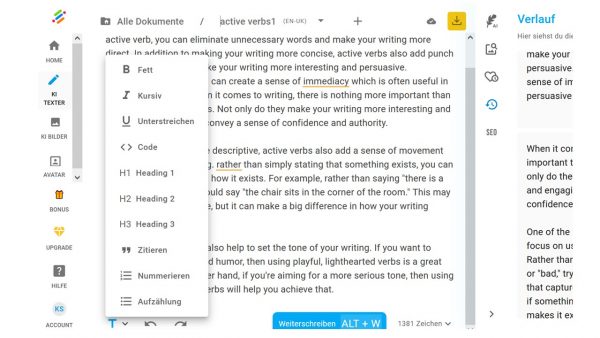
B for Balance
To reach a balance, to keep the balance or one’s balance, this highlights the process nature of balancing. Even the old tool of a balance (scale for weights) very much reflects the evening-out of the balancing process. It seems like a temporary balance most of the time. We might evolve from one level to another one. Especially imagining ourselves on a (body weight) balance in the morning and then throughout the year or years, this appears like a dynamic trajectory. The nature and/or nurture connection is evident. Beware to search for synonyms of “balance” on the internet. You get more than 3000 synonym (Link) meanings and 30 suggestions for definitions (Link) to contemplate on. I like the nice physical experience of balance and the simple (a bit nerdy) explanation of it. Economist get very excited about balance of payments and the ways to achieve equilibrium or equilibria. Balancing personal accounts can be a bit painful at times, but balancing in the arts gets our imagination going. Dancing is about balance most of the time. Playing with your own balance, the balance when 2 or more persons are in action, how not to be absorbed by such experiences. In music, the balance is a primary issue since Bach’s “wohltemperiertes Klavier” and balance and tension are the origin of much jazz. An image or photo might be balanced, certainly architecture is playing with or restricted by balancing acts. Herta Müller’s “Atemschaukel” has thrown us off balance for a while. History we study often with a concern for a balance of power. In peace and war times, the balance of power within and between countries or superpowers are a long-lasting research issue. At times when this balance is at risk or completely out-of-balance we are deeply concerned about the return of a balanced situation. Babies and children draw comfort from being balanced. Adults as well. Let’s try again (chanson). (balance22-venice -video). 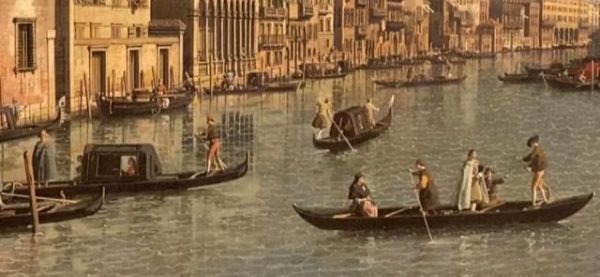
Y for YinYang
Y in maths stands for the phenomenon that is to be explained. If you are lucky, it is just one single Y. To explain this phenomenon, we usually have a multitude of different X-es and some random chance element. To complicate things a bit, we have X running over time. Example: Happiness at retirement age (66) might be explained by your earnings over years and marital unions/separations over time plus health over time and other random, not specified elements.
In my understanding of the YinYang philosophy of balancing the complementary of Yin and Yang, I probably should have thrived for a balance of earnings and health throughout my working life, to arrive at a happy retirement. Balancing not only among the X-es, but also between X and Y might even out the excitement about retirement. Additionally, this reasoning leads us to the more complicated case of multiple Y-s and multiple X-es. We can image the optimisation issue of y for 2 persons rather than just 1. Now, the maths starts to get more complicated without being complex in the mathematical sense. If you can solve such equations in statistics using different forms of random and not- so-random error terms, yr doomed for a Nobel medal in economics. What the heck, man this has to do with Yin and Yang? Beware of your work-life balance, be selective, I suppose. Breathe carefully, repair (YoYi) and read up on Chinese philosophy and maybe TCM, short for Traditional Chinese Medicine. Let’s try to re-balance in a lot of life-domains. We know our Western way of life (CO2) is not sustainable. Imagine 1 billion Europeans driving a diesel car on this planet and you have an idea about what hell might be like. An open mind to the Yin and Yang philosophy could be helpful for us, just as much as it would be for the leading Chinese politicians and their policies. Yes, Y in French is much more common than in other languages “Y avait …” is the beginning of chansons (ex 1 Aufray, ex 2 Kaas, portrait). Drawing YinYang using formulas is a bit like drawing or painting mandalas. It helps your inner balance. I am not quite there yet. 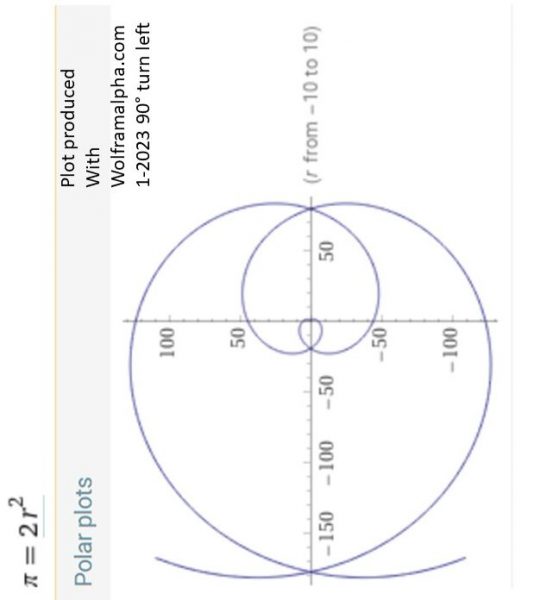
X for Xeno
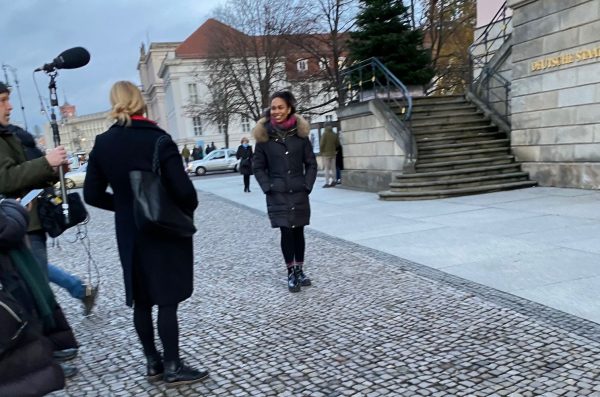
Xeno is the root of the much more commonly used words of xenophobia or xenophilia. Xenos, in its Greek original, just means guest, strangeness or coming from another place. With the awareness of coming from another place or dreaming of another place we create the link Xeno-link to migration. Everybody knows about migration experiences, be they just from one village to the neighbouring one, rural- urban migration or beyond language or legal boundaries. Interesting new perspectives on the issue are rare. To view migration from an optimism or pessimism angle is a bit like a Picasso-like view on the century-old topic. Beyond out-migration and in-migration there is the population left behind in the villages, regions, countries or nations. Optimism seems to guide the outmigrants. Realizing to become viewed and stigmatised as an immigrant might reduce optimism considerably. Pessimism might spread among the persons who do not succeed locally or to migrate in those sending regions or countries. Migration is a selection process of multiple forms. The western view of in-migration has for most parts focused on labour market related preferences. Skill shortages urge us to accept the “being somehow different” more easily. Learning to cope with this is called “intercultural competence”. In Berlin this is accessible through learning-by-doing or going to cultural events. Even there, 2 further steps are needed:
First step ahead, have more diversity everywhere, including so-called high art or centers of excellence (video xeno video22). Second step, consider it strange, if diversity is not the standard or part of day-to-day or normal life.
The performance of Mozart’s opera “Mitridate” at the Deutsche Staatsoper with performers and creators (booklet!) from all continents might be a good start to nourish xenophilia instead of xenophobia.
W for War
In Europe many people were lucky to live without the existential threat of war for a long time now. Putin has stopped this with his land-grabbing in Ukraine. We wonder why, what, when and where? War is back in our minds again. Members of the birth cohorts of the 1920s, 30s or early 40s have direct experience our traumatic memories related to war times. Some later born cohorts suffered from various forms of deprivation . Economic reconstruction or even so-called miracles may follow and can soften the traumatic experience, often by way of focusing attention on repair and new investments.
The work by James Hillman “A terrible love of war” has been a difficult read. To acknowledge that “war is normal” and our mindsets should take this into account, is hard to accept. Hillman cites Susan Sontag to state that “we cannot imagine how terrible war is – and how normal war can become”. We need a leap of imagination (p. 9) to grasp the mythical element about war which seems to be beyond the rational understanding of it. Greek tragedies told us, all along for more than 2000 years. The Romans exceled in it and German perfectionism and cold-bloodedness added the most horrible recent experience of war for millions of people. Memory and historical knowledge are important to activate recall for older and learning for younger generations. (short Video clip on war and UKR)