Positive negative Utopia

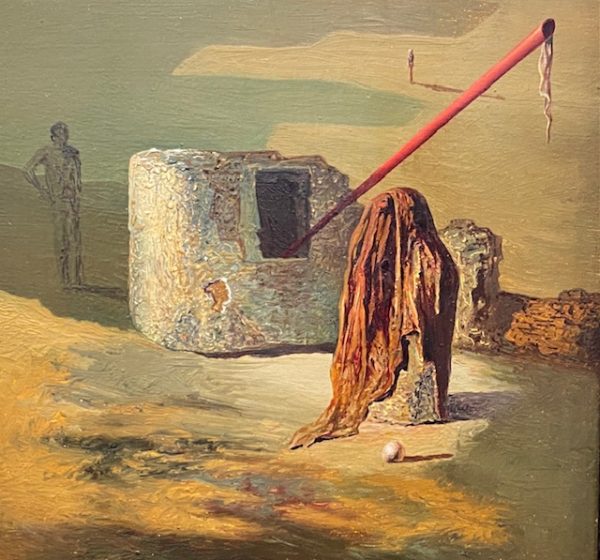
We have been used to distinguish between a positive or a negative utopia. The idea of a paradise is usually associated with a positive utopia, however, from the perspective of mankind being unable to live together without the idea of God being the ultimate arbitrator, this is more like a negative utopia. The industrial revolution and communism as the utopia to spread wealth equally across generations and all people, have been turned into negative utopia by dictatorships and authoritarian regimes. The fascist ideas of superiority of a race has also turned into negative horror and Nazi-terror. Hence, skepticism is in order, if either form of utopia is advocated. There are numerous examples of unintended or not explicitly stated consequences that have to be considered as well. (Image: Extract from Salvador Dali, Looming Danger Alarm, 1934, Neue Nationalgalerie, Stiftung Pietzsch)  
Communist Utopia

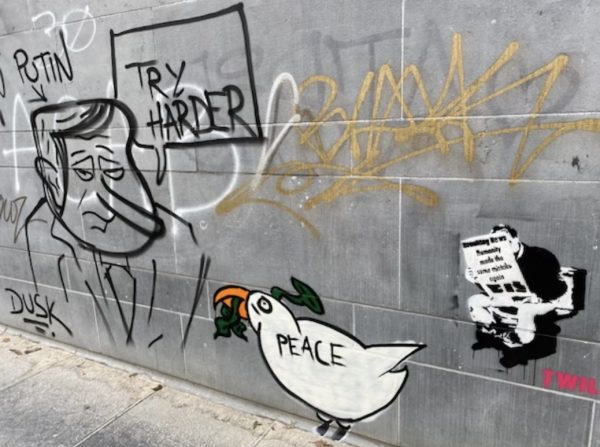
Putin has not only killed thousands of his own people, but he he has also killed the communists’ utopia of a better world and future, if only private property would be replaced by a top down, one party rule of a leadership that pretends to act on behalf of the people. Young Russians have little choice than to follow orders, learn how to bribe superiors not to be sent to the killing fields or be sanctioned. Putin has put an end to the ideas of Glasnost and Perestroika in Russia and utopian ideas about communism as well. He must have sensed it during his time in Eastern Germany that without brutality the Soviet union will not survive for long. As soon as he came back to Russia he prepared the shameless abuse of his power and ideas about a law-based socialist system in favor of the return of the military state. Borders are for those who believe in a rule-based international legal system. Changed to this international legal framework are hard to believe by European nations, but have to be accepted as a new form of “Realpolitik” in the international arena. (Image: Graffiti in Brussels Mont des Arts 2022-3-1) 

Peak Refugees

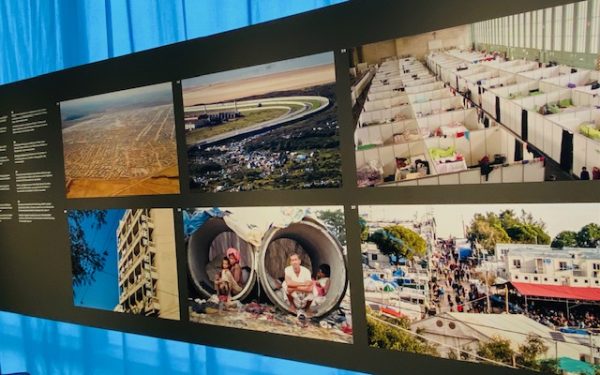
The number of refugees in the world has stabilized at a very high level. According to the data from the UN Refugee agency (UNHCR) until mid 2025 the number stands at 36.6 million people. With slight decreases in the last 2 years, the challenges remain at a high level. The 10 top countries hosting the largest numbers of refugees are Iran, Turkey, Columbia, Germany, Uganda, Pakistan, Chad, Peru, Poland and Ethiopia (compare Fig 4 of report). It is particularly remarkable that this list of countries is relatively little associated with a country’s level of average income. Humanitarian concerns and being a neighboring country play an important role. We all hope that we have witnessed peak refugees and that an assisted and safe return will be a feasible option for many of them eventually. Although we know that many people suffer from authoritarian regimes and, for many years, don’t have a return option in sight. (Image: Documentation Center on refugees in Berlin) 

Good or bad

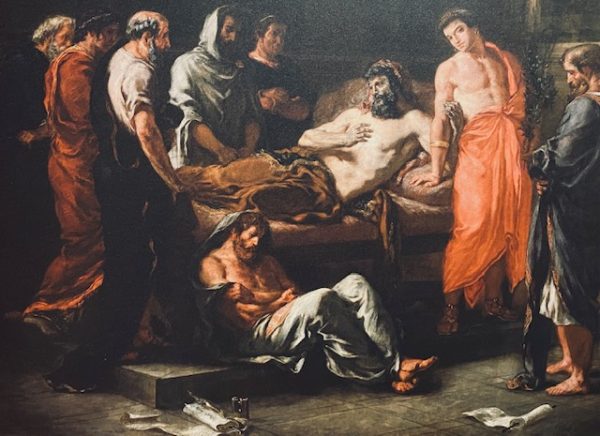
We have been taught by Shakespeare “to be or not to be, that is the question”. In political science we have pondered the question in a slightly augmented form. “to be good or bad, that is our question”. The basic image of women and men in society has been a subject throughout the history of ideas. For those who believe in the good nature of mankind, they tend to find reasons to believe that eventually mankind will find a way towards a peaceful cohabitation on our planet (there is no planet B yet for humans). On the other hand, each outbreak of violence and war are considered as a confirmation that mankind will always recur to some form of violence, even after extensive periods of peaceful cohabitation. According to the evidence presented by Meller, Michel, van Schaik, referring back to Kant, trade between people and nations is likely to prevent more violent relationships (p. 330). One of the major conclusions over the long term view of mankind is, that the periods of war have been far shorter and more rare than a focus on the last 3000 years seems to suggest. Maybe, “to be good or bad” is just a question of demographics of being too many at the same time in the same place.  Population growth and population density might be a powerful driver of “being good or bad”.  (Image: Delacroix, Last words of Marc Aurel)

Generation Hope

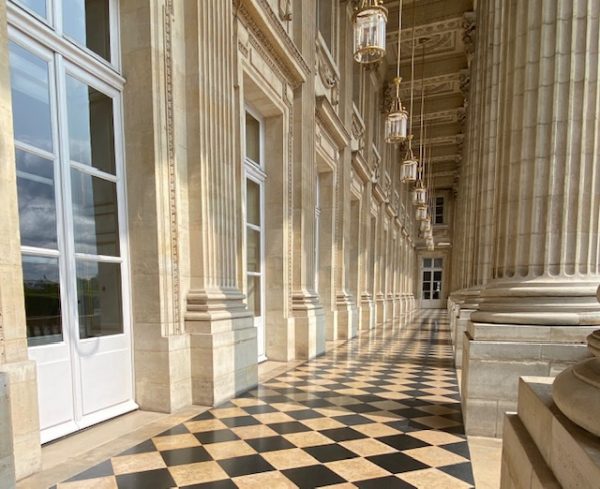
The whole of Europe has good reasons to take a careful look at the stunning protests organized by the young generation in Bulgaria (Le Monde, 2025-12-13). With spectacular repeated demonstrations in the center of Sophia, the young people attempted to stop a government that is likely to sink further into corruption. It is this generation of young people that have experienced and/or lived in other European countries or in other Western-style democracies around the globe that have enough of corruption in politics and social systems more generally. The well-educated Bulgarian youth has managed to overthrow a government that had been subject to pressure from corrupt forced. It is not easy to get rid of corrupt politicians and powerful business interests as a system based on merits rather than ability to pay remain fragile in the first few years of such a transition. It needs a sizable “Generation Hope” as I would like to call these young enthusiasts of democracies. The message reaches well beyond Bulgaria and gives hope to all those whose political systems deteriorate into authoritarianism across the globe. It took 20 years to build this “Generation Hope” and mobile youth that takes home the messages and learnings from other democracies. Based on statistics from Eurostat we know about the strong in-migration from Turkey and Russia into Bulgaria. Youth is particularly likely to leave authoritarian regimes to seek a better future in democracies, for example as part of the Generation Hope” in Bulgaria. (Image: Cour constitutionel Paris) 

Deep Fake Threat

Our Western democracies are aware that “deep fake videos”, radio, online-newspapers and most of all social media platforms are all around us already. However, more scientific voices alert us that this threat to our easy or comfortable way of life to consume information eventually threatens the survival of our democracies. Previously, interference in elections used to focus on rigged election procedures, but in the 21st century powerful other alternatives can do the dirty job to bias elections against the original intentions of the electorate. The widespread use of AI will exacerbate the already practiced ways to produce deep fakes. In a preparatory self-test of an AI-assisted chatbot I was surprised myself of the quality of the output. A person not very familiar with my original voice in a second language would assume that it is me who is being interviewed in person. Based on a fake news text, any form will be automatically translated into voice only and/or video based on basic visuals.
Statisticians used to joke some decades ago: “Don’t believe in any statistics, unless you faked it yourself.” This is meant to encourage people to be aware of dangers of the use of statistics to influence opinions or official decision-making, like in policy making of central banks, which might be based on biased accounting for shrinkflation, cheatflation or greedflation to name just a few,
Hence, the need to strengthen awareness, analytical skills and critical thinking should be high on the agenda to defend our democracies. There are not only external military threats, but additional ones masked as internal threats.
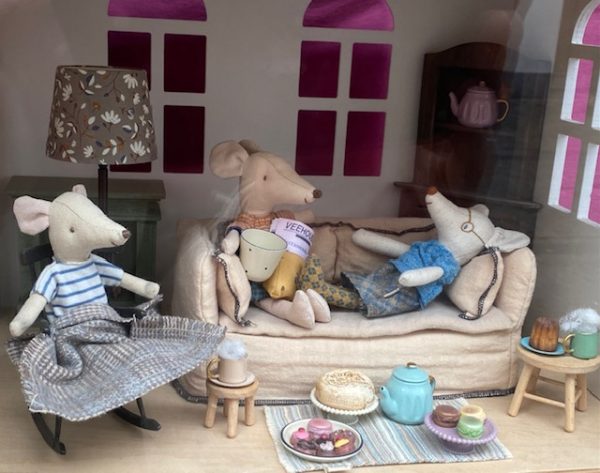
(Image:: mice as humans in living room 2 couch potatos 1 on rocking chair, tea time)

Foul-smelling dictatorship

The animal world is full of interesting strategies of how to turn over a foul-smelling ruler or dictatorship. The ant queen of “lasius orientalis” infiltrates a colony of “lavius flavus” to spray the incumbent queen with a foul-smelling substance which turns the worker ants against their own queen and eventually kills the queen. This is a rather intelligent strategy to trick the defense system of rival colonies and prepare a takeover of a whole colony to install your own reign.
This may constitute a stark warning for democracies just as much as a threat to persistent dictatorships. In the age of the not so social media there is a lot of foul-smells produced. Beware of the risks to democracy as open societies are much easier to infiltrate than closed societies or dictatorships. (Link)

Dynamic Equilibrium

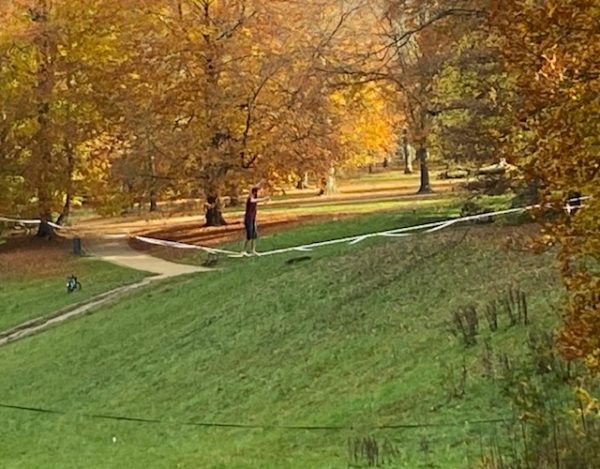
The notion of a dynamic equilibrium is applied in several scientific disciplines. The search of the world wide web takes us first to the application in chemistry. The dynamic equilibrium denotes the state when reactants and products are continuously converted. Fascinating as a process, there are videos where you can watch the process evolve. Applications in economic or social theory are also common even if the time scales to observe such processes of dynamic equilibrium usually take longer to evolve than in chemistry of bubbles. In physics we ponder about dynamic equilibria in Newton’s view of gravitational forces between planets and the celestial system. With a more down to earth approach we might just admire the dynamic equilibrium of an artist on a rope, before we dive into the complex challenges of the new balance of power in international politics of the multipolar world. 

Codes of Emperors

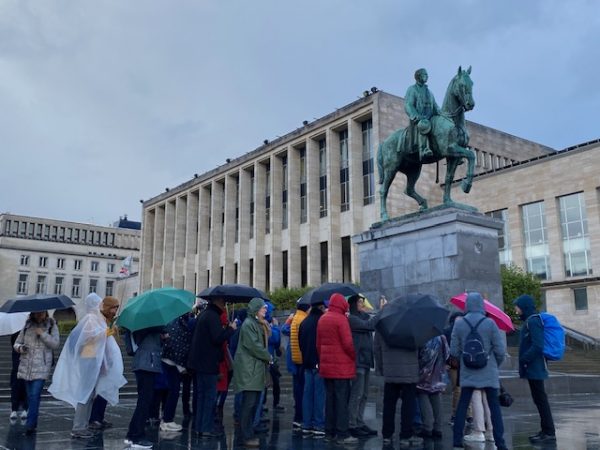
Even in the 21st century we spot the ancient codes of emperors. In Brussels the statue of King Albert, who ruled until 1933 and celebrated the first centenary of the Kingdom of Belgium in 1930, shows the Emperor riding a horse without saddle. This iconic position was started as a symbol of a powerful leadership by Marc Aurel and continued by Napoleon’s reign as well as several other ones.
The position on the elevated podium of the emperor on the horse, which further raises him beyond the level of the people, all contribute to the idealized perception of the king above the people. Such a vertical or hierarchical perspective on society or even mankind, including the colonial approaches of the emperors, are the lasting attributes of those times.  According to Els Witte et al. who wrote on the political history of Belgium, King Albert I was also named King Knight by some.
The portrayal and self-portrayal played an important role already centuries ago. No surprise that democracy has brought about an avalanche of idealized self-portraits or “selfies”.

Political Economy 2025

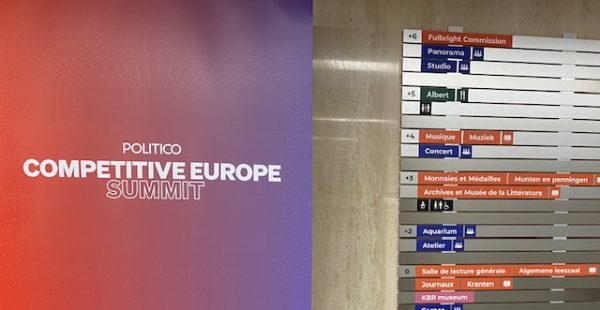
As the global markets have moved from an international economic system based on competition to a world of protectionism based on arbitrary tariffs and restrictions, it feels strange to spot banners in Brussels in 2025-10 entitled “Competitive Europe Summit”. Participants at the conference appear to be “barking up the wrong tree”. In industries, and even more so in most services, access to markets is the necessary condition to embark on competition. No access, no competition. Tariffs or taxes are created to stifle competition.
All this has multiple reasons. One reason is to create an equal playing field among countries. Previously, we thought exchange rates of currencies and eventually purchasing power parities would shift following changes in competitiveness. This mainstream economic thinking has been disrupted through Putin’s war on Ukraine territory. The MAGA political economy narrative has impacted the competition between countries as well, (1) with its rhetoric and (2) back and forth changes in tariffs. Competition with countries which do not respect basic principles of fairness in competition can no longer be confronted with a mantra of a “competitive Europe”.
A more unified Europe could deal with the “politico-economic” fact that the global economy is much less concerned with the idea of competitiveness than in the last few decades of the last millennium (70s, 80s, 90s). Powerplay between nations maybe regarded as a kind of competition for dominance, but a sole focus on economic competition is grossly misleading nowadays after 3 years of the Russian aggression, at least with a focus on the short and middle distance run.