Hybrid publishing threat

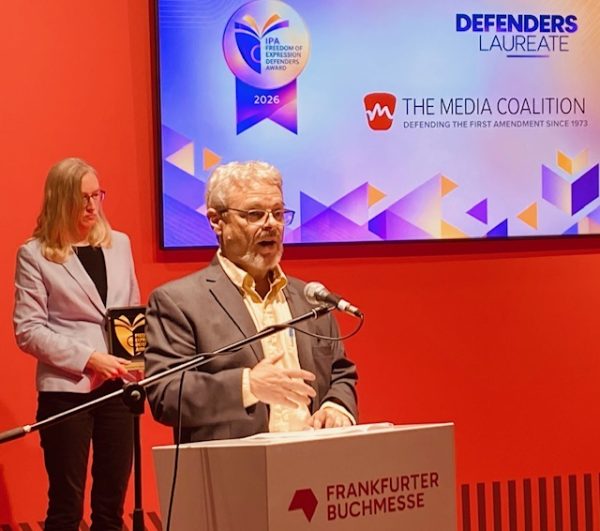
For decades there have been strong initiatives which defended the freedom of expression. Historically, the press and book publishing have a pretty long track record. The IPA Freedom of Expression Defenders Award has been inaugurated at the Frankfurt book fair #fbm26 on 2026-10-8 with much acclaim. The challenges of the freedom to publish are on the rise again as many countries tackle these freedoms as part of the rise of authoritarian governance. Democratic countries, however, have to live up to the challenges that publishing, as part of the whole media world, has been included into a kind of hybrid way of influencing and even hybrid warfare. AI is a dangerous 2-sided sword in this endeavor as well. The publishing sector starts to address the issue, but finding a consensus seems rather time consuming. Foster alliances before it is too late to regulate, build and strengthen defenses. 

IPA award 2026


Hybrid publishing threat

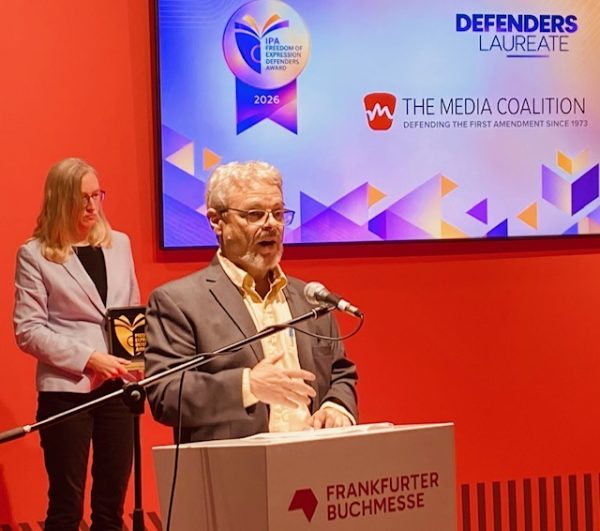
For decades there have been strong initiatives which defended the freedom of expression. Historically, the press and book publishing have a pretty long track record. The IPA Freedom of Expression Defenders Award has been inaugurated at the Frankfurt book fair #fbm26 on 2026-10-8 with much acclaim. The challenges of the freedom to publish are on the rise again as many countries tackle these freedoms as part of the rise of authoritarian governance. Democratic countries, however, have to live up to the challenges that publishing, as part of the whole media world, has been included into a kind of hybrid way of influencing and even hybrid warfare. AI is a dangerous 2-sided sword in this endeavor as well. The publishing sector starts to address the issue, but finding a consensus seems rather time consuming. Foster alliances before it is too late to regulate, build and strengthen defenses. 

IPA Award

Evaluate Web analytics

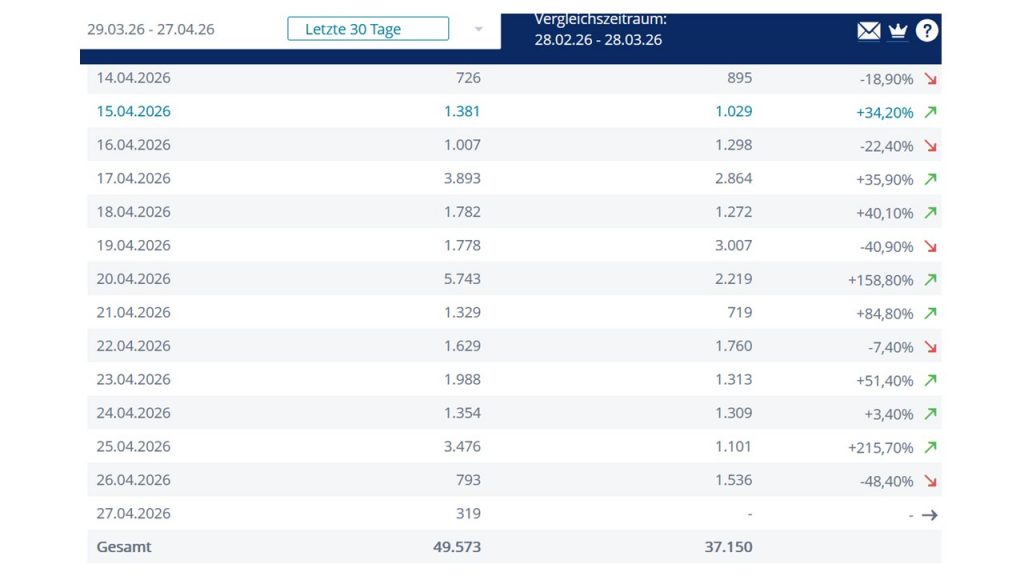
An own webpage “schoemann.org” allows to gain interesting insights into the skills needed for the internet era and the security as well as cost structures for running such a business endeavour. Taking stock of basic web analytics, therefore, should be on the agenda from time to time. Towards the end of April 2026, it is about time to look into some simple statistics again. The host of this webpage offers access to some anonymous statistics (see below). The number of daily or weekly visits of the webpage are suitable to get a basic idea about frequencies of visits. Average daily visits are still below 1000 daily visits, but there are peaks of 3000+ and even 5000+.
Whereas the distribution across weekdays (no peaks on weekends, correlation with bad weather not tested yet ;-)) is rather random compared over months. However, the topics which received most attention are do not seem to be random. In 2026-4 the most attention has been raised with “Abduction of Europa”, followed by a brief entry on “Confessions” a philosophical topic in a broad sense (Stats below 2026-4-27. Next in popularity are 2 entries of my scientific “fail collection” which reflect on take-home-messages from the “Flop exhibition”, quite topical in combination with the 40th commemoration of the Chernobyl nuclear reactor explosion and pervasive contamination across Eastern Europe.
(Image: Page visits between 2026-3-29 to 2026-4-27 compared to month before same year)

1000+ entries

From time to time it is useful to review whether a project is still on track or has developed biases, which may run for some time without reviews. Just like the United Nations Strategic Development Goals (SDGs) have been set 1bout 10 years ago, I do scan my own publishing project whether I still cover the SDGs in a larger spread. The goals need monitoring and I shall redo my own review as well.
As the number of blog entries on a daily basis has reached 1000+ entries, a review becomes a bit of a statistical exercise. As a kind of anniversary reward, a publication of more collections beyond the AI-reader or the Paris Olympics 2024 reader should be fun. However, there is so much work with checking and updating links, that the e-book, pdf and epub publications have become a time-consuming effort.
The search function implemented on this digital publication format is so fast and powerful that I am myself delighted again and again about the digging up of previous entries, concepts and evidence retained.
Time is a treasure and a value in its own right. Test it!

Page Turner

Modern digital technologies turn pages for you. Just with one touch.
Search functions that are implemented in the software allow you to search for any keyword you are keen to follow-up on. These are valuable advantages of digital versions of books or other content. Once you adapt the brightness of the screen you can scroll comfortably through hundreds of pages. These books are called flipbooks and there are a number of editors specialised on these versions.
In combination with a blog format of publishing online first and then transforming content into flipbooks or even printed versions, www.MPL-publisher.com  offers a nice feature to host such flipbooks. It is comfortable to know that the content has a unique address on the web, which you can share freely and use from all sorts of devices including your smartphone, tablet, desktop or notebook. The collection of my images I even watch sometimes on an even larger TV-screen or a beamer for teaching purposes.
Yes, we can (!) teach from a smartphone. Learners have opted for the small screens a long time ago. -“hey – teachers, leave us kids alone. We don’t need no education, we don’t need no thought control“. Flipbooks combine the classic form and feeling to turn a page as accomplished progress with the fast access to keywords that spread over several pages of the book.
My latest version of blog entries from 1st of January to 30th of June 2024 is at your fingertip now. (here, allow for a really long download time!). A screenshot is provided below of page 114 of a total of 390 (OMG) on a notebook screen. The search list is shown for the keyword “wage” as an example.
A shorter reader on “Society and AI” is available here as flipbook (29 pages).

AI Ghost Writer

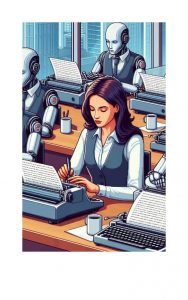
Yes, with AI we have entered a new phase of the impact of IT. Beyond the general applications like ChatGPT there is a rapidly expanding market of AI applications with more specialized functions or capabilities. In the realm of scientific writing AI-Writer is an interesting example of the AI assisted production of scientific tests. After the specification of the topic you will receive several options to specify the content of the short paper you want to produce with AI-Writer. You may choose the headline, keywords, subtopics and the logical order of these subtopics depending on your audience. Alternatively, you leave all those decisions to the application and restrain yourself to fix the amount of words you would like the paper to have.
AI-Writer is a powerful ghost writer for much work even of advanced scientists. The quality of the paper needs to be checked by yourself, but the explicit list of references, from which AI-Writer derives its restatements of the content, is just next to it. Your ghost writer AI is likely to replace a number of persons that were previously involved to just produce literature reviews or large parts of textbooks sold to millions of students.
A much lesser known feature of such tools is the way it makes plagiarism much more transparent for the scientific communities and the public at large. These programs demonstrate the techniques of combining knowledge and the citation imperatives in a transparent, almost pedagogical way. This latter function will speed up scientific work like dissertation drafting, since the reading up and documentation of previous literature in a field is a time consuming early stage of academic degrees.
Email composition, rewording, plot generator or social media posts are additional nice-to-have features of the new AI-assistants. A lot of work that has been outsourced, for example, to lawyers, consultants or other technical professions, might equally be challenged. Ghost writers have been around for centuries. With AI for everybody, they will also be involved everywhere.
(Image screen shot of working with AI-Writer 2024-6)

AI Citation

In science we love citations. The whole issue about plagiarism is about use and abuse of citations. It is a core competence of scientists to properly cite the work of other persons who dealt with the same or similar topic. There are lots of conventions or ways of how to cite mostly defined by professional academic groups. How do we cite texts that originate from an AI-system? We shall have to establish ways of how to do this properly rather than to ignore the spreading practice of its use.
For the time being, we test AI-systems that provide references in addition to the text and even direct clickable links to the original work they use. The AI-toolbox is called “scite”. Your assistant by scite will draft a short note on a topic (for example: Minkowski space, see trial below) for you and provide the linked citations for follow-up. At the price of about 15 €/months it is affordable for students and young researchers. The texts generated will then, in many instances, acquire “intellectual property and publishing rights” by persons.
The ways to follow back on citations of AI-produced texts seems a trustworthy step ahead. The authors of millions of papers cannot claim more than the original ownership of the text. The academic mantra “publish or perish” has been turned into “publish and perish”. AI-enabled citations might alleviate the pain only a little bit. The profession of even university professors shifts as reviewer of texts from students to texts of machines.

Portable Grundgesetz

Celebrating democracy in Germany is rare. We take it for granted that democracy persists, as most of us have not experienced it otherwise in Germany. This is grossly mistaken as the opinion polls show repeatedly in recent years. Therefore, it is welcome to find the “Portable Grundgesetz” at the “Demokratiefest” in Berlin and Bonn at the event to celebrate 75 years of democracy in West Germany and 35 years in East Germany.
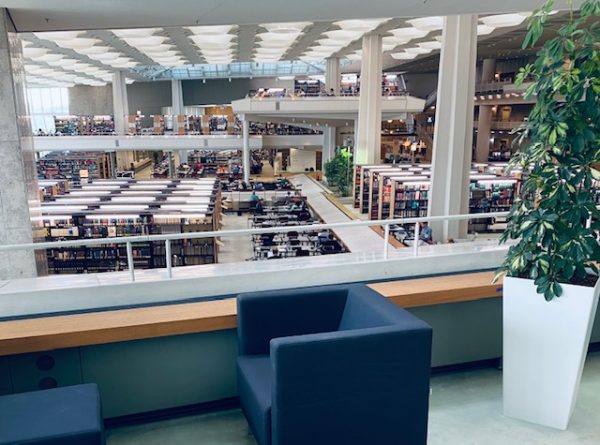
The century-old tradition to produce miniature books has been revived and the miniature books have been widely distributed at the event. A side effect consists in the eco-friendliness of this version, which saves a lot of paper. It is fun also fun to turn pages rapidly and discover some paragraphs which we would not have read otherwise. “Daumenkino” is the German word for versions that contain many images. Maybe next time, an illustrated and/or animated version of the Grundgesetz could encourage youth to celebrate using the texts, §s and images to discover the fundamentals of our constitution.
325 years ago, Weigel the Elder has illustrated, edited and published such a tiny edition of the Bible. It is currently exposed in the treasure museum at the “Kulturwerk” in the “Stabi Ost” in Berlin. “Back to the Future”, lots of ideas we get by taking archives seriously. By chance inspiration is undervalued. Search algorithms have a hard time to replace this in an effective way so far.
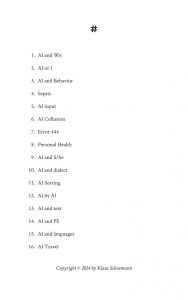
AI Reader

In the middle of the hype around AI it is useful to take stock of the reflection and evolution of AI. In my own analyses and writings on AI it evident that a narrowing of focus has taken place. Whereas before 2022 the writing dealt more with digital technologies in general. The links to the literature on the social construction of technologies was obvious. Algorithms and AI was a part of the broader topic of society and technology.
This has changed. The public debate is focused on “everything AI now”. We look at technological developments largely through the lens of AI now. Hence, my focus of assessments of technology from a societal perspective follows this trend. In a collection of blog entries on AI we try to demonstrate the far reaching changes that have started to have an impact on us. In the last few months the all encompassing concern about AI’s effect on us needs full attention of social scientists, policy makers, companies and the public at large. We can no longer leave this topic to the software engineers alone. By the way, they themselves ask us to get involved and take the latest advances in AI more seriously.
As a “flipbook” the online reading is rather comfortable (Link to flipbook publisher MPL). The pdf or epub files of the blog entries allow to directly follow the links to sources in webpages or other publications (AI and Society 2p 2024-4-18). The cycles of analyses and comments have become faster. Traditional book writing suffers from time lags that risk to make pubications outdated rather quickly. Dynamic ebook writing might bridge the gap between time to reflect and speed to publish or inform the wider public. The first update as .pdf-file is available here: AI and Society(2).

Publishing2024

With new channels of publishing online the publishing world continues to change. Scientific research  moves also online and the reach of audiences has become a much more important factor in evaluation of success. Elite circles of in-groups publishing and quoting each other have a harder time to survive. It is a form of democratising the world of research which is by very large amounts financed by public budgets. Public radio and television now start to feel the heat as so-called influencers, some working independently, challenge the world of traditional journalism. The good news is that there are many more people active to produce news and entertainment and the two separate worlds become more and more integrated. Young people who have left the “official” media world, engage with their own peer groups and make their voices heard and more influential.  The quality of the provision of information is, however, a matter of concern. Audiences will have to check even more carefully than before which sources can be trusted. This is not an easy task. Speed of spreading information becomes an additional factor. It has always been like that, but the rhythm of a daily or weekly newspaper was very different from the publishing and consumption of news and information today.
The second factor that has drastically changed is the influence of “external” influences and information as well as disinformation campaigns that have an impact on “internal” reporting and commenting. What used to be the world of professional journalists has become an accessible possibility for many more than journalists. Publishing has become a very different world from the printing days and yet printing remains one important channel of publishing. (Link to own edited volumes of blog post for printing here).
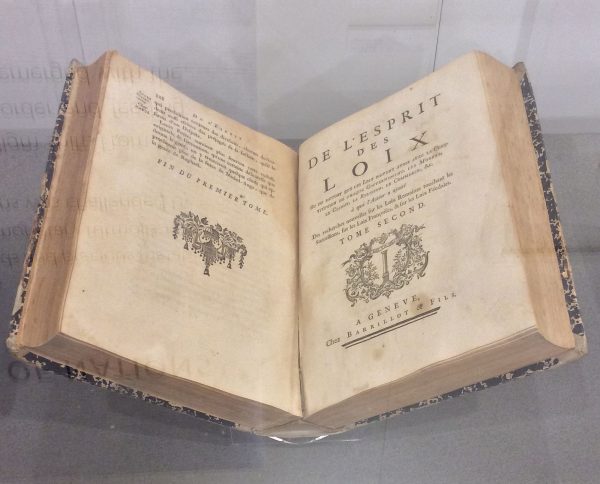
Previously, we prepared the manuscript in paper, nowadays this seems to move online and the edited and sometimes corrected versions will be published in print later on. The challenge to science and journalism is ticking. Not accepting that there is a serious challenge is no solution either. (Image from Exposition “Books that made Europe”, 2016)