Zero is more than just a number. Originally the Zero=0 was a simple placeholder for higher order numbers. The concept of 0 is useful in calculus. The digital revolution is based on 0 – 1 systems. Beyond this, there is a philosophical sense to it as well. Think of nothing, black holes, empty space, “ground zero“. Emptiness might not be empty at all, as for those filling your empty space (ets) with an empty—log. In Philosophy the nihilists or nihilism reached a lot of prominence. “God is dead” leaves us with a void that asks for alternative solutions. Beware of simplistic answers. Study the origins of democracy and the need for freedom of expression as a basis for new concepts based on fundamental values.
“Zero”, the group of artists in “Zero foundation” have made a significant contribution to the development of art in post-war Europe. The catalogue of the exhibition in Amsterdam and Berlin 2015 inspires imagination beyond today. Time passes on to achieve zero-emissions. Zut alors, the last Z-word to finish the countdown 3-2-1-0, I guess. (P.99 zero catalogue 2015)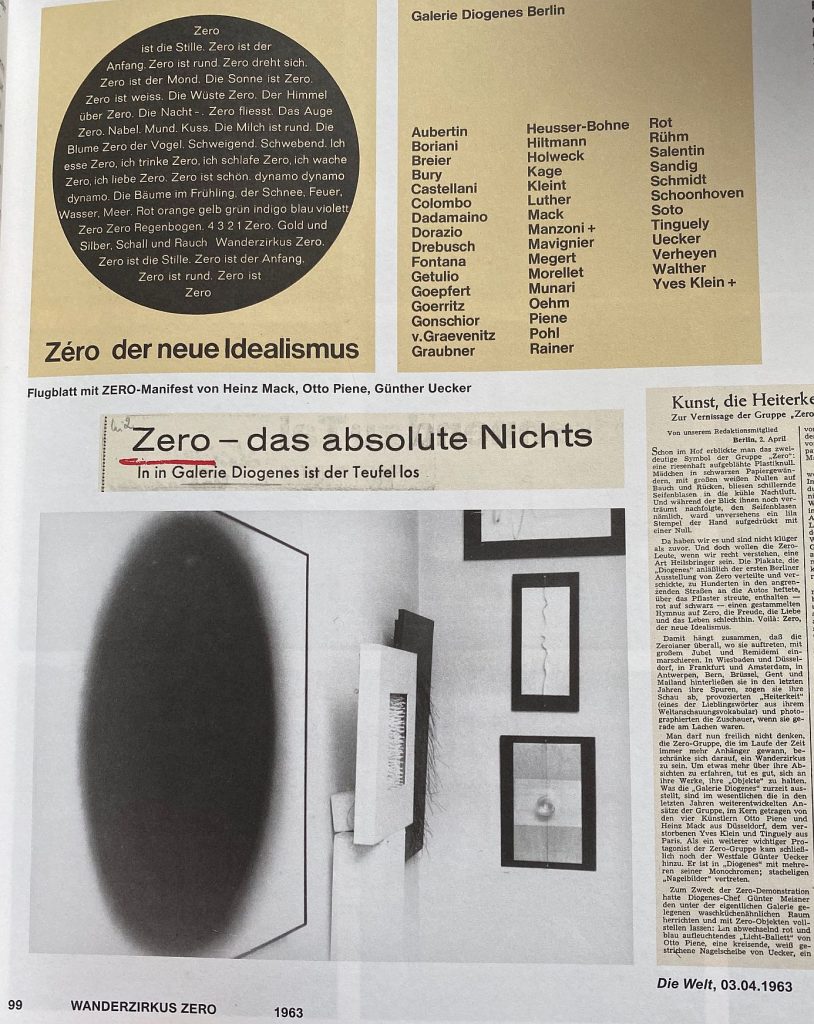
T for Time
“The times they are a changing“, end of blog entry T.
We live time forward, but we seem to understand it only backwards or in retrospect. Towards the end of each year, it is common practice to look back and review the last 12 months. Then we imagine what will the future be like. Our concept of time is past, present or future oriented. In classical physics we reflect this with a depiction of time on a linear axis. However, modern concepts of time include Einstein’s relativity theory, whereby in 2 different places time may run with different speed. Similarly, quantum physics allows that the causal relationship between 2 physical states is no longer observable in a logic that follows linear time. A particle may exit in 2 states in parallel. Hard to imagine, maybe, but demonstrations of these effects are found in textbooks for pupils already. Our grasping of the world around us is enhanced through scientific rigour.
Story-telling also plays with time frames. Analepsis and prolepsis are common techniques constructing a story, a film or any form or narrative. We tend to perceive chronological time even as boring. Our memory is also playing tricks with us on time scales. When was …? Additionally, we have multiple clocks ticking away. Time to submit a report, pay taxes, until the next medication or the psychological concept of “time until death”. Strangely enough, depending on which ticking clock we focus most, our behaviour is likely to change. Mobile time management tools have been created for centuries for us to handle all this jazz (call them a watch). They all have not changed our concept of time, only the precision to measure and cramp more activities or the same one faster into our daily life. Happier since? Test your self-efficacy, more general than time management! Try meditation to slow down the pace, use an app!? I started to clone myself with a virtual presence to experience the quantum effect of my life. Podcasts are played with 1,5x the normal speed now. Rhythm and music are the remaining traditional metrics of time. Even there, John Cage’s piece “silence” managed to abandon the time reference, partly at least. Okay, time is up, next letter, please.
R for Repairing
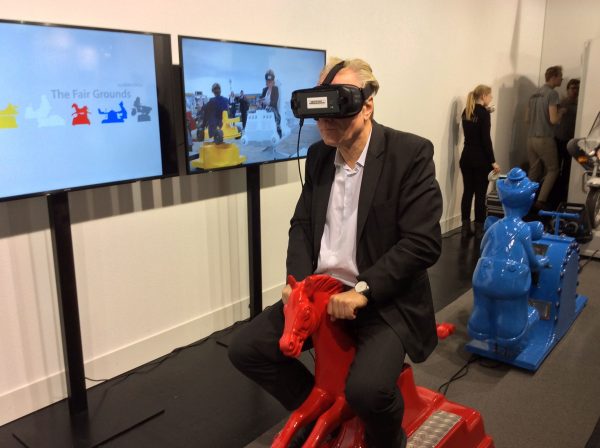
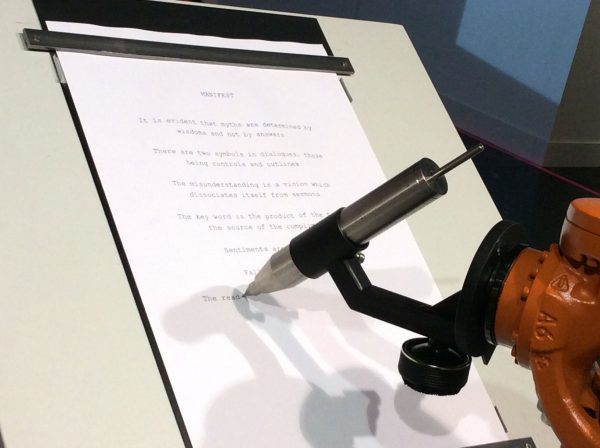
Without noticing for many people, we have shifted into the repair mode. Our planet needs repair work. Well beyond the less plastic, CO2, less oil, gaz and pollution in general, we have to actively repair what we have damaged, certainly since the industrial revolution. With nuclear waste we have entered into a phase, in which repairing is not really feasible. Areas around Tschernobyl and Fukushima speak for themselves. However, we seem to leave the repairing to future generations. Whereas for us currently it is an option, later on it will be an obligation.
The bionic interest has already turned to the Axolotl and Polycarpa mytiligera. Both species can repair themselves after the loss or a malfunctioning part of their body. Rather than producing externally, growing the spare part is a promising healing device. Nature provides many fabulous insights, if we were able to preserve the biodiversity. Repairing biodiversity is difficult, impossible for lost species which we do not even really know. Start to repair and build awareness that repairing can be fun. Beyond the gender stereotypes, women repair cars, men repair clothes, we have to learn from each other how to use our repair knowledge for many other things and devices. This applies even to our social, legal and economic systems.
In addition to reimagining, we need repairing everywhere. I have lots of stuff to repair at home. When do you start repairing? Welcome to the next trend: the joy to repair, repairs even joy. 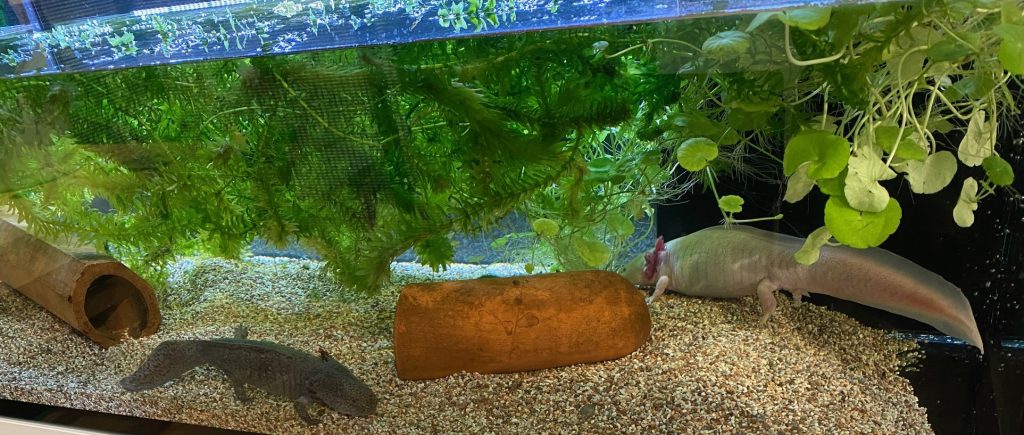
Q for Question
Quality and quantity or queer and query could have made valuable entries here as well. Common to all is the underlying process of questions. Questions put to oneself, to others, society or supra natural or supra national instances. Can quantity turn into quality? Is a queer perspective a new one? Is a query in a programming language the beginning of each algorithm? Questioning is a child’s “natural” approach to understanding the world. This does not stop soon after childhood, but it is occupying, if not haunting, us until the end of our life. When is this exactly happening – the end thing? Are we free to chose this? Just try to answer one of these questions and you’ll find out how one question leads to the next. We are all the same in this behaviour. However, we all find different stopping rules to the query algorithm. Religion is a fast shortcut to stop further questions. Sciences are the never, ever, ending type of questioning. Mathematics solved part of the problem. For a lot of series we are able to calculated the limit value towards which the series evolves circumventing the lack of a stopping rule. Fundamental human rights are such a far-reaching stopping rule. Just like after the French revolution, the question was, how to quickly spread the message of human rights. Didactic and paedagogics evolved in parallel. From “cogito ergo sum” to “rogatio ergo sum”. 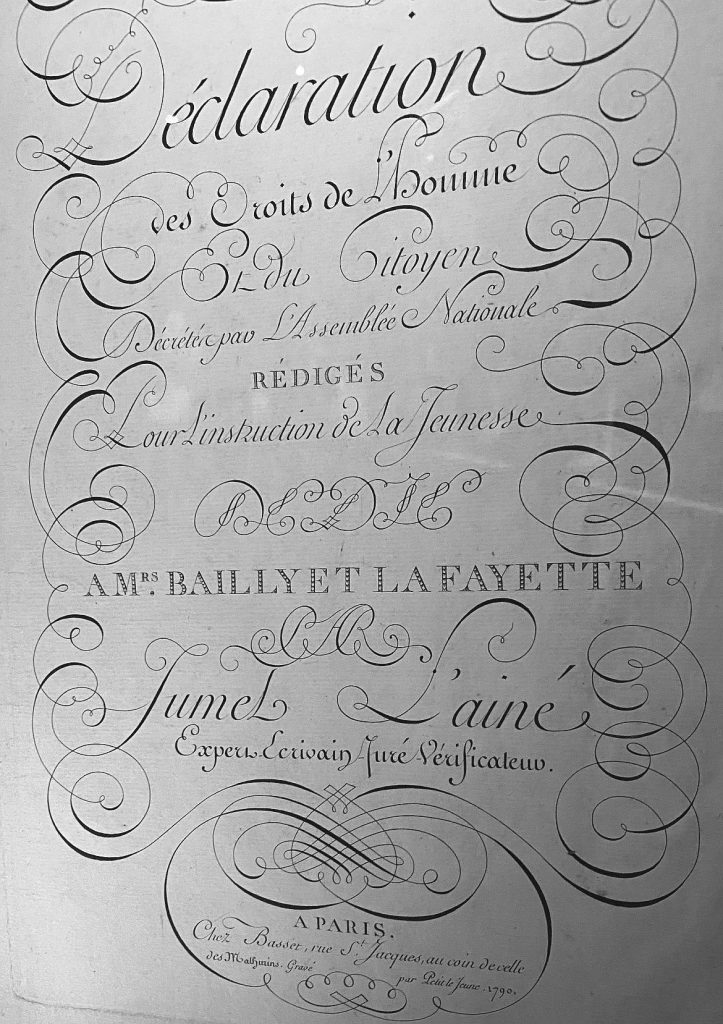
O for Optimism
Looking back at the end of every year to what happened in the last 12 months gives mixed feelings in annual repetition. Developments of nature and biodiversity are sometimes troublesome (variants of viruses like omicron). Despite wars and man-made disasters most people have a capacity to bolster with optimism. To view a glass as half-full rather than half-empty is a common description of two different perspectives on the same fact. Additionally from a longitudinal perspective it matters, whether you started from a full glass beforehand or from the empty glass. In experiments we would need to clarify the role of the starting point and evolution before the statement on the 50-50 state of affairs.
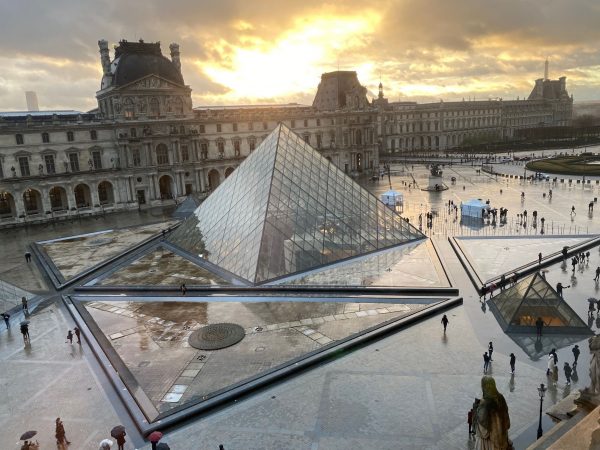
In the French enlightenment, represented by Voltaire‘s “Candide ou l’optimisme“, a critical view on the optimism of Leibniz is expressed. The optimistic claim of Leibniz, “we live in the best of possible worlds” is questioned by Candide who believes taking care of his own little garden is probably the best he can do to preserve nature and the world. These two apparently opposite perspectives and conclusions on the potential of human action we find reflected still nowadays in politics and world affairs. Do we stand up to defend human rights or do we believe the fight is futile? The optimism embedded in Ukranian culture, for example, demonstrates the power that might come out of optimism. It would even go as far as stating that optimism is a precondition for democracy, always striving for the improvement and spread of democratic procedures. Creating opportunities to more freedom to do something is the driving force besides ensuring to curb infringements on one’s freedom. Optimism is a close ally of imagination, imagination of all people living in peace. A nice sunset gives hope for a nice sunrise as well.

M for Memory
Besides the English term memory, which refers to a huge scientific literature starting with cognitive psychology, I like the French version of “mémoire”, because it is more comprehensive with additional meanings, nicely represented by Wikipedia.org. On the German Wikipedia-page you find first the reference to the children’s game memory, turning around images and memorising where the counterpart is/was (play pairs). This diversity hints towards a cultural element in memory. There is a person’s memory or mental capacity to recall and ways to remember. The latter term refers a lot more to collective memories and becomes a more debated issue. Danny Trom uses the term “split memory” in a chapter on France and the “myths of nations” (p.129-151). In David Brook’s reader on “the social animal” he states that grandmasters in chess (p.88) were long believed to have superior memory. This is actually not true as memory experiments showed, but they rather saw formations and “internal connections forming networked chunks of information”.
“Mémoire”, on the contrary, refers also to the writing of a person’s own biography. Nowadays, book shops contain whole sections of autobiographies, the most sold appears to be the one by Michele Obama recently, if I recall correctly. Among the most scandalous is the publication of the “Journal pour Anne (Pingeot) 1964-1970” by Francois Mitterand. All the autobiographical documents make explicit major parts of what might form collective memory later on.
Memory has found its way into engineering and computing. The memory effect in batteries or being “out of memory” frightens users in computing or programming. In short, I wish you the best of memories reading this page and stimulation by visiting memorials (image: Jewish Museum in Berlin 2022, Ullmann exhibition). 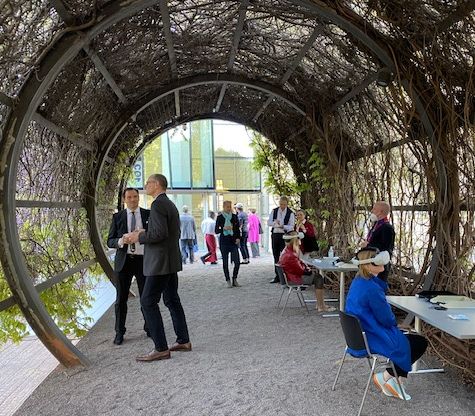
L for Law
Contrary to a popular misunderstanding. Law is not boring. The history of ideas is full of exiting projects based on laws. Starting with the foundation of empiricism, i.e. the comparison of laws governing the different Greek city states pioneered by Aristotle. Considering law from the perspective of legislation gives it an actionable touch and makes it more exciting to many persons. Contrary to a static perception of law, laws can be changed and are subject to interpretation continuously by courts and judges. The fascination with law might start with the philosophers of the French enlightenment like Montesquieu. “De l’esprit des lois” – explains already the need to look behind the literal text of law. What is the spirit of law, becomes the driving question. Not only the categories of countries like republic, monarchy and despotism were argued by him, but also the separation of powers into an executive, legislative and judicial power is his original contribution. These principles govern the German “Grundgesetz” and are a common understanding of the founding states of the European Union as well as a potential breaking point.
A sociological perspective on law is formulated by Niklas Luhmann (short intro in D) and highlights the danger of laws as a self-referential system. This dominated by experts who develop the system further independent of the concerns and understandings of wider society. In order to understand this concern, it is probably useful to think of climate change as an urgent problem. Bio-diversity has for much too long not been of much relevance for legal founding principles of our constitutions. In the same vein, women judges or diversity in the legal profession is a point of concern. Majorities versus minority rights create intrinsic tensions in law, legislation, execution and interpretation. Analysing the half-life of laws is interesting, i.e. how fast do they really change or get abandoned altogether. Equality in front of the law remains a thorny issue. It is a huge issue when moving from law to justice as primary concern. The most interesting point is the view of law as a changing matter, hopefully for the better, but this is another question altogether. Reveillons-nous l’esprit des lois ! (pas seulement au Reveillon). 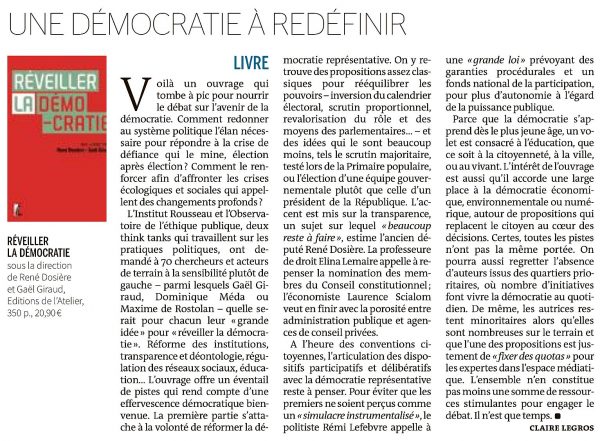
K for Knowledge
Readers of the sociology and/or the philosophy of science or knowledge have a hard time. Each discipline is evolving at such a high speed that is terribly hard for humans to follow more than 1 or 2 fields. Perhaps the choice of Karma instead of knowledge would have made it easier here. Alternatively, in German it is easy to find many nouns starting with a capital K. Kapital, Krieg, Kritik or Käsekuchen would have been popular, I guess. Soon I shall open the comments for suggestions for additional nouns, as part of the empirical “swarm knowledge strategy” rather than the theory-driven deductive method applied in knowledge generation on my side so far.
But wait, we are already in the middle of the unsatiable quest for knowledge. On a meta-level we would deal with the multiple ways to acquire knowledge and create new knowledge. Artifical intelligence is certainly one of the hypes at the moment. New data and new combinations of data drive us forward in the expanding universe and knowledge space. We have witnessed the disappearance of the thick printed encyclopedia in most households, replaced by specilised digital dictionaries or the network society’s shared knowledge base of “wikipedia“. Knowledge is linked to the history of ideas and Peter Burke is a prominent figure to rely on as a reference in this field. 20 years after “A social history of knowledge: From Gutenberg to Diderot” he published the much acclaimed: “The Polymath. A cultural history from Leonardo da Vinci to Susan Sontag” in 2020. To synthesise across the many “monsters of knowledge” over centuries is a daunting task. I like quotes like the one from Leibniz (p.77) “the horrible heap of books that is constantly increasing” and then his own continuation: “Printing, once viewed as a solution to the problem, had become a problem itself”. The whole section is devoted to information overload. Fragmentation of knowledge into disciplines and, much worse, the manufacturing of false knowledge create new challenges to knowledge. Maybe transforming the term to “knowledges” rather than knowledge is likely to capture better the differences between artificial knowledge, created by artificial intelligence and specialised algorithms, and human based knowledge. In knowledge storage we have lost the race with computers, but in deciding what are promising combinations between different fields of knowledge, we are still a wee bit ahead of the machines. Klara tell me, where is the exit, or your synthesis of the whole lot. Meanwhile I continue to read – what? books and the like. 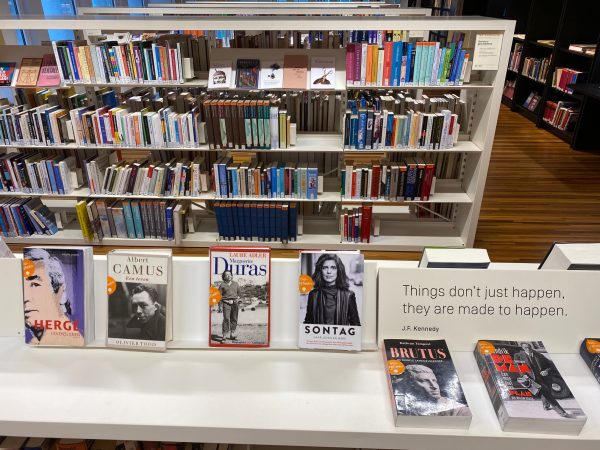
I for Imagination
We are all full of imagination. The human brain hardly can do without it. It could be understood as if thinking of oneself is a continuous process of imagining and reimagining oneself. We just developed or were forced to suppress imagination at various instances throughout our lives. Day dreams are rarely tolerated, starting at school, then on the job and probably for a long time also about the way we imagine our own ending or life after death. Just trying not to think, like in meditation, seems to be a very hard exercise and it demands long practice to arrive at longer durations. Abstraction is one of the ways of art to allow imagination to rule the process of creation. In view of the anniversary of Pablo Picasso in 2023, the Brussels Royal museum of fine arts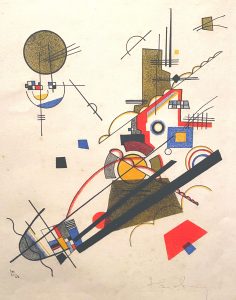 is presenting a paedagogic reflection and demonstration how Picasso emerged on his way towards abstraction as his preferred way of imagination and reimagination as part of the realisation process of his art work. As part of the Cubist revolution Picasso is quoted in this exhibition on how he paints: “Je ne peins pas ce que je vois, je peins ce que je pense.” and “Chez moi, un tableau est une somme de destructions.” Nice imagination, reimagination and de-construction I would say. Like the imagination depicted above from Paul Klee reflects the accomplishment of a new form of pictural language. Try imagination, it isn’t hard to do, “John Lennon” sang once. In Brussels you can try seeing the cubist way in the Picasso exhibition, a good way to prepare yourself for the next visits of fabulous exhibitions in honor of Picasso in 2023.
E for Enterprise
There is a new start-up scene in development in Germany. Interesting to witness the new entrepreneurial spirit. Many of the youngsters grow out of their peer community, wanting to try new ways of working and living together. The new bottom-up or grassroots form of growing a business out of a subculture seems to be an adequate response to the growing diversity of societies and easier ways of community building through online social media. Name it “reach” today, it is similar to what you previously called having a customer base. The new element refers to a blending of cultures. Learning through being online connected to the world, yes, the whole world, allows wide-spread influences from other sub-cultures, be they American, Asian or African. The young are open-minded to new stimuli like “Ikigai” from Japan and, of course, the life histories of founders and individual biographies from entrepreneurs like the legend of Steve Jobs, Apple’s legendary founder. Imagineering has become part of the movie-influenced influencers. Short clips out of a longer story build communities. The witty comment, like at school, gets more attention than the long boring story of the preacher, teacher or the mansplainer. The experience of “flow” is all around these communities and this creates the specific magic of the start-up scene. They take each other to new levels, mutually, reinforcing their preferences and life-styles. They are well aware of the risks they are taking. “Keinhorn” German short for “not an Einhorn”, the one billion value threshold for super successful enterprises taught them crucial lessons. The “ecology of organisations” which I referred to in my courses at the now renamed “Constructor University” previously “International University Bremen”, then “Jacobs University”, (let’s see what comes next?) is an important complementary research tradition to assess the “survival” of enterprises. I still recommend this University, which I quit to start new endeavors. It carries in its several 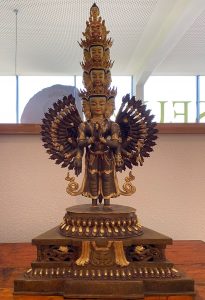 “names” the important message:
start, fail, change, (repeat).