
Home Energy

Energy production and consumption in a home are determined by many factors. The number of persons in a household has, of course, a considerable impact on consumption patterns. The investment in home energy production can cover the basics, but is less likely to cover peaks of consumption like friends on a visit wanting to charge their electric vehicle.
In a test with a simple small scale solar panel (fixed on a balcony for example with 860W peak) it was possible to produce a full days consumption on a sunny summer day for a 1-2 person household without use of electricity for personal mobility, but hot water through heat pump provision. The potential for an own production of electricity during summer months is within reach without major behavioral changes.
Okay, digital steering of energy consumption for hot water during hours of bright sunshine and washing machine around high noon are not for everybody to program or carry through.
Digital tools complement the energy consumption at the right time. There is a lot of power in sunshine. The usual caveats of bad weather and winter months change the calculations. The return on investment or break even point needs 300 days of about 2 kWh to recover the 500€ initial costs of the solar panels. After about 3 years the initial costs are recovered and savings begin to accrue. The bridge between energy theory and practical applications is to be found in experimental setups and tests of different scenarios for the modern “prosumer” of the 21st century.

Energetic Architecture

The link between energy and architecture is all to obvious. For at least a century we believed that energy had to serve architecture and could be relegated to second place. With global warming the overriding importance sits with energy concerns for some years to come. We spend billions to repair the bad architectural and fast growth architecture of the post 2WW era of architecture, especially the construction boom of the 60s and 70s. The driver of change in architecture has moved from the period of social architecture (60s, 70s) to energetic architecture. Energy in architecture has multiple dimensions. Whereas a century ago the shift consisted in the installation of central heating systems in the northern hemisphere of the globe at scale, in the 21st century the concern there shifts to isolation from heat (and cold) to more efficient, less polluting energy provision. Cooling houses and office spaces during extended periods and higher peeks of heat, ask for substantial revisions of existent architecture and the next generation of energetic architecture. Before long, we shall also think more seriously about the handling of water in architecture, a topic which is closely linked to energy consumption and design.
From a sociological point of view we are used to ask questions of social inequality related to this issue as well. We are on the way to move into a society of energy-rich versus energy poor households and enterprises. Financing of adaptations of housing and offices to the energetic challenges is likely to create severe additional inequalities, which exacerbate the already existing ones. If you have no money to spare, you will be unable to invest into energy savings with more distant returns on investment (ROI). At older age you are less resistant to heat waves and causes health disadvantages. If previous investments were impossible or the urgency for energetic architecture was neglected for too long, additional health inequalities shall arise.
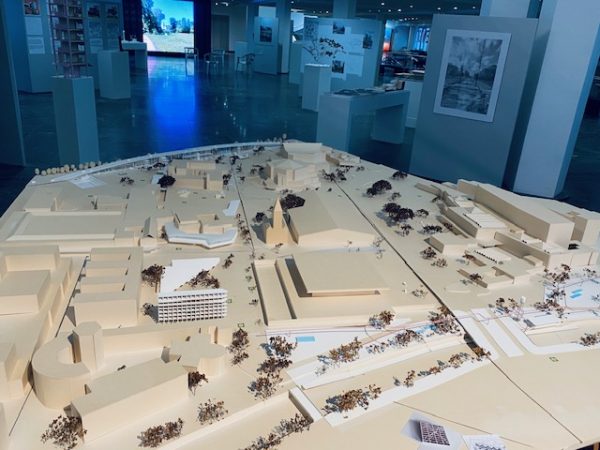
The “Deutsches Architekturmuseum” has built an exhibition around this theme, which widens the perspective of architecture and energy. This highlights the additional concern for energetic architecture and people living or working in (modern) architecture.
(Image Trier Roman arena 2025)

Global warming

The annual update of the global warming indicators (source: Earth system science data 2025-6) gives more reasons to worry about the future of our climate. The objective to limit global warming to +1.5°C, established at the Paris climate agreement in 2015, is no longer achievable. This is the hard evidence based on the global network of scientific data collections and their projections. Fossil fuels are a major cause, deforestation and greenhouse gas emissions as well (Forster et al. 2025). As a consequence, human-induced warming of average surface temperatures and flows of heat into oceans continue. The first consequences, we witness in many parts of the world already. France is particularly affected (Le Monde 2025-6-20, p.7). What used to be called “natural disasters” is better described as long-term consequences of human-induced global changes like global warming. About time to take our CO2 footprint even more seriously. The “All electric society” can reduce reliance on fossil fuels considerably, as of now.

Fertility Fecundity

The scientific debate around changes in fertility has focused on social, economic and cultural factors to explain the drop in total fertility rates in OECD countries. The baby boom years of the 1950s and early 1960s had come to an end following the spread of new forms of birth control like contraception from the late 1960s onwards. The trend is very obvious and yet, the explanations of the trend might lack a more profound analysis of fecundity in addition to the socio-economic explanations. Shakkebaek et al. (2025) point for example to the little known effects of environmental (pollution) factors on the biological reproduction capability of humans (men and women).
Additionally, psycho-social factors like “the German Angst” fear about future developments in many social and economic fields might have direct effects, but also indirect effects on human biology. We know still very little about such feedback loops or feedback effects. We are more convinced, than we actually have hard evidence, that the BSP, SPB or PSB (B=Bio, S=Social, P=Psycho) spheres are interwoven, but an ambitious research agenda is called for to enlighten the issue. The big invisible elephant in the room might be environmental issues that enter into the fertility equations more than we have expected for many years. A nice working hypothesis for an ambitious and overdue research agenda.

Real dad-ication

The last few years there has been a stronger recognition of the need to get fathers more involved in caring for children. In the USA the #dadication became a symbol and an annual campaign to raise awareness to the importance of fathers to get involved in addition to mothers. The combination of fatherhood and dedication was shortened into “dadication” to reflect the combination of both elements that we not always considered to a natural part of fatherhood. It is a win-win-win situation as fathers gain emotional strength, children learn about parental styles and mothers get some relief from at times overwhelming family care.
In literature we have some great examples of caring or neglecting fathers. Famous are the letters to his father by Franz Kafka. Historically, fathers have often thought their role solely as ensuring a social status for their children, but nowadays the role patterns is much broader and much more emotional or psychological as well. As there are more “dadication” role models around, the song “Papa où te” (Dad, where are you?) will still be popular, but with more reassurance that children or adolescents have vivid memories of time spent together.

Home cooling

In the summer months, in Europe, the concern shifts from heating your home to cooling your home. For generations this has been possible without use of air conditioning. A natural way of cooling has been for centuries to dig into earth to take advantage of the rather stable and cool temperatures underground. In home building this has also been a tradition for centuries to build cellars underneath a home.
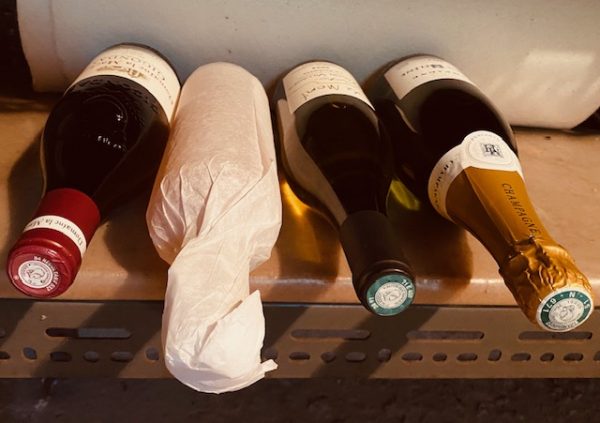
Wine growing regions have used the cellar as a natural cooling facility for long and short term storage of wine. Digging into a mountain of a valley offered a natural cool storage solution for years without additional energy consumption. Modern buildings should return to this practice and gain cold from below the surface to cool buildings in the warm or hot seasons. Good isolation combined with the cool temperatures from below the surface in summer months will substantially save energy and thereby CO2 emissions. Circulation of the cool air from below to the upper floors is the issue as well as dealing with differential humidity levels. The wisdom of previous generations in home building with no access to air conditioning (avoiding the air conditioning paradox) is likely to experience a revival in the coming years.
Coolness is the new and old wisdom.

Warming continues

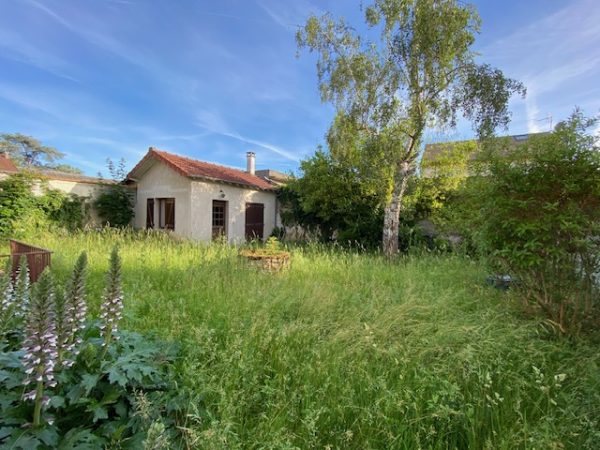
The global warming continues to change our landscapes. Heat waves, droughts and flooding become more often. Average temperatures keep rising. The evidence from meteorological data is showing this beyond doubt. Our forest take the toll and reports document the worsening situation for many trees (Germany and Switzerland). An adaptation will take years if not decades. In the region around Paris some home owners have started or been forced to adapt their gardens to the warming weather conditions. Trees that do not support the consequences of warming die and we witness the changing of the landscape. Palm trees near Paris have survive for years by now near Paris and can grow rather tall.
Like it or not, the visual landscape will change despite the many great initiatives launched by the city of Paris to stop the warming of the city.

Erik Satie Satisfied

The collection of letters from Erik Satie contains more than 1000 letters amongst them some in exchange with the best artists of his time. The range is largely due to the circle of artists who met at Montmartre in Paris before and during the Great War. We discover letters to Maurice Ravel, Claude Debussy, Pablo Picasso or Henri Matisse. For some artists there are 100+ letters preserved like to Jean Cocteau. In the 1920s he composed music for shows at Montmartre, where the scenario was painted by Pablo Picasso and costumes designed by Coco Chanel. The sculpture by Brancusi must have been familiar to him, just as much as the cubist paintings by Georges Braques, as there are also letters or references to such letters in the impressive 1000+ pages collection. Like Ravel he was rejected by the Conservatoire de Musique de Paris in his early days as student. Montmartre allowed to live and create at the same time while living on a minimal budget. Erik Satie signed his letters with ES. In German this denotes a “neutrum”, maybe, beyond male or female differentiation, but also a tonality in music (E flat). There is no trace that this was a conscious choice. It is just another unresolved puzzle about the self-declared “Gymnopédiste” and composer of the “Parade” and the popular piano music the “Gnossienne”. 100 years after his death on 1925-7-1 he (ES) could be rather satisfied with his impact on the course of music in the 20th century and beyond.

Musician Historian

Musicians are usually perceived as “part of history” rather than being historians themselves. However, recent research on Bob Dylan has extended that view to portray Dylan in his role as historian as well. The issue here is more with the historical periods and references the musician, composer and song writer builds on and interprets historical events. Thereby, his thoughts and impressions on living through historical events enter into his work as an artist. Dylan is literally “doing history”. He puts events of past and present into perspective of his own making and reached authority through the non-conformist perspective, which connected him to as a performer to his various audiences. His approach to doing history consists in the re-presentation and re-creation of historical narratives. Nina Goss (2024) in her book review highlights the “irruptions of the past into the present unique in popular culture”. The re-arrangement of fact and fiction encourages us “to inhabit, question, and revise historical narratives and tropes” (p.399). Several musicians have specific ways of reflecting, sometimes critically, on history in their artistic work. Bob Dylan certainly is a very prominent example of this an has been honoured for this by the Nobel Prize for literature. It remains an interesting perspective to review composers and their choice of libretti for operas as a way of doing history. The shifts from royal drama to revolutions and popular scenes are in this line of interpreting musicians also as historians.

Home security

Digitalization has made it possible to step up home security at reasonable costs. The video surveillance of homes inside and the immediate surroundings are feasible through the use of connected cameras. The footage can reach sizable amounts of data, but intermittent recordings reduce or the AI-assisted detection of movements on a person’s property have become standard home security. Even for apartments the video enabled door bells and digital locks have improved the security level for those who are willing to invest in home security. A good neighborhood watch system is, of course, in most cases a superior solution. But neighbors change and social interaction is often reduced to minimal contact in most suburban regions. As with heating of homes, home security is also depending on what makes you feel comfortable at home. For some 20 degrees Celsius is enough and a solid mechanical lock is sufficient. Others have made very different experiences and want their digital devices directly linked to a professional security or police service. Like it or not, home security is part of the modern home just like many other digital devices or TV sets. 

Rainwater Use

The use of rainwater is fairly easy to realize. Most homes in Europe and beyond have a roof drainage system in place. However, for decades the only concern was to get rid of the water as soon as possible. Nowadays, we think twice about it. The recovery and storage of rainwater for a separate use in a household has become a substantial cost saving exercise. In the Paris region in France you can expect on average 650 liters of rainwater per year per square meter. For a roof size of, for example, 70 m2 this yields about 45.000 liters per year. If you take a shower using 40 liters this allows you and your household to take 1125 showers or 3 persons almost one shower every day. Average household consumption in Paris is 120L/day, which adds up to about 44.000 liters per year for washing and toilet use. On a monthly basis with a storage capacity of 4000 liters of rainwater per adult person you should be able to manage your own consumption with your own roof drainage system. It is a rather simple use case. Maybe during dry summer months the calculation is a bit too optimistic, but the potential for a water autonomy of households in Europe is an option. In addition to the dry January, the no mow May, we shall have the no shower July next. 

Sunny future

The use of solar panels for energy production is a standardized process with decent returns on investment. Combined with heat pumps and the potential of decentralized energy production, storage and consumption makes jointly for reducing emissions. The planning, investment and installation with digital tools allows to reap further benefits through the ease of coordination of all processes. The « All electric society » will take hold of homes and mobility. The climate and business case for this societal change is obvious, but the risk of new forms of inequality may arise between the one able to make such transitions now and the ones without the means to shoulder investments at the same time with other budget restrictions. The change has to start in our minds first before action will follow. In any case, the solar future takes hold of more and more people. Have you checked your amount of solar energy production already today?

Solar panel energy
Screenshot

testing testing

Before the installation of the new AI chatbots or other agentic AI, they need profound testing. Wise statistics are quoted with the conviction: it is all about testing, testing, testing. Any systems that build on statistical reasoning (LLMs or machine learning) will behave erratically on what is known as an area with stronger impacts of, for example, statistical outliers. On both ends of the “normal distribution” of events or reasoning the statistical models and algorithms used in AI will produce “spurious” errors or have larger error margins on such topics a bit off the 95% of usual cases.
This means, testing, testing and testing again for the programmers of such AI systems before the release to the public or enterprise specific solutions. The tendency to keep costs of testing phases low  compared to developing costs bears obvious risks to the “precautionary principle” applied in the European Union. Testing is most important to check the WEIRD bias of the most basic AI systems. In this sense AI development has become a sociological exercise as they have to deal with “selection bias” of many kinds that could have very expensive legal consequences.
(Image: Extract from Bassano, Jacopo: Abduction of Europa by Zeus, Odessa Museum treasures at exhibition in Berlin Gemäldegalerie 2025-5).

AI Workday

Our workdays have seen considerable changes throughout the last few days. The home office boom has allowed employees to work for extended hours from home. The there is an abundant literature on the effects of home office work on well-being or the work-life balance. Productivity gains could be reaped by employers and a better work-life balance was a lasting advantage for employees.
The increased use of AI specific to some occupations has introduced a new form of added  productivity for some occupations or professions, AI as complementarity, whereas other occupations suffered a higher risk of being substituted by AI applications.
Based on time diary data, the study by Wei Jiang et al. (2025) reports that users of AI have longer work time and reduced leisure time. Competitive labor markets increase the pressure to put in even higher hours of work. Nerds, just like workaholics, are likely to be drawn into excessive hours of work with increased health risks. Enterprises and consumers appear to be gaining more than the employees, who are at a higher risk of loosing out on their work-life balance over time.

Archers destroyed

In the attempt to explain modern warfare to people, the Roman and medieval languages are staging a comeback. The archers have found their way from warfare into art history and back again. George Barros explains recent defensive actions by Ukrainian military forces as the strategy to put the archers out of power rather than the arches.
Destroyed or unfit air planes can no longer launch missiles or bombs. The Russian reserves are, however, fairly numerous, but the air strikes on the modern archers have demonstrated an astonishing military intelligence on the Ukrainian side. The technological advances of the Ukrainian military services may shift the balance or raise the costs of war to Russia, considerably.

Travel Trumped

The travel and tourism sector of the U.S economy takes quite a hit from Trump‘s anti Canada and Europe tariffs and rhetoric. The Wall Street Journal (2025-6-3) reports data until May 2025  which show a 6% decline in international air travel and a 12% reduction in air arrivals from Europe (reference same period last year). Canadians seem to reduce their travels to the US as well, hitting many regions just across the long joint border. Airline bookings are an early warning indicator, but the more drastic figures are to be expected from the loss of spending tourists do not dispense in the US any more. Additionally, sizeable shares of US tourists travel to other countries due to the disgusting Trump rhetoric and spend their holiday budgets elsewhere. Trump‘s tariffs has focused a lot on redressing the trade balance of goods, but the balance of services like in tourism is worsening day by day now. The political economy of tariffs has multiple feedback effects which are quite hard to predict.

Citizen Walk

Capitals like Paris and Berlin make great efforts to improve the walkability of their cities. After decades of focus on automotive traffic and mobility and the detrimental effects on health for several generations of people, the awareness that walking citizens are part of the solution is spreading. Citizens of Paris voted in a referendum to stop circulation of cars in 500 more streets. In Berlin pedestrians unite to mobilize more people to take to the streets as well and reclaim walking space. In high density spaces like metropolitan areas it is possible to reach all major amenities within a reasonable walking distance. The more spread out suburban area, however, leve fewer options to walk and carry your shopping or do your dily commute to work while walking. Fewer cars and pharmaceutical products sold would mean less „artificial economic growth, but more healthy and happy citizens. It will take decades again to realize such visions.

Memories updated

In Berlin and many other German cities it is a regular practice to scrutinize the memory inscribed into street names. In order to correct the honors given to persons with a past as fascist or responsible for mass killings street names were changed at several points in the history of the city. Streets named after battle fields, for example, are a continuous point of discussion. It is important to keep the perspectives of victims in mind. Therefore, changing street names is a little contribution to rethink the role of places and persons. Such changes are sometimes very controversial as people become accustomed to names, some might even not care much at all. Recognition and responsibility, however, have a lot of currency in historical perspective. Overpainting like in the paintings from Gerhard Richter has an important function in society and can be one way of coping with the demons of the past.

Retirement Recruitment

The debate that later retirement of seniors reduces the hiring of youth has received new attention. Paul Mohnen published a paper on the “retirement slowdown on the US youth labor market” , which demonstrates this “crowding out effect”. Moreover, the recruitment of middle aged workers is also affected, as job changes slowed down for these age groups. The surprising finding is that higher skilled youth suffers the largest reduction in employment opportunities and become “pulled” into lower skilled jobs as jo offers for lower skilled persons remained high during the observation periods (until 2017!). This evidence suggests that the well-documented firm-level effect of fewer retirement means less recruitment holds also for society as a whole. Knowing that recruitment during a recession affects young workers more than persons already in employment, the macro level effects in 2025 will be rather unfavorable for young labor market entrants. (Image Frans Hals 1625, Odessa Museum in Berlin exhibition 2025).

Draft Lottery

For decades the “intergenerational effects of the Vietnam draft on risky behaviors” has been overlooked. Deza and Mezza (2025) identified several changes in parenting styles (PS) due to existence of a draft lottery. PS like uninvolved, permissive, authoritarian become more frequent. Similarly, risky behaviors of their children like smoking, drinking and drug abuse tend to increase. According to this new evidence on an old strategy to recruit military personnel the effects are not only directly on the persons drafted, but have lasting consequences onthe next generation as well. This increased overall the burden of going as well as preparing for war in the societies concerned. In view of the Russian aggression on Ukraine territory the consequences for both countries are considerable and shall be transmitted to future generations as well. Even neighboring countries fear and feel the heat of recruitment for armed conflict.


Artist Development

For many artists it takes years before they find their idiosyncratic style. Testing different forms of art before zooming in on a particular style of art is the  common trajectory for most artists. Maybe the art marker and collectors of art are in search of a “defining style” for an artist so the uniqueness becomes more easily identifiable. Being part of a group of artists has been beneficial as well. The “Neue Nationalgalerie” in Berlin makes this development of an artist, in this case Lygia Clark transparent through the organization of a retrospective devoted to her evolution from abstract paintings towards participative and more organic forms of art. Berlin offers to interact with the pieces at the exhibition. You become part of the exhibition and the happening of art instantaneously. The form stays the same, the persons interacting change permanently. The piece of art is never the same. Just the idea of it thrives. In the Corpo Colletivo the performers wear an overall, all of them are linked to each other and movements happen organically as a group rather than individually. This is like a tutorial in sociology as individuals move as part of a collective body and feel the embeddedness and multiple links to other persons (Image: Corpo Collectivo 1970, exhibit in Berlin 2025)

Robot repairs

Robots have been used mostly in industry for assembling, transport or sorting tasks. There is also a role in disassembling to enhance circularity. To repair electric or mechanic devices there is an enhanced version needed which starts with a diagnosis of the problem. Algorithms can sort out promising from dead end routes of repairs. However, the recognition of objects into things that can be repaired and those without repair potential is a worthwhile assistance. Beyond the economic and ecological rationale for repairs, there is an emotional or nostalgic sense to it as well. Maybe, from a life course perspective any object related to the teenager years of a person qualify for nostalgic value. Even simple robots or AI-assisted objects may qualify for this in future. Artificial friends will be like tamagotchis in need of repairs.

Repairs again

Trying to repair electric or mechanic devices is confronted with multiple obstacles. Spare parts are hard to come by and many pieces needed are no longer in stock. Hence, in many instances the remaining option is to use recovery pieces from other broken or discarded devices. Whereas this is still common for repairs of vintage cars, for example, this is rather rare for consumer electronics like stereo music players or television sets. An aging clientele of the repair market is very used to a specific device and is often reluctant to change habits. 

An additional element in the repair process is access. Only in thinking repairs into the engineering and design of the device will make repairs feasible later on. An economy and business model which is based upon a high turnover as the basis for profitability has no interest in engineering for repairs later on. This makes a preservation of resources tricky. Disassembling is a necessary but not sufficient condition for the repair sector to thrive. At least the basic materials enter into a circular economy as a first step. Further steps consist in preserving the skills needed to disassemble and/or repair more. The habit „buy a new one and throw away the old one“ is hard ro change. 

Permanently anxious

„There’s a set of forces that want us to be permanently anxious“, is the phrase chosen by Tony Cokes in the exhibit just outside the „Palais Populaire“ in Berlin in 2025-5. International politics and the economic upheaval caused by Trump’s tariffs contribute to the already existing other sources of anxiety like nuclear energy and warfare. Global warming causing more extreme weather events add more man-made reasons for anxiety. The next generations will have to foot the bills we have left to them unpaid. Our current shortsightedness increases anxieties which previous generations have not known of a similar kind or in that combination. 

Community building and solidarity are ways to overcome such overwhelming anxieties. Supranational organizations like the European Union have an even stronger role to play to reassure its people with credible signs of solidarity. We are not alone in the struggle to overcome the anxiety that is creeping up around us. We are certainly stronger together than individually dealing with unspecified fears. „We shall overcome …“

Non-autonomous driving

The more engineers will invest in developing autonomous driving vehicles, the more the value of the few completely non-autonomous cars will rise. A 60 years old car with manual gear changing on the steering wheel like the Peugeot 404 from 1965 (image below) demands a strong effort to steer the car around a city. Apparently, some car producers reintroduce buttons to press or switch on devices since customers seem to prefer some manual activity in addition to the touchscreen technology. Voice guidance and gestures can be helpful for some, but there are also the advantages of manual activities that keep you awake and maybe with better focus. Choice is key to suit diverse user and customer preferences.

Local history

In Berlin and many other big cities in Germany like Munich and Hamburg there are local history projects which tell the stories of specific places or a house linked to liberation day or deportation or courageous acts during the Nazi  grip on Germany and terror across Europe. The initiative « Denkmal am Ort » has become a kind of citizen science project which brings people together to raise awareness again for the cruelties committed under the dictatorship of Hitler and the fascist political movements. Remembrance is not a passive form it can take many active forms as well by simply trying to find an answer to the question what happened during the 30s, 40 and 1950s in the house you are currently living in? Access to archives of cities and small towns can tell very surprising stories about local history. It is a great inter generational experience as well and sometimes the unspoken history turns into a great conversation about history and responsibilities. History is everywhere you just need to keep your eyes and mind open.

Technology maturation

Technology has its own time of maturation. The time for wind power generation was quite lengthy compared to some innovation cycles in information technologies. Maybe, due to the fact that large wind turbines had only big enterprises or public monopolies as potential clients who were already heavily invested in even bigger nuclear energy projects caused the slow pace of development of this technology. In Germany just like in Denmark, Sweden and the USA the first larger research projects took off in the mid or late 1970s. The technology is explained by Erich Hau in a comprehensive way including the early days like the « Growian » test wind turbine in Germany (extract of image below). Despite the fact that major engineering difficulties were overcome already in the early 80s, the economic and legal challenges took much longer to resolve. Nowadays, we have an additional case of energy sovereignty to add to the cost-effectiveness of power generation from winds offshore and onshore. In the coming years we are likely to see more and more decentral power generation from wind on roof tops or small poles to complement solar energy during cloudy but windy weather or at night. Just like the sunshine we shall praise the windy days for their power generation potential.

Constitutional Responsibility

The memory of horrors caused by Nazi-led Germany before and during the 2nd World War is our constitutional obligation in the Federal Republic of Germany since its beginnings in 1948. 80 years after the unconditional surrender this has become a state responsibility. Since the shift of tone introduced by Richard von Weizäcker on 8th of May 1985 framing the end of the 2nd WW as liberation day in Europe and Germany. On the same day, 40 years later, the top 5 political instances of democracy in Germany, president, chancellor, presidents of the parliament (1st chanber), the council of the regions (2nd chamber) as well as the constitutional court. The constitutional and moral responsibility of the crimes is not reserved to a presidential address, but all pilars of democracy in Germany committed to the narrative of a liberation of Germans and Europeans at the end of the 2WW. It is a truly European topic to celebrate the end of war jointly in all countries. This is even more the case as the memories of the last survivors of the Shoa in Europe is less transmitted by the rare survivors until today due to very old age. The impressive unity of the top constitutional powers sets a the path for a far reaching renewal of the acknowledgement of a specific constitutional responsibility to counter extremist tendencies. The speeches by Frank-Walter Steinmeier and Julia Klöckner in the Bundestag (Link in German) were remarkable in explaining in plain language, why we are happy about this liberation also in Germany. The emphasis of the end of pervasive and endless oppression and suffering caused by the Nazi-regime are an essential part of this feeling of liberation. With this commemoration Germany today has become even more a European nation which takes its historical responsibility seriously.

Liberation Day

In Germany the celebration of the liberation day 2025-5-8 change years of mixed feelings about what happened during the 2nd world war. In Berlin this day is a bank holiday now and more and more people subscribe to the view that the liberation from Nazi-terror was a blessing for German people. The “Neue Wache” is the room of silence in honor of all victims. We shall always remember. Fighting the early tendencies remains the most effective strategy to avoid extremism of fascist groups. It is the task of Germans born also long after the war to keep the memory of the atrocities alive and to care about prevention of new ones.

Ugly duckling revival

Ever since Hans Christian Andersen created the fairy tale of the “ugly duckling” (1843) the story has been adapted to all forms of theatre. The adaptation of the fairy tale to the stage in 2019 and the revival in 2023 at the “Deutsches Theater” in Berlin keeps inspiring people to surpass their restrictions or inhibitions, whatever they may be. This early 19th century fairy tale is a fine piece of the search of identity of a person. As it deals with the difficulty of individuals to find their own identity, the fairy tale deals already with the fitting of an individual into society. Society exercises pressure on individuals to conform to written and unwritten rules, which tend to hold up rules like “one size fits all”. Differentiation and allowing individuals to be different from an established norm becomes a central theme of modernity and even more so in the post-modern world. It is the essence of democratic societies to practice a tolerance of persons being or just wanting to be different. The performance at the “Deutsches Theater” might be a test of your level of tolerance or acceptance of diversity for some, but at the time of rising intolerance in and beyond the U.S. under Trump, such performances are dearly needed to celebrate the rich cultural heritage and achievements of far reaching tolerance. It becomes more evident what we are about to loose (again), if such performances would no longer be possible in a controlled or financially overly restricted world of theatre.