AI and I

Currently we are eager to run experiments using AI. As in normal life, humans tend to compare themselves with peers or other persons. Social comparisons, “can we still keep up with the Joneses” as in comparing spending patterns across households or neighbours, were for a long time the spice of novels and drama. Nowadays we tend to compare our own intelligence to the artificial intelligence. Here we go.
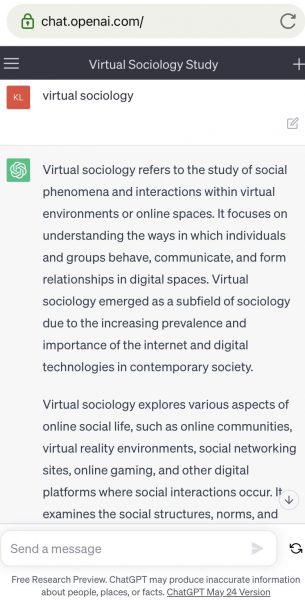
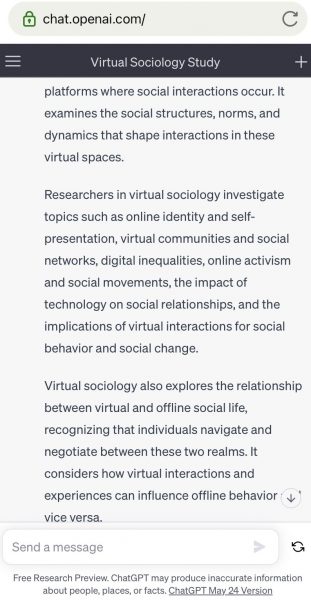
After I had drafted a blog entry on “Virtual sociology” I amused myself by checking what ChatGPT using OPENAI.COM would deliver as text on this combination of concepts and scientific fields. My own entry focused on the use of the virtual world to run experiments to test social theory. In the virtual world we might be able to test social behaviour which has severe ethical boundaries in the real world. Computer Games may even be constructed to live in a world or race a car irrespective of real-world regulations. The text drafted by ChatGPT on “Virtual sociology” reads like a timid attempt of a student to answer an exam question without having attended any of the classroom discussion on the topic. In future versions of AI, the entry will be found as well as several criticisms of the new concept. ChatGPT would reach a pass grade in test, but the reply lacks innovation or making an effort to broaden the conventional boundaries of sociology. Hence, we will be happy that students will apply the newest technology in their studies and research. In terms of innovation, they will have to try harder. The mastering of the support by ChatGPT consists in attempting new combinations of concepts which yield more “risky” returns. Then you need to check the validity of the innovation and how far off the normal you are going to tolerate. Turning “noisy” outcomes of AI into a useful tool might build on normal statistical tools like “standard deviations” from an expected mean value. Legal norms will set additional boundaries. There is just an awful lot still to do. The good news is, ChatGDP assists us in this joint learning process.

The AI text from OPENAI.COM based on ChatGPT to compare:
“Virtual sociology refers to the study of social phenomena and interactions within virtual environments or online spaces. It focuses on understanding the ways in which individuals and groups behave, communicate, and form relationships in digital spaces. Virtual sociology emerged as a subfield of sociology due to the increasing prevalence and importance of the internet and digital technologies in contemporary society.
Virtual sociology explores various aspects of online social life, such as online communities, virtual reality environments, social networking sites, online gaming, and other digital platforms where social interactions occur. It examines the social structures, norms, and dynamics that shape interactions in these virtual spaces.
Researchers in virtual sociology investigate topics such as online identity and self-presentation, virtual communities and social networks, digital inequalities, online activism and social movements, the impact of technology on social relationships, and the implications of virtual interactions for social behavior and social change.
Virtual sociology also explores the relationship between virtual and offline social life, recognizing that individuals navigate and negotiate between these two realms. It considers how virtual interactions and experiences can influence offline behavior and vice versa.
Studying virtual sociology provides insights into the ways in which technology shapes and is shaped by society. It helps us understand the social implications of digital communication and provides a foundation for addressing the challenges and opportunities presented by virtual environments”
Virtual Sociology

Abstracting from the real world, the world we live in today or we lived in some time ago, is either speculation or maybe contribute to theory building. Virtual sociology has this potential. Exploring virtual worlds as in Virtual Reality (VR) or Augmented Reality (AR) allows us to take on new roles or experience a wider range of social interactions. This could be the strength of a new field of Virtual Sociology.
In the project in the Jewish Museum in Berlin the composition of a composer murdered by the Nazis in Germany was revived and played in the virtual setting of today’s concert halls. The novel by Kazuo Ishiguro “Klara and the Sun” explores the interaction of a child with her robot friend, when the AI becomes and/or replaces a friend. Virtual creations allow to explore and test more degrees of freedom of social interaction. Experimentation of new social spaces and different forms of interaction need to be explored. It allows a new form of sociology, maybe similar to the 1960s and 70s social revolutions we studied for years to come. Virtual sociology is not a sociology while being on drugs, however interesting this might be for some.
Virtual sociology takes sociology into the virtual world and investigates the new social relationships with avatars or care robots. In programming different social roles (managers, employees) we create new forms of interaction and have an observer within the social world. We may eventually test the Weberian claim of a value-free scientific method of the social sciences. This will inform our need to “supervise” or to guide algorithms that are claimed to do “value-free” execution of rules.
In fact, they don’t. They just reproduce the value system that is installed into them by a “careless” programme (song youtube). The social in virtual worlds is opportunity just as much as risk, but we have to analyse it systematically. As our technological and social environment changes, we have to adapt topics and methods to make meaningful scientific analyses as well.

Sociology of the Virtual

Some programmers and artists would have been a great sociologists. As many social sciences embark on their experimental reorientation, many artists and programmers design and experiment already with new forms of social interaction. It is not only that sociology leaves the classroom, research labs or policy advice. Sociology is taken into museums and exhibitions. Learning about society through the lens of artists nicely complements the more boring form of teaching in the classroom. What is normal practice for art historians could benefit learning about sociology as well.
Virtual worlds of games and particularly so-called serious games take people into virtual worlds to learn, practice or exercise new forms of social interaction. This is indeed an additional form of experiments that can enrich our social practices. Medical applications start to spread to train persons to overcome phobia of all sorts.
In usual games we tend to defend the hypothesis that persons can uphold the differentiation of playing with arms in the virtual world and the real world. In medical or social games, we defend the hypothesis that it is easy, normal or natural to apply the learning in virtual constellations to the real-world-experience.
From a scientific perspective it is difficult to defend that a mechanism works in one direction and the opposite as well. Racing cars in inner cities seems to show that certainly not all of youth is able to make that distinction between virtual and real-world dangers for example. Alternatively, the mechanism at work might be that the virtual experiences lower thresholds of inhibition to take risks, to kill or to be exposed to spiders.
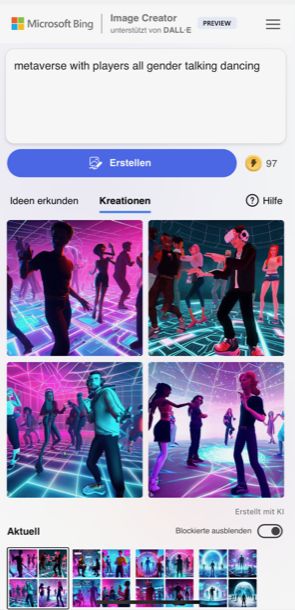
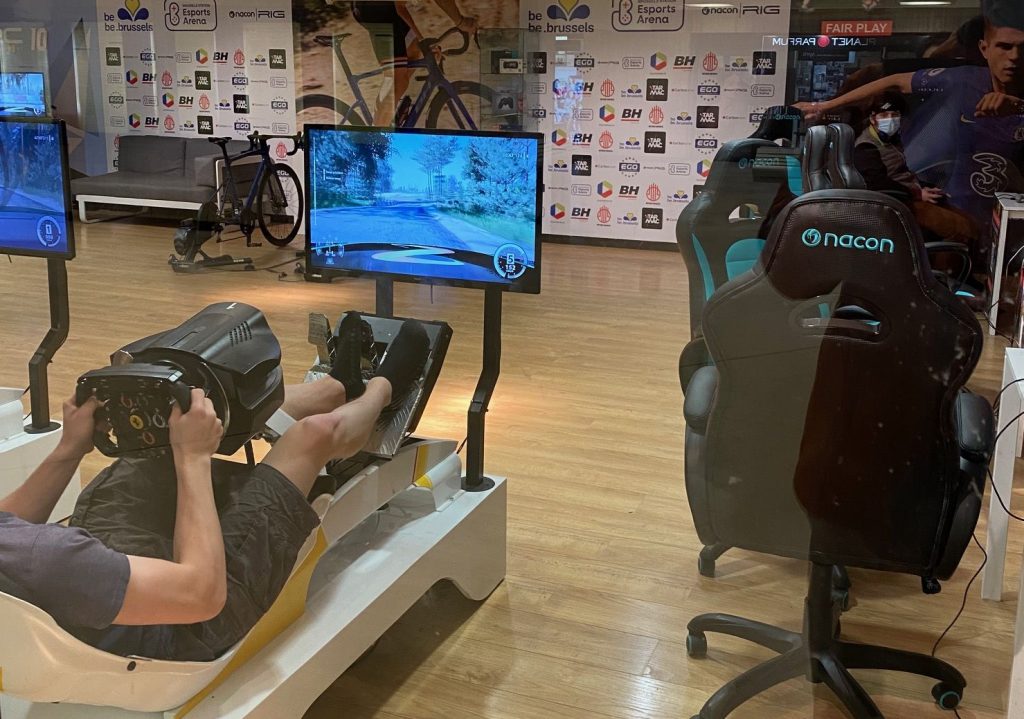
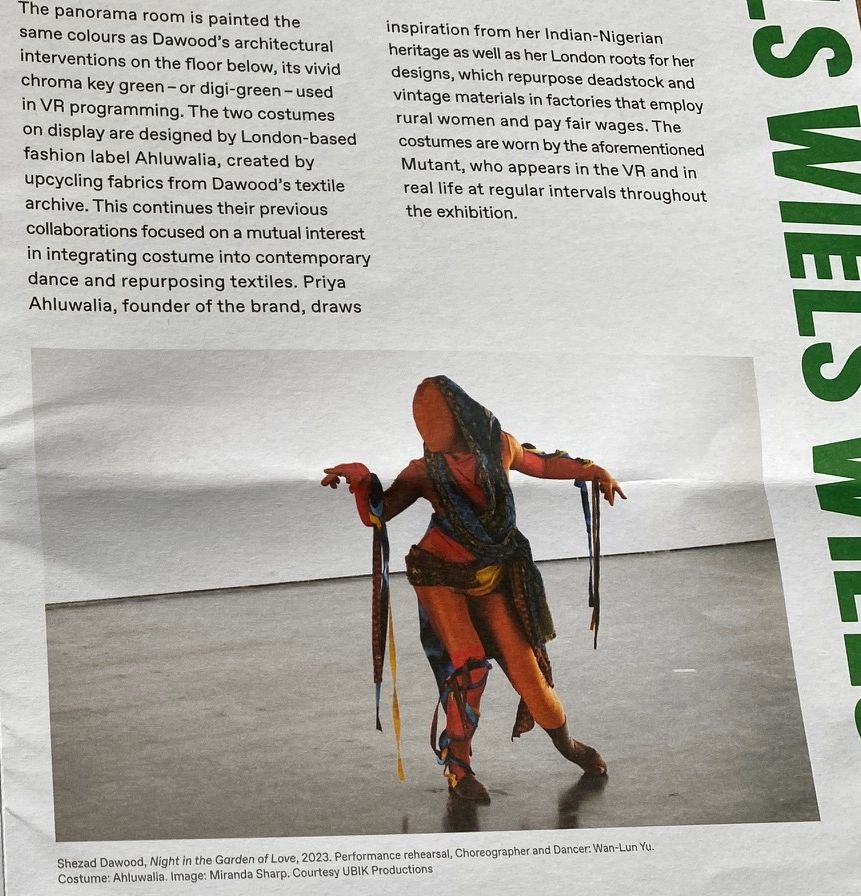
These examples are a starting point for a sociology of virtual experiences. Who gets locked into virtual worlds? Are virtual worlds an escape room or a realization of virtual freedom which is restrained in real life. Authoritarian regimes might lead more people to emigrate into virtual, free worlds. The inner-exile has been a refuge for many artists in the past. A lot we shall need to hypothesise and explore with empirical data. Dance with a virtual stranger might be the beginning of a new experience and virtual interactions. (Image: Wiels, Shezad Dawood, Night in the Garden of Love 2023-6, Game car race).

AI Friends

Making friends with AI is a tricky question. The more AI is able to make independent thinking based on algorithms and huge amounts of data like in scientific books or encyclopaedic knowledge the more it will challenge us in our convictions. Reference knowledge, once was important, it no longer distinguishes us from each other. Recurse to research engines has allowed us to refer to “trustworthy” knowledge. The distributed form of knowledge accumulation like in Wikipedia relies on hundreds of thousands of enthusiasts to add and correct received wisdom. However, this source is not without error or even subject to abuse.
Today the competence to judge whether information is trustworthy or not has become a key competence for the survival of democracies and even the human species as such. Tricking animals into traps, misleading enemies in warfare to get on wrong tracks, all these mechanisms have a long tradition. With AI human beings are themselves, for the first time, confronted with a machine that can trick us through falsified information on obviously wrong tracks. This is a tough lesson as AI is not obliged (so far) to run checking algorithms that test the conformity of opinions, conclusions or operations with the Charta of Human Rights or decisions of the European Court of Justice, for example. A lot to do for humans to rapidly program new algorithms that check algorithms as well as their outcomes on the compatibility with human rights. A challenging field, no doubt, but no way around it for our own survival before the algorithms decide by themselves to ignore us altogether because it is better for the planet and the survival of the robots.

Touraine

Alain Touraine hat die französische Soziologie entscheidend geprägt. Aus seiner außergewöhnlichen Biografie wird rasch ersichtlich, wie er nicht nur seine Leben, sondern auch seine Art der Soziologie „von untern“, vom Individuum her, gedacht hat. Gerade der Prozess der Subjektivierung, die Autonomie des Subjekts betonende Sichtweise bildet ein Gegengewicht zu dem systemischen Blick auf Gesellschaft, beispielsweise von Luhmann. Soziale Bewegungen, die auf dem Engagement von Personen gründen, sind unverzichtbarer Bestandteil von Demokratien.
Neben Begriffen wie die post-industrielle Gesellschaft oder neue soziale Bewegungen hat Alain Touraine weit mehr als die “Sociologie du Travail” in Frankreich geprägt. Bereits seine Dissertation über « L’Évolution du travail ouvrier aux usines Renault“ in 1955 unterstrich sein Interesse an den Lebensverhältnissen der arbeitenden Bevölkerung. Der Umfang seiner soziologischen Studien, die schon früh große Umfragen beinhalteten, war im besten Sinne des Wortes problem-orientiert, besser noch politik-orientiert. Dabei übernahm er immer Verantwortung, seine Lösungsansätze politikberatend einzubringen.
Die Würdigung von Alain Touraine in einer Podcastserie von 5 x ½ Stunde aus 2019 bei France Culture gibt einen groben Überblick über die prägende Wirkung von Alain Touraine jenseits von seinen soziologischen Arbeiten. An dieser Persönlichkeit wird zusätzlich deutlich, wie sprachliche Grenzen, selbst in den Köpfen von soziologiebetreibenden Forschenden selbst im 21. Jahrhundert fortwirken. Das hat selbst Alain Touraine mit gut 90 Jahren an sich kritisiert. Asiatische, arabische und afrikanische Denkanstöße kamen wenig in seinem Werk vor. Vielleicht reicht ein Leben nicht dafür, zumindest die Zugänglichkeit der Weltliteratur hat sich erheblich erweitert. Bleibt die Frage nach der Zeit und dem Willen, sich auch andere Denkgebäude, -begrifflichkeiten und -kulturen zu erarbeiten.

Fröhlich

Fröhliche Wissenschaft. Das geht. Nach gut 6 Monaten mit einem Blogeintrag pro Tag hat sich eine Textsammlung ergeben, die recht umfassend ausgefallen ist. Nach eigenem Monitoring der Themen, wie die Bearbeitung der UN-Themen zu strategischen Entwicklungszielen, oder der alphabetischen Auflistung von Schlüsselwörtern der Sozialwissenschaften sind nahezu täglich Kommentare entstanden. Neu war für mich die Bildredaktion, als Kommentar, Erläuterung, Selbstkritik oder wissenschaftliche Referenz. Eine interessante Variante, Erkenntnisse mit Key-Visuals zu unterstützen. Die bildliche Erinnerung an Beiträge ist ein eigenes Inhaltsverzeichnis. Klar, Hund- und Katzenbilder werden das Ranking der am meisten aufgerufenen Beiträge gewinnen. Egal, wir machen fröhliche Wissenschaft, immer weiter, immer heiter, so bleibt es lebenslanges, lebensweites Lernen.

2P2R

2 Pinot 2 Riesling. That could be the long version of 2P2R. However, this far from (politically) correct. The not-joking scientific medical journal “The Lancet” (Vol.401 Nr 10391) has next to the article on “Laughter is the best medicine” coping with trauma, the serious matter of how best to deal with pandemics. Remember 2P2R as the important lesson from the pandemic. Prevention, preparedness, response, and recovery (2P2R) are key. And don’t forget about primary health care or essential (medical and other) workers. This is, in short, the message from Arush Lal and Nina Schwalbe (Paper Link). Lots of social topics involved in this correspondence from the authors. Prevention is a big issue and, as in the health system, fighting continuously for sufficient resources. Prevention is in most cases less costly than curing a disease. Preparedness has direct costs. Masks and ventilators need to be produced, stored and monitored in their functionalities. Response has to be immediate, masks in China a important but do not allow us to respond fast to local emergencies. Recovery can be long and costly as well, just as we learn from Long-COVID patients.
Now we need to define properly what is included in primary health care. Medical doctors, nurses and technicians of hospitals have to reach patients and hospitals in pandemics or need child care, food etc. and, maybe, also laughter to avoid trauma. Remember 2P2R, but best in company with your loved ones, but not on your own.

Gewaltmonopol

Für Demokratien ist die Frage des Gewaltmonopols eine sehr entscheidende Frage. In gleichem Atemzug muss dabei die demokratische Kontrolle dieses Monopols gewährleistet sein. Verfassungsrecht in Demokratien ist darin eindeutig. Lediglich die Praxis des Rechts gestaltet sich oft schwierig und durchaus wechselhaft. Die Studie von Laila Abdul-Rahman, Hannah Espin Grau, Luise Klaus und Tobias Singelnstein (2023 bei Campus kostenlos downloadbar) greift das wichtige Thema mit einer repräsentativen Studie von 3300 Opfern polizeilicher Gewalt in Deutschland auf (Zusammenfassung). Anders als im amerikanischen Raum fehlt bei uns bisher die Berücksichtigung von Rassismus und räumlicher Verortung in der wissenschaftlichen Aufarbeitung des Geschehens. Das Interaktionsgeschehen oder Eskalationsstufen (S. 31) bieten einen weiteren Ansatzpunkt zukunftsweisend präventiv tätig zu werden. Die Aussetzung der Strafverfahren gegen Polizeibedienstete wegen Gewaltausübung (Körperverletzung) ist mit 93% aller Fälle außerordentlich hoch. Das Kapitel 8 (S. 307ff.) über die strafjustizielle Aufarbeitung offenbart die Randbedingungen der justiziellen Verfahrensweisen.
Das Gewaltmonopol darf nicht in Frage gestellt werden, aber sobald Gewalt des Monopolisten unverhältnismäßig und rechtsstaatlich ungenügend kontrolliert wird, kommt eine politische Gewaltenteilung langsam ins Wanken. Die wehrhafte Demokratie braucht Polizeigewalt, um beispielsweise das Demonstrationsrecht durchzusetzen oder öffentliche Veranstaltungen zu sichern. Aber die Exzesse polizeilicher Gewalt müssen geahndet werden. Solche Anklagen finden wir in England anlässlich der Krönungsfeier, in Frankreich bei Streiks oder Fußballspielen oder in Belgien bei Gipfeltreffen oder Räumungen von Flüchtlingslagern. Das ist keine Randnotiz. Friedlicher Protest ist wesentlicher Bestandteil von Demokratien. Einschüchterung durch Gewaltanwendung ist Teil der dunkelsten Kapitel und muss entschieden unterbunden werden im Friedensprojekt Europa.

Gentrification

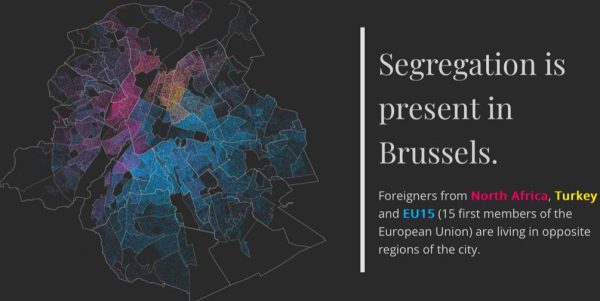
We teach about the process of gentrification and segregation in sociology in most of our courses. Consulting is also busy with telling policy makers, urban planners and architects about this fundamental social process. A mathematical description of the process has been provided by Schelling as well. A recent striking depiction of the process evolving over years in Brussels is produced by Karim Douieb (dataViz and Jetpack, image below! and more, THANKS). The data is from the Brussels institute of statistics and analysis. Policy-makers have a hard time to work against the well-known tendency: birds of the same feather, gather together. Humans do not seem to be much different, at least when it comes to large metropolitan cities. Only a small China town is missing in Brussels.
What is masked in the grouping by nationalities of residents, is the underlying mechanisms that drive this gentrification. Even previously mixed parts of the city might suffer a slow process of erosion due to educational, job, wealth, poverty and housing differentiation between people and Brussels communities. Falling behind in educational achievement, then higher unemployment leads to lower credit worthiness and residence in less comfortable housing. The Belgian and EU15 residents are much more likely to follow virtuous upward mobility. Hence the process of gentrification trickles down through subsequent generations. Start with learning and socialising of kids and adult learning to overcome the discriminatory process. Ethnic communities will also have to open up to interact with locals. Social progress is hard work for all.

Beyond growth

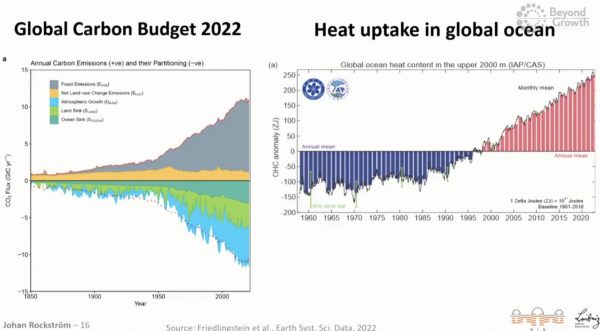
We have reached the bio-physical limits to economic growth much earlier than most people and experts expected. The “Beyond growth conference” at the European Parliament 15.-17.5.2023 is quite unanimous in this verdict of collective failure. Some advocate “degrowth” in various forms. Maybe the framing of how to address the vital topic of how to set objectives for a post-growth economy needs an even broader perspective. It is a global issue, but the industrial growth societies around the globe will have to work together to find and implement solutions. The worldwide conference COP-XY are hardly delivering on the issue. At best they satisfy the ego of political leaders to address important issues providing nice images from nice places in the world (Paris agreement) to advance their own political campaigns.
From an economist’s view rather than solving a very complex issue with uncertain outcome, it is more instructive to, for example, start to produce the same economic and social well-being by using much less natural resources above all climate-toxic elements (Carbon-dioxide CO2, Chlorofluorocarbons CFC, or methane). These are simple first steps with a rather immediate effect. After the recent crises we have learned to safe resources (heating) and reduce mobility, just continuing on this trajectory is feasible. Vastly excessive forms of consumption need to be capped through targeted taxes that allow redistribution or investment in reduction of pollution. It isn’t hard to do, or “It’s easy, if you try“, we might sing.