Gartenwelt

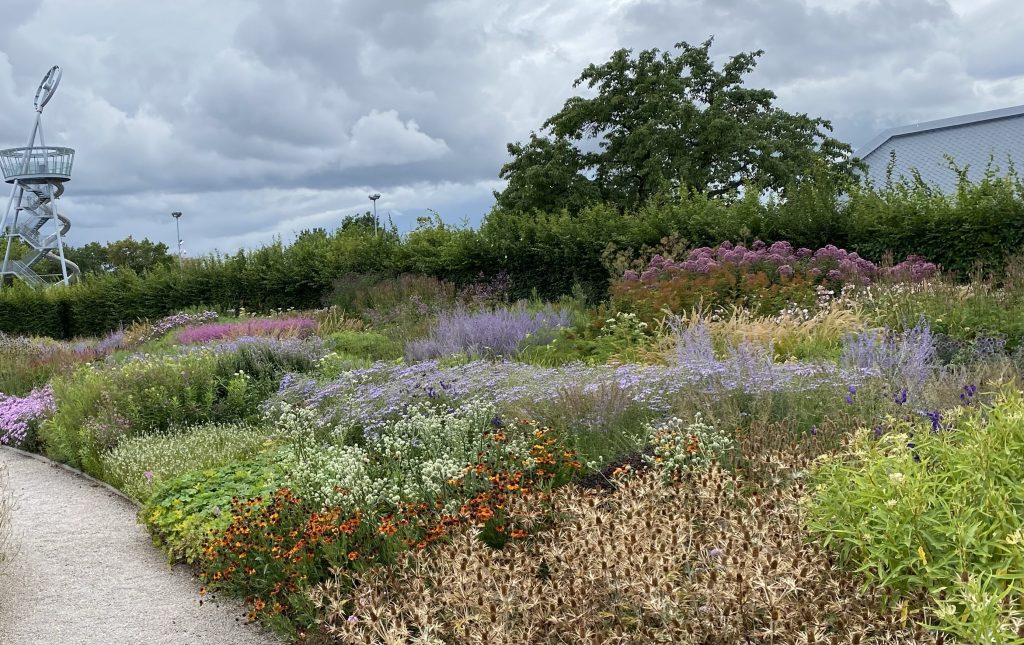
Gärten sind eigene Welten. Selbst im gleichen Garten sehen verschiedene Menschen unterschiedliche Dinge. Man stelle sich nur sogenannte Farbenblindheit vor. Jahreszeiten bieten zusätzliches Ansichtsmaterial. Animalische Perspektiven würden für erstaunliche Überraschungen sorgen. Nach den Vorarbeiten mit dem Polinatorprojekt online hatten wir die Gelegenheit eine konkrete Realisierung einer solchen Gartenwelt zu durchwandern.

Der reale 3-D Eindruck ist überwältigend und bringt die virtuelle Erfahrung des Gartens im Lauf der Jahreszeiten in die reale Welt. Zu jeder Jahreszeit, selbst im Hochsommer, ist viel Farbe im Spiel und das auf mehreren Ebenen. Paradiesische Gartenwelten erschließen sich bei der Bewegung im Garten. Das wirkt wie ein Ansporn zu eigenen oder besser gemeinschaftlichen Anstrengungen einer vergleichbaren Realisierung. Genau das ist auch Teil der Ausstellung und des Katalogs „Zukunft der Gärten“ im Vitra Design Museum.

Healthy Brain

We’ve got only one brain. Hence, we better take good care of it. There is only a small community in Wales that has got more than one brain, they have got brains. For all others we should like to know what we can do to keep our brain healthy for as long as possible. Scientists try their best to find out for decades. The state of the art is well documented in a study published in The Lancet which followed 64 so-called superagers in the study and 55 in the control group. These superagers are 80 years old persons that have annual brain fitness tests and brain scans (MRIs) that show their brain has a functionality of a person 20+ years younger. Anxiety scores and depression levels seem to be major explanatory factors for reduced grey matter and decline in functionality of the brain in aging. Fewer glucose disorders and hypertension contribute to successful aging of the brain. An active lifestyle and any form of practicing music make you also more likely to be in the group of superagers. Motor control, balance and speed are important to take into account additionally. A good solution to successful aging is “singing in the rain” I would say. In terms of prevention of “brain loss” it seems important to highlight both the pure brain functionality and the importance of exercise to keep sufficient motor control. Get up and walk! That is the answer. Yes. Again. Trying to do it fast is a good way to preserve not only your body but also your brain.

Health inequality

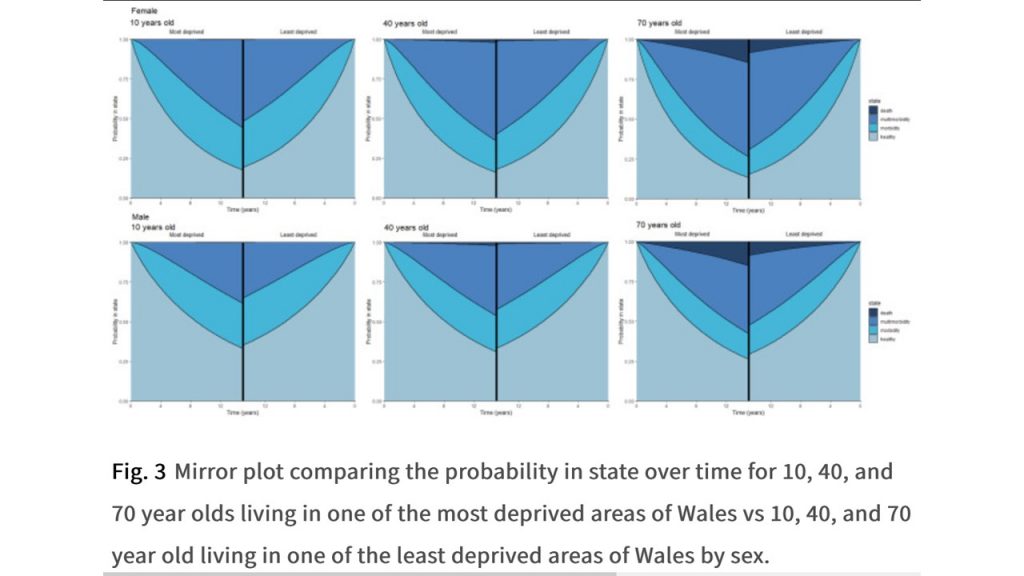
Almost all studies irrespective of the methods applied find that health is a matter of related to social inequality. The study by Lyons et al. (2023) in the Lancet demonstrates the same basic findings. This study uses the concept of multimorbidity and time until first and subsequent diagnosis as the measures of health. Mortality between different socioeconomic groups in Wales (UK) is largely confirmed. It is not only men beyond 70 years of age that face this unequal health trajectories, but already in the age group of 10- 20 years old teenagers the time until first diagnosis is different between the poor and wealthy neighbourhoods.
Differential health trajectories have a very early onset and seem to widen throughout the live course. The longitudinal nation-wide study in Wales allows to determine the impact of socioeconomic deprivation on health. The conclusions imply a combination of health and social policies to address health inequality. Clinical practice alone is unlikely to reverse the trends as onset of disease in form of first or subsequent diagnoses start from a very early age onwards in deprived areas.
Health as part of the curriculum in education systems is an obvious conclusion as well. This needs to take preventative approaches more seriously to give children and adolescents a more equal start into adulthood and professional working life. Education systems have to be reformed to become part of the solution rather than creating unhealthy trajectories themselves due to stress and unrealistic, unhealthy goal setting. Walking or cycling to school, more healthy school meals and learning about nutrition as well as processes of metabolism in the body should complement a more active school life-style. The dangers of developing ill health early seem to be greater nowadays than before. That is probably the most worrying news of the study. Sedentary life-styles seem to be a result of deprived neighbourhoods with less areas for comfortable, healthy walking or outdoor exercise.
It is an accumulation of effects due to neighbourhoods, commuting patterns and work-related health risk. Counties within regions grow more distant from each other as well as regions within countries. Youth is well aware of these health and social differentials. Eventually they will claim their “lives” or “equal chances” back again. Sociology has provided many clous to address these issues: Segregation or discrimination of groups of society, gentrification of neighbourhoods, intersectionality of health and social issues, to name just a few.
In order to target at-risk populations better and intervene with prevention rather than curative, we have to integrate social and health approaches much more than we used to do. The way forward is to improve the targeted, preventive approaches in order to improve the equality of chances to education, health and work.
(DOI: LINK to study)

Nuclear War

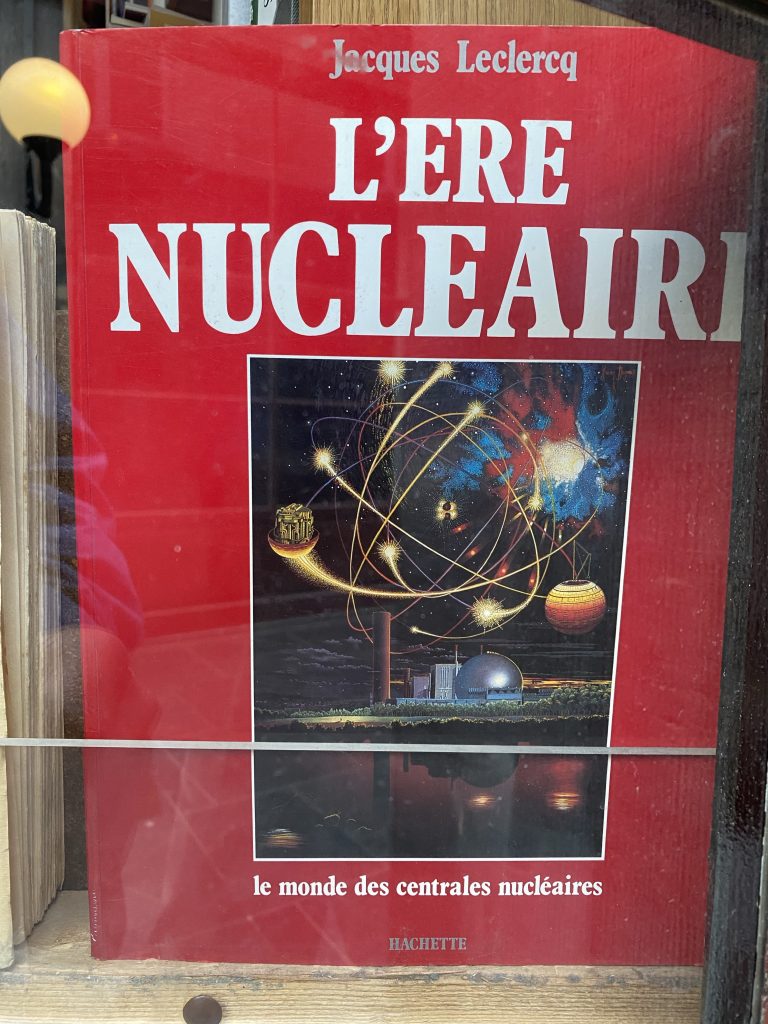
In the last few years we have witnessed a new surge in the investment in nuclear energy on the global level (IEA). Ever since the foundation of the initiative “International physicians for the prevention of nuclear war” in the 1980s, there have been relentless reminders of the devastating effects of such a war. In 2023 we are all aware of the real risk of attacks on the biggest nuclear power plant located in Ukraine. Nevertheless we continue to invest heavily in power plants that constitute a massive risk at times of war between irresponsible nations. Besides the publication of many high quality papers in The Lancet there is regularly space to keep the awareness of the dangers of nuclear war at a high level. Too many politicians shield themselves from dealing with such realistic dangers in the interest of supposed cheap and save energy for all. Both is no longer the case. Nuclear energy is expensive and unsafe in peace and horrible in war times. We cannot afford to abstract from these rising risks. The hype about anything nuclear like in the 1980s is grossly displaced (image of book below).

Anger

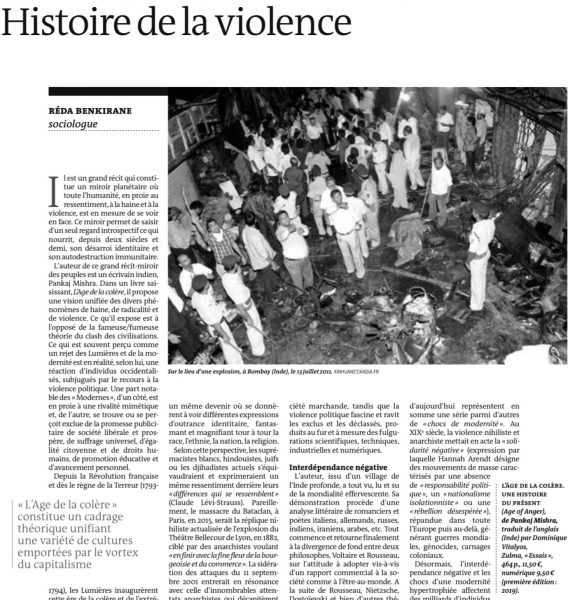
It feels like we live in the “age of anger”. Anger was a predominate feeling in the “French yellow vest movement” spurred by sharp increases in petrol prices. In Germany the notion of “Wutbürger” had a short career to express anger of citizens against, against whatever could arise anger. There are plenty of issues of course that will cause arousal in public politics. The more a government enacts change, be it necessary or not, the more it is to arouse its citizens. Parliamentary democracy is thought to solve this through majority voting of the equally represented in parliament. Minority rights have been installed to safeguard the majority to become too overwhelming, but any close decisions on hotly debated topics are likely to cause substantial anger within a society.
This is far from being an issue only in Western democracies. Pankaj Mishra claims, this is a world-wide phenomenon and history provides ample examples for it. In his book on “The age of anger” he challenges the predominantly Western political theory, deriving from an opposition of Voltaire’s and Rousseau’s political thought to hold the individualisation and globalisation of an economic model, traditional capitalism, responsible for the rise of anger across the globe.
This critique of capitalism is now translated into French. Several movements of anger in France probably find some unifying roots of seemingly unrelated outbreak of anger, violence and subsequent repression. Old arguments of critics of capitalism stand up again. The challenge to democracy comes from the extreme right even more than from the extreme left. Re-imagining capitalism is needed more than ever to safe the survival of democracy. Participative democracy like in Bürgerräte in Germany or deliberative democracy practiced by President Macron in France are an important part to stimulate involvement of more people in the preparation of decision-making. Not perfect as procedures, but small steps ahead to confront and address anger of the citizens and people at large.

Work Stress

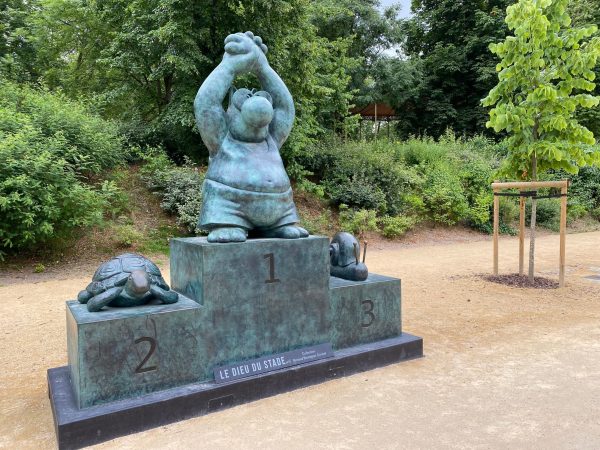
The empirical evidence on life stress is relatively clear cut. Based on the animal model, life stress causes multiple metabolic disorders among them “insulin resistance, glucose and lipid homeostasis, as well as ageing processes such as cellular senescence and telomere length shortening” (Kivimäki et al. 2023). Besides sleeping we spend most of our life in work-related contexts. Stressful commuting to work and stress at work create a rather unhealthy lifestyle. More stressful working lifes have very likely contributed to currently increased risks of obesity around the globe. Unhealthy nutrition adds to risks just as too little exercise or walking. Time to act for the benefit of all of us. It is not correct to put the blame on individuals, if we know that work and life styles jointly contribute. Urban planning can do a lot to contribute to insulin resistance of inhabitants through more walking or cycling paths for all not only in the wealthier suburbs. The more stressed winner of the daily race might come last in the longer run.

Work Subordination

One of the defining principles besides the job description, working time, working place, remuneration of a work contract is the subordination to a superior. The employment contract entails some more or less strictly executed form of direction, but a right of direction nevertheless. This element of subordination has become a major issue in the definition of whether you are effectively an employee or a self-employed person. The digital revolution had enlarged the kinds of subordination. Platforms and algorithms, that distribute work among several employees (but named platform workers) disguised the subordination to a superior level of management to the platform and its seemingly anonymous algorithm. Many young riders were saying, I don’t like bosses, but I am willing to accept a “technical” platform that distributes work tasks only seemingly in a non-discriminatory way. Due to a failure of labour legislation to regulate early enough a thriving model of fake self-employment developed throughout Europe and beyond. Labour Courts have contributed a lot to correct the disguised subordination. Even Uber is advertising that they only operate as a broker of tasks, but have no subordinated employees. The related issue of subordination remains largely the same. Subordination to an algorithm of the distribution of tasks is the end result.
Many start-up enterprises use Kanban boards to facilitate project and team management. Shifting tasks between employees, introducing new tasks and self-selection of tasks are potentially subordination-free allocation of tasks (example software). Flat hierarchies seem more manageable through the use of such tools. The number of tools that integrate other office functions is impressive. When testing such tools, that become more popular also in the distribution of household tasks, beware of the data-hungry nature of such tools. For example, https://trello.com/ warns correctly in the small print that for its full functionality it would need to have permission to use “your” camera, microphone, contacts, photo library, calendar etc.
This demonstrates that subordination, nowadays, is complemented by the algorithmic use of a lot of privacy, we would never have agreed to a boss in person should even ask for. The new and old subordinators have powerful tools at hand, the subordinated will have to get their act together and limit the amount of subordination they are willing to accept.
Again, this is a generational topic. The low threshold to accept technical subordination in younger generations, your autonomous level-5 car is breaking earlier than you even perceive a risk, is confronted with the higher threshold to accept personal subordination for youth. Interestingly, for older generations the obverse is true. All in all, we have ample reason to rethink and re-define also in legal terms the manifold, disguised and new forms of subordination related to work.
Work Remote

Since the COVID-19 crisis we witness a steep increase in the interest to working from home or from remote places. Originally during the pandemic spread of the virus, remote work was the only way to stay in contact with employers and fellow employees for all those not considered as essential workers. Many employees and employers, for the first, experienced that working remotely can have multiple positive effects. First of all, saving time and stress as well as CO2 reduction due to less commuting is beneficial not only for individual employees, but also for society at large. These benefits are substantial.
In my opinion the most substantial consequence is the rethinking of several fundamentals related to work that have gone unquestioned for decades or even centuries, which is: Work happened predominantly at the work place. Digitalisation had changed this partially already, but the willingness to implement far reaching reforms related to work for millions of employees remained rather limited before the Covid-19 pandemic. Nobody had to go on strike to force employers to accept remote work. Suddenly employers, in some instances, were begging employees to please do your work from home or anywhere else. Now we are in the historically rather unique situation that both employers as well as employees try to reap the benefits of the unexpected revolution of remote work potentials including new digital tools to organise remote work (example “scoopforwork”). Employers found out they can do with much less office space than they previously thought they would need to accommodate all employees. Employees found out that saving on commuting time saves energy and frees time resources for other, potentially more healthy ways of life. A new balance of work and private life could be arranged at home. So much for the theoretical expectations.
In practice many women realised that they suddenly found themselves thrown back into working at home and in the home all the time again, with men still less willing to share household work equally. Unsuitable work spaces at home, arranged rather ad hoc, became a health and safety issue usually considered to be part of the employers’ responsibilities.
The results of the real-life experiment of forced remote work are still under scrutiny. To turn them into beneficial arrangements of voluntary remote work which is empowering, emancipating, increasing degrees of freedom for employees would be a huge step ahead. The full spectrum of negotiations is involved. Legislation, collective agreements and 1-on-1 solutions are needed to reap the benefits on all levels. Comparable to the industrial revolution during the 19th century, drawing millions of workers into factories and coal mines, we are at the beginning of a new era of digital and remote work that governs solar and wind farms for energy provision as well as 3D printing of industrial components.
It seems that we shift from the blue collar to the white collar to the no collar world of work. Working remotely in my t-shirt under the cherry tree is not the worst of a revolution (guard against cherry picking by employers and new layers of inequality). It might take a generation or two to accomplish this. With threatening, pervasive climate change we probably have to make it happen sooner rather than later.

Wessen Wetter

Wessen Wetter ist es denn? Mitten in einem Gewitter deklamieren Leute heute noch, “Um Gottes Willen“! Selbst in 2023 vereinen sich Leute und beten für Regen. Dabei wissen wir längst, wie der Regen entsteht, Feuchtigkeit in Wolken über weite Strecken zieht und schlußendlich als Regen über uns kommt. Dafür haben wir Dächer vorgesehen, mehr oder  weniger solide und dicht. Regenwasser sammeln, sickern lassen, Rückhaltebecken erweitern; das sind alles Vorkehrungen gegen größer werdende Unwetter des menschengemachten Klimawandels. Beten sowie Meditieren kann dem Einzelnen helfen, sich zu fokusieren und Kräfte zu sammeln. Gemeinschaftserlebnisse stärken Resilienz.
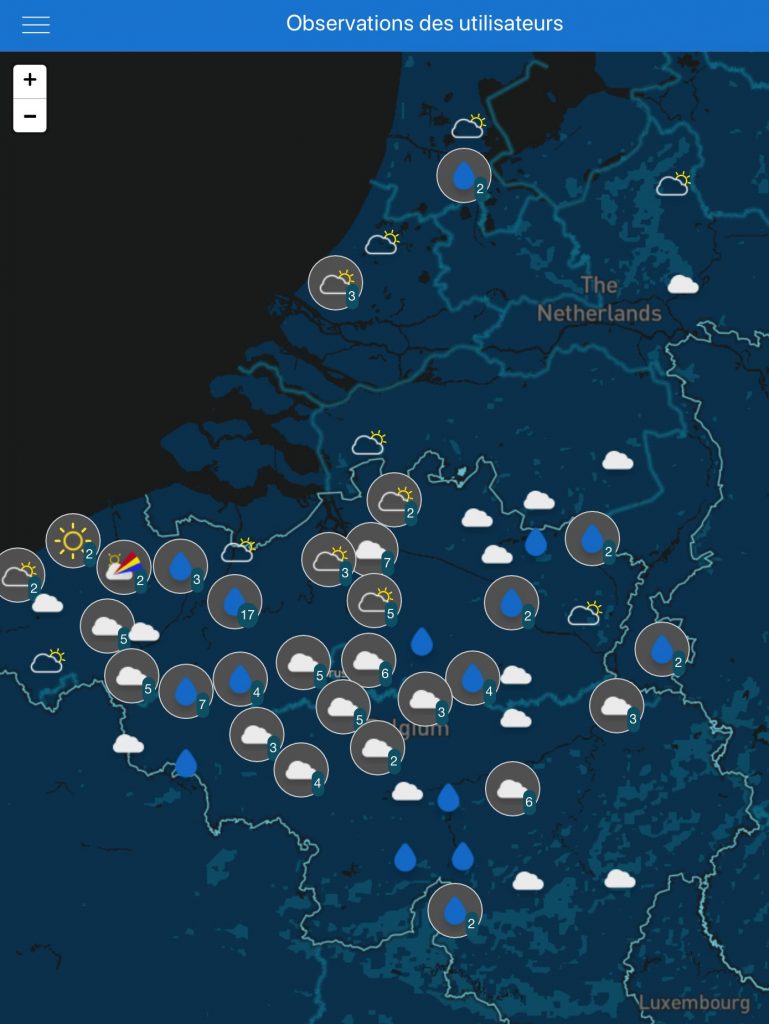
Wetter ist in der Tat eine tägliche Art von Gemeinschaftserlebnis, oft lokal begrenzt, aber meist regionenspezifisch und manchmal ein landes- oder gar europaweites Phänomen. Neben den staatlichen Meteorologischen Instituten gibt es bereits immer mehr “citizen science” Projekte zum Wetter. Das belgische Beispiel (s.u.) zeigt eine Vernetzung von Bürgerinnen, die Spaß und Interesse am Wetter und am Teilen sowie Partizipieren haben, kann das Messstationsnetzwerk der staatlichen Wetterdienste erweitern und eine alternative Vorhersagemöglichkeit bieten. PollenAPPs nutzen ebenfalls die Leidensstärke von allergischen Personen, um ihre Pollenbelastung spezifischer zu erfassen und Prognosen zu verbessern.
Ciitzen Science ist ebenso ein wechselseitiger Lernprozess, der das Wissen und Methoden einzelner Wissenschaffenden quasi basisdemokratische “bottom up” Wissenschaft gegenüberstellt. Stärken und Schwächen der jeweiligen Vorgehensweisen müssen untersucht werden, besonders mit Blick auf “fake news” oder “fake data”. Nicht nur erschreckend viele Forschende in der Wissenschaft produzieren “fake data and science” (Sabel et al. 2023) für fragwürdige Reputation und Karrieren. Bürgerinnen, die Daten sammeln und eigene Analysen, Vermutungen oder Hypothesen vornehmen, können Wissenschaft erweitern, andere ermuntern und wertvolle, viele, kleine Beiträge leisten.
Schwarmintelligenz beim Wetter praktizieren bereits die Schwalben. Das könnten wir vielleicht von diesen lernen. Bei Vervier in Belgien sowie an der Ahr in Rheinland-Pfalz sind mehr als 100 Menschen gestorben, wegen unpräziser Vorhersagen und Verzögerungen bei der Übermittlung der akuten Gefahrensituation.
Citizen Science kann Leben schützen, genauso wie es andere dringend nötige Freiwilligendienste bereits bewiesen haben. Das sind mal ganz andere vielfältige, bunte Wetteraussichten.

Workation

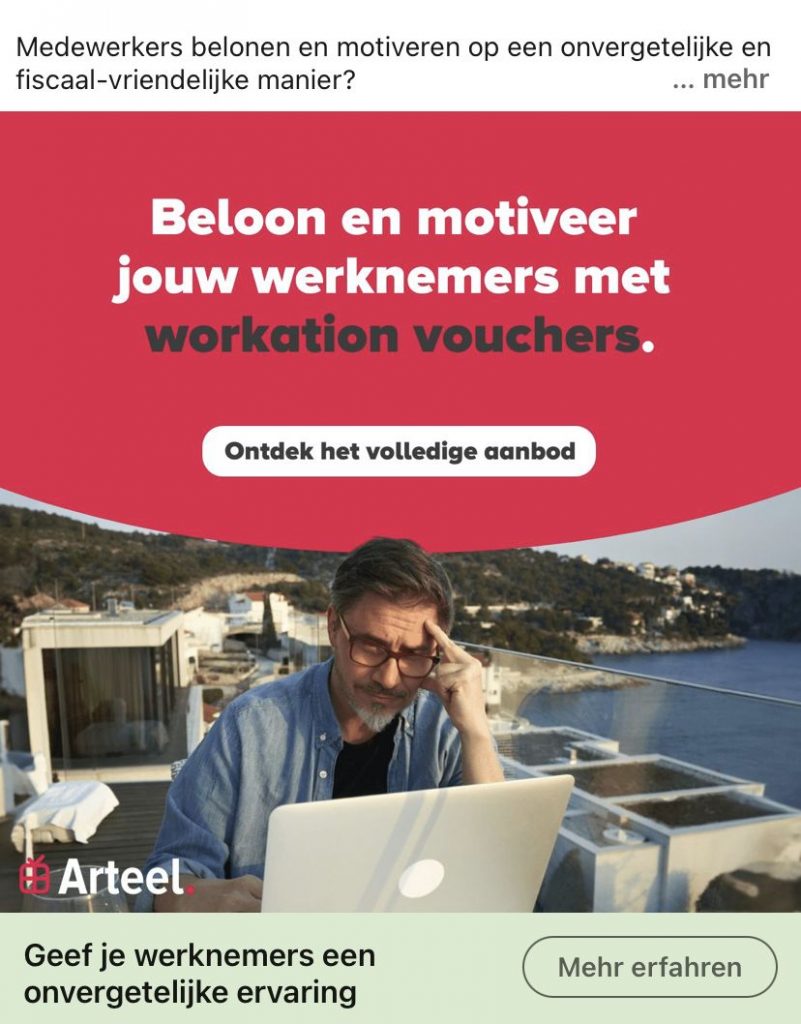
Take work, take vacation = workation.
Take flexibility, take security = flexicurity.
Take business, take leisure = bleisure, not pleasure.
Blending notions or building hybrid terms is a powerful way to get discussions going or to challenge standard notions of work, security and leisure. At first sight these hybrid notions give the impression of a new, interesting approach to an established narrative. Adopting a new hybrid notion allows to blur the well-defined borders between established definitions. New narratives have their imaginative charm about them, only these hybrid notions tend to tip the balance in favour of work, flexibility and business, most of the time.
Additionally, there is a generational effect to it. Younger generations feel already more at ease with english-sounding new concepts. Feeling part of a new, cool approach to work is catchy. However, do not forget about the second part in all these notions: vacation, job security and leisure are fundamental rights of workers. Health and safety at work and in the medium- and longer- term depend on the latter notions. Sustainability and prevention of burn-out as well as depression hinge on taking time for leisure and vacation. Something nice in the immediate, might turn out to be very costly later on. Shifting costs related to health from employers to employees (or society) at a later time is in the end an unfair deal.
Just try a workation once and you are likely to value a real vacation much higher the next time. Why not do a workation in reconsidering the distribution of work within your household, couple or family. In this sense I am all in favour of a workation for men, most of whom still shun away from a fair distribution of care work at home. Happy Workation!