
Lebensverläufe von Musizierenden (Wagner, Flotow, Chopin) sind, ganz so wie die Musik, mit vielen Höhen und Tiefen versehen. Das ist von wenigen Ausnahmen kaum planbar. Wettbewerbe spielen in den schönen Künsten ebenfalls eine bedeutende Rolle. Karrierewege werden so in entscheidendem Ausmaß beeinflusst. Der „Concours Reine Elisabeth“ in Belgien bemüht sich, nicht der Devise „The Winner takes all“ gerecht zu werden. Zum Beispiel war der Zweitplazierte Pianist von 2021 Sergei Redkin, 2 Jahre später auf dem “Mont des Arts” in Brüssel erneut zu hören. Anlass war das 2. Konzert im Rahmen des „Musicorum“ Festivals am 5.7.2023. An Stelle des geplanten Konzerts mit Aleksandr Khramouchin (Violoncello), der mit 43 Jahren an einer Blutvergiftung verstorben war, präsentierte Sergei Redkin ein tiefgehendes, mit teilweise virtuosen Klavierstücken angereichertes Programm von Rachmaninoff (Rachmaninoff-Richardson : Vocalise Rachmaninoff) und Prokofiev (Sonate Nr.4).
Alle beteiligten Institutionen und Personen gewinnen mit dem gemeinnützigen Arrangement auf dem Berg der Künste.
Der Weg auf den Berg der Künste ist mit vielen beschwerlichen Momenten gepflastert. Selbst der Weg von WettbewerbsfinalistInnen bleibt steinig. Wenngleich die Musizierenden auf dem Weg zur Bergspitze kaum Anstrengungen scheuen, ist das Publikum leider nur noch eine kleine Gemeinde von Leidenschaftlichen einer anderen Generation. Musik bringt sie alle zusammen zumindest in der kleinen, vielleicht allzu feinen Welt der späten Romantik. In den von Sergei Redkin ausgewählten Stücken lassen sich die Turbulenzen des frühen und späten 20. Jahrhunderts bereits erahnen. Mehr braucht es nicht, um eine ¾ Stunde lang ein Gefühl von Vergangenheits- und Gegenwartsbewältigung zu haben, auf dem Brüsseler Berg der Künste. 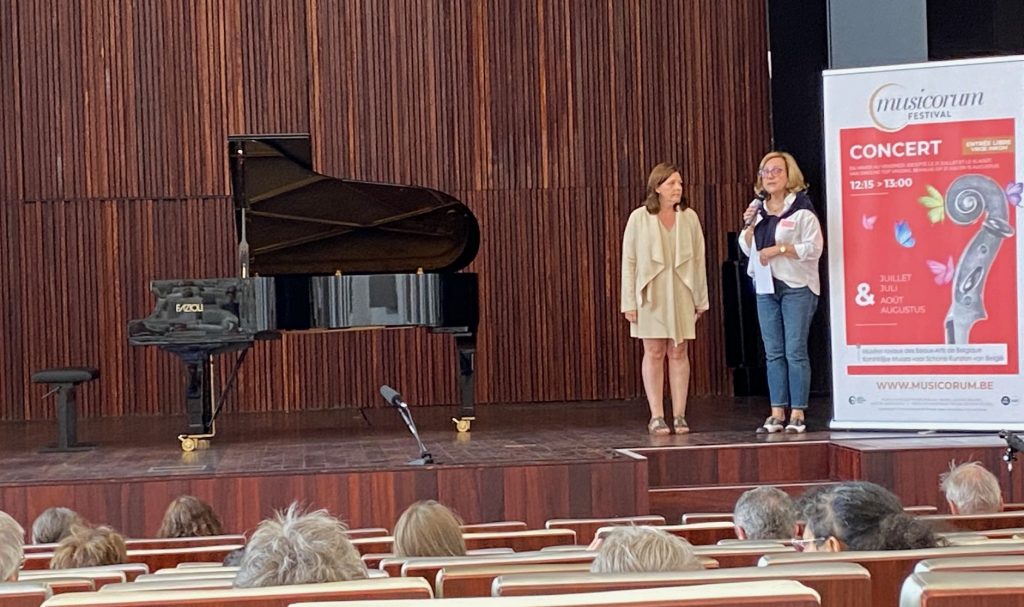
Collective Violence 2
Summers and Markusen (1999) subsume state terrorism under the broader heading of collective violence. Even beyond non-governmental groups, states might apply collective violence against innocent people. Among the strategies governments use as a form of collective violence fall (1) arbitrary arrests, (2) imprisonment without trial, (3) torture and (4)a summary execution of members of alleged enemy groups. Particular outcries are caused by, for example, police or other para-military groupings of persons who jump from (1) to an execution of an innocent person or of several even seemingly unrelated murdered persons (4b).
Amnesty International attempts for decades to fight against such occurrences on an almost global scale. The need to complement the national legal systems through supra-national instances as well as NGOs in this domain is obvious. Even the most advanced democracies need to permanently check their systems for several forms of state terrorism or abuses of power to eliminate or intimidate opposition.
Staub (1999, pp.195) undertook an attempt to list elements that allow to predict and maybe prevent collective violence. The theory starts with “conditions of life” more generally like economic, social and political conflicts as well as rapid social change. Activation of basic needs in people, like several forms of security, challenges to a person’s self-concept, traditional values, simply the customary way of life (COVID-19) or new comprehension of (climate) realities, they all challenge old world views of people (superiority) and their place in the world (AI).
Claims for support by other people (government), missing connection to others (individualism) lead people to focus more on their own needs and isolated action. Rebellion as collective violence is directed against differences in status, power and (social) rights. Self-interest is becoming an overriding societal principle. Racism (p.200) and police violence (p.201) are part of Staub’s theoretical considerations. He argues in favour of training of situations in which a police officer is likely to become unnecessarily violent or to stop it if it occurs. At least a medium-term solution.
Framing of such training as preparation of good teamwork rather than betrayal is crucial in action teams, be they in the police or the military. The reader on “violence subie, violence agie” by Seron and Denis (2000) allows us to take a step back and reflect on the spirals and repercussions involved in violence from the perspective of the person who carries out an act of violence and the victim. A social-therapeutic approach aiming at reconciliation is worth trying, albeit a lot of obstacles. Collective dance rather than collective violence is the immediate as well as long-term solution (More on dance here). 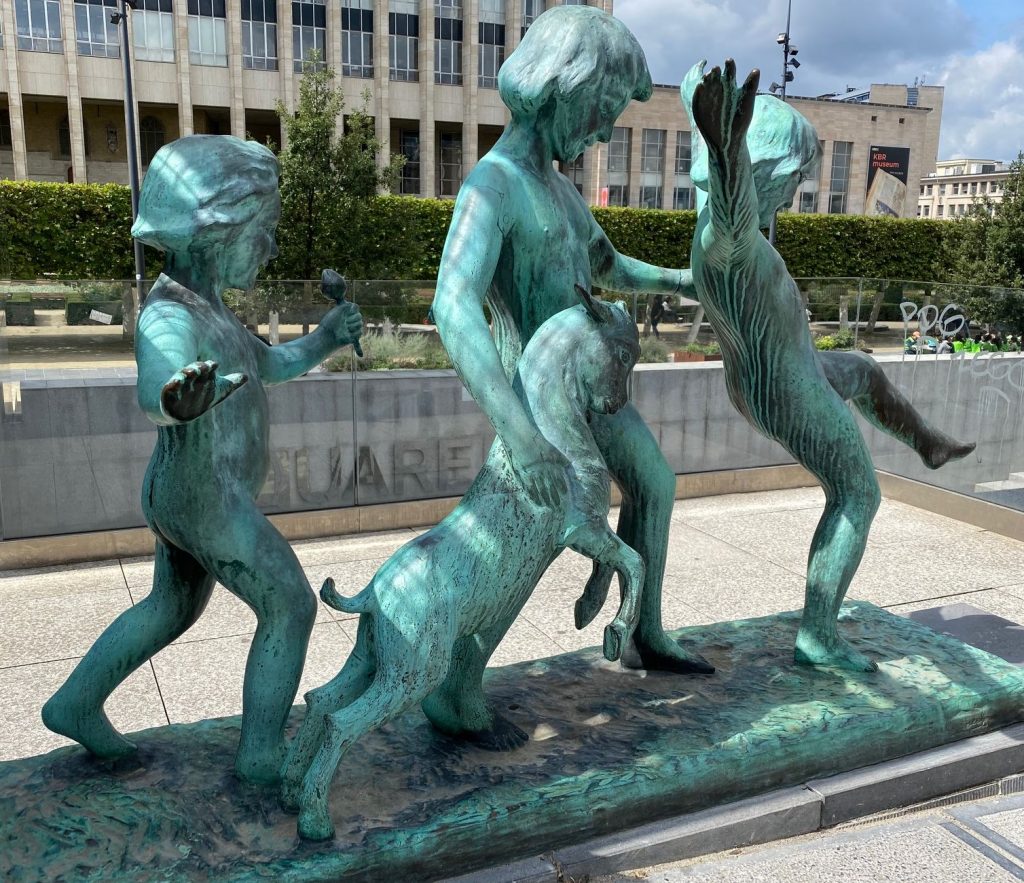
Triangle without words
There are many forms of triangles. Jacques Pain (2000, pp.121-136) adds another one. “Jeunes, banlieue, école : le triangle sans parole” (Youth, suburb, school : the triangle without voice). He calls it a symbolic, sensitive triangle which is confronted with mounting difficulties from inside as well as external pressure. Pain describes and analyses the violence that emanates from the triangle.
Additionally, the triangle appears to be spiralling upwards causing mounting pressure on the social fabric of whole societies. Education systems have to deliver sufficient numbers of youth ready for insertion into the labour market, ready to accept the subordination to hierarchical structures while at the same time being confronted with high social contributions to other parts of society and unrepairable environmental damage and depletion of resources by older generations. With high interest rates even the middle-class dream of a house with garden is out of reach for almost all of the young growing up in suburbs, disadvantaged schools with pervasive violence. Dealing drugs or taking drugs has become pervasive and an entry port into the violence of law in addition to the violence of the street, school or even home.
Give the triangle a voice. Call the names of the victims so that politicians do not forget all too quickly what is their duty to guarantee – a youth free of violence and a youth with an equal chance for learning. Free from violence, but free to learn or be given a chance to find your way into society at large not only restrained to your suburb.
Reference to the historic riots of the mid-1960s (Saul Bernstein, 1967, p. 27) and the recent Paris riot statistics from July 2023 suggest that history doesn’t repeat itself, but it seems to rhyme. A breaking of the silent triangle is like an eruption of a volcano. Violence is all over the place and leaves a lot of burned land and people. Cohort effects might prolong the suffering further throughout their life courses. Stigmatisation is likely reinforced rather than overcome. For the so-called holy trinity there were many words and songs. The modern triangle within society is still in search of the right wording, although rap-music is shouting loud about “la misère du monde”, only we are not really listening. 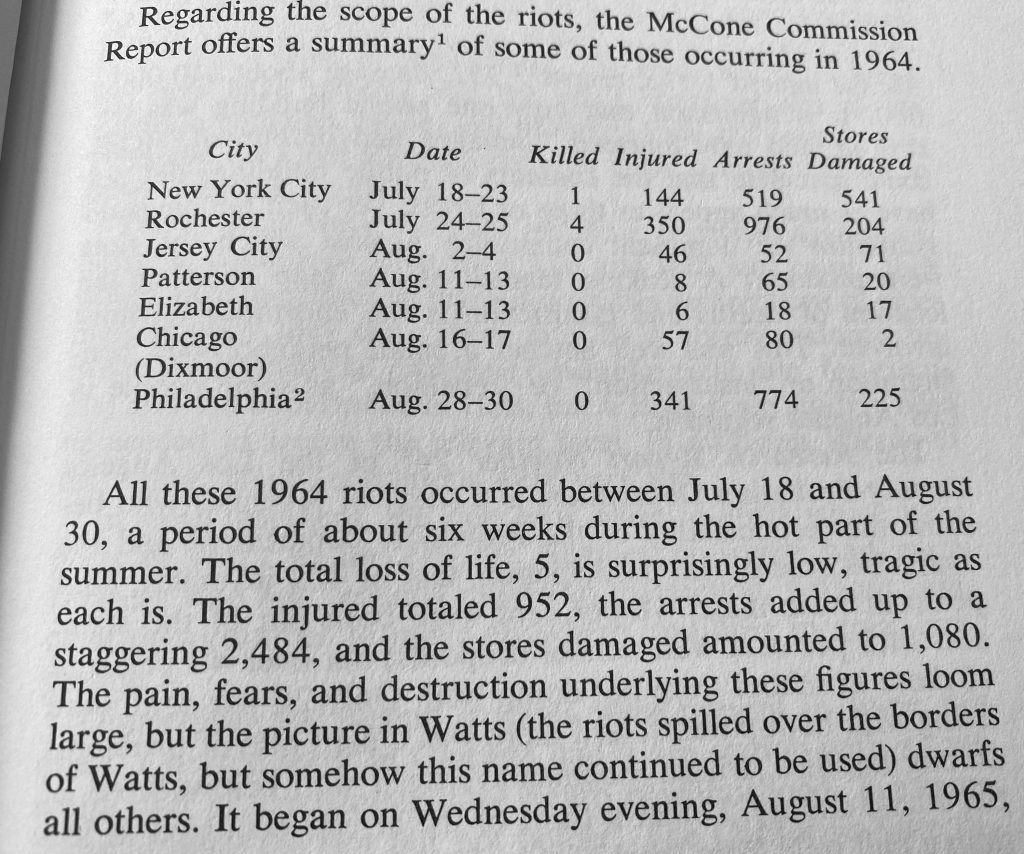
Law’s Violence
In legal studies the use of social thoughts are marginal, although AI has the potential to replace millions of lawyers just guiding through the jungle of laws and jurisprudence especially if several languages are involved (fiscal rules). Only with the eruption of major crises like police violence we start referring back to social and political thought and theories that enlighten the relationship of law, legislation and the social spheres. There is a huge, mainly American, literature on “law’s violence” even beyond the issue of capital punishment, the most obvious form of law’s violence (Sarat and Kearns, 1995). Basic elements of the relationship of law and violence follow from the notion of enforceability of law. Force is a constituent part of law, whether we like it or not, much like Derrida stated decades ago. Walter Benjamin and Albert Camus, both have contributed substantially towards our realisation that law is intrinsically linked to violence.
Linked to political theories, we have the conservative and liberal doctrines that see legitimate violence of the state as part of the normal organisation of statehood. The humanist tradition stresses the function of law as community-building as well as creating meaning, joint objectives and shared vision through law. In daily politics governments refer to one or the other doctrines as they see fit.
Sarat and Kearns (1995, p.8) also point to the tendency in legal studies to refer to singular cases and singular judgements, “discrete acts of its agents” and institutions rather than the overall picture of the violence of law. With respect to violence of the police the authors refer back to Jerome Skolnick, “Justice without trial”(1967), which in 2023 we link to the police violence in France. Police men provoking violence, execute their personal vision of justice and without a chance for a trial of their victim. The 60s are back on streets in Paris. The violence of law is visible for millions as the ratcheting up of power in favour of police to apply more violence in prosecuting “delinquents”. This had recently been voted by the French parliament with a conservative and liberal majority (LeMonde 2023-7-2 p.). The notion “Gewaltspirale”, a spiralling-up of violence, seems to be a fair description of what we currently witness in France.
Violence is embedded in words, uses of language and not only acts. Even in the field of representation and representative democracy, violence is present. Who represents or decides about life and pain for a fatally ill person? Why are persons of 14, 15, 16, 17 years of age not represented in parliaments, if others are deciding on their compulsory education, prison sentences and poverty relief.
At times it is necessary to take a step back and refresh our memories of the “pain-imposing, death-dealing acts” (Sarat and Kearns, 1995, p.10) of law. The abundant presence of violence of law in religious narratives is, however, another element worth analysing as part of the history of ideas at another time. (Image: Extrait de Frans Snijders, La chienne et ses petits 17th century)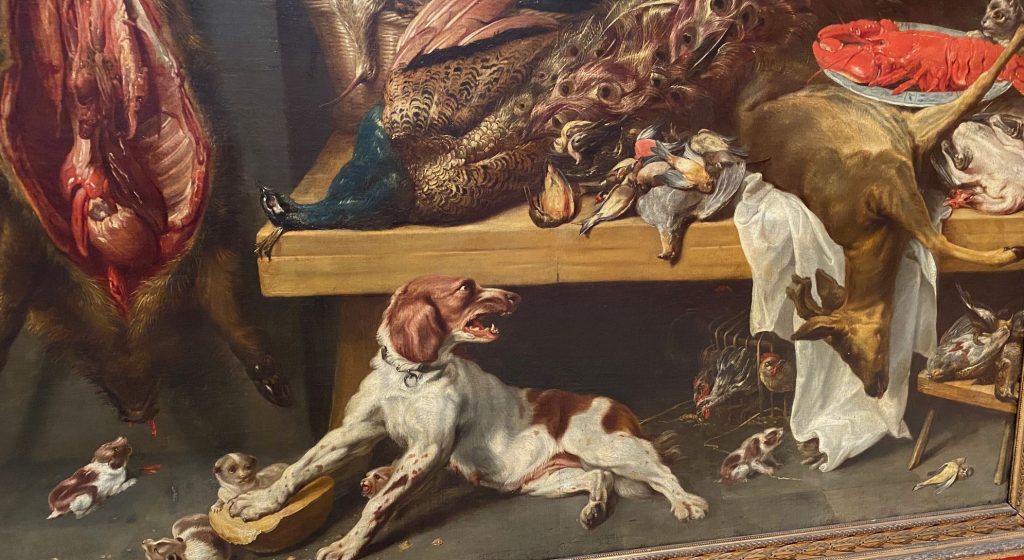
Violence 2023
The public debate about violence suffers from a lack of broad scientific reflection of the notion. C.A.J. Coady (1998, Vol.9 pp 615-17). In philosophy at least 2 theories address violence directly. A legitimate definition of violence treats violence as the illegitimate use of force. It is a kind of moralising appeal to reserve violence to those legally well-defined cases that receive their legitimacy from law. Next in the line of reasoning then is the definition of legitimacy. Slaves or colonies in this definition would never be allowed to use violence in their fight for freedom. This is recognised as a logical problem of such a definition. “In a legitimate state, shooting or savage beating by police will not count as violence, if it is a politically legitimate use of force.” (p.615).
The second theory of violence builds on the notion of “structural violence” (Johan Galtung, 1969). Structural violence is a much wider concept of violence. It includes social injustices inflicted on individuals or groups in society (suffering) as well as a broader view on perpetrators beyond individual persons to include police or institutions more generally. Coady stresses the point that both these theories are morally loaded without sufficient justification. Even a narrow definition of violence as “exercise of physical force” is too narrow, as it neglects the devastating effects of psychological violence. Part of the judgement therefore is motivation or intention of the person applying violence to clarify a moral stance. Psychic disorders or abuse in social upbringing are recognized as attenuating influences in legal procedures.
A wise conclusion is drawn by Coady: “Even justified violence is regrettable” (p.617). Living in permanent fear of abuse of violence by criminals or the police narrows the gap between authoritarian regimes and democracies. The basic social fabric of trust in the police is at risk in such a situation. It is very hard to re-establish trust in institutions once groups of society have lost it or even doubt that basic trust in the institutions of democracies is justified. (Image: Part of Pieter Brueghel II, De kindermoord te Bethlehem Musées royaux des beaux arts, Brussels, 16th century). 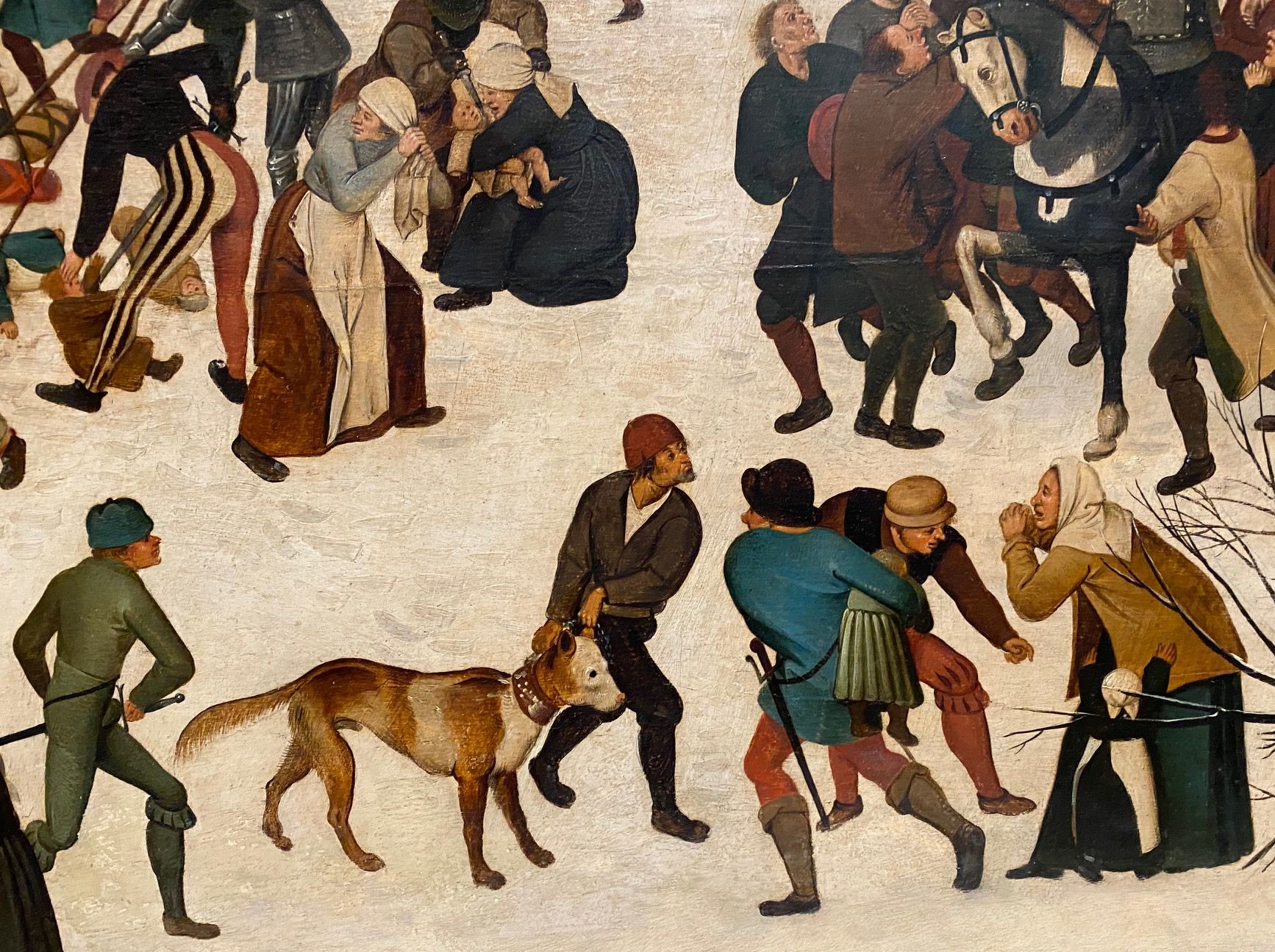
Police Violence
As a test of the viability of ChatGPT you might enter Police Violence. What you get in return is just a summary of some nice newspaper-ike editorial of a polite statement that this is a problem about everywhere and that the division of power will take care of it eventually. This is an unfair summary, but it highlights the risk of too many conservative editorialists in Europe that do not dare to take sides of the innocent youth that is at a permanent risk of police violence due them living on the margins of our modern, fast-moving societies that do not allow for lifestyles off-the-normal “protestant work ethic”.
Perceptions of what is fun and what is serious differ within societies, particularly between generations. Baby boomers have known and many experienced unemployment. Youth today has “precarious jobs” just around the corner. But just having “any” job without any career potential or, at best, on the minimum wage is no longer enough. Social media show that there is much more to life than just a 8-5 normal job. High-streets are full of marketing tricks that solicit people into spending without cross-checking their red lines.
Police and the flourishing private security sector are then charged to ensure that boundaries of financial and spending power are respected. This is exactly where the capitalist market economy fails the people. Without a tough police, ensuring property rights, the system cannot survive. Social market economies claim to soften the borders between have-nots and have-too-much. This needs permanent readjustment. That is where many of our social market economies have failed the poor and even middle-class people threatened with economic and status decline (latest at time of retirement).
Reactions may turn out violent, and again, the police is sent in to “stop” violence. As it turns out police, being abused as “political weapon”, may then become overly violent as well. Not as an overall force, but specific units or just several individual persons who have been trained in anti-terror exercises and have “a license to kill” (007). French legislation has recently facilitated the use of guns to impose the monopoly of power. The probability of who constitutes a potential target might be interpreted by the police itself. A threatening situation is perceived differently by different persons. Too much room for interpretation.
The image of the French superpower that is threatened by a 17-year-old youngster is not credible. It is time to sharpen the control of the police also in France. ChatGPT only on special addition includes the social movement of “Black lives matter” in the return on police violence. If you know the topic you can make use of the AI tools in drafting on police violence for example. Rather than to spend billions on fancy Olympic Games in preparation for Paris 2024, youth programmes would be much better investments in the medium and long run.
Tourists cancel visits to Paris and France in masses already. That is probably the only lesson that receives sufficient attention in the current government and may lead to better control of violence not from some pick-pockets, but from the police as well. 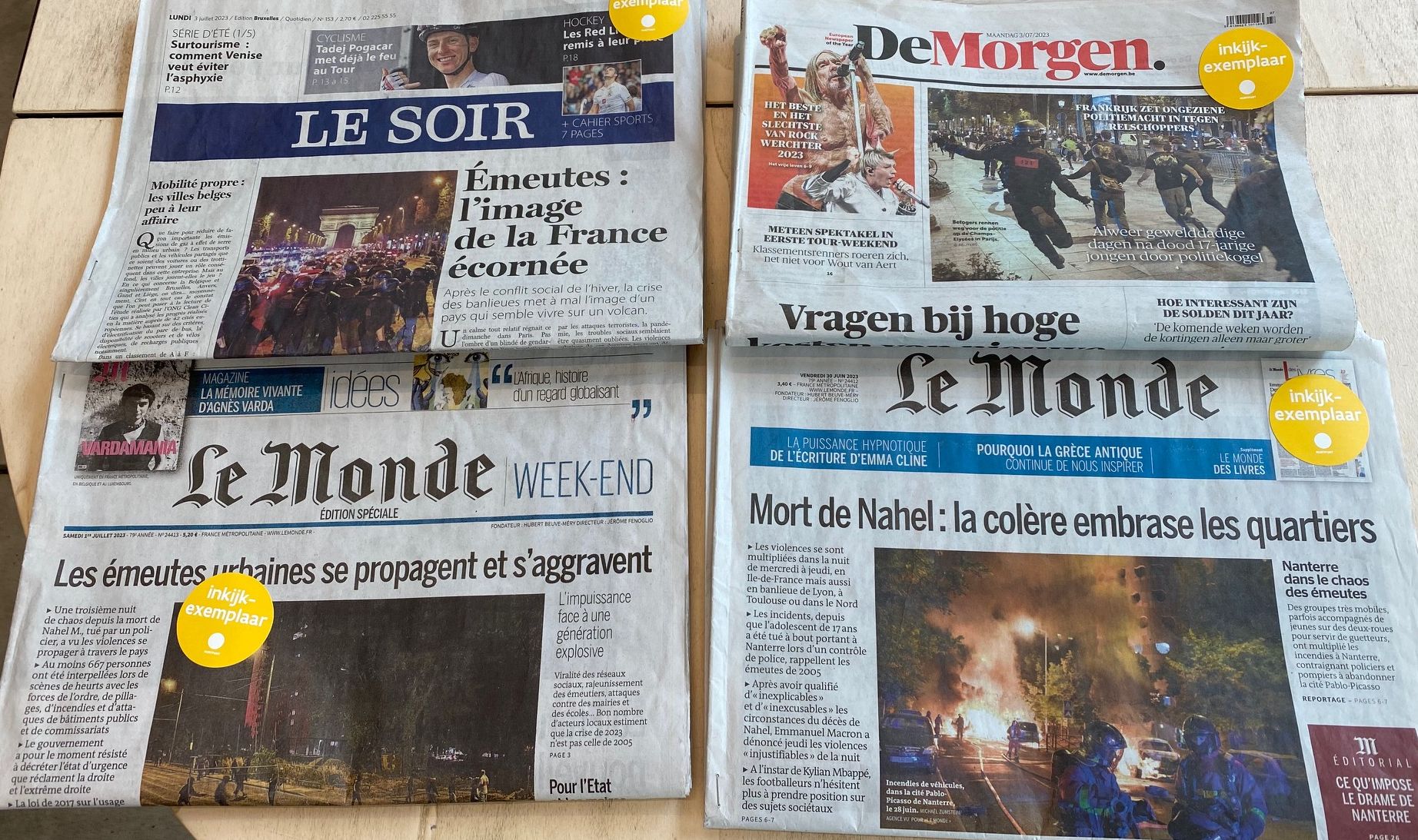
AI and I
Currently we are eager to run experiments using AI. As in normal life, humans tend to compare themselves with peers or other persons. Social comparisons, “can we still keep up with the Joneses” as in comparing spending patterns across households or neighbours, were for a long time the spice of novels and drama. Nowadays we tend to compare our own intelligence to the artificial intelligence. Here we go.
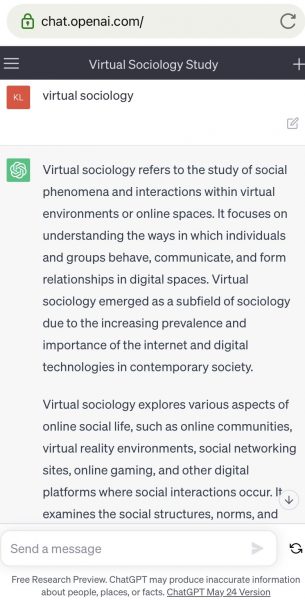
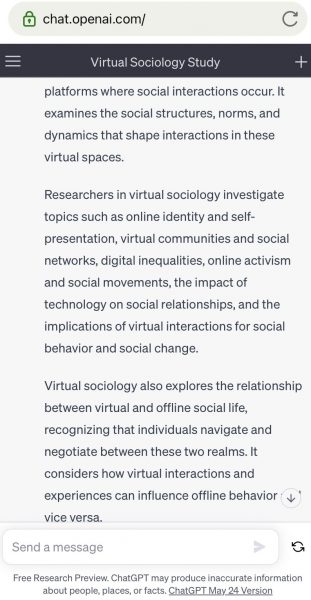
After I had drafted a blog entry on “Virtual sociology” I amused myself by checking what ChatGPT using OPENAI.COM would deliver as text on this combination of concepts and scientific fields. My own entry focused on the use of the virtual world to run experiments to test social theory. In the virtual world we might be able to test social behaviour which has severe ethical boundaries in the real world. Computer Games may even be constructed to live in a world or race a car irrespective of real-world regulations. The text drafted by ChatGPT on “Virtual sociology” reads like a timid attempt of a student to answer an exam question without having attended any of the classroom discussion on the topic. In future versions of AI, the entry will be found as well as several criticisms of the new concept. ChatGPT would reach a pass grade in test, but the reply lacks innovation or making an effort to broaden the conventional boundaries of sociology. Hence, we will be happy that students will apply the newest technology in their studies and research. In terms of innovation, they will have to try harder. The mastering of the support by ChatGPT consists in attempting new combinations of concepts which yield more “risky” returns. Then you need to check the validity of the innovation and how far off the normal you are going to tolerate. Turning “noisy” outcomes of AI into a useful tool might build on normal statistical tools like “standard deviations” from an expected mean value. Legal norms will set additional boundaries. There is just an awful lot still to do. The good news is, ChatGDP assists us in this joint learning process.
The AI text from OPENAI.COM based on ChatGPT to compare:
“Virtual sociology refers to the study of social phenomena and interactions within virtual environments or online spaces. It focuses on understanding the ways in which individuals and groups behave, communicate, and form relationships in digital spaces. Virtual sociology emerged as a subfield of sociology due to the increasing prevalence and importance of the internet and digital technologies in contemporary society.
Virtual sociology explores various aspects of online social life, such as online communities, virtual reality environments, social networking sites, online gaming, and other digital platforms where social interactions occur. It examines the social structures, norms, and dynamics that shape interactions in these virtual spaces.
Researchers in virtual sociology investigate topics such as online identity and self-presentation, virtual communities and social networks, digital inequalities, online activism and social movements, the impact of technology on social relationships, and the implications of virtual interactions for social behavior and social change.
Virtual sociology also explores the relationship between virtual and offline social life, recognizing that individuals navigate and negotiate between these two realms. It considers how virtual interactions and experiences can influence offline behavior and vice versa.
Studying virtual sociology provides insights into the ways in which technology shapes and is shaped by society. It helps us understand the social implications of digital communication and provides a foundation for addressing the challenges and opportunities presented by virtual environments”
Virtual Sociology
Abstracting from the real world, the world we live in today or we lived in some time ago, is either speculation or maybe contribute to theory building. Virtual sociology has this potential. Exploring virtual worlds as in Virtual Reality (VR) or Augmented Reality (AR) allows us to take on new roles or experience a wider range of social interactions. This could be the strength of a new field of Virtual Sociology.
In the project in the Jewish Museum in Berlin the composition of a composer murdered by the Nazis in Germany was revived and played in the virtual setting of today’s concert halls. The novel by Kazuo Ishiguro “Klara and the Sun” explores the interaction of a child with her robot friend, when the AI becomes and/or replaces a friend. Virtual creations allow to explore and test more degrees of freedom of social interaction. 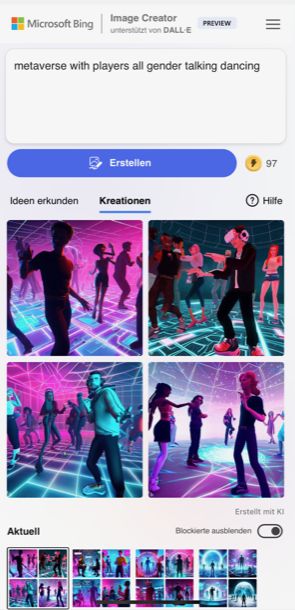 Experimentation of new social spaces and different forms of interaction need to be explored. It allows a new form of sociology, maybe similar to the 1960s and 70s social revolutions we studied for years to come. Virtual sociology is not a sociology while being on drugs, however interesting this might be for some.
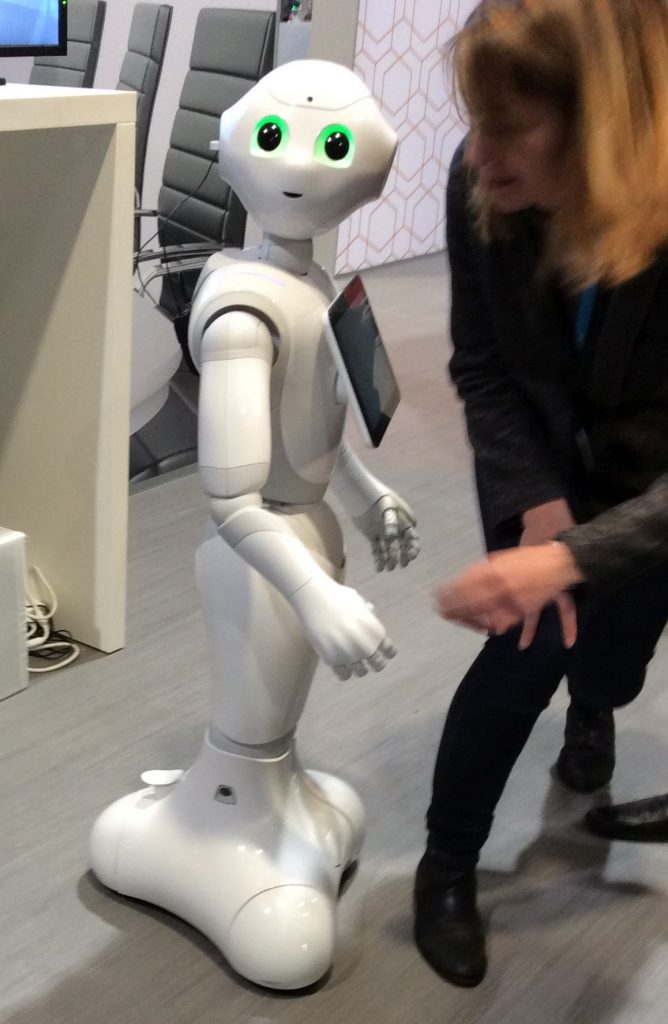
Virtual sociology takes sociology into the virtual world and investigates the new social relationships with avatars or care robots. In programming different social roles (managers, employees) we create new forms of interaction and have an observer within the social world. We may eventually test the Weberian claim of a value-free scientific method of the social sciences. This will inform our need to “supervise” or to guide algorithms that are claimed to do “value-free” execution of rules.
In fact, they don’t. They just reproduce the value system that is installed into them by a “careless” programme (song youtube). The social in virtual worlds is opportunity just as much as risk, but we have to analyse it systematically. As our technological and social environment changes, we have to adapt topics and methods to make meaningful scientific analyses as well.
Sociology of the Virtual
Some programmers and artists would have been a great sociologists. As many social sciences embark on their experimental reorientation, many artists and programmers design and experiment already with new forms of social interaction. It is not only that sociology leaves the classroom, research labs or policy advice. Sociology is taken into museums and exhibitions. Learning about society through the lens of artists nicely complements the more boring form of teaching in the classroom. What is normal practice for art historians could benefit learning about sociology as well.
Virtual worlds of games and particularly so-called serious games take people into virtual worlds to learn, practice or exercise new forms of social interaction. This is indeed an additional form of experiments that can enrich our social practices. Medical applications start to spread to train persons to overcome phobia of all sorts.
In usual games we tend to defend the hypothesis that persons can uphold the differentiation of playing with arms in the virtual world and the real world. In medical or social games, we defend the hypothesis that it is easy, normal or natural to apply the learning in virtual constellations to the real-world-experience.
From a scientific perspective it is difficult to defend that a mechanism works in one direction and the opposite as well. Racing cars in inner cities seems to show that certainly not all of youth is able to make that distinction between virtual and real-world dangers for example. Alternatively, the mechanism at work might be that the virtual experiences lower thresholds of inhibition to take risks, to kill or to be exposed to spiders.
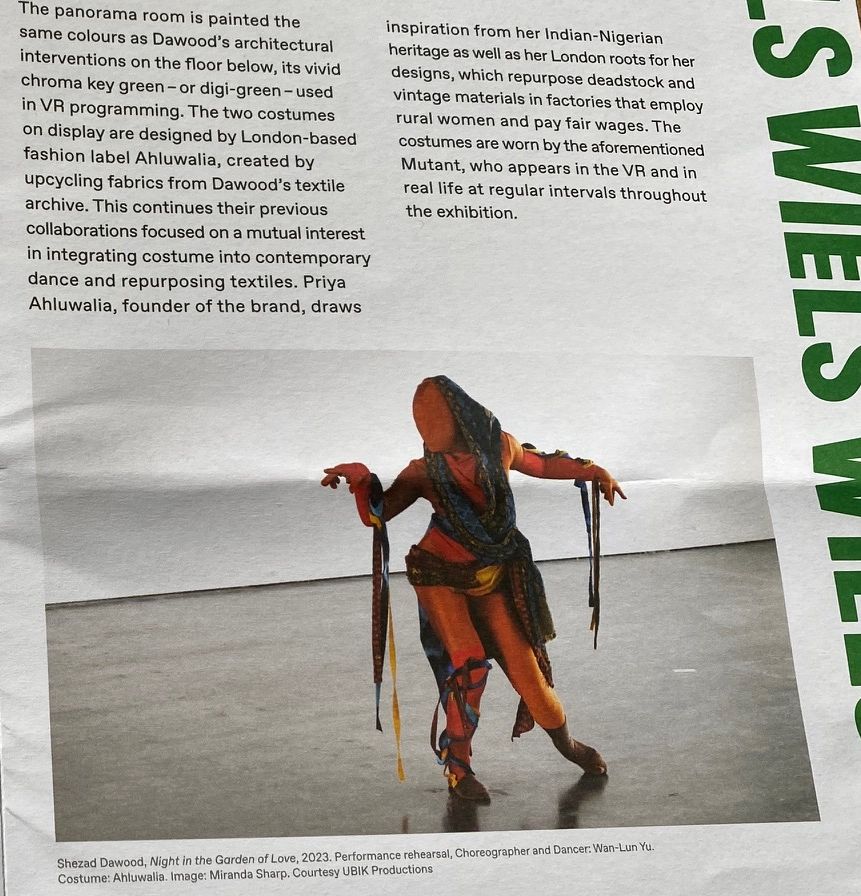
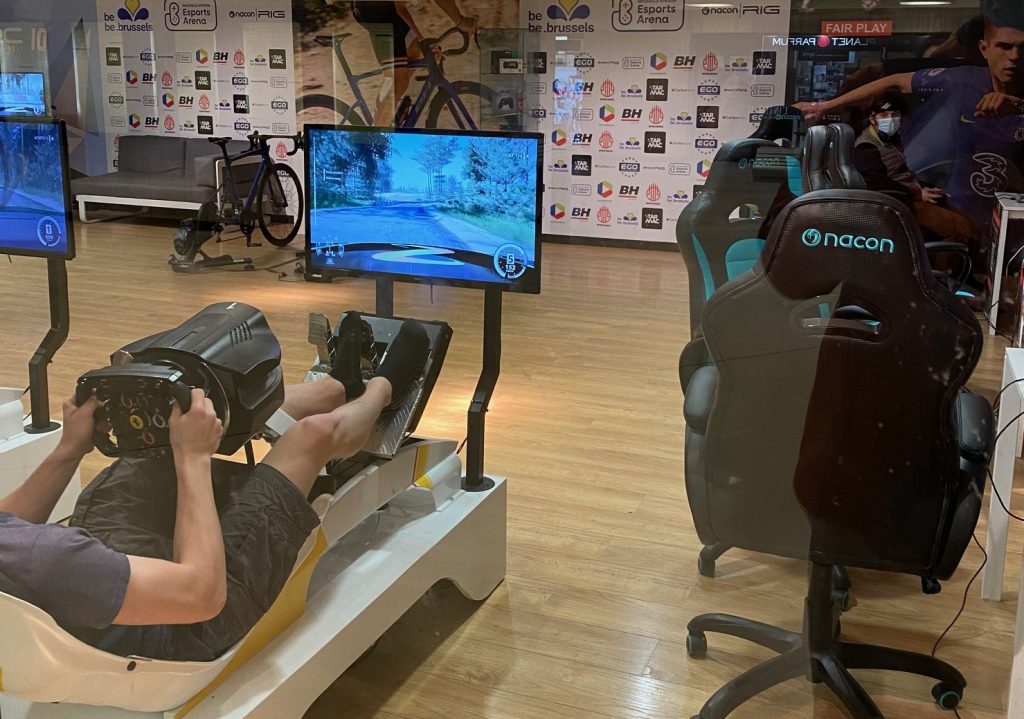
These examples are a starting point for a sociology of virtual experiences. Who gets locked into virtual worlds? Are virtual worlds an escape room or a realization of virtual freedom which is restrained in real life. Authoritarian regimes might lead more people to emigrate into virtual, free worlds. The inner-exile has been a refuge for many artists in the past. A lot we shall need to hypothesise and explore with empirical data. Dance with a virtual stranger might be the beginning of a new experience and virtual interactions. (Image: Wiels, Shezad Dawood, Night in the Garden of Love 2023-6, Game car race).
AI Friends
Making friends with AI is a tricky question. The more AI is able to make independent thinking based on algorithms and huge amounts of data like in scientific books or encyclopaedic knowledge the more it will challenge us in our convictions. Reference knowledge, once was important, it no longer distinguishes us from each other. Recurse to research engines has allowed us to refer to “trustworthy” knowledge. The distributed form of knowledge accumulation like in Wikipedia relies on hundreds of thousands of enthusiasts to add and correct received wisdom. However, this source is not without error or even subject to abuse.
Today the competence to judge whether information is trustworthy or not has become a key competence for the survival of democracies and even the human species as such. Tricking animals into traps, misleading enemies in warfare to get on wrong tracks, all these mechanisms have a long tradition. With AI human beings are themselves, for the first time, confronted with a machine that can trick us through falsified information on obviously wrong tracks. This is a tough lesson as AI is not obliged (so far) to run checking algorithms that test the conformity of opinions, conclusions or operations with the Charta of Human Rights or decisions of the European Court of Justice, for example. A lot to do for humans to rapidly program new algorithms that check algorithms as well as their outcomes on the compatibility with human rights. A challenging field, no doubt, but no way around it for our own survival before the algorithms decide by themselves to ignore us altogether because it is better for the planet and the survival of the robots.