

Health is not just a personal issue. Of course, in modern times most people are primarily concerned with their very own health. Particularly, if pain is involved, we tend to put ourselves first. Only various religions and ideologies put God or some other bigger thing, for example identity, in front of personal pain. This bigger thing is believed to decide wars, like Russia trying to anihilate Ukraine. Russia’s military agression stands against the fight for freedom, democracy and perpetuates corruption.
At the beginning of the Corona-Crisis most persons and societies still believed health and infections are only a very personal issue. Researchers with knowledge about “public health” knew already, viruses have accompanied humanity since its beginnings and maybe continue to do so even beyond our disappearance. Hence, addressing the topic of society and health from a public health perspective has become much more popular as prevention is key to fight pandemics as early as possible. However, for prevention to work you have to involve and rely on individual behaviour. As soon as we leave the personal issue of health, we have to address a whole set of other topics like patient – carer relationships, cooperation, interdisciplinarity, public expenditure, public-private partnerships, corruption or behaviour of large crowds. We have developed antidotes against most difficulties, probably the strongest one is solidarity. Social systems that address inequality of provision (e.g. between regions) or inequality in access to and quality of medical services (e.g. doctors, care or pharmaceuticals) have a strong role to play. Structural, financial and political issues play a powerful role in health. As we think more about prevention and costs we start to understand that we have to start with nutrition, mobility, mortality and our western style of life in more general terms, particularly if we think about health on a global scale. There is no planet B where we could travel to, once it has become impossible to lead a healthy life on our planet. Topics of health over the life course or ageing will need a lot more attention. Findings on the risk of suicide after onset of physical health problems (Link to study) asks for fast responses. Access to digital tools might be part of the solution like “Sympatient” as well as being part of the problem like data leakage. 
G for God
God is dead, wrote Nietzsche about 140 years ago. So, is he, is she, are they? The discussion is ongoing. As science has debunked the myths surrounding birth, the jury is out as humanity is claiming freedom of choice also towards the end of life. Our cathedrals of Modernity, i.e. libraries , or Tempel of knowledge, i.e. universities, offer lots of instruction and Musea artefacts or Anschauungsmaterial to answer these existential questions. Perhaps this is just a lot of noise about “rien”, “nichts” or “Much ado about nothing“.
We might have to rethink society from scratch, starting with the definition of social backround and identity , but there are plenty of good sources to build upon, starting with basic human rights and the Schuman declaration for the construction of Europe, rising out of the ashes. Lots of hard thinking to do, Rodin thought so, too. The thinker above the “porte de l’enfer” ready for meditation in the Musée Rodin Paris 7eme arrondisement. 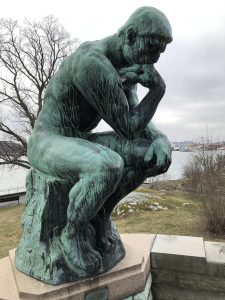
F for Freedom
This choice is no surprise, or is it? Who is longing the most for freedom? People in the so-called Western world are reported to score highest in the rankings of achieved levels of freedom. However, the longing for freedom often seems the strongest in countries, or regions within a country, where elements of freedom are restricted. Then fighting for freedom becomes an intense struggle, sometimes leading to outright war or fighting back like in Ukraine. Beyond the negative freedom (free from capital punishment) there is the positive freedom to express yourself freely. Both perspectives on freedom are crucial. Being free from prosecution is often only a first step towards the goal of being free to live your way of life as you feel it. It has always been a political struggle and will remain one today as well as in future. Less consensus reigns on the topic to what extent economic freedom is a constituent part of the term freedom. Far-reaching economic inequality within societies frequently limit persons at the bottom of the distribution to fully participate in society and excercise many components of freedom like decent food, housing, health and health care. All this remains the biggest challenge for humanity for years to come. We shall need a lot more heros in the name of freedom like the famous Nobel prize winners. Fighting for freedom in a peaceful way is probably the biggest challenge for humanity also in the 21 century. 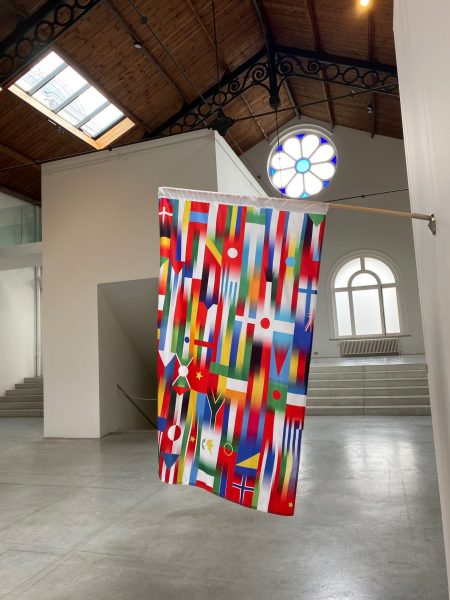
E for Enterprise
There is a new start-up scene in development in Germany. Interesting to witness the new entrepreneurial spirit. Many of the youngsters grow out of their peer community, wanting to try new ways of working and living together. The new bottom-up or grassroots form of growing a business out of a subculture seems to be an adequate response to the growing diversity of societies and easier ways of community building through online social media. Name it “reach” today, it is similar to what you previously called having a customer base. The new element refers to a blending of cultures. Learning through being online connected to the world, yes, the whole world, allows wide-spread influences from other sub-cultures, be they American, Asian or African. The young are open-minded to new stimuli like “Ikigai” from Japan and, of course, the life histories of founders and individual biographies from entrepreneurs like the legend of Steve Jobs, Apple’s legendary founder. Imagineering has become part of the movie-influenced influencers. Short clips out of a longer story build communities. The witty comment, like at school, gets more attention than the long boring story of the preacher, teacher or the mansplainer. The experience of “flow” is all around these communities and this creates the specific magic of the start-up scene. They take each other to new levels, mutually, reinforcing their preferences and life-styles. They are well aware of the risks they are taking. “Keinhorn” German short for “not an Einhorn”, the one billion value threshold for super successful enterprises taught them crucial lessons. The “ecology of organisations” which I referred to in my courses at the now renamed “Constructor University” previously “International University Bremen”, then “Jacobs University”, (let’s see what comes next?) is an important complementary research tradition to assess the “survival” of enterprises. I still recommend this University, which I quit to start new endeavors. It carries in its several  “names” the important message:
start, fail, change, (repeat). 
D for Democracy
Stand up for Democracy. Give me a D. Yes, we are passionate for democracy. Even if we are not singing Beethoven‘s “Ode an die Freude” every day, we are well aware that we have to defend democracy at numerous places. The essay in the New Yorker by Jill Lepore from January 2020 on the manifold risks to democracy and the way forward is a great inspiration. Democracy is always a “work in progress”. It improves and in most cases rises with the challenges. However, this demands to stay alert and wither the beginnings of threats to its functioning. Beyond the external threats, internal threats to democratic values are abound. The discursive element that is highlighted in the essay remains crucial. Debating in public is key. Transparency of arguments, reasoning and values are constituent parts of democracy. Clandestine ways of corruption, bribery and threatening of violence become apparent when fractions of society retreat from the public to form insider groups. Defenders of democracy need to speak out in public, publish they work, expose and perform their arts, challenge school curricula and be active in any policy field. This is a lot to do, but we have to prevail and rise to the continuous challenges to the democratic way of life. Too many dictators and autocrats around the world would like to see democracy fail. Worse, they work actively, like in “Qatargate” in November 2022 in Brussels to spread illicit practices of corruption. We have to strengthen our “antennas” and sensors to detect such practices. Prevention is key. Tough reactions with the force of the legal system to stop the spreading is also indicated. Let’s rise to the challenge, again and again with the latest technology. 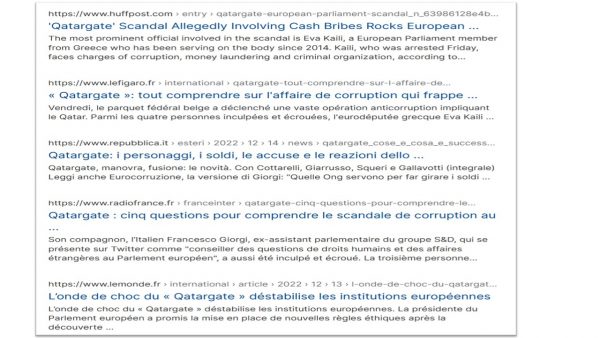
C for Corruption
After the association of C with crises of corona, climate, consumption and the church we have to come back to one of the original links: corruption. Beyond the work of describing and analysing corruption from the time of the Roman empire to the Americas of today (Link) by Thomas Strunck, the re-reading of Niccoló Machiavelli is recommended by a number of scholars (in latin here). Also, in Asia the work and writings of Niccoló have been rediscovered (Link). “non creando in veritá le cuose nove”. It needs “una ferma experienza”. As people don’t just believe in the truth of new reasons, a firm experience of them is needed. New princes cannot just pray, they have to install a new vision or belief with force (p.25) by literally forcing persons (forzare) or “fare … credere par forza” stated in Chapter 6 of THE PRINCE. If we just complement the term force by force of persuasion, or money as surrogate for both, the writing of Niccoló speaks directly to corruption in our times. History does not repeat itself. However, the history of ideas still teaches “some dogs old tricks” until they are found out by investigative journalism and an independent judiciary, which both did not exit at Niccoló’s time. (inspired by Chaudhuri, S. & Chakravarty, P. (2022) Machiavelli Then and Now: History, Politics, Literature. Cambridge University Press.) 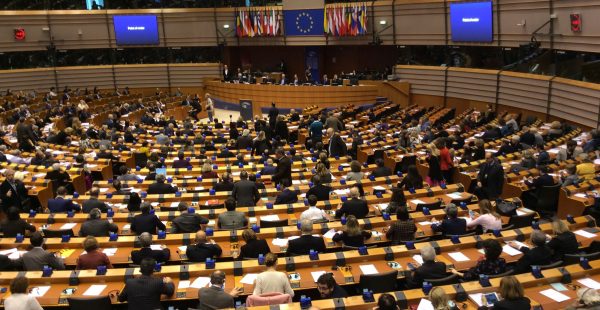
Human Rights
It is 10 years after the publication of a Ph.D. thesis on “Corruption: a violation of human rights and a crime under international law?” by Martine Boersma that at the top level of the European Parliament and the International Trade Union Congress the smell of corruption is investigated by police and judges. Following “Qatargate” (Radio France Link) this means that the persons accused of corruption, forming a criminal group and money laundering have changed their lobbying in return for accepting cash. Exploitation of workers and more than 100 deaths in Qatar was the result, due to the heat when building the stadiums for the Football World Cup which took place in 2022. Following the recommendations of Boersma corruption in this respect can be interpreted as these persons contributing to and being guilty of abusing their political positions to silence criticism and whistle-blowers, and the right for defendants to a fair trial for example. The advocacy to counter corruption with developing international human rights legislation and persecution in this respect is dearly needed now. “This line of reasoning transforms a corrupt act into a possible starting point for legal action, be it at the national level, …, or at the international level by submitting a complaint to a regional or global human rights monitoring body.” (Boersma, 2012 p.376) The International Criminal Court or “alternative such as the establishment of a permanent anti-corruption court, or anti-corruption commission to monitor compliance with the UN Convention Against Corruption should be kept in mind, as well as the possibility of setting up ad hoc anti-corruption tribunals” (p.380). Not much to add to this, act now, before the practice spreads.
Francesco Merloni wrote in his book (2019, p.132) on corruption with Italy in comparative perspective: “when corruption is defined in its wider meaning of maladministration, we are looking at a mass phenomenon which is “sub-criminal”, yet nonetheless with strongly negative implications for the efficiency and effectiveness of public administration and democracy in general.” The practice of excessive salaries of the Italian parliament (p.131) is mentioned in the list of case histories of corruption just like the international event of the EXPO 2015 in Milano with huge construction projects (LeMonde on Panzeri l’ex-eurodéputé). Learning from case studies is best practice in many business schools and probably beyond. Finally, attention should be drawn to prevention of corruption. Here the reading of Corruption and Anti-corruption by Larmour and Wolanin (2001, p.235) offers good advice. The micro-economics of corruption (pp. 119) states for example that “If expected penalties are sufficiently high, bribery is deterred” (p.126). Equally the real threat of a full and explicit audit of operations, promotions and financial transactions might deter corrupt activities. Most importantly the authors state, “the social networks approach to corruption allows the corruption investigator to conceptualise the operation of corrupt networks in terms of power flows and relationships rather than the attributes of actors. The question to be asked by the corruption investigator is not whether actor A is corrupt. The question should be, what is the relationship between actor A and other potentially corrupt actors in the network.” Re-reading some classics of sociology like Max Weber on bureaucracy, but also James Coleman’s foundation of social theory provide basics for understanding social interaction when things go fundamentally in the wrong direction. We might even need to use artificial intelligence to detect corruptive practices to shield and support the trade union movement. 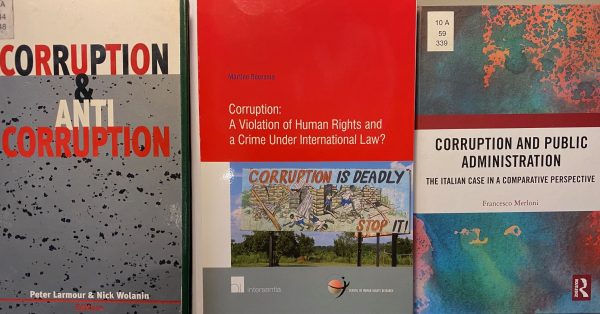
State of the Union
“The times they are a changing”. Currently, we witness that democracies are at multiple risks. One existential threat is, of course, war of external origin. Democracies have been perceived as often to slow to mobilize military forces sufficient to resist “Blitzkrieg”. What Nazi-Germany applied successful at the beginning took a long time and millions of dead persons to rectify. Similarly, the threat to Ukraine’s independence and liberal aspirations are threatened by Russian imperialism. The other existential threat is that of “the enemy within”. This is the conclusion by Canova (2011, p.213) when he writes on “democracy’s disappearing duties”. Whereas he has primarily in mind, that citizens need to participate more actively in the duties to democracy’s survival. These are “the duty to become informed and to vote, as well as rights and duties related to civic and/or military duties. The discussion, whether we need an army of the many or an army of specialists has shifted largely in favour of the need for specialists, simply think of cyber or drone war technology. However, the threat of the enemies from within becomes clear if we remember terrorist attacks targeted at democracies practice of free movement, free speech or art. Another centuries-old threat has come to our attention again. Corruption. The slow-motion erosion of democracies is hard to fight against as it operates not with visible tanks and weapons, but with clandestine and psychological ways of slow corrosion of organisations and institutions. Combatting corruption is even more tricky in cross-country settings like the European Union. Reference to cultural practices and exclusive or inner circles as cultural exceptionalism make it hard to introduce non-discriminatory monitoring and controlling mechanisms in democracies. Only a well-equipped security, police and judicial system can stem the risk to democracies from corruption and organized crime. It is not only a matter of state responsibility, but our democracies rely on an alert public to stand up continually for our basic values. Just singing the national and European anthem is not enough, fighting corruption is laboursome and cumbersome, particularly as corrupt circles do not refrain from using brute force and weapons (Reichsbürger, Mafia, etc.). Addressing inner and outer enemies at the same time remains high on the agenda for the surviving and thriving of democracies. The foundation ideas of the European Union were constructed by Monnet and Schuman on a sustainable democracy. Let’s not endanger this through a sluggish response on corruption.
inspired by Canova, T.A. 2011: Democracy’s disappearing duties. In: Democratic Citizenship and War. Peled, V. et al. (eds.) pp. 199-216.
Kritik der Kritik
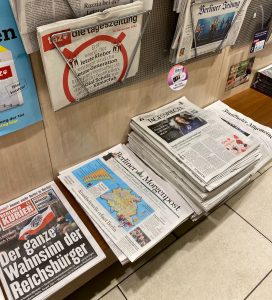
In Berlin türmen sich als ökologisches Desaster die nicht verkauften Zeitungen auf. Darunter gerade der in neuer Aufmachung erscheinende Tagesspiegel. Mal gespannt, ob dieses teure Experiment gelingen wird. Mit sorgfältig recherchierter Kritik des kulturellen Schaffens und der etablierten Häuser rühmt sich der Tagesspiegel nicht gerade. Vielleicht ist das ein Grund, warum die beständig weniger werdenden Zeitunglesenden ebenfalls auf andere Medien umsteigen. Eine Kritik, wie die von Ulrich Amling im Tagesspiegel vom Dienstag 6.12.22 Seite B24 braucht wohl keiner. Soll er doch besser gleich Bratwurst essen auf dem benachbarten Weihnachtsmarkt. In dem neuen Format des Tagesspiegel finden sich die Kritiken eh jetzt ziemlich weit am Ende, wo der eilige Lesende meist nicht hinkommt vor dem Einschlafen. Ich würde eher davon ausgehen, dass solche Kritiken etablierte Lesende abschrecken. Für Berliner Schnauze oder Wutbürgerniveau im Kulturteil muss ich kein Geld bezahlen. Die internationale Besetzung und Ausrichtung mit Regie Satoshi Miyagi erlaubt Berlin internationale Aufmerksamkeit zu erlangen jenseits des Berliner Inner Circles von Freund- und Feindschaften. Auf der Webseite der Staatsoper lesen wir: “Ein japanisches Inszenierungsteam um den Regisseur Satoshi Miyagi taucht Mozarts »Mitridate« in ein zauberhaftes Ambiente …”. Das lese ich dann umformuliert im Tagesspiegel auch genannt Spitzel: “Unter den Linden taucht derweil ein japanisches Team um Regisseur Satoshi Miyagi “Mitridate” in Ströme von Gold”. Platter gehts nicht. Zeitung ist halt meistens 2D und nur wenigen gelingt es kulturelle Events ebenso plastisch darzustellen, wie sie eben auf der Bühne wirken. Tolle Einführung vor der Oper im Foyer übrigens. Wer Internationalität und Interkulturalität schätzt kommt hier voll auf seine Kosten.
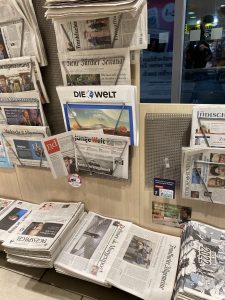
Die Stapel Tagesspiegel als Altpapier, die zurzeit täglich entsorgt werden müssen (Foto vom 6.12.2022 18.26h am Südkreux), sind ein weiteres tägliches Ärgernis. So werden bestenfalls fake-news über eine Tageszeitung selbst produziert. Branchenkenntnis über Zeitungsmärkte beklagt das schleichende Rückbau des Mediums. “Zwar setzte sich die Erosion der Absatzzahlen fort, aber sie verstärkte sich nicht. Bei den Regionalzeitungen nahm die Zahl der Abonnements im Westen um drei Prozent auf 7,55 Millionen ab.”(BDZV Relevant 2-2021 S.25). Oft sagen Bilder mehr als Worte und dabei ist goldfarbenes Lametta in der Weihnachtszeit in der Staatsoper vielleicht doch sehr passend.
Bogenschütze
Der Bogenschütze, seine Materialien und Techniken, hat seit Jahrtausenden die Menschheit beeinflusst. Im Angriffskrieg Russlands gegen die Ukraine 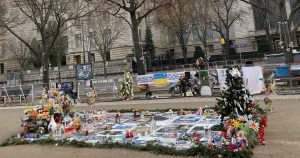 sind schon mehr als 10.000 Tote auf ukrainischer Seite zu beklagen. Der stille Protest vor der russischen Botschaft in Berlin gibt davon Zeugnis. Wer hätte gedacht, dass Heckenschützen in Europa wieder wichtig im Krieg werden. Historisch ist die Bedeutung vielfach belegt und die Künste haben ihren Anteil daran. Auch im Kulturforum Berlins wird wieder aufgerüstet. Nach? der Skulptur “Bastion” vor der Stabi West, hatte die Nationalgalerie ihren dreifachen “Bogenschützen” von Henry Moore auf die Bastion gerichtet. Jetzt hat die Nationalgalerie mit dem Kauf der “Bogenschützen” von Sascha Wiederhold erneut aufgerüstet. Das farbenfrohe Werk des Malers und Bühnenbildners ist derzeit, gleich in der Eingangshalle unten zu bestaunen.
 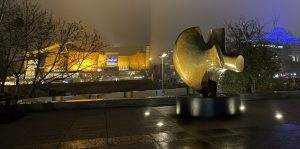 Die “reclining figure” von Moore am UNESCO-Gebäude in Paris hat mich aufgrund des verkörperten Optimismus eher inspiriert, wenngleich das “Three Way Piece No.2 Archer” klare Stellung im Kulturforum bezieht. Die Stabi West hat mit der Renovierung der Stabi Ost und direkter Busline ihre backup Truppen deutlich verstärkt. Mit der Nachbarschaft der Scheune wird die Neue Nationalgalerie, bei erfolgter Unterstützung durch die Gemäldegalerie und der Alten Nationalgalerie auf der Museumsinsel, in einigen Jahren das Kulturforum dominieren. Das WZB hat schon mal seine Kathedrale aufgestockt und die Digitalisierung wird von der Stabi insgesamt dynamisch vorangetrieben. Schon längst ist die Kultur in einem umfassenderen Cyberwettkampf, der zunächst zwischen den Generationen ausgetragen wird. Während die Stabis von der jüngeren und mittleren Generation dominiert werden, haben die Tempel der Moderne ein Alterungsproblem. Ob es nach den Kirchen die Museen treffen wird, bleibt zu befürchten. Die hohen Studierendenzahlen verstärken die Truppen der Stabis. Letztlich hängen alle diese Institutionen am Tropf der öffentlichen Finanzen (Statistikinfo). Es wird mehr MäzenInnen brauchen und viele kleine Fördervereine, die diese wertvolle Vielfalt erhalten wollen. Retten wir, was noch zu retten ist.