Switch off

We have many associations with the imperative “switch off”. Depending on your background or state of mind, you might associate “to switch off” with a mental state, i.e. to calm down. Instead of buzzing about, juggling with multiple projects or deadlines at the same time, the reduction on a few major preoccupations can be achieved through a switch-off. In electrical engineering the switch, as switch-off or switch-on, is a key component of electrical circuits. In programming languages a key element is the switch implemented as an “if-condition” in form of “do if X=True”, in its easiest form.
Let us develop a social science corollary of a theoretical concept of “switch-off”. At times of energy shortages the switch-off option becomes an often overlooked or discarded option. Switch-off an engine to lower overall consumption of energy is a very powerful mechanisms. We do this manually by switching off lights, or as programmed or AI-assisted versions in modern homes. States might impose the switch-off of street lights or loud music after certain hours. In an energy crisis the switch-off option needs to be moved to center stage again as any MegaWattHour not consumed does not have to be (1) produced, (2) moved to local provision and (3) distributed. Additionally there is (4) less waste that has to be taken care of. Hence, the switch-off option is a fourfold win-win-win-win-situation. Who cares about this option as all 4 kinds of savings do not increase a standard measure of GDP in an economy? Broader social science perspectives may offer precious indications that “less can be more“.

Critique of Maps

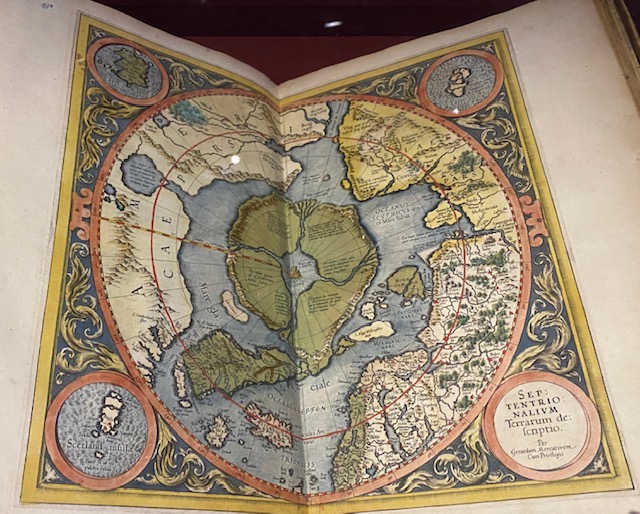
From a sociological perspective on maps we learn for example, that maps are also instruments to reflect property rights. This can be past claims of imperialism or recent claims of independence. A depiction as a map has historical and societal implications. Superposition of maps according to political, cultural or linguistic communities often reveal contested areas of domination and liberation movements. The specialized field of the history of maps can sharpen the senses for a critical view of maps in the 21st century. (Image:  Brankiza Zilovic, Nusquama 1984 exhibition “Cartes imaginaires’ BNF Paris).

Fact and Fiction on Maps

As a matter of fact, for centuries maps have played in both registers, fact and faction. In geography we expect maps to represent geographical facts, and yet based on a historical perspective on the subject, we realize that early cartographers had to brush over, at their time unknown, territories. What did many of them do? They imagined what could be the case.
In the early days of “creating a map” the artists had to rely on some sort of fiction or were intentionally creating a fictive image of the unknown world. Out of this “science and fiction” approach, a whole discipline of literature has evolved, science-fiction. The imagery of Manga-mania in the 2020s owes a lot to this drawing and mapping of fiction in form of stories.
Maps tell lots of stories. They are powerful in their neurological function, similar to mind maps that are a tool to structure our thoughts or story lines. The gesture to point at an area on a map of the Arctic, Greenland for example, can send shivers across the globe. Maps make stories and stories may lead (eventually) to shifts of attribution on maps. In the same vein: the mapping of power also reflects the power of maps, be they based on facts or fiction.
(Image: Exhibition: Cartes imaginaires, BNF Paris 2026-4-8, Gerardus Mercator, Map of North Pole 1595)

Fail collection

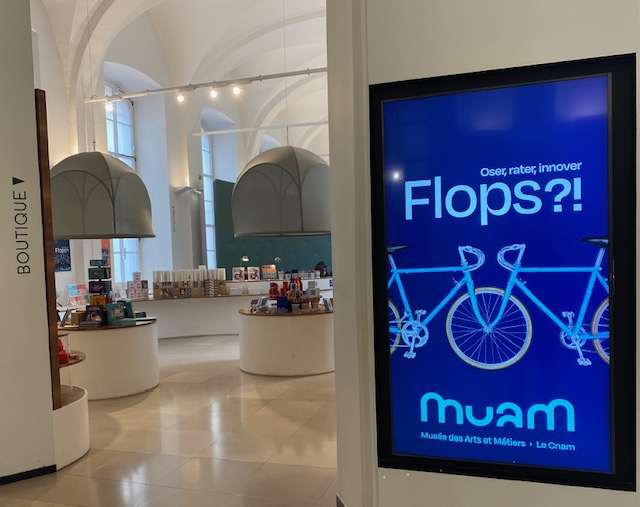
The not-so-social media have been flooded with collections of failures. The success of this short video format is mostly due to its entertainment value. A quick laugh is guaranteed if a certain intention is turned into its opposite. You want to take a witty shortcut but effectively you end up with a lengthy or painful lesson of the opposite. The fail collection of the CNAM in Paris has a similar attraction. The “Flops” exhibition in 2026 exposes a larger number of technical innovations that either did not reach the mass markets or that were “flawed good ideas”. In fact to put an innovative idea or design into practice it takes a lot in addition to engineering intelligence and professional competence and experience. The collection of documentary evidence invites us to explore the topic of what constitutes a failure and why failure is an intrinsic part of the creative process of trial and error, fail, fail again and fail better. (Image Musée Arts et Metiers 2026). 

Time Response

Time enters in many studies of behavior as response time. It could be summerized under a mechanism defined as “action – reaction” in many instances. In the animal model this is studied not only from external stimuli and bodily reactions, but with direct brain or nerve stimulation and subsequent reactions in other parts of the body.
Within humans the same rationale is widely acknowledged as well (Kimura2023). In many processes it is not no longer a question, whether a response will occur, but the differences in response time play a crucial role, for example in processes of aging. In many mental processes, response time is a fairly reliable indicator of aging as response time increases and the reaction is slowed down. The focus then shifts on strategies how to keep response times within usual boundaries. Eliminating or at least reducing disturbing peripheral influences like noise or light as distractions become an issue. In jazz music, the “call – response” mechanism has entered as a successful element in composition and improvisation. Time and response or response time is a highly passionate, physiologic and emotional issue.

Screenshot

Super fast spin

For all players of table tennis, tennis, pocket billards or football, the secrets of achieving a fast spin on the ball is interesting. The bouncing of a ball changes inherent with the speed of the spin.
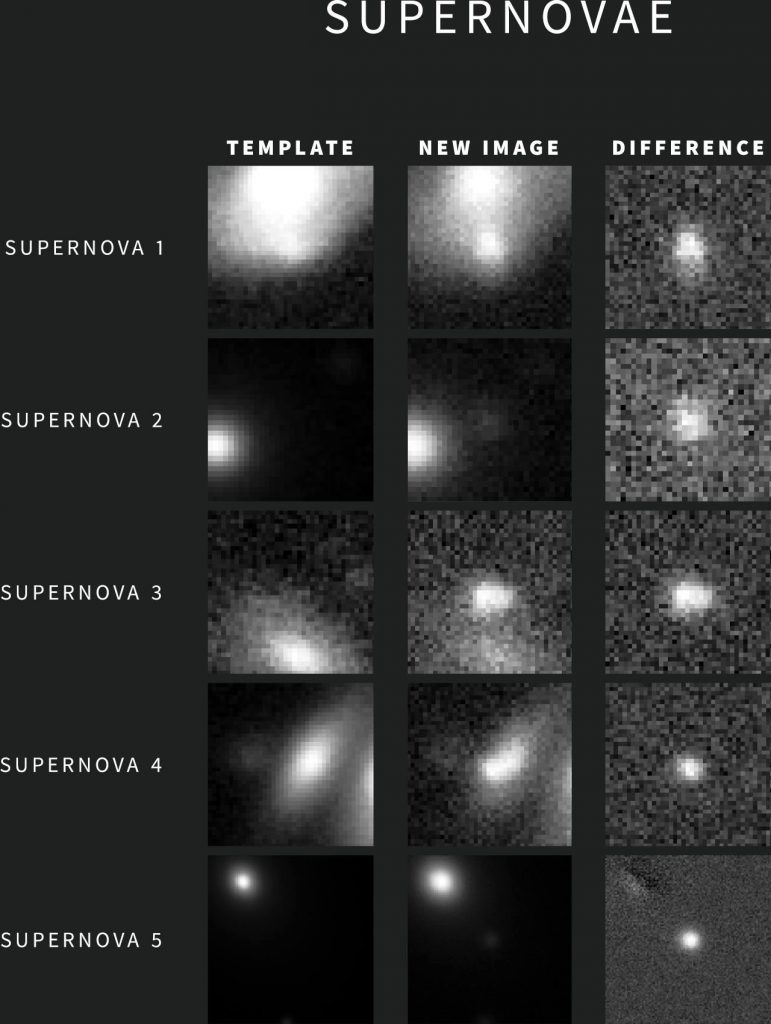
The maths and physics of such movements are well understood, the empirical phenomenon of super fast spin still draws large audiences. The earth is typically spinning about once every 24 hours, hardly noticeable for us living on it. Seen from space this changes already and it makes for marvellous views on the blue planet. The NSF Vera C. Rubin project has made available the first few images of super fast spinning asteroids. The 2025 MN 45 asteroid is such a fast spinning one. The asteroid has a rotation period of about 2 minutes only, with a size of about 700 meters as diameter.
Collisions with such a super fast spinning asteroid, made out of very hard material as otherwise it would have disintegrated already, is likely to cause substantial damage in space. It is not threatening us, but satellites or rockets on their way to planet Mars in space would certainly be knocked out due to any collision. For the time being, we may just admire the splendid images of space, spins and the occasional collisions. (Image: Link to source NSF Vera Rubin 2026, NSF-DOE Vera C. Rubin Observatory/NOIRLab/SLAC/AURA)

Myths debunked

There has been careful research on the use, or not, of color in classical Greek sculpture. More than 40 years of research have documented that what was long believed as monochrome sculptures, have in fact been very colorful specimen. The collection and researchers linked to the “Liebieghaus Sculpture Collection” can be inspected with experimental versions of the colors of the classical Greek time. “Gods in Color”, an exhibition by the Liebieghaus, provides a view of the rich colors of classic statues like the “archer” using the chemicals of the time to produce more or less durable or resistant colors. See also the archaic Greek Sphinks at The Met Museum.
Brinkmann and Koch-Brinkmann have spent close to 50 years on this research and attempts to convince the public of the “monochrome myth” of Greek sculptures. Research alone did not convince people, they seemed to need to see the colorful versions eye to eye to believe. The broader social science interest is to realise how much time it can take to re-establish scientific facts once they have been “eradicated” previously. (Image: Statuettes of classic Greek actors, lower row, BNF Paris)  

Fukushima Commemoration

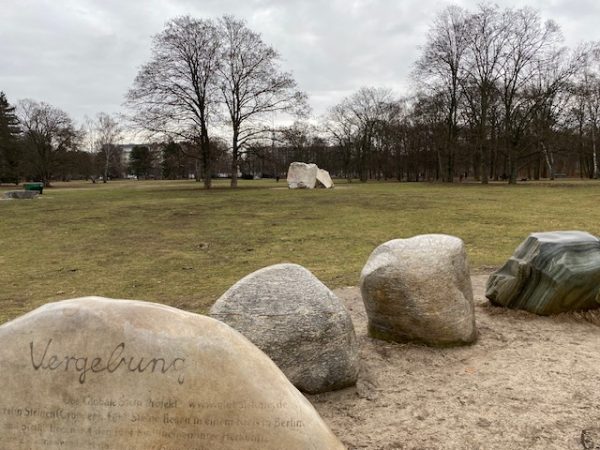
The date of 2021-3-11 is marked by an event that according to science should not have been realistically expected by anybody. The probability of a meltdown of a nuclear reactor due to an earthquake and tsunami in Fukushima were simply beyond a “normal” statistical probability. And yet, it did happen. The consequences are still visible and the nuclear waste has to be dumped somewhere and lots of contaminated water has to be dealt with as well. 90.000 persons had to evacuate the area. Many of them have no interest in returning to the devastated area. Moreover, the psychological damage to the perceived security causes continuous trauma. The psychiatrist Ryoji Arizuka, interviewed for the French newspaper Liberation, reports that victims find it easier to cope with the “natural disasters” of the exceptional earthquake (9.0 on Richter scale) and the tsunami than with the man-made disaster of the meltdown of the nuclear reactor. Whereas the former disasters can be attributed to external forces, the latter example of a the explosion of the reactor is due to a failure to estimate the risk (technical, human and political) of an explosion properly by engineers and subsequently by politicians.
The commemoration of Fukushima by its governor Masao Uchibori in 2026 is a reminder that more risky technological progress comes potentially with higher costs to society as well. These “risks for societies” will have to carried by some selected regions. Solidarity with people who carry disproportionate amounts of risk should be “addressed” right from the beginning of the decision to use a risky technology, as an attempt to “internalise” the likely costs to society, eventually. Perceived cheap technology turns out to be very costly using different probabilities of associated even unlikely risks. (Image: Global stone project). 

Retrieval-augmented AI

As a scientist it is in our DNA to cite other scholar’s work with precision. As a university professor your job is to check the quality of citations, kinds of citations and accuracy as a regular part of your job, also as supervisor of junior scientists. In 2026, the use of up-to-date AI (Asai et al. 2026, OpenScholar AI) allows not only to summarise large bodies of scientific literature, but also to cite references and even quotes from the paper(s). Literature reviews used to take months to compile. AI can speed up the process enormously. The citations can be ordered following an own logic or an AI-suggested logic.
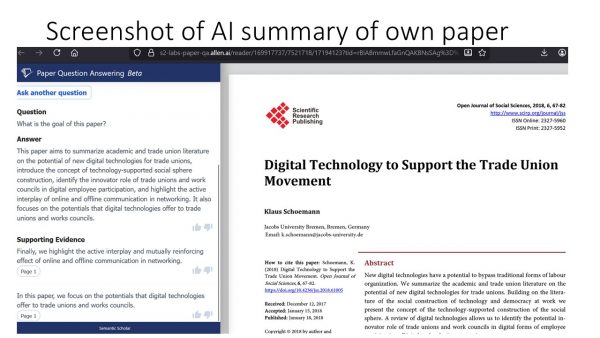
It has become much harder to evaluate the degree of innovation of a candidate for a scientific degree. Tools like retrieval-augmented Language Models enhance the scientific potential of generative AI since they extract more or less short citations directly from the original source just next to the original based on a simple query of author and approximate subject (see screenshot below of own previous publication).
The good news is: (1) referral to previous research and citations should become faster with improved tools for verification. (2) You will find papers written by yourself that you no longer have in your own archive.
The bad news is: (1)self-citations of researchers might become more feasible, although this problem is conditional on a researcher’s seniority. (2) so far, Language models prioritise specific languages (although not necessarily) and differentiate names with “foreign” characters e.g. “ö,ä,é” and do not double check “close neighbours” of them like “o, oe, a, ae, ue, e, ê, è” leading to a “character based normalisation bias“.
It is, of course, rather easy to point out deficiencies of the search, sorting and inclusion algorithm if you know already about the complete picture of a data set. 

1000+ entries

From time to time it is useful to review whether a project is still on track or has developed biases, which may run for some time without reviews. Just like the United Nations Strategic Development Goals (SDGs) have been set 1bout 10 years ago, I do scan my own publishing project whether I still cover the SDGs in a larger spread. The goals need monitoring and I shall redo my own review as well.
As the number of blog entries on a daily basis has reached 1000+ entries, a review becomes a bit of a statistical exercise. As a kind of anniversary reward, a publication of more collections beyond the AI-reader or the Paris Olympics 2024 reader should be fun. However, there is so much work with checking and updating links, that the e-book, pdf and epub publications have become a time-consuming effort.
The search function implemented on this digital publication format is so fast and powerful that I am myself delighted again and again about the digging up of previous entries, concepts and evidence retained.
Time is a treasure and a value in its own right. Test it!