Talking about joy is fun. Its feels better than just cracking a few jokes, and this is not bad at all. The starting point of much joy can be a simple joke, because of the simplicity of emotions and the bonding between persons. However, laughing about jokes is often abused in the form of laughing at the expense of someone or a specific group of persons (serious publication “L’empire du rire” CNRS, 998 pages). This explains to me the difference between a joke and joy. Joy is the emotion resulting of a joke, but also of many other experiences. The simple joy to meet another person, an animal, the sun, rain, wind, music, art or just less pain is more probably more intrinsic. To receive or to give a present is often associated with a joyful moment, sometimes lasting quite a bit. For some psychologists, emotions can be problematic, if a person can no longer regulate them effectively. Many persons tend towards excessive use of alcohol or other drugs to experience positive emotions like joy. Negative emotions of another person, strangely enough, may also contribute to the joy of another person (“Schadenfreude”), e.g., if a dictator is finally overthrown.
Much more inspiring is joy in connection with religion. As a critic of religious ideas, the attempts of religion to define joy for individuals and society probably explains the success of religions. Representations of Buddha, show the happy or joyful monk, Christians define joy with the advent and the birth of an unconceived child, fighting fiercely any modern forms of contraception and science advances for birth assistance. Restricting jokes and joy to the “carnival” period reflects the Christian doctrine to control and monopolise the definition of joy. Therefore, it is no surprise to witness that many persons feel more inspired by Asian traditions like “Ikigai” or “yoga” in their daily routines to experience joyful moments. I always found it very odd that Christian fundamentalists would not say Merry Christmas before the 25th of December after they have been to church at midnight. The priest or pope as the master of joy is a very strange idea. Affect inhibition or deferral is a powerful psychological tool. As in this blog entry I deferred my joy and laughter until the last line. So now, please join me in a wholehearted JOYFUL LAUGHTER, so the people around you may believe you’ve gone completely mad. It might be the beginning of more lasting joy, just keep practicing. Joy is within us not depending on outside stimuli, joyful1 although they might help. 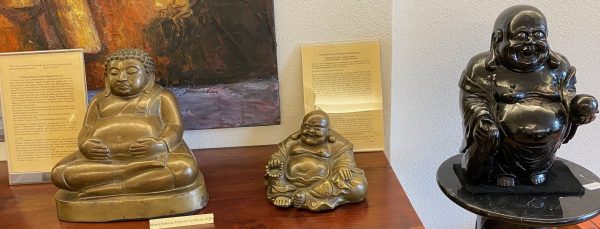
I for Imagination
We are all full of imagination. The human brain hardly can do without it. It could be understood as if thinking of oneself is a continuous process of imagining and reimagining oneself. We just developed or were forced to suppress imagination at various instances throughout our lives. Day dreams are rarely tolerated, starting at school, then on the job and probably for a long time also about the way we imagine our own ending or life after death. Just trying not to think, like in meditation, seems to be a very hard exercise and it demands long practice to arrive at longer durations. Abstraction is one of the ways of art to allow imagination to rule the process of creation. In view of the anniversary of Pablo Picasso in 2023, the Brussels Royal museum of fine arts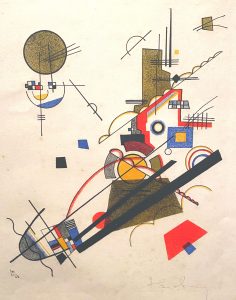 is presenting a paedagogic reflection and demonstration how Picasso emerged on his way towards abstraction as his preferred way of imagination and reimagination as part of the realisation process of his art work. As part of the Cubist revolution Picasso is quoted in this exhibition on how he paints: “Je ne peins pas ce que je vois, je peins ce que je pense.” and “Chez moi, un tableau est une somme de destructions.” Nice imagination, reimagination and de-construction I would say. Like the imagination depicted above from Paul Klee reflects the accomplishment of a new form of pictural language. Try imagination, it isn’t hard to do, “John Lennon” sang once. In Brussels you can try seeing the cubist way in the Picasso exhibition, a good way to prepare yourself for the next visits of fabulous exhibitions in honor of Picasso in 2023.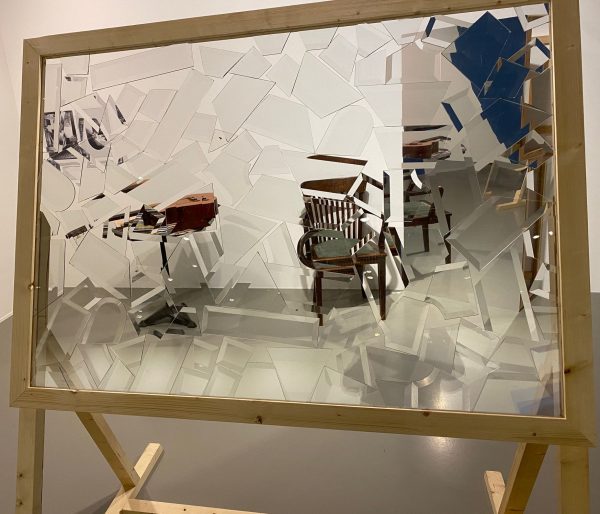
H for Health
Health is not just a personal issue. Of course, in modern times most people are primarily concerned with their very own health. Particularly, if pain is involved, we tend to put ourselves first. Only various religions and ideologies put God or some other bigger thing, for example identity, in front of personal pain. This bigger thing is believed to decide wars, like Russia trying to anihilate Ukraine. Russia’s military agression stands against the fight for freedom, democracy and perpetuates corruption.
At the beginning of the Corona-Crisis most persons and societies still believed health and infections are only a very personal issue. Researchers with knowledge about “public health” knew already, viruses have accompanied humanity since its beginnings and maybe continue to do so even beyond our disappearance. Hence, addressing the topic of society and health from a public health perspective has become much more popular as prevention is key to fight pandemics as early as possible. However, for prevention to work you have to involve and rely on individual behaviour. As soon as we leave the personal issue of health, we have to address a whole set of other topics like patient – carer relationships, cooperation, interdisciplinarity, public expenditure, public-private partnerships, corruption or behaviour of large crowds. We have developed antidotes against most difficulties, probably the strongest one is solidarity. Social systems that address inequality of provision (e.g. between regions) or inequality in access to and quality of medical services (e.g. doctors, care or pharmaceuticals) have a strong role to play. Structural, financial and political issues play a powerful role in health. As we think more about prevention and costs we start to understand that we have to start with nutrition, mobility, mortality and our western style of life in more general terms, particularly if we think about health on a global scale. There is no planet B where we could travel to, once it has become impossible to lead a healthy life on our planet. Topics of health over the life course or ageing will need a lot more attention. Findings on the risk of suicide after onset of physical health problems (Link to study) asks for fast responses. Access to digital tools might be part of the solution like “Sympatient” as well as being part of the problem like data leakage. 
G for God
God is dead, wrote Nietzsche about 140 years ago. So, is he, is she, are they? The discussion is ongoing. As science has debunked the myths surrounding birth, the jury is out as humanity is claiming freedom of choice also towards the end of life. Our cathedrals of Modernity, i.e. libraries , or Tempel of knowledge, i.e. universities, offer lots of instruction and Musea artefacts or Anschauungsmaterial to answer these existential questions. Perhaps this is just a lot of noise about “rien”, “nichts” or “Much ado about nothing“.
We might have to rethink society from scratch, starting with the definition of social backround and identity , but there are plenty of good sources to build upon, starting with basic human rights and the Schuman declaration for the construction of Europe, rising out of the ashes. Lots of hard thinking to do, Rodin thought so, too. The thinker above the “porte de l’enfer” ready for meditation in the Musée Rodin Paris 7eme arrondisement. 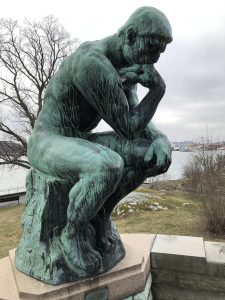
F for Freedom
This choice is no surprise, or is it? Who is longing the most for freedom? People in the so-called Western world are reported to score highest in the rankings of achieved levels of freedom. However, the longing for freedom often seems the strongest in countries, or regions within a country, where elements of freedom are restricted. Then fighting for freedom becomes an intense struggle, sometimes leading to outright war or fighting back like in Ukraine. Beyond the negative freedom (free from capital punishment) there is the positive freedom to express yourself freely. Both perspectives on freedom are crucial. Being free from prosecution is often only a first step towards the goal of being free to live your way of life as you feel it. It has always been a political struggle and will remain one today as well as in future. Less consensus reigns on the topic to what extent economic freedom is a constituent part of the term freedom. Far-reaching economic inequality within societies frequently limit persons at the bottom of the distribution to fully participate in society and excercise many components of freedom like decent food, housing, health and health care. All this remains the biggest challenge for humanity for years to come. We shall need a lot more heros in the name of freedom like the famous Nobel prize winners. Fighting for freedom in a peaceful way is probably the biggest challenge for humanity also in the 21 century. 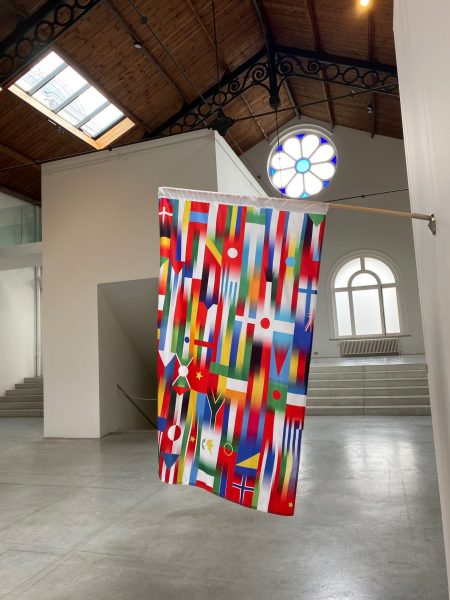
E for Enterprise
There is a new start-up scene in development in Germany. Interesting to witness the new entrepreneurial spirit. Many of the youngsters grow out of their peer community, wanting to try new ways of working and living together. The new bottom-up or grassroots form of growing a business out of a subculture seems to be an adequate response to the growing diversity of societies and easier ways of community building through online social media. Name it “reach” today, it is similar to what you previously called having a customer base. The new element refers to a blending of cultures. Learning through being online connected to the world, yes, the whole world, allows wide-spread influences from other sub-cultures, be they American, Asian or African. The young are open-minded to new stimuli like “Ikigai” from Japan and, of course, the life histories of founders and individual biographies from entrepreneurs like the legend of Steve Jobs, Apple’s legendary founder. Imagineering has become part of the movie-influenced influencers. Short clips out of a longer story build communities. The witty comment, like at school, gets more attention than the long boring story of the preacher, teacher or the mansplainer. The experience of “flow” is all around these communities and this creates the specific magic of the start-up scene. They take each other to new levels, mutually, reinforcing their preferences and life-styles. They are well aware of the risks they are taking. “Keinhorn” German short for “not an Einhorn”, the one billion value threshold for super successful enterprises taught them crucial lessons. The “ecology of organisations” which I referred to in my courses at the now renamed “Constructor University” previously “International University Bremen”, then “Jacobs University”, (let’s see what comes next?) is an important complementary research tradition to assess the “survival” of enterprises. I still recommend this University, which I quit to start new endeavors. It carries in its several 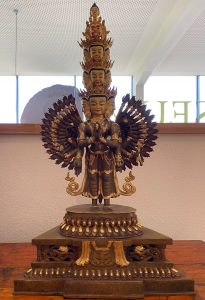 “names” the important message:
start, fail, change, (repeat). 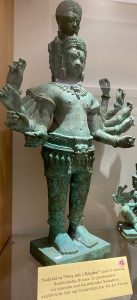
C for Corruption
After the association of C with crises of corona, climate, consumption and the church we have to come back to one of the original links: corruption. Beyond the work of describing and analysing corruption from the time of the Roman empire to the Americas of today (Link) by Thomas Strunck, the re-reading of Niccoló Machiavelli is recommended by a number of scholars (in latin here). Also, in Asia the work and writings of Niccoló have been rediscovered (Link). “non creando in veritá le cuose nove”. It needs “una ferma experienza”. As people don’t just believe in the truth of new reasons, a firm experience of them is needed. New princes cannot just pray, they have to install a new vision or belief with force (p.25) by literally forcing persons (forzare) or “fare … credere par forza” stated in Chapter 6 of THE PRINCE. If we just complement the term force by force of persuasion, or money as surrogate for both, the writing of Niccoló speaks directly to corruption in our times. History does not repeat itself. However, the history of ideas still teaches “some dogs old tricks” until they are found out by investigative journalism and an independent judiciary, which both did not exit at Niccoló’s time. (inspired by Chaudhuri, S. & Chakravarty, P. (2022) Machiavelli Then and Now: History, Politics, Literature. Cambridge University Press.) 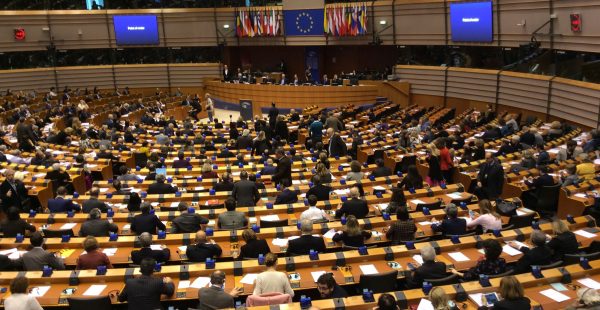
Human Rights
It is 10 years after the publication of a Ph.D. thesis on “Corruption: a violation of human rights and a crime under international law?” by Martine Boersma that at the top level of the European Parliament and the International Trade Union Congress the smell of corruption is investigated by police and judges. Following “Qatargate” (Radio France Link) this means that the persons accused of corruption, forming a criminal group and money laundering have changed their lobbying in return for accepting cash. Exploitation of workers and more than 100 deaths in Qatar was the result, due to the heat when building the stadiums for the Football World Cup which took place in 2022. Following the recommendations of Boersma corruption in this respect can be interpreted as these persons contributing to and being guilty of abusing their political positions to silence criticism and whistle-blowers, and the right for defendants to a fair trial for example. The advocacy to counter corruption with developing international human rights legislation and persecution in this respect is dearly needed now. “This line of reasoning transforms a corrupt act into a possible starting point for legal action, be it at the national level, …, or at the international level by submitting a complaint to a regional or global human rights monitoring body.” (Boersma, 2012 p.376) The International Criminal Court or “alternative such as the establishment of a permanent anti-corruption court, or anti-corruption commission to monitor compliance with the UN Convention Against Corruption should be kept in mind, as well as the possibility of setting up ad hoc anti-corruption tribunals” (p.380). Not much to add to this, act now, before the practice spreads.
Francesco Merloni wrote in his book (2019, p.132) on corruption with Italy in comparative perspective: “when corruption is defined in its wider meaning of maladministration, we are looking at a mass phenomenon which is “sub-criminal”, yet nonetheless with strongly negative implications for the efficiency and effectiveness of public administration and democracy in general.” The practice of excessive salaries of the Italian parliament (p.131) is mentioned in the list of case histories of corruption just like the international event of the EXPO 2015 in Milano with huge construction projects (LeMonde on Panzeri l’ex-eurodéputé). Learning from case studies is best practice in many business schools and probably beyond. Finally, attention should be drawn to prevention of corruption. Here the reading of Corruption and Anti-corruption by Larmour and Wolanin (2001, p.235) offers good advice. The micro-economics of corruption (pp. 119) states for example that “If expected penalties are sufficiently high, bribery is deterred” (p.126). Equally the real threat of a full and explicit audit of operations, promotions and financial transactions might deter corrupt activities. Most importantly the authors state, “the social networks approach to corruption allows the corruption investigator to conceptualise the operation of corrupt networks in terms of power flows and relationships rather than the attributes of actors. The question to be asked by the corruption investigator is not whether actor A is corrupt. The question should be, what is the relationship between actor A and other potentially corrupt actors in the network.” Re-reading some classics of sociology like Max Weber on bureaucracy, but also James Coleman’s foundation of social theory provide basics for understanding social interaction when things go fundamentally in the wrong direction. We might even need to use artificial intelligence to detect corruptive practices to shield and support the trade union movement. 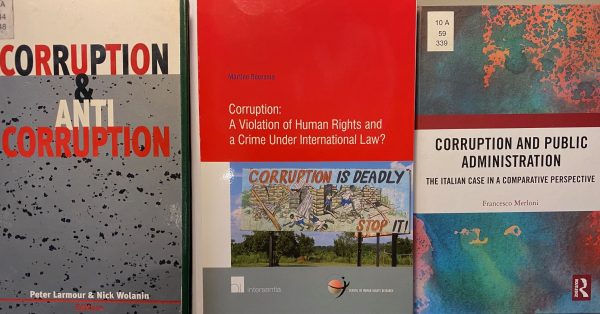
Corruption
There is an extensive literature on corruption in the social sciences. However, the evil practice continues to ruin personal lifes, institutions and countries. Psychologists put corrupt persons in the psychopath life trajectory (Link) or explain corruption as result of the triad of personality traits for persons scoring high on not only psychopathy, but also on narcissism as well as Machiavellianism (Link). Some important lessons derive from a fast reading of the scientific literature. (1) Corruption develops over a period of time. The creed for ever more power seems a strong driving force. (2) Some personality traits are more likely to deteriorate into corruptive behavior and (3) institutions need to monitor carefully leadership practices and guard against abuses of power already at small instances like threatening with violence or dismissal. (4) Countries can do a lot to limit corruption through adequate legal systems, most notably through a truely independent judiciary as well as the need of investigative journalism to accompany potentially illicit behavior. All this comes at a cost, but without it democracies are at high risk. The European Union has to strengthen its defences in this respect to remain a credible institution, just as much as a great number of Member States. Not only the World Bank or OECD need to be monitoring countries, but we all need to be better equiped to read the early signs of corruption. Whistle blowing and the protection of these persons is part of an effective anti-corruption system. Early signs of “nepotism” and “favoring of friends” in the workplace are easy to identify, but taking measures against it, needs firm committment on the part of advisory boards, colleagues at work or other interested parties like stakeholders or investors in case of private firms (wirecard) . (Link to NZZ). 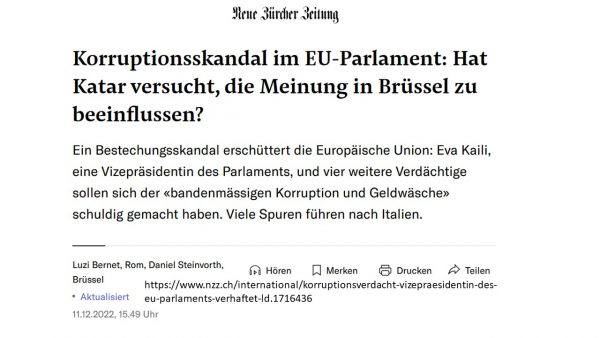
Mitridate
Ah! que vois-je … Welch schöner Ausruf, als Auftakt der letzten Szene im Theaterstück Mitridate von Jean Racine. Das könnte meine neue Begrüßungsformel im täglichen europäischen Umgang werden. Im Theater als moralischer Schule der Herrschenden und Diplomaten hatten Racine und durch seine Fabeln bekannt Jean de la Fontaine eine enorme Bedeutung. Die Geburtsorte beider in La Férte-Milon und Chateau Thierry liegen recht nahe beieinander für Museums- und Literaturliebhabende, unweit von Paris-Est mit RER erreichbar. Viele mit der jüngsten Geschichte Deutschlands vertraute Personen zucken bei dem Titel der Opera seria von Mozart “Mitridate, re del Ponto” zusammen. Mit dem Namen Ponto ist im kollektiven Gedächtnis Jürgen Ponto verknüpft. Die gleichnamige Stiftung heilt heute noch die Wunden der Vergangenheit. Der König von Ponto ist jedoch Herrscher über ein Königreich, das in der heutigen Türkei lag und die Halbinsel der Krim beinhaltete vor mehr als 2000 Jahren. Nur so viel zu den falschen, historischen und kulturellen Besitzansprüchen Putins heute.
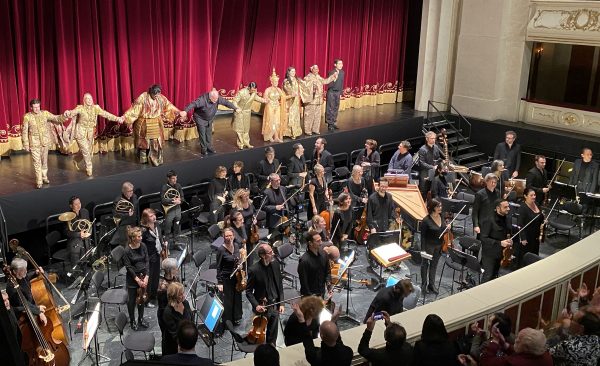
Mozart schuf bereits mit unglaublichen 14 Jahren die Oper Mitridate. Darin sind erstaunlich viele Anklänge und kleine Melodien enthalten, die er in späteren bekannteren Werken wieder variiert aufgreift. Seine erste Auslandsreise zum Studium der Kompositions- und Instrumentationstechnik nach Mailand hatte eine nachhaltige Wirkung. Zusammenarbeit mit den besten Singenden dieser Zeit stellt heute noch Professionelle der Gattung wie Pene Pati vor große Herausforderungen. Eine gewisse Analogie von Pati zu und Potenzial wie Pavarotti ist vielleicht schon erlaubt. Die Barocktage in der Staatsoper Berlin mit den “Musiciens du Louvre” sowie deren Gründundsdirigent Marc Minkowski, selbst ein Mozartexperte, sind wahrhaft glänzend und barock. Die in Goldfarben geschneiderten Kostüme und Bühnenbilder versetzen uns in borocke Bilder und Szenen. Der im Libretto vorgegebe Abschluss: Für die Freiheit, samt Abschlußakkorden, halt im Freiheitskampf der Ukraine gegen russische Besatzung heute noch nach. Bravi!!! Das hat der junge Mozart bereits 20 Jahre vor der französichen Revolution, vielleicht augenzwinkert vertont und inszeniert. Das Freiheitsstreben der Völker hat sich dann auf das Freiheitsstreben im Volk übertragen. Klar, ist nur eine spekulative These, aber schön zu glauben. Im Bild unten ist ein Cembalo zu sehen. Mozart spielte es selbst in den ersten 3 Aufführungen und hat wohl auch dirigiert, vielleicht wie es aus dem Film “Amadeus” 1984 in Erinnerung geblieben ist. Toll eine Oper, nicht nur für den Opa.