The social sciences deal with time either as part of social theory and as part of social measurement in the broadest sense. The entry of time in “The encyclopedia of social theory” (Ritzer, 2006, p.837-41) reminds us that since the age of Augustinus, believing that time is a God-given concept, we have evolved with Kant’s notion of the “Ding an sich” that time exists within our experience, but also beyond our experience of it. It is Durkheim who sees time as a social institution and raises the issue of a social construction of the concept(s) of time. In the process of civilisation, Nobert Elias leads us to think of time as an evolving social process which allows us to reach higher levels of civilisations. Despite wars and other backlashes, the basic premise remains an eventual improvement on previous situations (Time 3). The phenomenological method applied by Husserl points at the “inner time consciousness” of persons, which finds its literary expression for example in Proust’s writings.
In addition to time as the object of social theories, we find frequent implicit use of concepts of time as a component of social theories. Life courses, social change, social mobility, social integration, learning, all these concepts are conceived with “time stamps” attached to the them. Their temporality, i.e. location in time and space, durations, sequential orders and interlinkages form huge fields of research. Whole societies have attempted to define when is the “normal”, “right” or “best” time to do something for the individual or the society as a whole. Social desirability is linked to time and space and varies accordingly. The 1960s probably were a decade where the questioning of social desirability was most obvious.
Social measurement of time and the location of social phenomena in time leads us to the empirical field of studying time or the treatment of time as a basic dimension in and of social processes. “The encyclopedia of social measurement” (Kempf-Leonard, 2005) list the sampling of time as a basic entry to the topic. Frequency of sampling, (yearly, quarterly), level of sampling (person, household, region, country), repeated surveys (prospective, retrospective) of same person or rotating samples of persons have their specific strengths and weaknesses. Analytical methods rely on the concepts of the measurement of time. It seems to be a fair observation that (Clarke and Granato, 2005, p.836) the future of time series analysis lies in the linkages to theory. After all, the 2 worlds of theory and empirical measurement are linked through the concept of time, despite the tendency to abstract from it or assuming a large overlap in the concept of time (and space) referred to. Clocks seems to be ticking differently in different places.
Image: Dali Paris. R. & N. Descharnes Salvador Dali Sculptures & Objects. Eccart. Ref. 615, page 238. 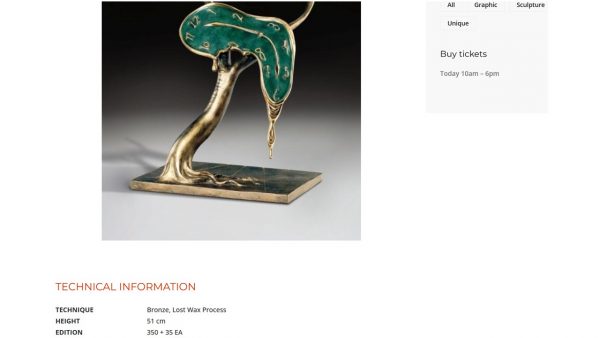
Time4
»Tempus fugit» (Latin proverb) time is flying, or time is escaping us. This is a classical quote. Students of Latin come across it in language acquisition. “Carpe diem” make the most of the day, others responded. Some even raise it to a dogma of their existence. Whereas in classical times, time was more likely to be perceived as a linear concept (v = s x t), modern concepts discuss time as “acceleration” a nonlinear concept (a = v x t = s x t²) or higher order non-linearities even (time³). Social time is embedded in such concepts of time. At some moments we perceive time as running very slowly, at other instances as running fast or accelerating. The synchronisation of time for friends, a couple, a family, lives, within a society or between societies is the big challenge. We tend to use calendars to synchronize our time acknowledging that time might be running at different speed for different persons. We have invented rituals of synchronisation like celebrating birthdays, departures at work, retirements or relative to seasons, with corresponding seasonal greetings. In between these events time fluctuates with different speed for different persons. Commonly in a kind of superficial objectivity, time is running in the same second-, minute-, hour-, day-like fashion, but considering activities or experiences, the same time span is widely different across persons. A lot of intergenerational conflicts have their origins in this non-synchronicity of time across generations. Bernard Guy (2018) reminds us of the link of time and space, as in the equations above, common in classical physics, where we could replace s with the change of coordinates of 2 GPS-signals. This space – time relationship complicates our simple reference to time. We have become used to think in time zones across the planet or within continents, however, our imagination is a bit stretched by imagining others sleeping while we are terribly busy on the other side of the globe. Global production and logistic processes have integrated the time and space framework for just-in-time delivery and optimisation of processes. As mankind we are still having a hard time to think about time and spend years “à la recherche du temps perdu” (Proust manuscript image below, BnF Paris2023).
Guy, B. (2018). Parler d’accélération, c’est aussi dire comment nous comprenons le temps. Dans : Nicole Aubert éd., @ la recherche du temps: Individus hyperconnectés, société accélérée : tensions et transformations (pp. 111-123). Toulouse: Érès. 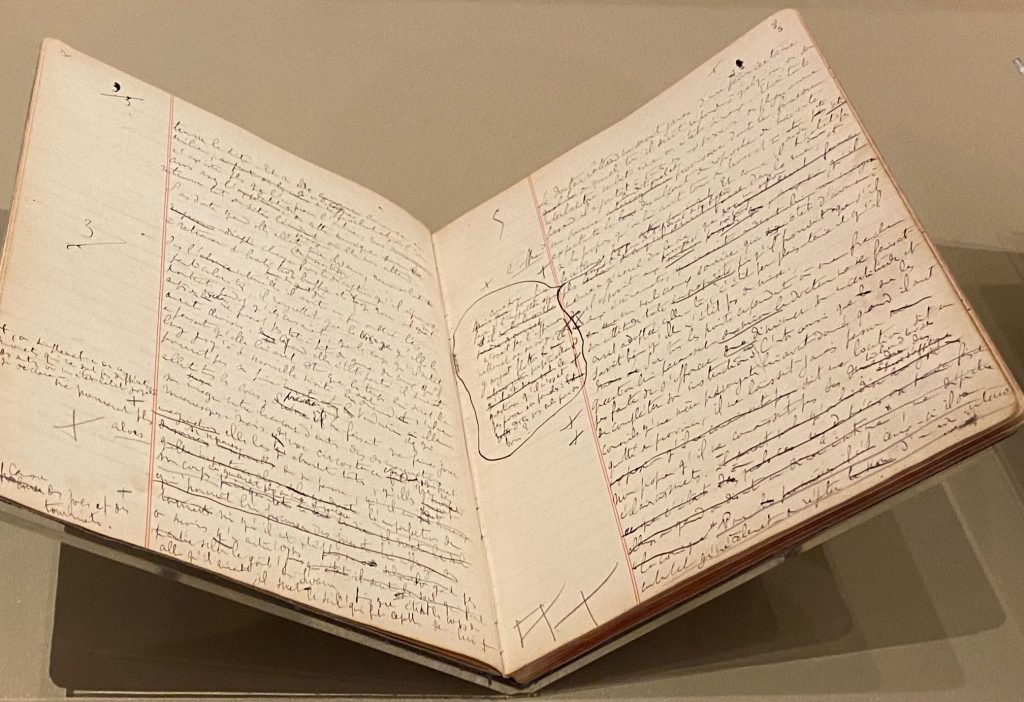
Know how
The construction of a knowledge graph is like an exercise in visual thinking or image thinking. A common method in design, visual thinking uses graphical tools to visualize ideas and develop the ideas on the basis of these visuals. So, let’s take our ABC of notions running from action … over nature … to zero. We place these notions in the core of the knowledge space and develop the satellite combined notions around the core. Visually this is easily reflected in the figure below. Content-wise a lot of thinking has to fill the combinations and check empirically this mind map of the knowledge space. Abundant complexity will let us search for digital tools to accomplish such tasks. On this webpage we find already a cloud of words that is empirically showing biggest the words with the most entries of the same key word. This shows us visually what this blog is mainly about. Europe and democracy appear fairly big. Additional analytical tools will clarify what are major or minor links to this pair of notions. “There’s something on my mind”, something which I might not even be aware of. Just an empirical question, should be easy to solve, eventually. 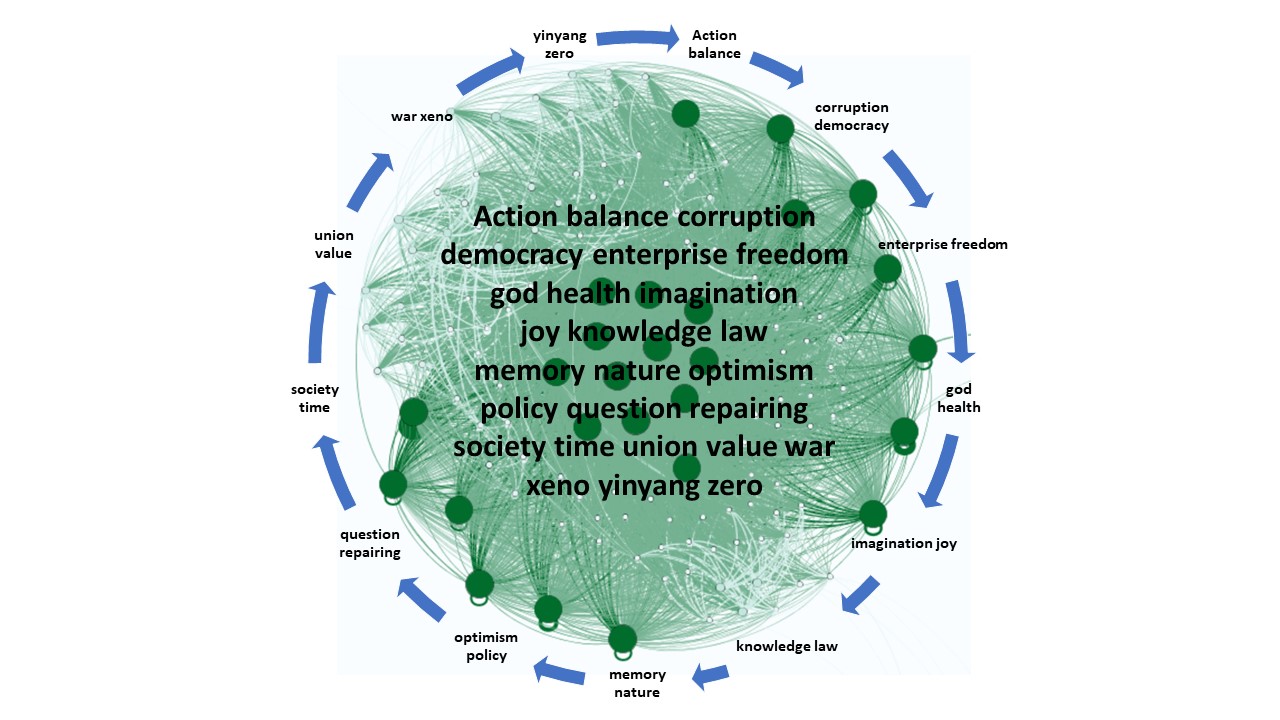
Bio-medical-sociology
In family histories we like to look on tree-like linking structures. Most frequently the choice is the descendant perspective (Top down). X, Y, Z have been the children of A and B and so on for a couple of generations. Bottom-up perspectives are equally feasible and modern patchwork families have more widespread representations of their families. Those representations were easy to do as families were lifelong bonds. Shorter family bonds, previously mainly caused by pre-mature deaths, are more common as people might have different partners and off-springs at different periods of their life course. Drawing family trees then looks more like a network structure of several families. History and literature is full of stories of how families aimed to keep their genealogy simple to the outside world. Modern days are no exception to this. Law had to adapt to these societal facts and changes thereof. Comparing decades over the last century there is, in my view, the remarkable trend to allow for more complexity in family histories, even after the 60s leading to many complete ruptures of family ties and links throughout the 70s and 80s.
With reducing fertility rates in most, not only western regions of the world, medical demography is back on the agenda. Similar to family trees, new forms of identifying promising pharmaceutical products have moved to more data-driven disease insights. Historically the local medical doctor had an overview about the likelihood of diseases following family’s medical histories over generations. Data-driven analyses, supported by data analytics and/or AI support, can learn permanently about potential and actual risks. New links of diseases are discovered this way extending the family doctor’s view of risks to watch out for in patients. Additional remedy and marketing potentials of existing drugs are also detected this way, beyond anecdotal evidence. Research published in the “Journal of biomedical semantics” by Vlietstra et al. (2020) classifies disease trajectories to construct knowledge graphs of biomolecular interactions. What previously a medical doctor in region could infer from his medical records in a less systematic way, can now be analysed on big data sets of countries, continents or even the global scale. Data is knowledge, and some already know, that this data-driven knowledge is worth a lot of money. Linking previously and seemingly unrelated facts or events, just like becoming aware of more complex family trees through DNA-analyses is the medical part of history. How we deal with this as families or societies as a whole, is the trickier part. Structural changes of societies are marked by decades-like changes, but specific events like “Fukushima”, Tschernobyl or other man-made rather than natural disasters have created new forms of contamination and the spreading of it. In addition to family trees we need broader consideration for knowledge bases to demonstrate, for example, the spread of cancer in the networked society. Additionally this evidence should have a stronger recognition in courts as prove of contamination lines. Statistical reasoning is more likely to become court-relevant. Hence, train the legal profession beyond what “statistical discrimination” is like. Causal mechanisms are manifold. Some are more likely than others. Semantic knowledge graphs remind us of the presence of reverse causality many relationships. Scientists need an optimistic state of mind to abstract from many intervening processes on health, be they tiny micro- or bigger macro-level societal effects. 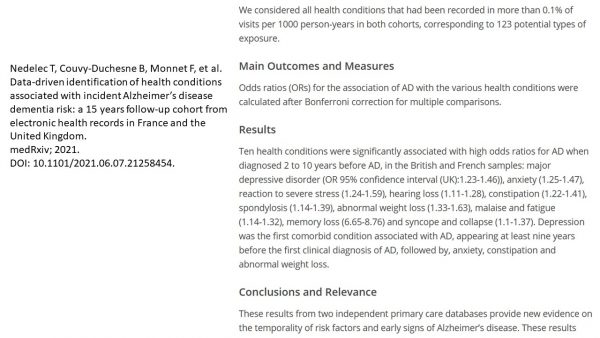
Flotow Potpourri
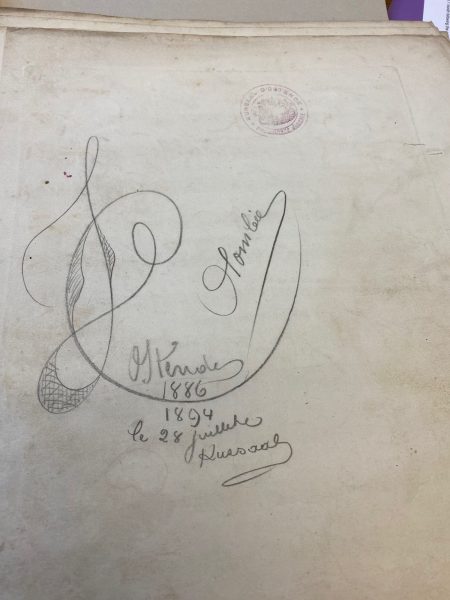
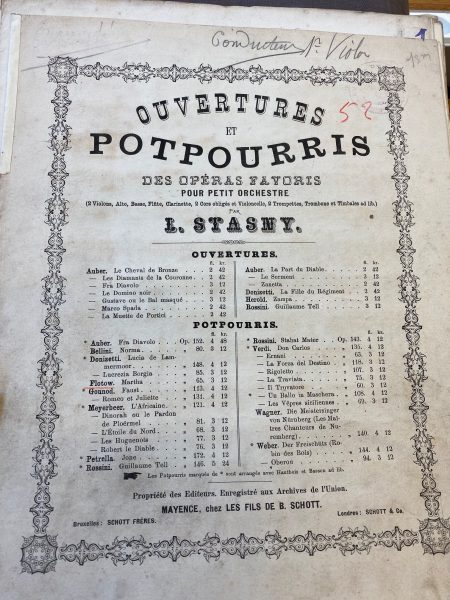
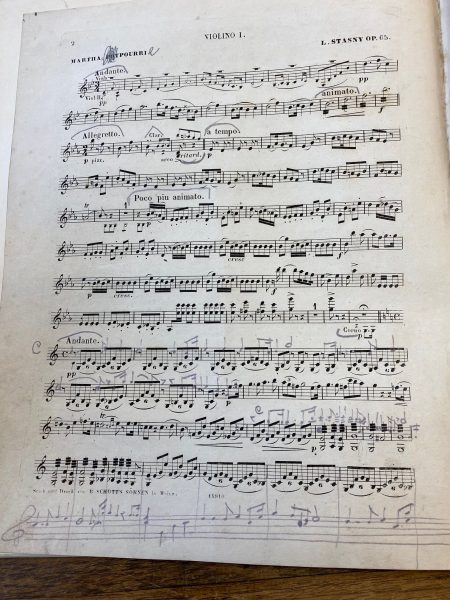
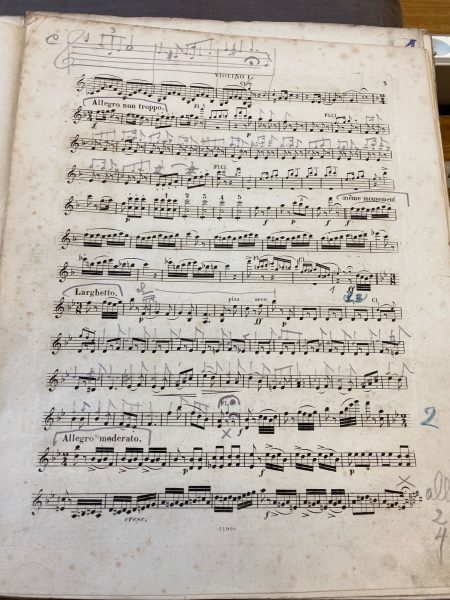
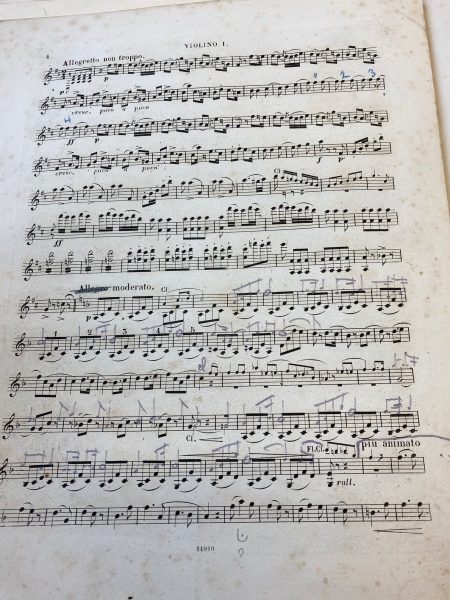
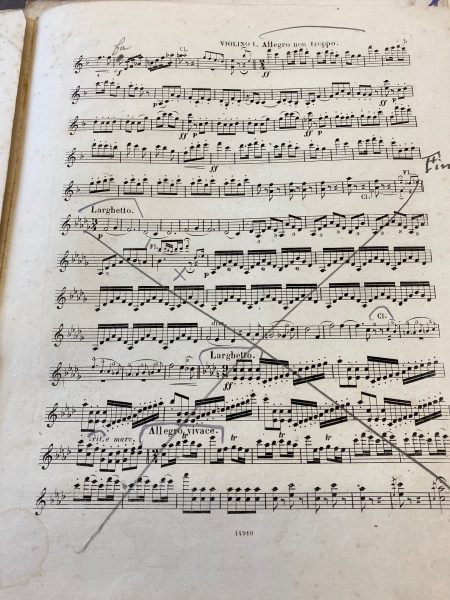
Über das musikalische Thema der Flotow Oper „Martha“ gibt es der heutigen Popmusik vergleichbar spätere verkürzte Versionen. Zu einiger Beliebtheit ist das Potpourri zu den Motiven von Martha gekommen. Kleineres Orchester und ein melodisches vereinfachtes Arrangement konnten für kurze Konzertabende verwandt werden. Der Komponist und Arrangeur Spasny Op. 65 hat Flotows Melodien aus „Martha“ publiziert (desgleichen von Wagner und Verdi). Die Kopie in der KBR Bruxelles ist ein kompletter Orchestersatz datiert von 1886 und 28.7.1894. Aufgeführt wurde das Potpourri im Kursaal von Ostende, wahrscheinlich für die Sommergäste in der Hafenstadt mit naheliegenden Erholungsgebieten und Küstenorten. Neben einigen schönen handschriftlichen Kopien für Violine (5 Seiten) oder Pauken (1 Seite, viele Pausentakte) ist die Partitur für die 1. Violino als „Conducteur“ (assisté?) ausgewiesen und sehr abgegriffen. Interessant sind die Anmerkungen und Einfügungen, wahrscheinlich zu wichtigen Parallelstimmen. Die komplette Streichung ab dem Larghetto am Ende der Partitur, anfänglich in Des-Dur, war vielleicht zu anspruchsvoll, für das zu erwartende Publikum. Ein F-Dur Abschlussakkord vorher klingt erholsamer, zumal im Urlaub nicht wahr. Der an einem Gag interessierte Musikfreund amüsiert sich an der Kritzelei am Anfang. Aus MARTHA; POTPOURRI ist Martha, Potpourrie geworden, was so viel heißt, wie „Martha verdorben“. Der Dirigent (Assistent? Es gibt noch ein sauberes Conducteurexemplar in der Mappe) hatte wohl einen schwierigen befristeten Sommerjob angenommen. Alternativ könnten wir das aber auch interpretieren als Kommentar zu der vereinfachten, aber verdorbenen Version der Flotowschen Martha als Originalstück. Genauer wollen wir das gar nicht wissen, oder?
Flotow Europa
In der späteren Aufführungspraxis des Werks von „Fritz“ von Flotow, wie ihn seine Mutter in MeckPom nannte, sollte es für den in Frankreich ausgebildeten Jugendlichen einige Fallstricke zu überwinden geben. Bereits seine erste Oper „Alessandro Stradella“ hatte mit Produktpiraterie zu kämpfen. Der Übersetzer Gustave Oppelt (1844 Autor zu Stradella genannt BNF), mit Erwähnung auch von Alphonse Royer, hatten die Rechte des Librettos inne (Stempel des Dépôt Légal 1859 Nr 1139). Anlässlich der Erstaufführung in Brüssel am 2-3-1859 au Théâtre Royal de la Monnaie erschien das gedruckte Libretto versehen mit einem Echtheitsstempel. Bereits 1860 gab es dann Anlass, dass Gustave Oppelt mit der Unterstützung von „Frédéric de Flotow“ für seine Übersetzungsrechte kämpfen musste und dazu eine Notiz in der „La revue et gazette musicale de Paris“ veröffentlichen mussten. Autorenrechte waren und sind keine Selbstverständlichkeit. Die Lebensgrundlagen vieler Künstler, besonders der KünstlerInnen, auch heute, bleiben meistens prekär. Flotow war bereits beteiligt an Vereinen, die die Kompensation von AutorInnenrechten vertraten. Die „Dédicace“ an die königliche Hoheit Madame la grande Duchesse Douairière Alexandrine de Mecklembourg-Schwerin, née princesse de Prusse (Link Stammbaum), versteht sich dabei wohl auch als Dank für die Berufung von Flotow als Intendant an das Theater von Schwerin, gleich neben dem schönen Schloss. Mäzene konnten wohl über Stellenbesetzungen KünstlerInnen ihr künstlerisches Arbeiten weiterhin ermöglichen. Flotow brauchte auch die Unterstützung, die ihn zu seinem Lebensende nach Darmstadt umziehen ließ.
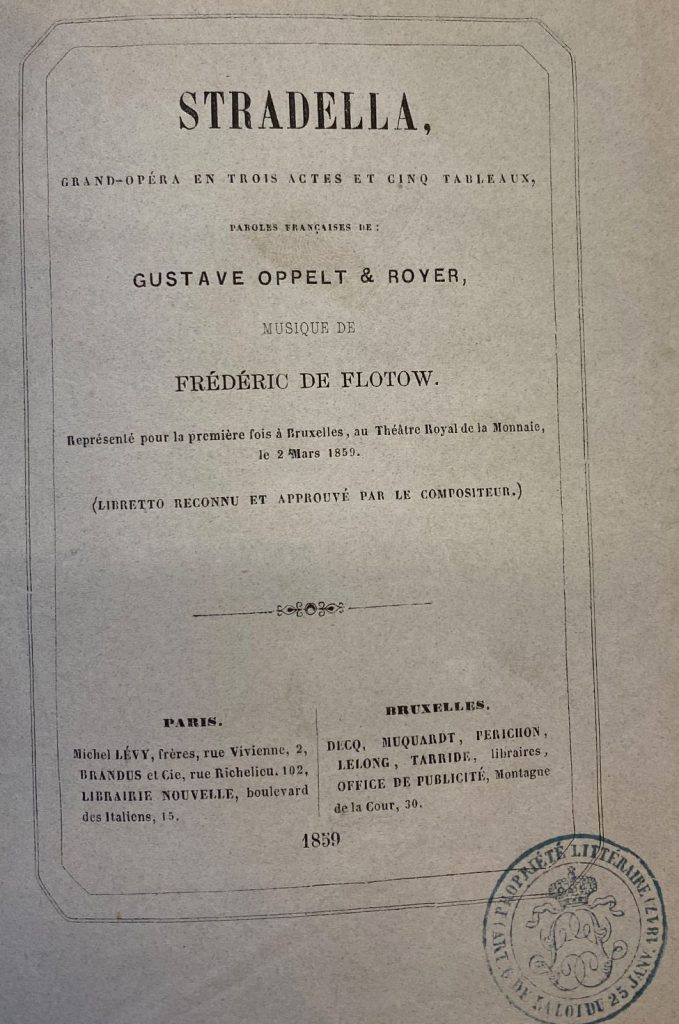
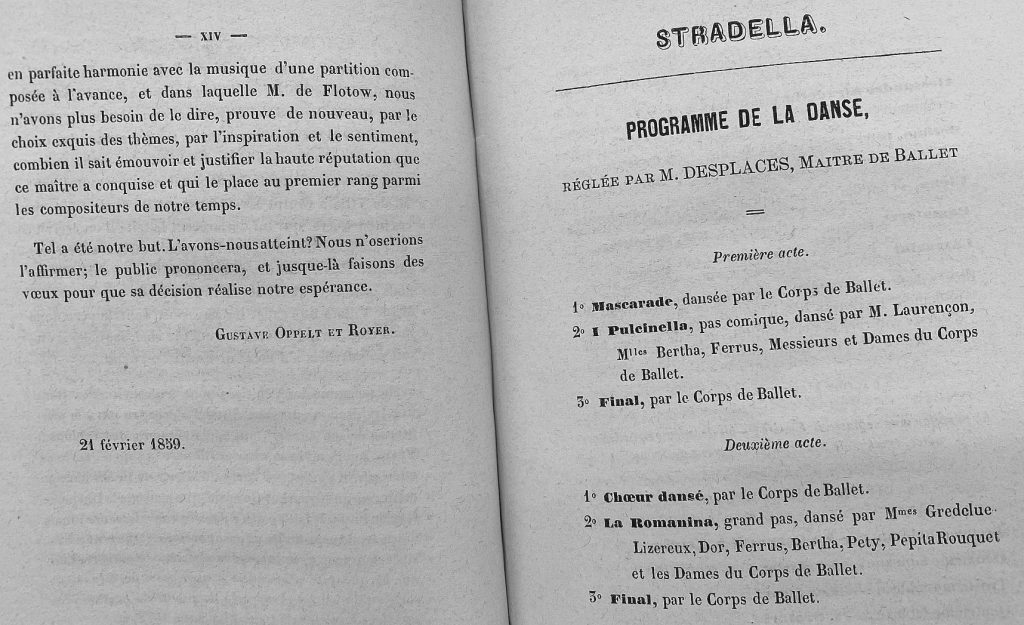


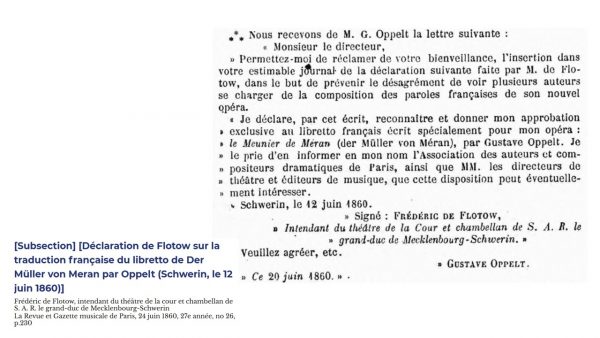
Photo K
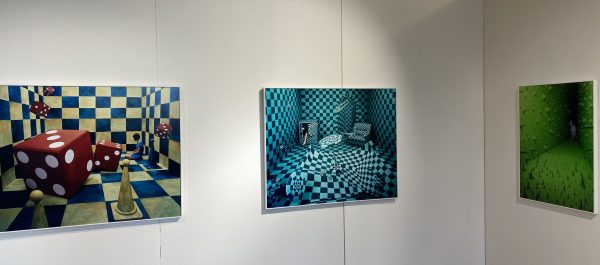
The self portrait is a timely topic for an exhibition of photography. As part of the European month of photography (EMOP), the PhotoBrusselsFestival offers a good overview of what photography deals with in the 21 century. The Korean cultural centre (KCC) in Brussels has a long tradition to serve as an exposition in the centre of Brussels (Sablon) and is joining this year’s photo festival. The 2023 photography festival has the “Self-Portrait” as a guiding theme. Rather than entering the debate about “portrait chosen or portrait endured” (Photographica 5,2022) the self-portrait has more degrees of freedom in it. Even if it is apparently a choice to portrait oneself, there are ample examples, where the urge to produce a self-portrait is part of a wider concern for fundamental issues.
The exhibition of 5 artists from Korea at the KCC invites us to reflect on the pervasive self-portrait practice all around us. The self-portrait is not only a tool of self-reflection, which has a long tradition in art (just think of a famous drawing by Albrecht Dürer of himself), but self-portraits are also pervasive on media and social media today. Additionally, the self-portrait is a powerful tool of thinking and imagining yourself at various stages of the life-course. For centuries it had been a social or political privilege to have your portrait taken. It still is to some extent, but only if the person taking the photograph, has a special reputation. In a market difference to the selfie, the exhibition of artists in the KCC highlights the process of self-reflection that is part of creating the portrait as well as the ensuing reflection by the spectator. In looking at the self-portrait of the photographer, we might involuntarily deal first with our own perception of the image. Danger, dreams, fantasy, sorrow, pain, self-assertion and reconstruction of the self, all these themes come to mind when confronted with the self-portraits of the 5 artists (Bae Chan-hyo, Jeong Yun-soon, Lee Jee-young, Ahn Jun, Choi Young-kwi).
KCC director Kim Jae-hwan names this collection, curated by Seok Jae-hyun, “An odyssey of images leading to self-re-flection”. In referring back to the protagonists in novels from Hermann Hesse, he points our attention to the “unique journey through images as they find themselves”. To embark on the journey visit KCC in Brussels, ask for a copy of the catalogue or start by reading the title of the exposition: “Who Am I” – it is apparently no longer a question after the journey. Is it for you? More reflection on images and photos here. 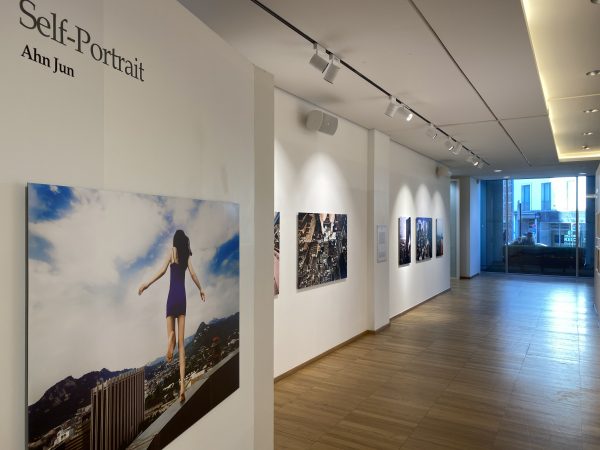
50s
The fifties are remembered as the prosperous and booming years in the 20th century, worthy of nostalgy for some. Indeed, after the 2nd world war and its destruction the time of re-construction had come already some way, thanks to the Marshall plan of the late 1940s. Most countries had to turn huge military equipment industries into civil uses. After the Schumann Declaration, the European Coal and Steel Community was a first successful and lasting institution building in Central Europe. A mass production boom of cars, civil aircrafts, radio and the beginning of public television were landmark changes in the relationship of technology and society. The U.S. became a leading force in this evolution pushing for free trade between countries and consumerism. The deprived generations of the war period in the 40s welcomed the “fabulous fifties” (Arleen Kelin, 1978) as a dynamic and prosperous decade, despite dramatic speed to innovate new more deadly weapons. The atomic bombs were tested from superpowers and nuclear energy started to surface. Solar cells and optic fibres were also inventions of the mid-50s. Strange that we had to wait for another 70 years and multiple crises before these resource-efficient technologies achieved popular success. Integrated circuits, micro-chips, the laser, Tupperware, Coke, Lego, Mickey Mouse and global cinema came upon us during the 50s. The Sputnik effect re-opened an arms race as part of the cold war including outer space beyond airplane reach.
Families longed for and indulged in an as normal as possible family life. Unfortunately, this meant for many women, who had worked outside home during wartimes, to return to a role of housekeeping. Rock n Roll and increasing consumption of mass produced products could compensate for some of this deprivation. Higher divorce rates in the 60s and/or lack of own pensions were the dire consequences for many women. Showtime, and showing-off were the mantra of the 50s. Glamour (Magazine) rose to cult status and prepared popular culture and art. Following fashion and awareness of design spread across societies enabled by the easier access to “sewing machines” allowing more home production for the middle-class persons. The “people of plenty” (Andrew Dunar, 2006 p.167-8, referring to David Potter, 1954) were effectively sold a car culture with the automobile as an agent of change.
The atomic era was believed to continue prosperity for more decades (Expo 58 in Brussels) and a delicate, but relatively stable balance of power restricted open wars. “The End of Ideologies” during the fifties (Daniel Bell, 1960) lead to focus on Realpolitik and a race for prosperity, oblivious of the ecological consequences for many decades to come. 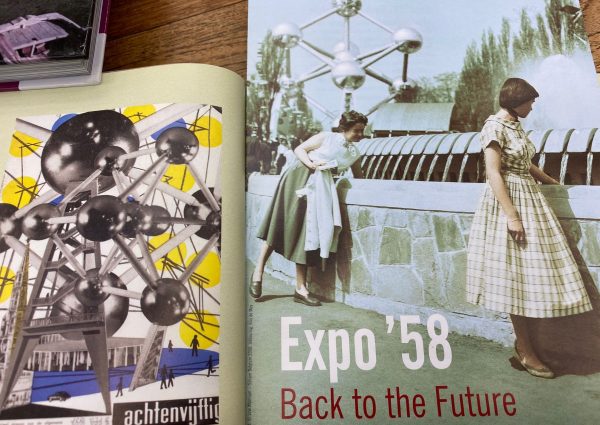
60s
“Make love, not war”, is a summary slogan of all sorts of protests that have moved the sixties. With the spread of television impressive images caught attention no longer just locally, but almost across the whole world. With the inauguration of political debates on TV between Kennedy and Nixon, reaching millions of persons at once and images travelling borders faster than to translate text, spreading of new ideas and political actions was more rapid and more emotional. Commonly the 60s are described as the sex, drug and rock-n-roll period. But there is much more to it. Yes, the sex revolution got started and access to, as well as experimenting with, drugs became more widely spread. Music became a defining moment for young people from teenage years onwards. After Rock n Roll from the 50s, came the rock music and pop culture, which were able to bring together huge crowds of several hundred thousand party-goers. The Woodstock festival and hippie gatherings became a defining moment mainly for the young. Older generations still battled for affordable housing and the “Great society”, as a large-scale anti-poverty program was called.
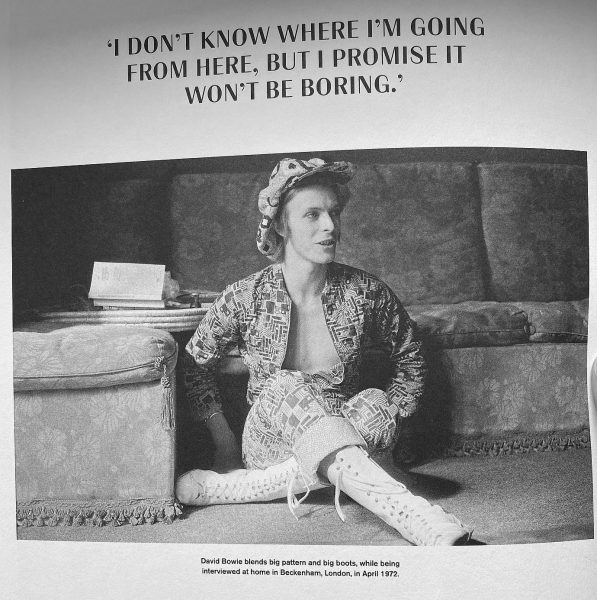
The phenomenon of the Beatles co-defined the 60s. The Beatles captured more than just one generation with their popular songs and iconic style. Mary Quant, attributed to have designed the mini-skirt, equally co-defined a period with a visual provocation to conservative life-styles. In parallel, the sixties saw the civil rights movement grow, Black Power succeeding with peaceful actions more widespread attention, leading to the abolition of openly racist practices. The peaceful movements and happenings, however, had to face the deadly attacks on J.F. Kennedy and Martin Luther King during the 60s. The whole decade was influential in the field of education as well. Based on a new spirit of altruism and happiness combined with, but also beyond religious feelings, new forms of living together, sharing and the common good were tried out. Anti-authoritarian educational practices were influential beyond the 60s.
Books covering the 60s are manifold. In addition to Arthur Marwick’s impressive, multi-faceted volume “The sixities”, I enjoyed the book by David Burner “Making peace with the 60s”, especially his approach to burn some received wisdoms about the 60s, namely the restriction of it to those 10 years. “The withering away of philosophy”, the beginnings of postmodernism and a theory-driven or conceptual approach to the decade, amongst other topics, is the merit of Fredric Jameson (1984, p.192). “The 60s without apology” is a programmatic title well worth thinking about seriously as the editors and authors did.
Besides the ecological disasters of the 60s already, (nuclear, oil and wars), Mini Cooper cars, Lava Lamps as well as Blow or Ball Chairs, Barbies, Frisbees, Brigitte Bardot and Pippi Longstocking (Patricia Massó, 2010), all were dressed to impress. “The 60s without apology” by a group of editors nicely summarises the review of the 60s and their lasting effects on us, for better and/or worse. 2 generations later in 2023 youth is again threatening mass mobilisation in France as depicted in LeMonde 4.2.2023. It is a kind of “déjà vu experience”. 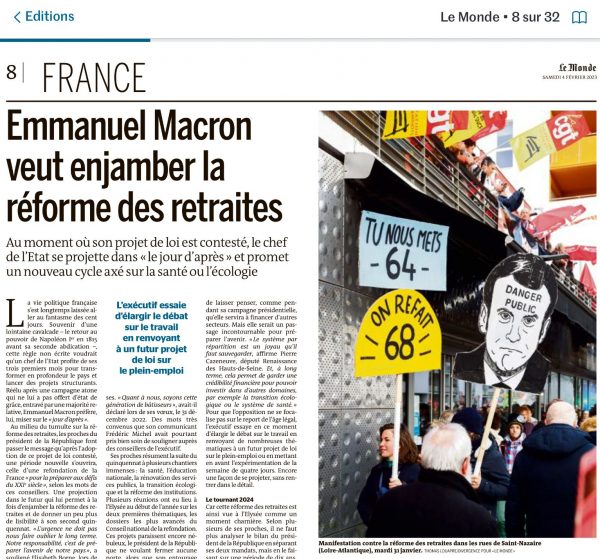
70s
In autumn 2019 the Cosmopolitan featured a headline “Stop fighting it: the ´70s are back”. At least in fashion the 70s are still with us. Platform soles, moon boots, hot pants, all had their first appearance in the 70s. We keep seeing them in fashion shows even 50 years later. In politics, the retreat of the U.S. from Vietnam in 1972, with more than 50.000 killed soldiers from the U.S. and many more Vietnamese persons, is certainly a success of the sizable activists’ peace movement of the 60s. Willy Brandt’s kneeling in Warsaw in front of the heroes monument in honour of the Warsaw ghetto marked the beginning of a reconciliation with Eastern parts of Europe.
The oil crises 1973 and 1979 caused mass unemployment and from the beginning of the 70s “Greenpeace” started its on-site activist approach against nuclear weapons, killing of whales and dumping of toxic waste. The network of independent organisations is contemporaneous to the invention of e-mail between large so-called mainframe computers using the now common address format x@y.z. The feminist movement achieved major successes with a UN resolution to ban discrimination against women. The male dominated aggressive and excessive punk movement occurred almost in parallel. New products like the Polaroid camera for instant photos and prints, video cassette recorder, the chopper bike “Bonanza” as well as the collapsible Maclaren Buggy for children defined a lifestyle around a more mobile society. Plastic furniture, bright colours with uncommon combinations brought with it a more diverse culture. Societies exploded into different lifestyles. Some taking the new Concorde, so-called supersonic speed delta airplane between Paris and New York, whereas others walked around in “wooden clogs” as a kind of folk fashion, watched Kojak the bold police inspector, listened or sang to ABBA tunes, danced like in “Saturday night fever”. In December 1979 Pink Floyd released “The Wall” which became with 23 million sales the top seller of all 70s productions (Champ Hamish p.120). Some of these artists we can still enjoy jumping up and down on stages across the world or being honoured with a Nobel prize in literature like Bruce Springsteen.
The wild 70s are remembered for the sexual revolution, the philosophy of love and peace as well as the continued spirit of the civil rights movements (Particia Massó, 2010). The sexual revolution spurred women’s liberation just as additional exploitation by thriving borderless consumption industry. Sex sells and it sold well. The cinema and print industry cashed in on the new trends and the spreading the new trends. Social relationships became much more unstable, divorce rates increased sharply in the 70s. In response, “surviving the 70s” (DeMott, 1971) as a kind of survival guide tried to give advice of how to stem the tide, largely unsuccessful for some decades.
Societies continued to explore new forms of life, while some niches of conservative life styles started to shield themselves from these outrageous trends. Vasarely imitating tapestry and design invited new forms of facing your own walls. Where to go on from this liberalisation? More equal rights for all, was a claim, but it took several additional decades to achieve some of the claims. Intersectionality, viewing for example violence as an across gender, social class and ethnicity as an overall mankind issue, became a claim much later only. “All in all, it was just bricks in the wall”, a huge wall it still is. We haven’t climbed it yet.