The concept of time has been dominated by “chronometry”. We used to take a look at our more or less reliable wrist watch for orientation in time. This is a cultural practice in all societies where such devices are readily available as consumer products. Before this time, even in the Europe, church bells or the sun played the role to locate people in time (Norbert Elias on civilization). Nowadays, even in remote areas of our planet the mobile phone has taken over to assist us to organize time. In the sociology of time, we observe multiple clocks. The personal time, social time – organized through laws, collective agreements, conventions or as behavioural features of us. So-called early birds have a specific awakening response of their cortisol level in their blood. For others this is delayed. We might conclude from this that different clocks are ticking within us. The societal challenge is to synchronize them. Starting time of schooling is another phenomenon of societal construction of life courses. Starting or ending time of a school day, week, month, year, adulthood, all are determined collectively and changed from time to time. Beyond points in time, there are durations in time to consider. Life spans are socially determined. Life expectancy varies a lot by social class and education levels. Therefore, at least in retrospect and keeping the duration constant across persons, life time clocks are ticking with different speeds for us as individual persons.
In the digital age and powerful search engines based on “web crawlers” we live more than ever in a global state of mind. Awareness of “global history of history” (Woolf, 2011) allows us to add perspectives from several parts of the world to our own version of history, historiographies and histories. Collective memories are continuously shaped and recreated. Due to easy reference to chronological time a perspective following decades has become a sort of collective mind map. This influences directly or indirectly through peer behaviour and preferences our own mindsets (Blanning, 2008 p.307). From a sociological point of view decades are at the crossroads of time, period and cohort effects, potentially mixing up all 3 effects. However, statistically speaking we might apply a spline function -´ to our otherwise / linear running of time. Thick description of decades like the 60s, 70s, 80s, is common practice in our communicative practices, preferences as well as behavioural features. A dialectic co-evolution of decades, one negating the other or one decade being a synthesis of 2 other decades are part of the critical assessment of lasting contributions to history through histories (Paul Ricoeur). 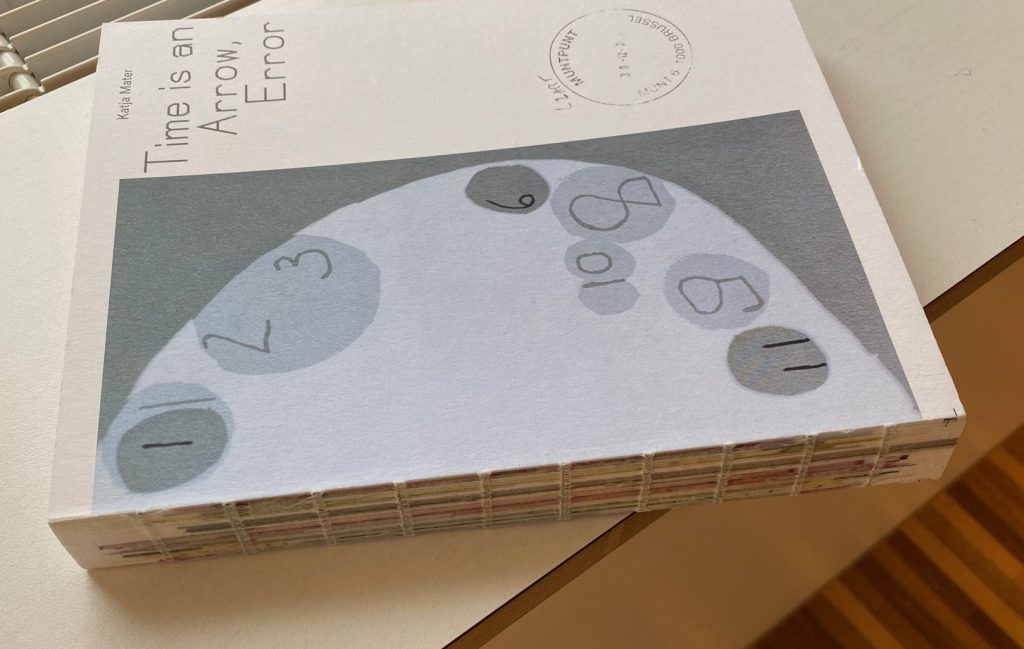
Deconstruction
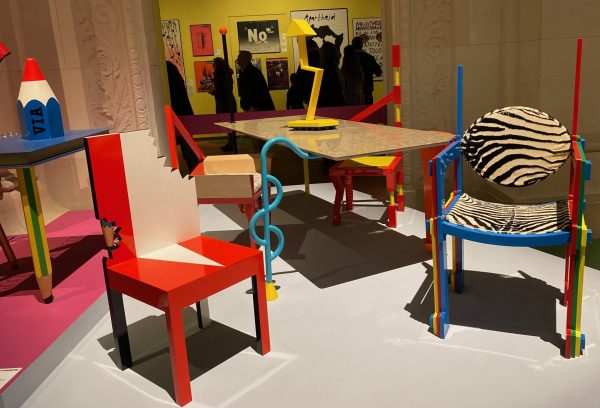
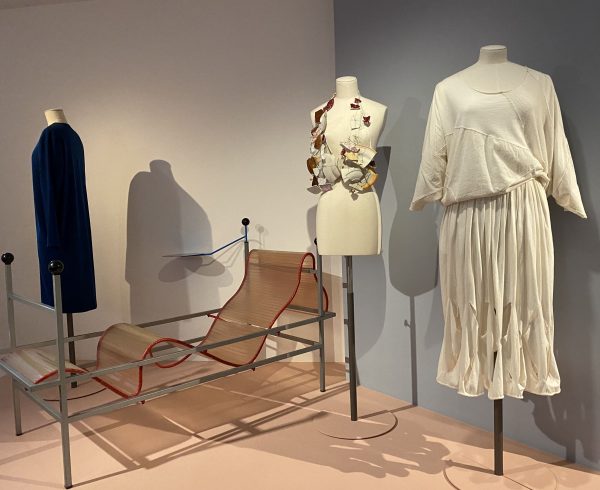
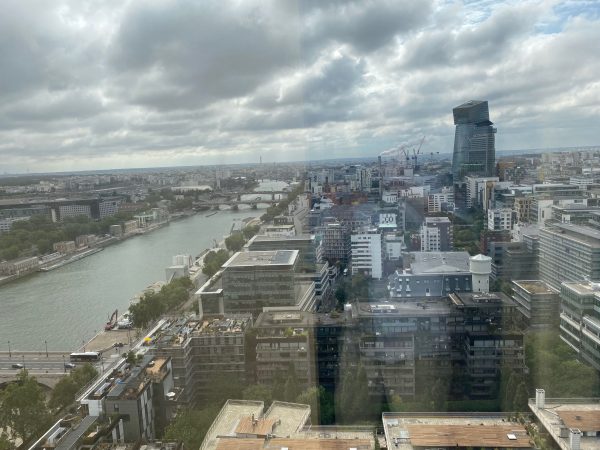
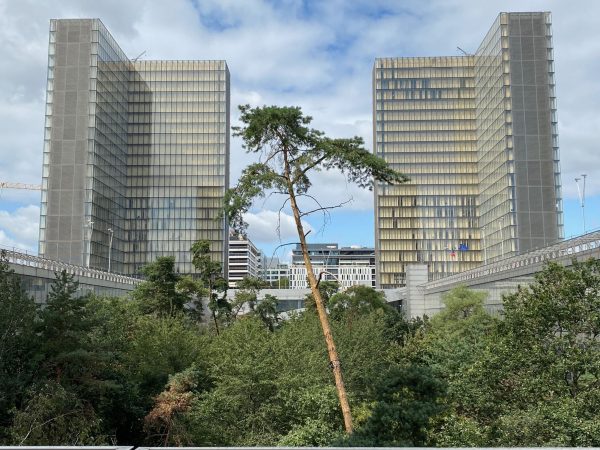
Deconstruction is a powerful tool or even method. Beyond imagineering, deconstruction in the literal sense means take to pieces. In most cases a physical object consists of several objects or parts. By deconstruction we attempt to understand the whole object as the sum of its parts. Before a new product or design is created, many scientists, engineers and artists start to deconstruct existing artefacts. Understanding how the object is assembled, for example, allows you to play around with pieces and maybe come up with an alternative way of constructing the object. The architecture of “deconstructivsm” has left us fantastic buildings. In furniture design there are also nice examples of deconstruction. Paris is a good place to study deconstruction (Explained), perhaps many still read Derrida there. It is a fruitful method beyond its engineering sense for example in law, literature or many other social science disciplines. If you are not mad yet, visit the MAD in Paris to see examples of deconstruction or construct your own deconstruction. Both have a dialectic relationship to each other anyway.
Subject/Object
The 26 notions in alphabetical order may determine a subject and/or an object in a sentence. This is just the simple grammar of a language. Add a verb and we have a full sentence subject predicate object (SPO) as they say in English. In the philosophical sense the subject-object relationship is a bit more complicated. Beyond Aristotle’s objectum and subjectum, we think of Descartes “Cogito ergo sum” as the definition of the self as subject, rather than being an object of God’s will and creation. Kant then forms the couple of object and subject in the sense of objectivity and subjectivity. Pure reasoning is the abstraction of subjectivity to achieve an interpersonal objectivity. The master of dialectic thinking, Hegel, conceives an object as objective conscience and a subject as particular subjectivity. Having defined the extreme points of the spectrum makes you think about a joinder or the synthesis. Freud adds the object as result of sexual impulse. Wittgenstein then introduces a kind of hierarchy into the S/O-relationship. Objects become ultimate elements and indescribable in content as kind of basic notions. This follows the mathematical view of objects as indirect description of a mathematical object through axioms stating the basic principles governing the object and then deduce the logical consequences. Gödel’s incompleteness theorem , however, rejects this claim. This is the basis of, for example, algorithmic testing whether deductions are true or false. Condensed mathematics has relied on this testing approach as well.
A pragmatic perspective is added by Marie Gautier (p.719 “Notions”). If we want to reach an objective, we shall need others to realize it. By way of this imagination the S/O-relationship turns into an interactive relationship. Following Habermas, we might claim that the S/O-relationship is also a part of communicative action and therefore the discourse ethics. The definition of who or what is object and/or subject needs open discourse. The arena is not only the parliament, but larger audiences or the world wide web. Beware of the Luhmann systems theory, whereby for example the definition of what is a technical object is, is left to technicians, who then ponder in their self-reflective, reflexive circles amongst themselves. Techniciens in their circles tend to neglect the prime importance of society and laws to determine technological choices. Language with its constituent elements of subject, predicate and object (SPO) is one example of a knowledge system build on axioms or negotiated conventions for grasping and exchanging about phenomena. Nice, now we play around with it.
SPO => OPS. 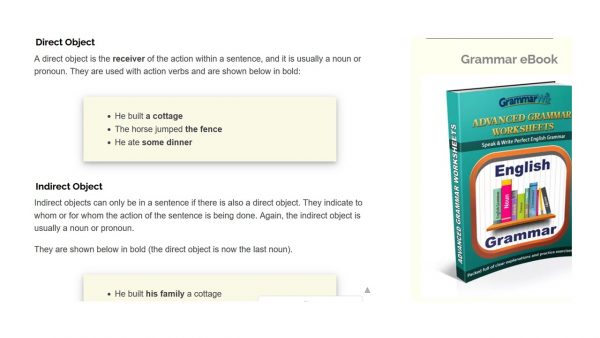
Sound
Each society has its sound. Each person lives in her/his sound cloud or bubble. Cities are generally noisy places, Lots of traffic, mobility and moves leave sound bytes all over the place. Each city though has its own sound and spectrum of frequencies. Libraries, museums, places of worship, all build their special atmosphere due to specific sound design. The Singing Project by Ayumi Paul (Gropiusbau Berlin) created its own sound environment. Reminding us to consciously design our exposure to and experience of sound is welcome. John Cage started to build his very own language of music, similar to Schoenberg, from scratch. His writings Empty Mind explain his view and techniques a bit. Starting with silence and the time between sounds we recreate our own sound experience. Notation of it comes second in place. only for the potential to repeat the experience notation is useful. But it is only one form of conservation for posterity. Noise canceling is the amazing tool from sound physics which allows you to neutralize noise by adding specific frequencies to noise which cancel out each other. Design your personal sound experience beyond noise if you like. Nature recordings or familiar person voices allow you immersive experiences when and where we want. your home sound can be everywhere nowadays. 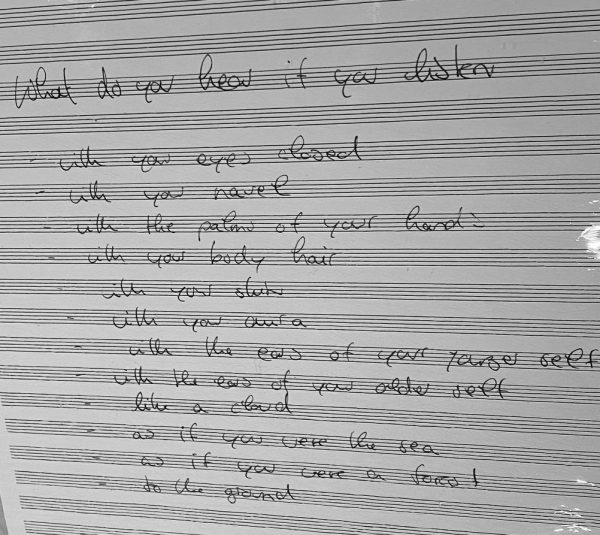
Action Verbs
Action words are in other words called action verbs. Each complete sentence has one. Hence, they are part and parcel of the basic construction of sentences.
“The purpose of an active verb is to create a clear, concise sentence. By using an active verb, you can eliminate unnecessary words and make your writing more direct. In addition to making your writing more concise, active verbs also add punch and clarity. They can make your writing more interesting and persuasive. Additionally, active verbs can create a sense of immediacy which is often useful in persuasive writing. When it comes to writing, there is nothing more important than using strong, active verbs. Not only do they make your writing more interesting and engaging, but they also convey a sense of confidence and authority. In addition to being more descriptive, active verbs also add a sense of movement and action to your writing. Rather than simply stating that something exists, you can use active verbs to show how it exists. For example, rather than saying “there is a chair in the room,” you could say “the chair sits in the corner of the room.” This may seem like a small change, but it can make a big difference in how your writing comes across. Finally, active verbs can also help to set the tone of your writing. If you want to convey a sense of wit and humour, then using playful, lighthearted verbs is a great way to do so. On the other hand, if you’re aiming for a more serious tone, then using powerful, authoritative verbs will help you achieve that.”
After the 3rd sentence this blog entry (Link) has been written by the artificial intelligence app “Neuroflash”. They promise that it is not just copy and paste, but rather written following some instructions I gave like title, table of content, style and then selected among several choices. It makes sense to me, although it is just like many other textbook entries I have found on the web. It may well serve as an introduction. Lazy journalists, priests or lawyers in case they do little research will be replaced soon by AI, who else, who is next? Big brother drafts the brave new world for us already. 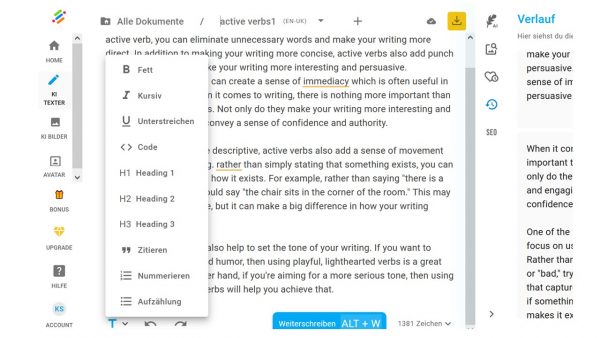
U for Union
Union, understanding, undo, unknown, uncertainty, universe, urbanization, use, u-turn. All those u-words spark imagination. Additionally, the short forms of u as abbreviation for you, ur = your, youth and smartphone typing are creating for us abbreviations to communicate even faster and shorter via social media. Union is my favourite of this list for several reasons: (1) Marital union, passionate topic not only for family sociologists, (2) trade unions, as collective form to organize solidarity in and across societies, (3) European Union, the formidable tool to create, conserve and ensure peaceful developments in Europe. We have to prolong this list with the union jack, the united states, the united nations and …, please continue the list.
For me, in union I see a whole film running, a process proceeding, or persons uniting. Unionization, just like two persons deciding to pass more time together, has some magic in it. Match making is the modern term for it. No Union without reunion, dissolving a union might be part of the process as well, as painful it can turn out to be. Most of the times we grow throughout the process. Forming a union, in all senses of the word and of all sorts of forms, is a kind of teleological urge of us as a species. We share this with many animals but have also developed strategies and weapons to force others into union. Unfortunately, no u-word without its potential to be used in the sense of abuse. Unite to defend the union of fans of unions. (Evolution of Union of Tweets own Video 12-2022). IMG_4611
T for Time
“The times they are a changing“, end of blog entry T.
We live time forward, but we seem to understand it only backwards or in retrospect. Towards the end of each year, it is common practice to look back and review the last 12 months. Then we imagine what will the future be like. Our concept of time is past, present or future oriented. In classical physics we reflect this with a depiction of time on a linear axis. However, modern concepts of time include Einstein’s relativity theory, whereby in 2 different places time may run with different speed. Similarly, quantum physics allows that the causal relationship between 2 physical states is no longer observable in a logic that follows linear time. A particle may exit in 2 states in parallel. Hard to imagine, maybe, but demonstrations of these effects are found in textbooks for pupils already. Our grasping of the world around us is enhanced through scientific rigour.
Story-telling also plays with time frames. Analepsis and prolepsis are common techniques constructing a story, a film or any form or narrative. We tend to perceive chronological time even as boring. Our memory is also playing tricks with us on time scales. When was …? Additionally, we have multiple clocks ticking away. Time to submit a report, pay taxes, until the next medication or the psychological concept of “time until death”. Strangely enough, depending on which ticking clock we focus most, our behaviour is likely to change. Mobile time management tools have been created for centuries for us to handle all this jazz (call them a watch). They all have not changed our concept of time, only the precision to measure and cramp more activities or the same one faster into our daily life. Happier since? Test your self-efficacy, more general than time management! Try meditation to slow down the pace, use an app!? I started to clone myself with a virtual presence to experience the quantum effect of my life. Podcasts are played with 1,5x the normal speed now. Rhythm and music are the remaining traditional metrics of time. Even there, John Cage’s piece “silence” managed to abandon the time reference, partly at least. Okay, time is up, next letter, please.
S for Society
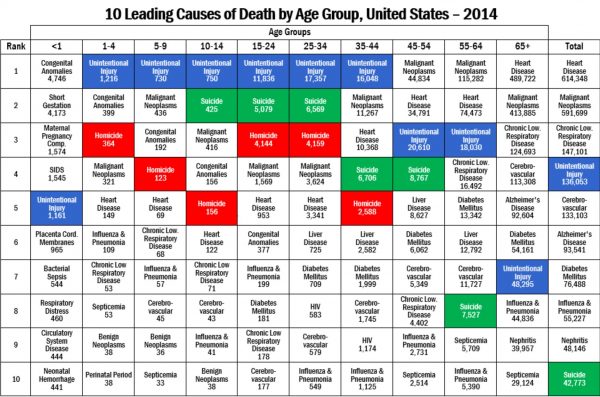
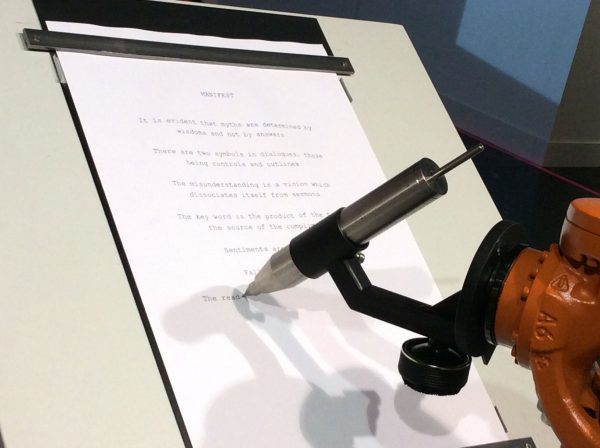
At least since the “Greek Polis” became a subject of science, the study of society has filled libraries around the world. To catch up with the social sciences view on society, we may start with foundations based on Max Weber, Niklas Luhmann, Jürgen Habermas, Ulrich Beck to then move on to my predilection with micro-level foundation of social theory based on work from James Coleman. The history of sociological ideas runs from the protestant work ethic, autopoiesis in systems theory, ethics of discourse and communicative action, risk management to “1 to 1 relationships” as pillars of theorising about society. 10.000 pages later on, you might still ask yourself the question: what practical knowledge have I gained from this. Well let’s see. Imagine you want to learn about a friend and whether s/he is really a friend. Nowadays we would start with an online-search to find profiles of a person (facebook, Instagram, linked-in, twitter, twitch, mastodon). When the first entries pop-up, we start to learn about interests, looks, friends and preferences of the person. In which social media the person is (or not) participating tells a lot. We start to build an image of the person and her/his networks and communities. Soon we start comparing the person’s world reference framework with our set of values and characteristics. Welcome to thinking about society in small, and interactions within society or between groups of society. Adding some solid knowledge about statistics and you’re ready to start the science of society.
Yet, so many still open questions. When talking about society, we have to think about the trend of individualisation and ways to keep society together despite increasing plurality of life courses. “Solitude versus loneliness” is as much a social as it is an individual based issue. Community-building with inclusion, staying-on and exclusion processes have to be studied in detail. The whole process of civilisation or the study of suicide has been a sociological topic since its inception by Emile Durkheim. Imagineering is an additional tool to speculate in a systematic way about the past and future of society. That’s where all the arts come into the picture as well. The history of art is full of perspectives on society, its splendour, the misery of individuals, communities and societies. An emotional starting point is a very valid starting point, the science of society then moves on to abstraction and generalisations as well. The challenge is, to capture audiences emotionally, with short reflections on society. 
K for Knowledge
Readers of the sociology and/or the philosophy of science or knowledge have a hard time. Each discipline is evolving at such a high speed that is terribly hard for humans to follow more than 1 or 2 fields. Perhaps the choice of Karma instead of knowledge would have made it easier here. Alternatively, in German it is easy to find many nouns starting with a capital K. Kapital, Krieg, Kritik or Käsekuchen would have been popular, I guess. Soon I shall open the comments for suggestions for additional nouns, as part of the empirical “swarm knowledge strategy” rather than the theory-driven deductive method applied in knowledge generation on my side so far.
But wait, we are already in the middle of the unsatiable quest for knowledge. On a meta-level we would deal with the multiple ways to acquire knowledge and create new knowledge. Artifical intelligence is certainly one of the hypes at the moment. New data and new combinations of data drive us forward in the expanding universe and knowledge space. We have witnessed the disappearance of the thick printed encyclopedia in most households, replaced by specilised digital dictionaries or the network society’s shared knowledge base of “wikipedia“. Knowledge is linked to the history of ideas and Peter Burke is a prominent figure to rely on as a reference in this field. 20 years after “A social history of knowledge: From Gutenberg to Diderot” he published the much acclaimed: “The Polymath. A cultural history from Leonardo da Vinci to Susan Sontag” in 2020. To synthesise across the many “monsters of knowledge” over centuries is a daunting task. I like quotes like the one from Leibniz (p.77) “the horrible heap of books that is constantly increasing” and then his own continuation: “Printing, once viewed as a solution to the problem, had become a problem itself”. The whole section is devoted to information overload. Fragmentation of knowledge into disciplines and, much worse, the manufacturing of false knowledge create new challenges to knowledge. Maybe transforming the term to “knowledges” rather than knowledge is likely to capture better the differences between artificial knowledge, created by artificial intelligence and specialised algorithms, and human based knowledge. In knowledge storage we have lost the race with computers, but in deciding what are promising combinations between different fields of knowledge, we are still a wee bit ahead of the machines. Klara tell me, where is the exit, or your synthesis of the whole lot. Meanwhile I continue to read – what? books and the like. 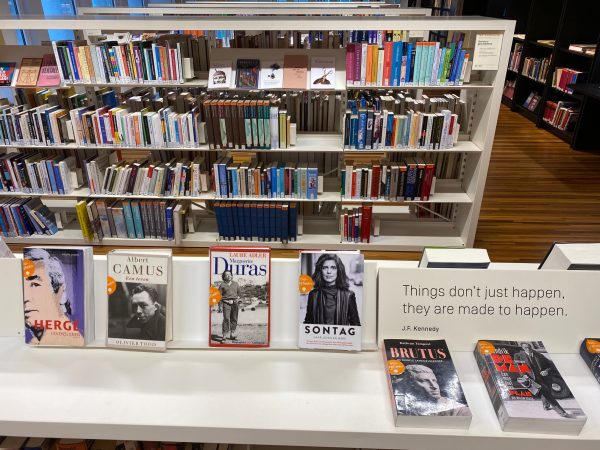
G for God
God is dead, wrote Nietzsche about 140 years ago. So, is he, is she, are they? The discussion is ongoing. As science has debunked the myths surrounding birth, the jury is out as humanity is claiming freedom of choice also towards the end of life. Our cathedrals of Modernity, i.e. libraries , or Tempel of knowledge, i.e. universities, offer lots of instruction and Musea artefacts or Anschauungsmaterial to answer these existential questions. Perhaps this is just a lot of noise about “rien”, “nichts” or “Much ado about nothing“.
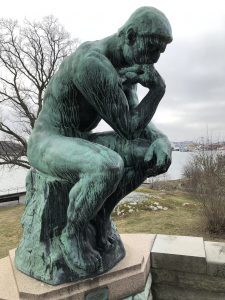
We might have to rethink society from scratch, starting with the definition of social backround and identity , but there are plenty of good sources to build upon, starting with basic human rights and the Schuman declaration for the construction of Europe, rising out of the ashes. Lots of hard thinking to do, Rodin thought so, too. The thinker above the “porte de l’enfer” ready for meditation in the Musée Rodin Paris 7eme arrondisement.