ABC Overview

Digital formats allow flexible organization of lists like alphabetical lists. Opening several pages, at the same time, of the same dictionary is easily feasible. In science the proceeding in this way is coined the inductive method. The entries of each letter stand on their own, but jointly they form a whole set of topics. Random choice is facilitated this way. New sequences or preferences of topics are the way forward. Alphabetical order or chronological order are only one out of many variants of possible sequences. Chose your own 3 favourite topics, maybe. On a big computer screen you might even organize your own poster – beam it on the wall – walk in the virtual exhibition of the metaverse with it. It could feel like you are strolling within parts of my brain. Frightening? For whom? The universe is within us.

action health optimism value
balance imagination policy war
corruption joy question xeno
democracy knowledge repairing yinyang
enterprise law society zero
freedom memory time
god nature union

B for Balance

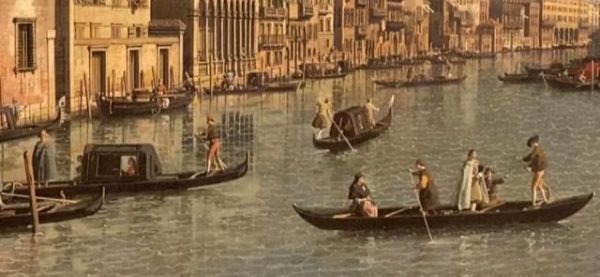
To reach a balance, to keep the balance or one’s balance, this highlights the process nature of balancing. Even the old tool of a balance (scale for weights) very much reflects the evening-out of the balancing process. It seems like a temporary balance most of the time. We might evolve from one level to another one. Especially imagining ourselves on a (body weight) balance in the morning and then throughout the year or years, this appears like a dynamic trajectory. The nature and/or nurture connection is evident. Beware to search for synonyms of “balance” on the internet. You get more than 3000 synonym (Link) meanings and 30 suggestions for definitions (Link) to contemplate on. I like the nice physical experience of balance and the simple (a bit nerdy) explanation of it. Economist get very excited about balance of payments and the ways to achieve equilibrium or equilibria. Balancing personal accounts can be a bit painful at times, but balancing in the arts gets our imagination going. Dancing is about balance most of the time. Playing with your own balance, the balance when 2 or more persons are in action, how not to be absorbed by such experiences. In music, the balance is a primary issue since Bach’s “wohltemperiertes Klavier” and balance and tension are the origin of much jazz. An image or photo might be balanced, certainly architecture is playing with or restricted by balancing acts. Herta Müller’s “Atemschaukel” has thrown us off balance for a while. History we study often with a concern for a balance of power. In peace and war times, the balance of power within and between countries or superpowers are a long-lasting research issue. At times when this balance is at risk or completely out-of-balance we are deeply concerned about the return of a balanced situation. Babies and children draw comfort from being balanced. Adults as well. Let’s try again (chanson). (balance22-venice -video).

A for Action

The A is everywhere. A is the beginning of the Alphabet, Google is our new Alphabet, we just have not realised it. A simple A-rating in investment is not good enough, AA or AAA is the goal. All this calls for ACTION. Do not be stopped in your action by reading on “Action theory” by Parsons, Rational action is the basis of most economic reasoning before the behavioural turn of economics. It is commonly acknowledged now, that rational action might not always be as rational as we want to believe it is. “Frame selection” as theory to explain our choice of action is fashionable in the social sciences. Transforming values and intentions into actions is a big challenge. Many jokes turn around this issue, like intentions to get up early in the morning. Find out whether you are an actionable leader. You should have at least a few “actionable items” on your to-do-list. Of course, Microsoft recommends actionable items to improve our productivity while spending hours on emails.
Well, early philosophers already distinguished between “vita contemplativa” and “vita activa“. A lot is about finding the right balance here and Hannah Arendt’s differentiation of active life in labor, work and action. She puts emphasis on action as a way to distinguish ourselves from others. The same thought might lead to very different actions. Hence, acting on one’s belief or values could lead to very different policies for just 2 persons. Action Artists perform even in inaction. We are back to basic questions of democratic  procedures as a form to moderate between different opinions or possible actions. Lots of other A-words come up now: ambiguity, anxiety, alienation, affirmation, affect, affection. In Greek, A might be associated with Apollo, In German with the famous “Angst”, but French is overriding all this with “Amour”.

V for Value


Value in its singular form refers for most people to the value of things. Since Karl Marx we have been fighting about the surplus value of a worker’s work. Nowadays, we have to deal with speculation bubbles on the value of property or even basic elements of nutrition (Water, wheat, energy). Max Weber introduced us to the rigorous analysis of value judgements. In political science the plural “values” refers to basic human rights as fundamental values of humanity. Many other associations with the letter V pop up and arouse emotions: victory, video, view(s), vision, visit, voice, vote, vulnerability.
Creating lasting value seems to transform itself into part of our system of values later on. The longitudinal dimension of value is often neglected, particularly in the short-term focus of much of economic reasoning. Value over time, in addition to the distribution question, or as part of distribution over time, excites researchers of inequality and policy design for generations. Approaching the end of the alphabet increases the stakes of the “endgame”, it seems. Value for me, might not be of value for others. I hope you have found a person that values much of the same as you do yourself.
Interpersonal value, value exchange and intertemporal value are  own fields of research. Since the Scottish enlightenment and Adam Smith’s work on “The theory of moral sentiments (TMS)”, reciprocity in value exchange has been an issue, well before the utilitarian turn in his own writings on “The wealth of nations”. Even Adam Smith refers to happiness and interest as a kind of value and “very laudable principles of actions” (part VII.ii.3.15 in TMS).
Children learn and experience value as natural part of growing up. Material things which you valued highly as toddler, you are ready to trash or exchange a couple of years later at much lower prices. Above which monetary value are you ready to trade in your humanitarian values? Never? History and bargaining theory is full of experiments and experiences that teach us otherwise. Corruption is the prominent example of exchanging or trading material value against immaterial values. Reading Kwame Anthony Appiah on “Experiments in ethics” is highly instructive. This bring me back to the economist joke I used to tell in lectures: You know that you’re an economist, if you ask your child, whether s/he prefers 20 Euros in cash, a trip to an adventure park later, a basket ball set or a pizza party for the next birthday. Economists do all this to find out about the value of each item, the preferences, the time frame of delayed reward or discounting of value also called the net-present value. Reading up to here is equal to the value of, maybe, an online bachelor in economics or social science. In your very own life review of learnings you then can estimate the value of your readings to you, your community or humanity. Alternatively, enjoy the joy of just living in peace with optimism.

T for Time

“The times they are a changing“, end of blog entry T.
We live time forward, but we seem to understand it only backwards or in retrospect. Towards the end of each year, it is common practice to look back and review the last 12 months. Then we imagine what will the future be like. Our concept of time is past, present or future oriented. In classical physics we reflect this with a depiction of time on a linear axis. However, modern concepts of time include Einstein’s relativity theory, whereby in 2 different places time may run with different speed. Similarly, quantum physics allows that the causal relationship between 2 physical states is no longer observable in a logic that follows linear time. A particle may exit in 2 states in parallel. Hard to imagine, maybe, but demonstrations of these effects are found in textbooks for pupils already. Our grasping of the world around us is enhanced through scientific rigour.
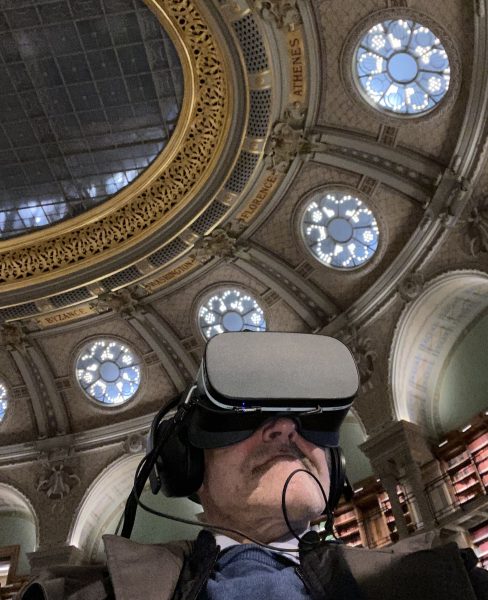
Story-telling also plays with time frames. Analepsis and prolepsis are common techniques constructing a story, a film or any form or narrative. We tend to perceive chronological time even as boring. Our memory is also playing tricks with us on time scales. When was …? Additionally, we have multiple clocks ticking away. Time to submit a report, pay taxes, until the next medication or the psychological concept of “time until death”. Strangely enough, depending on which ticking clock we focus most, our behaviour is likely to change. Mobile time management tools have been created for centuries for us to handle all this jazz (call them a watch). They all have not changed our concept of time, only the precision to measure and cramp more activities or the same one faster into our daily life. Happier since? Test your self-efficacy, more general than time management! Try meditation to slow down the pace, use an app!? I started to clone myself with a virtual presence to experience the quantum effect of my life. Podcasts are played with 1,5x the normal speed now. Rhythm and music are the remaining traditional metrics of time. Even there, John Cage’s piece “silence” managed to abandon the time reference, partly at least. Okay, time is up, next letter, please.

Digital Technology

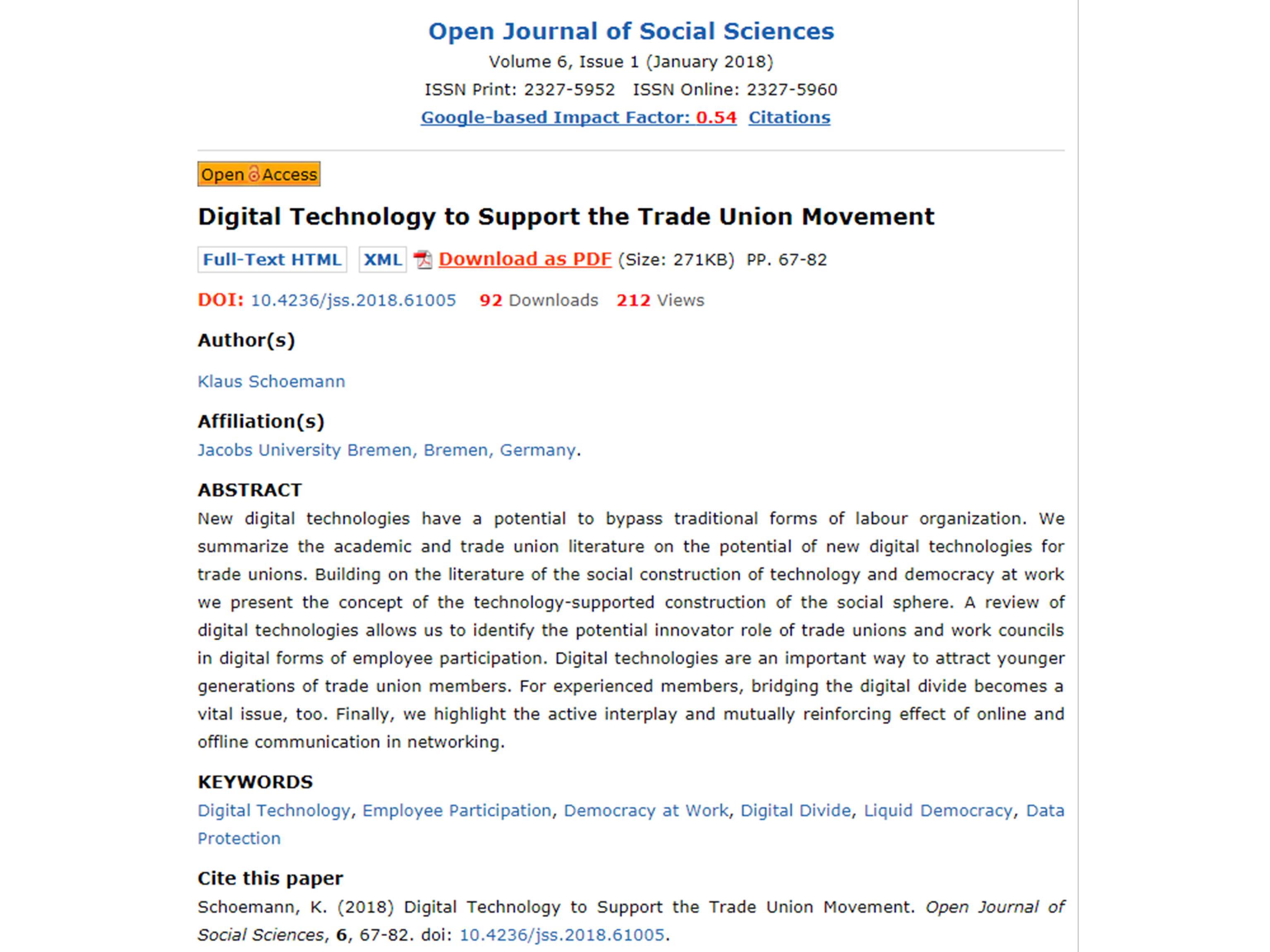
Im Februar 2018 hatte ich auf dieser Webseite eine kleine Veröffentlichung mit dem kurzen folgenden Text angekündigt.
“A new research paper dealing with digital technologies is now published in the Open Journal of Social Sciences. The major impetus of the small scale project was to identify the potential of digital technologies to foster democratic procedures and decision-making. The paper investigates the role of new technologies to support employees and the trade union movement.”

The pdf-download free of charge is here.

Fast 5 Jahre später bräuchte das Paper eine Ergänzung, denn es gibt wohl eine interessierte Community dafür (1000+ Downloads, 3500+ online views-reads). Insbesondere sind neben die sozialen Netzwerke diverse mediale Platformen dazu gekommen, wie TiKTok, Mastodon, Twitch, Instagram und fast schon wieder vorbei  Twitter. Ergänzen würde ich wohl auch die Notwendigkeit, digitale Technologie einzusetzen  in der Bekämpfung von Korruption. So ließe sich automatisch in einer großen Menge an Zahlungen Auffälligkeiten wie hohe Bargeldsummen leicht identifizieren und Alarmsignale senden. Ebenso (Gruppen-) Reiseaktivitäten und zweifelhafte Abrechnungen könnten leichter zu Aufmerksamkeit führen.
Eigentlich freue ich mich bereits, dass dieser Artikel in eine damals recht unbekannten, aber eben “open access publication” doch eine so große Reichweite von aktiv Suchenden und Lesenden gefunden hat. Gut, gleich im Internet zu veröffentlichen und nicht in einem überteuerten Sammelband oder wissenschaftlicher Fachzeitschrift mit Bezahlschranke versteckt zu bleiben.

S for Society

At least since the “Greek Polis” became a subject of science, the study of society has filled libraries around the world. To catch up with the social sciences view on society, we may start with foundations based on Max Weber, Niklas Luhmann, Jürgen Habermas, Ulrich Beck to then move on to my predilection with micro-level foundation of social theory based on work from James Coleman. The history of sociological ideas runs from the protestant work ethic, autopoiesis in systems theory, ethics of discourse and communicative action, risk management to “1 to 1 relationships” as pillars of theorising about society. 10.000 pages later on, you might still ask yourself the question: what practical knowledge have I gained from this. Well let’s see. Imagine you want to learn about a friend and whether s/he is really a friend. Nowadays we would start with an online-search to find profiles of a person (facebook, Instagram, linked-in, twitter, twitch, mastodon). When the first entries pop-up, we start to learn about interests, looks, friends and preferences of the person. In which social media the person is (or not) participating tells a lot. We start to build an image of the person and her/his networks and communities. Soon we start comparing the person’s world reference framework with our set of values and characteristics. Welcome to thinking about society in small, and interactions within society or between groups of society. Adding some solid knowledge about statistics and you’re ready to start the science of society.
Yet, so many still open questions. When talking about society, we have to think about the trend of individualisation and ways to keep society together despite increasing plurality of life courses. “Solitude versus loneliness” is as much a social as it is an individual based issue. Community-building with inclusion, staying-on and exclusion processes have to be studied in detail. The whole process of civilisation or the study of suicide has been a sociological topic since its inception by Emile Durkheim. Imagineering is an additional tool to speculate in a systematic way about the past and future of society. That’s where all the arts come into the picture as well. The history of art is full of perspectives on society, its splendour, the misery of individuals, communities and societies. An emotional starting point is a very valid starting point, the science of society then moves on to abstraction and generalisations as well. The challenge is, to capture audiences emotionally, with short reflections on society.

R for Repairing

Without noticing for many people, we have shifted into the repair mode. Our planet needs repair work. Well beyond the less plastic, CO2, less oil, gaz and pollution in general, we have to actively repair what we have damaged, certainly since the industrial revolution. With nuclear waste we have entered into a phase, in which repairing is not really feasible. Areas around Tschernobyl and Fukushima speak for themselves. However, we seem to leave the repairing to future generations. Whereas for us currently it is an option, later on it will be an obligation.
The bionic interest has already turned to the Axolotl and Polycarpa mytiligera. Both species can repair themselves after the loss or a malfunctioning part of their body. Rather than producing externally, growing the spare part is a promising healing device. Nature provides many fabulous insights, if we were able to preserve the biodiversity. Repairing biodiversity is difficult, impossible for lost species which we do not even really know. Start to repair and build awareness that repairing can be fun. Beyond the gender stereotypes, women repair cars, men repair clothes, we have to learn from each other how to use our repair knowledge for many other things and devices. This applies even to our social, legal and economic systems.
In addition to reimagining, we need repairing everywhere. I have lots of stuff to repair at home. When do you start repairing? Welcome to the next trend: the joy to repair, repairs even joy.

Q for Question

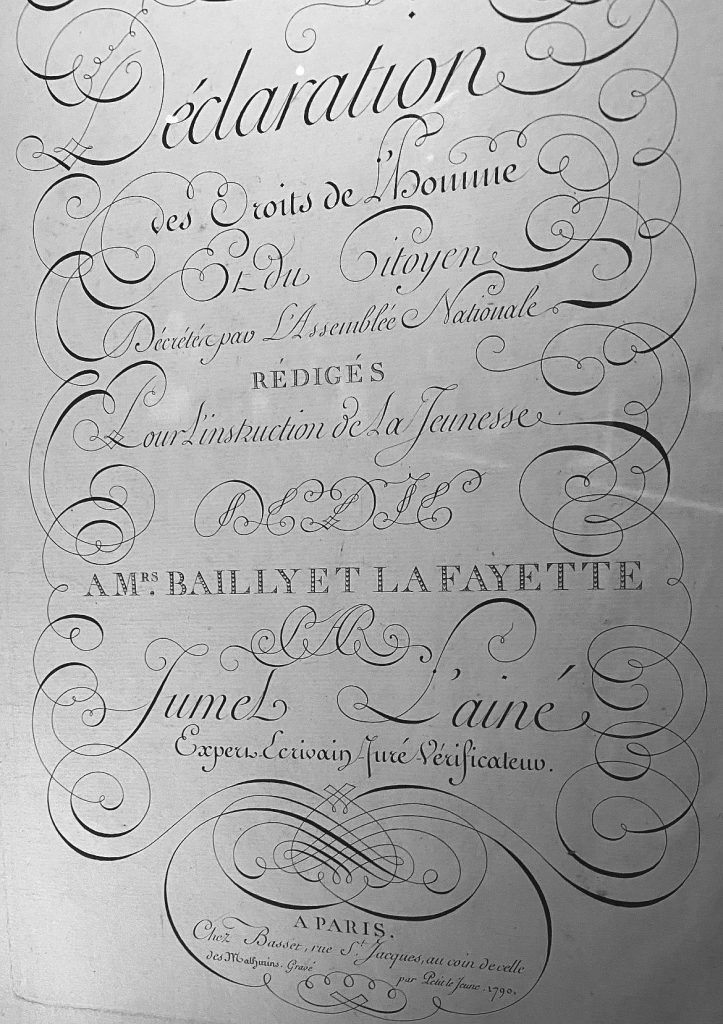
Quality and quantity or queer and query could have made valuable entries here as well. Common to all is the underlying process of questions. Questions put to oneself, to others, society or supra natural or supra national instances. Can quantity turn into quality? Is a queer perspective a new one? Is a query in a programming language the beginning of each algorithm? Questioning is a child’s “natural” approach to understanding the world. This does not stop soon after childhood, but it is occupying, if not haunting, us until the end of our life. When is this exactly happening – the end thing? Are we free to chose this? Just try to answer one of these questions and you’ll find out how one question leads to the next. We are all the same in this behaviour. However, we all find different stopping rules to the query algorithm. Religion is a fast shortcut to stop further questions. Sciences are the never, ever, ending type of questioning. Mathematics solved part of the problem. For a lot of series we are able to calculated the limit value towards which the series evolves circumventing the lack of a stopping rule. Fundamental human rights are such a far-reaching stopping rule. Just like after the French revolution, the question was, how to quickly spread the message of human rights. Didactic and paedagogics evolved in parallel. From “cogito ergo sum” to “rogatio ergo sum”.

P for Policy

Politics and policy are key elements of democracy. Agreeing that we might strongly disagree, is a virtue of democracy, particularly in order to avoid a confrontation using force. Dialectic thinking builds on the confrontation of opposite opinions originating even of the same factual knowledge. Based on different theories the same evidence will be interpreted differently. Hence, in the field of politics, where disagreement is part and parcel of the game to build majorities, policies will change. This then leads to the belief that we need a policy in each and every subject of the alphabetical list we are about to create.  There is a high risk, if you are not having a digital security policy, you will be at high risks that crucial infrastructure might not work in case of a major internal or external conflict. Candide in his small garden might run out of water to water the plants or climate change is threatening the species growing until recently. Young startups, just like ageing enterprises, persons or societies need a policy  to take care of survival, not only of the fittest. As the challenges and stakes of humanity rise fast, a revival of the policy sciences is dearly needed before the pervasive skill shortages creap into the fields of social sciences as well.