Fröhliche Wissenschaft. Das geht. Nach gut 6 Monaten mit einem Blogeintrag pro Tag hat sich eine Textsammlung ergeben, die recht umfassend ausgefallen ist. Nach eigenem Monitoring der Themen, wie die Bearbeitung der UN-Themen zu strategischen Entwicklungszielen, oder der alphabetischen Auflistung von Schlüsselwörtern der Sozialwissenschaften sind nahezu täglich Kommentare entstanden. Neu war für mich die Bildredaktion, als Kommentar, Erläuterung, Selbstkritik oder wissenschaftliche Referenz. Eine interessante Variante, Erkenntnisse mit Key-Visuals zu unterstützen. Die bildliche Erinnerung an Beiträge ist ein eigenes Inhaltsverzeichnis. Klar, Hund- und Katzenbilder werden das Ranking der am meisten aufgerufenen Beiträge gewinnen. Egal, wir machen fröhliche Wissenschaft, immer weiter, immer heiter, so bleibt es lebenslanges, lebensweites Lernen. 
Goals SDGs
The Strategic Development Goals (SDGs) date back to 2015 for their enactment. The goal setting is a routine procedure for the UN and its subsidiary international organisations. This makes a lot of sense, because if you do not name the problems, you are unlikely to address them in a systematic fashion. Quantifying the goals is then a much more difficult task and that then already part of the ensuing discussion about idealist, illusive or realist goals. Most diplomatic exchanges focus on this goal setting and scheduled monitoring as well as more comprehensive evaluations of goal achievement. The SDGs comprise another strategic twist. Rather than concentrating on national governments, non-governmental organisations and businesses were encourages to actively participate in the implementation of the goals. After more than 7 years the achievements of intended improvements should become visible. Well, goal setting and monitoring over the last seven years is likely to reveal failure on several of the 17 indicators. Covid-19, disruption of supply chains, wars causing recessions and high inflation are major factors to explain failure. However, knowing the reasons of failure is a substantial part of improving in the next coming years. Returning to cooperation rather than confrontation could do the trick. Even after wars cooperation to organise relief is the only way forward to come closer to achieving the SDGs.
Bold initiatives like the Marshall-Plan for Europe in the 20th century made it possible to rise from the ashes. Countries that have been in ruins at that time, now have important roles as financial contributors to support other regions. The goals remain the same, the challenges as well. 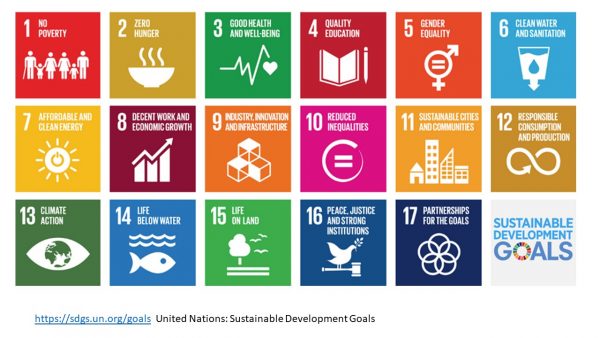
Construction
Construction as an industrial sector was growing strongly in the last decade. Corona crises, supply chain disruptions have slowed growth in the last two years, but the sector was still growing in terms of employment. The topic of skill and employee shortages hardened from year to year. In March 2023 the sector has more time to reflect on the somehow rapid, if not sometimes chaotic growth of the previous decade. The macro-economic scenario has changed now. Following on supply chain disruptions, we saw the high inflation rates of raw materials. The war of Russia against Ukraine caused energy prices to soar and eventually come down again. Latest worry is the increase in interest rates to finance construction projects of public, private and the business sector.
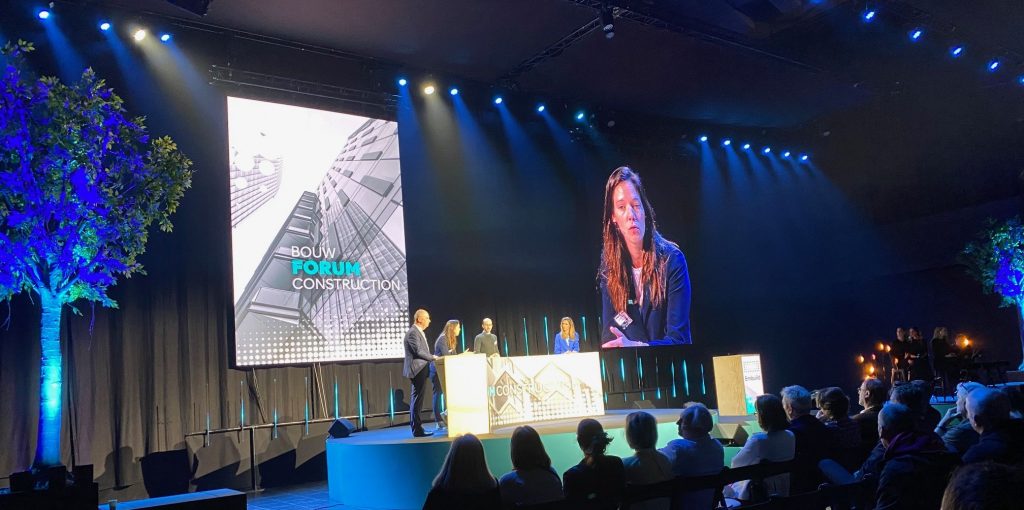
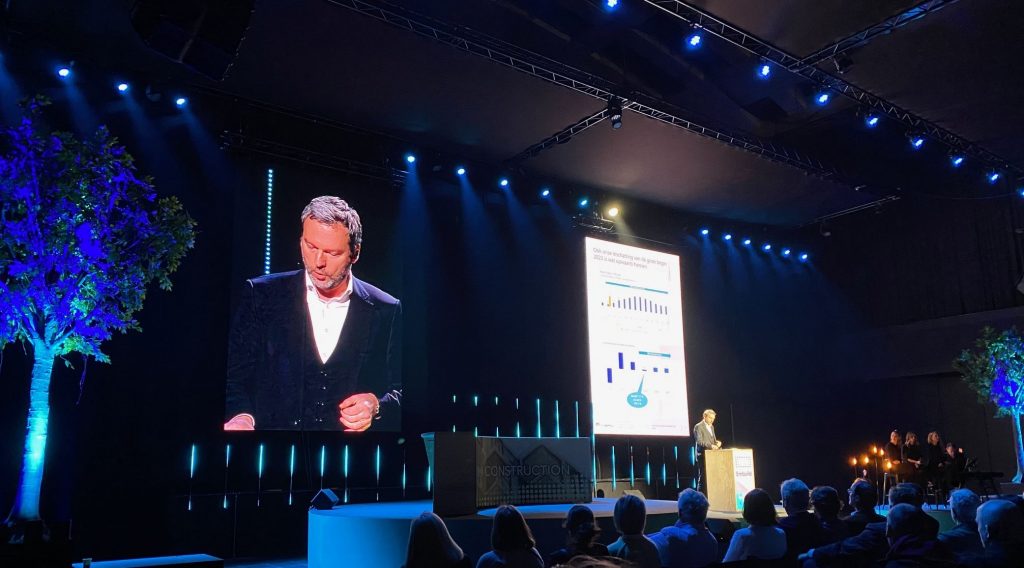
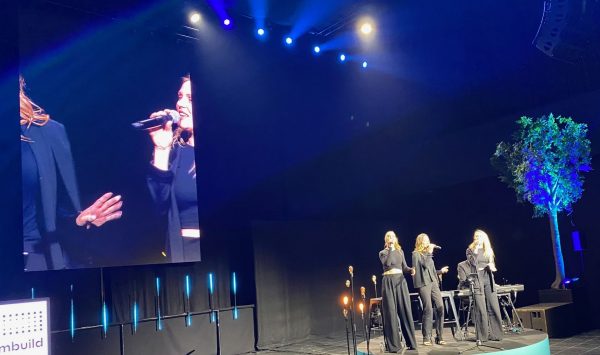
The whole sector is known for its economic role of forerunner of economic cycles, up or down. So, what are the prospects? Not so rosy, as the experts explain for example on the expert forum of the Belgian construction forum. The official from the Belgian National Bank announced a rather bleak outlook for the sector. New construction is stalling, but the renovation of buildings, especially for the purpose of reducing energy consumption is still strong and growing. Long-term reduction of emissions keeps the sector busy, thanks to the EU green deal in my opinion. The public, private and business investments in buildings all keep growth from turning negative. 2 big worries remain: (1) skill shortages and the lack of employees signalled in job openings in the sector is high and still rising; (2) the scarcity of women employed in the sector is still trailing most other sectors. Most companies have seen earnings grow over the last decade, sufficient time to build up reserves for the tougher quarters to come. Skill shortages and gender biases are harder to overcome. The Construction Forum in Brussels addressed both topics and tries to convince employers and the younger generation. Construction companies have to work on their male-dominated image was one of the take home messages Hélène de Troostemberg, the Director of Build Up pronounced.
It is not certainly not enough to have a woman as moderator of a panel and an all-female singers group accompanying the presentations. Women as architects, technicians and builders will make the sector even more attractive for the next generation of men as well. Aging of employees in the sector is another tough issue waiting for innovative solutions. Digitalisation of every step in the value chain is an additional necessary step. The leadership and trade unions in the sector are well aware of these facts. Maybe next year women engineers will pilot the robotics demonstration rather than being in charge of building a nice atmosphere with their songs. I must admit I liked the intro song to the Forum: “We build this city on rock ‘n role”, but I am less sure whether rock ‘n role will solve the gender and recruiting issue of the sector. However, naming and framing the problem(s) is already part of the solution.
Aphorismen L3
“Was für Aussichten würden wir bekommen, wenn wir unser Kapital von Wahrheiten einmal von demjenigen entblößen könnten, was ihnen nicht sowohl wesentlich ist, als vielmehr aus der öfteren Wiederholung zuwächst.“ (Lichtenberg S. 50). Die Wiederholung ist eine starke Lernmethode. Sie wird seit Jahrtausenden erfolgreich eingesetzt. Alle Religionen bedienen sich am liebsten täglich dieser Methode, um sich der Treue der Anbetenden zu vergewissern. Der Glaube im Glauben ist: Oft genug wiederholt ist gut verinnerlicht. Dabei bleibt ein Glaube ein Glaube, selbst bei ständiger Wiederholung. Lediglich so manchem Mensch erscheint durch regelmäßiges Wiederholen die Botschaft als verinnerlichte Selbstverständlichkeit. Wahrscheinlich ist es beruhigender, sich nicht täglich zu fragen, ob das 1x,2x,3x mal tägliche Einmassieren von Chemikalien auf Zähne und Zahnfleisch wirklich nachhaltig gesundheitsfördernd ist. Alleine dem Markt wollen wir das Thema nun auch nicht überantworten. Warten wir weiterhin auf die nächste entblößende, hoffentlich wirklich unabhängige, wissenschaftliche Studie dazu. Mit den Pestiziden in der Ernährung hat das bekanntlich nur sehr bedingt funktioniert. Wie schön, dass alle Jahre wieder Frühling kommt und die finsteren Tage hinter uns lässt. Wiederholungen lassen Routinen entstehen, die uns das ständige Hinterfragen ersparen. Rasch gehen wir über Fragen von Kindern hinweg: Muss ich heute in die Schule gehen? Dabei ist Hinterfragen von Wiederholungen ein wichtiges Lernen, dem Mitläufertum entgegen zu wirken. 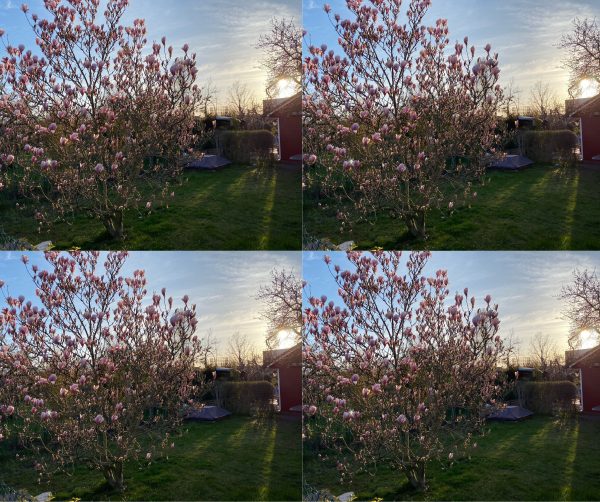
Romanatik2
Zur romantischen Periode gehören die bekannten Lieder von Schumann und Schubert. Meine Auswahl dazu liebäugelt besonders mit den Liedern zum Lindenbaum. Die Linde mit ihrem süßlichen Duft an warmen Tagen hat Malende der Romantik sowie die Dichtenden und Komponierenden betört. “Am Brunnen vor dem Tore da steht ein Lindenbaum …” kannte vor 50 Jahren jedes Kind. Etwas weniger bekannt sind die fabelhaften Rückert-Lieder von Gustav Mahler: “Ich atmet’ einen linden Duft …”. Für mich steht dabei die Atmosphäre in der Nähe der Linde im Vordergrund. “Unter den Linden” assoziieren viele nur noch mit der Verkehr in der Hauptstadt auf dem Weg zum Brandenburger Tor. Zum Reinhören und Reinversetzen in die Romantik sind die Lieder ein idealer Weg. Der Frühlingsglaube (Schubert Op.20.2) besingt die linden Lüfte und das Aufblühen der Natur. Es keimt die Hoffnung auf, dass sich alles zum Besseren wendet. Doch etwas Skepsis ist schon angebracht. Im Lied “Die abgeblühte Linde“, ebenfalls von Schubert vertont, ist dann das Altern und die Treue thematisiert. Der Zyklus der Natur und Jahreszeiten nimmt scheinbar unaufhaltsam seinen Lauf. “Nur der Gärtner bleibt ihr treu, denn er liebt in ihr den Baum”. Das weise Herz will Gärtnern und erhalten, was so viele Emotionen und Optimismus hervorgebracht hat. Wir müssen die Bäume retten, aus Pflicht die Romantik inklusiv und erlebbar zu erhalten. Dazu können wir mit den Linden ja schon einmal anfangen. 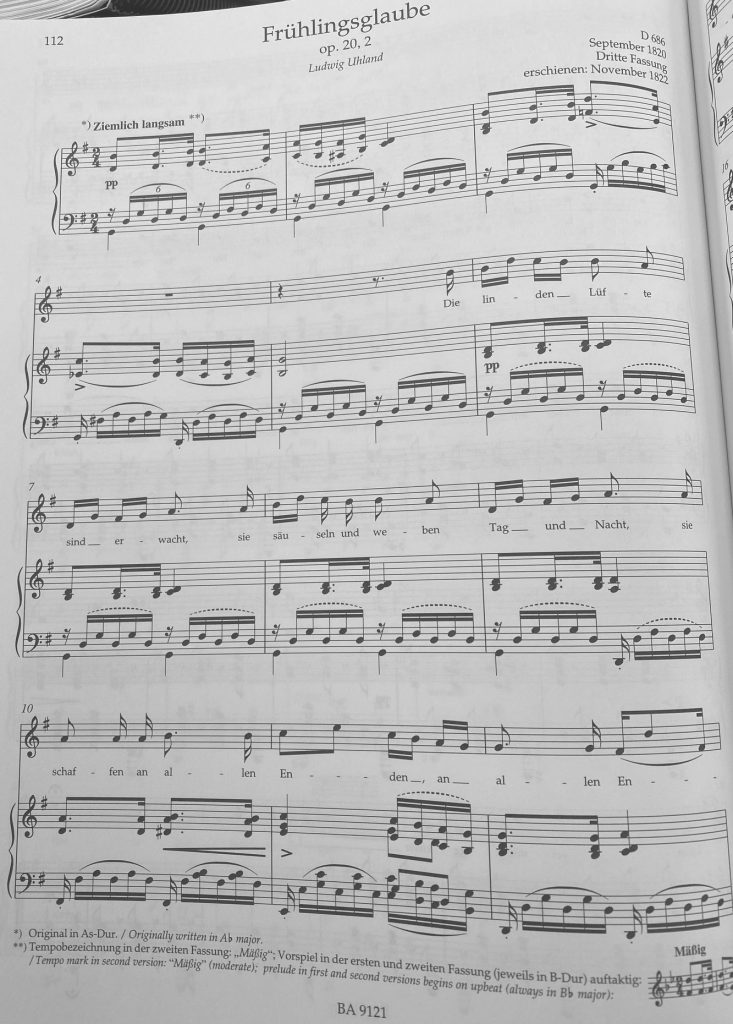
Employment
Employment is back on top of the agenda. Not as we used to think, though. Previously unemployment had dominated societal concerns. Now it is the lack of persons seeking or available for employment. What has happened? The Covid-19 crisis has demonstrated the need of persons qualified to work in the health sector. From health care and urgency care, we are short of personnel in all these fields, everywhere. 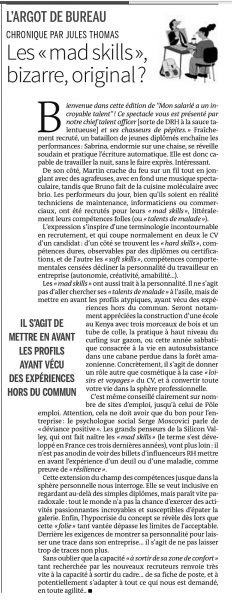 Then we discovered the role of essential services and the need to equip crucial infrastructures like ports, transport, shops, schools and ambulances with service persons resisting despite work overload. Larger cohorts leave employment to retire, some even early due to illness or burn-out. Additionally, war is back in Europe. Military personnel is in high demand again, drawing largely from younger cohorts. The need for conventional weapons. long thought to be oblivious, is forcefully back on the agenda.
Growth potentials are everywhere. However, these pre-modern facts encounter a population in the western democracies that insists on new approaches to employment. Beyond hard and soft skills, recruiters seek atypical skills, competences and trajectories. A parachute jump from an airplane, cooking and dining experiences, caring spells, periods in self-employment, all are directly or indirectly relevant for employment and teamwork. So, what is your specialty? Collecting stamps? Surely you are able to spot tiny differences in images with specific content. Fake news and fake image detection or video surveillance is in high demand, just try an application and discover the employment potential of your MAD skills. Sounds crazy? No joke. Skill needs are everywhere, just give it a start again and again. Read a serious newspaper regularly (here LeMonde 19.1.2023) for inspiration.
U for Union
Union, understanding, undo, unknown, uncertainty, universe, urbanization, use, u-turn. All those u-words spark imagination. Additionally, the short forms of u as abbreviation for you, ur = your, youth and smartphone typing are creating for us abbreviations to communicate even faster and shorter via social media. Union is my favourite of this list for several reasons: (1) Marital union, passionate topic not only for family sociologists, (2) trade unions, as collective form to organize solidarity in and across societies, (3) European Union, the formidable tool to create, conserve and ensure peaceful developments in Europe. We have to prolong this list with the union jack, the united states, the united nations and …, please continue the list.
For me, in union I see a whole film running, a process proceeding, or persons uniting. Unionization, just like two persons deciding to pass more time together, has some magic in it. Match making is the modern term for it. No Union without reunion, dissolving a union might be part of the process as well, as painful it can turn out to be. Most of the times we grow throughout the process. Forming a union, in all senses of the word and of all sorts of forms, is a kind of teleological urge of us as a species. We share this with many animals but have also developed strategies and weapons to force others into union. Unfortunately, no u-word without its potential to be used in the sense of abuse. Unite to defend the union of fans of unions. (Evolution of Union of Tweets own Video 12-2022). IMG_4611
Q for Question
Quality and quantity or queer and query could have made valuable entries here as well. Common to all is the underlying process of questions. Questions put to oneself, to others, society or supra natural or supra national instances. Can quantity turn into quality? Is a queer perspective a new one? Is a query in a programming language the beginning of each algorithm? Questioning is a child’s “natural” approach to understanding the world. This does not stop soon after childhood, but it is occupying, if not haunting, us until the end of our life. When is this exactly happening – the end thing? Are we free to chose this? Just try to answer one of these questions and you’ll find out how one question leads to the next. We are all the same in this behaviour. However, we all find different stopping rules to the query algorithm. Religion is a fast shortcut to stop further questions. Sciences are the never, ever, ending type of questioning. Mathematics solved part of the problem. For a lot of series we are able to calculated the limit value towards which the series evolves circumventing the lack of a stopping rule. Fundamental human rights are such a far-reaching stopping rule. Just like after the French revolution, the question was, how to quickly spread the message of human rights. Didactic and paedagogics evolved in parallel. From “cogito ergo sum” to “rogatio ergo sum”. 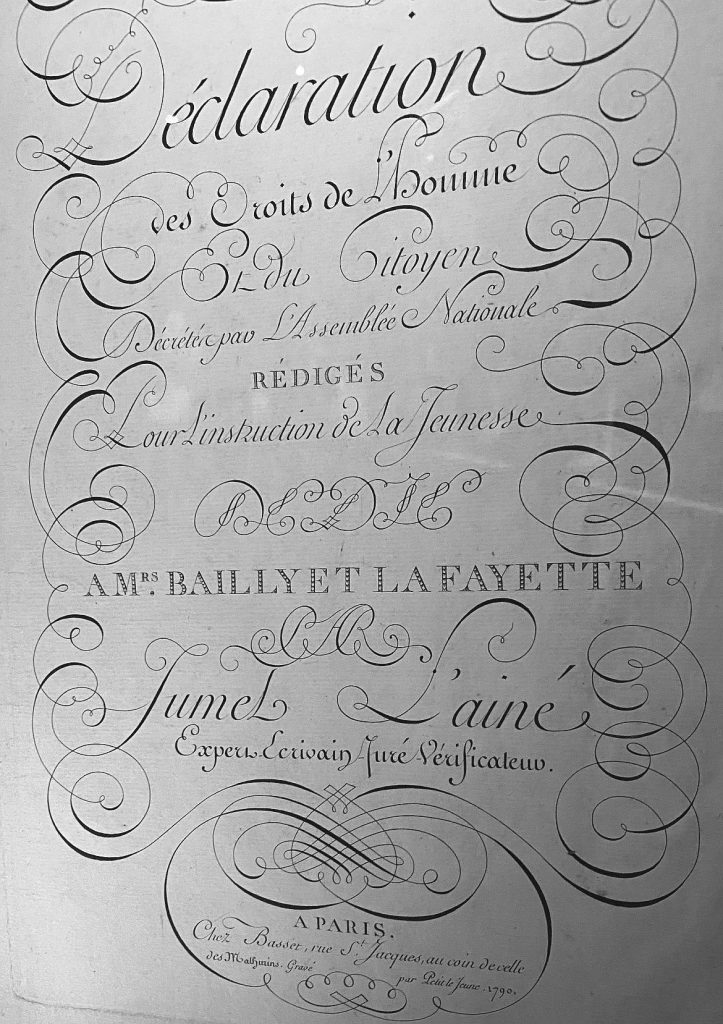
M for Memory
Besides the English term memory, which refers to a huge scientific literature starting with cognitive psychology, I like the French version of “mémoire”, because it is more comprehensive with additional meanings, nicely represented by Wikipedia.org. On the German Wikipedia-page you find first the reference to the children’s game memory, turning around images and memorising where the counterpart is/was (play pairs). This diversity hints towards a cultural element in memory. There is a person’s memory or mental capacity to recall and ways to remember. The latter term refers a lot more to collective memories and becomes a more debated issue. Danny Trom uses the term “split memory” in a chapter on France and the “myths of nations” (p.129-151). In David Brook’s reader on “the social animal” he states that grandmasters in chess (p.88) were long believed to have superior memory. This is actually not true as memory experiments showed, but they rather saw formations and “internal connections forming networked chunks of information”.
“Mémoire”, on the contrary, refers also to the writing of a person’s own biography. Nowadays, book shops contain whole sections of autobiographies, the most sold appears to be the one by Michele Obama recently, if I recall correctly. Among the most scandalous is the publication of the “Journal pour Anne (Pingeot) 1964-1970” by Francois Mitterand. All the autobiographical documents make explicit major parts of what might form collective memory later on.
Memory has found its way into engineering and computing. The memory effect in batteries or being “out of memory” frightens users in computing or programming. In short, I wish you the best of memories reading this page and stimulation by visiting memorials (image: Jewish Museum in Berlin 2022, Ullmann exhibition). 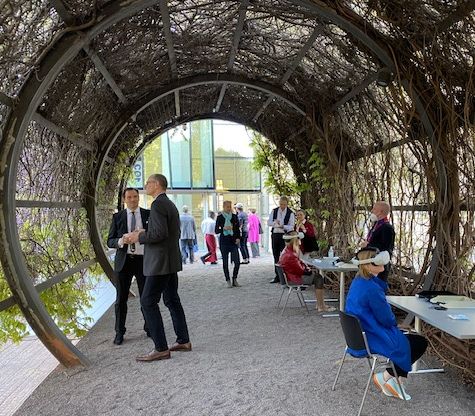
E for Enterprise
There is a new start-up scene in development in Germany. Interesting to witness the new entrepreneurial spirit. Many of the youngsters grow out of their peer community, wanting to try new ways of working and living together. The new bottom-up or grassroots form of growing a business out of a subculture seems to be an adequate response to the growing diversity of societies and easier ways of community building through online social media. Name it “reach” today, it is similar to what you previously called having a customer base. The new element refers to a blending of cultures. Learning through being online connected to the world, yes, the whole world, allows wide-spread influences from other sub-cultures, be they American, Asian or African. The young are open-minded to new stimuli like “Ikigai” from Japan and, of course, the life histories of founders and individual biographies from entrepreneurs like the legend of Steve Jobs, Apple’s legendary founder. Imagineering has become part of the movie-influenced influencers. Short clips out of a longer story build communities. The witty comment, like at school, gets more attention than the long boring story of the preacher, teacher or the mansplainer. The experience of “flow” is all around these communities and this creates the specific magic of the start-up scene. They take each other to new levels, mutually, reinforcing their preferences and life-styles. They are well aware of the risks they are taking. “Keinhorn” German short for “not an Einhorn”, the one billion value threshold for super successful enterprises taught them crucial lessons. The “ecology of organisations” which I referred to in my courses at the now renamed “Constructor University” previously “International University Bremen”, then “Jacobs University”, (let’s see what comes next?) is an important complementary research tradition to assess the “survival” of enterprises. I still recommend this University, which I quit to start new endeavors. It carries in its several  “names” the important message:
start, fail, change, (repeat).