Mehr GeologInnen braucht das Land. In der Schweiz beunruhigen derzeit zunehmende geologische Risiken. Der Klimawandel lässt Permafrost in den Höhen schmelzen, der jahrhundertelang Gestein zusammenhielt Gleichzeitig sinkt die Schweiz, nicht die Aktienkurse, selbst die Credit Suisse ist bereits untergegangen, aber rein geologisch, nüchtern betrachtet (NZZ, 2023 „Die Schweiz sinkt“). Das verlangt nun doch einige gründliche wissenschaftliche Untersuchungen. GeologInnen messen bereits mit unzähligen Messstationen die Bewegungen der Erdkrusten. In der Schweiz lässt sich sicherlich mit dem zunehmenden Abschmelzen der Gletscher und der Veränderung der (mehr) Regenfälle statt Schneefälle in den frühen Wintermonaten eine neue Gefahrensituation aufzeigen, nicht nur für den Tourismus. Die üblichen Reflexe: mehr Investieren in Schutz und neue Versicherungen wird alleine nicht mehr helfen. Biodiversität auf den unteren Skipisten ist eh Fehlanzeige, aber die Baumgrenze steigt. Das könnte genutzt werden, statt die vielfach kranken Fichten, die wegen ihrer kurzen Wurzeln kaum ein Gewitter überstehen (Ruinaulta vom 4.8.2023 S.6 und S.16-18). Diese Gewitter werden durch den Klimawandel wahrscheinlich häufiger werden. Noch mehr Versicherungen werden die Welt nicht retten können. Wir werden umdenken müssen auch wenn Verhaltensänderungen sehr schwerfallen.
Das Abbrechen von Bergspitzen, wie am Kantersteg (BE) oder der Bergsturz am Piz Cengalo 2017 in Graubünden, ereignen sich dann eher in den wärmeren Sommertagen. Die GeologInnen werden viele Arbeitsstellen haben (nicht nur im Geopark Sardona UNESCO Welterbe) und gehören zu den Berufen mit höherer Nachfrage durch den Klimawandel. 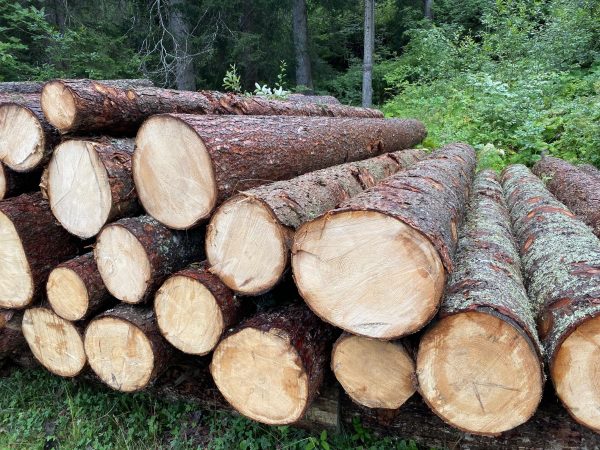
Work Satisfaction
There is an important distinction between job satisfaction and satisfaction with one’s work. Being satisfied with the work you have done or something you created or co-created has become almost a privilege. Production in capitalism has mostly different objectives like rent seeking rather than satisfaction with one’s work. Compromises between both are a major learning process about the functioning of labour markets. Remote work, for some, contributes a lot to more job satisfaction. For others a healthy work environment is the top priority. Many people however focus simply on pay packages and this is often out of sheer necessity to escape poverty eventually. Trades have a tradition to allow satisfaction with one’s work, more than most jobs in industry. Flat hierarchies and subordination to your own standards, rather than pressure from supervisors, are much more common. Recognition of your work adds to the pay you receive. Job turnover is related to job satisfaction but also to satisfaction or even identification with the product of your work.
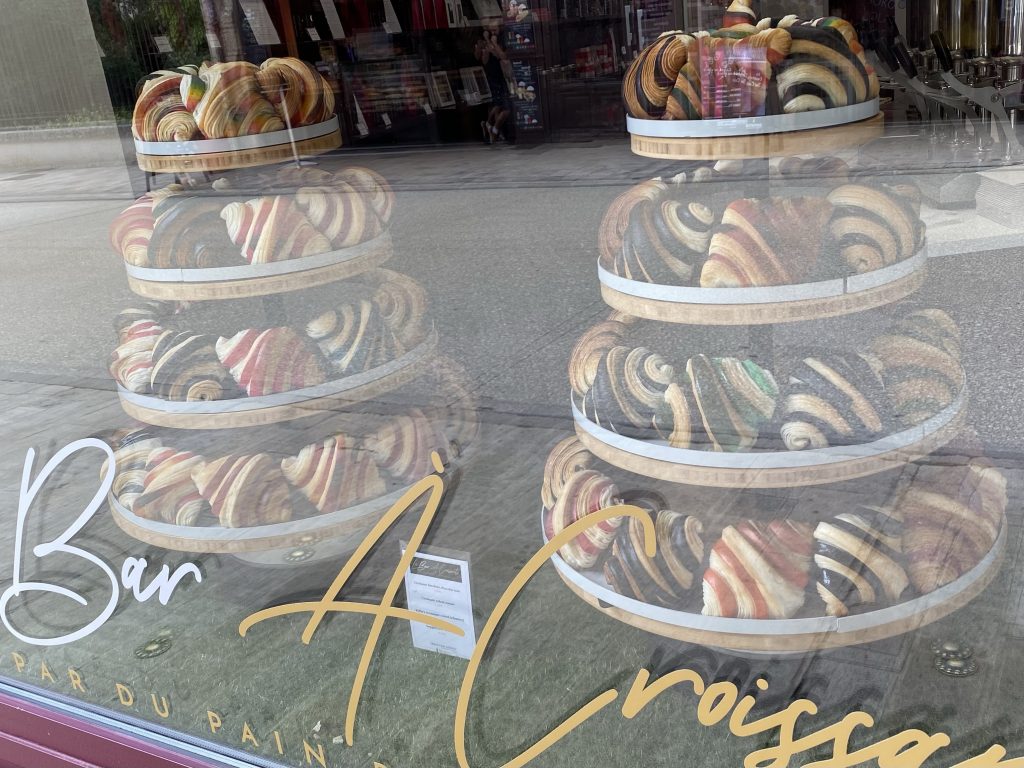
There is more to work than pay. Recognition in form of winning a price in a competition may help to keep awareness high that pay is only one element of remuneration. “meilleur ouvrier de France“ is such a kind of recognition. It encourages people to try new things and test new ideas. This is a major source of satisfaction with one’s work. We might even feel sorry for someone shouting “I can get no satisfaction”. He probably has to try in a simpler or different fashion rather than to try harder. The city Dijon in Burgundy seems to have a pretty high number of people with high levels of work satisfaction and happy to show it.
Heidi
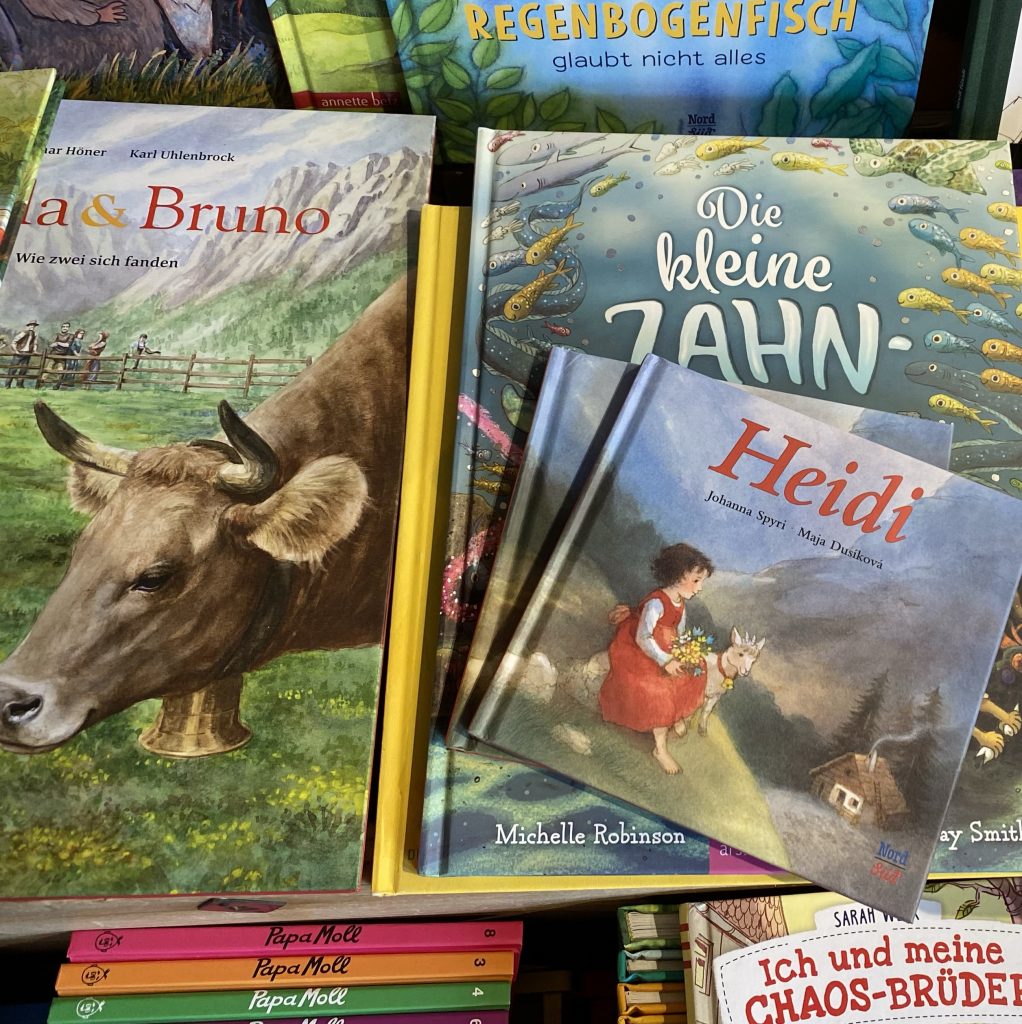
Neben dem Kassenschlager des neuen Barbie Films lebt ein anderer Mythos der Mädchenjahre weiter. Die in der Nähe von Zurich im Kanton Graubünden gebürtige Schriftstellerin Johanna Spyri hatte zwei Bücher mit Kindergeschichten im 19. Jahrhundert mit Namen Heidi verfasst. Dieser Ausgangspunkt bot zahlreichen Verfilmungen eine verwertbare Basis. Die Geschichten der kleinen Heidi wurden überraschenderweise von Filmstudios in Japan zu dem Welterfolg 1974 im Animé Format geschaffen.
Computer Animationen sind nichts Neues, und statt aus Japan kommen viele nun auch aus Südkorea. Outsourcing zur Gewinnmaximierung war schon immer ein verlässliche, gewinnorientierte Produktionsmöglichkeit. Lediglich für so etwas wie Kulturgüter glaubten wir, wäre das nicht so einfach. Filmrechte werden gehandelt wie andere Waren. Hohe Einschaltquoten werden uns noch mehr Heidis und Barbies im Filmformat bringen. Das werden wir aushalten müssen.
Food Change
Changing habits of eating is among the most difficult behavioral changes. We get so used to our habits to prefer certain alimentary mixtures that we tend to believe we can no longer change them. Depending on our will power we are able to command for more or less longer periods our food intake. Bodily functions of blood pressure or insulin levels play tricks on us of a powerful kind. Therefore it is interesting to see towards the end of a food market what kind of food is sold and what has been left over.
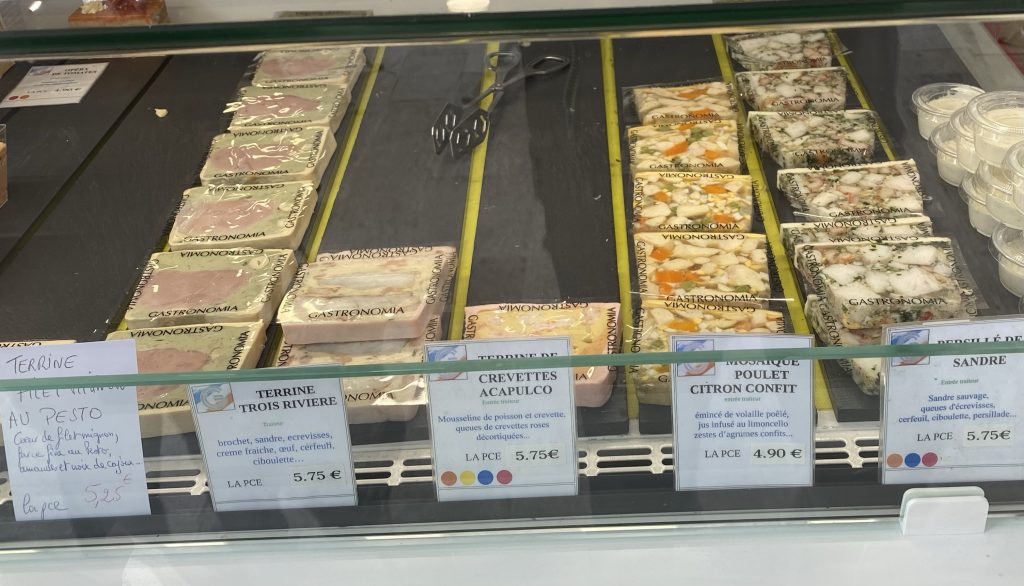
In the historic market of the food, wine and spice loving region of Burgundy in Dijon the ad hoc inspection of an étalage was surprisingly different from my expectation. ‘Paté’ containing meat was left over towards the end of the opening hours and the fish based ’Paté’ was almost sold out. A change towards a more healthy and somewhat more sustainable diet is slowly creeping into societies. This gives hope that food changes are possible and markets will adapt eventually as well. It is a change for the better for each person and our societies as well as the planet.
Greenwashing
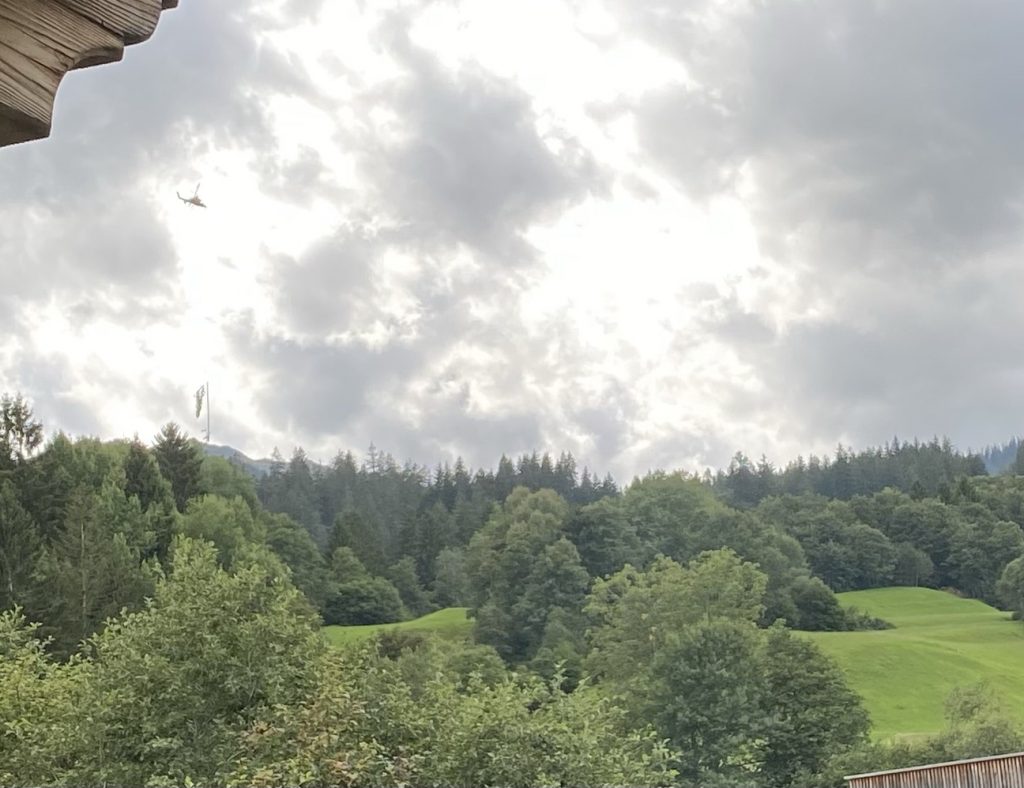
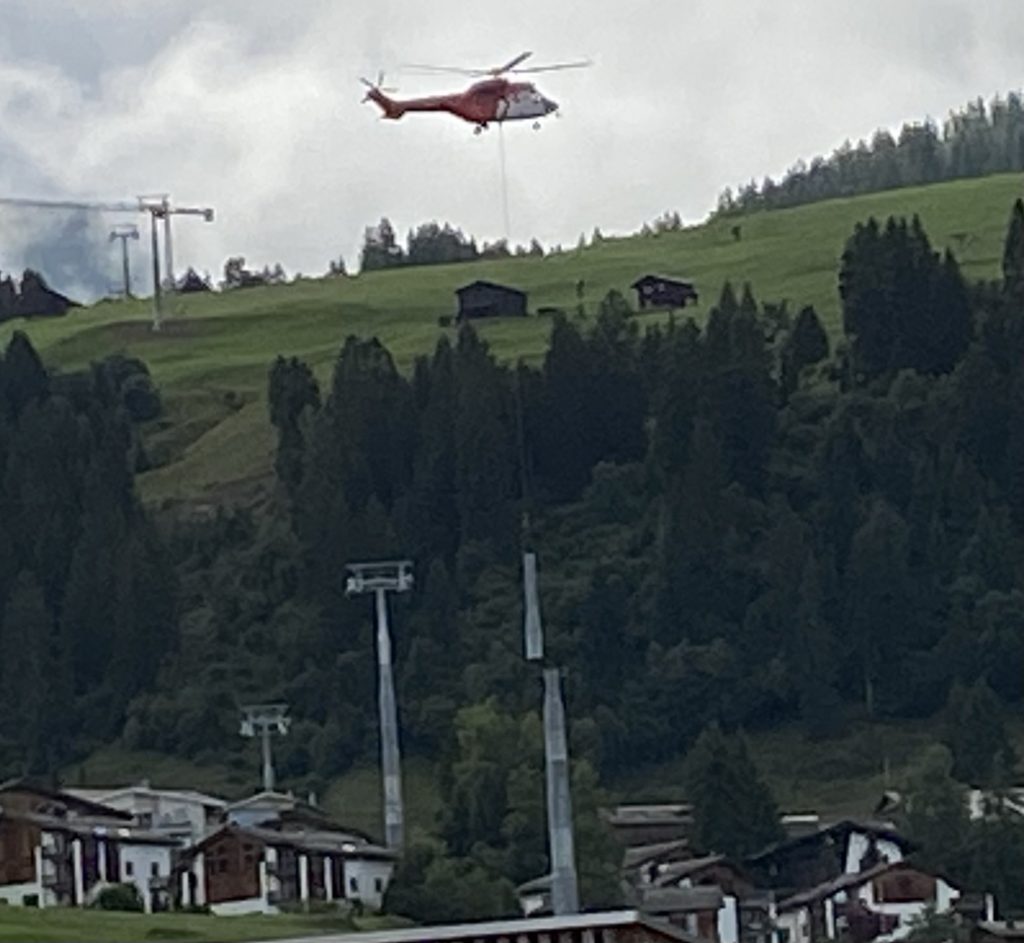
We mostly think of greenwashing of big polluting industries , but there many other ways to cheat with green labels. When you travel through green Switzerland you might be surprised of how the Swiss way of greenwashing works. In order to survive as tourist attraction with less snow (Study published in Nature Climate change 2023) and reduced numbers of trees, greenwashing has to happen quickly before tourists arrive again.
The challenge is to clear your sick parts of the forest quickly and to build new ways for fast lifts to heights in the mountains where you are likely to find snow at least for the next 30 years after which the investment is amortized. (quote from Neue Zürcher Zeitung 5.8.2023 p11). This all is carried through in speedy fashion and probably in the most polluting way you can imagine. Heidi would cry in the arms of her grandfather and join Greta in the school strike.
Gartenwelt
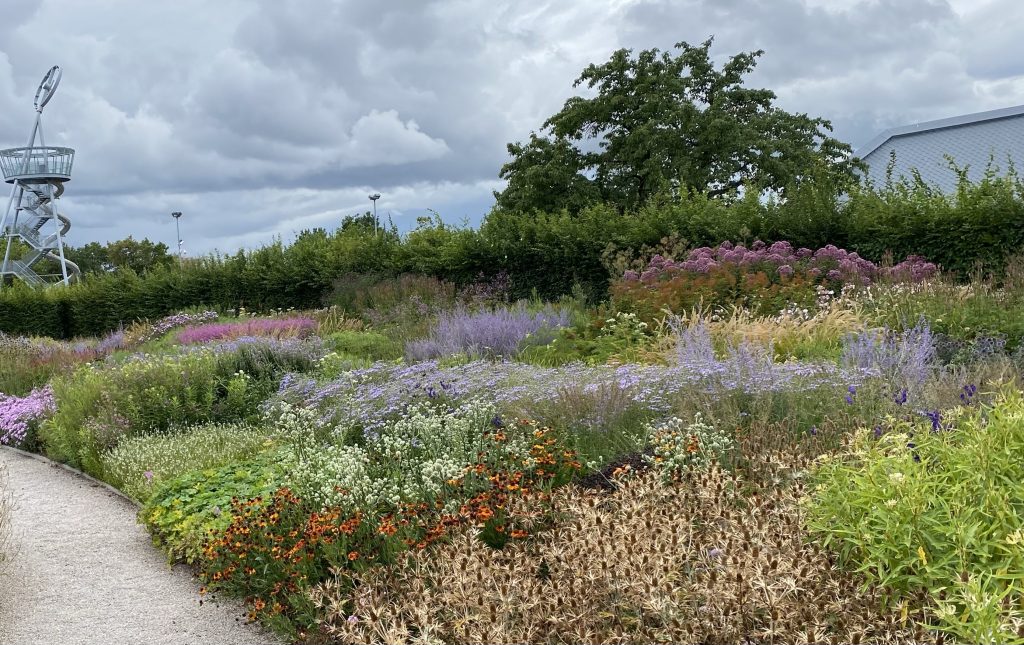
Gärten sind eigene Welten. Selbst im gleichen Garten sehen verschiedene Menschen unterschiedliche Dinge. Man stelle sich nur sogenannte Farbenblindheit vor. Jahreszeiten bieten zusätzliches Ansichtsmaterial. Animalische Perspektiven würden für erstaunliche Überraschungen sorgen. Nach den Vorarbeiten mit dem Polinatorprojekt online hatten wir die Gelegenheit eine konkrete Realisierung einer solchen Gartenwelt zu durchwandern.
Der reale 3-D Eindruck ist überwältigend und bringt die virtuelle Erfahrung des Gartens im Lauf der Jahreszeiten in die reale Welt. Zu jeder Jahreszeit, selbst im Hochsommer, ist viel Farbe im Spiel und das auf mehreren Ebenen. Paradiesische Gartenwelten erschließen sich bei der Bewegung im Garten. Das wirkt wie ein Ansporn zu eigenen oder besser gemeinschaftlichen Anstrengungen einer vergleichbaren Realisierung. Genau das ist auch Teil der Ausstellung und des Katalogs „Zukunft der Gärten“ im Vitra Design Museum.
Health inequality
Almost all studies irrespective of the methods applied find that health is a matter of related to social inequality. The study by Lyons et al. (2023) in the Lancet demonstrates the same basic findings. This study uses the concept of multimorbidity and time until first and subsequent diagnosis as the measures of health. Mortality between different socioeconomic groups in Wales (UK) is largely confirmed. It is not only men beyond 70 years of age that face this unequal health trajectories, but already in the age group of 10- 20 years old teenagers the time until first diagnosis is different between the poor and wealthy neighbourhoods.
Differential health trajectories have a very early onset and seem to widen throughout the live course. The longitudinal nation-wide study in Wales allows to determine the impact of socioeconomic deprivation on health. The conclusions imply a combination of health and social policies to address health inequality. Clinical practice alone is unlikely to reverse the trends as onset of disease in form of first or subsequent diagnoses start from a very early age onwards in deprived areas.
Health as part of the curriculum in education systems is an obvious conclusion as well. This needs to take preventative approaches more seriously to give children and adolescents a more equal start into adulthood and professional working life. Education systems have to be reformed to become part of the solution rather than creating unhealthy trajectories themselves due to stress and unrealistic, unhealthy goal setting. Walking or cycling to school, more healthy school meals and learning about nutrition as well as processes of metabolism in the body should complement a more active school life-style. The dangers of developing ill health early seem to be greater nowadays than before. That is probably the most worrying news of the study. Sedentary life-styles seem to be a result of deprived neighbourhoods with less areas for comfortable, healthy walking or outdoor exercise.
It is an accumulation of effects due to neighbourhoods, commuting patterns and work-related health risk. Counties within regions grow more distant from each other as well as regions within countries. Youth is well aware of these health and social differentials. Eventually they will claim their “lives” or “equal chances” back again. Sociology has provided many clous to address these issues: Segregation or discrimination of groups of society, gentrification of neighbourhoods, intersectionality of health and social issues, to name just a few.
In order to target at-risk populations better and intervene with prevention rather than curative, we have to integrate social and health approaches much more than we used to do. The way forward is to improve the targeted, preventive approaches in order to improve the equality of chances to education, health and work.
(DOI: LINK to study)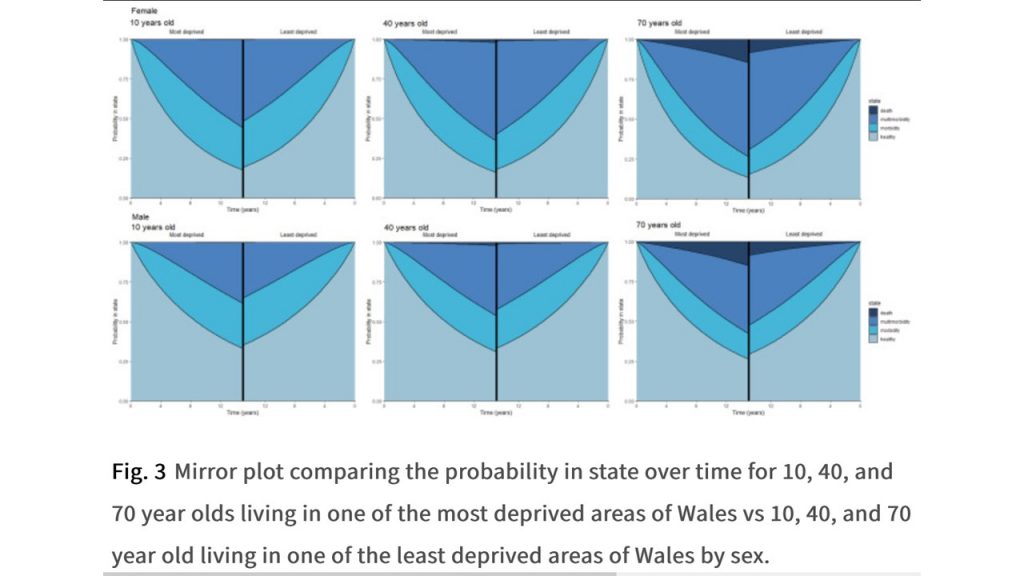
Nuclear War
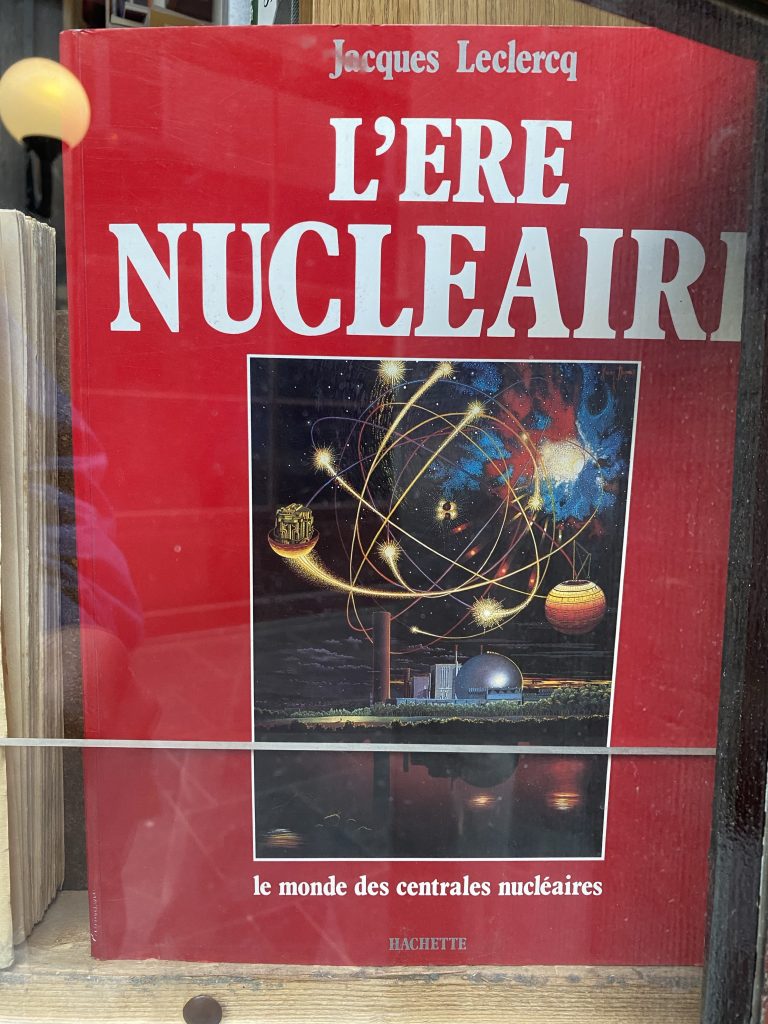
In the last few years we have witnessed a new surge in the investment in nuclear energy on the global level (IEA). Ever since the foundation of the initiative “International physicians for the prevention of nuclear war” in the 1980s, there have been relentless reminders of the devastating effects of such a war. In 2023 we are all aware of the real risk of attacks on the biggest nuclear power plant located in Ukraine. Nevertheless we continue to invest heavily in power plants that constitute a massive risk at times of war between irresponsible nations. Besides the publication of many high quality papers in The Lancet there is regularly space to keep the awareness of the dangers of nuclear war at a high level. Too many politicians shield themselves from dealing with such realistic dangers in the interest of supposed cheap and save energy for all. Both is no longer the case. Nuclear energy is expensive and unsafe in peace and horrible in war times. We cannot afford to abstract from these rising risks. The hype about anything nuclear like in the 1980s is grossly displaced (image of book below).
Anger
It feels like we live in the “age of anger”. Anger was a predominate feeling in the “French yellow vest movement” spurred by sharp increases in petrol prices. In Germany the notion of “Wutbürger” had a short career to express anger of citizens against, against whatever could arise anger. There are plenty of issues of course that will cause arousal in public politics. The more a government enacts change, be it necessary or not, the more it is to arouse its citizens. Parliamentary democracy is thought to solve this through majority voting of the equally represented in parliament. Minority rights have been installed to safeguard the majority to become too overwhelming, but any close decisions on hotly debated topics are likely to cause substantial anger within a society.
This is far from being an issue only in Western democracies. Pankaj Mishra claims, this is a world-wide phenomenon and history provides ample examples for it. In his book on “The age of anger” he challenges the predominantly Western political theory, deriving from an opposition of Voltaire’s and Rousseau’s political thought to hold the individualisation and globalisation of an economic model, traditional capitalism, responsible for the rise of anger across the globe.
This critique of capitalism is now translated into French. Several movements of anger in France probably find some unifying roots of seemingly unrelated outbreak of anger, violence and subsequent repression. Old arguments of critics of capitalism stand up again. The challenge to democracy comes from the extreme right even more than from the extreme left. Re-imagining capitalism is needed more than ever to safe the survival of democracy. Participative democracy like in Bürgerräte in Germany or deliberative democracy practiced by President Macron in France are an important part to stimulate involvement of more people in the preparation of decision-making. Not perfect as procedures, but small steps ahead to confront and address anger of the citizens and people at large. 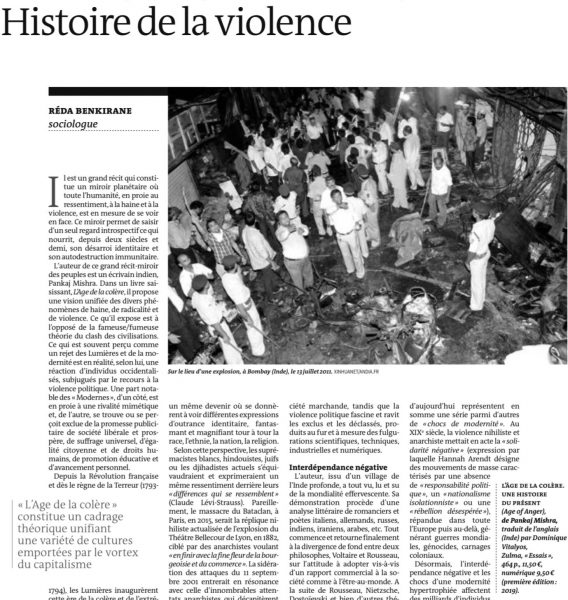
Work Stress
The empirical evidence on life stress is relatively clear cut. Based on the animal model, life stress causes multiple metabolic disorders among them “insulin resistance, glucose and lipid homeostasis, as well as ageing processes such as cellular senescence and telomere length shortening” (Kivimäki et al. 2023). Besides sleeping we spend most of our life in work-related contexts. Stressful commuting to work and stress at work create a rather unhealthy lifestyle. More stressful working lifes have very likely contributed to currently increased risks of obesity around the globe. Unhealthy nutrition adds to risks just as too little exercise or walking. Time to act for the benefit of all of us. It is not correct to put the blame on individuals, if we know that work and life styles jointly contribute. Urban planning can do a lot to contribute to insulin resistance of inhabitants through more walking or cycling paths for all not only in the wealthier suburbs. The more stressed winner of the daily race might come last in the longer run.