Alkoholismus

Alkohol ist eine Droge, da Alkohol abhängig machen kann. Die Bewusstseinsveränderungen können beachtliche bis extreme Ausmaße erreichen. Das wissen wir alle und zwar seit Jahrhunderten. Mäßigung bei Rauschmitteln ist nötig, aber schwer erlernbar. Etwas Genuss ist gesellschaftlich nicht nur toleriert, sondern gewollt zur Förderung der Geselligkeit. Zu viel Genuss beeinträchtigt meistens andere und wird dann zu einer schwierigen Problematik. Ärztinnen, Psychologinnen und andere Heilberufe stehen oft hilflos, wie auch das nahe familiäre Umfeld, vor dieser Situation. Selbst neuere Studien weisen darauf hin, dass die Versorgung dieser Patienten (UK), bestenfalls in der Hälfte der Fälle als gut einzustufen ist. Die Studie zu Großbritannien beschreibt gleichfalls die Krankheitsgeschichte und -versorgung als „eskalierende Tragödie“. Für die meisten anderen Länder liegen keine wirklich guten Daten vor, die weder einen Handlungsbedarf noch auf einen gesellschaftlichen Gestaltungswillen hindeuten würden.
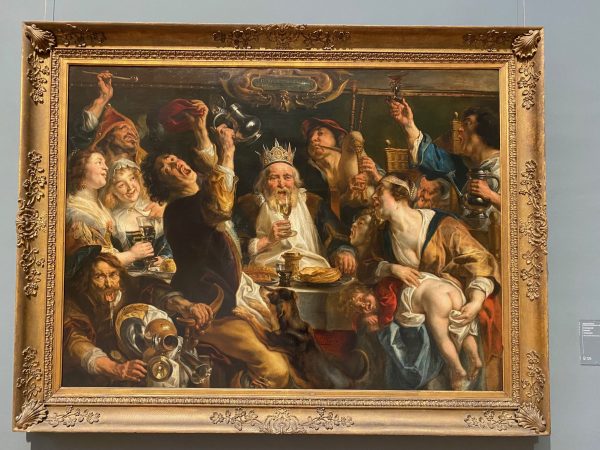
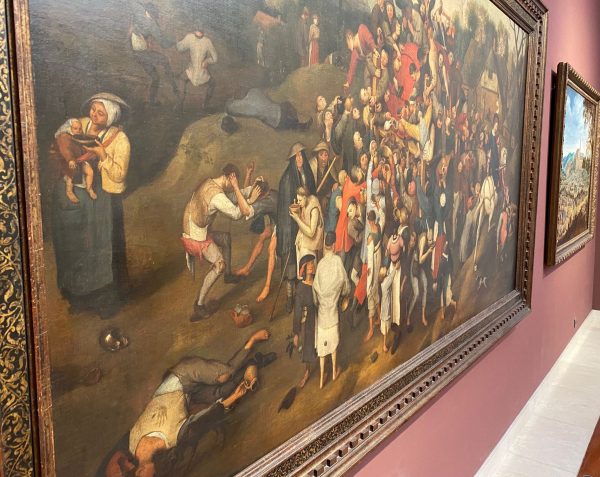
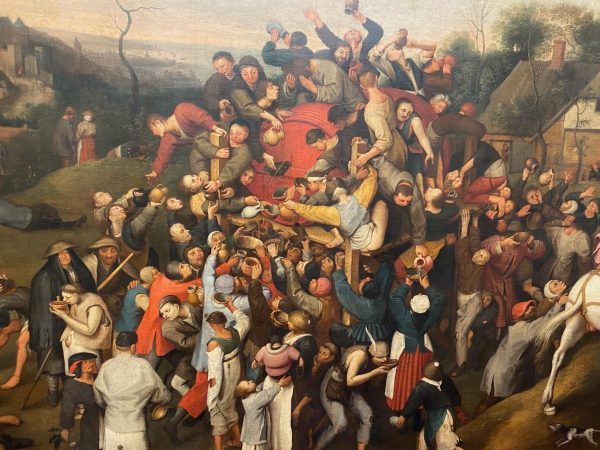
Die Radiosendung zum Thema „Umgang mit Alkoholkranken“ und die Initiative von Sänger Max Mutzke, „Kindern suchtkranker Eltern eine Stimme geben“ beschreibt eindrücklich die generationsübergreifende Bedeutung von Alkoholkrankheit. Alkohol ist eben nicht nur das Problem der betroffenen Person. Ein ganzes Umfeld ist betroffen. Das Problem wächst sich meistens aus zu einer Problematik für das weitere familiäre Umfeld, Freundeskreise und ArbeitskollegInnen. Es ist erstaunlich, dass wir seit Jahrhunderten keinen anderen Umgang mit alkoholbasierten Rauschmitteln gefunden haben, als alles erlaubt oder alles verboten, außer der Altersbegrenzung für Kinder und beim Autofahren. Der Maler Bruegel sah das wohl ähnlich. Den St. Martinswein kann sich heute jeder im Laden um die Ecke selbst kaufen. Mäßigung im Umgang mit Drogen ist nach wie vor ein schwieriger Lernprozess, für Einzelne (Jordaens – Der König drinkt!), wie für die Gesellschaft. ( fast betrunkenes Video Alko VLC Bruegel MRBA Bruxelles.jpg zur Bildexploration).
Aphorismen L2

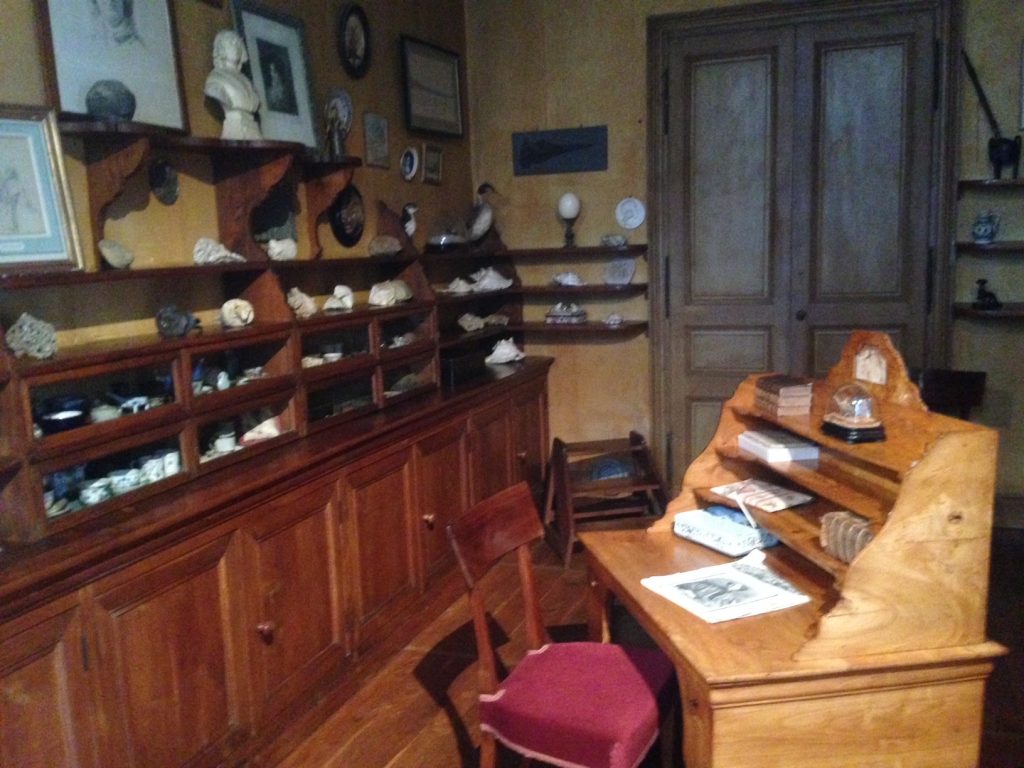
“Man soll öfters dasjenige untersuchen, was von den Menschen meist vergessen wird, wo sie nicht hinsehen und was so sehr als bekannt angenommen wird, dass es keiner Untersuchung mehr wert geachtet wird.“ (Lichtenberg S. 50). Eine eindrückliche Warnung sich nicht nur den großen Wellen und Wogen der Öffentlichkeit oder der Wissenschaften hinzugeben. Wo viele nicht hinschauen oder bewusst wegsehen, da gibt es meist einiges zu ergründen. Die Soziologie der kleinen Dinge, der Alltagsgegenstände bringt faszinierende Erkenntnisse hervor. Nehmen wir nur einmal die Bekleidung beim Kochen. Von der Kittelschürze zum gestylten Outfit für die Kochshow zum Gesellschafts-cooking“ haben sich Kleidungsstücke und Berufe in ihrer Funktionalität gewandelt. Dem Anlass entsprechend wird sich gekleidet. Kochen ist von den Hinterzimmern mancherorts ins Zentrum der Gesellschaft mutiert. Wertschätzung von Handwerk und delikate Zubereitung sollten Rekrutierung erleichtern. Bleibt nur noch die Arbeit drumherum. Einkaufen, Einräumen, Einweichen, Abtrocknen, Aufräumen. Die Arbeit geht uns nicht aus, sie verändert sich nur. Wertschätzung der kleinen Aktivitäten, desjenigen, „was von den Menschen meist vergessen wird, wo sie nicht hinsehen“ kann so aufschlussreich sein. Hinschauen und Verstehen lernen bleibt angesagt. Lichtenberg weiter: „Man frage sich selbst, ob man sich die kleinsten Sachen erklären kann; dieses ist das einzige Mittel, sich ein rechtes System zu formieren, seine Kräfte zu erforschen und seine Lektüre sich nützlich zu machen.“ Aphorismen können ein ganzes Forschungsprogramm auf den Punkt bringen und so die kleinsten Beiträge noch als nützlich erweisen. (Foto: Schreibatelier von George Sand in Nohant).

Narrative economics

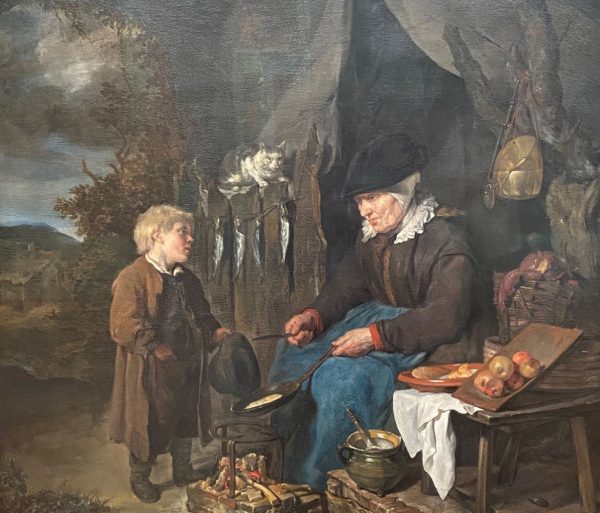
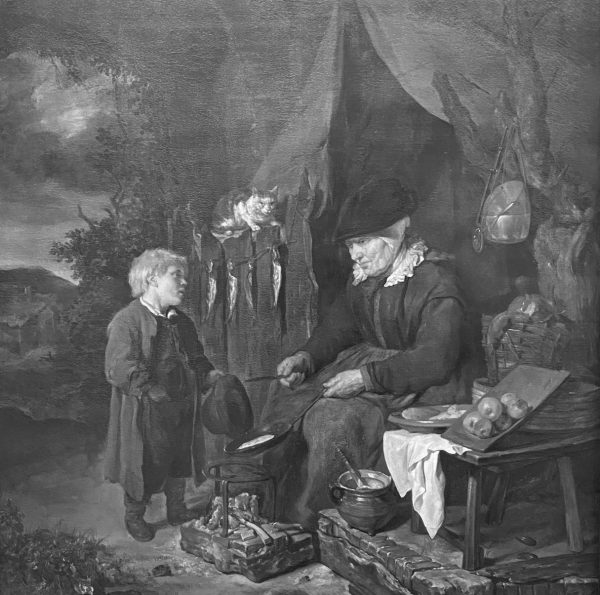
Narratives have been with us as long as mankind exists. They just take different forms and content nowadays. Whereby narratives have first spread orally, then much later through written words, images and movies, they are forceful ways of communicating. Robert Shiller wrote a good story about narratives related to the field of economics. Referring to the writing of the polymath David Hume (1742), main proponent with Adam Smith of the Scottish enlightenment, contagion like in pandemics is mentioned for the first time to explain that “the multitude will certainly be seized by the common affection and be governed by it in all their actions”. (Shiller 2019, p. 58). In order to understand narratives going viral Shiller mentions the importance for narratives to be embedded in “narrative constellations”. Holding truth against spreading false narratives might not be enough in itself. Strong, catching narratives seem to bypass or override even truthful information. Additionally, narratives never die, but rather offer opportunities for repetition. On content of economic narratives Shiller exemplifies stock market panic, consumerism, financial stability, automation and AI fears, speculation bubbles, evil business and labour unions. Topics like lazy unemployed persons, too early entry into retirement, too late entry into the labour market for youth, women or migrants, all have endured stigmatising narratives across time and/or across countries. With emotional and powerful economic narratives all around us, trust and authenticity become a very important meta-currency. The instantly printing camera now serves as proof. Beware of the scenery, actors and action chosen. Medieval painter Gabriel Metsu (1629-1667 Leiden-Amsterdam) had chosen the economic narrative of the “women baking pan cakes and the child as beggar”.  Ending up in a museum instead of the White House is probably the opposite of going viral. The same Photo in black and white might have more of a trustworthy documentary character than the suggestive colours.

Time5

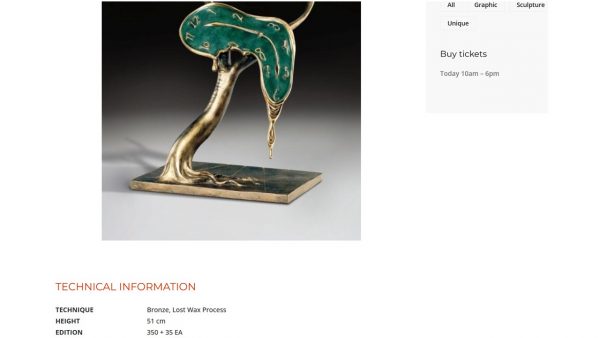
The social sciences deal with time either as part of social theory and as part of social measurement in the broadest sense. The entry of time in “The encyclopedia of social theory” (Ritzer, 2006, p.837-41) reminds us that since the age of Augustinus, believing that time is a God-given concept, we have evolved with Kant’s notion of the “Ding an sich” that time exists within our experience, but also beyond our experience of it. It is Durkheim who sees time as a social institution and raises the issue of a social construction of the concept(s) of time. In the process of civilisation, Nobert Elias leads us to think of time as an evolving social process which allows us to reach higher levels of civilisations. Despite wars and other backlashes, the basic premise remains an eventual improvement on previous situations (Time 3). The phenomenological method applied by Husserl points at the “inner time consciousness” of persons, which finds its literary expression for example in Proust’s writings.
In addition to time as the object of social theories, we find frequent implicit use of concepts of time as a component of social theories. Life courses, social change, social mobility, social integration, learning, all these concepts are conceived with “time stamps” attached to the them. Their temporality, i.e. location in time and space, durations, sequential orders and interlinkages form huge fields of research. Whole societies have attempted to define when is the “normal”, “right” or “best” time to do something for the individual or the society as a whole. Social desirability is linked to time and space and varies accordingly. The 1960s probably were a decade where the questioning of social desirability was most obvious.
Social measurement of time and the location of social phenomena in time leads us to the empirical field of studying time or the treatment of time as a basic dimension in and of social processes. “The encyclopedia of social measurement” (Kempf-Leonard, 2005) list the sampling of time as a basic entry to the topic. Frequency of sampling, (yearly, quarterly), level of sampling (person, household, region, country), repeated surveys (prospective, retrospective) of same person or rotating samples of persons have their specific strengths and weaknesses. Analytical methods rely on the concepts of the measurement of time. It seems to be a fair observation that (Clarke and Granato, 2005, p.836) the future of time series analysis lies in the linkages to theory. After all, the 2 worlds of theory and empirical measurement are linked through the concept of time, despite the tendency to abstract from it or assuming a large overlap in the concept of time (and space) referred to. Clocks seems to be ticking differently in different places.
Image: Dali Paris. R. & N. Descharnes Salvador Dali Sculptures & Objects. Eccart. Ref. 615, page 238.

Time4

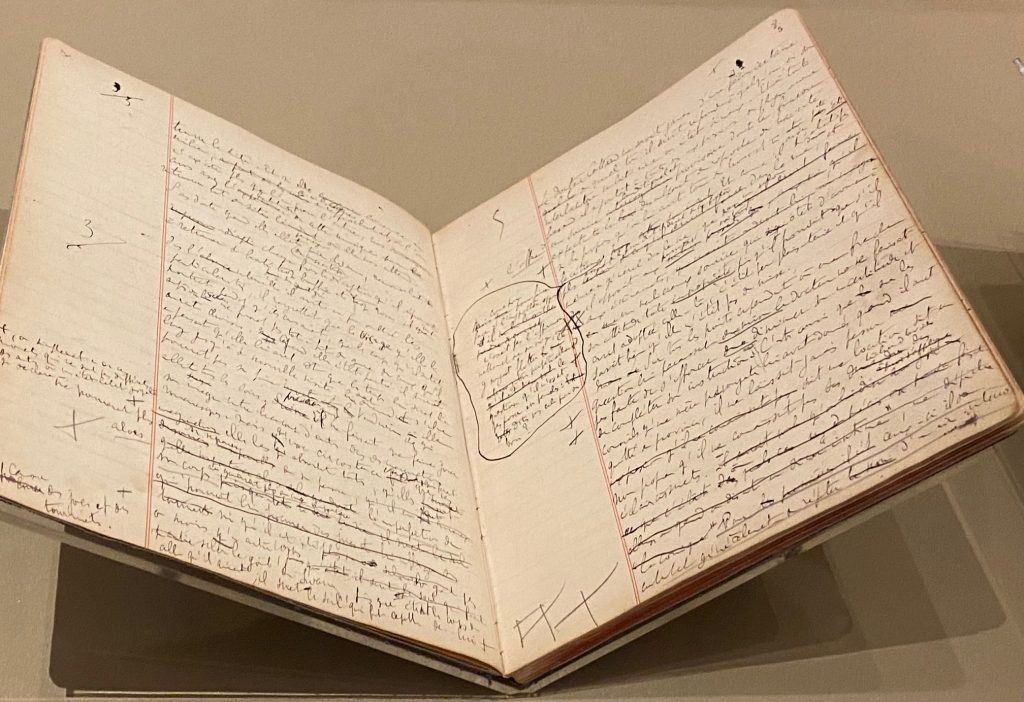
»Tempus fugit» (Latin proverb) time is flying, or time is escaping us. This is a classical quote. Students of Latin come across it in language acquisition.  “Carpe diem” make the most of the day, others responded. Some even raise it to a dogma of their existence. Whereas in classical times, time was more likely to be perceived as a linear concept (v = s x t), modern concepts discuss time as “acceleration” a nonlinear concept (a = v x t = s x t²)  or higher order non-linearities even (time³). Social time is embedded in such concepts of time. At some moments we perceive time as running very slowly, at other instances as running fast or accelerating. The synchronisation of time for friends, a couple, a family, lives, within a society or between societies is the big challenge. We tend to use calendars to synchronize our time acknowledging that time might be running at different speed for different persons. We have invented rituals of synchronisation like celebrating birthdays, departures at work, retirements or relative to seasons, with corresponding seasonal greetings. In between these events time fluctuates with different speed for different persons. Commonly in a kind of superficial objectivity, time is running in the same second-, minute-, hour-, day-like fashion, but considering activities or experiences, the same time span is widely different across persons. A lot of intergenerational conflicts have their origins in this non-synchronicity of time across generations. Bernard Guy (2018) reminds us of the link of time and space, as in the equations above, common in classical physics, where we could replace s with the change of coordinates of 2 GPS-signals. This space – time relationship complicates our simple reference to time. We have become used to think in time zones across the planet or within continents, however, our imagination is a bit stretched by imagining others sleeping while we are terribly busy on the other side of the globe. Global production and logistic processes have integrated the time and space framework for just-in-time delivery and optimisation of processes. As mankind we are still having a hard time to think about time and spend years “à la recherche du temps perdu” (Proust manuscript image below, BnF Paris2023).
Guy, B. (2018). Parler d’accélération, c’est aussi dire comment nous comprenons le temps. Dans : Nicole Aubert éd., @ la recherche du temps: Individus hyperconnectés, société accélérée : tensions et transformations (pp. 111-123). Toulouse: Érès.

Berlin Wahl 2023

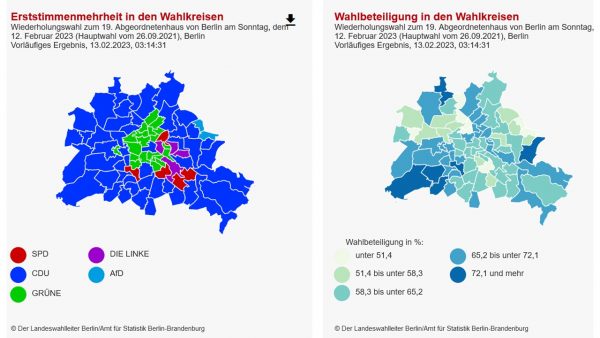
Wähle Wähler, sonst hast du die Wahl verloren. Die wiederholte Wahl geht sicherlich in die deutsche Wahlforschung ein. Murks bei der Durchführung einer Senats- oder Landtagswahl dürfte in etablierten Demokratien nicht in diesem Ausmaß vorkommen. Solche Versuche, demokratische Systeme zu delegitimieren, kennen wir aus demokratiefeindlichen Umgebungen. Die angeordnete Neuwahl hat eine um ca. 150.000 Stimmen geringere Wahlbeteiligung ergeben, bei einer Anzahl von ca. 1.500.000 abgegebenen Zweitstimmen von ca 2.500.000 Wahlberechtigten. Neuwahlen bringen also nicht unbedingt ein faireres Ergebnis im Sinne der Beteiligung an Demokratie mit sich. Im Gegenteil, Frustrationen äußern sich an Wahlurnen in Form von Denkzetteln statt Wahlzetteln. Die Summe der entschieden für Demokratie eintretenden Wählerstimmen, die im Senat vertreten sein werden liegt nur bei 1.170.905 Stimmen. Das ist keine absolute Mehrheit der Wahlberechtigten mehr. Damit sollten die demokratischen Alarmglocken klingeln. Während sich Rot-Grün-Rot im Zentrum behauptet ist der Speckgürtel deutlich schwärzer geworden. Die Neuwahl hat ca 1 von 10 Wählenden abgeschreckt. Sogar die Protestwählenden und ungültigen Stimmen sind rückläufig. Meinungsäußerung über das Parlament wird dadurch weniger repräsentativ und das kann auch gefährlich werden. Interessenvertretung findet dann mehr auf der Straße statt als im Parlament. Partikularinteressen, die Tierschutzpartei hat 36.233 Zweitstimmen gewinnen können, die FDP nicht einmal das doppelte davon, können Parlamente bereichern, in dem sie kleine Gruppenmeinungen ermöglichen. Das fordert die Koalitionsfähigkeit und den Koalitionswillen aller demokratischer Parteien heraus. Allzu knappe Wahlergebnisse von 105 Stimmen, wie zwischen den Grünen und der SPD in Berlin bei den Zweitstimmen schüren kontraproduktive Glaubwürdigkeitsdebatten. Der Gerichtsbeschluss zur Neuwahl 2-2023 ist gültig, verloren hat aber eher die Demokratie als Ganzes, die das Gericht zu schützen glaubte. Vielleicht am Überraschendsten von allem ist, dass die Skandalpresse nicht wirklich von diesem Ereignis profitieren konnte. Die noch Lesenden sind wohl auch von der belehrenden Berichterstattung dazu eher angewidert gewesen. So schreitet das Auseinanderleben der Stadt und der Gesellschaft weiter voran. Solche sozialen Prozesse sind lange bekannt. Sie heißen „Schelling’s process of segregation“. (genauer Gentrification) Eine fortschreitende Entmischung einer städtischen Bevölkerung ist die Konsequenz. Schelling’s Modell ist ein gutes Beispiel. Der Markt alleine, auch mit häufigen Wahlen,  wird die Gesellschaft nicht zusammenbringen oder zusammenhalten. Bund gegen Stadtverwaltung gegen Bezirksverwaltung bringt noch mehr Unzufriedenheit in die Stadt. Es ist Karneval und die Berliner Bären tanzen noch gemeinsam, hoffen wir mal. (Datenquelle: Wahlleiter Berlin)

Protest

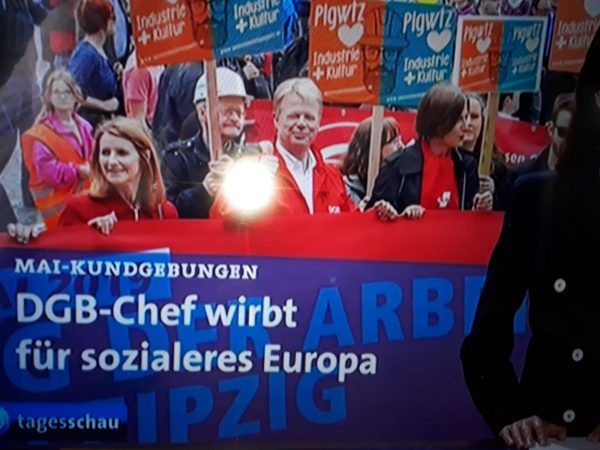
In studying the 60s we still come up with a number of remarkable ideas. Not only concerts moved the masses but also new ideas flourished. Many subcultures developed specific forms of protest. To implement new ideas, new forms of protest were applied to advance civil rights, to overcome established routines and to raise awareness for inequalities and injustices. New forms of participatory democracy were tested and some reached public attention and/or approval. Burner (1996, p.162) even goes as far as defining freedom as “continuing exercise in decision-making” which hinges on the taking-in of all voices across society. The coming together of freedom and community constitutes the cross-roads of politics. Besides terrible effects of violent abuses, peaceful forms originated in Gandhi’s peaceful resistance in 1930. Martin Luther King and later Nelson Mandela reached historical milestones through peaceful forms of protest. In 1967 in Oakland, California, the form of “action protest” took place. The basis of protest was civil disobedience going beyond sit-ins as the civil rights movement had applied. “They involved blocking roads and entrances to buildings, peacefully inasmuch as the demonstrators used no force beyond the presence of their own bodies or other obstacles to passage.” (p.163). The new feature was, that protesting persons take the risk of being a victim of violence without a violent response from themselves. The intention is to “convert temporary antagonists into permanent friends”. Through the repercussions in mass media protesting persons can reach larger audiences and touch “uninvolved or possibly sympathetic bystanders” (p.163). Such new forms of participatory democracy, acting in the public arena, are stretching the idea of peaceful protest to its limit, where the freedom of others might be impinged. Participatory democracy, therefore, is a balancing act. Some recent forms of protest, in fact, have their origins in the 1960s or the year 1968 a focal point. They continue to be influential 55 years later in many countries and at all instances where basic freedoms or minority rights are violated or threatened.
Protest has also moved online. Internet sites are not only used for simple communication, but they serve as port of entry to prepare and organise protest. High-jacking of company or political adverts in the public arena can be taken online as well. Challenges to conventional politics and media representation is enacted through webpages like www.adbusters.org or www.indymedia.org the latter page comprises a whole network of local activist groups. Brian D. Loader (2003, p.1320) has added activist approaches against particular corporations to the list of online protest forms. Through public shaming of brands these activists attempt to raise awareness of the public for abusive employment practices, cruelty towards animals, environmental disasters or fake information using online channels like social media, email-lists or chatgroups via mobile phone numbers. The funding of protesting persons is another relatively new form which ranges from crowd-funding initiatives through platforms as well as forms of corruptive practices applied by states or corporate interests. Protest against protest is online and offline the next round of activist forms of protest. Democracy, law and the police have to balance out these new forms of protest. Learning about the way democracy functions is a continuous task, some would say a continuous struggle. Evaluations of the short-term or long-term effectiveness of protests yields important insights about the functioning of democracies and autocratic regimes. New forms of protest need new forms of measuring impact as well.

Time3

The evolution of time is fascinating as research topic. Both in theoretical as well as empirical approaches. Beyond the precise measurement of time and the use of time in measuring working time, which intensified during the industrial revolution, we witness continued struggles over the length and the organisation of working time. The 30+X hours week working time could be reorganised into a 4-days week to improve work-life balances for millions of people. The effects are not only on employees directly concerned, but also on their families and/or households involved.
The changing perception of time (as being short of time) and its evolution over time needs huge surveys collected over time (known as “Time use studies”). Inequality over the life course remains an issue with a persistent gender bias. Unhealthy and excessive overtime work is still a problem, usually negated by upper ranks in hierarchies.
Let us start to imagine different concepts of time to maybe one day overcome the shortcomings of our current understanding and use of time. Usually, time is considered a linear concept, one day follows another day and so on. Time, depicted as an arrow or a horizontal axis in graphical representations, is helpful for most processes we observe. If our aim is to explain a social process which evolves over time, we could perceive time as running with different speed in, for example, urban and rural areas of the same country. The liberalisation of women or peace movements evolved or spread with different speed in different regions. The 60s became known for many women as the decade when the control of reproduction allowed different life styles. Concerning reproductive behaviour and divorce rates a break in series compared to previous periods is observable, reduction of reproduction and diffusion of divorce throughout societies. Instead of continuous time we might speak of discrete time, in for example decades like the 60s, 70s, 80s. In retrospect “social time” seems to have passed faster in one decade than the other. We might also imagine time as growing exponentially as time². Taking into account the slowing down and successive rise again of evolution over time, the time trend might look like a rising wave (time² + time³). In econometric models testing of such hypotheses is feasible, although it is more difficult to convince reviewers of an alternative theoretical model of time.
An investigation of trends of democratic behaviour over time would need to adjust for the potential and sometime measurable return of undemocratic practices for periods. A depiction of such “social time” of democracies as an upward rising line with periodic relapses is a plausible theoretical framework. Trajectories of inwards or outwards spiralling processes are already fairly complex trends for the process of democratisation as the phenomenon to explain or the modelling of a time trend to explain the level of democratisation reached so far. Challenges of time frames for independent and dependent variables in social processes might be questioned altogether to claim that time is a spurious occurrence of events much like a process of a so-called “Brownian motion” also named white noise. In fact, not being explicit about the concept of time applied in social analyses amounts to a severe neglect. Examples of such neglect are certainly all those cross-section studies, still pervasive practice, in social sciences or opinion polls. The linear concept of time, as a chronologically processing arrow of time, is a convention useful for synchronisation of action. However, this synchronisation is already debated more forcefully with more persons being unsatisfied with the use of synchronisation as a tool to regulate our “social time” and social processes. Time zones, summer and winter times challenge our day-to-day perception of everybody living at the same time, speed or intensity. Bedtime for me, wake-up call for others, or vice versa.

80s

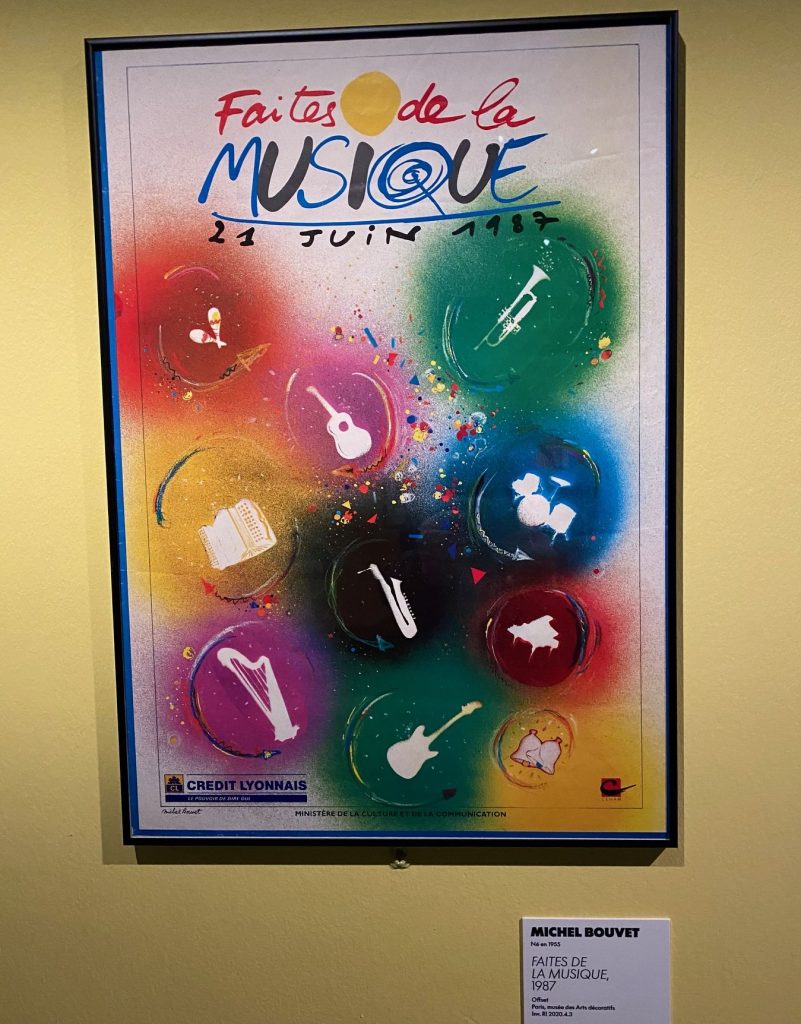
The colourful 80s. That could be a summary of the years from 1980 to 1989. Certainly in fashion and design a multitude of colours dominated the 80s. Mariel Marohn (2010, Ed.) published 20 years later a visual summary of the 80s. Often thought as less spectacular than other decades, the 80s had seen some defeats to start with. John Lennon shot dead in New York December 1980. The NASA space shuttle Challenger explodes 2 minutes after the launch in 1986. Nuclear accidents (after three mile island 1979, Tschernobyl 1986,or the finding of the Titanic demonstrated not only the “limits to growth” (1972), but reminded us of deadly consequences of technological ambitions wanting to move too fast in time. Ghettoblaster, Walkman, first cell phones, facilitated a more mobile life style to more people. Overcoming the oil crises of the 70s, mobility roared ahead again. Cars, bikes, planes, CDs, windsurfing and aerobics become part of the lifestyle in these years.
Mass culture in music reached all levels of society. Music was no longer perceived as a protest movement, but a normal part of the freedom of expression. Fusion of music and dance, but also music and street art like in hip-hop music and graffiti art become part of day-to-day experiences of commuters. In the anthology of poems of the 80s we find on page 141 “Commuters” by Edward Hirsch 1983 who singles out the commuting practice as the way of life, he does not want to identify with. “Malgré lui”, in spite of himself, he finds himself in cars, trains travelling distances every day. More, faster and with more colours, time moved on. The fall of the Berlin wall 1989 was thought of as a “Zeitenwende” already. Royalty in the press with the marriage of Diana & Charles, was replaced by Madonna as the Queen of Pop and Michael Jackson as the King of Pop. The digital age entered into a new era with the Apple Macintosh desktop computer with an accessible visual interface to computing. Reaganomics and Thatcherism pushed for a revival of liberal market economies ploughing the fields for digital multinationals (GAFAM) to thrive ever since. These lasting technological changes define this period as colourful, grabbing all our senses and attention. Want to breathe a bit of the air of the 80s – visit MAD Paris.

knowledgeable

It is the role of scientists to ask questions. “The New Scientist” asked in one of its recent editions the fundamental question of what are the limits to knowledge? Nice, they provide 5 parts of an answer to the question. (1) According to Karl Popper, the falsification guy, knowledge is only valid as long as it has not yet been falsified. Hence, a limit to knowledge exists where we cannot falsify a hypothesis or theory, i.e. for example when empirical measurement is impossible. (2) Mary Douglas’s messy problems have been claimed as another limit, or as the New Scientist puts it, “when things are outrageously complicated”. Chaos theory, applied in climate modelling leads us to learn about the potentially huge impact of tiny, little things. (3) Our tools to look into the sky have improved since Ticho Brahe‘s time before the telescope was invented. Most of our knowledge about the universe has only be as accurate as the tools to capture radiation or to observe planetary movements. Therefore, the next limit arises from the fact, “when our best tool to describe the universe may be unreliable”. (4) “When we can’t directly experience something”, we might be unable to understand the concept of colour another person or animal is experiencing. Listening to colours is possible for some, but generally we would not accept such experiences without recourse to drugs, maybe. Bats use ultrasound frequencies, especially trained blind persons use “click sounds” for orientation. Dialetheism is another branch of the philosophy of science and knowledge, a bit hard to digest, as empirical evidence may lose its importance. Its all dialectic or what? (5) If “logic itself is fatally flawed”, what are we left with to construct as knowledge, beyond logical sequences or even causality itself is in question. The Condorcet paradoxon or the impossibility theorem shown by Ken Arrow is an example where it is impossible or very tricky to arrive at a logically consistent solution to a social choice issue. Our tree of science and knowledge grows, undeniably, every second even. Where are we located in this forest now? Thinking of a tree up-side-down shows some have roots even bigger than the visible branches.
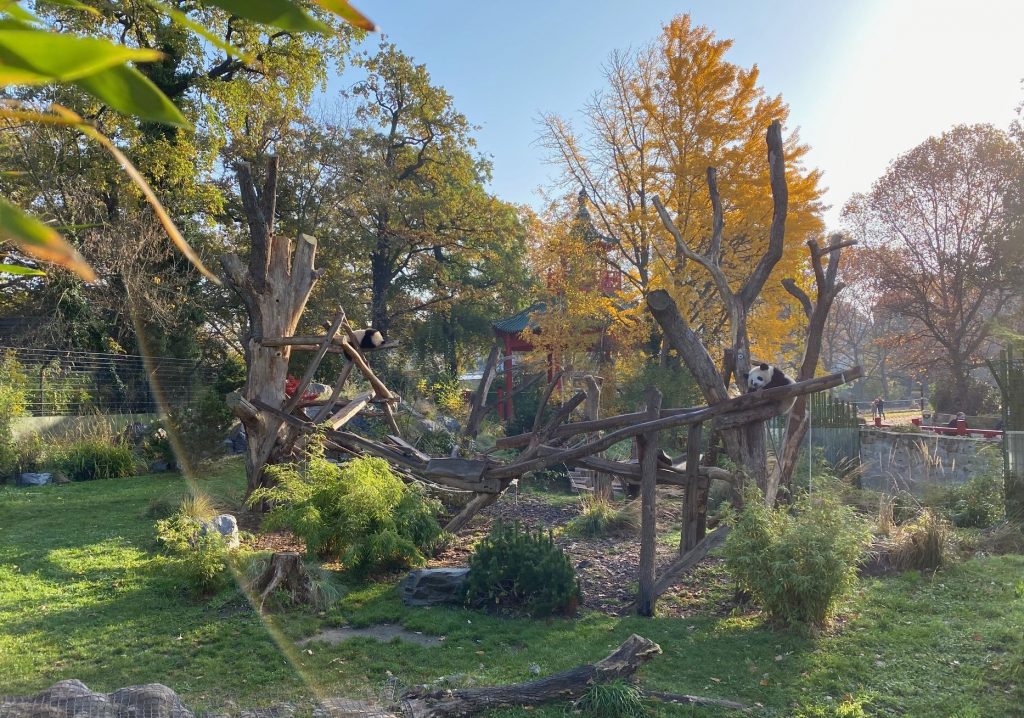
Does the Panda bear in the Berlin Zoo have a cognitive map of the cage in his mind? Do they care? Only recently they even had a baby Panda bear there.