Summary terms for the 1990s range from the “global 90s”, the “roaring (again) nineties”, the “fabulous 90s” to the “gay 90s”. After the fall of the Berlin Wall, a new era of reaping the economic benefits of more peaceful times had started. Re-unification or unification of Germany could have unsettled the balance of power on the continent. However, a firm integration into the European project and the withering away of the Cold War on a more global scale allowed economic growth in many countries and even continents. Joseph E. Stiglitz claimed it was the world’s most prosperous decade even. The overly popular view that unrestricted market principles will allow for rapid growth reached huge crowds before the new limits to growth (which were the old ones) and rising imbalances (in trade and among different firm sizes) became clear later on. The outlook of “America in the global ‘90s”, written in 1989 is overly optimistic. Nevertheless, it describes fairly well the almost euphoric view at the beginning of the nineties. “World economic growth will strengthen in the 1990s. Democracy and free markets are on the upswing. U.S. will retain its lead in technology and world trade. Openness to foreign capital, goods, immigrants is key. Budget and trade deficits will continue downward. America is a strong nation getting stronger.” (Kiplinger and Kiplinger, 1989 p.1)
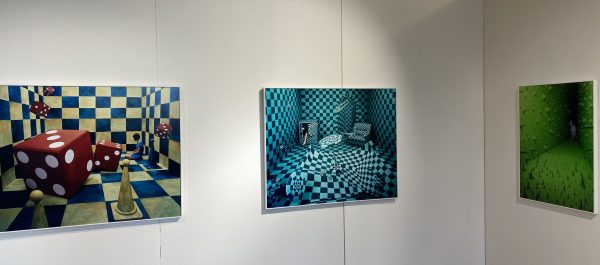
Ten years make a decade, but the retrospective analysis might not make for such a rosy overall image. In other fields of study, many saw the real societal changes in the 90s in the liberation of views on gender. Gay movements and queer studies are on the rise throughout these years. The realisation of “Genders” beyond the male – female, binary vision captures more global attention as well. “Education reform in the ‘90s” (Finn et al. 1992) start to focus more on “higher-order learning skills, expanded methods of student assessment” (Joseph Murphy 1992 p.13) in addition to interdisciplinarity, core curriculum, original source materials and teacher choice. Diversification is high on the agenda, despite slow progress in social matters and high unemployment in many countries at the beginning of the 90s. Capture the peace dividend wherever it seems possible. Rapid globalization was the panacea of the decade; before the iron curtain would come down again 22 years later. The photographic art by Didier Engels (Affordable Art Fair Brussels 2023) reflects the bright and colourful side of globalisation as much as the overload. The 90s made us believe mainly in the bright side of it. 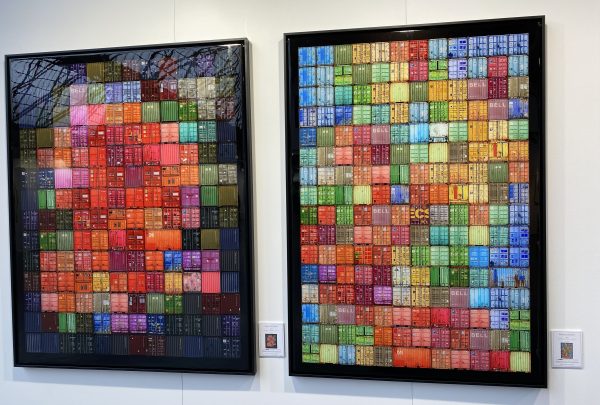
Sax and the Sax
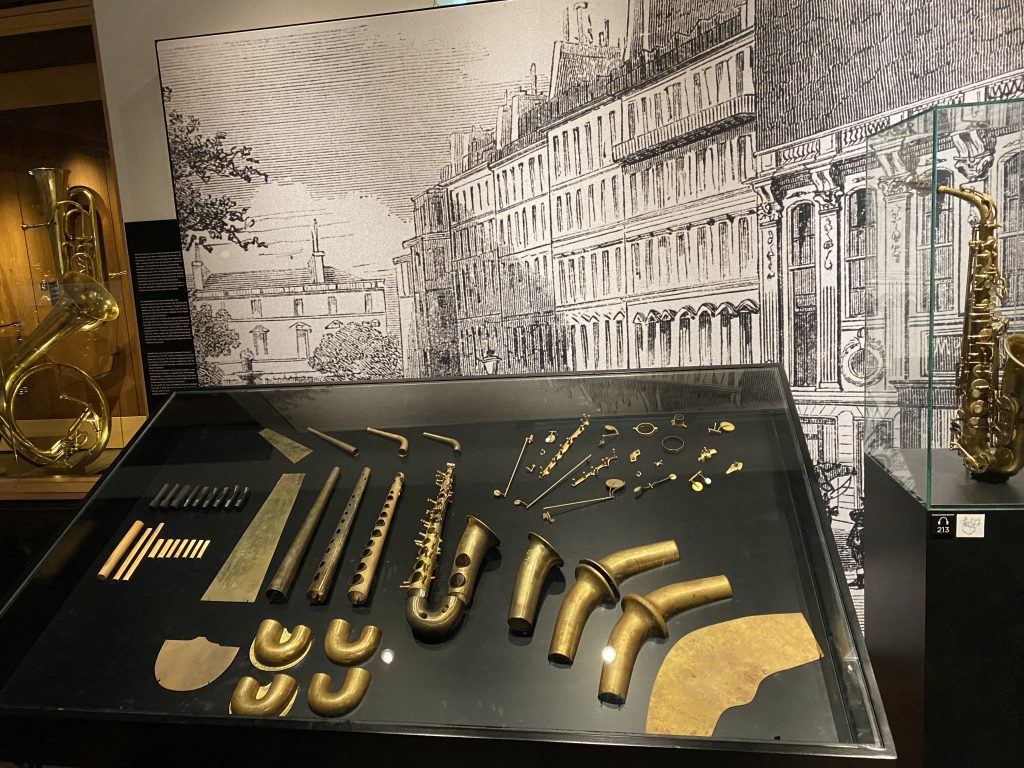
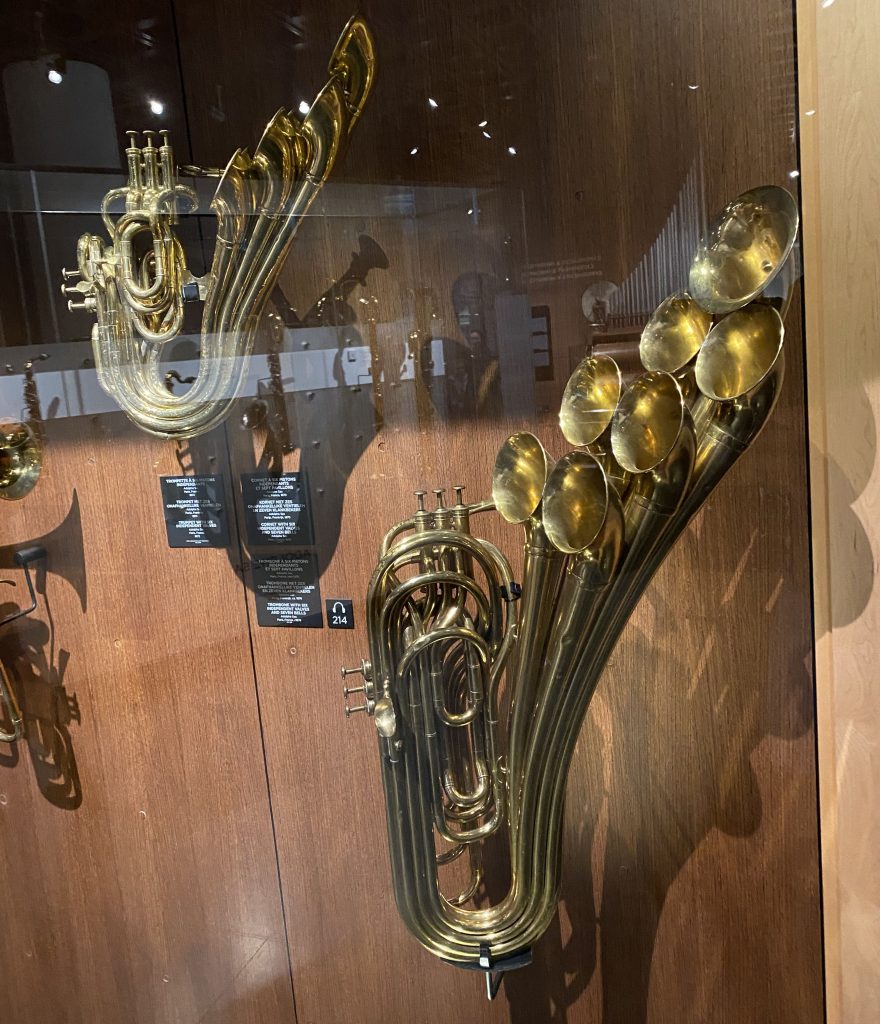
Adolphe Sax is celebrated for his celebrated design of musical instruments in what it known and played as the Sax family of musical instruments. Most museums around the world have an example of an early Sax instrument in their collections. Beyond the many fascinating musical delights and emotions produced with the instrument, there is a century-old debate around the issue of the patent attributed to the various designs claimed by Adolphe Sax for the Saxophone among others. The patent attribution was hugely different across Europe in the 19th century (largely inexistant in other parts of the world at the time). The reason for this were differing laws guiding intellectual property rights. “In France no preliminary examination was necessary before a patent could be granted; in Germany examination was obligatory; and … British patent laws, which allowed makers to register designs or apply for patents for developments that had been copied from abroad (imported inventions), as long as they had not been published in Britain.” (Mitroulia and Myers, 2008 p.93). There is a well-documented controversy about the “Berlin valves” and the contested patent in France of it. Design of instruments, particularly popular ones, guarantee sizable earnings for producers of instruments. After 20 years of the 1846 patent in France 1866 the patent expired and the copies could become even cheaper. Some ugly disputes in the middle of Europe were fought around this issue. Remember that military music was still accompanying troops for better or worse. “Visionary or plagiarist? The authors are unable to give a simple verdict. … The fact that Sax claimed originality for some borrowed ideas seems in retrospect less important than the true vision shown.” (Mitroulia and Myers, 2008 p.135). We might not agree with this statement. The visit to the MIM in Brussels gives a good overview of the evolution of musical instruments over thousands of years and across continents, which pushes us to rethink the link of society and technology through the lens of music and technology. Welcome to techno music beyond patent laws. Pushing the boundaries of copyrights on sound sequences to new limits.
(Sources: MIM Brussels, Rice A. R. (2009). Making and improving the nineteenth-century saxophone. Journal of the American Musical Instrument Society. 35:81-122. Mitroulia, E., A. Myers. (2008). Adolphe Sax: Visionary or plagiarist? Historic Brass Society journal, 20, 93-141).
Thucydides on War
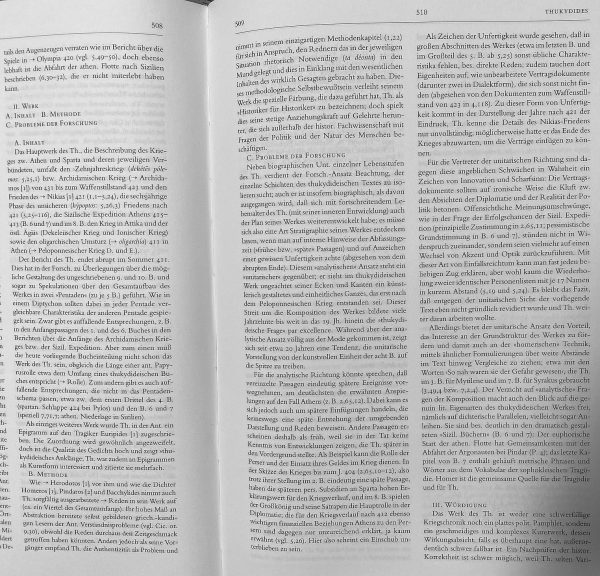
Thucydides (born around -460) has received a lot of fame for his “thick description” of the Peloponnesian War. He deserves continued praise even for inspiring statisticians. The account of events without emotions, but with lots of details, is often perceived as the beginning of historiography and history as science as well as empirical political science. The entry of “Thucydides” in the Encyclopedia of Social Measurement (2005, p.805) by P.A. Furia and A. Kohen cites the derivation of a causal or explanatory effect based on his historical account as a foundation of scientific approaches based on empirical data. “The growth of the power of Athens, and the alarm which this inspired in Lacedaemon (i.e. Sparta), made war inevitable” (Thucydides, I 23). The empirical assessment of the growth of power is subject to controversial accounts. Power may derive from population, wealth, industry, weapons, munition or general military capabilities or skills. The assessment would also need to consider relative rather than absolute strength of just a one-sided approach. Here we are in the middle of the Russian war on Ukraine from 24.2.2022 onwards. Statisticians discuss, whether it is just a single variable that has the overall explanatory power for the beginning of the war and what other intervening variables might be important to take into account to avoid a selection bias. Beyond this materialist explanation we might stress the importance of the sociological concept of “collective fear” (links to approximation through trust, xenophobia) of the strength of Athens as the underlying causation of the beginning of war. The ideation of perceived strength gives rise to the construction of many intervening processes (Coleman’s macro-micro-macro linkages), which make a simple causal attribution just to material strength an illusion or risky shortcut explanation. The Thucydidean Method (p.806) exemplifies much of the dilemma and spice of social science analyses. Scholars of diplomacy challenge the empiricist perspective in arguing that the breakdown of diplomatic discourse several decades before was at the beginning of the causal chain. Here again we can make links to the preparation of war by Russia through strategic diplomacy as well as the risks taken through a break-up of diplomatic channels of communication. The perceived strength of the opponent in war might play a decisive role at the beginning and at the end of war. The charisma of leaders, democratic decision-making and political alliances with neighbouring states, Sicily at the time of the Peloponnesian War, were further intervening processes. This is perhaps not all too different from today, if we consider the role of Belarus in the aggression of Russia against the Ukraine. In fact, Thucydides seemed to be convinced that under similar circumstances human behaviour would reproduce itself. Therefore, thick description of historical facts might still inform political leaders today and tomorrow.
(Reallexikon für Antike und Christentum, XV pp. 752,
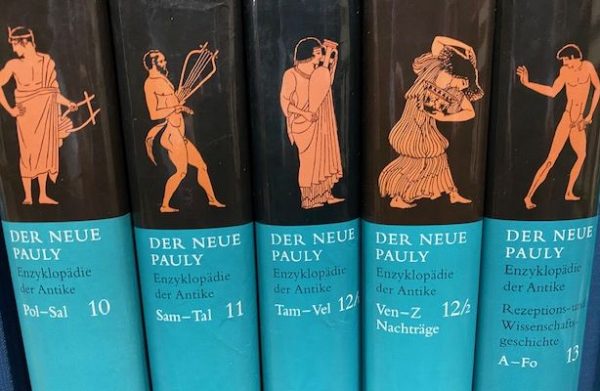
Der neue Pauly, Enzyklopädie der Antike 12, pp.505 image below).
Double bind
Knowledge and knowhow are a pair of notions that have strong links between each other. It is a challenge to see 2 knowledge systems, knowledges, to co-exist sometimes for a very long time. Medicine is a good example. The traditional Chinese medicine continues to exist in parallel to the western style science based medicine. It remains a challenge to analyse the effectiveness, efficiency and equality each system can provide. In terms of public health the border between knowledge and knowhow becomes more blurred. The knowledge about diseases needs to be transferred into knowhow of how to prevent the disease to the population at large. This is a steep challenge as the persistence of alcohol abuse, smoking habits and other drugs abuses show on a global scale. Knowledge alone on the negative consequences is far from enough to prevent abuse. The thin and blurred line between use and abuse of pharmaceutical products equally challenges our traditional views on knowledge and knowhow. In a knowledge graph knowledge would figure, for example, in the core and knowhow as a satellite on the periphery. However, despite the strong link between these 2 notions, knowhow has a lot of additional links to topics like health or yin and yang. Knowhow has a basic link also to notions like memory (techniques) or even war (equipment). The more abstract notion of knowledge, “le savoir”, has been seen for a long time superior to the less abstract notion of knowhow, “savoir faire”. Polymaths have been identified for touching on several fields of knowledge with little concern for the practical side of things, despite the fact that Leonardo da Vinci combined many fields of science of his time to improve technology of his time including visions for the future. The double bind link exists in the recursive element of a link between 2 notions. Rather than denying its existence we have a lot to do to incorporate the more complicated links into our scientific knowledge and the more practical knowhow. 
Bio-medical-sociology
In family histories we like to look on tree-like linking structures. Most frequently the choice is the descendant perspective (Top down). X, Y, Z have been the children of A and B and so on for a couple of generations. Bottom-up perspectives are equally feasible and modern patchwork families have more widespread representations of their families. Those representations were easy to do as families were lifelong bonds. Shorter family bonds, previously mainly caused by pre-mature deaths, are more common as people might have different partners and off-springs at different periods of their life course. Drawing family trees then looks more like a network structure of several families. History and literature is full of stories of how families aimed to keep their genealogy simple to the outside world. Modern days are no exception to this. Law had to adapt to these societal facts and changes thereof. Comparing decades over the last century there is, in my view, the remarkable trend to allow for more complexity in family histories, even after the 60s leading to many complete ruptures of family ties and links throughout the 70s and 80s.
With reducing fertility rates in most, not only western regions of the world, medical demography is back on the agenda. Similar to family trees, new forms of identifying promising pharmaceutical products have moved to more data-driven disease insights. Historically the local medical doctor had an overview about the likelihood of diseases following family’s medical histories over generations. Data-driven analyses, supported by data analytics and/or AI support, can learn permanently about potential and actual risks. New links of diseases are discovered this way extending the family doctor’s view of risks to watch out for in patients. Additional remedy and marketing potentials of existing drugs are also detected this way, beyond anecdotal evidence. Research published in the “Journal of biomedical semantics” by Vlietstra et al. (2020) classifies disease trajectories to construct knowledge graphs of biomolecular interactions. What previously a medical doctor in region could infer from his medical records in a less systematic way, can now be analysed on big data sets of countries, continents or even the global scale. Data is knowledge, and some already know, that this data-driven knowledge is worth a lot of money. Linking previously and seemingly unrelated facts or events, just like becoming aware of more complex family trees through DNA-analyses is the medical part of history. How we deal with this as families or societies as a whole, is the trickier part. Structural changes of societies are marked by decades-like changes, but specific events like “Fukushima”, Tschernobyl or other man-made rather than natural disasters have created new forms of contamination and the spreading of it. In addition to family trees we need broader consideration for knowledge bases to demonstrate, for example, the spread of cancer in the networked society. Additionally this evidence should have a stronger recognition in courts as prove of contamination lines. Statistical reasoning is more likely to become court-relevant. Hence, train the legal profession beyond what “statistical discrimination” is like. Causal mechanisms are manifold. Some are more likely than others. Semantic knowledge graphs remind us of the presence of reverse causality many relationships. Scientists need an optimistic state of mind to abstract from many intervening processes on health, be they tiny micro- or bigger macro-level societal effects. 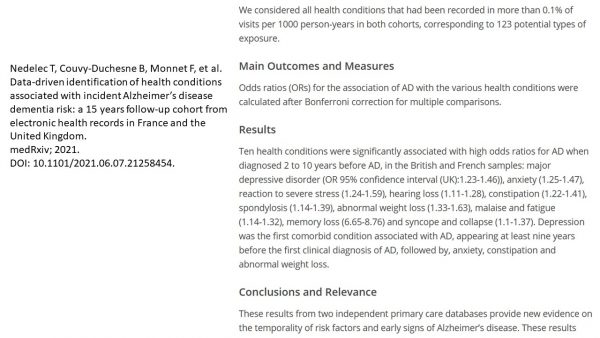
From AI with Love
Love is action. Love is balance. Love is corruption.
Love is democracy. Love is enterprise. Love is freedom.
Love is god. Love is health. Love is imagination. Love is joy.
Love is knowledge. Love is law. Love is memory.
Love is nature. Love is optimism. Love is policy.
Love is question. Love is repairing. Love is society. Love is time.
Love is union. Love is value. Love is war.
Love is xeno. Love is yinyang.
Love is zero.
All you need is laugh. Love is all you need. 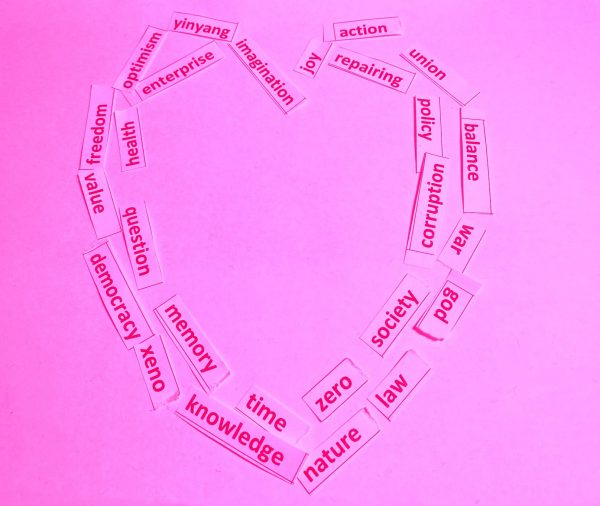
Aphorismen
Eine Sammlung von Aphorismen, wie sie Georg Christoph Lichtenberg hinterlassen hatte, regten viele Denkende an, sich mit seinem Gedankengebäude zu befassen. Die prägnante Form der Zusammenfassungen, Hypothesen oder Vermutungen zu jeweils einem großen Thema hat ihn unsterblich werden lassen. In Form von Gedankenblitzen, Neudeutsch Tweets, vor mehr als 222 Jahren, gestorben ist er im Jahr 1799, zeugen von großem Weitblick, Tiefe und Breite seines Wissens (Polymath). Jede Person, die sich heute in der Schule mit der Infinitesimalrechnung befasst, der mathematischen Annäherung an einen GrenzwertS (Mathe Vorlesungsnotizen pdf), findet bei Lichtenberg zum Beispiel die Anwendung dieser Methode auf soziale Phänomene. Einer Wahrheit werden wir uns auch nur annähern können, selbst wenn wir sie auf unsere Weise, zumindest temporär, als solche definieren. Vor mehr als 250 Jahren hat Lichtenberg bereits in seinem ersten „Sudelbuch“ interessante Gedanken niedergeschrieben, die uns heute noch Nachdenken lassen. „Unser Leben hängt so genau in der Mitte zwischen Vergnügen und Schmerz, dass uns schon zuweilen Dinge schädlich werden können, die uns zu unserm Unterhalt dienen, wie ganz natürlich veränderte Luft, da wir doch in die Luft geschaffen sind.“
Dem modernen Menschen ist das Bewusstsein, in die Luft geschaffen zu sein, fast vollständig abhandengekommen. Unsere Eingriffe, wider besseren Wissens, lassen weltweit jährlich Millionen Menschen vorzeitig sterben am Smog der Moderne. Innovation ist enervierend, wenn sie nicht vornehmlich den Menschen im Blick hat. Es sollte noch einige Jahre nach Lichtenberg brauchen bis Goethe Faust den Satz sagen ließ: Die Geister, die ich rief, ich werd’ sie nicht mehr los. Lichtenberg setzte das obige Zitat so fort: „Allein wer weiß, ob nicht vieles von unserem Vergnügen von diesem Balancement abhängt; diese Empfindlichkeit ist vielleicht ein wichtiges Stück von dem, was unsern Vorzug vor den Tieren ausmacht.“ Aus dem Akt der Balance den jede/r Einzelne zwischen Schmerz und Vergnügen im Lebensverlauf beschreibt ist längst ein gesellschaftlicher und politischer Balanceakt geworden, zwischen gesellschaftlichen Gruppen sowie zwischen Generationen. Die Abweichungen von einem Grenzwert oder von einem ausbalancierten Zustand sind ebenfalls größer geworden, so dass der ganze Akt ins Wanken gerät. Mit dem beschriebenen, unserem Vorzug vor den Tieren, könnte jedoch ebenfalls ein Teil des Problems sein, denn die Vernichtung der Biodiversität ist nun mal noch die Lebensgrundlage des homo sapiens. Seien es Schwankungen um einen Mittelwert oder immer kleinere Annäherungen an einen Grenzwert, wir wanken auf Pfaden, die Lichtenberg angerissen hat. Blogposts sind wohl vergleichbar den Einträgen in Sudelbüchern. Aus vielen Puzzleteilen kann ein Gesamtbild entstehen, muss aber nicht. Die Begriffe „Random Walk“ oder „Brownsche Bewegung“ sind erst lange nach Lichtenberg entwickelt worden. Heute sind wir von dem „Random Walker Algorithmus“ begeistert oder erschreckt, wenn letzterer für „fake news“ statt Wahrheitsfindung missbraucht wird. 
Photo K
The self portrait is a timely topic for an exhibition of photography. As part of the European month of photography (EMOP), the PhotoBrusselsFestival offers a good overview of what photography deals with in the 21 century. The Korean cultural centre (KCC) in Brussels has a long tradition to serve as an exposition in the centre of Brussels (Sablon) and is joining this year’s photo festival. The 2023 photography festival has the “Self-Portrait” as a guiding theme. Rather than entering the debate about “portrait chosen or portrait endured” (Photographica 5,2022) the self-portrait has more degrees of freedom in it. Even if it is apparently a choice to portrait oneself, there are ample examples, where the urge to produce a self-portrait is part of a wider concern for fundamental issues.
The exhibition of 5 artists from Korea at the KCC invites us to reflect on the pervasive self-portrait practice all around us. The self-portrait is not only a tool of self-reflection, which has a long tradition in art (just think of a famous drawing by Albrecht Dürer of himself), but self-portraits are also pervasive on media and social media today. Additionally, the self-portrait is a powerful tool of thinking and imagining yourself at various stages of the life-course. For centuries it had been a social or political privilege to have your portrait taken. It still is to some extent, but only if the person taking the photograph, has a special reputation. In a market difference to the selfie, the exhibition of artists in the KCC highlights the process of self-reflection that is part of creating the portrait as well as the ensuing reflection by the spectator. In looking at the self-portrait of the photographer, we might involuntarily deal first with our own perception of the image. Danger, dreams, fantasy, sorrow, pain, self-assertion and reconstruction of the self, all these themes come to mind when confronted with the self-portraits of the 5 artists (Bae Chan-hyo, Jeong Yun-soon, Lee Jee-young, Ahn Jun, Choi Young-kwi).
KCC director Kim Jae-hwan names this collection, curated by Seok Jae-hyun, “An odyssey of images leading to self-re-flection”. In referring back to the protagonists in novels from Hermann Hesse, he points our attention to the “unique journey through images as they find themselves”. To embark on the journey visit KCC in Brussels, ask for a copy of the catalogue or start by reading the title of the exposition: “Who Am I” – it is apparently no longer a question after the journey. Is it for you? More reflection on images and photos here. 
Art Un-Fair
The Brussels Art Fair (Brafa 2023) with its long tradition is certainly a major highlight in the world of art in Brussels. In view of the languages spoken at the fair, mainly French and Dutch, some English with here and there a word in Spanish or German, the international reach is probably still not at the level of before the corona crisis.
The availability of established, internationally recognized art over many centuries on the art market is remarkable. Whereas before the crisis speculators bought art to shield their fortunes from a high inflation and/or politically instable period, nowadays it seems to me, that some art is returning to the market due to the need for liquidity of speculators or risks of confiscation in case of dubious previous acquisitions or ownerships. Renowned galleries, of course, provide impeccable certificates or information on them, a tricky business in itself. Anyway, the tour on the fair is a “parcour” through the history of art, mainly through the Western or European arts across centuries rather than decades. Most persons will find splendid examples according to their preferences of art ranging from paintings, sculpture, prints or other artefacts. Beyond the impressive individual art work, the arrangements and “mise en scene” of art is another learning experience at the fair. Whereas most public museums are happy to make accessible as much as they can of their collections and archives, the private art market has another objective. Effective and convincing presentation of the artefact is likely to “enrich” the value of art work as well as the seller and the dealer. Technology allows great lighting and some otherwise “sombre” artwork becomes a shiny little piece catching eyes, hearts and wallets. For some visitors it works probably the other way round.
For persons overly stimulated by art, I recommend to close the actual or virtual visit with a look at the little bit cheeky artwork presenting Belgian chocolate next to royalty (Gallery Delaive, showing Peter Anton’s “Paradise Variety” next to Andy Warhal’s depiction of a Queen, see below or their Instagram presentation). A sublime moment to repeat the experience at home at moderate prices with your very own box of chocolates. At a price of 10€ each box you can enjoy roughly 2000 of them for the price of the art work. The question is: What is more healthy? Think about mental health as well. Alternative question: Art on a Fair is fair, unfair or fair traide? 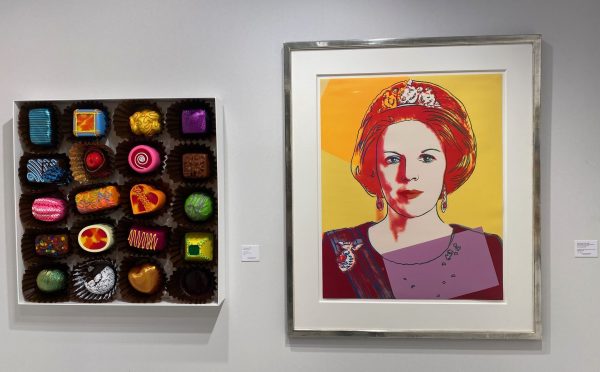
50s
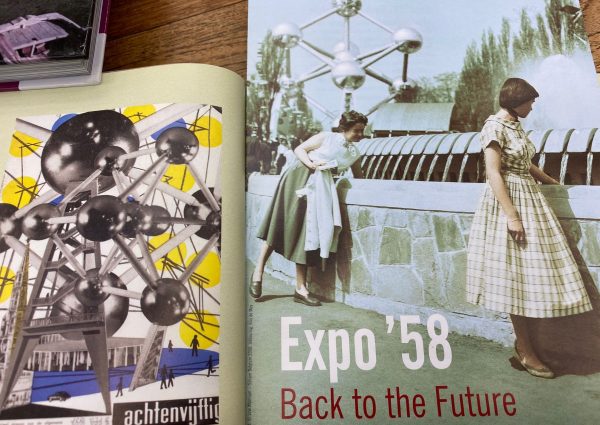
The fifties are remembered as the prosperous and booming years in the 20th century, worthy of nostalgy for some. Indeed, after the 2nd world war and its destruction the time of re-construction had come already some way, thanks to the Marshall plan of the late 1940s. Most countries had to turn huge military equipment industries into civil uses. After the Schumann Declaration, the European Coal and Steel Community was a first successful and lasting institution building in Central Europe. A mass production boom of cars, civil aircrafts, radio and the beginning of public television were landmark changes in the relationship of technology and society. The U.S. became a leading force in this evolution pushing for free trade between countries and consumerism. The deprived generations of the war period in the 40s welcomed the “fabulous fifties” (Arleen Kelin, 1978) as a dynamic and prosperous decade, despite dramatic speed to innovate new more deadly weapons. The atomic bombs were tested from superpowers and nuclear energy started to surface. Solar cells and optic fibres were also inventions of the mid-50s. Strange that we had to wait for another 70 years and multiple crises before these resource-efficient technologies achieved popular success. Integrated circuits, micro-chips, the laser, Tupperware, Coke, Lego, Mickey Mouse and global cinema came upon us during the 50s. The Sputnik effect re-opened an arms race as part of the cold war including outer space beyond airplane reach.
Families longed for and indulged in an as normal as possible family life. Unfortunately, this meant for many women, who had worked outside home during wartimes, to return to a role of housekeeping. Rock n Roll and increasing consumption of mass produced products could compensate for some of this deprivation. Higher divorce rates in the 60s and/or lack of own pensions were the dire consequences for many women. Showtime, and showing-off were the mantra of the 50s. Glamour (Magazine) rose to cult status and prepared popular culture and art. Following fashion and awareness of design spread across societies enabled by the easier access to “sewing machines” allowing more home production for the middle-class persons. The “people of plenty” (Andrew Dunar, 2006 p.167-8, referring to David Potter, 1954) were effectively sold a car culture with the automobile as an agent of change.
The atomic era was believed to continue prosperity for more decades (Expo 58 in Brussels) and a delicate, but relatively stable balance of power restricted open wars. “The End of Ideologies” during the fifties (Daniel Bell, 1960) lead to focus on Realpolitik and a race for prosperity, oblivious of the ecological consequences for many decades to come.