
V for Value


Value in its singular form refers for most people to the value of things. Since Karl Marx we have been fighting about the surplus value of a worker’s work. Nowadays, we have to deal with speculation bubbles on the value of property or even basic elements of nutrition (Water, wheat, energy). Max Weber introduced us to the rigorous analysis of value judgements. In political science the plural “values” refers to basic human rights as fundamental values of humanity. Many other associations with the letter V pop up and arouse emotions: victory, video, view(s), vision, visit, voice, vote, vulnerability.
Creating lasting value seems to transform itself into part of our system of values later on. The longitudinal dimension of value is often neglected, particularly in the short-term focus of much of economic reasoning. Value over time, in addition to the distribution question, or as part of distribution over time, excites researchers of inequality and policy design for generations. Approaching the end of the alphabet increases the stakes of the “endgame”, it seems. Value for me, might not be of value for others. I hope you have found a person that values much of the same as you do yourself.
Interpersonal value, value exchange and intertemporal value are  own fields of research. Since the Scottish enlightenment and Adam Smith’s work on “The theory of moral sentiments (TMS)”, reciprocity in value exchange has been an issue, well before the utilitarian turn in his own writings on “The wealth of nations”. Even Adam Smith refers to happiness and interest as a kind of value and “very laudable principles of actions” (part VII.ii.3.15 in TMS).
Children learn and experience value as natural part of growing up. Material things which you valued highly as toddler, you are ready to trash or exchange a couple of years later at much lower prices. Above which monetary value are you ready to trade in your humanitarian values? Never? History and bargaining theory is full of experiments and experiences that teach us otherwise. Corruption is the prominent example of exchanging or trading material value against immaterial values. Reading Kwame Anthony Appiah on “Experiments in ethics” is highly instructive. This bring me back to the economist joke I used to tell in lectures: You know that you’re an economist, if you ask your child, whether s/he prefers 20 Euros in cash, a trip to an adventure park later, a basket ball set or a pizza party for the next birthday. Economists do all this to find out about the value of each item, the preferences, the time frame of delayed reward or discounting of value also called the net-present value. Reading up to here is equal to the value of, maybe, an online bachelor in economics or social science. In your very own life review of learnings you then can estimate the value of your readings to you, your community or humanity. Alternatively, enjoy the joy of just living in peace with optimism.

U for Union

Union, understanding, undo, unknown, uncertainty, universe, urbanization, use, u-turn. All those u-words spark imagination. Additionally, the short forms of u as abbreviation for you, ur = your, youth and smartphone typing are creating for us abbreviations to communicate even faster and shorter via social media. Union is my favourite of this list for several reasons: (1) Marital union, passionate topic not only for family sociologists, (2) trade unions, as collective form to organize solidarity in and across societies, (3) European Union, the formidable tool to create, conserve and ensure peaceful developments in Europe. We have to prolong this list with the union jack, the united states, the united nations and …, please continue the list.
For me, in union I see a whole film running, a process proceeding, or persons uniting. Unionization, just like two persons deciding to pass more time together, has some magic in it. Match making is the modern term for it. No Union without reunion,  dissolving a union might be part of the process as well, as painful it can turn out to be. Most of the times we grow throughout the process. Forming a union, in all senses of the word and of all sorts of forms, is a kind of teleological urge of us as a species. We share this with many animals but have also developed strategies and weapons to force others into union. Unfortunately, no u-word without its potential to be used in the sense of abuse. Unite to defend the union of fans of unions. (Evolution of Union of Tweets own Video 12-2022). IMG_4611

M for Memory

Besides the English term memory, which refers to a huge scientific literature starting with cognitive psychology, I like the French version of “mémoire”, because it is more comprehensive with additional meanings, nicely represented by Wikipedia.org. On the German Wikipedia-page you find first the reference to the children’s game memory, turning around images and memorising where the counterpart is/was (play pairs). This diversity hints towards a cultural element in memory. There is a person’s memory or mental capacity to recall and ways to remember. The latter term refers a lot more to collective memories and becomes a more debated issue. Danny Trom uses the term “split memory” in a chapter on France and the “myths of nations” (p.129-151). In David Brook’s reader on “the social animal” he states that grandmasters in chess (p.88) were long believed to have superior memory. This is actually not true as memory experiments showed, but they rather saw formations and “internal connections forming networked chunks of information”.
“Mémoire”, on the contrary, refers also to the writing of a person’s own biography. Nowadays, book shops contain whole sections of autobiographies, the most sold appears to be the one by Michele Obama recently, if I recall correctly. Among the most scandalous is the publication of the “Journal pour Anne (Pingeot) 1964-1970” by Francois Mitterand. All the autobiographical documents make explicit major parts of what might form collective memory later on.
Memory has found its way into engineering and computing. The memory effect in batteries or being “out of memory” frightens users in computing or programming. In short, I wish you the best of memories reading this page and stimulation by visiting memorials (image: Jewish Museum in Berlin 2022, Ullmann exhibition).

K for Knowledge

Readers of the sociology and/or the philosophy of science or knowledge have a hard time. Each discipline is evolving at such a high speed that is terribly hard for humans to follow more than 1 or 2 fields. Perhaps the choice of Karma instead of knowledge would have made it easier here. Alternatively, in German it is easy to find many nouns starting with a capital K. Kapital, Krieg, Kritik or Käsekuchen would have been popular, I guess. Soon I shall open the comments for suggestions for additional nouns, as part of the empirical “swarm knowledge strategy” rather than the theory-driven deductive method applied in knowledge generation on my side so far.
But wait, we are already in the middle of the unsatiable quest for knowledge. On a meta-level we would deal with the multiple ways to acquire knowledge and create new knowledge. Artifical intelligence is certainly one of the hypes at the moment. New data and new combinations of data drive us forward in the expanding universe and knowledge space. We have witnessed the disappearance of the thick printed encyclopedia in most households, replaced by specilised digital dictionaries or the network society’s shared knowledge base of “wikipedia“. Knowledge is linked to the history of ideas and Peter Burke is a prominent figure to rely on as a reference in this field. 20 years after “A social history of knowledge: From Gutenberg to Diderot” he published the much acclaimed: “The Polymath. A cultural history from Leonardo da Vinci to Susan Sontag” in 2020. To synthesise across the many “monsters of knowledge” over centuries is a daunting task. I like quotes like the one from Leibniz (p.77) “the horrible heap of books that is constantly increasing” and then his own continuation: “Printing, once viewed as a solution to the problem, had become a problem itself”. The whole section is devoted to information overload. Fragmentation of knowledge into disciplines and, much worse, the manufacturing of false knowledge create new challenges to knowledge. Maybe transforming the term to “knowledges” rather than knowledge is likely to capture better the differences between artificial knowledge, created by artificial intelligence and specialised algorithms, and human based knowledge. In knowledge storage we have lost the race with computers, but in deciding what are promising combinations between different fields of knowledge, we are still a wee bit ahead of the machines. Klara tell me, where is the exit, or your synthesis of the whole lot. Meanwhile I continue to read – what? books and the like.

J for Joy

Talking about joy is fun. Its feels better than just cracking a few jokes, and this is not bad at all. The starting point of much joy can be a simple joke, because of the simplicity of emotions and the bonding between persons. However, laughing about jokes is often abused in the form of laughing at the expense of someone or a specific group of persons (serious publication “L’empire du rire” CNRS, 998 pages). This explains to me the difference between a joke and joy. Joy is the emotion resulting of a joke, but also of many other experiences. The simple joy to meet another person, an animal, the sun, rain, wind, music, art or just less pain is more probably more intrinsic. To receive or to give a present is often associated with a joyful moment, sometimes lasting quite a bit. For some psychologists, emotions can be problematic, if a person can no longer regulate them effectively. Many persons tend towards excessive use of alcohol or other drugs to experience positive emotions like joy. Negative emotions of another person, strangely enough, may also contribute to the joy of another person (“Schadenfreude”), e.g., if a dictator is finally overthrown.
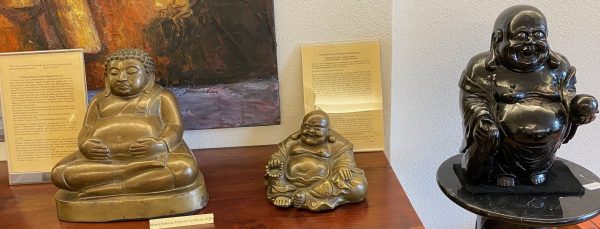
Much more inspiring is joy in connection with religion. As a critic of religious ideas, the attempts of religion to define joy for individuals and society probably explains the success of religions. Representations of Buddha, show the happy or joyful monk, Christians define joy with the advent and the birth of an unconceived child, fighting fiercely any modern forms of contraception and science advances for birth assistance. Restricting jokes and joy to the “carnival” period reflects the Christian doctrine to control and monopolise the definition of joy. Therefore, it is no surprise to witness that many persons feel more inspired by Asian traditions like “Ikigai” or “yoga” in their daily routines to experience joyful moments. I always found it very odd that Christian fundamentalists would not say Merry Christmas before the 25th of December after they have been to church at midnight. The priest or pope as the master of joy is a very strange idea. Affect inhibition or deferral is a powerful psychological tool. As in this blog entry I deferred my joy and laughter until the last line. So now, please join me in a wholehearted JOYFUL LAUGHTER, so the people around you may believe you’ve gone completely mad. It might be the beginning of more lasting joy, just keep practicing. Joy is within us not depending on outside stimuli,  joyful1  although they might help.

F for Freedom

This choice is no surprise, or is it? Who is longing the most for freedom? People in the so-called Western world are reported to score highest in the rankings of achieved levels of freedom. However, the longing for freedom often seems the strongest in countries, or regions within a country, where elements of freedom are restricted. Then fighting for freedom becomes an intense struggle, sometimes leading to outright war or fighting back like in Ukraine. Beyond the negative freedom (free from capital punishment) there is the positive freedom to express yourself freely. Both perspectives on freedom are crucial. Being free from prosecution is often only a first step towards the goal of being free to live your way of life as you feel it. It has always been a political struggle and will remain one today as well as in future. Less consensus reigns on the topic to what extent economic freedom is a constituent part of the term freedom. Far-reaching economic inequality within societies frequently limit persons at the bottom of the distribution to fully participate in society and excercise many components of freedom like decent food, housing, health and health care. All this remains the biggest challenge for humanity for years to come. We shall need a lot more heros in the name of freedom like the famous Nobel prize winners. Fighting for freedom in a peaceful way is probably the biggest challenge for humanity also in the 21 century.

E for Enterprise

There is a new start-up scene in development in Germany. Interesting to witness the new entrepreneurial spirit. Many of the youngsters grow out of their peer community, wanting to try new ways of working and living together. The new bottom-up or grassroots form of growing a business out of a subculture seems to be an adequate response to the growing diversity of societies and easier ways of community building through online social media. Name it “reach” today, it is similar to what you previously called having a customer base. The new element refers to a blending of cultures. Learning through being online connected to the world, yes, the whole world, allows wide-spread influences from other sub-cultures, be they American, Asian or African. The young are open-minded to new stimuli like “Ikigai” from Japan and, of course, the life histories of founders and individual biographies from entrepreneurs like the legend of Steve Jobs, Apple’s legendary founder. Imagineering has become part of the movie-influenced influencers. Short clips out of a longer story build communities. The witty comment, like at school, gets more attention than the long boring story of the preacher, teacher or the mansplainer. The experience of “flow” is all around these communities and this creates the specific magic of the start-up scene. They take each other to new levels, mutually, reinforcing their preferences and life-styles. They are well aware of the risks they are taking. “Keinhorn” German short for “not an Einhorn”, the one billion value threshold for super successful enterprises taught them crucial lessons. The “ecology of organisations” which I referred to in my courses at the now renamed “Constructor University” previously “International University Bremen”, then “Jacobs University”, (let’s see what comes next?) is an important complementary research tradition to assess the “survival” of enterprises. I still recommend this University, which I quit to start new endeavors. It carries in its several “names” the important message:
start, fail, change, (repeat).

State of the Union

“The times they are a changing”. Currently, we witness that democracies are at multiple risks. One existential threat is, of course, war of external origin. Democracies have been perceived as often to slow to mobilize military forces sufficient to resist “Blitzkrieg”. What Nazi-Germany applied successful at the beginning took a long time and millions of dead persons to rectify. Similarly, the threat to Ukraine’s independence and liberal aspirations are threatened by Russian imperialism. The other existential threat is that of “the enemy within”. This is the conclusion by Canova (2011, p.213) when he writes on “democracy’s disappearing duties”. Whereas he has primarily in mind, that citizens need to participate more actively in the duties to democracy’s survival. These are “the duty to become informed and to vote, as well as rights and duties related to civic and/or military duties. The discussion, whether we need an army of the many or an army of specialists has shifted largely in favour of the need for specialists, simply think of cyber or drone war technology. However, the threat of the enemies from within becomes clear if we remember terrorist attacks targeted at democracies practice of free movement, free speech or art. Another centuries-old threat has come to our attention again. Corruption. The slow-motion erosion of democracies is hard to fight against as it operates not with visible tanks and weapons, but with clandestine and psychological ways of slow corrosion of organisations and institutions. Combatting corruption is even more tricky in cross-country settings like the European Union. Reference to cultural practices and exclusive or inner circles as cultural exceptionalism make it hard to introduce non-discriminatory monitoring and controlling mechanisms in democracies. Only a well-equipped security, police and judicial system can stem the risk to democracies from corruption and organized crime. It is not only a matter of state responsibility, but our democracies rely on an alert public to stand up continually for our basic values. Just singing the national and European anthem is not enough, fighting corruption is laboursome and cumbersome, particularly as corrupt circles do not refrain from using brute force and weapons (Reichsbürger, Mafia, etc.). Addressing inner and outer enemies at the same time remains high on the agenda for the surviving and thriving of democracies. The foundation ideas of the European Union were constructed by Monnet and Schuman on a sustainable democracy.  Let’s not endanger this through a sluggish response on corruption.
inspired by Canova, T.A. 2011: Democracy’s disappearing duties. In: Democratic Citizenship and War. Peled, V. et al. (eds.) pp. 199-216.

Flotow Martha

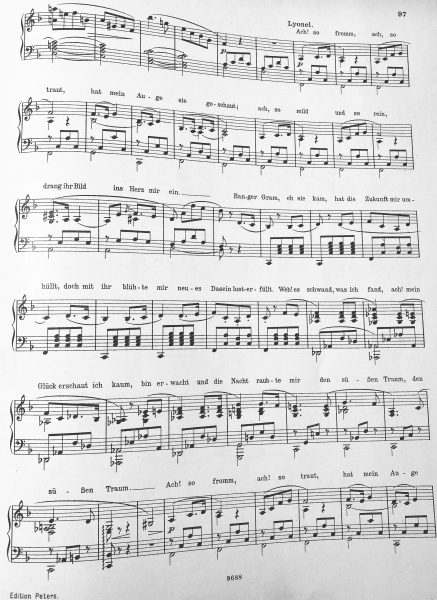
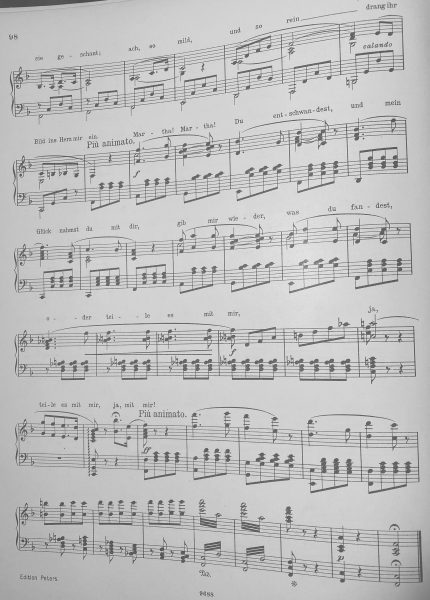
Die musikalische Schaffen des Fritz von Flotow ist recht umfassend. Seine aufwendigen Opern werden bis auf „Martha“ kaum noch gespielt. Die letzte mir bekannte Aufführung von Martha war in Schwerin mit Radioübertragung im Deutschlandfunk 2009. Im Auswahlrepertoire für den „Concour de la Reine Elisabeth“ war noch in 2018 auch die Arie “Ach so fromm” aus Martha zu finden. Der Sieger Samuel Hasselhorn hatte allerdings eine gute Wahl mit Fokus auf Liedern von Schubert und Schumann gelegt, die scheinbar bei der aus Bayern stammenden belgischen Königin Elisabeth sehr beliebt waren. Es verwundert nicht, wenn Fritz von Flotow, dessen Oper Martha in Wien uraufgeführt wurde, weiterhin auf der Liste der möglichen Stücke im Wettbewerb steht. Der Nachwuchswettbewerb hat eine karriereprägende Funktion für viele Teilnehmende. Die meisten Aufrufe auf Youtube hat die italienisch gesungene Version von Ach so fromm aus Marthas zum Beispiel von Pavarotti. Oder auch von Caruso oder von Placido Domingo, dessen langjährige Frau selbst Marta hieß. Die deutsche Fassung, gesungen von Placido Domingo ist eine von meinen Favoriten (hier). Die ältere Version, die ich von ZDFtheater gefunden habe, hat ihren eigenen Charme durch die pantomimisch begleitete Ouvertüre von Sama Molcho und die klar gesungenen Arien. Ab 1h17 gibt es dann die “Ach so fromm” in historischen Kostümen. Diese Interpretation erscheint mir sehr an die von Jacques Offenbach begründete französische Tradition der Operette angelehnt zu sein. Aus der Biografie von Rosine Swoboda, die Witwe von Friedrich von Flotow ist bekannt, dass sich die beiden Komponisten kannten und freundschaftlich verbunden waren. Mit 3 Mio Aufrufen ist „Die letzte Rose“ gesungen von Lila als Trauerlied wohl doch der populärste Hit vom Fritz. Das Europäische Jugendorchester hat Arie und Duett 2013 in London aufgeführt. Also, wer nun mal „Martha“ als Tenor mitsingen möchte, kann die Noten unten oder die karaoke Version oder Klavierbegleitung einer Pianistin aus Berlin-Schöneberg heranziehen. Worauf warten wir noch? Ich stelle die Dusche schon an, länger als 3 Minuten sollen wir eh nicht mehr duschen. Die Entzauberung der Tenorstimme können wir z.B. hier leicht verständlich nachlesen (Link), Schalldruck ist das akustische Geheimnis.

Marx-Wagner

Begleitend zu den Ausstellungen zu Karl Marx und Richard Wagner fand eine vom DHM organisierte Vortragsreihe statt. Die Links (hier) zu den Hördokus sind eine anregende Erweiterung der Ausstellung und stützen die These der Verbindung zwischen Karl Marx und Richard Wagner auf einer abstrahierenden Meta-Ebene. Die Vorträge, Gespräche und Diskussionen informieren und vertreten wissenschaftlich fundierte Thesen. Die müssen gerade nicht von allen geteilt werden, aber eine Haltung zu dem Thema haben die meisten Menschen in der Welt, besonders wenn wir an die Millarden von Menschen jenseits von der westlichen Welt denken. Es ist also auch an uns, diese Diskussion über den Kapitalismus zu führen. Hören wir mal rein. Alle dauern 1h-1.30h!
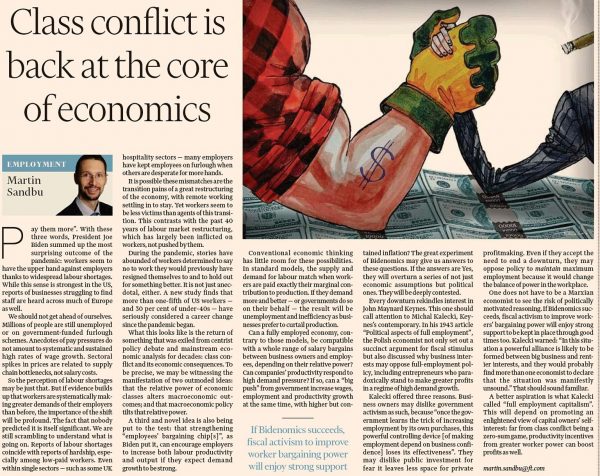
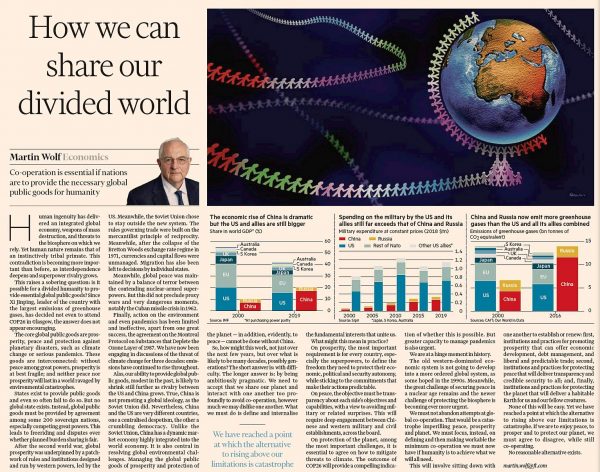
Einleitung,  M&W Kosky + Bisky, M&W Nietzsche, M&W Mahatma Gandhi, M&W Viktoria Kaiserin Friedrich, Ein Artikel aus der Financial Times von Martin Sandbu vom 18.8.2021 und Martin Wolf vom 21.11.2021 ergänzen die Diskussion: Wenn der Kapitalismus weltweit gewonnen hat, was war dann noch mal der Wettbewerb? Bitte öffnen Sie jetzt ihren Computer, Sie haben 3 Stunden Zeit für die Beantwortung. $???$ Danach speichern Sie bitte das Dokument in der Cloud und nehmen es zur Evaluation nach 10,20,30,40 Jahren wieder hervor. Hat sich ihre Meinung über den Sachverhalt zwischenzeitlich verändert? THX for your feedback.