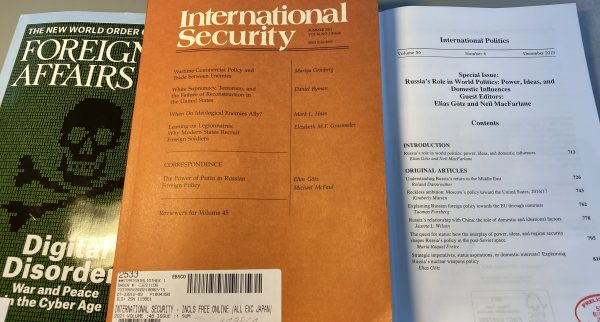
Employment is back on top of the agenda. Not as we used to think, though. Previously unemployment had dominated societal concerns. Now it is the lack of persons seeking or available for employment. What has happened? The Covid-19 crisis has demonstrated the need of persons qualified to work in the health sector. From health care and urgency care, we are short of personnel in all these fields, everywhere. 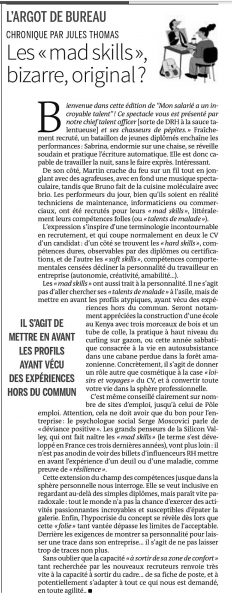 Then we discovered the role of essential services and the need to equip crucial infrastructures like ports, transport, shops, schools and ambulances with service persons resisting despite work overload. Larger cohorts leave employment to retire, some even early due to illness or burn-out. Additionally, war is back in Europe. Military personnel is in high demand again, drawing largely from younger cohorts. The need for conventional weapons. long thought to be oblivious, is forcefully back on the agenda.
Growth potentials are everywhere. However, these pre-modern facts encounter a population in the western democracies that insists on new approaches to employment. Beyond hard and soft skills, recruiters seek atypical skills, competences and trajectories. A parachute jump from an airplane, cooking and dining experiences, caring spells, periods in self-employment, all are directly or indirectly relevant for employment and teamwork. So, what is your specialty? Collecting stamps? Surely you are able to spot tiny differences in images with specific content. Fake news and fake image detection or video surveillance is in high demand, just try an application and discover the employment potential of your MAD skills. Sounds crazy? No joke. Skill needs are everywhere, just give it a start again and again. Read a serious newspaper regularly (here LeMonde 19.1.2023) for inspiration.
Relation
Several inputs from logic will assist us to establish relations between 2 objects, 2 subjects or 1 subject and 1 object as in simple relationships to form sentences. The most obvious is A = B. The most common, depending on definitions, A is not equal to B, hence A >B or B>A. Medieval logic adds the consideration of consequences and suppositions to relationships. A determines or leads B. We might suppose that A is a precondition for B. Logical arguments often attempt to explain. Mathematical proofs chose ways to deduce or induce, whether a statement is true or false. To reduce the number of lines to explain a theorem is a mathematical virtue, just like in a game of chess to find a check and mate in fewer moves.
Leibniz increased the repertoire considerably. In geometry objects are parallel or in the infinitesimal calculus they approach each other without ever reaching each other. With the art of combinations he describes a language than contains groups and elements. The binary revolution, to express numbers, letters, images in form of pixels as multiple assemblies of 0 and 1, has revolutionized our potentials. Beyond these determined relationships there are stochastic relationships, they happen more or less likely. The centre of logic relationships remains deductability = to deduce, consistency = to consist of and completeness = to complete (Encyclopedia Universalis 14, p.653). Time adds another dimension to our concern to exemplify relations. A pre-empts B, or B follows A in time, but not in respect of deterministic logic. Additionally, locations in space of 2 objects allows us to imagine additional abstract forms of relationships, artists play around with this continuously. Some artefacts have created fantastic new ways to challenge our learned ways to consider relations. Last but not least, sound has contributed to how we perceive relations. To superpose, transpose or dissociate relations leaves different emotions. Relations are all around us. They certainly link subject and object in a sentence in multiple ways, copying or imitating nature. For further reading: HERBERT HOCHBERG; KEVIN MULLIGAN. Relations and Predicates. Frankfurt: De Gruyter, 2004. ISBN 9783110326536. Disponível em: https://search-ebscohost-com.kbr.idm.oclc.org/login.aspx?direct=true&db=nlebk&AN=603683&site=ehost-live&scope=site. Acesso em: 23 jan. 2023.
Subject/Object
The 26 notions in alphabetical order may determine a subject and/or an object in a sentence. This is just the simple grammar of a language. Add a verb and we have a full sentence subject predicate object (SPO) as they say in English. In the philosophical sense the subject-object relationship is a bit more complicated. Beyond Aristotle’s objectum and subjectum, we think of Descartes “Cogito ergo sum” as the definition of the self as subject, rather than being an object of God’s will and creation. Kant then forms the couple of object and subject in the sense of objectivity and subjectivity. Pure reasoning is the abstraction of subjectivity to achieve an interpersonal objectivity. The master of dialectic thinking, Hegel, conceives an object as objective conscience and a subject as particular subjectivity. Having defined the extreme points of the spectrum makes you think about a joinder or the synthesis. Freud adds the object as result of sexual impulse. Wittgenstein then introduces a kind of hierarchy into the S/O-relationship. Objects become ultimate elements and indescribable in content as kind of basic notions. This follows the mathematical view of objects as indirect description of a mathematical object through axioms stating the basic principles governing the object and then deduce the logical consequences. Gödel’s incompleteness theorem , however, rejects this claim. This is the basis of, for example, algorithmic testing whether deductions are true or false. Condensed mathematics has relied on this testing approach as well.
A pragmatic perspective is added by Marie Gautier (p.719 “Notions”). If we want to reach an objective, we shall need others to realize it. By way of this imagination the S/O-relationship turns into an interactive relationship. Following Habermas, we might claim that the S/O-relationship is also a part of communicative action and therefore the discourse ethics. The definition of who or what is object and/or subject needs open discourse. The arena is not only the parliament, but larger audiences or the world wide web. Beware of the Luhmann systems theory, whereby for example the definition of what is a technical object is, is left to technicians, who then ponder in their self-reflective, reflexive circles amongst themselves. Techniciens in their circles tend to neglect the prime importance of society and laws to determine technological choices. Language with its constituent elements of subject, predicate and object (SPO) is one example of a knowledge system build on axioms or negotiated conventions for grasping and exchanging about phenomena. Nice, now we play around with it.
SPO => OPS. 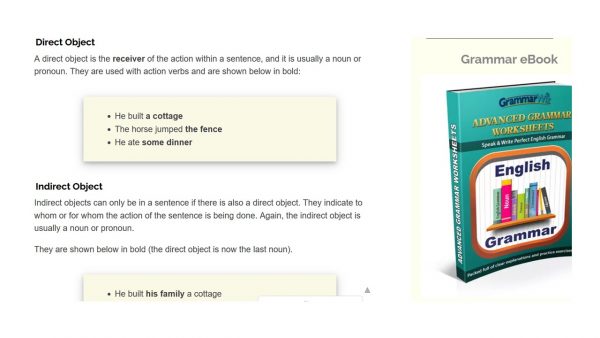
Invent
The nice thing about mathematics is that it asks you to invent new ways of thinking. Numbers, percentages, Venn-Diagramms, infinite series etc. have accompanied us at school. The story is far from finished. Under www.spektrum.de there is a nice introduction to the new theory of numbers, called “condensed mathematics“. Their lecture notes (pdf-file) are a tough read. My take home message simply is, the invention of new approaches to old problems, providing more general answers and/or unifying different fields are particularly rewarding. Maths is a fascinating discipline. You study abstract problems, hardly anybody else has had so far, but you are not considered strange as for example some artists at times. Imagine your new world in music, painting or the arts in more general terms or try to become a mathematician. Finding ways to communicate about your predilection and invention is the next challenge. Many scientist, inventors or artists found very few people to talk to about their new stuff. The internet and social media have changed this. Persons with interests or findings beyond the mainstream find colleagues in other parts of the world. Lighthouses from far away become visible through this. Navigation of other possible worlds turns into reality. These specialisations might turn out to be generalisations. The stretch between indepth knowledge and the polymath approach shall accompany us for a long time. Unified theories in several fields are indeed a step to be able to have an oversight about several, but not all fields. Polymaths probably start with condensed maths to move on to other fields of imagination. There is always a risk to get stuck somewhere on the road in a topological space. 
AB with ABC
There are lots of ways to memorize the alphabet. We sing the alphabet with children to trick them from an early age into learning something useful, even if they do not fully grasp the immense power of the 26 signs or letters they are about to learn. It is a tool to construct images and stories of your own and exchange with others in speaking or writing. We have come full circle with the subjects/objects addressed from C to A, more commonly described as from A to Z. With 26 subjects we have a long story already. With each different starting point from the alphabet a new story might be told. Proceeding in reverse order, from any letter, taking couples of letters as in the figure below yields a whole lot of new combinations to be defined. Taking 3 words from the alphabetical list is already a complex issue. Starting from a randomly chosen letter allows lots of additional combinations and topics. We start to grasp the difficulty a computer will encounter when constructing own definitions. Huge data bases of dictionaries will teach the programme to discard apparently meaningless combinations. However, humans might just enjoy creating new combinations. Machines don’t laugh, yet. Teaching artificial intelligence to produce jokes is probably a very difficult task. For the time being, we just continue to construct sequences of words, like the German language is perfect to do so, producing endless jokes with damn serious matter in the “Bundestag“: -Aufwendungsersatzansprüche, -Asylbewerberleistungsgesetz, -Brennstoffemissionshandelsgesetz, -Beweislastumkehr, -BeitragsbemessungsgrenzeUmrechnungswert (okay, I made up the last one). 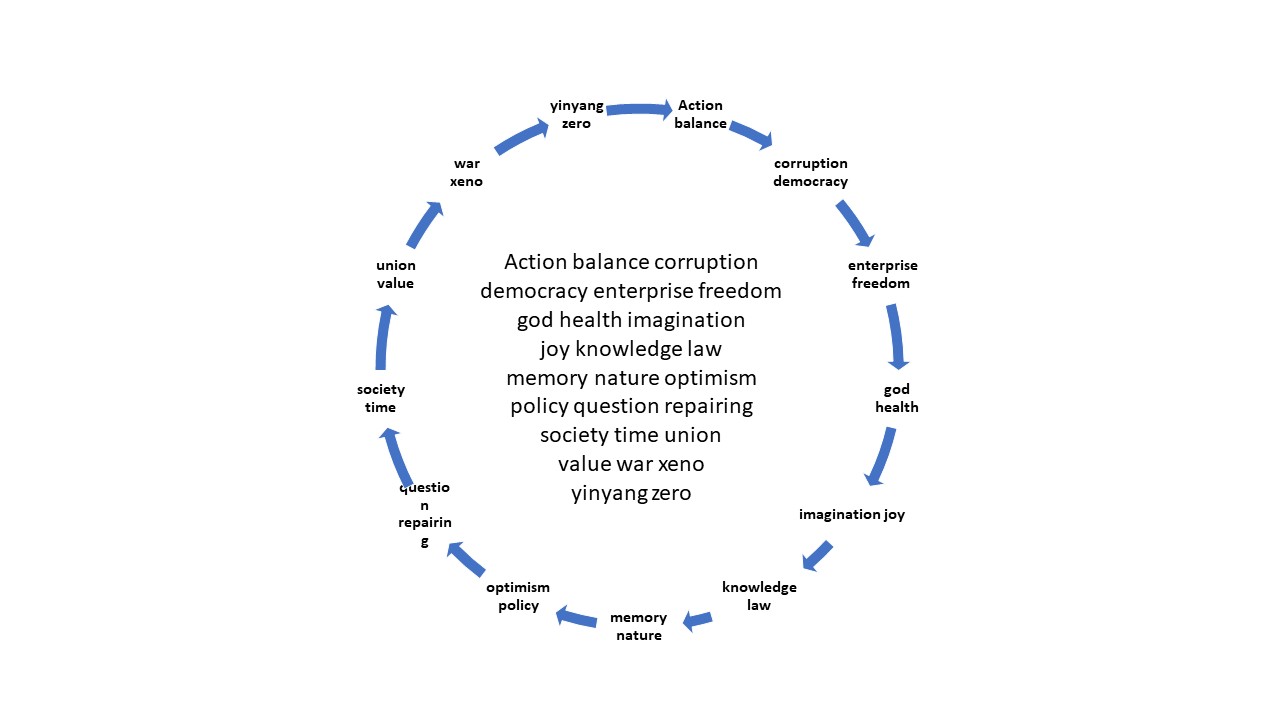
ABC Overview
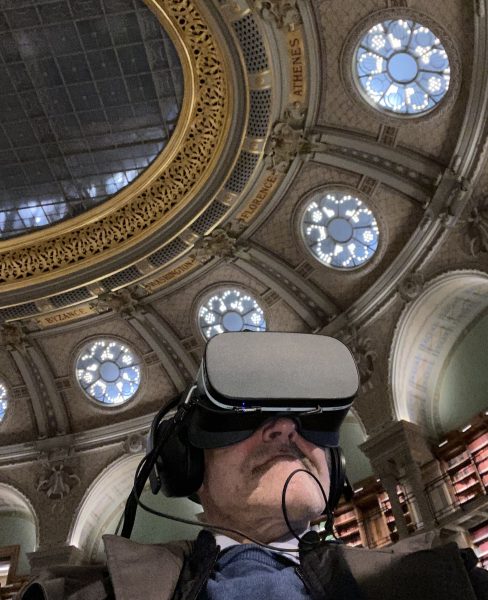
Digital formats allow flexible organization of lists like alphabetical lists. Opening several pages, at the same time, of the same dictionary is easily feasible. In science the proceeding in this way is coined the inductive method. The entries of each letter stand on their own, but jointly they form a whole set of topics. Random choice is facilitated this way. New sequences or preferences of topics are the way forward. Alphabetical order or chronological order are only one out of many variants of possible sequences. Chose your own 3 favourite topics, maybe. On a big computer screen you might even organize your own poster – beam it on the wall – walk in the virtual exhibition of the metaverse with it. It could feel like you are strolling within parts of my brain. Frightening? For whom? The universe is within us.
| action | health | optimism | value |
| balance | imagination | policy | war |
| corruption | joy | question | xeno |
| democracy | knowledge | repairing | yinyang |
| enterprise | law | society | zero |
| freedom | memory | time | |
| god | nature | union |
B for Balance
To reach a balance, to keep the balance or one’s balance, this highlights the process nature of balancing. Even the old tool of a balance (scale for weights) very much reflects the evening-out of the balancing process. It seems like a temporary balance most of the time. We might evolve from one level to another one. Especially imagining ourselves on a (body weight) balance in the morning and then throughout the year or years, this appears like a dynamic trajectory. The nature and/or nurture connection is evident. Beware to search for synonyms of “balance” on the internet. You get more than 3000 synonym (Link) meanings and 30 suggestions for definitions (Link) to contemplate on. I like the nice physical experience of balance and the simple (a bit nerdy) explanation of it. Economist get very excited about balance of payments and the ways to achieve equilibrium or equilibria. Balancing personal accounts can be a bit painful at times, but balancing in the arts gets our imagination going. Dancing is about balance most of the time. Playing with your own balance, the balance when 2 or more persons are in action, how not to be absorbed by such experiences. In music, the balance is a primary issue since Bach’s “wohltemperiertes Klavier” and balance and tension are the origin of much jazz. An image or photo might be balanced, certainly architecture is playing with or restricted by balancing acts. Herta Müller’s “Atemschaukel” has thrown us off balance for a while. History we study often with a concern for a balance of power. In peace and war times, the balance of power within and between countries or superpowers are a long-lasting research issue. At times when this balance is at risk or completely out-of-balance we are deeply concerned about the return of a balanced situation. Babies and children draw comfort from being balanced. Adults as well. Let’s try again (chanson). (balance22-venice -video). 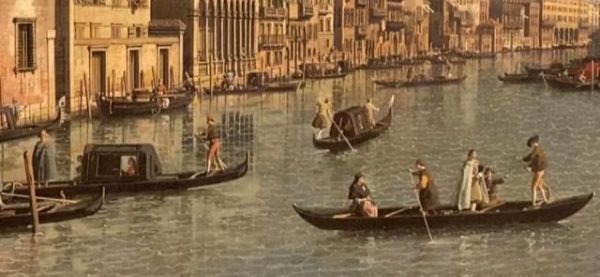
Y for YinYang
Y in maths stands for the phenomenon that is to be explained. If you are lucky, it is just one single Y. To explain this phenomenon, we usually have a multitude of different X-es and some random chance element. To complicate things a bit, we have X running over time. Example: Happiness at retirement age (66) might be explained by your earnings over years and marital unions/separations over time plus health over time and other random, not specified elements.
In my understanding of the YinYang philosophy of balancing the complementary of Yin and Yang, I probably should have thrived for a balance of earnings and health throughout my working life, to arrive at a happy retirement. Balancing not only among the X-es, but also between X and Y might even out the excitement about retirement. Additionally, this reasoning leads us to the more complicated case of multiple Y-s and multiple X-es. We can image the optimisation issue of y for 2 persons rather than just 1. Now, the maths starts to get more complicated without being complex in the mathematical sense. If you can solve such equations in statistics using different forms of random and not- so-random error terms, yr doomed for a Nobel medal in economics. What the heck, man this has to do with Yin and Yang? Beware of your work-life balance, be selective, I suppose. Breathe carefully, repair (YoYi) and read up on Chinese philosophy and maybe TCM, short for Traditional Chinese Medicine. Let’s try to re-balance in a lot of life-domains. We know our Western way of life (CO2) is not sustainable. Imagine 1 billion Europeans driving a diesel car on this planet and you have an idea about what hell might be like. An open mind to the Yin and Yang philosophy could be helpful for us, just as much as it would be for the leading Chinese politicians and their policies. Yes, Y in French is much more common than in other languages “Y avait …” is the beginning of chansons (ex 1 Aufray, ex 2 Kaas, portrait). Drawing YinYang using formulas is a bit like drawing or painting mandalas. It helps your inner balance. I am not quite there yet. 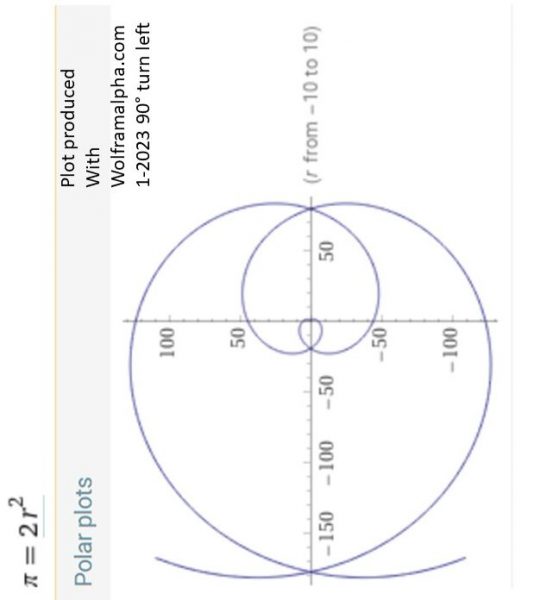
X for Xeno
Xeno is the root of the much more commonly used words of xenophobia or xenophilia. Xenos, in its Greek original, just means guest, strangeness or coming from another place. With the awareness of coming from another place or dreaming of another place we create the link Xeno-link to migration. Everybody knows about migration experiences, be they just from one village to the neighbouring one, rural- urban migration or beyond language or legal boundaries. Interesting new perspectives on the issue are rare. To view migration from an optimism or pessimism angle is a bit like a Picasso-like view on the century-old topic. Beyond out-migration and in-migration there is the population left behind in the villages, regions, countries or nations. Optimism seems to guide the outmigrants. Realizing to become viewed and stigmatised as an immigrant might reduce optimism considerably. Pessimism might spread among the persons who do not succeed locally or to migrate in those sending regions or countries. Migration is a selection process of multiple forms. The western view of in-migration has for most parts focused on labour market related preferences. Skill shortages urge us to accept the “being somehow different” more easily. Learning to cope with this is called “intercultural competence”. In Berlin this is accessible through learning-by-doing or going to cultural events. Even there, 2 further steps are needed:
First step ahead, have more diversity everywhere, including so-called high art or centers of excellence (video xeno video22). Second step, consider it strange, if diversity is not the standard or part of day-to-day or normal life.
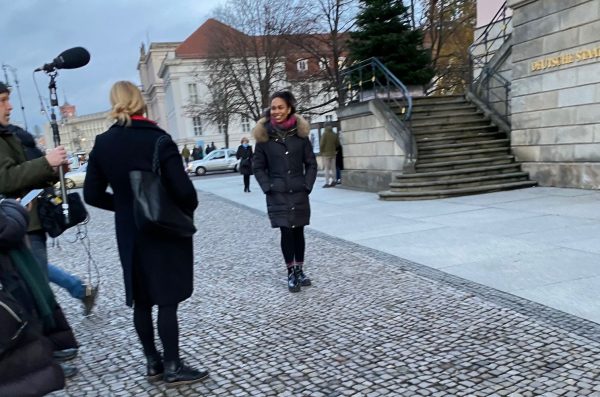
The performance of Mozart’s opera “Mitridate” at the Deutsche Staatsoper with performers and creators (booklet!) from all continents might be a good start to nourish xenophilia instead of xenophobia.
W for War
In Europe many people were lucky to live without the existential threat of war for a long time now. Putin has stopped this with his land-grabbing in Ukraine. We wonder why, what, when and where? War is back in our minds again. Members of the birth cohorts of the 1920s, 30s or early 40s have direct experience our traumatic memories related to war times. Some later born cohorts suffered from various forms of deprivation . Economic reconstruction or even so-called miracles may follow and can soften the traumatic experience, often by way of focusing attention on repair and new investments.
The work by James Hillman “A terrible love of war” has been a difficult read. To acknowledge that “war is normal” and our mindsets should take this into account, is hard to accept. Hillman cites Susan Sontag to state that “we cannot imagine how terrible war is – and how normal war can become”. We need a leap of imagination (p. 9) to grasp the mythical element about war which seems to be beyond the rational understanding of it. Greek tragedies told us, all along for more than 2000 years. The Romans exceled in it and German perfectionism and cold-bloodedness added the most horrible recent experience of war for millions of people. Memory and historical knowledge are important to activate recall for older and learning for younger generations. (short Video clip on war and UKR)