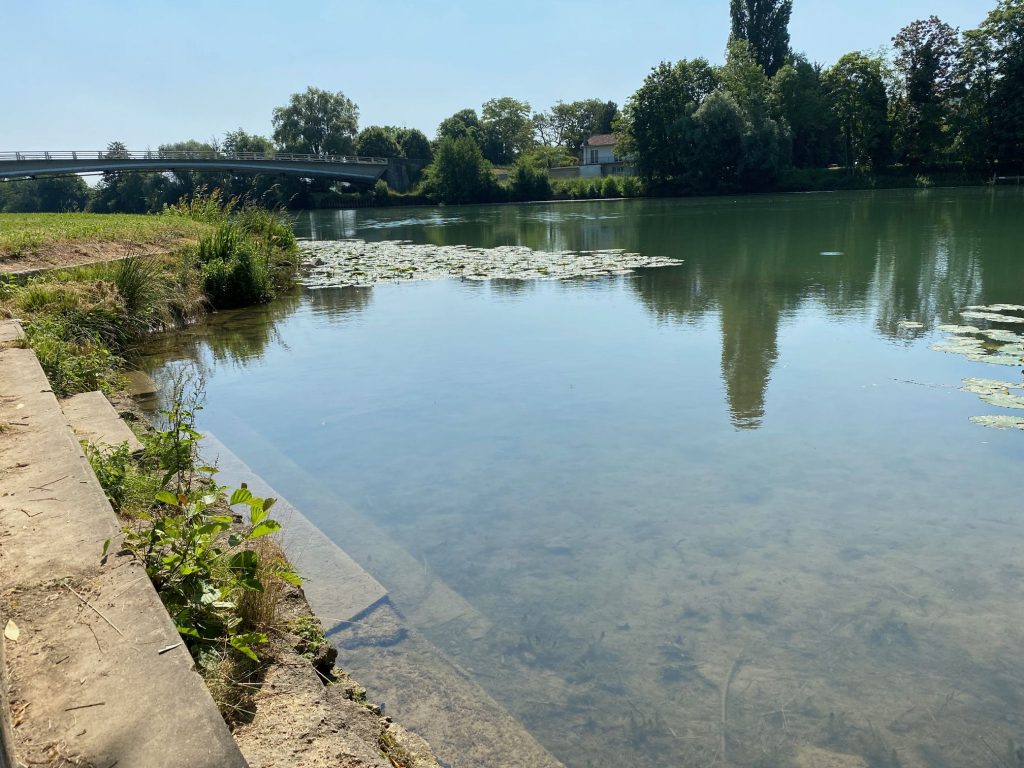
Der Bericht der europäischen Umweltagentur 2023 beschreibt eine durchschnittlich gute Wasserqualität der Seen in der EU (Link). Die Aufmerksamkeit für das Baden in den Seen und als touristisch wertvolle Naherholungsgebiete haben die Beachtung in den letzten Jahren wieder steigen lassen. Das ging leider oft auf Kosten der zu Wasserstraßen ausgebauten fließenden Gewässern. Dort befanden sich bis vor einigen Jahren noch vielerorts Flussbäder. Das war früher riskant und ist heute eigentlich größtenteils verboten. Wieder etwas, das wir dem Wirtschaftswachstum geopfert haben. Mehr Wirtschaftswachstum erscheint statistisch sinnvoll, mehr Lebensqualität hat das aber nicht immer mitsichgebracht. 
Waldbrände
Waldbrände sind leider jenseits vom Süden Europas auch im Zentrum von Europa ein Bestandteil der täglichen Gefahren geworden. Vor 50 Jahren waren die seltenen heißen Sommer die große Gefahr. Seit einiger Zeit bemerken wir öfter heiße Sommerwochen, die die Wälder austrocknen und leicht entzündlich machen. Jetzt haben wir die noch frühere Sommersaison nicht nur im Süden, sondern auch im mittleren Europa. Neben den Bränden in der Lausitz in Deutschland, kämpfen Feuerwehrleute öfter in den französischen nördlicheren Waldregionen mit Bränden. Eine Nachricht, wie die zum Brand Anfang Juni im „Forêt Fontainebleau“, sollte uns klar machen, da brennt unserer europäisches ökologisches und kulturelles Erbe. Jeder hat die brennende Kathedrale „Notre Dame de Paris“ noch in Erinnerung. Da war Klimawandel nicht die Ursache. Bei den Waldbränden sieht das anders aus. Das Ergebnis ist das gleiche. Die Vernichtung unseres kulturellen Erbes schreitet voran ohne Prävention. Das ist eine zentrale Aufgabe. Nicht erst in der Zukunft. Prävention verlangt Handeln, Planen und Implementieren schon heute. Das ist ein riesiges Qualifizierungsprogramm nötig. Es umfasst die Sensibilisierung für die allgegenwärtigen Gefahren genauso, wie das Schulen allfälliger Einsätze von professionellen und freiwilligen Helfenden. Gefahr erkannt, heißt leider nicht schon Gefahr gebannt. Da gibt es viele Zwischenschritte, die geprobt sein wollen, damit ein effektiver Einsatz gelingen kann. Es bleibt viel zu tun, packen wir’s endlich an. (Artikel in La Marne 7.6.2023 S.6) 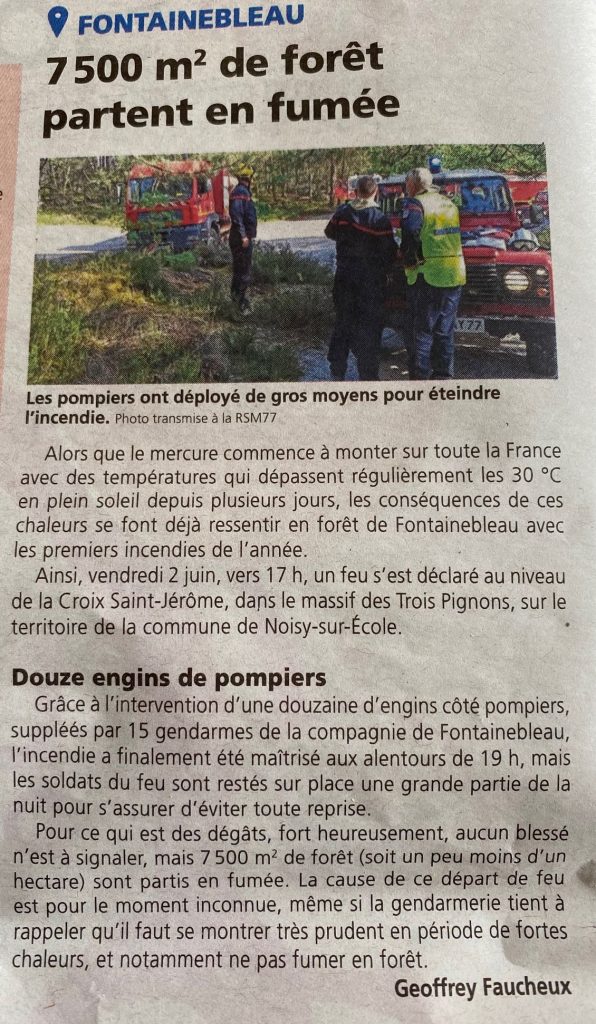
Corruption EP
Corruption is a severe crime. Not only in administrations, organisations and enterprises, but primarily in democracies it is discrediting political systems. Autocracies rely on corruption as a major tool to be able to persist over time. They are used to such practices. Democracies rely on meritocratic systems, where ideas, effort and winning elections should be the major ingredient of achieving higher positions in organisations, enterprises, political parties and democracies. This is not easy to ensure. The European parliament has a tough time to get rid of an enemy of the democratic Europe. Rather than stepping aside for the time of the legal procedure, Eva Kaili, accused, but not yet convicted of corruption is willing to destroy the European project as much as she can. If money can buy political decisions, the European project will no longer find wide-spread support. Big interests will always have a strategic advantage, however, the ethical principles on which democracies are found have to guard against corrupt misbehaviour. The same applies to the business world. Even low corruption countries like Sweden still face a risk of adverse effects of corruption like the negative impact on entrepreneurship on the local level. It is another context, but the same conclusion.
Additionally, it is part of the strategy of corrupt persons to portray themselves as victims of other persons’ wrong-doing. The major function of this strategy is to remind other persons in the corrupt network that the network has still some clout on its members as well as outside the inner circle. Hey, we are still alive and in powerful positions, they proclaim.
Therefore, the fight against corruption is a long and persistent one. Reducing the guards against early onsets usually is very lengthy to fight later on. Always a painful lesson for believers in democracy and the European project. (image Jacques Jordaens before 1678 “The King Drinks! Musées royaux des beaux arts, Brussels). 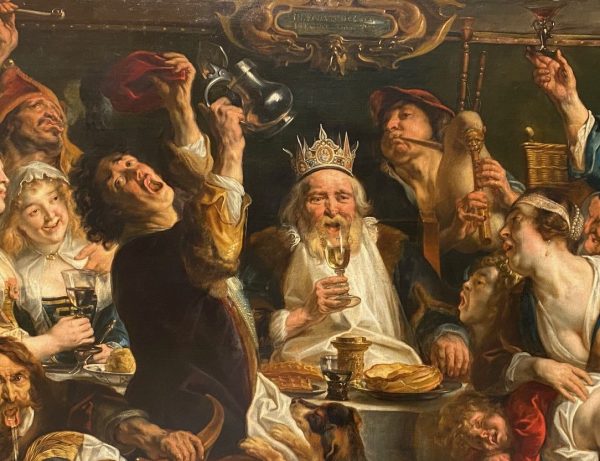
Eyes
So-called deep learning algorithms can assist us in lots of routine tasks. Their applications seem to be spreading more rapidly than we commonly believe. The recent paper published in “Lancet Digit Health 2023; 5: e257–64” shows the relevance for medical screening again. Beyond skin or breast cancer, digital images have for years or decades been subject to studies using deep learning algorithms to early detection of cancer and other diseases. Now Google has published an additional potential application of algorithmic learning that assists in diagnosing blood sugar levels among others. For diabetes scanning photographs of the external eye with professional equipment (Zeiss Cirrus Photo 600) was used in the study, but the outlook hints already at the potential for most recent smartphone cameras to also be able to capture images of even better resolutions.
Just like measuring our weight and muscles as a weekly routine on scales, we shall have a more scientific look at our selfies soon. Spotting early onsets of several diseases will become a normal feature.
Early adopters of the new technology and screening potential of the smartphones might live even longer. Reminders to adopt or keep a healthy life style will be all around us. In some cultures, it is deeply offensive to look straight into the eyes of another person. We always knew that our eyes might tell a lot about us. Beyond mental health, they tell a lot about physical health, too.
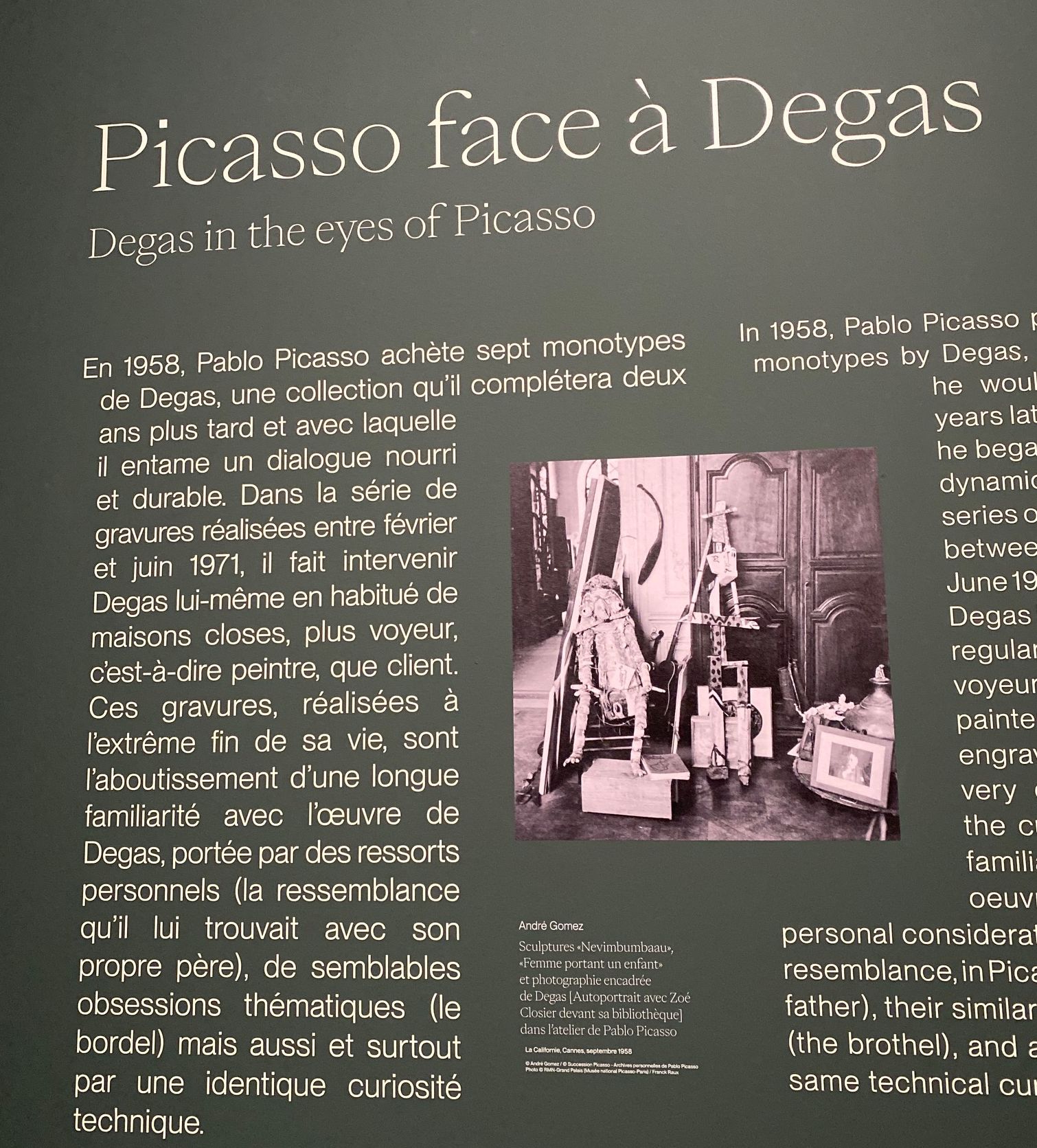
Artists have always told us fascinating stories about eyes or how and what they see with their eyes. Scientists confirm that there is a lot of information in the eyes. (Image extract from MAD Paris, Picasso, Schiaparelli). 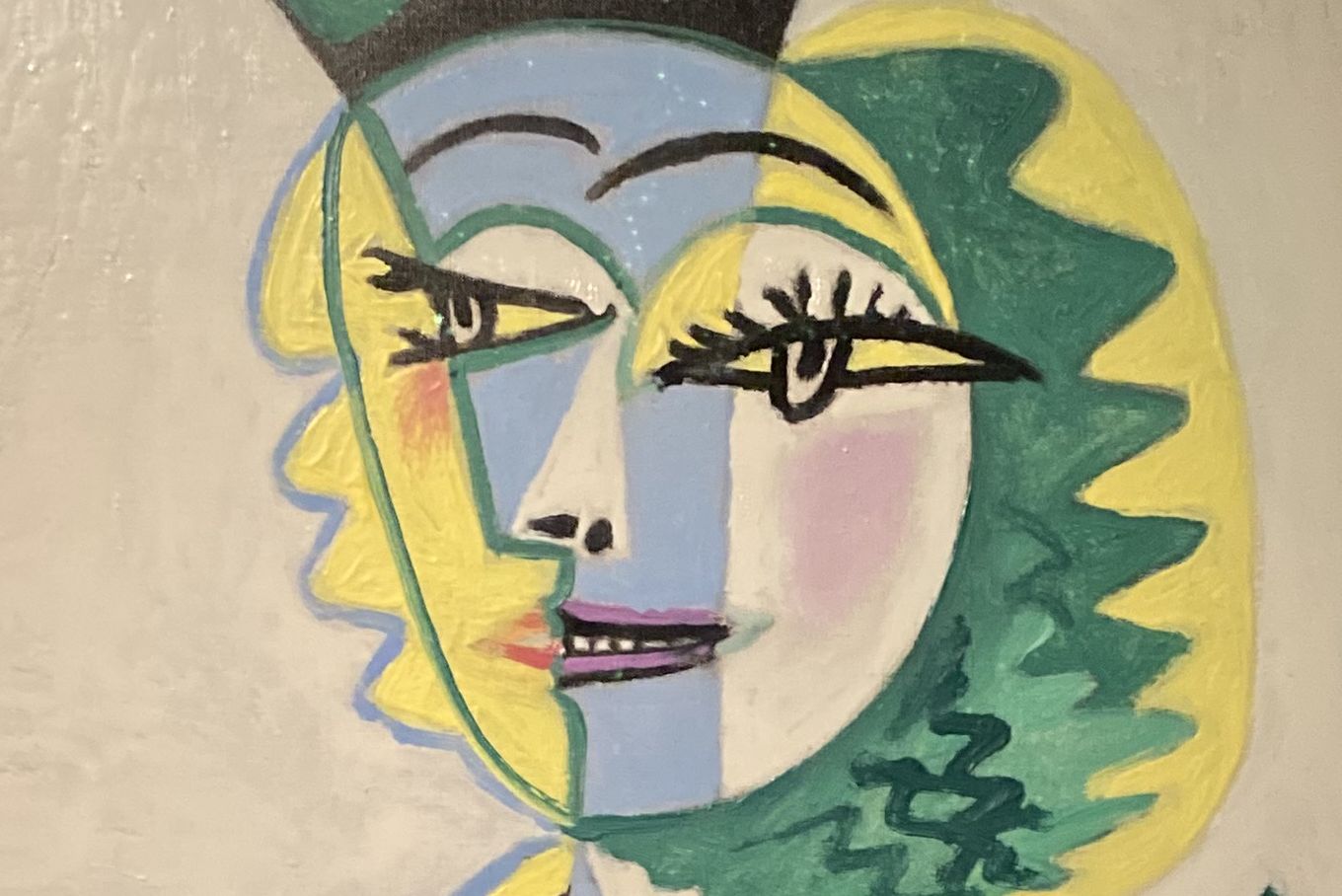
Black White
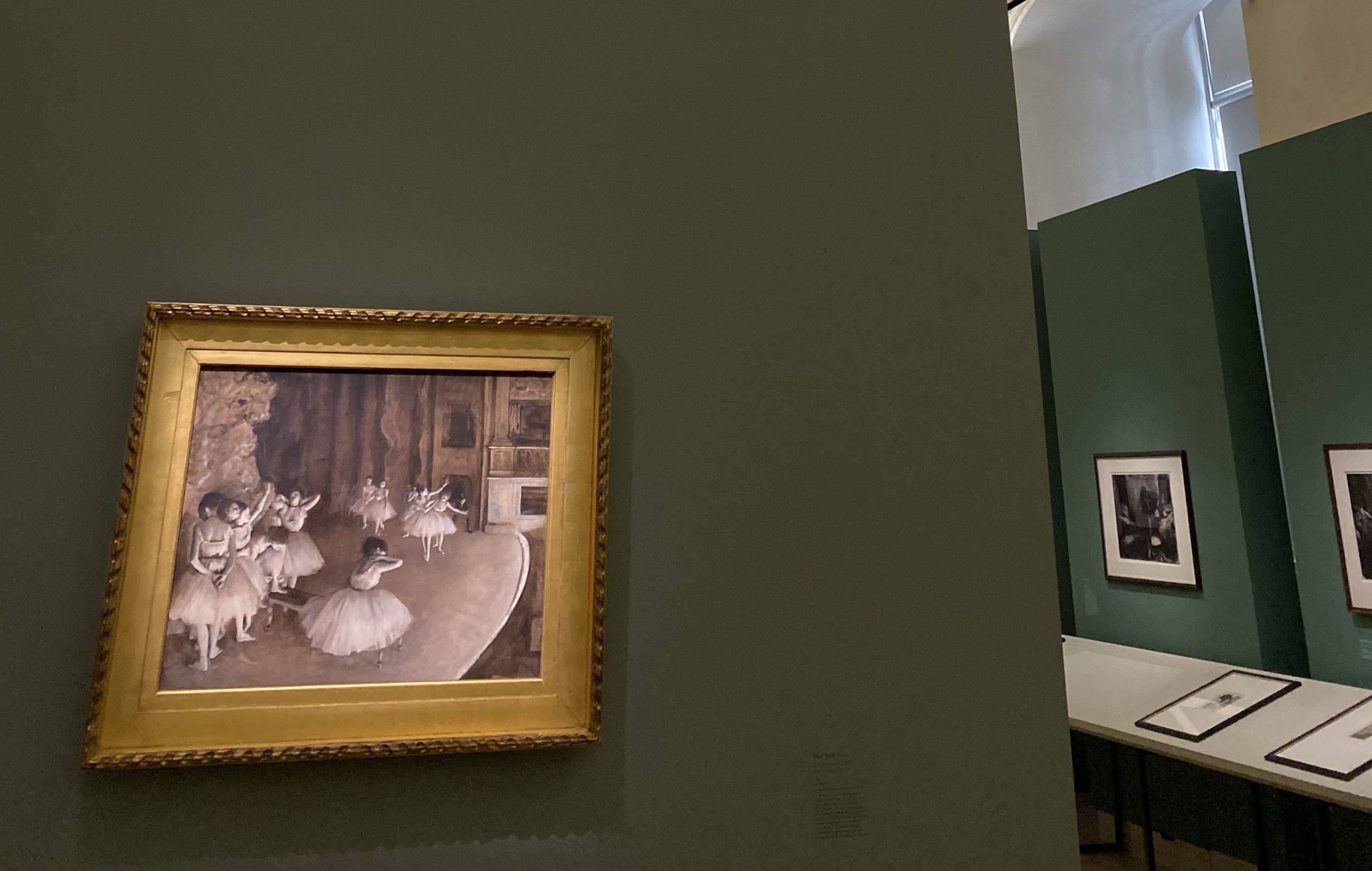
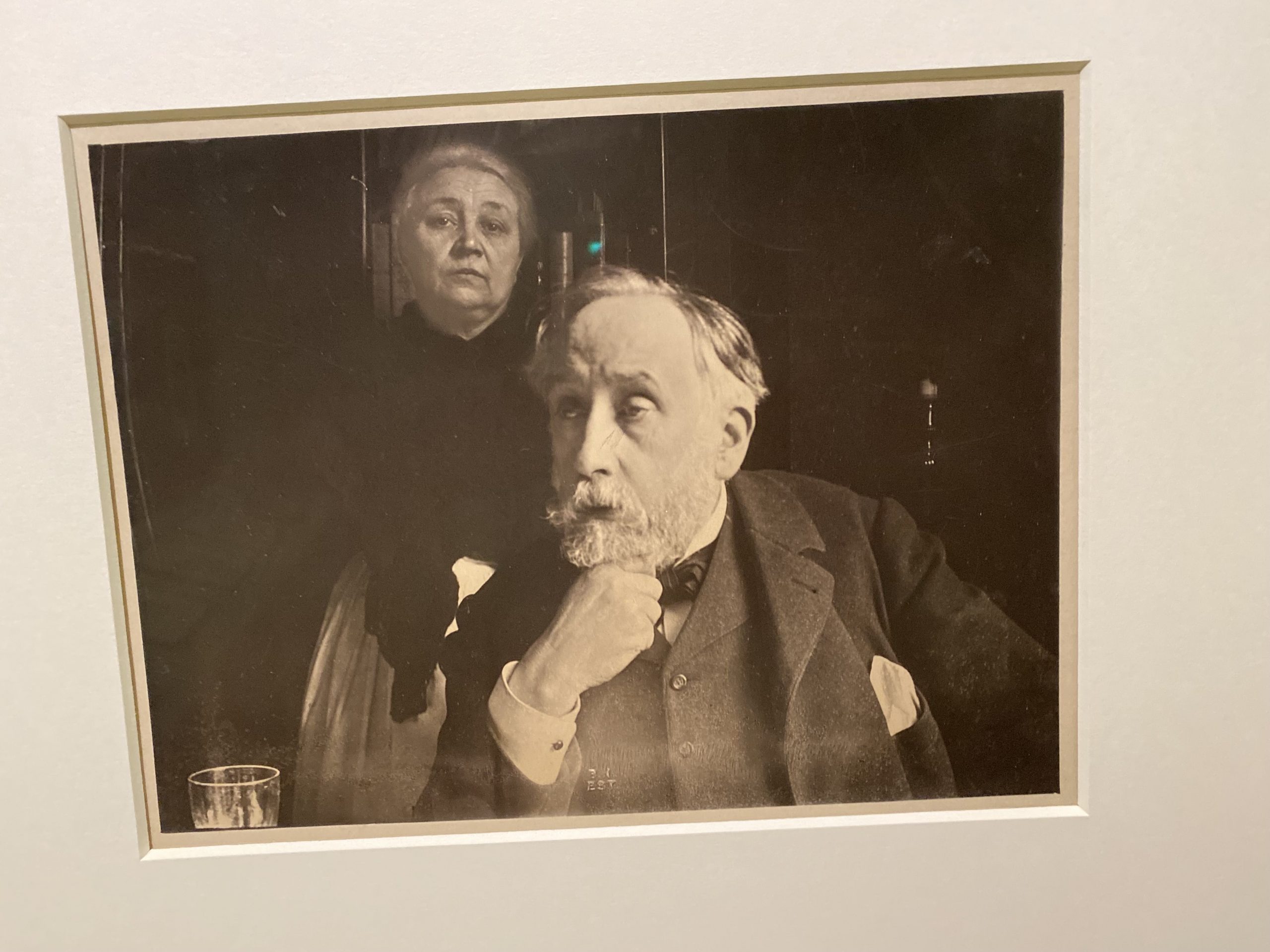
Working at the Bibliothèque nationale de France (BnF.fr), just like visiting, allows you to benefit from the many temporary exhibitions based primarily on their own collections and donations to the BnF. For those who like “dessins, estampes, photographies”, there is a small exhibition as of June 2023 which features on these three techniques in the work of a single artist Edgar Degas from the impressionist movement. Walking through the exhibition or slowly scrolling the press documentation allows you to follow the artistic life course of Edgar Degas. He started with the pencil dessin and evolved to the printing of a single or sequences of “estampes” (up to 20) to impress us beyond black and white with multiples of 50 shades of grey. Degas seems like continuously searching for the uniqueness of the moment to present strong emotions or to summarise interpersonal relationships immersed in a specific spatial setting. Having demonstrated the richness of dessins and estampes as artistic, but a bit laborious technique, he devotes his last few years to a more intensive work taking photographs and proceeding to their development or tirage as printed versions. No matter which technique he applies, he has a special artistic view that allows to capture emotions and immortalise them. The painter’s eye, as well as later on in his artistic career the photographer’s eye, keep scrutinising himself in various forms of “auto-portraits”. Beyond youth, the pervasive obsession with selfies nowadays had its artistic precursor Edgar Degas for example. Whereas most photographers would classify a double exposure as a “raté”, Degas experimented with this almost like a cubist, Picasso-like techniques in photography. Actually, the last few images in the exhibition show the artistic reference Picasso made in his work to images, impressions and techniques that inspired him throughout his artistic work. There are amazing links in and across the history of art or arts. (BnF expo Edgar Degas 2023). 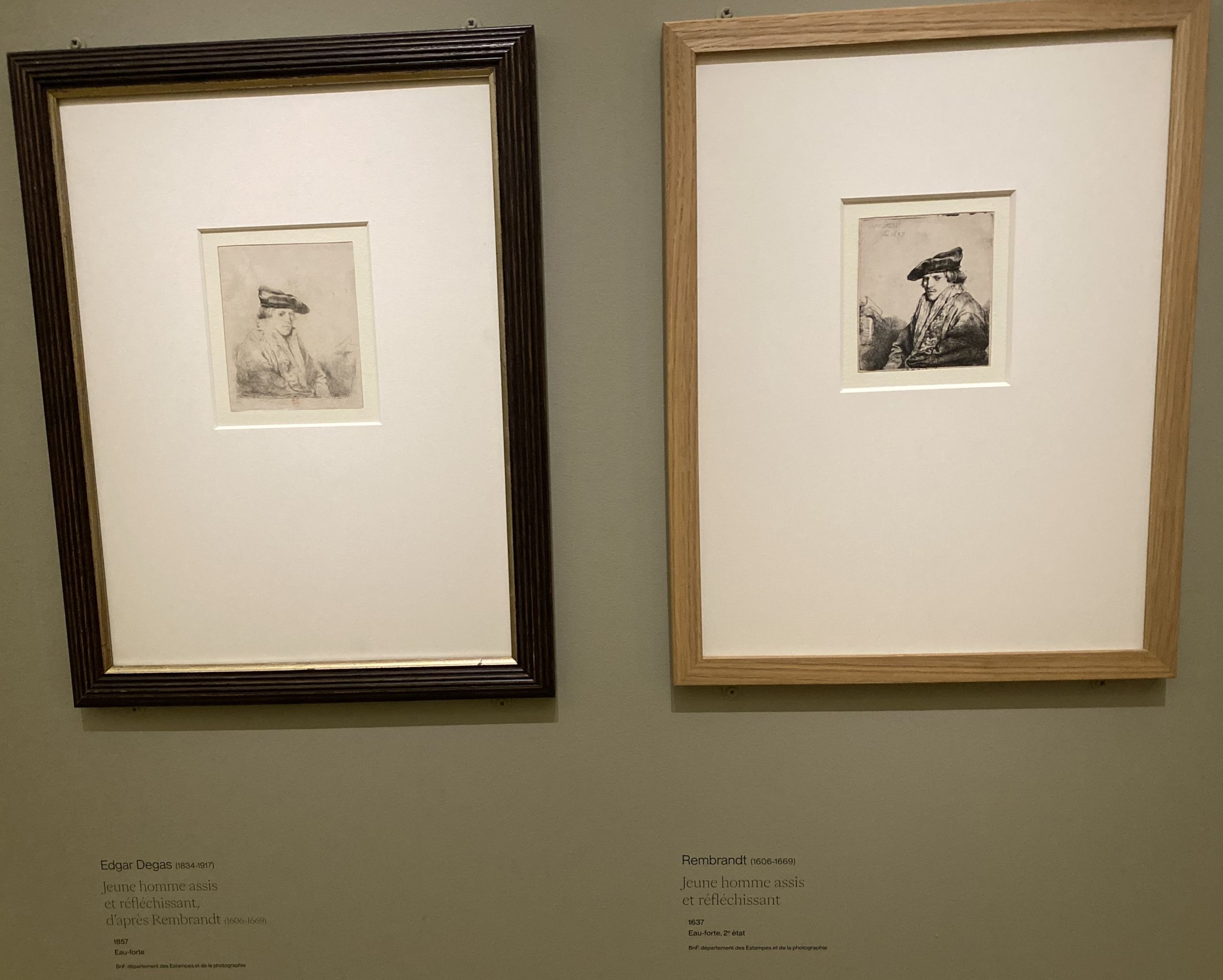
Fröhlich
Fröhliche Wissenschaft. Das geht. Nach gut 6 Monaten mit einem Blogeintrag pro Tag hat sich eine Textsammlung ergeben, die recht umfassend ausgefallen ist. Nach eigenem Monitoring der Themen, wie die Bearbeitung der UN-Themen zu strategischen Entwicklungszielen, oder der alphabetischen Auflistung von Schlüsselwörtern der Sozialwissenschaften sind nahezu täglich Kommentare entstanden. Neu war für mich die Bildredaktion, als Kommentar, Erläuterung, Selbstkritik oder wissenschaftliche Referenz. Eine interessante Variante, Erkenntnisse mit Key-Visuals zu unterstützen. Die bildliche Erinnerung an Beiträge ist ein eigenes Inhaltsverzeichnis. Klar, Hund- und Katzenbilder werden das Ranking der am meisten aufgerufenen Beiträge gewinnen. Egal, wir machen fröhliche Wissenschaft, immer weiter, immer heiter, so bleibt es lebenslanges, lebensweites Lernen. 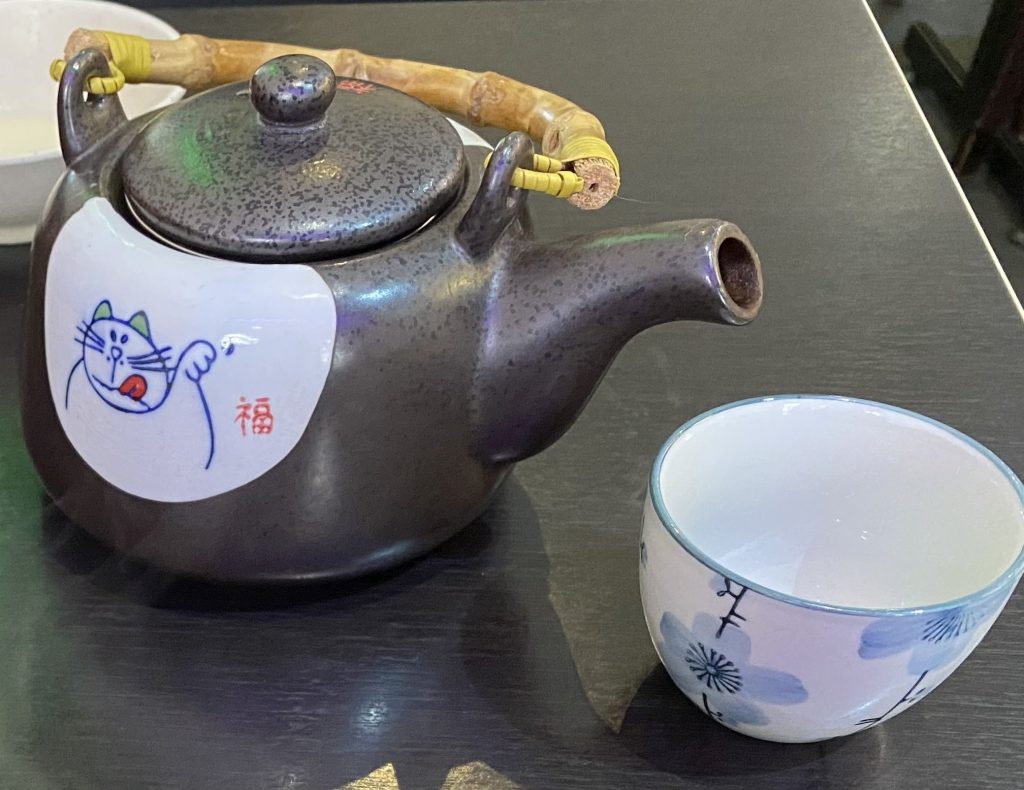
2P2R
2 Pinot 2 Riesling. That could be the long version of 2P2R. However, this far from (politically) correct. The not-joking scientific medical journal “The Lancet” (Vol.401 Nr 10391) has next to the article on “Laughter is the best medicine” coping with trauma, the serious matter of how best to deal with pandemics. Remember 2P2R as the important lesson from the pandemic. Prevention, preparedness, response, and recovery (2P2R) are key. And don’t forget about primary health care or essential (medical and other) workers. This is, in short, the message from Arush Lal and Nina Schwalbe (Paper Link). Lots of social topics involved in this correspondence from the authors. Prevention is a big issue and, as in the health system, fighting continuously for sufficient resources. Prevention is in most cases less costly than curing a disease. Preparedness has direct costs. Masks and ventilators need to be produced, stored and monitored in their functionalities. Response has to be immediate, masks in China a important but do not allow us to respond fast to local emergencies. Recovery can be long and costly as well, just as we learn from Long-COVID patients.
Now we need to define properly what is included in primary health care. Medical doctors, nurses and technicians of hospitals have to reach patients and hospitals in pandemics or need child care, food etc. and, maybe, also laughter to avoid trauma. Remember 2P2R, but best in company with your loved ones, but not on your own. 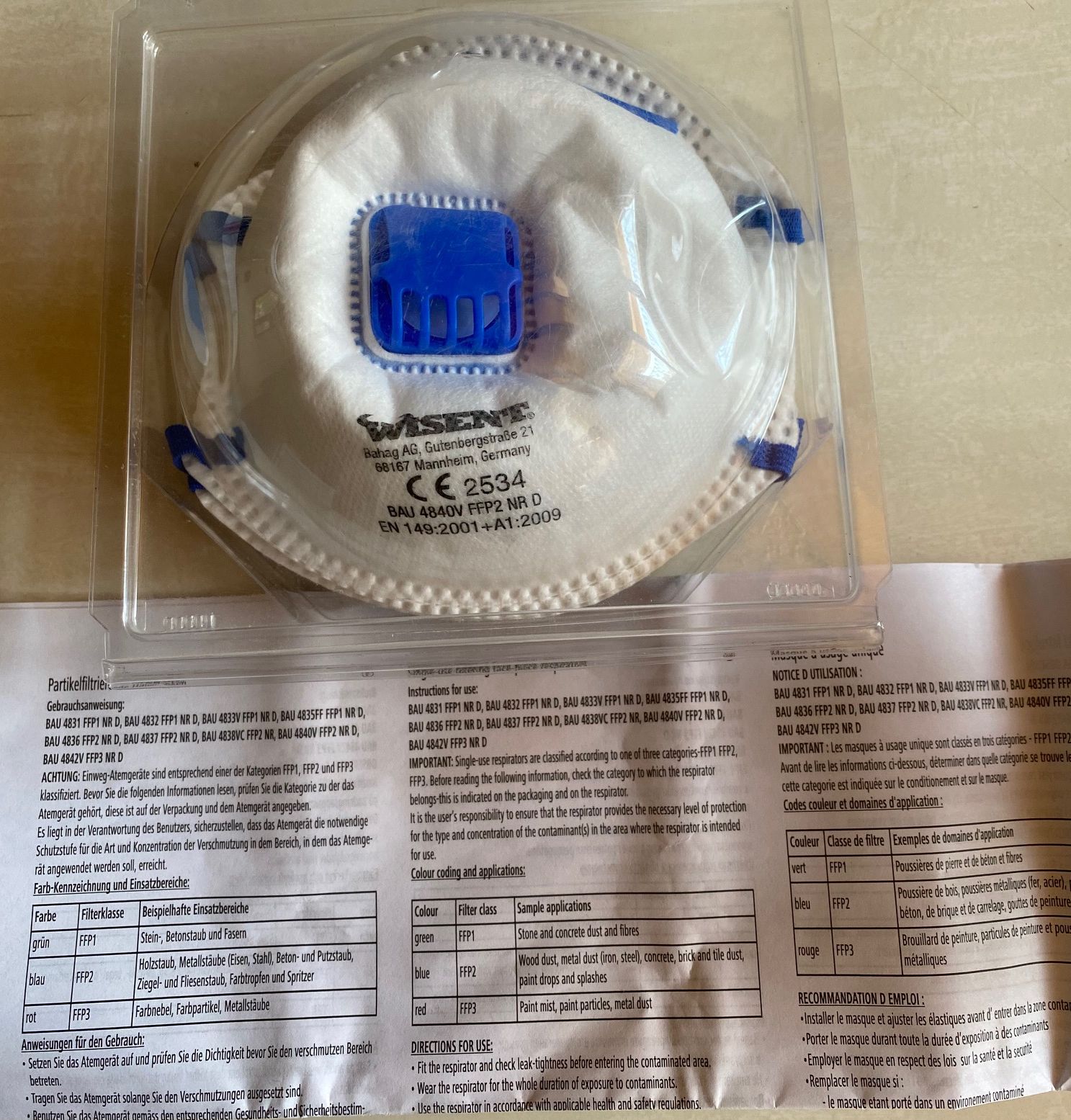
Himalaya
In May 2023 we commemorate the 70th anniversary of the first claiming of the Mount Everest in the Himalaya region of Nepal. Since then, the tourism to reach the highest mountain and have your photo taken there, has become a kind of over-tourism. Spectacular memories and images lead to persons taking unprecedented risks for a bit of fame. 30 persons have died on such expeditions. It is a bit more exclusive than running a marathon of 42,125 km, but even there occasional deaths are part of the race.
Nepal needs the foreign currency to build and rebuild the country. After resources have created the wealth of nations, it is tourist attractions that favour accumulation of wealth. Beware of over-exploiting nature in this respect. The consequences and costs are non-negligable. Climate change does not stop in front of tourist attractions. Some routes in mountains are already more dangerous due to melting of what we named wrongly permanently frozen areas (permafrost). Using virtual reality should allow us rapidly to experience the splendour of the highland Himalaya peaks and climbing. In the meantime enjoy some momo (Himalaya dish) rather than making preparations or training for the next top mountain. It is the images of the area that count, not us in front of the mountains or seemingly endless space. Images and photos taken can help us over the urge to visit this spectacular area ourselves. The planet will need us being satisfied this way, just like watching photos or movies rather than demanding to live in a splendid surrounding or building (castle). My home is my castle and my imagination is my travel book. 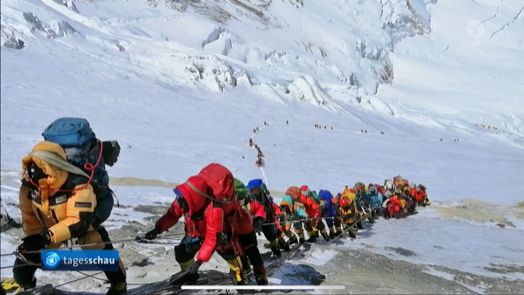
Repair 3
Repair is our new mantra. Think of repairing in all domains as of now. Nature is showing us the way how to repair in many ways. Culture is also embracing the shift towards repairing as caring. If we really care about our planet, and there is no planet B, we shall have to repair in many more domains. We are used to repair bicycles, cars, roofs, windows etc. Repairing is never boring. You can improve the performance of a device or building by repairing it, even with relatively small budgets. Isolation of buildings is a good example of investing in upgrades through repairing. Rather than throwing away a functioning heating system repairing it with an energy saving device is enhancing its performance and produces fewer emissions in the short run. Heat pumps are the way forward for new installations. Shifting a sector, heating with gaz, to ensure longer lasting repair and improve options would save a lot of raw materials and CO2 as well. The construction sector has repair work almosts in its DNA, the energy sector will have to make that shift as well. Dare to repair. 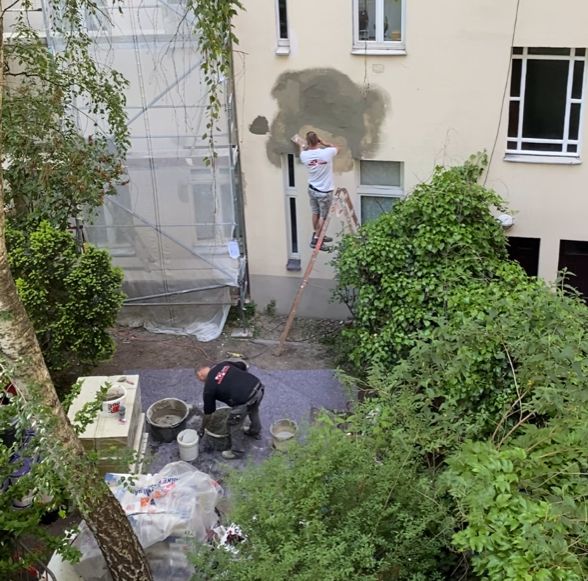
Krieg
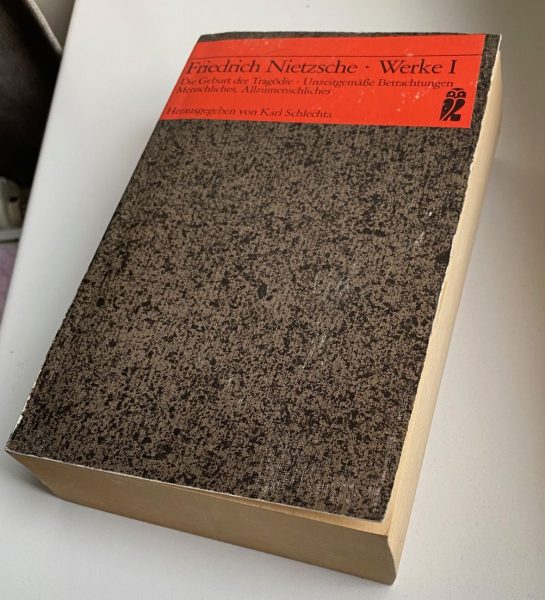
„Zugunsten des Krieges kann man sagen: er macht den Sieger dumm, den Besiegten boshaft. Zugunsten des Krieges: er barbarisiert in beiden ebenfenannten Wirkungen und macht dadurch natürlicher; er ist für die Kultur Schlaf- oder Winterszeit, der Mensch kommt kräftiger zum Guten und Bösen aus ihm heraus.“ (Nietzsche, Menschliches, Allzumenschliches Nr. 444 S. 668).
Wir werden der Ukraine ermöglichen, ihre Kultur zu erhalten und gestärkt durch den Krieg zu bringen. Das können wir ermöglichen und gleichzeitig der von Putins Russland eingeleiteten Barbarisierung seiner eigenen Bevölkerung entgegen wirken. Nietzsche hatte das recht klar durchdacht und die Gefahren des Krieges kühl berechnet. In seinen aphoristischen Betrachtungen (u.a. Menschliches, Allzumenschliches) nachzulesen, lohnt immer mal wieder. Es schärft den Blick für zu schnell Vergessenes.
Die Einen dumm, die anderen boshaft gemacht. Es lässt sich damit nichts zugute des Krieges sagen, außer es werden Tendenzen, negative wie positive, verstärkt. Der Prozess der Zivilisation (Norbert Elias) wird auf barbarische Zeiten zurückgeworfen. Nur mit Erhalt und Förderung der Kultur kann dem begegnet werden. Die Ukraine ist auf einem vielschichtigem, demokratischem und kulturellem Weg in die Zukunft.