Waldbrände sind leider jenseits vom Süden Europas auch im Zentrum von Europa ein Bestandteil der täglichen Gefahren geworden. Vor 50 Jahren waren die seltenen heißen Sommer die große Gefahr. Seit einiger Zeit bemerken wir öfter heiße Sommerwochen, die die Wälder austrocknen und leicht entzündlich machen. Jetzt haben wir die noch frühere Sommersaison nicht nur im Süden, sondern auch im mittleren Europa. Neben den Bränden in der Lausitz in Deutschland, kämpfen Feuerwehrleute öfter in den französischen nördlicheren Waldregionen mit Bränden. Eine Nachricht, wie die zum Brand Anfang Juni im „Forêt Fontainebleau“, sollte uns klar machen, da brennt unserer europäisches ökologisches und kulturelles Erbe. Jeder hat die brennende Kathedrale „Notre Dame de Paris“ noch in Erinnerung. Da war Klimawandel nicht die Ursache. Bei den Waldbränden sieht das anders aus. Das Ergebnis ist das gleiche. Die Vernichtung unseres kulturellen Erbes schreitet voran ohne Prävention. Das ist eine zentrale Aufgabe. Nicht erst in der Zukunft. Prävention verlangt Handeln, Planen und Implementieren schon heute. Das ist ein riesiges Qualifizierungsprogramm nötig. Es umfasst die Sensibilisierung für die allgegenwärtigen Gefahren genauso, wie das Schulen allfälliger Einsätze von professionellen und freiwilligen Helfenden. Gefahr erkannt, heißt leider nicht schon Gefahr gebannt. Da gibt es viele Zwischenschritte, die geprobt sein wollen, damit ein effektiver Einsatz gelingen kann. Es bleibt viel zu tun, packen wir’s endlich an. (Artikel in La Marne 7.6.2023 S.6) 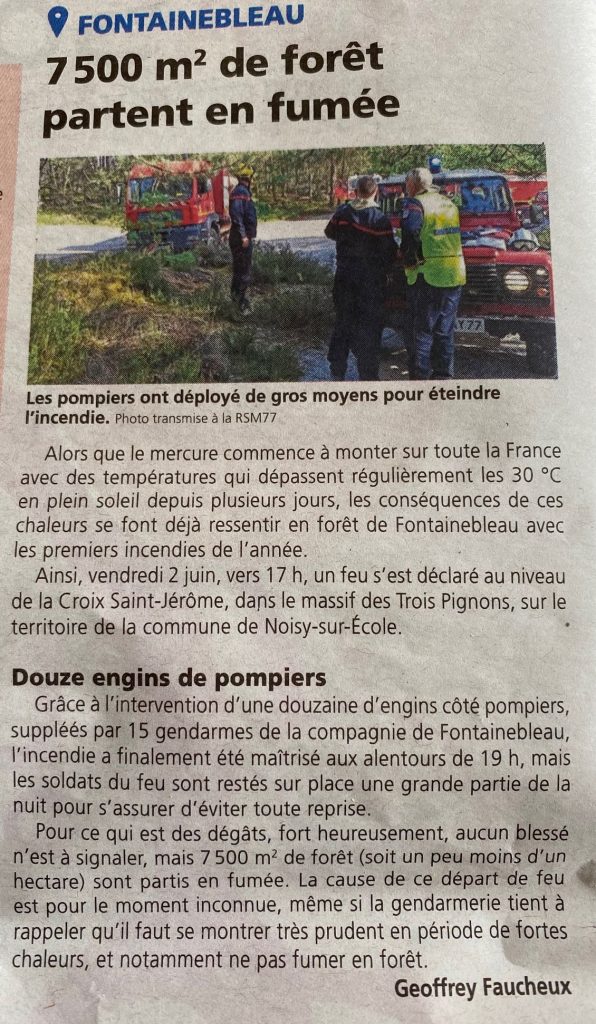
Corruption EP
Corruption is a severe crime. Not only in administrations, organisations and enterprises, but primarily in democracies it is discrediting political systems. Autocracies rely on corruption as a major tool to be able to persist over time. They are used to such practices. Democracies rely on meritocratic systems, where ideas, effort and winning elections should be the major ingredient of achieving higher positions in organisations, enterprises, political parties and democracies. This is not easy to ensure. The European parliament has a tough time to get rid of an enemy of the democratic Europe. Rather than stepping aside for the time of the legal procedure, Eva Kaili, accused, but not yet convicted of corruption is willing to destroy the European project as much as she can. If money can buy political decisions, the European project will no longer find wide-spread support. Big interests will always have a strategic advantage, however, the ethical principles on which democracies are found have to guard against corrupt misbehaviour. The same applies to the business world. Even low corruption countries like Sweden still face a risk of adverse effects of corruption like the negative impact on entrepreneurship on the local level. It is another context, but the same conclusion.
Additionally, it is part of the strategy of corrupt persons to portray themselves as victims of other persons’ wrong-doing. The major function of this strategy is to remind other persons in the corrupt network that the network has still some clout on its members as well as outside the inner circle. Hey, we are still alive and in powerful positions, they proclaim.
Therefore, the fight against corruption is a long and persistent one. Reducing the guards against early onsets usually is very lengthy to fight later on. Always a painful lesson for believers in democracy and the European project. (image Jacques Jordaens before 1678 “The King Drinks! Musées royaux des beaux arts, Brussels). 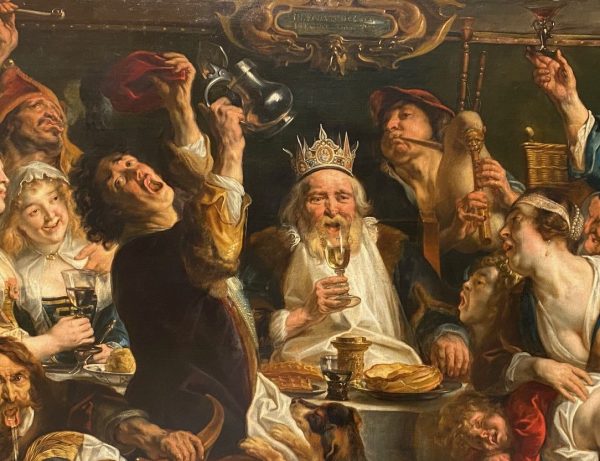
Jury
The are many forms of a jury. In many judicial processes a jury accompanies judges or the president of a jury in the preparing and voting on the verdict. In sports competitions or arts contests it is also common practice to have a jury of several persons to assist in the decision-making process. In academia we are also used to sit on juries to award Ph.Ds or academic positions or fundings. From famous film festivals (Cannes or Berlin) we know the tricky part to select jury members and supervise the proceedings of the jury to follow the official rules of how to accord prices according to a set of predefined rules. The basic proceedings are very similar irrespective of field of application, academia, film, music. Decision-making of the jury is usually based on some voting procedures, attribution of scores and summarising across jury members (to avoid or minimize the effect of corruption for example). Of course, there is a scientific literature on fallacies to avoid for juries themselves or in the selection of jury members.
The Concours Reine Elisabeth in Brussels 2023 has large jury. This year the enlarged diversity of the jury included the amazing lyric soprano Sumi Jo. The slightly more diverse jury (compared to 2018 song competition) might have contributed to the impressive participation of Asian singers in 2023. In competitions the quality of the jury has already a role in the number of international submissions you are likely to receive. Signalling diversity in the jury, therefore, is an important element of diversity of participants and probably intensifies competition through a broader reach. The winner of 2023 Baryton singer Taehan Kim performs a repertoire of Lieder and Arias in at least double the required 2 (European) languages. The impressive performances in the Demi-final with piano accompaniment and then the Final with the full Orchestra were cheered by the jury (in points) and the audiences as well. The repertoire of Taehan Kim ranges from Beethoven, Donizetti, Poulenc, Schubert, Verdi, Tschaikovsky to Schoenberg in the semi-final and from Wagner, Mahler, Korngold to Verdi in the final performance. Born in 2020, he certainly has a steep career in front of him, in addition to a potentially genetical predisposition as researchers just published in Science Advances 2023.
Praise goes to the accompanying pianist, the orchestra and the jury as well, which has encouraged diversity in applications and throughout the competition. An important training in cross-cultural competence for all performers involved. Rather than having a contest behind a curtain, for performers and/or the jury, the whole competition is an excellent piece of daring far reaching transparency of a jury’s work. Everybody online can still listen to the competition performances and judge (or train judgement) for themselves, because “the jury is still out”. 
Birds
The study published in PNAS in May 2023 is demonstrating the loss in bio-diversity with respect to birds over last few decades. Our economic growth has caused considerable costs. Some of these costs we shall never be able to make up again. Species gone for ever, we should care. Measuring the loss is a first step in calculating the negative impact our economic growth models have already caused. Time to stop, repair and reverse as much as we still can. It is not fair to next generations to destroy a large amount of bio-diversity now and leave the exploited planet to “no-future generations”. A good documentation of the losses (radio-france-LINK) allows us to pin down who is most responsible for the losses. Agro-industry with the heavy use of pesticides is well known for the huge negative impact it has on bird populations and us as well. It is not only a European issue, but rather a world-wide issue. However, starting at home is a huge step to practice agriculture differently. Most of this is known for some time. It is the implementation of the necessary policies where powerful lobbying is successful to carry on as usual. Thinking “Beyond growth” delivers many useful perspectives and solutions to these problems. 
Frau, Leben, Freiheit
Seit der brutalen Tötung einer Frau im Iran gehen viele Iranerinnen und Iraner auf die Straße. Als Zeichen ihres Protests rufen sie: Frau, Leben, Freiheit! Das ist und bleibt eine kurze Zusammenfassung für die Forderungen der Frauen, die trotz massiver Unterdrückung unablässig demonstrieren. Viele Hinrichtungen und Misshandlungen von Frauen werden wir weiter anprangern und fordern den internationalen Druck auf das Regime im Iran zu erhöhen. Wir dürfen nicht wegschauen, sondern werden weiterhin die Öffentlichkeit wachhalten. Diese aktiv für Menschenrechte eintretende Stellungnahme wurde von Yasmin Fahimi (DGB-Vorsitzende) eindrücklich auf dem EGB-Kongress vorgetragen. Mit überwältigender Mehrheit wurde diese Resolution vom Kongress befürwortet. Die italienischen Gewerkschaften stimmten gleich ein in den Ruf: Donna, Vita, Liberta!
Bravi! So rufen viele sonst eher in den Opernsälen. Hier passt es zu der Stimmung auf dem EGB-Kongress. Mit großer Einigkeit und ausgeprägter Solidarität wurde eindrücklich Stärke bewiesen, die auch über Europa hinweg Strahlkraft besitzt. Bravi! Kurzvideo EGB-Iran-Resolution Yasmin Fahimi und italienischer Support. EGB-Iran-Akklamation-IT. 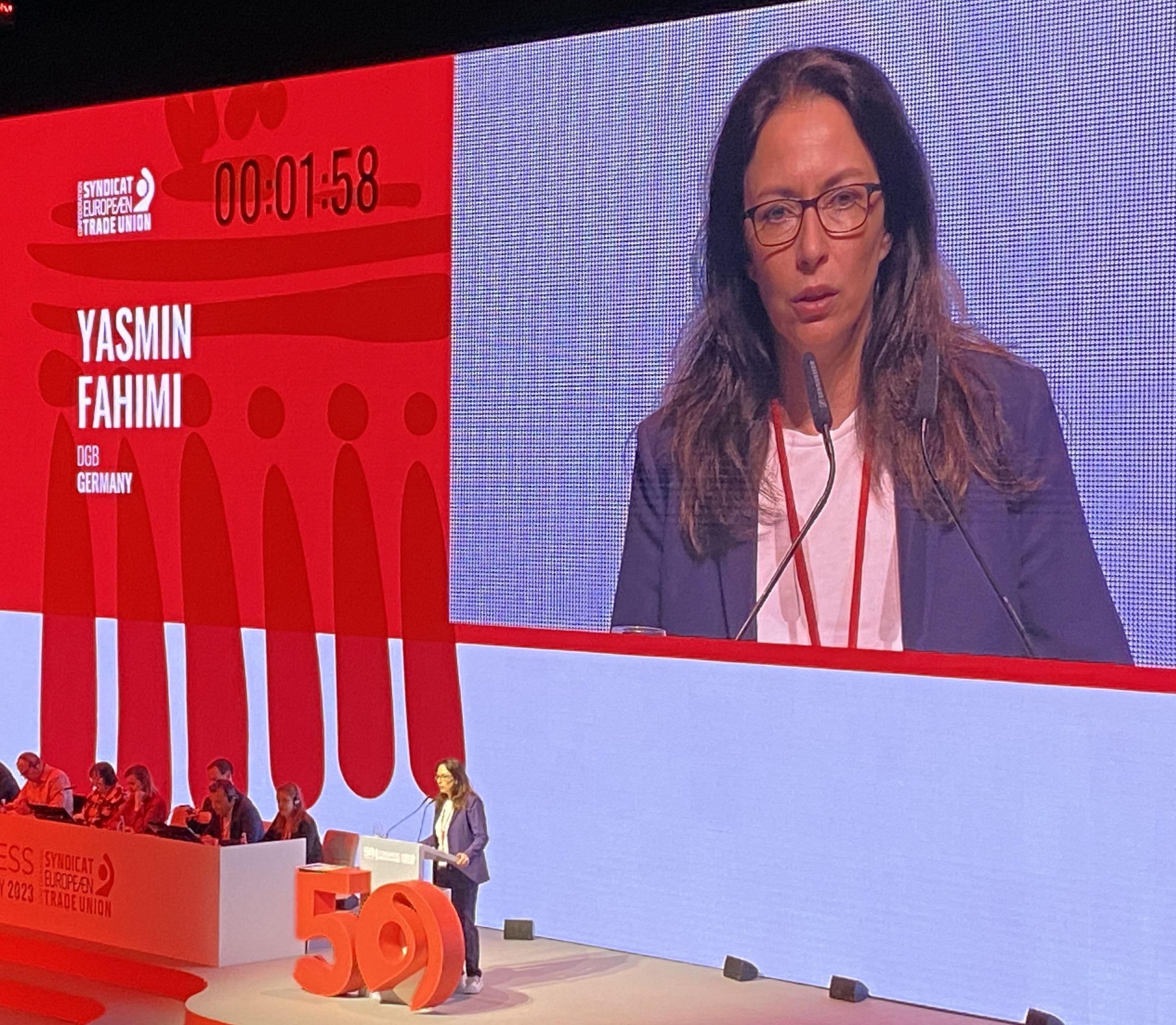
Gewaltmonopol
Für Demokratien ist die Frage des Gewaltmonopols eine sehr entscheidende Frage. In gleichem Atemzug muss dabei die demokratische Kontrolle dieses Monopols gewährleistet sein. Verfassungsrecht in Demokratien ist darin eindeutig. Lediglich die Praxis des Rechts gestaltet sich oft schwierig und durchaus wechselhaft. Die Studie von Laila Abdul-Rahman, Hannah Espin Grau, Luise Klaus und Tobias Singelnstein (2023 bei Campus kostenlos downloadbar) greift das wichtige Thema mit einer repräsentativen Studie von 3300 Opfern polizeilicher Gewalt in Deutschland auf (Zusammenfassung). Anders als im amerikanischen Raum fehlt bei uns bisher die Berücksichtigung von Rassismus und räumlicher Verortung in der wissenschaftlichen Aufarbeitung des Geschehens. Das Interaktionsgeschehen oder Eskalationsstufen (S. 31) bieten einen weiteren Ansatzpunkt zukunftsweisend präventiv tätig zu werden. Die Aussetzung der Strafverfahren gegen Polizeibedienstete wegen Gewaltausübung (Körperverletzung) ist mit 93% aller Fälle außerordentlich hoch. Das Kapitel 8 (S. 307ff.) über die strafjustizielle Aufarbeitung offenbart die Randbedingungen der justiziellen Verfahrensweisen.
Das Gewaltmonopol darf nicht in Frage gestellt werden, aber sobald Gewalt des Monopolisten unverhältnismäßig und rechtsstaatlich ungenügend kontrolliert wird, kommt eine politische Gewaltenteilung langsam ins Wanken. Die wehrhafte Demokratie braucht Polizeigewalt, um beispielsweise das Demonstrationsrecht durchzusetzen oder öffentliche Veranstaltungen zu sichern. Aber die Exzesse polizeilicher Gewalt müssen geahndet werden. Solche Anklagen finden wir in England anlässlich der Krönungsfeier, in Frankreich bei Streiks oder Fußballspielen oder in Belgien bei Gipfeltreffen oder Räumungen von Flüchtlingslagern. Das ist keine Randnotiz. Friedlicher Protest ist wesentlicher Bestandteil von Demokratien. Einschüchterung durch Gewaltanwendung ist Teil der dunkelsten Kapitel und muss entschieden unterbunden werden im Friedensprojekt Europa. 
Jahrestage
Jahrestage sind die Geburtstage von Organisationen oder zeitgeschichtlichen Dokumenten. Der 23. Mai ist so ein Jahrestag. Alle BundesbürgerInnen sollten an diesem Tag die Verkündung des Grundgesetzes im Jahre 1949 feiern. 75 Jahre sind das in 2024. Die Ostdeutschen hatten mit den Füßen abgestimmt, dem Geltungsbereich des Grundgesetzes beizutreten. Eine gesamtdeutsche Verfassung lässt noch auf sich warten. Provisorien halten oft ganz gut.
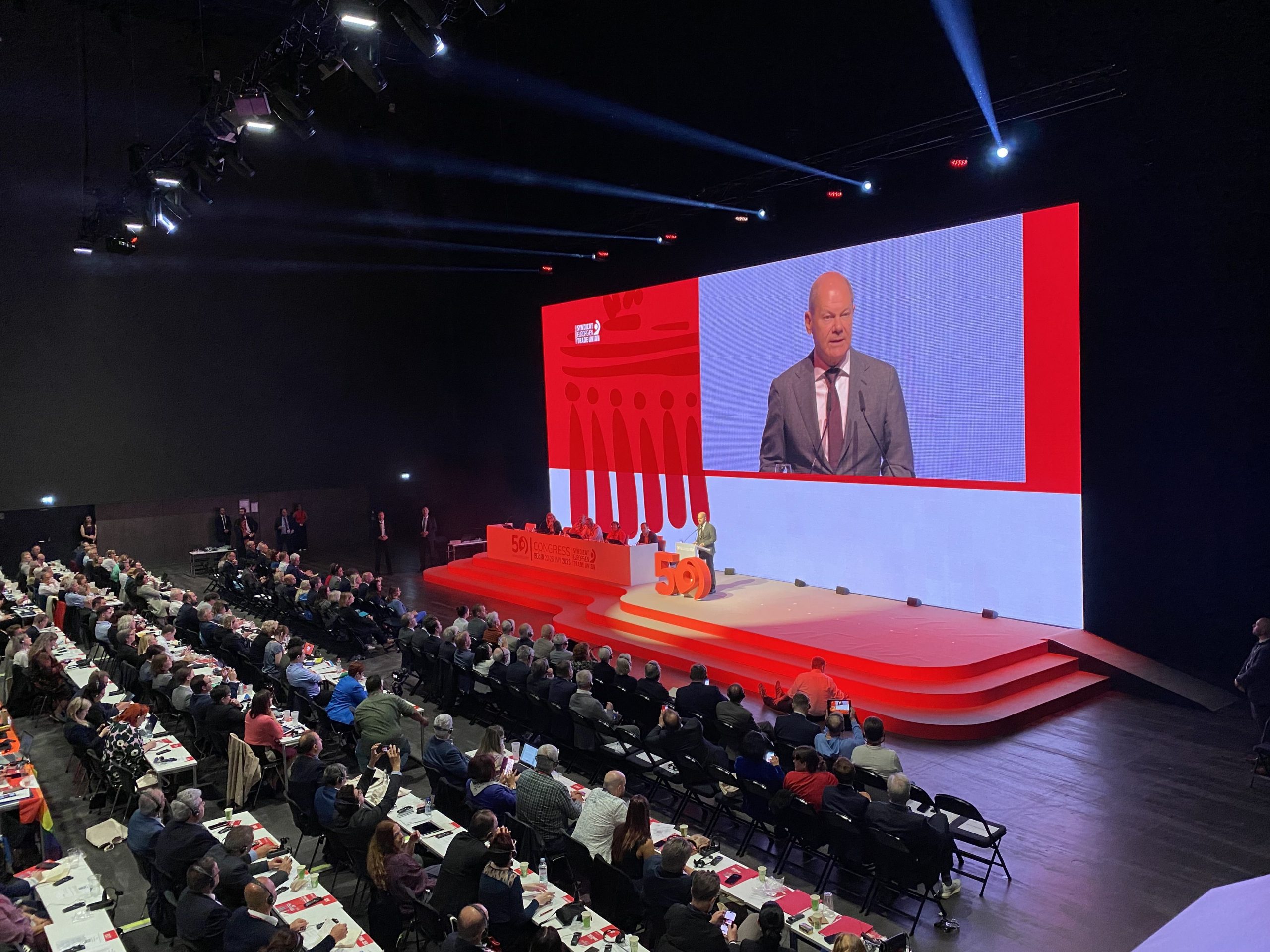
160 Jahre SPD, feiern wir etwas verhalten, ob der enttäuschenden Wahlergebnisse der heutigen Sozialdemokraten beispielsweise in Berlin (außer in Bremen Mai 2023). Der Allgemeine Deutsche Arbeiterverein (ADAV) von 1863 in Leipzig begründete die lange Tradition und der Kampf für Rechte der Arbeiter. Zu dem Jahrestag der Sozialdemokratie passt der am 23.5.2023 in Berlin stattfindende Kongress, gleichzeitig zur 50 Jahre-Feier des Europäischen Gewerkschafsbundes (EGB). Viele Sozialdemokraten haben dabei Anlass beides zu feiern. Ferdinand Lassalle, Gründer des ADAV, forderte aufgrund seiner These vom „ehernen Lohngesetz“, die Armutsbekämpfung zu einem Hauptthema zu machen. 160 Jahre später feiert der EGB in Berlin auf seinem 15. Kongress die erfolgreiche Arbeit für eine europäische Richtlinie für Mindestlöhne. Manche Sprünge brauchen sehr viel Anlauf.
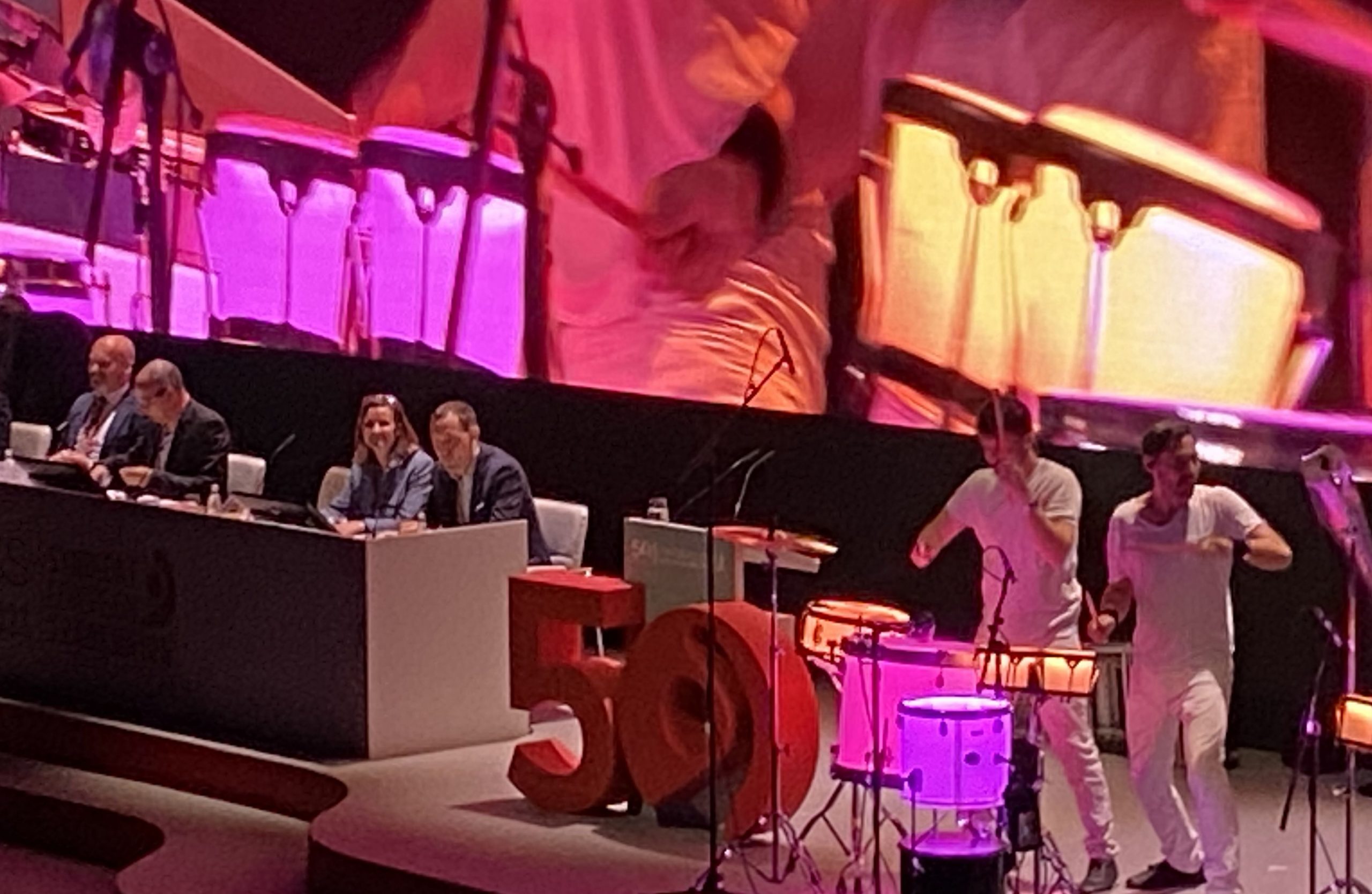
Weiter hinten in der Warteschlange der Aufmerksamkeitsökonomie der Jahretage reiht sich der 25. Jahrestag der Europäischen Zentralbank am 24.5.2023 in Frankfurt ein. Auf allen Feiern gibt es einen persönlichen Vortrag des deutschen Bundeskanzlers Olaf Scholz (gerade zurück aus Hiroshima und Südkorea). Sein Ausrufen der „Zeitenwende“ (Artikel in Foreign Affairs) wird deutlich in dem tösenden Applaus für die Aufnahme der Ukrainischen Gewerkschaften in den EGB (Bild unten) auf dem EGB-Kongress, der quasi im Laufschritt von der DGB-Vorsitzenden Yasmin Fahimi eröffnet wurde. Jahrestage können wehmütige Blicke in die Vergangenheit sein. Dem EGB-Kongress ist ein zukunftsweisender Auftakt „à la Zeitenwende“ gelungen. 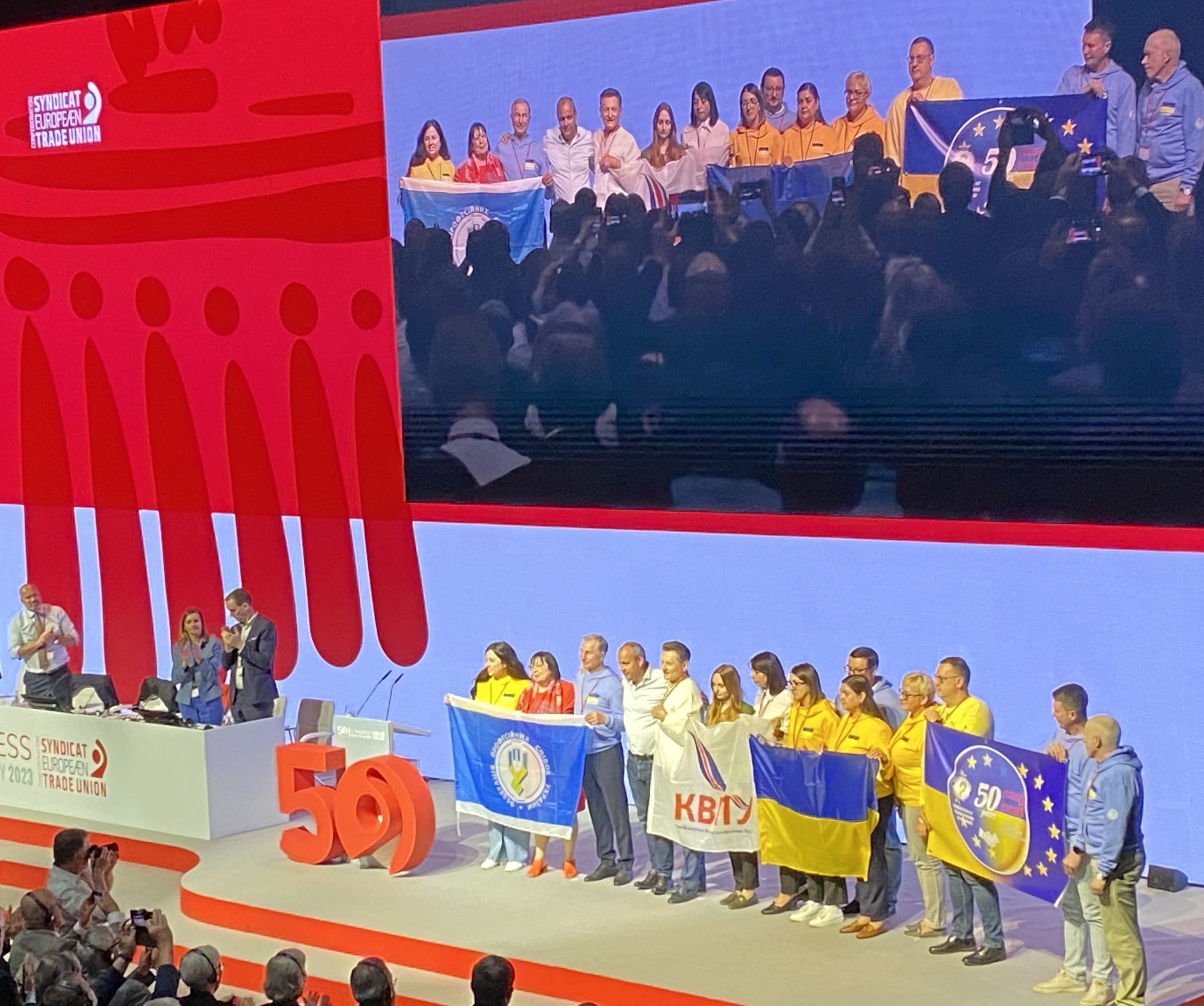
Put People First
Put people first is a natural claim of human beings. We tend to abstract from the fact that we implicitly rely on a sufficient biodiversity for our survival. Therefore, the natural claim to put people first has many preconditions itself and severe implications. The most obvious implication is related to our world of production and consumption. We need to build an economy that serves its people rather than one that uses up human resources and discards people to an inferior rank of importance. Externalising health and safety at work to save money in the process of production will only cost society much more later on. This needs to be part of the balance sheet of companies not only “national accounts” or relegated to some health statistics hardly known to the public.
Put people first in consumption, has come to our attention recently. With energy prices rising due to Russia’s war on Ukraine territory we have learned that energy prices may be grossly distorted. Firms’ versus consumers’ energy consumption became a thorny issue. Even legislation, like in Germany, that put people’s energy consumption before companies’ consumption of energy became subject for debate.
Same issue with artificial intelligence. Let’s put people first here as well. Discriminating use of language or biased conclusions due to wrong data input to train AI is not acceptable as excuse. AI may serve humans in their work or leisure, improve production lines through error detection or early onset of disease, but it cannot replace the human verification of a just or otherwise justified human intervention. Humans are not perfect, never will be either. This is a tough rule to teach the algorithms that guide AI. Put people first has a strong interpersonal or solidarity element enshrined in it. This is what matters, now, in the medium term as well as the long run. 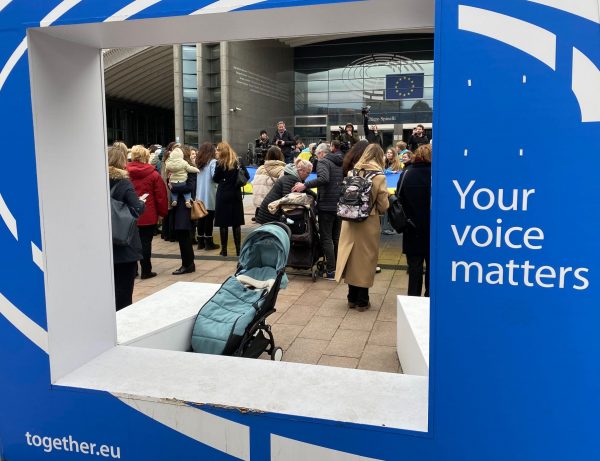
De-risking
Risks are all around us. Risk is the spice of life. True, but this might be an elitist concept of life or business. Survival of the fittest or the best equipped to take risks might be the consequence. After the 3 crises, financial, covid, energy, we have a new impetus to thrive for de-risking. Certainly, concerning our health, we are aware that prevention is key to fight a pandemic. In order to stem an energy crisis, most countries start to rethink their energy mix and achieving more energy autonomy is a major step to shield against risks of delayed delivery or commerce with belligerent states like Russia. De-risking is key in supply chains for industries (automotive production, microprocessors) as well as service providers (cloud services, care givers) just as well. Mariana Mazzucato (UC London) urges us to develop a new narrative to accompany the transformation of our production and service provision models. Mazzucato advocates to learn from lessons from the ground of how to proceed in the best way. Copenhagen is a good starting point to observe how a metropolitan city manages the greening and decarbonisation of a city. It is important to not only target single policies but the coherence of several policies and approaches. In my view de-risking means for Germany and the EU to shield energy systems from foreign, malignant interference. Only local production of energy and nearby consumption of it will ensure the de-risking of energy provision and consumption. Let us start with massive investments in rooftop solar or small wind turbines. Nobody complained about millions of ugly television antenna all around us. Solar cells on balconies contribute to a basic local electricity supply, difficult to target millions of solar cells instead of a single huge and horrifically dangerous nuclear power plant. At the same time ,we reduce dependency on monopoly or oligopoly structures that develop their own agenda (Too big to fail, remember those?). I prefer the reverse statement. Because they are so big, they are doomed to fail and, therefore, fail us sooner or later. The Forum New Economy offered an open and accessible platform for exchange of ideas. That’s a good starting point to address de-risking. Reducing Risk is in the subtitle of Rebecca Henderson’s Chapter 3 on “Reimagining Capitalism” (short Review), but I would like to add the business case for household production of energy for de-risking supply failure and exploitation of consumers through excessive profit margins as a prosumer business case. 
Crises
Crises, yes crises, we have seen a few in recent years. After the first financial crisis, 2009, the COVID-19 crisis and now the energy crisis, , they all have cost us respectively 1.6%, 2.5% and lately a whopping 7.8% of GDP loss according to Tom Krebs (Uni Mannheim and FNE) in his assessment of lessons from these crises. Also Philip Lane (ECB) showed the lower GDP growth rates due to the crises.
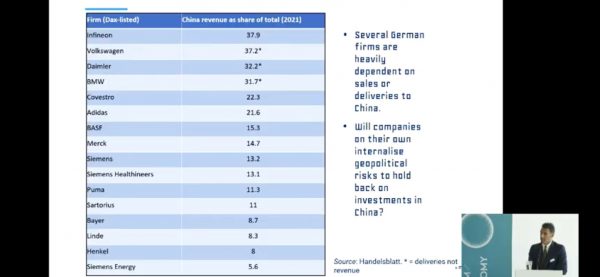
We lost out on the wealth of our nations and face mounting difficulties for the distribution of this wealth. As firms cashed in on profit margins lately, workers risk even more to fall behind significantly. At the same time, it is high time to prepare for the next winter season now, to ensure the same risks as the dependency on energy resources from outside Europe, especially Russia, can be maintained. The conference of the Forum New Economy from the 8th of May 2023 discussed several ways forward to learn our lessons from these crises. Strategic independence needs to be properly defined for Europe as a whole, not just in each individual state. Implementation has to be rapid as well. Geopolitical challenges will not wait for us to finish discussions. Germany and minister Robert Habeck has received some acclaim from the economists for a fast and rather successful reaction to safe us from an energy crisis last winter. Massive increases in renewables (+20% solar energy) has helped a lot to ensure sufficent energy supply when France suffered heavy reductions from its nuclear energy power plants. “Let the sun shine … in”, I would sing. However, we have to think even further ahead build our resilience based on improved energy efficiency and may rethink the risks and vulnerabilities of our economic model of production and consumption. Diversifying imports from Russia with imports from other countries and other (green) forms energy is part of the solution. A heavy reliance on China as buyer of our products is good for trade balance, but some sectors (automotive) are nowadays critically dependent on selling in China. Some of our partners are very anxious about this new dependency on Asia for our economic growth model (see figure below from conference). Market based economies suffer more openly from huge economic swings than more secret-based autocratic economies. Our state agencies have to keep that in mind and state intervention seems to become more likely options in future as we have already witnessed in the past crises. We had to rely on running higher state deficits to cover the losses incurred from the crises. The EU, the larger Europe in combination with the transatlantic and pacific alliances has a lot of resources to address these strategic interdependencies. Being prepared, in strategic thinking and potential implementation procedures is a major part of building capacities that ensure resilience and strategic independence. As in a game of chess, you have to think ahead a couple of steps to frighten off some potentially dangerous moves of other players.
In terms of a planetary concern we still have to address the major climate crisis and the last 3 crises have largely contributed to reduce the resources we have available to address climate change. Smart crisis management succeded to ask for emission reductions in return for subsidies from firms and private households. This might be the “best practice examples” worthy to learn from. There are still huge evaluation tasks for analysts of these crises.