Sublime

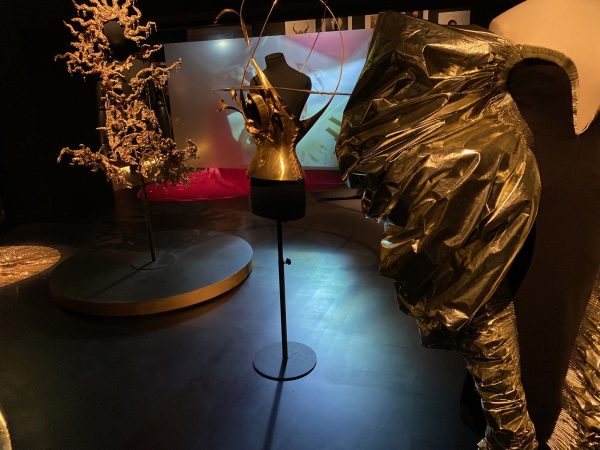
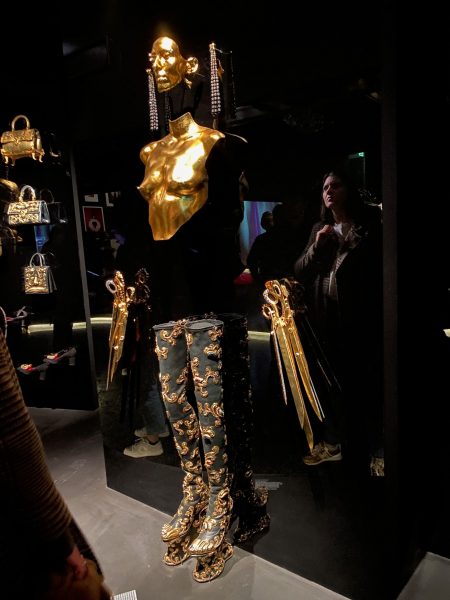
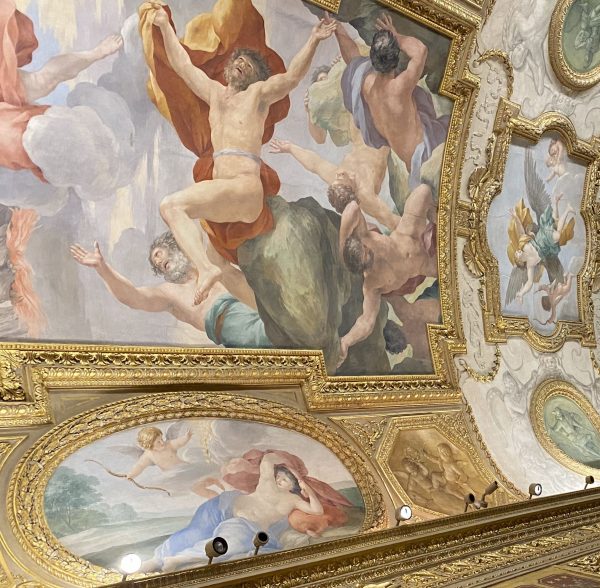
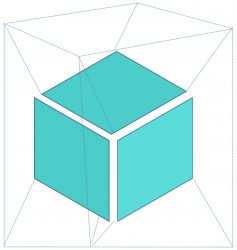
The exposition of art work in the MAD “Musée des Arts Décoratifs” in Paris is sublime. Growing out of fashion design into the work of art can be a process of sublimation: passing from one state of designing one product to producing artwork. The intermediate state of artefacts created for designing a product, like the drawings of fashion designers or scenery and costumes in theatre and operas, are often less visible or subject of exposition. Objects become subjects. A trend in recent expositions is to devote more space to the applied arts like stage design, costumes as well as products of everyday use. “Bauhaus” has a lasting effect.
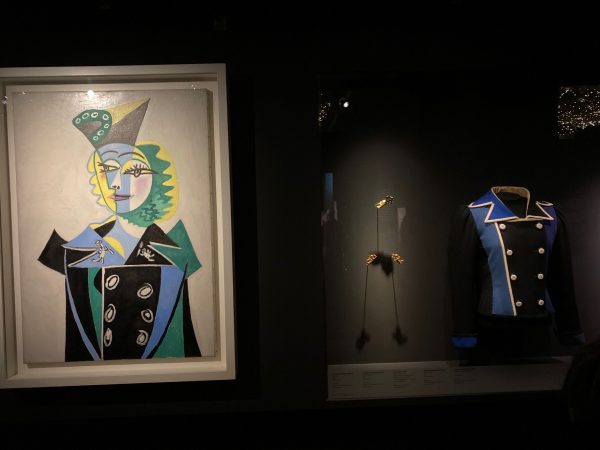
Elsa Schiaparelli has achieved this sublimation. Starting with extravagant fashion design, her designed fashion objects were adopted by Picasso before she developed into the sublime state of artist with her artefacts herself (see below). Now in this process of subjectivation she is the prime subject of an exposition herself. The combination or arts and crafts (Kunsthandwerk) has been always present in art history. The challenge of concepts combined with arts is more recent or just more explicit since the late 19th and 20th century. Being able to live from your artwork is still a challenge, though due to “Mäzene” and state subsidies it is more feasible to follow artistic trajectories. 
Subject/Object

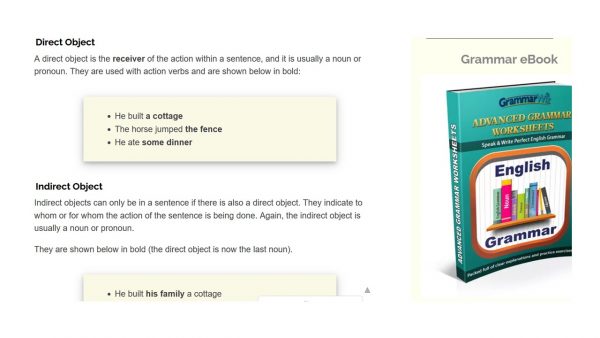
The 26 notions in alphabetical order may determine a subject and/or an object in a sentence. This is just the simple grammar of a language. Add a verb and we have a full sentence subject predicate object (SPO) as they say in English. In the philosophical sense the subject-object relationship is a bit more complicated. Beyond Aristotle’s objectum and subjectum, we think of Descartes “Cogito ergo sum” as the definition of the self as subject, rather than being an object of God’s will and creation. Kant then forms the couple of object and subject in the sense of objectivity and subjectivity. Pure reasoning is the abstraction of subjectivity to achieve an interpersonal objectivity. The master of dialectic thinking, Hegel, conceives an object as objective conscience and a subject as particular subjectivity. Having defined the extreme points of the spectrum makes you think about a joinder or the synthesis. Freud adds the object as result of sexual impulse. Wittgenstein then introduces a kind of hierarchy into the S/O-relationship. Objects become ultimate elements and indescribable in content as kind of basic notions. This follows the mathematical view of objects as indirect description of a mathematical object through axioms stating the basic principles governing the object and then deduce the logical consequences. Gödel’s incompleteness theorem , however, rejects this claim. This is the basis of, for example, algorithmic testing whether deductions are true or false. Condensed mathematics has relied on this testing approach as well.
A pragmatic perspective is added by Marie Gautier (p.719 “Notions”). If we want to reach an objective, we shall need others to realize it. By way of this imagination the S/O-relationship turns into an interactive relationship. Following Habermas, we might claim that the S/O-relationship is also a part of communicative action and therefore the discourse ethics. The definition of who or what is object and/or subject needs open discourse. The arena is not only the parliament, but larger audiences or the world wide web. Beware of the Luhmann systems theory, whereby for example the definition of what is a technical object is, is left to technicians, who then ponder in their self-reflective, reflexive circles amongst themselves. Techniciens in their circles tend to neglect the prime importance of society and laws to determine technological choices. Language with its constituent elements of subject, predicate and object (SPO) is one example of a knowledge system build on axioms or negotiated conventions for grasping and exchanging about phenomena. Nice, now we play around with it.
SPO => OPS.

Letters

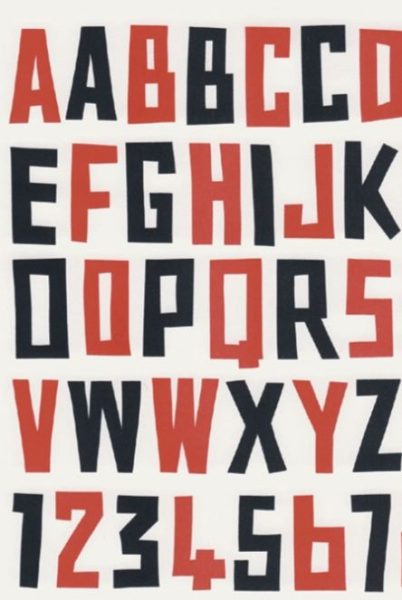
In the glossary of modern concepts, the alphabet has one and only one entry for each letter. This corresponds to the way graphists construct their alphabets. One design template usually is applied to all letters of the alphabet, figures and special characters. The exhibition in the MAD Paris on graphism shows nicely the art around letters and numbers. Each of uses computers and the style choices provided. It can be subject of an artistic endeavour to construct your own design of the alphabet. Etienne Robial, NT cutter (Extract below), is a representative example of structuring principles of own letter designs. Adding colour to the design adds a new dimension just as an additional axes of reflection. But even without colour the possibilities are endless.
A B C D    E F G   H I J K L    M N O P    Q R S T U    V W X Y Z

Invent

The nice thing about mathematics is that it asks you to invent new ways of thinking. Numbers, percentages, Venn-Diagramms, infinite series etc. have accompanied us at school. The story is far from finished. Under www.spektrum.de there is a nice introduction to the new theory of numbers, called “condensed mathematics“.  Their lecture notes (pdf-file) are a tough read. My take home message simply is, the invention of new approaches to old problems, providing more general answers and/or unifying different fields are particularly rewarding. Maths is a fascinating discipline. You study abstract problems, hardly anybody else has had so far, but you are not considered strange as for example some artists at times. Imagine your new world in music, painting or the arts in more general terms or try to become a mathematician. Finding ways to communicate about your predilection and invention is the next challenge. Many scientist, inventors or artists found very few people to talk to about their new stuff. The internet and social media have changed this. Persons with interests or findings beyond the mainstream find colleagues in other parts of the world. Lighthouses from far away become visible through this. Navigation of other possible worlds turns into reality. These specialisations might turn out to be generalisations. The stretch between indepth knowledge and the polymath approach shall accompany us for a long time. Unified theories in several fields are indeed a step to be able to have an oversight about several, but not all fields. Polymaths probably start with condensed maths to move on to other fields of imagination. There is always a risk to get stuck somewhere on the road in a topological space.

Sound

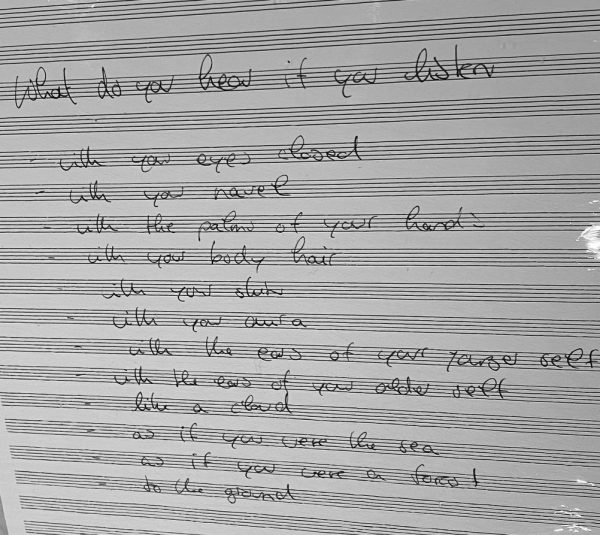
Each society has its sound. Each person lives in her/his sound cloud or bubble. Cities are generally noisy places, Lots of traffic, mobility and moves leave sound bytes all over the place. Each city though has its own sound and spectrum of frequencies. Libraries, museums, places of worship, all build their special atmosphere due to specific sound design. The Singing Project by Ayumi Paul (Gropiusbau Berlin) created its own sound environment. Reminding us to consciously design our exposure to and experience of sound is welcome. John Cage started to build his very own language of music, similar to Schoenberg, from scratch. His writings Empty Mind explain his view and techniques a bit. Starting with silence and the time between sounds we recreate our own sound experience. Notation of it comes second in place. only for the potential to repeat the experience notation is useful. But it is only one form of conservation for posterity. Noise canceling is the amazing tool from sound physics which allows you to neutralize noise by adding specific frequencies to noise which cancel out each other. Design your personal sound experience beyond noise if you like. Nature recordings or familiar person voices allow you immersive experiences when and where we want. your home sound can be everywhere nowadays.

Action Verbs

Action words are in other words called action verbs. Each complete sentence has one. Hence, they are part and parcel of the basic construction of sentences.
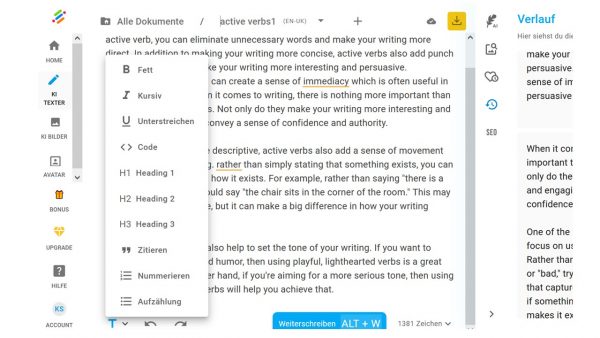
“The purpose of an active verb is to create a clear, concise sentence. By using an active verb, you can eliminate unnecessary words and make your writing more direct. In addition to making your writing more concise, active verbs also add punch and clarity. They can make your writing more interesting and persuasive. Additionally, active verbs can create a sense of immediacy which is often useful in persuasive writing.  When it comes to writing, there is nothing more important than using strong, active verbs. Not only do they make your writing more interesting and engaging, but they also convey a sense of confidence and authority. In addition to being more descriptive, active verbs also add a sense of movement and action to your writing. Rather than simply stating that something exists, you can use active verbs to show how it exists. For example, rather than saying “there is a chair in the room,” you could say “the chair sits in the corner of the room.” This may seem like a small change, but it can make a big difference in how your writing comes across. Finally, active verbs can also help to set the tone of your writing. If you want to convey a sense of wit and humour, then using playful, lighthearted verbs is a great way to do so. On the other hand, if you’re aiming for a more serious tone, then using powerful, authoritative verbs will help you achieve that.”
After the 3rd sentence this blog entry (Link) has been written by the artificial intelligence app “Neuroflash”. They promise that it is not just copy and paste, but rather written following some instructions I gave like title, table of content, style and then selected among several choices. It makes sense to me, although it is just like many other textbook entries I have found on the web. It may well serve as an introduction. Lazy journalists, priests or lawyers in case they do little research will be replaced soon by AI, who else, who is next? Big brother drafts the brave new world for us already.

AB with ABC

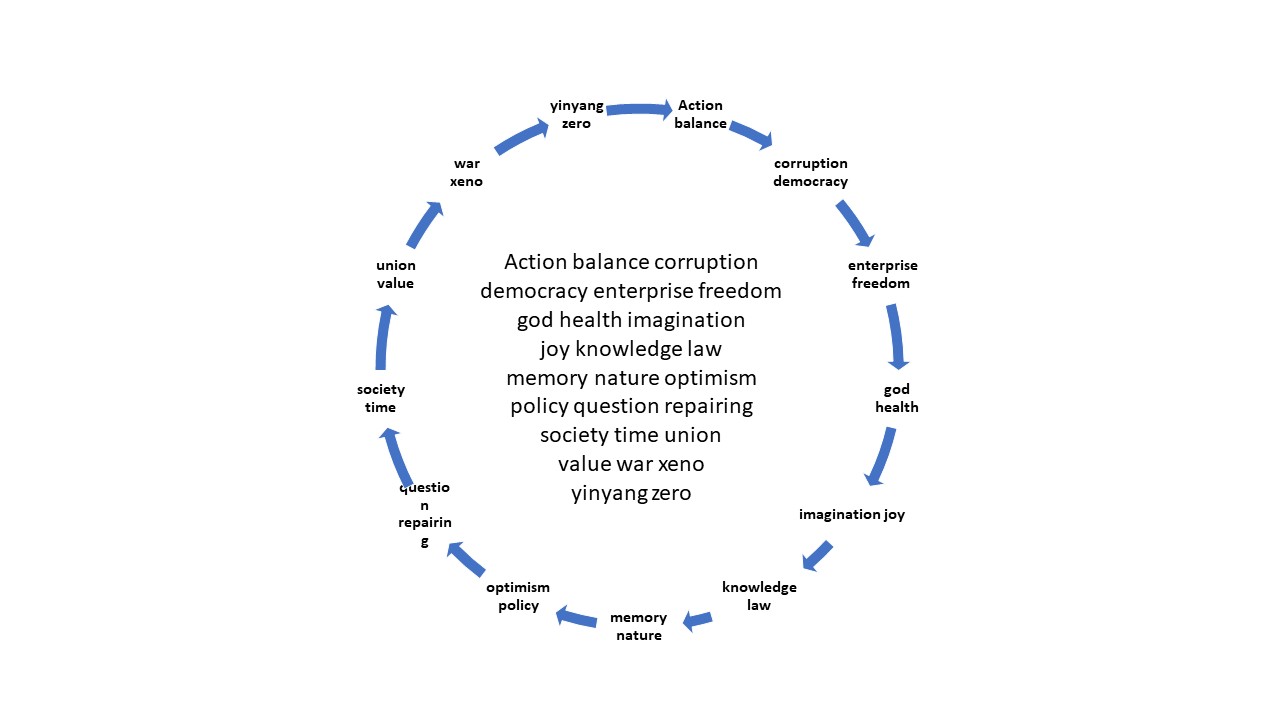
There are lots of ways to memorize the alphabet. We sing the alphabet with children to trick them from an early age into learning something useful, even if they do not fully grasp the immense power of the 26 signs or letters they are about to learn. It is a tool to construct images and stories of your own and exchange with others in speaking or writing.  We have come full circle with the subjects/objects addressed from C to A, more commonly described as from A to Z. With 26 subjects we have a long story already. With each different starting point from the alphabet a new story might be told. Proceeding in reverse order, from any letter, taking couples of letters as in the figure below yields a whole lot of new combinations to be defined. Taking 3 words from the alphabetical list is already a complex issue. Starting from a randomly chosen letter allows lots of additional combinations and topics. We start to grasp the difficulty a computer will encounter when constructing own definitions. Huge data bases of dictionaries will teach the programme to discard apparently meaningless combinations. However, humans might just enjoy creating new combinations. Machines don’t laugh, yet. Teaching artificial intelligence to produce jokes is probably a very difficult task. For the time being, we just continue to construct sequences of words, like the German language is perfect to do so, producing endless jokes with damn serious matter in the “Bundestag“: -Aufwendungsersatzansprüche, -Asylbewerberleistungsgesetz, -Brennstoffemissionshandelsgesetz, -Beweislastumkehr, -BeitragsbemessungsgrenzeUmrechnungswert (okay, I made up the last one).

ABC Overview

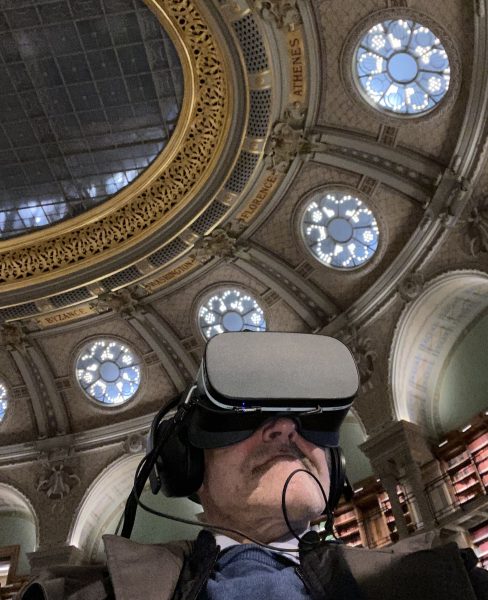
Digital formats allow flexible organization of lists like alphabetical lists. Opening several pages, at the same time, of the same dictionary is easily feasible. In science the proceeding in this way is coined the inductive method. The entries of each letter stand on their own, but jointly they form a whole set of topics. Random choice is facilitated this way. New sequences or preferences of topics are the way forward. Alphabetical order or chronological order are only one out of many variants of possible sequences. Chose your own 3 favourite topics, maybe. On a big computer screen you might even organize your own poster – beam it on the wall – walk in the virtual exhibition of the metaverse with it. It could feel like you are strolling within parts of my brain. Frightening? For whom? The universe is within us.

action health optimism value
balance imagination policy war
corruption joy question xeno
democracy knowledge repairing yinyang
enterprise law society zero
freedom memory time
god nature union

B for Balance

To reach a balance, to keep the balance or one’s balance, this highlights the process nature of balancing. Even the old tool of a balance (scale for weights) very much reflects the evening-out of the balancing process. It seems like a temporary balance most of the time. We might evolve from one level to another one. Especially imagining ourselves on a (body weight) balance in the morning and then throughout the year or years, this appears like a dynamic trajectory. The nature and/or nurture connection is evident. Beware to search for synonyms of “balance” on the internet. You get more than 3000 synonym (Link) meanings and 30 suggestions for definitions (Link) to contemplate on. I like the nice physical experience of balance and the simple (a bit nerdy) explanation of it. Economist get very excited about balance of payments and the ways to achieve equilibrium or equilibria. Balancing personal accounts can be a bit painful at times, but balancing in the arts gets our imagination going. Dancing is about balance most of the time. Playing with your own balance, the balance when 2 or more persons are in action, how not to be absorbed by such experiences. In music, the balance is a primary issue since Bach’s “wohltemperiertes Klavier” and balance and tension are the origin of much jazz. An image or photo might be balanced, certainly architecture is playing with or restricted by balancing acts. Herta Müller’s “Atemschaukel” has thrown us off balance for a while. History we study often with a concern for a balance of power. In peace and war times, the balance of power within and between countries or superpowers are a long-lasting research issue. At times when this balance is at risk or completely out-of-balance we are deeply concerned about the return of a balanced situation. Babies and children draw comfort from being balanced. Adults as well. Let’s try again (chanson). (balance22-venice -video).

A for Action

The A is everywhere. A is the beginning of the Alphabet, Google is our new Alphabet, we just have not realised it. A simple A-rating in investment is not good enough, AA or AAA is the goal. All this calls for ACTION. Do not be stopped in your action by reading on “Action theory” by Parsons, Rational action is the basis of most economic reasoning before the behavioural turn of economics. It is commonly acknowledged now, that rational action might not always be as rational as we want to believe it is. “Frame selection” as theory to explain our choice of action is fashionable in the social sciences. Transforming values and intentions into actions is a big challenge. Many jokes turn around this issue, like intentions to get up early in the morning. Find out whether you are an actionable leader. You should have at least a few “actionable items” on your to-do-list. Of course, Microsoft recommends actionable items to improve our productivity while spending hours on emails.
Well, early philosophers already distinguished between “vita contemplativa” and “vita activa“. A lot is about finding the right balance here and Hannah Arendt’s differentiation of active life in labor, work and action. She puts emphasis on action as a way to distinguish ourselves from others. The same thought might lead to very different actions. Hence, acting on one’s belief or values could lead to very different policies for just 2 persons. Action Artists perform even in inaction. We are back to basic questions of democratic  procedures as a form to moderate between different opinions or possible actions. Lots of other A-words come up now: ambiguity, anxiety, alienation, affirmation, affect, affection. In Greek, A might be associated with Apollo, In German with the famous “Angst”, but French is overriding all this with “Amour”.