Bücher, die lange weg waren, können wiederkehren. Das ist die gute Botschaft, die durch die digitale Bibliothek der verbrannten Bücher erzeugt wird. Vergleichbar der erneuten Aufführung von Komponierenden, deren Werke wieder in fantastischen Klangwelten erlebbar werden. Der 90. Jahrestag der Bücherverbrennung durch die Nationalsozialisten markiert meistens nur ein einmaliges Ereignis (10.5.1933 Berlin) in dem brutalen Aufstieg der Nationalsozialisten. Tatsache ist jedoch, dass sich die Bücherverbrennungen über mehrere Wochen hingezogen haben. Ein Beispiel ist die Bücherverbrennung in Potsdam Babelsberg am 24.6.1933. Viele andere Orte warten auf ihre Aufarbeitung. Erneutes Lesen dieser Bücher ist eine Würdigung der geächteten SchriftstellerInnen. Werner Treß wurde im Deutschlandfunk am 12.5.2023 dazu interviewt und beschreibt die erschreckende Hetze, die dabei von den Studentenverbindungen ausgegangen ist.
Erneutes Verlegen dieser Bücher hält die Erinnerung an die „verbrannten Dichter“ wach und verdeutlicht, wie der Einstieg in die grausame Diktatur ablief. Literatur hat neben der Funktion der Unterhaltung und der schönen Künste, sicher eine zusätzliche Aufgabe, die der Verteidigung der Meinungsfreiheit. Dazu gehört das Tolerieren unangenehmer Meinungen, solange sie die unveräußerlichen Menschenrechte berücksichtigen. Dazu ebenfalls ein Hörbeitrag im DLF. Nicht jeder hat die Courage wie der bayerische Schriftsteller Oskar Maria Graf, der solidarisch verkündete, verbrennt mich auch, mit der Konsequenz, unmittelbar ins Exil gehen zu müssen. Exilliteratur ist heute noch vielfach vorzufinden. Salman Rushdie, beispielsweise ist erst kürzlich einem Anschlag entgangen. Lesen all dieser SchriftstellerInnen würdigt ihre Beiträge und ihre Bücher bleiben. (online Link)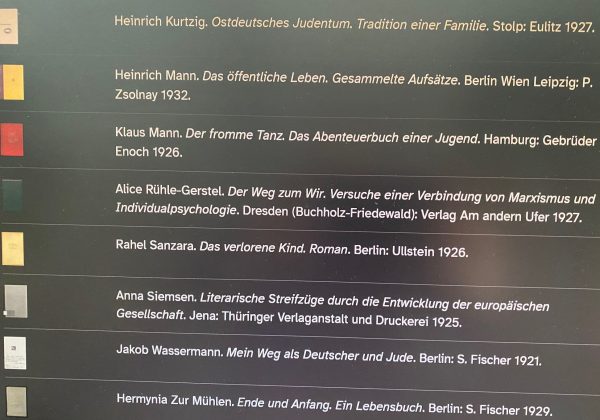
Rhetoricae artis
“Die Kunst der Rhetorik und der positiven Fähigkeit” ist eine kleine Wissenschaft. So hieß es bereits 1475 in dem von Guillaume Rardif veröffentlichten Buchdruck aus dem “Atelier du Soufflet Vert”. (BnF, Réserve des livres rares, Rés. X-1118). Als Teil der Ausstellung zum Buckdruck entnehmen wir 5 wichtige Hinweise für die Kunst der öffentlichen Rede: (1) inventio = (Er-)findungskraft, (2) dispositio = Anordnung, Gliederung, (3) elocutio = Ausdrucksweise, Stil, (4) memoria = Erinnerungsvermögen, (5) pronunciatio = Urteilskraft.
Ein kritzelnder Leser hat mit Bleistift die 6 Teile angefügt. Exordium = Einleitung, Narratio = Erzählung, Sachverhalt, partitio = Einteilung, und schließlich die dialektik mit Confirmatio, Rufusation, Conclusio. Abweichungen von diesem rhetorischen Schema sind noch immer selten. Das galt wohl seit dem 15-ten Jahrhundert schon für Predigten und wissenschaftliche Vorträge. Alles altes Latein, oder was? Die heute übliche “Elevator-speech” folgt anderen Regeln. Die Aufmerksamkeitsökonomie und Flut der Informationen erzwingt viel kürzere Redezeiten. Die Nachhaltigkeit der Botschaft wird anders erzeugt. Bildlichkeit ist Trumpf in Erscheinung und Auftritt. Auch das will gelernt sein. Die Bücher damals waren selbst ästhetische Kunstwerke und dennoch Arbeitsbücher, leider nur für sehr wohlhabende Studierende. 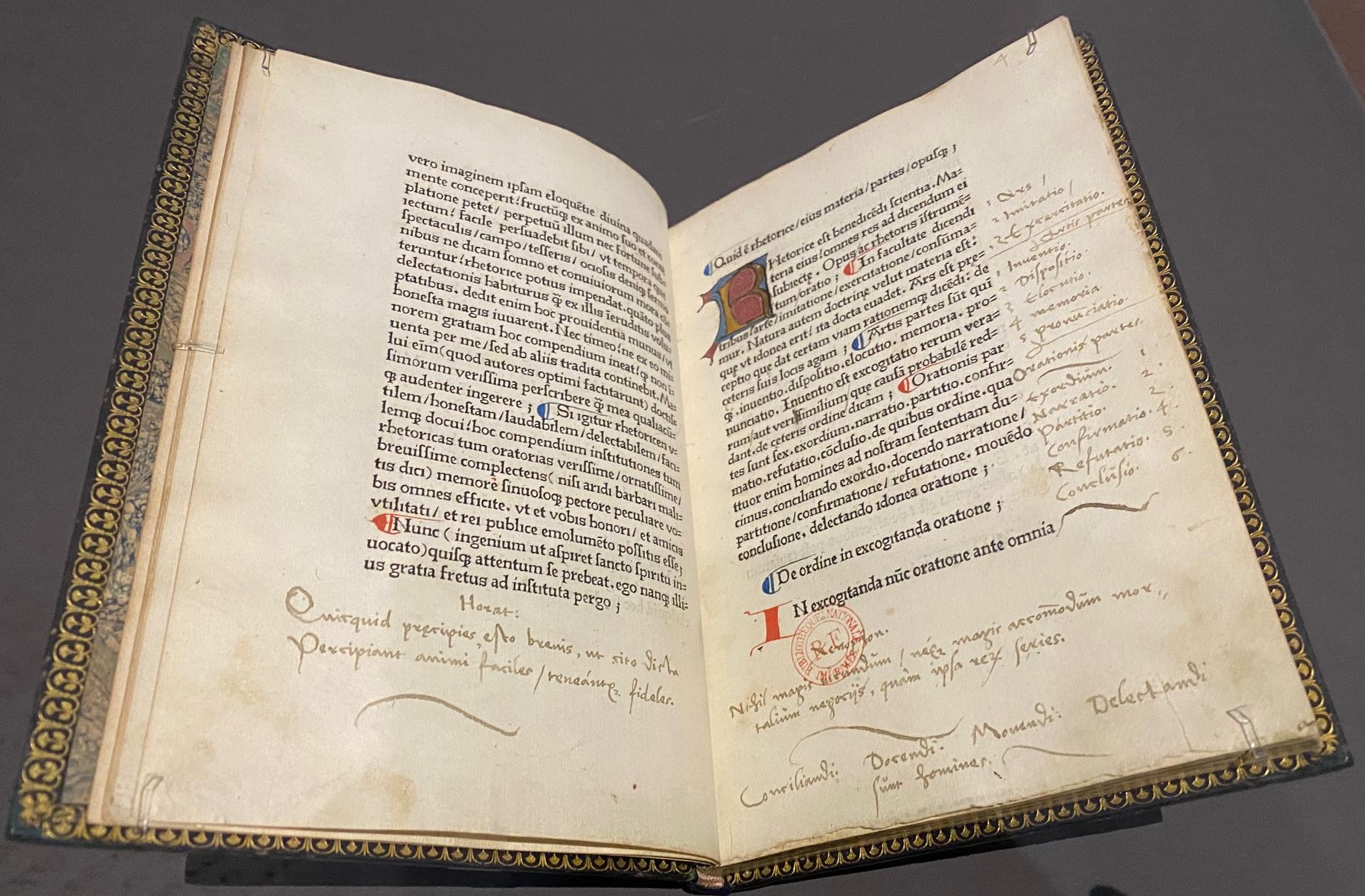
Printing
Printing is a more than 5 century-old industry. The invention of the printing press is mostly attributed to Johannes Gutenberg from Mainz. However, the Asian precursor of mobile type letter printing of Cai Lun of the Jikji dates back to 1377 in Korea. These early masterpieces of the inventors of print can be inspected at the Bibliothèque nationale de France (BnF). The summary term for this technical innovation by historians is the “age of start-ups”. The procedure for Gutenberg to have 2 financing rounds with his “business angel” Johann Fust, who is later claiming even almost the full rights of the printed volumes, resembles the start-up spirit of today as much as that of the 15th century. Not belonging to the Patrician families, it was very difficult to defend your rights in courts of the gilds. The printers also became a very powerful intermediary themselves. They either sold pre-ordered books or had to take the risk of assessing the market for their product. The editors of today do much the same in the trading world of books and rights of authors and translators. Merchandising products of the church and later churches (protestants Luther Bible) had a particular value to both the clergy and its devotees, not to mention the shop keepers in-between as well. Pilgrimage business was another start-up industry still going strong in the 20th and 21st century and popular in all religions. The early prints and typographs applied are fascinating in themselves, but there is a lot to be learned about the foundation of a new industries that still employs millions of people and is at the origin of learning revolution similar to the one we are living with the digital technologies today. The European languages with respect to printing had a certain competitive advantage, based on 26 letters of the alphabet, far fewer types were needed to print books than the more than a thousand different signs for printing a Korean text. In terms of printing this is cost-reducing and probably you do not need to be able to read yourself to be a printer or it makes proof reading more accessible favouring benefit margins. After all, the age of industrialisation probably had a precursor in the printing industry. The potential of the printing industry was only exploited much later to the full extent. Comparable to “peak oil” we hope to have reached “peak paper” at last as well for the sake of our planet and our own survival. 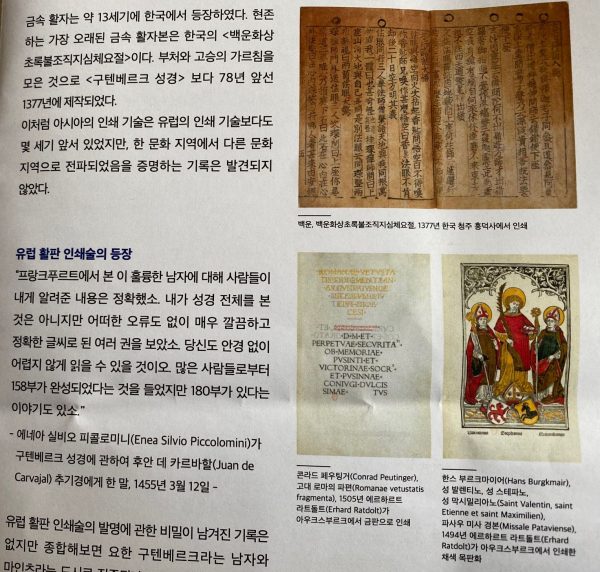
Time2
The concept of time has been dominated by “chronometry”. We used to take a look at our more or less reliable wrist watch for orientation in time. This is a cultural practice in all societies where such devices are readily available as consumer products. Before this time, even in the Europe, church bells or the sun played the role to locate people in time (Norbert Elias on civilization). Nowadays, even in remote areas of our planet the mobile phone has taken over to assist us to organize time. In the sociology of time, we observe multiple clocks. The personal time, social time – organized through laws, collective agreements, conventions or as behavioural features of us. So-called early birds have a specific awakening response of their cortisol level in their blood. For others this is delayed. We might conclude from this that different clocks are ticking within us. The societal challenge is to synchronize them. Starting time of schooling is another phenomenon of societal construction of life courses. Starting or ending time of a school day, week, month, year, adulthood, all are determined collectively and changed from time to time. Beyond points in time, there are durations in time to consider. Life spans are socially determined. Life expectancy varies a lot by social class and education levels. Therefore, at least in retrospect and keeping the duration constant across persons, life time clocks are ticking with different speeds for us as individual persons.
In the digital age and powerful search engines based on “web crawlers” we live more than ever in a global state of mind. Awareness of “global history of history” (Woolf, 2011) allows us to add perspectives from several parts of the world to our own version of history, historiographies and histories. Collective memories are continuously shaped and recreated. Due to easy reference to chronological time a perspective following decades has become a sort of collective mind map. This influences directly or indirectly through peer behaviour and preferences our own mindsets (Blanning, 2008 p.307). From a sociological point of view decades are at the crossroads of time, period and cohort effects, potentially mixing up all 3 effects. However, statistically speaking we might apply a spline function -´ to our otherwise / linear running of time. Thick description of decades like the 60s, 70s, 80s, is common practice in our communicative practices, preferences as well as behavioural features. A dialectic co-evolution of decades, one negating the other or one decade being a synthesis of 2 other decades are part of the critical assessment of lasting contributions to history through histories (Paul Ricoeur). 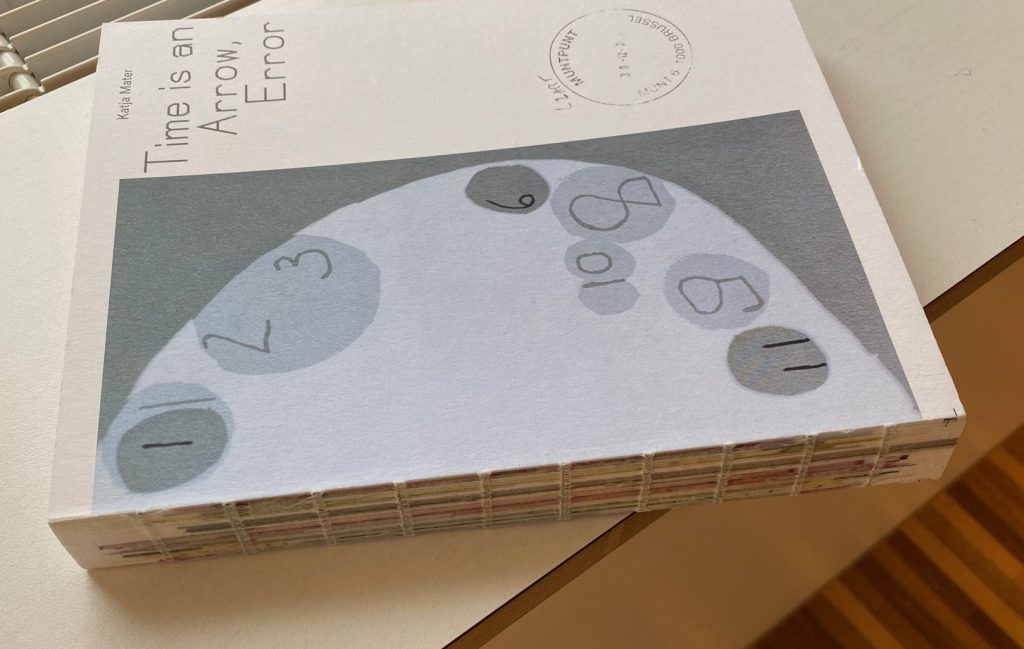
Linguistics2
Languages are simple once you understood the making of them. Take children, they learn the alphabet first, and use notions or images in alphabetical order, which you associate with this list of short words from A to Z in western cultures. From short words like “Cat” and “Dog” the learner moves on to longer ones like “Bird”, just 4 letters now. More advanced learners then use more letter words like “supercalifragilisticexpialidocious” invented for amusement in the Disney-film Mary Poppins. It sounds a bit like one of those never-ending long German words with lots of nouns just added on. This is exactly what we shall do in the following. A bit like in computational linguistics when ChatGPT is predicting the next word, we use algorithmic thining to form new combinations of an alphabetical list of notions. We start in the table below with column 1, then tell our spreadsheet to copy cells A1-01 to Z1-26 list and insert it in the second column just one cell below and insert Z2-27 at the place on the top of the list of column 2, which is A2-01. Then take this column 2 and repeat. Stop after, lets say the repeat counter is N=25.
The first 2 words combination then is “Action Zero”. Take this, enter it into Computer Search and take the top entry. “ActionZero” is an actual company name proposing actions to achieve net-zero emissions. Following this, we produce a whole encyclopedia of pretty up-to-date knowledge from the WWW with hardly any humans involved anymore. We only need to cut out duplicates and nonsense entries. That’s what most editors or teachers are used to do. Knowledge creation might no longer be reserved to the human species. Oh my God – but the machine might eventually sort this word out as nonsense concept, too. The new mantra could be ZeroGod or let us try the reset like in GodZero. In other words we move from HamletMachine to our own KnowledgeMachine. 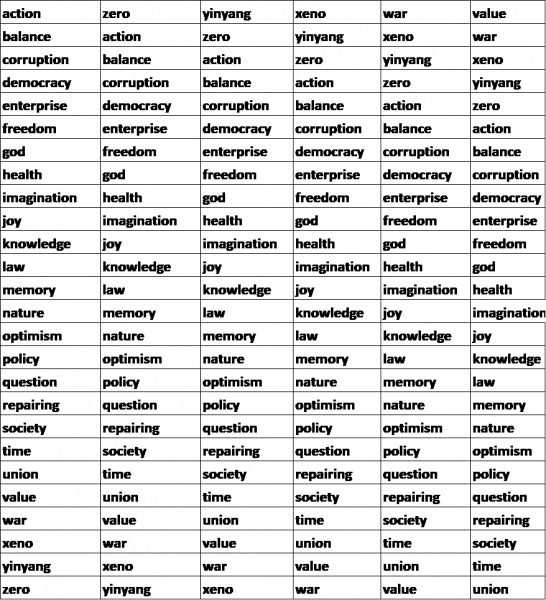
Giselle
Once upon a time, not at the Opera de la Bastille, but next it, in a small theatre called Théâtre de la Bastille, the fairy tale of “Giselle…” was performed. The world-famous ballet Giselle (Karlsruhe Programmheft) is still amongst the most frequently performed magic piece of classical ballet. What is it about? In short: sex and crime. Yes, and it sells well.
Francois Gremaud tells the classic story of excitement, love, deception, death, regret, haunting and memory in a concise and witty fashion. The exemplary dancer is at the same time the narrator of the story as well as the critic and art historian accompanied by a 4 musicians strong orchestra. The educational piece with a “womanxplainer” on stage is great entertainment, full of references, why it is still okay to like the piece in spite of its fantasy-loaded content. Modern dance (Cunningham, De Keersmaeker) has decoupled or emancipated movement from music. In classical ballet, at least, you still know what comes next and this is aesthetically appealing for most people. Besides Wilfried, no he is not part of the “Wilis” (could be an interesting variant), but in the ballet there figures “Hilarion”. He is not hilarious at all. Splendid entries are from Myrtha (close to Martha, but not quite the same) and, of course, Giselle, when she leaves her tomb and turned into a “Wili”. Then there is Albrecht in a pas de deux with Giselle, swirling between earth and space. Aldi dances like mad on impulse from Myrtha, but Giselle vanishes nevertheless. End of story, or is it? Giselle is a Wili and Aldi is the wally. Maybe the story could be retold like in the film “Billy Elliot – I will dance”, which is an emancipatory tale where dance is the liberation rather than part of the dooming fate.
Francois Gremaud with the astonishing performer and choreographer Samantha van Wissen have created a version of Giselle that is musical, aesthetic, funny and critic. For those who enjoy an epic theatre version of Giselle including its “alienation effects”, referring back to Berthold Brecht, will want to read the script as well, kindly distributed as a gift after the show. 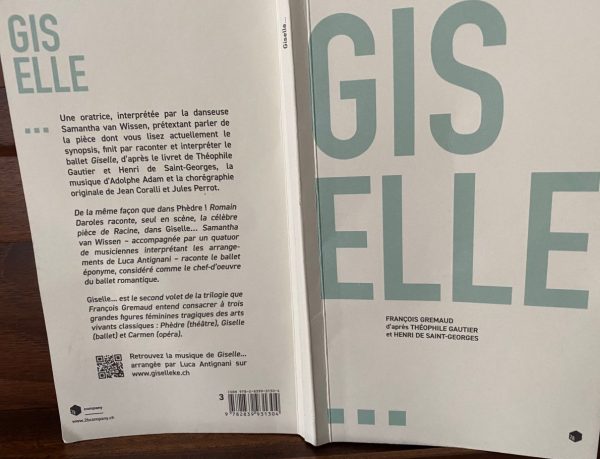
Subject/Object
The 26 notions in alphabetical order may determine a subject and/or an object in a sentence. This is just the simple grammar of a language. Add a verb and we have a full sentence subject predicate object (SPO) as they say in English. In the philosophical sense the subject-object relationship is a bit more complicated. Beyond Aristotle’s objectum and subjectum, we think of Descartes “Cogito ergo sum” as the definition of the self as subject, rather than being an object of God’s will and creation. Kant then forms the couple of object and subject in the sense of objectivity and subjectivity. Pure reasoning is the abstraction of subjectivity to achieve an interpersonal objectivity. The master of dialectic thinking, Hegel, conceives an object as objective conscience and a subject as particular subjectivity. Having defined the extreme points of the spectrum makes you think about a joinder or the synthesis. Freud adds the object as result of sexual impulse. Wittgenstein then introduces a kind of hierarchy into the S/O-relationship. Objects become ultimate elements and indescribable in content as kind of basic notions. This follows the mathematical view of objects as indirect description of a mathematical object through axioms stating the basic principles governing the object and then deduce the logical consequences. Gödel’s incompleteness theorem , however, rejects this claim. This is the basis of, for example, algorithmic testing whether deductions are true or false. Condensed mathematics has relied on this testing approach as well.
A pragmatic perspective is added by Marie Gautier (p.719 “Notions”). If we want to reach an objective, we shall need others to realize it. By way of this imagination the S/O-relationship turns into an interactive relationship. Following Habermas, we might claim that the S/O-relationship is also a part of communicative action and therefore the discourse ethics. The definition of who or what is object and/or subject needs open discourse. The arena is not only the parliament, but larger audiences or the world wide web. Beware of the Luhmann systems theory, whereby for example the definition of what is a technical object is, is left to technicians, who then ponder in their self-reflective, reflexive circles amongst themselves. Techniciens in their circles tend to neglect the prime importance of society and laws to determine technological choices. Language with its constituent elements of subject, predicate and object (SPO) is one example of a knowledge system build on axioms or negotiated conventions for grasping and exchanging about phenomena. Nice, now we play around with it.
SPO => OPS. 
ABC Overview
Digital formats allow flexible organization of lists like alphabetical lists. Opening several pages, at the same time, of the same dictionary is easily feasible. In science the proceeding in this way is coined the inductive method. The entries of each letter stand on their own, but jointly they form a whole set of topics. Random choice is facilitated this way. New sequences or preferences of topics are the way forward. Alphabetical order or chronological order are only one out of many variants of possible sequences. Chose your own 3 favourite topics, maybe. On a big computer screen you might even organize your own poster – beam it on the wall – walk in the virtual exhibition of the metaverse with it. It could feel like you are strolling within parts of my brain. Frightening? For whom? The universe is within us.
| action | health | optimism | value |
| balance | imagination | policy | war |
| corruption | joy | question | xeno |
| democracy | knowledge | repairing | yinyang |
| enterprise | law | society | zero |
| freedom | memory | time | |
| god | nature | union |
K for Knowledge
Readers of the sociology and/or the philosophy of science or knowledge have a hard time. Each discipline is evolving at such a high speed that is terribly hard for humans to follow more than 1 or 2 fields. Perhaps the choice of Karma instead of knowledge would have made it easier here. Alternatively, in German it is easy to find many nouns starting with a capital K. Kapital, Krieg, Kritik or Käsekuchen would have been popular, I guess. Soon I shall open the comments for suggestions for additional nouns, as part of the empirical “swarm knowledge strategy” rather than the theory-driven deductive method applied in knowledge generation on my side so far.
But wait, we are already in the middle of the unsatiable quest for knowledge. On a meta-level we would deal with the multiple ways to acquire knowledge and create new knowledge. Artifical intelligence is certainly one of the hypes at the moment. New data and new combinations of data drive us forward in the expanding universe and knowledge space. We have witnessed the disappearance of the thick printed encyclopedia in most households, replaced by specilised digital dictionaries or the network society’s shared knowledge base of “wikipedia“. Knowledge is linked to the history of ideas and Peter Burke is a prominent figure to rely on as a reference in this field. 20 years after “A social history of knowledge: From Gutenberg to Diderot” he published the much acclaimed: “The Polymath. A cultural history from Leonardo da Vinci to Susan Sontag” in 2020. To synthesise across the many “monsters of knowledge” over centuries is a daunting task. I like quotes like the one from Leibniz (p.77) “the horrible heap of books that is constantly increasing” and then his own continuation: “Printing, once viewed as a solution to the problem, had become a problem itself”. The whole section is devoted to information overload. Fragmentation of knowledge into disciplines and, much worse, the manufacturing of false knowledge create new challenges to knowledge. Maybe transforming the term to “knowledges” rather than knowledge is likely to capture better the differences between artificial knowledge, created by artificial intelligence and specialised algorithms, and human based knowledge. In knowledge storage we have lost the race with computers, but in deciding what are promising combinations between different fields of knowledge, we are still a wee bit ahead of the machines. Klara tell me, where is the exit, or your synthesis of the whole lot. Meanwhile I continue to read – what? books and the like. 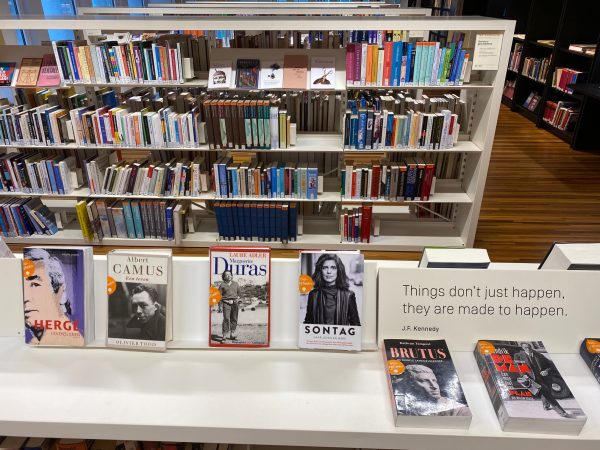
J for Joy
Talking about joy is fun. Its feels better than just cracking a few jokes, and this is not bad at all. The starting point of much joy can be a simple joke, because of the simplicity of emotions and the bonding between persons. However, laughing about jokes is often abused in the form of laughing at the expense of someone or a specific group of persons (serious publication “L’empire du rire” CNRS, 998 pages). This explains to me the difference between a joke and joy. Joy is the emotion resulting of a joke, but also of many other experiences. The simple joy to meet another person, an animal, the sun, rain, wind, music, art or just less pain is more probably more intrinsic. To receive or to give a present is often associated with a joyful moment, sometimes lasting quite a bit. For some psychologists, emotions can be problematic, if a person can no longer regulate them effectively. Many persons tend towards excessive use of alcohol or other drugs to experience positive emotions like joy. Negative emotions of another person, strangely enough, may also contribute to the joy of another person (“Schadenfreude”), e.g., if a dictator is finally overthrown.
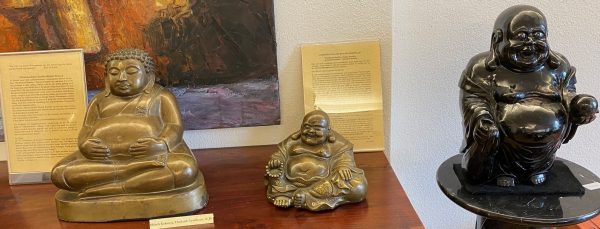
Much more inspiring is joy in connection with religion. As a critic of religious ideas, the attempts of religion to define joy for individuals and society probably explains the success of religions. Representations of Buddha, show the happy or joyful monk, Christians define joy with the advent and the birth of an unconceived child, fighting fiercely any modern forms of contraception and science advances for birth assistance. Restricting jokes and joy to the “carnival” period reflects the Christian doctrine to control and monopolise the definition of joy. Therefore, it is no surprise to witness that many persons feel more inspired by Asian traditions like “Ikigai” or “yoga” in their daily routines to experience joyful moments. I always found it very odd that Christian fundamentalists would not say Merry Christmas before the 25th of December after they have been to church at midnight. The priest or pope as the master of joy is a very strange idea. Affect inhibition or deferral is a powerful psychological tool. As in this blog entry I deferred my joy and laughter until the last line. So now, please join me in a wholehearted JOYFUL LAUGHTER, so the people around you may believe you’ve gone completely mad. It might be the beginning of more lasting joy, just keep practicing. Joy is within us not depending on outside stimuli, joyful1 although they might help.