Polypharmacy issues

As we age, we become more likely to confront polypharmacy issues. Polypharmacy is defined as taking 5 or more medications per day. The study reported in The Lancet healthy longevity by Payne et al. 2025 had participants with a median of 4 health conditions and a median of 8 prescriptions. Even a comprehensive set up which involved several experts from medical doctors and pharmacists did not manage to achieve a significant improvement in polypharmacy outcomes in this experimental study with otherwise carefully matched intervention and control group. However, the mental health (measured in patients as “health-care-related quality of life”) slightly increased and the “treatment burden” experienced by patients was slightly reduced.
In combination with a previous study the probability of errors in nurses, who are the prime persons responsible for the administration of medications in institutionalized settings, the reduction of potentials for errors like they are to be found in polypharmacy should continue to be a prime target of this research in future. Together with the knowledge about the prevalence of functional illiteracy at older ages, polypharmacy remains a critical issue on the public health agenda beyond the experimental settings in this study.

Spring in Autumn

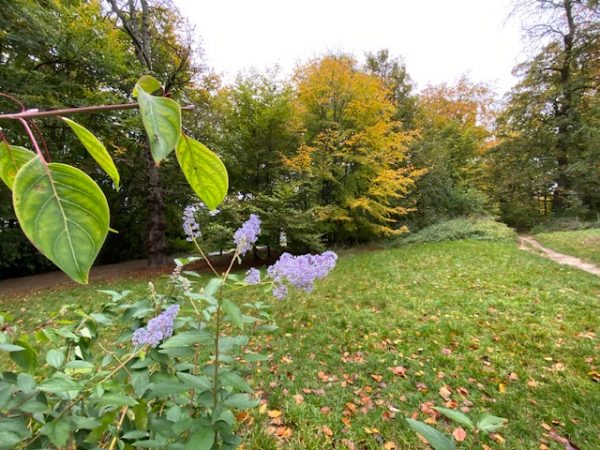
Can we have spring in autumn? Of course not, most people would answer. The definitions of spring and autumn are clearly defined as separate seasons. Depictions of the seasons in paintings in the Romantic or Impressionist periods are hard to imagine with somewhat blurred distinctions between seasons. And yet, climate change in the 21st century show surprising spring flowers in autumn across Europe. This leads to lots of confusion in nature’s time table.
From a life course perspective, we may ask, whether it is possible to experience a 2nd spring in the season’s view of the life course. More healthy years and spring feelings in the autumn of live have propelled a whole new industry around longevity and the mantra to “stay healthy for the wealthy”. The growing health inequality over the extended life course is a silent killer. The experience of spring in autumn remains a distant dream for most people with multi-morbidity.
Our experience of sequential or linear time, where one season follows the other, gets disturbed or at least blurred. The “Gleichzeitigkeit des Ungleichzeitigen” in English the “simultaneity of the non-simultaneous“ can be observed in the macro-world of everyday experience, albeit in a different way than Ernst Bloch defined the concept. On the other hand, it is no longer necessary to invoke Einstein’s theory of relativity or quantum physics to come up with apparently strange phenomena, but empirical facts allow us to question received wisdom, evidence based.

Tether thy liver

There are few of us who take our liver seriously. Yet, this big organ plays a central role in our body to regulate metabolism. The obesity pandemic in western countries increases health risks, just as excessive alcohol consumption increases risks of liver dysfunction. Additionally, viruses increase the risk of failure of this organ.
Each of these risks as well as any combination of one of the risks with another one have led to rising public health risks. Several studies since 2020 have highlighted these increased risks for populations in general. The risks, however, have an unequal spread across subgroups of society. A recent comment based on the research of the INSERM U955 team in “The Lancet Regional Health” by Brustia et al. “Liver-related mortality strikes hardest where deprivation is greatest.” Health inequities consist in the lack of income available to buy healthy food or in untreated alcohol addiction, both more common in poor people.
In order to tackle the inequity, the team of medical doctors call for a shift in awareness. Structural reasons like diagnostic delay, remoteness or health literacy are just as important as individual predilections like nutrition or lifestyles. Inequality in access to health and ability to afford a healthy lifestyle have become serious drivers of social inequality in the 21st century.

All electric again

The “all electric society” has been identified by Dan Wang and Arthur Kroeber (2025 p.48) as one of the underlying driving forces of “The real China Model”. Despite the heavy reliance and pollution caused by China’s use of coal, the large share of electricity  (30%) of energy use is unmatched by the rest of the world except Japan. Investment in electricity grids and innovative ways of mobility around electricity will allow China to buzz rather than steam ahead. Solar cells, batteries for electricity storage and innovative ways of distribution of electricity through AI enhanced “learning” devices will widen the gap between China and other countries that suffer from inefficient path dependency.
Taking the advent of the “All electric society” seriously will free resources through the focus on future-proof technologies. We should not be afraid of the sparks of a short-circuited “All electric society”, the environmental challenges ahead for all of us, particularly China, ask to shift to high voltage solutions urgently. 

Weaponized Interdependence

The shift in the international political system is clearly expressed in the contribution by Henry Farrell and Abraham Newman in “Foreign Affairs” (2025 (Nr. 5) p.25). “… governments must navigate a terrain with many more players, figuring out how to redirect private-sector supply chains in directions that do not hurt themselves while anticipating the responses of a multitude of governmental and nongovernmental actors.”
As the number of bigger global players increases, the complexity to identify best strategies increases as well. Going it alone is only second best to coordinated actions. New matches of interests may result in the medium term. This could entail enormous long term realignments.
Russia attempted to play the China, and subsequently the India, card to achieve new strategic partnerships in this multipolar world. Other international players test new forms of alliances and strategies (like hybrid wars) in this period of weaponized interdependence as well.
The weaponization of such interdependencies puts critical limits to the basic economic rationale and a world building on comparative advantages together with trade, rather than going it all alone or try the coercive way of exploiting dependencies of mineral resources, supply chains, computing power and AI.
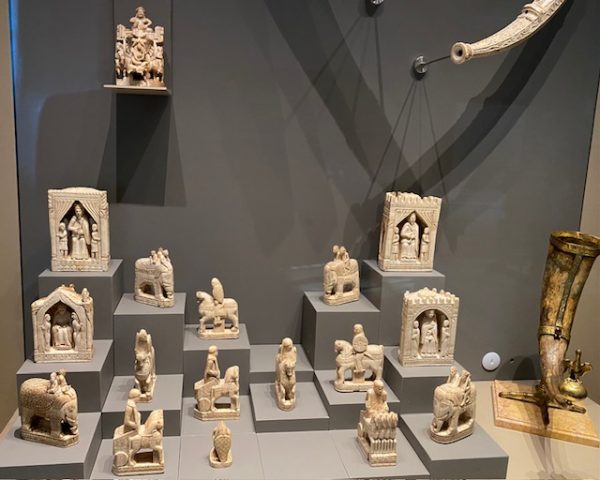
(Image: Chess figures attributed to Charlemagne, dating from 1080-1100 ” BNF Galerie Mazarin 2025-10)

Popular Sociology

Sociology, like other social science disciplines, has often difficulties in reaching bigger audiences. However, in combination with a museum which specializes in the history of a big city like Paris, the insights can suddenly become very popular. The “Musée Carnavalet of the history of Paris” has mounted an exhibition, which builds on the population censuses of 1926,1931 and 1936. The access to the complete original records of 3x about 2 millions of people has become a national treasure for social scientists and the public at large.
People flock to the exhibition. Some do it to learn about the past of their districts or streets. Others to learn about historical facts, which are sometimes linked to the family anecdotes and broader historical narratives. Out of this interest grows an understanding of macro- and micro-level social processes, which makes use of basic statistics.
People ask themselves: Is your (family) story unique or is it part of a more general pattern or social process like urbanization or social mobility.
(Image: original census recording sheet – Paris)

Opera design

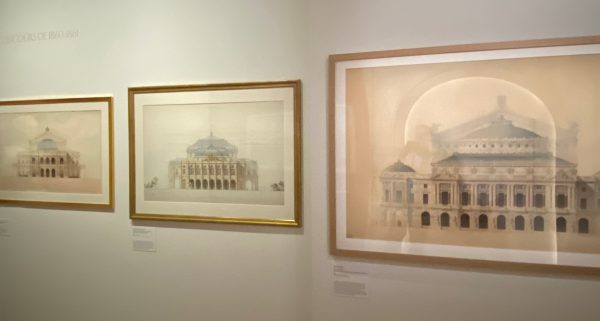
France celebrates 150 years of the National Opera Garnier in Paris. The exhibition in the splendid building traces the history of the building from the competition for the design to the legendary performances and celebrities attending. The stairs outside and even more so inside are built to enhance the glamour around operas and dance. The drawings by Garnier are a highlight as much as the videos about celebrities walking up the stairs of an Opera building.
Charles de Gaulle, as many French Presidents before, dressed and took the famous stairs to impress the official invitees. The image of de Gaulle together with Konrad Adenauer is another interesting example of opera politics showing the authentic friendship after the fierce fighting of the 2 WW, the Nazi-terror and Shoa.
The design of the Paris Opera 150 years ago made for an impressive ritual performance of state diplomacy enhancing international reputation.
(Images: 150 years of Opera Garnier Paris – 3 designs, winning design by Garnier on the right).


Balance and justice

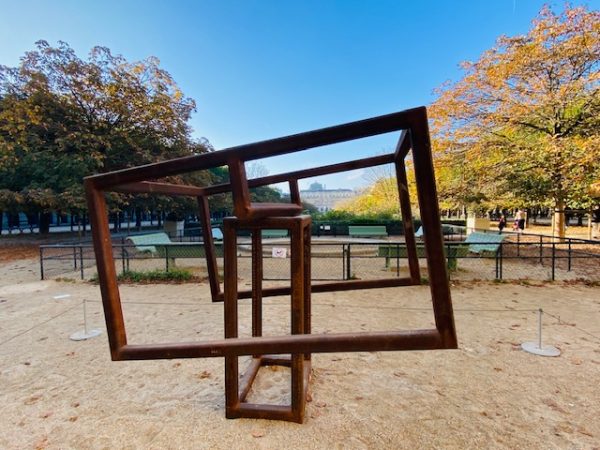
Justice is often represented with the symbol of a balance. This dates back at least to the Roman times when the Roman law reached an unprecedented spread across Europe. The philosophy of law dating even further back to the Greek philosophers, notably Aristotle, founded comparative law with his comparison of constitutional principles in various Greek city states of his time. Striking the right balance, therefore, is encrypted into law, legislation and the American constitutional principle of checks and balances. In Paris the sculpture in the “Parc du Palais Royal” of heavy metal balance at the opposite end of the park is moving as well. Facing the ”Conseil d’état” and the “Le conseil constitutionnel”, this is a forceful reminder of the basic principles of a republic and democracy.
In the 21st century, particularly, since the weights attached at each end of the balance pull more forcefully at the moment in several countries.
Institution building and safeguarding the existing ones have become “the challenge for democracies in 2025 in many “centuries-old” democracies.
(Image: Sculpture by Raul Mourao in Parc Palais Royal, Paris 2025-10)

Fighting the Beast

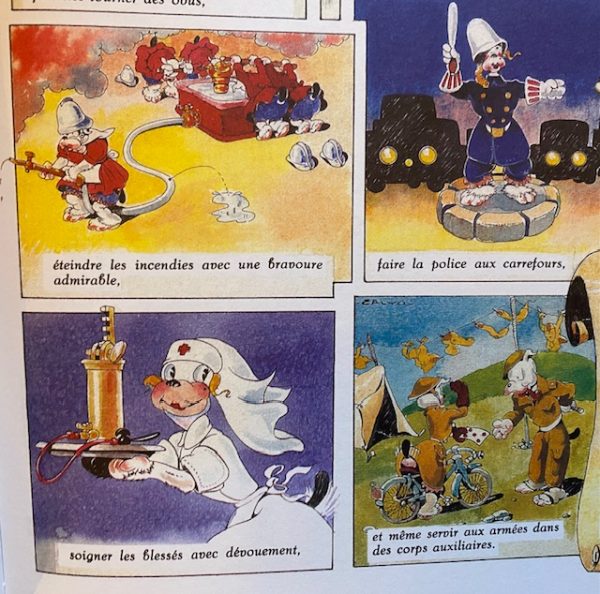
The earliest post 2nd WW cartoon stems from Calvo in France, published in its first edition in 1945. After the first part entitled “When the beast became unchained”, the second part could report on the happy ending “When the beast was overturned”. Amongst the admirable comprehensiveness to talk about the preparation of war, the battles and atrocities committed by the wolves, the allied forces of animals gained the upper hand. The role of women in the fight against the beast takes almost a whole page in the historically precise narrative of the 2 WW. With a fine sense of necessary historical detail, the reporting of British women (the female dogs in the cartoon) as essential part in the war effort to win the war against the beast(s). Women exercised professions were not previously allowed to enter. Gender awareness as early as the mid 1940s was rather advanced at the time.
Great topics to talk about with your children or grand-children.

AI as individualizer

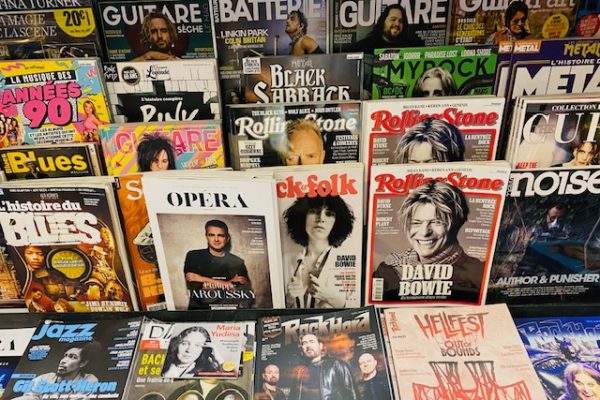
In a one pager in the journal “Rolling Stone” (2025, p. 9) Bruno Patino writes about the legendary David Bowie who was the first rock musician to launch a new song on the internet before it became available as CD (Telling Lies, 1996). As a pioneer in co-creation, Bowie anticipated somehow the trend and wish of people to personalize preferred songs even further and distribute such versions among friends. In this process, AI has become a powerful tool to push individualization even further and the digital social media allow even broader audiences beyond a more narrow circle of friends. Music maybe setting the trend  for some in the same field, other creative fields might follow the footsteps. The need to co-create collective experiences and participate in collective musical moments is likely to rise again as well.
Good news for music festivals across the world. Live concerts are the new form “collective individualism”.