Digital Technology

Im Februar 2018 hatte ich auf dieser Webseite eine kleine Veröffentlichung mit dem kurzen folgenden Text angekündigt.
“A new research paper dealing with digital technologies is now published in the Open Journal of Social Sciences. The major impetus of the small scale project was to identify the potential of digital technologies to foster democratic procedures and decision-making. The paper investigates the role of new technologies to support employees and the trade union movement.”

The pdf-download free of charge is here.
Fast 5 Jahre später bräuchte das Paper eine Ergänzung, denn es gibt wohl eine interessierte Community dafür (1000+ Downloads, 3500+ online views-reads). Insbesondere sind neben die sozialen Netzwerke diverse mediale Platformen dazu gekommen, wie TiKTok, Mastodon, Twitch, Instagram und fast schon wieder vorbei  Twitter. Ergänzen würde ich wohl auch die Notwendigkeit, digitale Technologie einzusetzen  in der Bekämpfung von Korruption. So ließe sich automatisch in einer großen Menge an Zahlungen Auffälligkeiten wie hohe Bargeldsummen leicht identifizieren und Alarmsignale senden. Ebenso (Gruppen-) Reiseaktivitäten und zweifelhafte Abrechnungen könnten leichter zu Aufmerksamkeit führen.
Eigentlich freue ich mich bereits, dass dieser Artikel in eine damals recht unbekannten, aber eben “open access publication” doch eine so große Reichweite von aktiv Suchenden und Lesenden gefunden hat. Gut, gleich im Internet zu veröffentlichen und nicht in einem überteuerten Sammelband oder wissenschaftlicher Fachzeitschrift mit Bezahlschranke versteckt zu bleiben.
S for Society

At least since the “Greek Polis” became a subject of science, the study of society has filled libraries around the world. To catch up with the social sciences view on society, we may start with foundations based on Max Weber, Niklas Luhmann, Jürgen Habermas, Ulrich Beck to then move on to my predilection with micro-level foundation of social theory based on work from James Coleman. The history of sociological ideas runs from the protestant work ethic, autopoiesis in systems theory, ethics of discourse and communicative action, risk management to “1 to 1 relationships” as pillars of theorising about society. 10.000 pages later on, you might still ask yourself the question: what practical knowledge have I gained from this. Well let’s see. Imagine you want to learn about a friend and whether s/he is really a friend. Nowadays we would start with an online-search to find profiles of a person (facebook, Instagram, linked-in, twitter, twitch, mastodon). When the first entries pop-up, we start to learn about interests, looks, friends and preferences of the person. In which social media the person is (or not) participating tells a lot. We start to build an image of the person and her/his networks and communities. Soon we start comparing the person’s world reference framework with our set of values and characteristics. Welcome to thinking about society in small, and interactions within society or between groups of society. Adding some solid knowledge about statistics and you’re ready to start the science of society.
Yet, so many still open questions. When talking about society, we have to think about the trend of individualisation and ways to keep society together despite increasing plurality of life courses. “Solitude versus loneliness” is as much a social as it is an individual based issue. Community-building with inclusion, staying-on and exclusion processes have to be studied in detail. The whole process of civilisation or the study of suicide has been a sociological topic since its inception by Emile Durkheim. Imagineering is an additional tool to speculate in a systematic way about the past and future of society. That’s where all the arts come into the picture as well. The history of art is full of perspectives on society, its splendour, the misery of individuals, communities and societies. An emotional starting point is a very valid starting point, the science of society then moves on to abstraction and generalisations as well. The challenge is, to capture audiences emotionally, with short reflections on society.

R for Repairing

Without noticing for many people, we have shifted into the repair mode. Our planet needs repair work. Well beyond the less plastic, CO2, less oil, gaz and pollution in general, we have to actively repair what we have damaged, certainly since the industrial revolution. With nuclear waste we have entered into a phase, in which repairing is not really feasible. Areas around Tschernobyl and Fukushima speak for themselves. However, we seem to leave the repairing to future generations. Whereas for us currently it is an option, later on it will be an obligation.
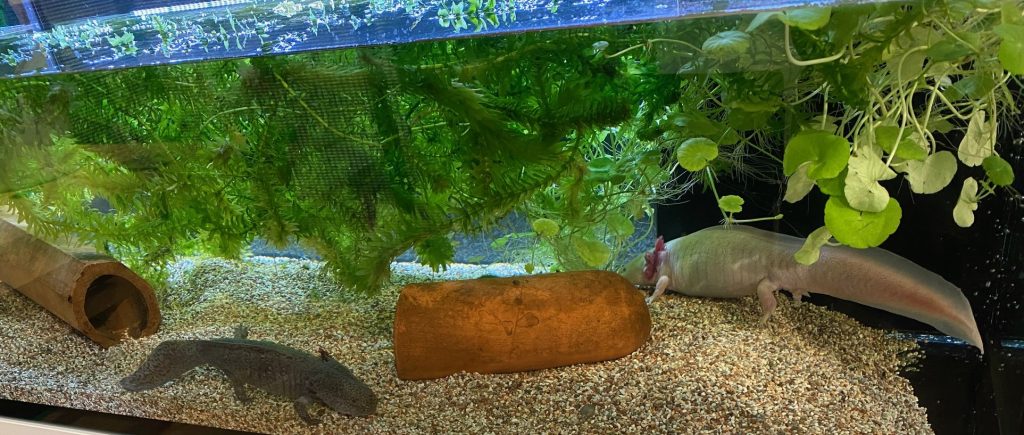
The bionic interest has already turned to the Axolotl and Polycarpa mytiligera. Both species can repair themselves after the loss or a malfunctioning part of their body. Rather than producing externally, growing the spare part is a promising healing device. Nature provides many fabulous insights, if we were able to preserve the biodiversity. Repairing biodiversity is difficult, impossible for lost species which we do not even really know. Start to repair and build awareness that repairing can be fun. Beyond the gender stereotypes, women repair cars, men repair clothes, we have to learn from each other how to use our repair knowledge for many other things and devices. This applies even to our social, legal and economic systems.
In addition to reimagining, we need repairing everywhere. I have lots of stuff to repair at home. When do you start repairing? Welcome to the next trend: the joy to repair, repairs even joy.

Q for Question

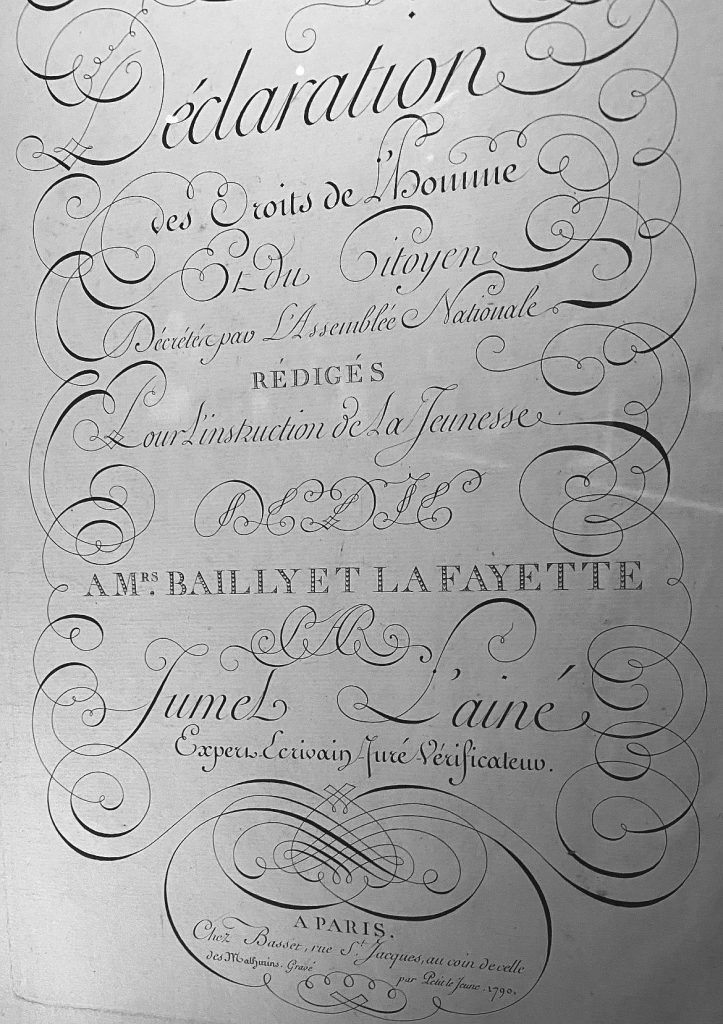
Quality and quantity or queer and query could have made valuable entries here as well. Common to all is the underlying process of questions. Questions put to oneself, to others, society or supra natural or supra national instances. Can quantity turn into quality? Is a queer perspective a new one? Is a query in a programming language the beginning of each algorithm? Questioning is a child’s “natural” approach to understanding the world. This does not stop soon after childhood, but it is occupying, if not haunting, us until the end of our life. When is this exactly happening – the end thing? Are we free to chose this? Just try to answer one of these questions and you’ll find out how one question leads to the next. We are all the same in this behaviour. However, we all find different stopping rules to the query algorithm. Religion is a fast shortcut to stop further questions. Sciences are the never, ever, ending type of questioning. Mathematics solved part of the problem. For a lot of series we are able to calculated the limit value towards which the series evolves circumventing the lack of a stopping rule. Fundamental human rights are such a far-reaching stopping rule. Just like after the French revolution, the question was, how to quickly spread the message of human rights. Didactic and paedagogics evolved in parallel. From “cogito ergo sum” to “rogatio ergo sum”.

P for Policy

Politics and policy are key elements of democracy. Agreeing that we might strongly disagree, is a virtue of democracy, particularly in order to avoid a confrontation using force. Dialectic thinking builds on the confrontation of opposite opinions originating even of the same factual knowledge. Based on different theories the same evidence will be interpreted differently. Hence, in the field of politics, where disagreement is part and parcel of the game to build majorities, policies will change. This then leads to the belief that we need a policy in each and every subject of the alphabetical list we are about to create.  There is a high risk, if you are not having a digital security policy, you will be at high risks that crucial infrastructure might not work in case of a major internal or external conflict. Candide in his small garden might run out of water to water the plants or climate change is threatening the species growing until recently. Young startups, just like ageing enterprises, persons or societies need a policy  to take care of survival, not only of the fittest. As the challenges and stakes of humanity rise fast, a revival of the policy sciences is dearly needed before the pervasive skill shortages creap into the fields of social sciences as well.

M for Memory

Besides the English term memory, which refers to a huge scientific literature starting with cognitive psychology, I like the French version of “mémoire”, because it is more comprehensive with additional meanings, nicely represented by Wikipedia.org. On the German Wikipedia-page you find first the reference to the children’s game memory, turning around images and memorising where the counterpart is/was (play pairs). This diversity hints towards a cultural element in memory. There is a person’s memory or mental capacity to recall and ways to remember. The latter term refers a lot more to collective memories and becomes a more debated issue. Danny Trom uses the term “split memory” in a chapter on France and the “myths of nations” (p.129-151). In David Brook’s reader on “the social animal” he states that grandmasters in chess (p.88) were long believed to have superior memory. This is actually not true as memory experiments showed, but they rather saw formations and “internal connections forming networked chunks of information”.
“Mémoire”, on the contrary, refers also to the writing of a person’s own biography. Nowadays, book shops contain whole sections of autobiographies, the most sold appears to be the one by Michele Obama recently, if I recall correctly. Among the most scandalous is the publication of the “Journal pour Anne (Pingeot) 1964-1970” by Francois Mitterand. All the autobiographical documents make explicit major parts of what might form collective memory later on.
Memory has found its way into engineering and computing. The memory effect in batteries or being “out of memory” frightens users in computing or programming. In short, I wish you the best of memories reading this page and stimulation by visiting memorials (image: Jewish Museum in Berlin 2022, Ullmann exhibition).

K for Knowledge

Readers of the sociology and/or the philosophy of science or knowledge have a hard time. Each discipline is evolving at such a high speed that is terribly hard for humans to follow more than 1 or 2 fields. Perhaps the choice of Karma instead of knowledge would have made it easier here. Alternatively, in German it is easy to find many nouns starting with a capital K. Kapital, Krieg, Kritik or Käsekuchen would have been popular, I guess. Soon I shall open the comments for suggestions for additional nouns, as part of the empirical “swarm knowledge strategy” rather than the theory-driven deductive method applied in knowledge generation on my side so far.
But wait, we are already in the middle of the unsatiable quest for knowledge. On a meta-level we would deal with the multiple ways to acquire knowledge and create new knowledge. Artifical intelligence is certainly one of the hypes at the moment. New data and new combinations of data drive us forward in the expanding universe and knowledge space. We have witnessed the disappearance of the thick printed encyclopedia in most households, replaced by specilised digital dictionaries or the network society’s shared knowledge base of “wikipedia“. Knowledge is linked to the history of ideas and Peter Burke is a prominent figure to rely on as a reference in this field. 20 years after “A social history of knowledge: From Gutenberg to Diderot” he published the much acclaimed: “The Polymath. A cultural history from Leonardo da Vinci to Susan Sontag” in 2020. To synthesise across the many “monsters of knowledge” over centuries is a daunting task. I like quotes like the one from Leibniz (p.77) “the horrible heap of books that is constantly increasing” and then his own continuation: “Printing, once viewed as a solution to the problem, had become a problem itself”. The whole section is devoted to information overload. Fragmentation of knowledge into disciplines and, much worse, the manufacturing of false knowledge create new challenges to knowledge. Maybe transforming the term to “knowledges” rather than knowledge is likely to capture better the differences between artificial knowledge, created by artificial intelligence and specialised algorithms, and human based knowledge. In knowledge storage we have lost the race with computers, but in deciding what are promising combinations between different fields of knowledge, we are still a wee bit ahead of the machines. Klara tell me, where is the exit, or your synthesis of the whole lot. Meanwhile I continue to read – what? books and the like.

I for Imagination

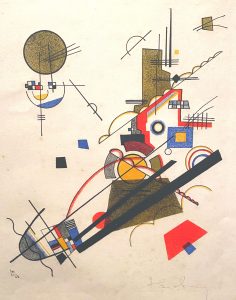
We are all full of imagination. The human brain hardly can do without it. It could be understood as if thinking of oneself is a continuous process of imagining and reimagining oneself. We just developed or were forced to suppress imagination at various instances throughout our lives. Day dreams are rarely tolerated, starting at school, then on the job and probably for a long time also about the way we imagine our own ending or life after death. Just trying not to think, like in meditation, seems to be a very hard exercise and it demands long practice to arrive at longer durations. Abstraction is one of the ways of art to allow imagination to rule the process of creation. In view of the anniversary of Pablo Picasso in 2023, the Brussels Royal museum of fine arts is presenting a paedagogic reflection and demonstration how Picasso emerged on his way towards abstraction as his preferred way of imagination and reimagination as part of the realisation process of his art work. As part of the Cubist revolution Picasso is quoted in this exhibition on how he paints: “Je ne peins pas ce que je vois, je peins ce que je pense.” and “Chez moi, un tableau est une somme de destructions.” Nice imagination, reimagination and de-construction I would say. Like the imagination depicted above from Paul Klee reflects the accomplishment of a new form of pictural language. Try imagination, it isn’t hard to do, “John Lennon” sang once. In Brussels you can try seeing the cubist way in the Picasso exhibition, a good way to prepare yourself for the next visits of fabulous exhibitions in honor of Picasso in 2023.
H for Health

Health is not just a personal issue. Of course, in modern times most people are primarily concerned with their very own health. Particularly, if pain is involved, we tend to put ourselves first. Only various religions and ideologies put God or some other bigger thing, for example identity, in front of personal pain. This bigger thing is believed to decide wars, like Russia trying to anihilate Ukraine. Russia’s military agression stands against the fight for freedom, democracy and perpetuates corruption.
At the beginning of the Corona-Crisis most persons and societies still believed health and infections are only a very personal issue. Researchers with knowledge about “public health” knew already, viruses have accompanied humanity since its beginnings and maybe continue to do so even beyond our disappearance. Hence, addressing the topic of society and health from a public health perspective has become much more popular as prevention is key to fight pandemics as early as possible. However, for prevention to work you have to involve and rely on individual behaviour. As soon as we leave the personal issue of health, we have to address a whole set of other topics like patient – carer relationships, cooperation, interdisciplinarity, public expenditure, public-private partnerships, corruption or behaviour of large crowds.  We have developed antidotes against most difficulties, probably the strongest one is solidarity. Social systems that address inequality of provision (e.g. between regions) or inequality in access to and quality of medical services (e.g. doctors, care or pharmaceuticals) have a strong role to play. Structural, financial and political issues play a powerful role in health. As we think more about prevention and costs we start to understand that we have to start with nutrition, mobility, mortality and our western style of life in more general terms, particularly if we think about health on a global scale. There is no planet B where we could travel to, once it has become impossible to lead a healthy life on our planet. Topics of health over the life course or ageing will need a lot more attention. Findings on the risk of suicide after onset of physical health problems (Link to study) asks for fast responses. Access to digital tools might be part of the solution like “Sympatient” as well as being part of the problem like data leakage.

E for Enterprise

There is a new start-up scene in development in Germany. Interesting to witness the new entrepreneurial spirit. Many of the youngsters grow out of their peer community, wanting to try new ways of working and living together. The new bottom-up or grassroots form of growing a business out of a subculture seems to be an adequate response to the growing diversity of societies and easier ways of community building through online social media. Name it “reach” today, it is similar to what you previously called having a customer base. The new element refers to a blending of cultures. Learning through being online connected to the world, yes, the whole world, allows wide-spread influences from other sub-cultures, be they American, Asian or African. The young are open-minded to new stimuli like “Ikigai” from Japan and, of course, the life histories of founders and individual biographies from entrepreneurs like the legend of Steve Jobs, Apple’s legendary founder. Imagineering has become part of the movie-influenced influencers. Short clips out of a longer story build communities. The witty comment, like at school, gets more attention than the long boring story of the preacher, teacher or the mansplainer. The experience of “flow” is all around these communities and this creates the specific magic of the start-up scene. They take each other to new levels, mutually, reinforcing their preferences and life-styles. They are well aware of the risks they are taking. “Keinhorn” German short for “not an Einhorn”, the one billion value threshold for super successful enterprises taught them crucial lessons. The “ecology of organisations” which I referred to in my courses at the now renamed “Constructor University” previously “International University Bremen”, then “Jacobs University”, (let’s see what comes next?) is an important complementary research tradition to assess the “survival” of enterprises. I still recommend this University, which I quit to start new endeavors. It carries in its several “names” the important message:
start, fail, change, (repeat).