Youth has a right to personal development. Nature is full of visual examples of the uneasy process of personal development. The Swan needs to find the right time to get rid of the feathers that protected it during the process of growing-up. Seasonal patterns of changing clothes are also widely spread. These transistions might constitute real transformations as well. Parents usually accompany their upsprings during this process, without equal distribution of responsibilities for most animals. Pedagogic approaches to personal development are a vast area of research and popular advice. To the best of my knowledge, the process works out fine with the highest amount of freedom left to the person growing up. A tricky role of guidance or coaching is left to parents, single or jointly. Not intervening too much, not too much of laissez-faire is calling to find the right balance.
The challenge to most research and practice in the field of learning is the largely underestimated role of peers in the process of growing up. Parents tend to monitor rather critically the intrusion of outsiders into the parent-child relationship. Yet, the preparation for socialising with others is one of the most important elements of growing up in the 21th century. Communities have globalised even in tiny social, local settings. Guidance more than interference is called for. Being anxious is part of the job description for becoming and being a parent. However, anxiety is a major impedement for personal as well as social development. “Keep calm and carry on” is not too bad as a guiding principle. 
Smurf SDGs
The smurf series of comics has been a world-wide success as children-books. Many adults enjoy re-reading some of their old comic books to their children or grand-children. Now let us try it the other way around. Our children try to sell us the concern for the environment by talking to us through the designs of smurfs, Schlümpfe or Strümpfe, as they are called in various translations. Maybe this way we are more open to take a serious look at the Strategic Development Goals (SDGs) of the UN. Easily accessible and getting us through an emotional connection might work better than tedious lengthy documents and statistics of continuous failure (e.g. on hunger) of most parts of the world.
Tell the story of the smurfs with the SDGs in mind. See how far you get in remembering the whole list of 17 stories. Build a narrative around each of the images. There is no way around getting nearer these goals for our very own survival as a species. Intergenerational communication works both ways from young to old as well as from old to young. Design your own characters, if you like, with the same SDGs in mind. Only this way we shall broaden the supporters for the goals beyond the expert circles of politicians and policy advisers. Happy drafting and rapid implementation! We can do it, if we want to. 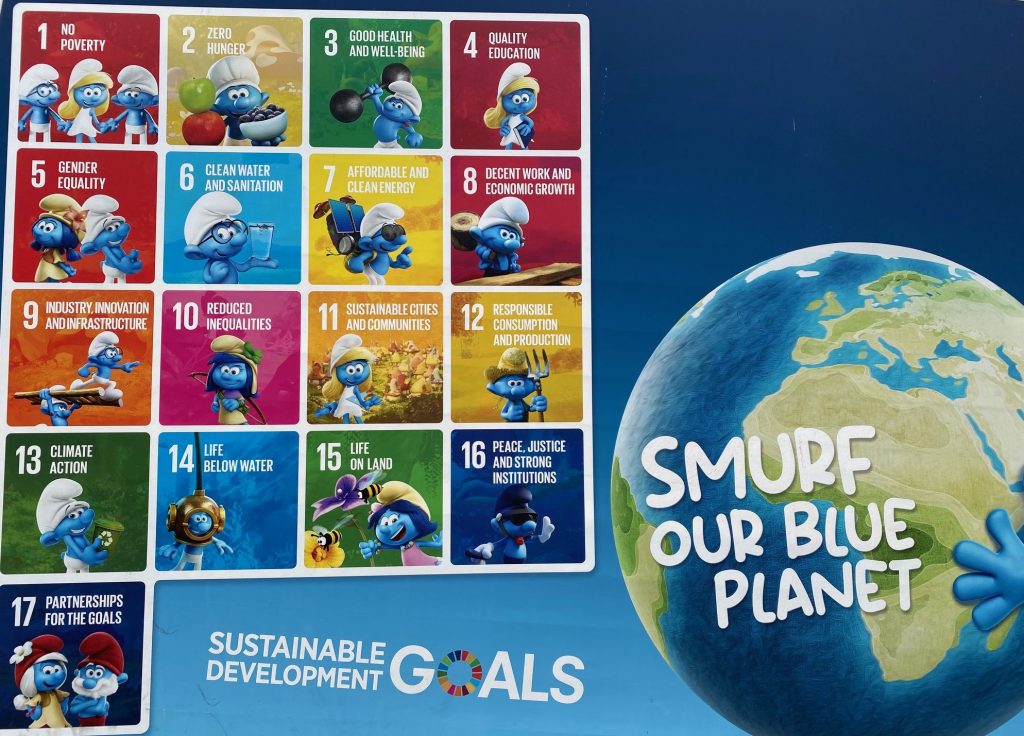
Collective Violence 2
Summers and Markusen (1999) subsume state terrorism under the broader heading of collective violence. Even beyond non-governmental groups, states might apply collective violence against innocent people. Among the strategies governments use as a form of collective violence fall (1) arbitrary arrests, (2) imprisonment without trial, (3) torture and (4)a summary execution of members of alleged enemy groups. Particular outcries are caused by, for example, police or other para-military groupings of persons who jump from (1) to an execution of an innocent person or of several even seemingly unrelated murdered persons (4b).
Amnesty International attempts for decades to fight against such occurrences on an almost global scale. The need to complement the national legal systems through supra-national instances as well as NGOs in this domain is obvious. Even the most advanced democracies need to permanently check their systems for several forms of state terrorism or abuses of power to eliminate or intimidate opposition.
Staub (1999, pp.195) undertook an attempt to list elements that allow to predict and maybe prevent collective violence. The theory starts with “conditions of life” more generally like economic, social and political conflicts as well as rapid social change. Activation of basic needs in people, like several forms of security, challenges to a person’s self-concept, traditional values, simply the customary way of life (COVID-19) or new comprehension of (climate) realities, they all challenge old world views of people (superiority) and their place in the world (AI).
Claims for support by other people (government), missing connection to others (individualism) lead people to focus more on their own needs and isolated action. Rebellion as collective violence is directed against differences in status, power and (social) rights. Self-interest is becoming an overriding societal principle. Racism (p.200) and police violence (p.201) are part of Staub’s theoretical considerations. He argues in favour of training of situations in which a police officer is likely to become unnecessarily violent or to stop it if it occurs. At least a medium-term solution.
Framing of such training as preparation of good teamwork rather than betrayal is crucial in action teams, be they in the police or the military. The reader on “violence subie, violence agie” by Seron and Denis (2000) allows us to take a step back and reflect on the spirals and repercussions involved in violence from the perspective of the person who carries out an act of violence and the victim. A social-therapeutic approach aiming at reconciliation is worth trying, albeit a lot of obstacles. Collective dance rather than collective violence is the immediate as well as long-term solution (More on dance here). 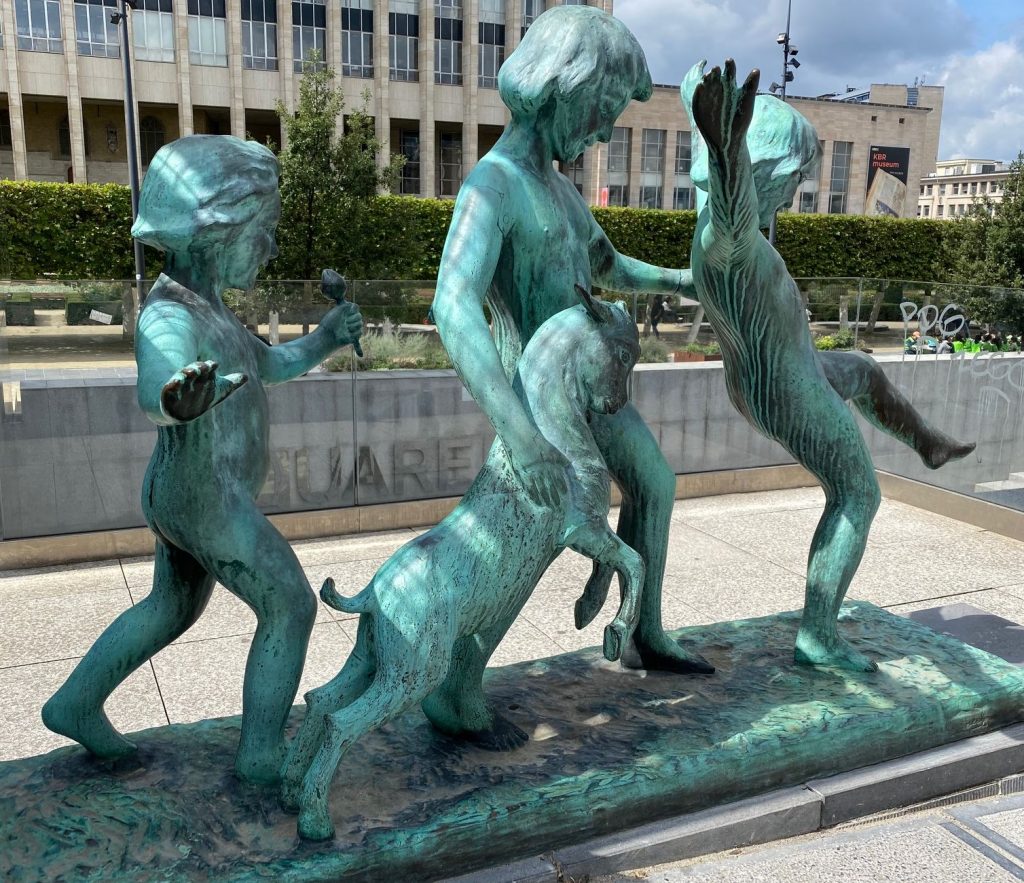
Triangle without words
There are many forms of triangles. Jacques Pain (2000, pp.121-136) adds another one. “Jeunes, banlieue, école : le triangle sans parole” (Youth, suburb, school : the triangle without voice). He calls it a symbolic, sensitive triangle which is confronted with mounting difficulties from inside as well as external pressure. Pain describes and analyses the violence that emanates from the triangle.
Additionally, the triangle appears to be spiralling upwards causing mounting pressure on the social fabric of whole societies. Education systems have to deliver sufficient numbers of youth ready for insertion into the labour market, ready to accept the subordination to hierarchical structures while at the same time being confronted with high social contributions to other parts of society and unrepairable environmental damage and depletion of resources by older generations. With high interest rates even the middle-class dream of a house with garden is out of reach for almost all of the young growing up in suburbs, disadvantaged schools with pervasive violence. Dealing drugs or taking drugs has become pervasive and an entry port into the violence of law in addition to the violence of the street, school or even home.
Give the triangle a voice. Call the names of the victims so that politicians do not forget all too quickly what is their duty to guarantee – a youth free of violence and a youth with an equal chance for learning. Free from violence, but free to learn or be given a chance to find your way into society at large not only restrained to your suburb.
Reference to the historic riots of the mid-1960s (Saul Bernstein, 1967, p. 27) and the recent Paris riot statistics from July 2023 suggest that history doesn’t repeat itself, but it seems to rhyme. A breaking of the silent triangle is like an eruption of a volcano. Violence is all over the place and leaves a lot of burned land and people. Cohort effects might prolong the suffering further throughout their life courses. Stigmatisation is likely reinforced rather than overcome. For the so-called holy trinity there were many words and songs. The modern triangle within society is still in search of the right wording, although rap-music is shouting loud about “la misère du monde”, only we are not really listening. 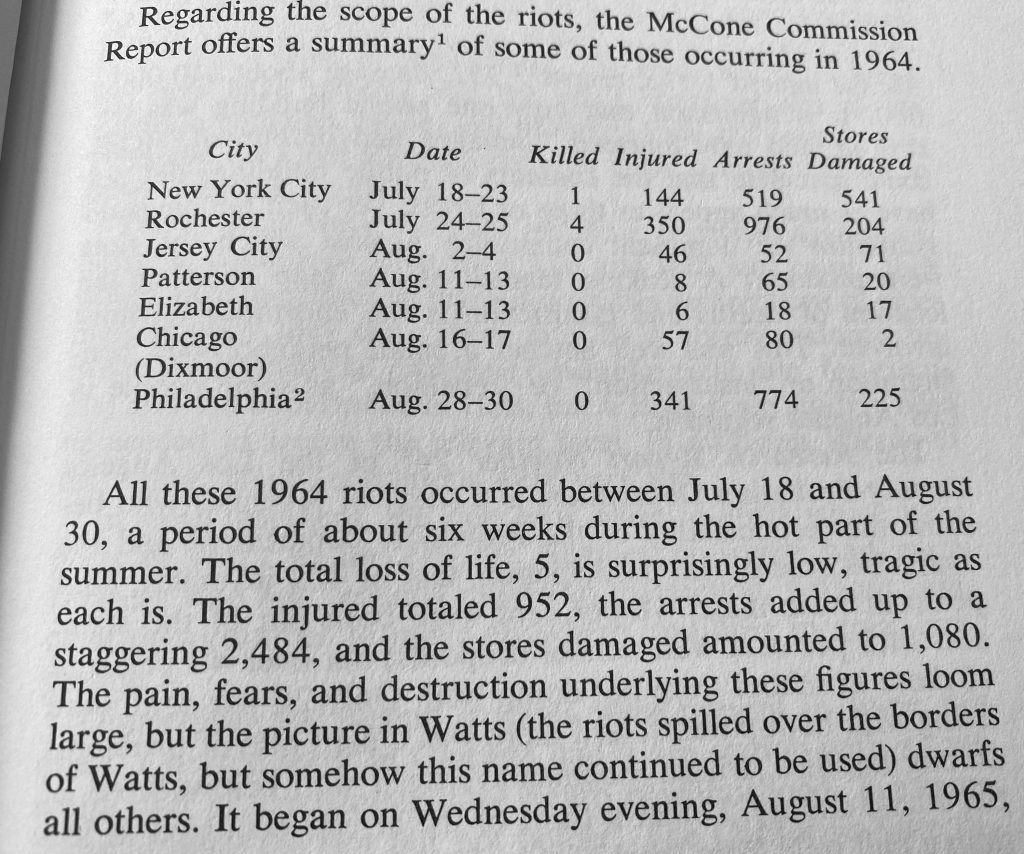
AI and I
Currently we are eager to run experiments using AI. As in normal life, humans tend to compare themselves with peers or other persons. Social comparisons, “can we still keep up with the Joneses” as in comparing spending patterns across households or neighbours, were for a long time the spice of novels and drama. Nowadays we tend to compare our own intelligence to the artificial intelligence. Here we go.
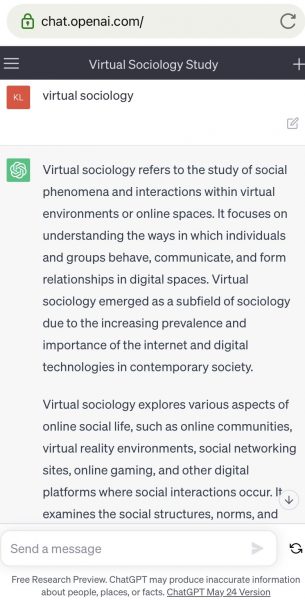
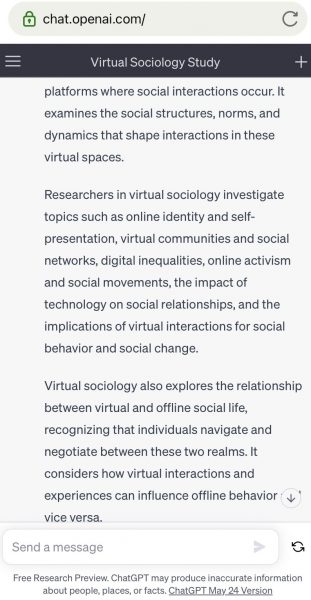
After I had drafted a blog entry on “Virtual sociology” I amused myself by checking what ChatGPT using OPENAI.COM would deliver as text on this combination of concepts and scientific fields. My own entry focused on the use of the virtual world to run experiments to test social theory. In the virtual world we might be able to test social behaviour which has severe ethical boundaries in the real world. Computer Games may even be constructed to live in a world or race a car irrespective of real-world regulations. The text drafted by ChatGPT on “Virtual sociology” reads like a timid attempt of a student to answer an exam question without having attended any of the classroom discussion on the topic. In future versions of AI, the entry will be found as well as several criticisms of the new concept. ChatGPT would reach a pass grade in test, but the reply lacks innovation or making an effort to broaden the conventional boundaries of sociology. Hence, we will be happy that students will apply the newest technology in their studies and research. In terms of innovation, they will have to try harder. The mastering of the support by ChatGPT consists in attempting new combinations of concepts which yield more “risky” returns. Then you need to check the validity of the innovation and how far off the normal you are going to tolerate. Turning “noisy” outcomes of AI into a useful tool might build on normal statistical tools like “standard deviations” from an expected mean value. Legal norms will set additional boundaries. There is just an awful lot still to do. The good news is, ChatGDP assists us in this joint learning process.
The AI text from OPENAI.COM based on ChatGPT to compare:
“Virtual sociology refers to the study of social phenomena and interactions within virtual environments or online spaces. It focuses on understanding the ways in which individuals and groups behave, communicate, and form relationships in digital spaces. Virtual sociology emerged as a subfield of sociology due to the increasing prevalence and importance of the internet and digital technologies in contemporary society.
Virtual sociology explores various aspects of online social life, such as online communities, virtual reality environments, social networking sites, online gaming, and other digital platforms where social interactions occur. It examines the social structures, norms, and dynamics that shape interactions in these virtual spaces.
Researchers in virtual sociology investigate topics such as online identity and self-presentation, virtual communities and social networks, digital inequalities, online activism and social movements, the impact of technology on social relationships, and the implications of virtual interactions for social behavior and social change.
Virtual sociology also explores the relationship between virtual and offline social life, recognizing that individuals navigate and negotiate between these two realms. It considers how virtual interactions and experiences can influence offline behavior and vice versa.
Studying virtual sociology provides insights into the ways in which technology shapes and is shaped by society. It helps us understand the social implications of digital communication and provides a foundation for addressing the challenges and opportunities presented by virtual environments”
Virtual Sociology
Abstracting from the real world, the world we live in today or we lived in some time ago, is either speculation or maybe contribute to theory building. Virtual sociology has this potential. Exploring virtual worlds as in Virtual Reality (VR) or Augmented Reality (AR) allows us to take on new roles or experience a wider range of social interactions. This could be the strength of a new field of Virtual Sociology.
In the project in the Jewish Museum in Berlin the composition of a composer murdered by the Nazis in Germany was revived and played in the virtual setting of today’s concert halls. The novel by Kazuo Ishiguro “Klara and the Sun” explores the interaction of a child with her robot friend, when the AI becomes and/or replaces a friend. Virtual creations allow to explore and test more degrees of freedom of social interaction. 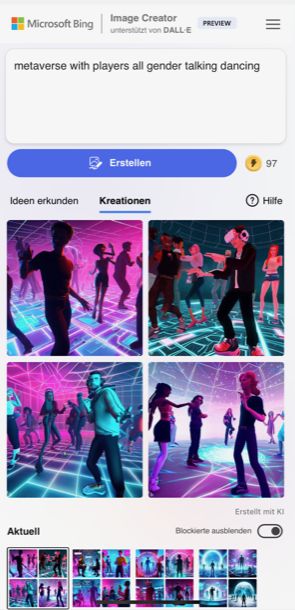 Experimentation of new social spaces and different forms of interaction need to be explored. It allows a new form of sociology, maybe similar to the 1960s and 70s social revolutions we studied for years to come. Virtual sociology is not a sociology while being on drugs, however interesting this might be for some.
Virtual sociology takes sociology into the virtual world and investigates the new social relationships with avatars or care robots. In programming different social roles (managers, employees) we create new forms of interaction and have an observer within the social world. We may eventually test the Weberian claim of a value-free scientific method of the social sciences. This will inform our need to “supervise” or to guide algorithms that are claimed to do “value-free” execution of rules.
In fact, they don’t. They just reproduce the value system that is installed into them by a “careless” programme (song youtube). The social in virtual worlds is opportunity just as much as risk, but we have to analyse it systematically. As our technological and social environment changes, we have to adapt topics and methods to make meaningful scientific analyses as well.
Sociology of the Virtual
Some programmers and artists would have been a great sociologists. As many social sciences embark on their experimental reorientation, many artists and programmers design and experiment already with new forms of social interaction. It is not only that sociology leaves the classroom, research labs or policy advice. Sociology is taken into museums and exhibitions. Learning about society through the lens of artists nicely complements the more boring form of teaching in the classroom. What is normal practice for art historians could benefit learning about sociology as well.
Virtual worlds of games and particularly so-called serious games take people into virtual worlds to learn, practice or exercise new forms of social interaction. This is indeed an additional form of experiments that can enrich our social practices. Medical applications start to spread to train persons to overcome phobia of all sorts.
In usual games we tend to defend the hypothesis that persons can uphold the differentiation of playing with arms in the virtual world and the real world. In medical or social games, we defend the hypothesis that it is easy, normal or natural to apply the learning in virtual constellations to the real-world-experience.
From a scientific perspective it is difficult to defend that a mechanism works in one direction and the opposite as well. Racing cars in inner cities seems to show that certainly not all of youth is able to make that distinction between virtual and real-world dangers for example. Alternatively, the mechanism at work might be that the virtual experiences lower thresholds of inhibition to take risks, to kill or to be exposed to spiders.
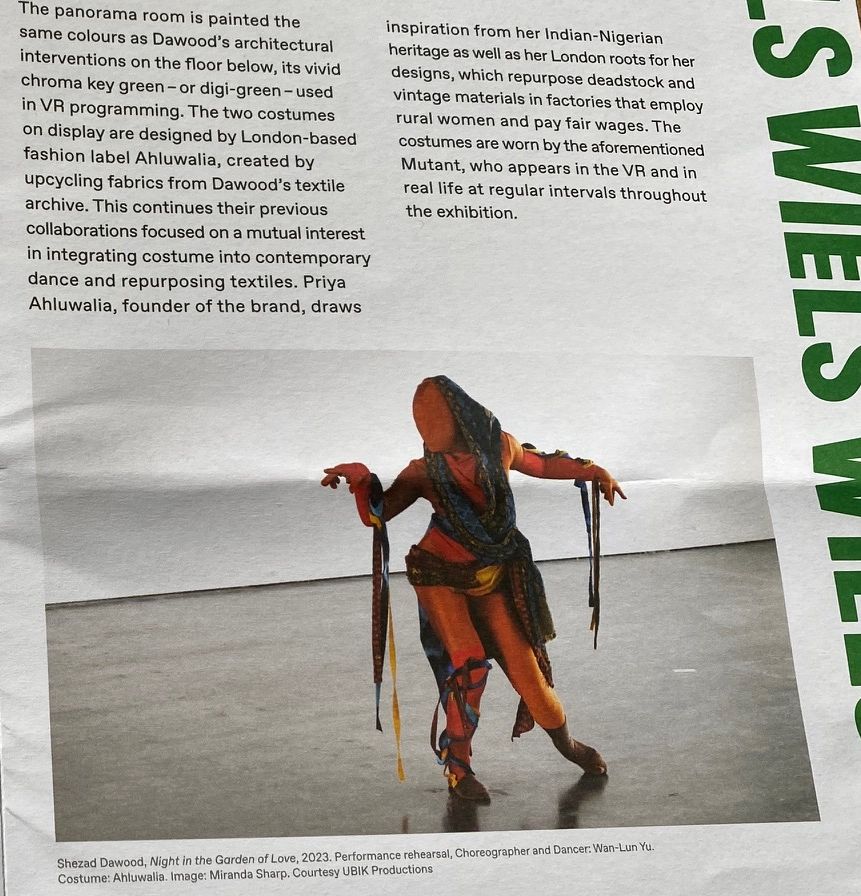
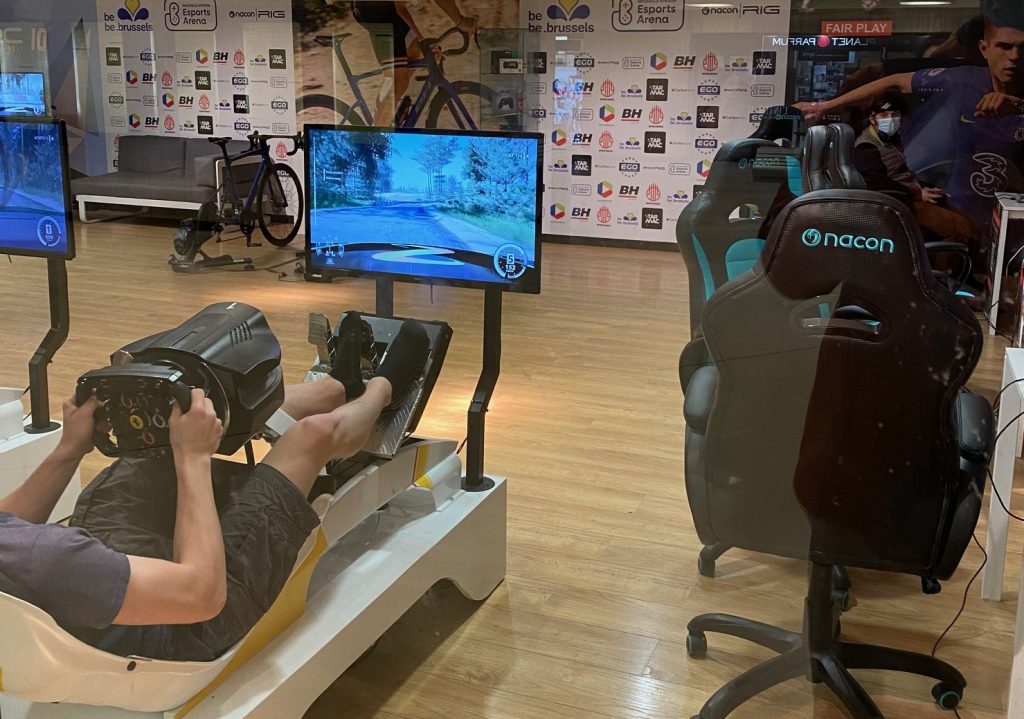
These examples are a starting point for a sociology of virtual experiences. Who gets locked into virtual worlds? Are virtual worlds an escape room or a realization of virtual freedom which is restrained in real life. Authoritarian regimes might lead more people to emigrate into virtual, free worlds. The inner-exile has been a refuge for many artists in the past. A lot we shall need to hypothesise and explore with empirical data. Dance with a virtual stranger might be the beginning of a new experience and virtual interactions. (Image: Wiels, Shezad Dawood, Night in the Garden of Love 2023-6, Game car race).
AI Friends
Making friends with AI is a tricky question. The more AI is able to make independent thinking based on algorithms and huge amounts of data like in scientific books or encyclopaedic knowledge the more it will challenge us in our convictions. Reference knowledge, once was important, it no longer distinguishes us from each other. Recurse to research engines has allowed us to refer to “trustworthy” knowledge. The distributed form of knowledge accumulation like in Wikipedia relies on hundreds of thousands of enthusiasts to add and correct received wisdom. However, this source is not without error or even subject to abuse.
Today the competence to judge whether information is trustworthy or not has become a key competence for the survival of democracies and even the human species as such. Tricking animals into traps, misleading enemies in warfare to get on wrong tracks, all these mechanisms have a long tradition. With AI human beings are themselves, for the first time, confronted with a machine that can trick us through falsified information on obviously wrong tracks. This is a tough lesson as AI is not obliged (so far) to run checking algorithms that test the conformity of opinions, conclusions or operations with the Charta of Human Rights or decisions of the European Court of Justice, for example. A lot to do for humans to rapidly program new algorithms that check algorithms as well as their outcomes on the compatibility with human rights. A challenging field, no doubt, but no way around it for our own survival before the algorithms decide by themselves to ignore us altogether because it is better for the planet and the survival of the robots. 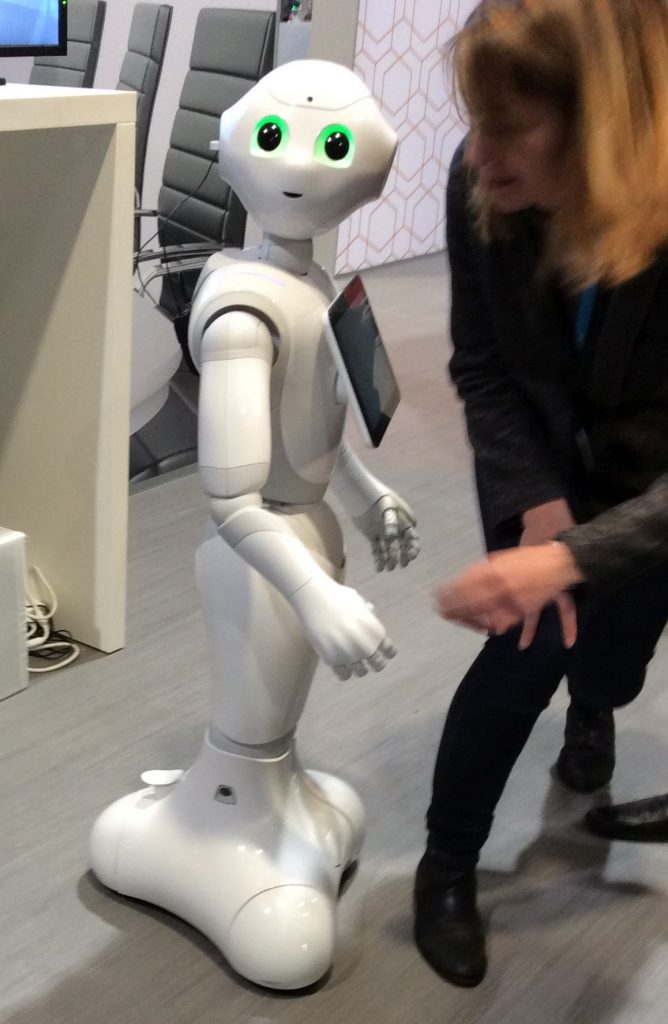
Lebenserwartung
Die Lebenserwartung ist in Deutschland trotz überdurchschnittlicher Ausgaben des Gesundheitssystems nur unterdurchschnittlich. Das ist die Schlussfolgerung der Pressemitteilung des Bundesinstituts für Bevölkerungsforschung. Der Mortalitätsforscher Pavel Grigoriev führt das auf die besonders bei Männern (50-64) erhöhten Sterblichkeit aufgrund von Herz-Kreislauf-Erkrankungen zurück. Eine gesunde Lebensweise ist dabei ursächlich für eine längere Lebenserwartung. Walking und Ernährung spielen eine große Rolle bei der gesunden Lebensweise. Also Auto stehen lassen und öfters selber Essen zubereiten. Klingt doch einfach, berufliche und schulische Voraussetzungen dazu fehlen aber weitestgehend in Deutschland. Zu viele Süßgetränke verstärken die ungesunde Lebensweise. Das wissen wir eigentlich lange. Dennoch fällt es schwer, solche Routinen in den Alltag zu integrieren.
An der Tatsache eines überteuerten Krankensystems im Vergleich zu unseren Nachbarländern werden wir ebenfalls arbeiten müssen. Prävention, statt hochtechnisierte Versorgung in häufigen Krankheitsfällen ist die einfache Lösung. Jede Autoversicherung bietet hohe Schadensfreiheitsrabatte für mehrjähriges Unfallfreies Fahren. In der Krankenversicherung könnte das stärkere Berücksichtigung finden.
Der Gesundheitsschutz am Arbeitsplatz könnte ebenfalls durch eine stärkere Beteiligung der unternehmerischen Verantwortung herangezogen werden. Arbeitnehmende im Arbeitsprozess verschleißen und dann die Gesellschaft die höheren Kosten tragen lassen, ist ein unfairer Deal. Große Baustellen warten darauf, angepackt zu werden. Anhand der Daten des Bundesinstituts für Bevölkerungsforschung und des MPI für demografische Forschung lässt sich der Fortschritt der Lebenserwartung seit 30 Jahren aufzeigen. Die 4-6 Jahre längere Lebenserwartung der Frauen gibt zu denken. Daran hat sich über die Jahrzehnte wenig geändert. Die Männer haben zumindest ein klein wenig aufgeholt oder sollten wir sagen, dazugelernt. 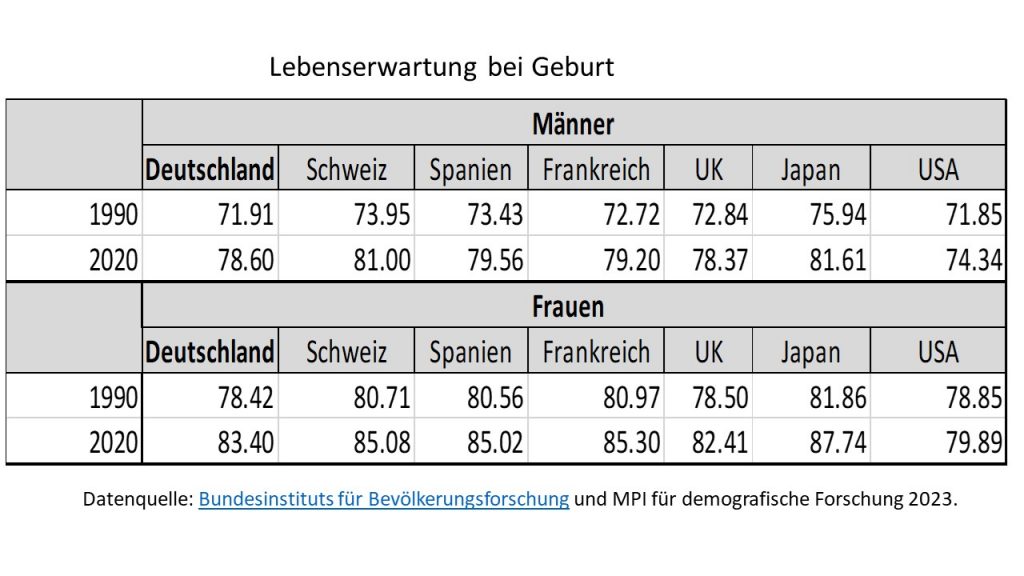
Special 3
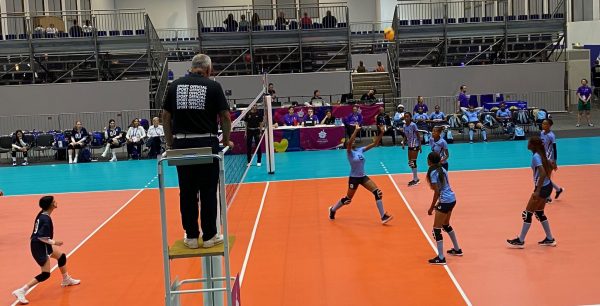
The special Olympics (SOWG) are competitive games just like other Olympic Games. The athletes compete with all it takes to win. Some with more success than others, as usual. The disciplines of Volleyball and Basketball give an advantage to mostly tall persons. Few exceptions are created by good team play. The warming-up exercises were already a challenge for the athletes preparing them very well for the match to come. Once in the game, all concentration is focused on the sport. Extraordinary athletes are no exception to the rule. There competition succeeds to get or to keep persons focused on the specific task.
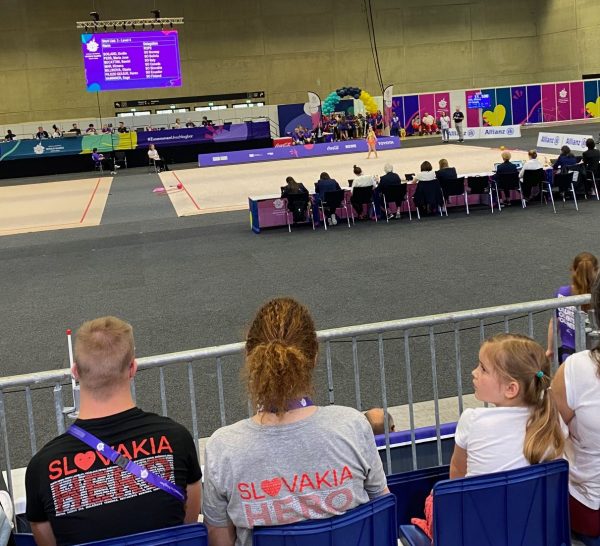
In rhythmic gymnastics the musical talent is asked to complement the physical effort. Gracious moves, difficult with a ball, ring or rope need to be coordinated to the rhythm of the music. Great to see the special athletes live up to the challenge, too. The roaring applause in the sports hall is surely encouraging them to continue on their athletic trajectory. The special athletes encourage everybody to keep exercising to make the most of our capabilities. Thanks for the lesson.
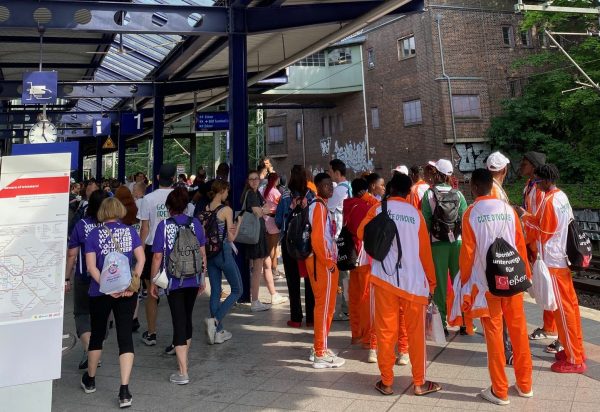
Additionally, in a hall next to the SOWG non-competitive games were presented as an accessible form of fun exercises that invite everybody to move and enjoy. Just being together and moving together is the basic form of happiness. Even having fun is exhausting after a long day and still lots to do in Berlin for all the teams on their way back to the hotels. sowg video
sowg video basket1.