Nuclear War

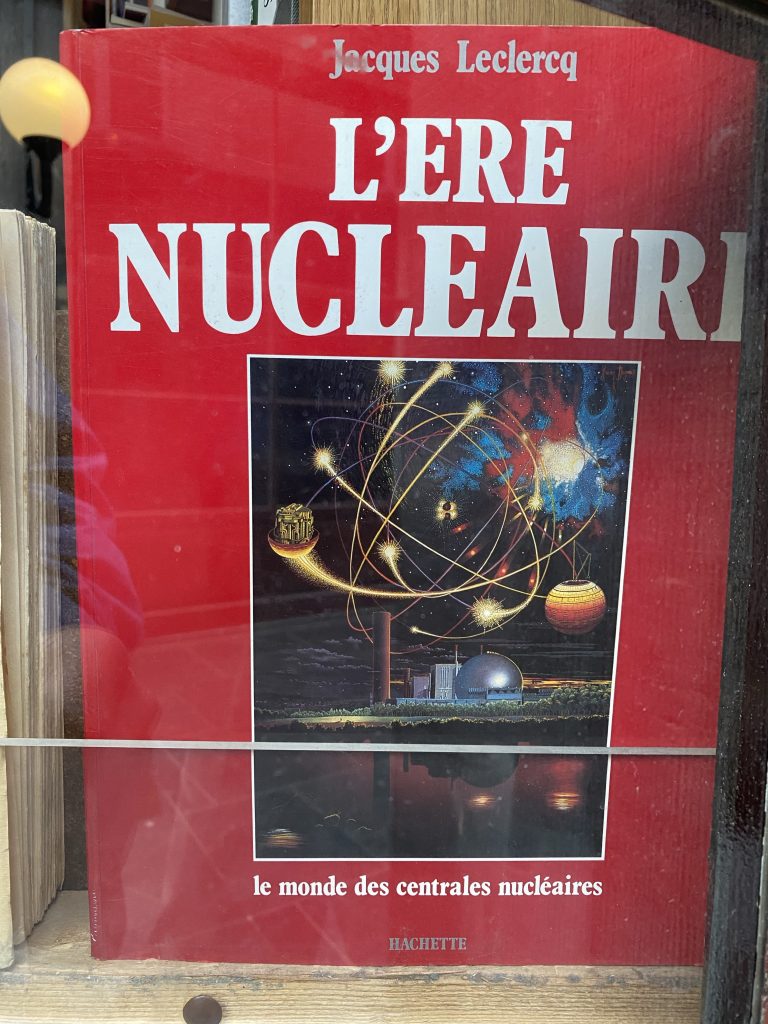
In the last few years we have witnessed a new surge in the investment in nuclear energy on the global level (IEA). Ever since the foundation of the initiative “International physicians for the prevention of nuclear war” in the 1980s, there have been relentless reminders of the devastating effects of such a war. In 2023 we are all aware of the real risk of attacks on the biggest nuclear power plant located in Ukraine. Nevertheless we continue to invest heavily in power plants that constitute a massive risk at times of war between irresponsible nations. Besides the publication of many high quality papers in The Lancet there is regularly space to keep the awareness of the dangers of nuclear war at a high level. Too many politicians shield themselves from dealing with such realistic dangers in the interest of supposed cheap and save energy for all. Both is no longer the case. Nuclear energy is expensive and unsafe in peace and horrible in war times. We cannot afford to abstract from these rising risks. The hype about anything nuclear like in the 1980s is grossly displaced (image of book below).

Anger

It feels like we live in the “age of anger”. Anger was a predominate feeling in the “French yellow vest movement” spurred by sharp increases in petrol prices. In Germany the notion of “Wutbürger” had a short career to express anger of citizens against, against whatever could arise anger. There are plenty of issues of course that will cause arousal in public politics. The more a government enacts change, be it necessary or not, the more it is to arouse its citizens. Parliamentary democracy is thought to solve this through majority voting of the equally represented in parliament. Minority rights have been installed to safeguard the majority to become too overwhelming, but any close decisions on hotly debated topics are likely to cause substantial anger within a society.
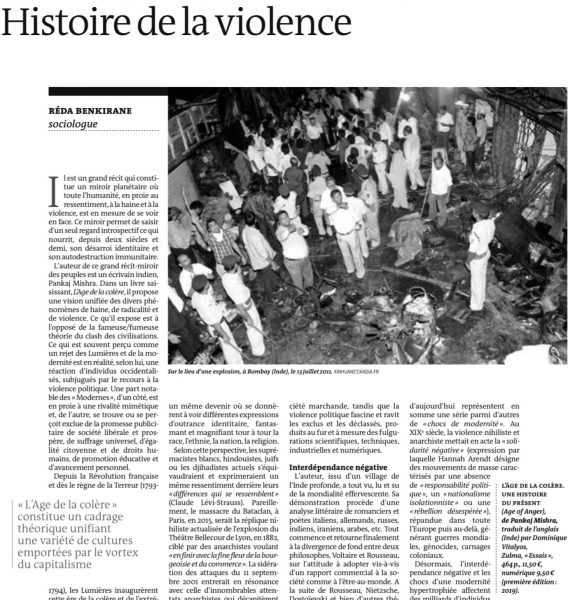
This is far from being an issue only in Western democracies. Pankaj Mishra claims, this is a world-wide phenomenon and history provides ample examples for it. In his book on “The age of anger” he challenges the predominantly Western political theory, deriving from an opposition of Voltaire’s and Rousseau’s political thought to hold the individualisation and globalisation of an economic model, traditional capitalism, responsible for the rise of anger across the globe.
This critique of capitalism is now translated into French. Several movements of anger in France probably find some unifying roots of seemingly unrelated outbreak of anger, violence and subsequent repression. Old arguments of critics of capitalism stand up again. The challenge to democracy comes from the extreme right even more than from the extreme left. Re-imagining capitalism is needed more than ever to safe the survival of democracy. Participative democracy like in Bürgerräte in Germany or deliberative democracy practiced by President Macron in France are an important part to stimulate involvement of more people in the preparation of decision-making. Not perfect as procedures, but small steps ahead to confront and address anger of the citizens and people at large.

Work Subordination

One of the defining principles besides the job description, working time, working place, remuneration of a work contract is the subordination to a superior. The employment contract entails some more or less strictly executed form of direction, but a right of direction nevertheless. This element of subordination has become a major issue in the definition of whether you are effectively an employee or a self-employed person. The digital revolution had enlarged the kinds of subordination. Platforms and algorithms, that distribute work among several employees (but named platform workers) disguised the subordination to a superior level of management to the platform and its seemingly anonymous algorithm. Many young riders were saying, I don’t like bosses, but I am willing to accept a “technical” platform that distributes work tasks only seemingly in a non-discriminatory way. Due to a failure of labour legislation to regulate early enough a thriving model of fake self-employment developed throughout Europe and beyond. Labour Courts have contributed a lot to correct the disguised subordination. Even Uber is advertising that they only operate as a broker of tasks, but have no subordinated employees. The related issue of subordination remains largely the same. Subordination to an algorithm of the distribution of tasks is the end result.
Many start-up enterprises use Kanban boards to facilitate project and team management. Shifting tasks between employees, introducing new tasks and self-selection of tasks are potentially subordination-free allocation of tasks (example software). Flat hierarchies seem more manageable through the use of such tools. The number of tools that integrate other office functions is impressive. When testing such tools, that become more popular also in the distribution of household tasks, beware of the data-hungry nature of such tools. For example, https://trello.com/ warns correctly in the small print that for its full functionality it would need to have permission to use “your” camera, microphone, contacts, photo library, calendar etc.
This demonstrates that subordination, nowadays, is complemented by the algorithmic use of a lot of privacy, we would never have agreed to a boss in person should even ask for. The new and old subordinators have powerful tools at hand, the subordinated will have to get their act together and limit the amount of subordination they are willing to accept.
Again, this is a generational topic. The low threshold to accept technical subordination in younger generations, your autonomous level-5 car is breaking earlier than you even perceive a risk, is confronted with the higher threshold to accept personal subordination for youth. Interestingly, for older generations the obverse is true. All in all, we have ample reason to rethink and re-define also in legal terms the manifold, disguised and new forms of subordination related to work.


Work Remote

Since the COVID-19 crisis we witness a steep increase in the interest to working from home or from remote places. Originally during the pandemic spread of the virus, remote work was the only way to stay in contact with employers and fellow employees for all those not considered as essential workers. Many employees and employers, for the first, experienced that working remotely can have multiple positive effects. First of all, saving time and stress as well as CO2 reduction due to less commuting is beneficial not only for individual employees, but also for society at large. These benefits are substantial.
In my opinion the most substantial consequence is the rethinking of several fundamentals related to work that have gone unquestioned for decades or even centuries, which is: Work happened predominantly at the work place. Digitalisation had changed this partially already, but the willingness to implement far reaching reforms related to work for millions of employees remained rather limited before the Covid-19 pandemic. Nobody had to go on strike to force employers to accept remote work. Suddenly employers, in some instances, were begging employees to please do your work from home or anywhere else. Now we are in the historically rather unique situation that both employers as well as employees try to reap the benefits of the unexpected revolution of remote work potentials including new digital tools to organise remote work (example “scoopforwork”). Employers found out they can do with much less office space than they previously thought they would need to accommodate all employees. Employees found out that saving on commuting time saves energy and frees time resources for other, potentially more healthy ways of life. A new balance of work and private life could be arranged at home. So much for the theoretical expectations.
In practice many women realised that they suddenly found themselves thrown back into working at home and in the home all the time again, with men still less willing to share household work equally. Unsuitable work spaces at home, arranged rather ad hoc, became a health and safety issue usually considered to be part of the employers’ responsibilities.
The results of the real-life experiment of forced remote work are still under scrutiny. To turn them into beneficial arrangements of voluntary remote work which is empowering, emancipating, increasing degrees of freedom for employees would be a huge step ahead. The full spectrum of negotiations is involved. Legislation, collective agreements and 1-on-1 solutions are needed to reap the benefits on all levels. Comparable to the industrial revolution during the 19th century, drawing millions of workers into factories and coal mines, we are at the beginning of a new era of digital and remote work that governs solar and wind farms for energy provision as well as 3D printing of industrial components.
It seems that we shift from the blue collar to the white collar to the no collar world of work. Working remotely in my t-shirt under the cherry tree is not the worst of a revolution (guard against cherry picking by employers and new layers of inequality). It might take a generation or two to accomplish this. With threatening, pervasive climate change we probably have to make it happen sooner rather than later.

Checks and balances

The principle of checks and balances refers back to the separation of powers introduced by the French political theorist Montesquieu in his writings “De l’esprit des loix” in 1748. 40 years later in 1788 James Madison wrote as §51 in “The Federalists Papers” explicitly about the system of checks and balances as part of the constitution of the USA. For maintaining the principle of separation of powers it is necessary to install a system of checks and balances between the powers to prevent one power dominating the others. These well-known principles of democracy face, nevertheless, continuous challenges as to the balance of the powers (legislative, executive, judiciary). In order to safeguard democracy a basic scepticism towards the exercise of power is warranted. “In framing a government which is to be administered by men over men, the great difficulty lies in this: you must first enable the government to control the governed; and in the next place oblige it to control itself. A dependence on the people is, no doubt, the primary control on the government; but experience has taught mankind the necessity of auxiliary precautions.” (Federalist Papers, 1788, p. 239).
The necessity of auxiliary precautions has led modern democracies to a multiplicity additional checks and balances. Independent Anti-fraud offices, disciplinary committees within the separate powers as well as the checks and balances between the separate powers play a role in the survival of democracy. Recently, in July 2023 services like the internal service of the police to overlook the adequate execution of the force applied by police have been much in the headlines. Checks and balances apply to each branch of separate powers internally, and if they prove inadequate, they have to be corrected by other powers. This is the procedural as well as fundamental interaction within the separation of power. Presidential systems, where this system of checks and balances has major deficiencies, are very likely to fail its people through an overpowering executive. Neither the country of Montesquieu, nor of the Federalists is free of these dangers. Freedom of speech, freedom of movement and to meet with people, all contribute to strengthen checks and balances in a democracy. “A dependence on the people is, no doubt, the primary control of the government” (p.239).

Youth

Youth has a right to personal development. Nature is full of visual examples of the uneasy process of personal development. The Swan needs to find the right time to get rid of the feathers that protected it during the process of growing-up. Seasonal patterns of changing clothes are also widely spread. These transistions might constitute real transformations as well. Parents usually accompany their upsprings during this process, without equal distribution of responsibilities for most animals. Pedagogic approaches to personal development are a vast area of research and popular advice. To the best of my knowledge, the process works out fine with the highest amount of freedom left to the person growing up. A tricky role of guidance or coaching is left to parents, single or jointly. Not intervening too much, not too much of laissez-faire is calling to find the right balance.
The challenge to most research and practice in the field of learning is the largely underestimated role of peers in the process of growing up. Parents tend to monitor rather critically the intrusion of outsiders into the parent-child relationship. Yet, the preparation for socialising with others is one of the most important elements of growing up in the 21th century. Communities have globalised even in tiny social, local settings. Guidance more than interference is called for. Being anxious is part of the job description for becoming and being a parent. However, anxiety is a major impedement for personal as well as social development. “Keep calm and carry on” is not too bad as a guiding principle.

Unwinding violence

A common metaphor to describe rising or erupting violence is the “spiral of violence”. In exerting violence by one person or group, the response of the other person or group is even more violent and, potentially, the response to the response makes use again of more violence. The spiralling up of violence is hard to stop or to reverse. Law as well as its enforcement has to play a major role in this process. However, if the police violence is involved as part of the spiralling process the process gets even more complicated. Beware of the beginnings of such a process.
In France in July 2023 the debate about violence is wide open. Contributions to the debate in Le Monde deal with the discussion to claim equal treatment of violence from “fundamental ecologists” as well as extremist defendants of industrial agriculture (Stéphane Foucart). Both sides became more radical in their actions and threaten an escalation in case of governmental inaction. The “triangle of silence” is also a breeding spot with a potential for violent confrontations. Groups in society that have no voice in parliament or local governments frequently use violent actions to raise awareness to their concerns as politics and media tend to ignore “not so nice” images and reporting from areas with multiple disadvantages and social confrontations.
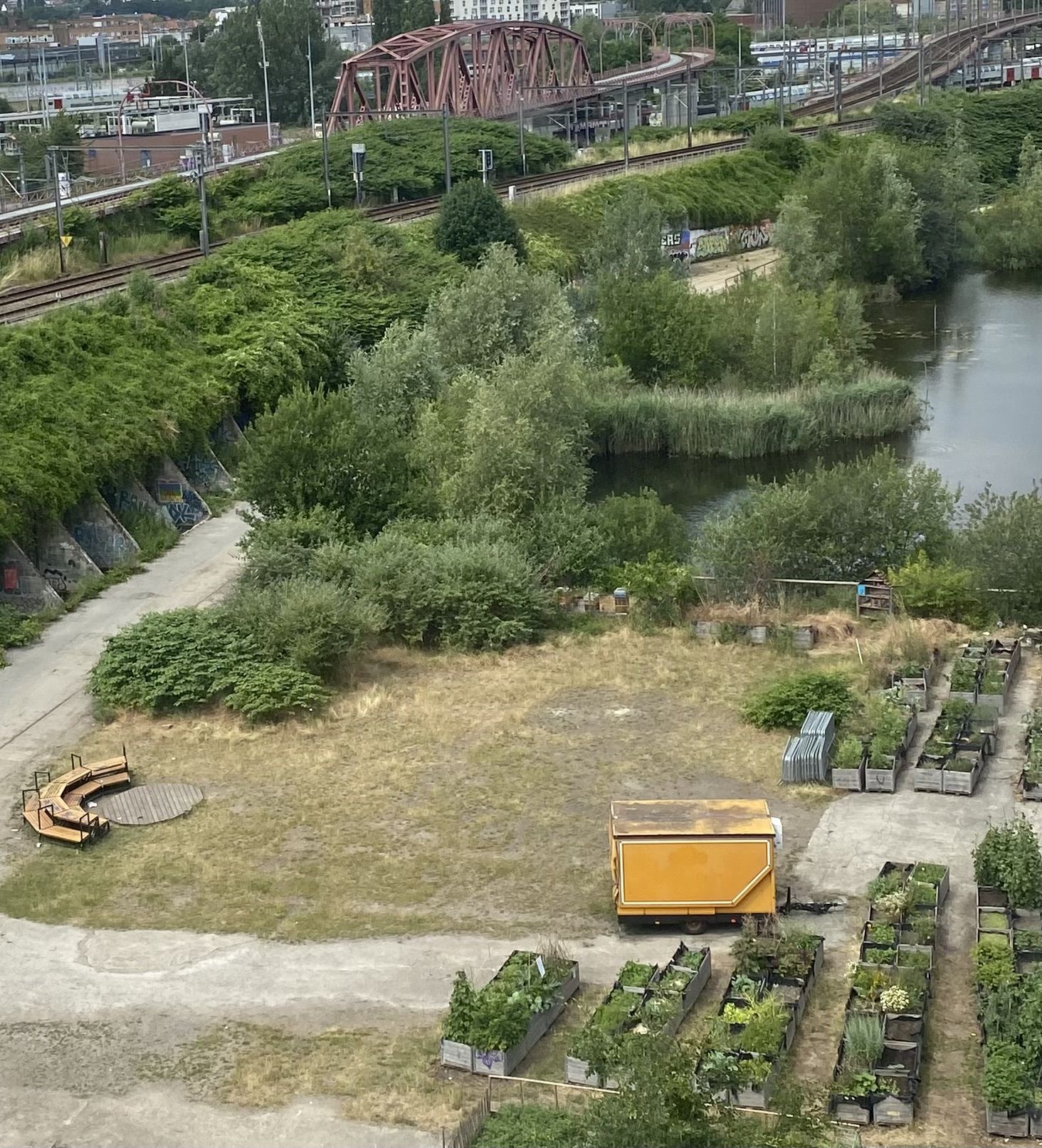
One of the proposed solutions by Marcel Marloie (published in LeMonde) proposes to rethink urban planning deviating from the path proposed originally by Le Corbusier. Instead of offering public parks that are cultivated (and policed) by the local government, entrust areas of collective gardening to the disadvantaged communities. The empowering role is, to master your own piece of happiness. The “bonheur à la Voltaire” is likely to increase attachment to your local and neighbouring community. Of course, this is not evolving without conflicts, but these are processes of accepting compromises and mediation rather than violent resolution of conflicts or aggression out of desperation.
Contrary to the belief that some big projects (Olympic games in Paris) should contribute to unite a nation(s), it might well lead to further segregation of persons who benefit from the games and those who are unable to enjoy some sort of participation in the event. Further gentrification of Paris is likely to be the result. Poorer or lower middle-class people will no longer be able to live in the renovated suburbs that have more public space being privatised and turned into for profit activities. The challenge is to build areas that enhance trust in people, trust in institutions and politics. Schools, associations, trade unions, political parties and social institutions have an important role to play in this respect. The way forward is with more communication and deliberation, not less, especially for and with the most distant groups of a societal consensus.

Happy

“Don’t worry, be happy”. Most people might remember the song of the late 1980s by Bobby McFerrin. Very popular at that time already, it simply took a popular phrase from an Indian mystical preacher and then take this and compose an easy-going melody. Simplicity is the art here, not the complex arrangement of voices or orchestration. Similar to the shifting mood of the late 1980s when eventually even the Berlin wall came down, we are still in need of finding simplicity again.
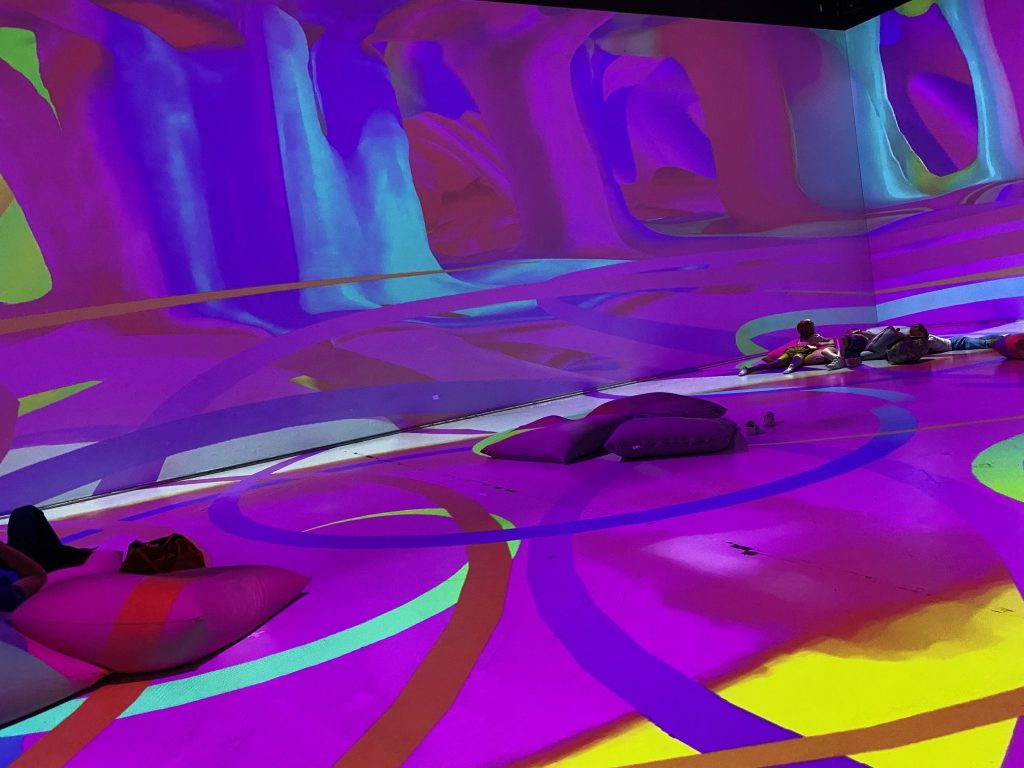
This is a kind of a good starting point for the visit of the happiness exhibition in Brussels. At the beginning of the exhibition, you do a bit of reading on the neuro-psychological and sociological foundation of happiness to then move on to the more fun part of the exhibition: immergence into rooms of light and colours. Sound complements the visual experience decently. It is interesting to witness that children are immediately seduced by the joyful atmosphere and feel very comfortable in the rooms. Adults are more reluctant to let lose. Drop defences and walls we have become used to and just let go of our concerns of day-to-day hustle. “Don’t worry, be happy”, at least for a while. You deserve it.
The entry price of 16€ at the door is a not-to-be underestimated as an impediment to an entry into the world of happiness in Brussels. Children are free of charge, most of them are happy anyway if their parents spend time together with them. Happiness for many in society remains still a challenge. Art could contribute more in this direction as well. On the “Mont des Arts” happiness is near, it takes just some time and you are very likely to feel the effect of the artist’s creation through splendid interior design taking our senses and emotions seriously.

Books

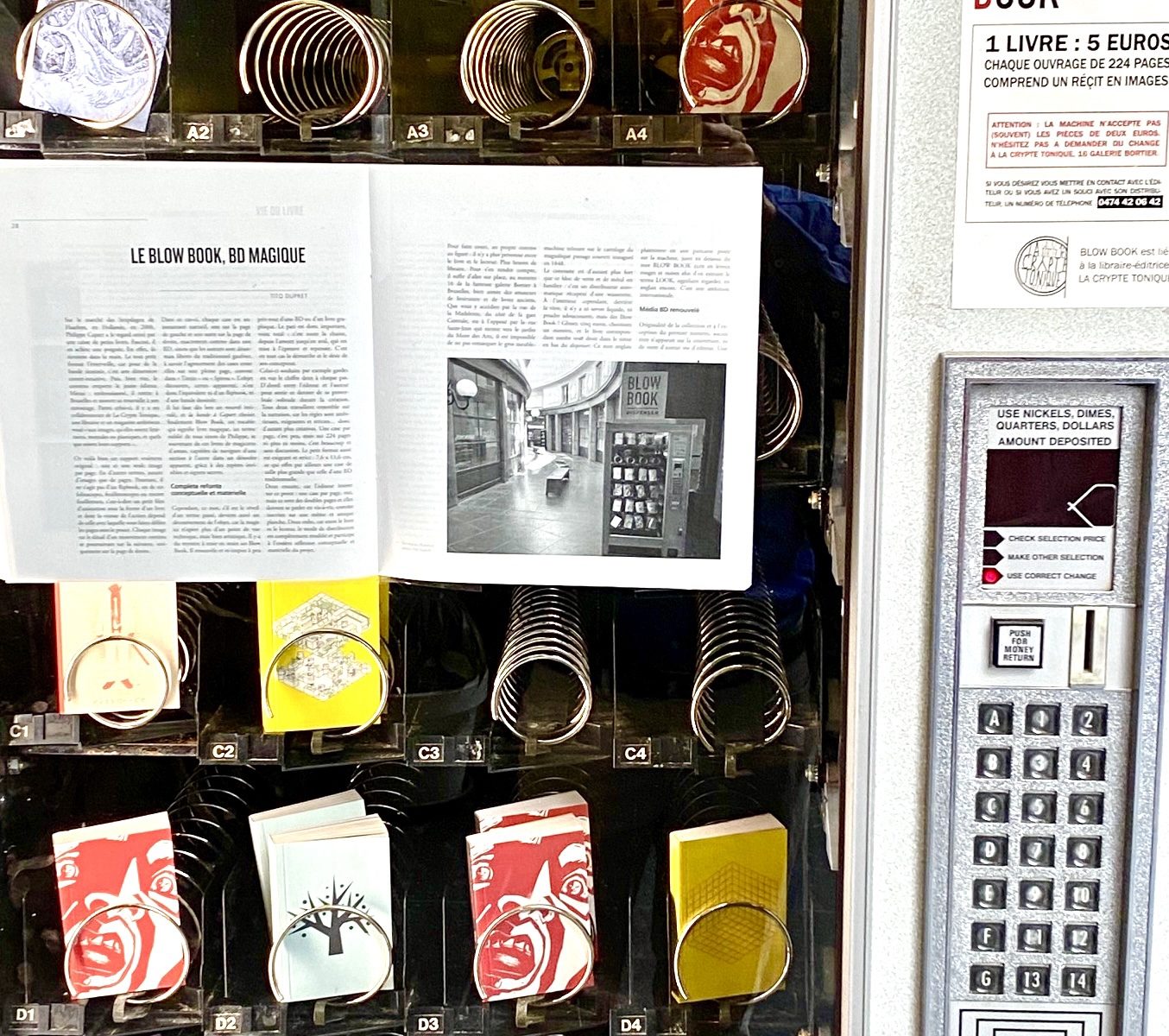
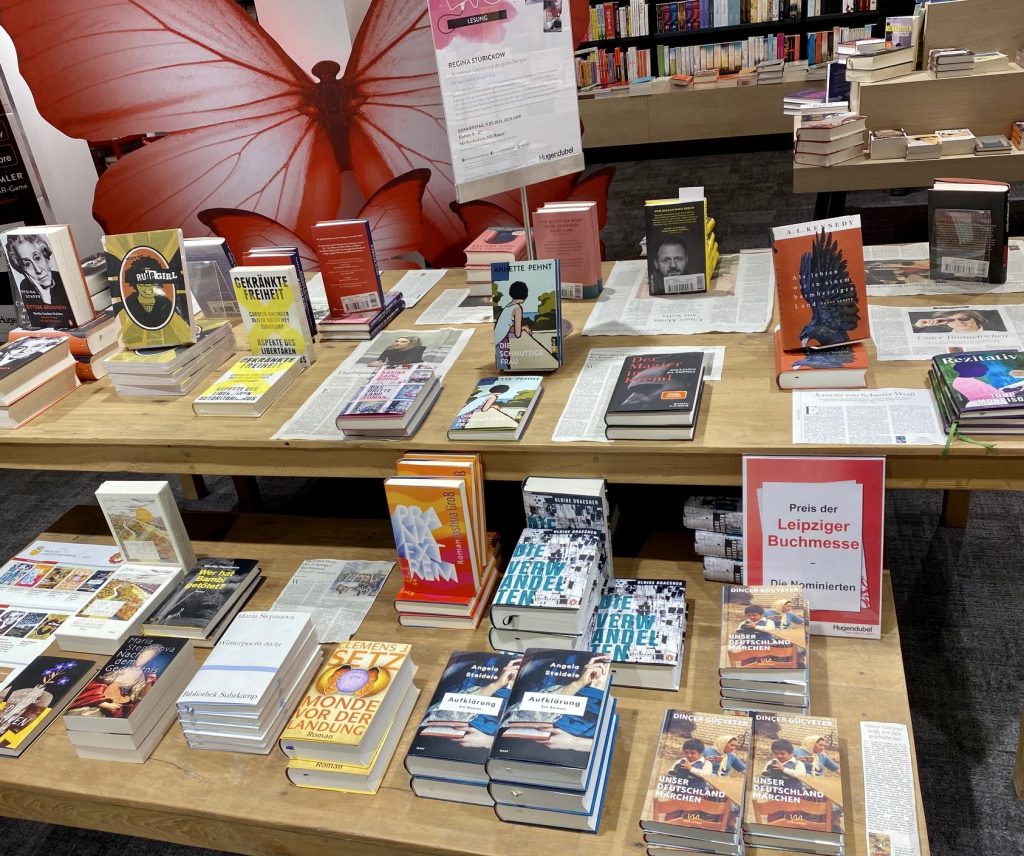
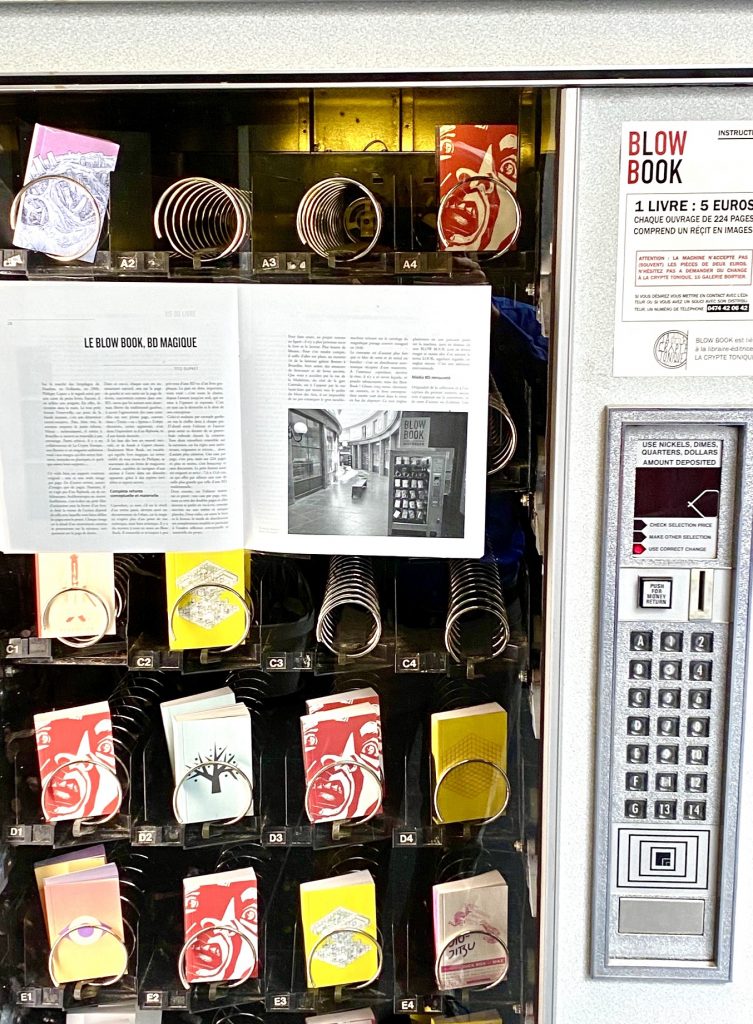
Some say, a book is a book, is a book. This is to reiterate the lasting effect a printed volume might have. Many books are a form of a documentation of facts. Creative writing in whatever form finds most of the time some way into a format of a book. For centuries books have facilitated the diffusion of myths and stories throughout societies including translated versions of the content. 2 aspects are constituent here (1) form and (2) content. Annual book fairs receive most attention for new content within more or less the same rectangular format. There are, nevertheless, interesting variations of the form to be discovered as well. Traditionally book binding was the art that gave shapes to the content. Images in form of film are yet another representation of the book content. All this is “dealt” with at the Frankfurt book fair #fbm23, particularly in form of dealing in and with copyrights. New forms of delivery of content, online or as e-book, have added to the variety of books. Pay as you go or as abonnement with monthly delivery is the old and maybe fashionable new way to digest abundant content. People trust in books. The format as book in general seems to remain an authoritative form to present content, irrespective of the truthful or fictional kind of the content. The more we live in insecure circumstances, the more we tend to be willing to hold on to a pile of paper nicely woven or clued. It is still a very powerful tool to guide imagination for all ages. It allows us to learn at our own rhythm as far as we are willing to go. We are, or seem to be, in control of the process as well as the likely outcome. And yet, the spice of life is the surprise. Book it.

Peace and AI

Rather than asking AI to draft a peace treaty, I used AI to generate images to illustrate my blog entry on strategic thinking and peace deals. My own bias for impressionistic images in art have guided my choice previously. The alternative suggestions from AI based on BING reveals the progressive as well as stereotypical creation of images through algorithms. Same gender in all images, even if the women only image is rather progressive, but as a matter of fact women still tend to be involved less in warfare. The racial stereotypes of AI in image creation also needs attention as the 2 POC persons are depicted in an unfavorable way, not one of strength as for the caucasian stereotype. Living with AI is a joint learning process, likely to be a long one, too. Critical assessment of output remains a human task and we need to train people how to critically and carefully analyze the flood of images in addition to photos.