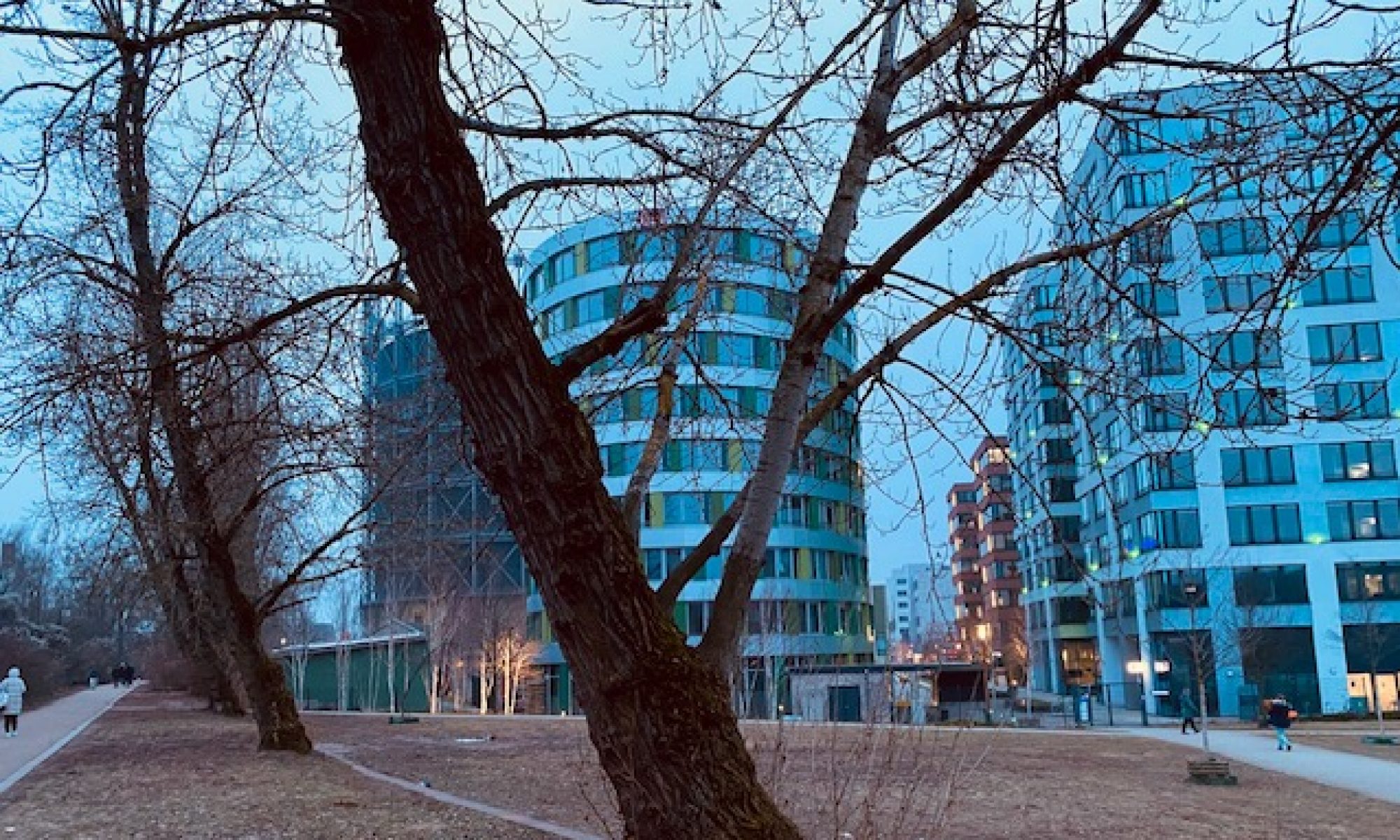
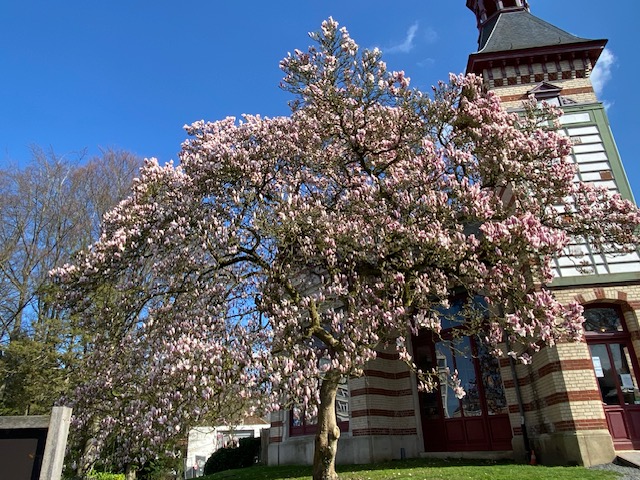
Polychrome tree

Maybe it is just a matter of taste whether you prefer a tree polychrome i. e. in full colors in spring or more monochrome during winter in almost black against a white background. Others might argue that it is not a singular version or time of the tree’s growth cycle, but the steady change. In any case the same tree never looks the same before and after rain. The only certainty is “the times are a changing”, so do our preferences. They are changing as well from time to time. Few persons have similar preferences over the life course and business, marketing and societal changes drive such changes. Often we hardly notice them. Trees are a perfect point of reference to check your personal preferences. Our smartphones track our preferences just by analyzing frequencies of photos taken over months or years. They have a very differentiated polychrome view of us. The reasons to take ugly pictures might confuse the AI-assisted exploitation of our polychrome or monochrome preferences. 
Nature Spectrum

When it comes to colors, nature has shown us the way forward for a long time. Before mankind „invented“ bionics, nature had opened up the full spectrum of colors. It took us thousands of years to understand how to recreate the colors of something technically rather simple like the rainbow. The colors continue to impress us independent of our cultural background. More interesting than, maybe the Atomium in Brussels, is the almost daily reproduction of a rainbow in a park in Brussels (park Bois de la Cambre). All it needs is a sunny day, water fountains and the right angle of observation. It is magic, but still simple science. Enjoy.

Wave Length

The links between art and science are manifold and run in both directions. Artists challenge science or the outcomes of science and scientist refer to or maybe inspired by the work of artists. If artists challenge scientists by proposing an alternative theory they become subject to empirical scrunity like the unfortunate fate of the theory of colors of J.W. Goethe. The physics of colors has long been established and the theory of colors and light are best represented in science using wave lengths as the unit of measuring different colors. Hence, in this theory of colors or light the spectrum of colors runs from violet, dark blue, indigo (short wave lengths) passing yellow (medium wave length) to orange and red (longest wave lengths).
The painter Ellsworth Kelly has also challenged the science-based view of colors in “Spectrum IX” from 2014 currently part of the exhibition “Ellsworth Kelly. Formes et couleurs, 1949-2015” at the Fondation Louis Vuitton in Paris (extract of image below). As a provocation to the scientifically trained vision Spectrum IX breaks up the running from short to long wave length to take the scientific linear colors of the spectrum and split the spectrum in the middle (yellow) and join the ends upside down. Alternatively, take the spectrum and glue both ends of the color spectrum together to a circle and cut in the middle of yellow to form again a seemingly linear evolution of colors.
Now, let’s meditate in front of this new spectrum of colors and follow your senses. The challenge of the theory of colors is a provocative statement of all those imaginative potentials we exclude through a solely science-based view of colors. Art opens up virtual space and fills it sometimes with abstract reflections on colors. It is raising the question of beauty versus science, beauty in science or beauty through science. (Image: Ellsworth Kelly. Spectrum IX in exhibition Formes et couleurs, 1949-2015″)