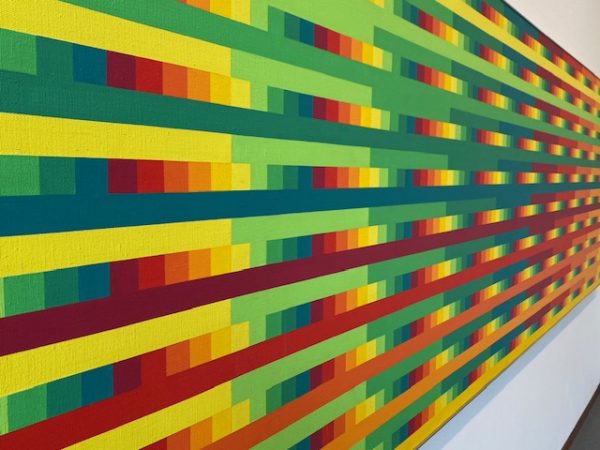
Learning and, surprisingly, innovation or creativity build upon repetition as a method. You may just recall the content or repeat an exercise and this is an obvious form of learning by simple repetition. A bit more challenging is active recall, which would take into consideration to ask (yourself) questions about the subject at hand. The time component is another form for effective or “spaced” repetition as time intervals and timing over a learning period are powerful mechanisms of learning strategies as well. Even visualizations of content in form of a mind map is a creative form of repetition. The basic content remains the same. You may also just use repetition in a form that you (imagine) teaching the same content to another person, which is also known as the Feynman method. Learning can consist in variations of repetitions. This works in many disciplines and the repertoire of repetitions is a part of any pedagogical toolbox and exercises. (Image: Extract from Horst Bartnig, Composition in ten colours 000-999, 1981, Neue Nationalgalerie Berlin)