
With the “Encyclical Letter” entitled “Magnifica humanitas”, Pope LeoXIV puts himself expressively into a long historical tradition of the catholic belief to be not only a religious leader, but also an institution that puts humanitarian values on the top of its agenda. As the catholic church is a globally active institution, which covers the whole life-course of individuals based on defined doctrines, the massive changes that are under way in the field of artificial intelligence asked for some guidelines to frame the church’s understanding of this relatively new “Deus ex machina” of the 21st century. In the Encyclical, there are several mentions with respect to comparable socio-economic developments of the past. In choosing the name of “Leo”, the Pope referred, from the earliest days of his Pontificat, to Leo XIII as a particularly important predecessor for himself. The latter has made his reputation in the Christian Church with the Encyclical “Rerum novarum”, which raised awareness to the risks to humanity with an industrialization and capitalism being pursued at all costs. “Res novae” of our time, which is AI and all its fields of applications have a potential to affect the course of humanity for decades to come. Leo XIV doesn’t condemn it as the devil in machine form, but puts emphasis on the potential of AI to assist us to enhance the “Common good”. This is the task of many, not of only a few, as he refers to in his Encyclical of 2026-5-15.
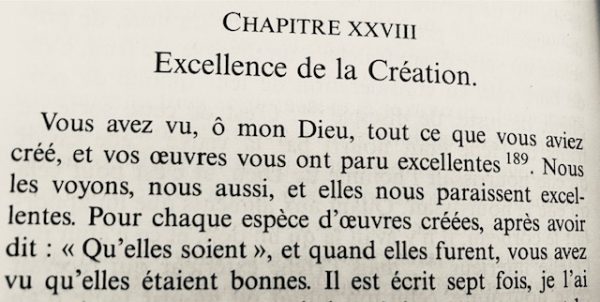
(Image: Extrait: Saint Augustin, Les Confessions, book 13, chapter 28).