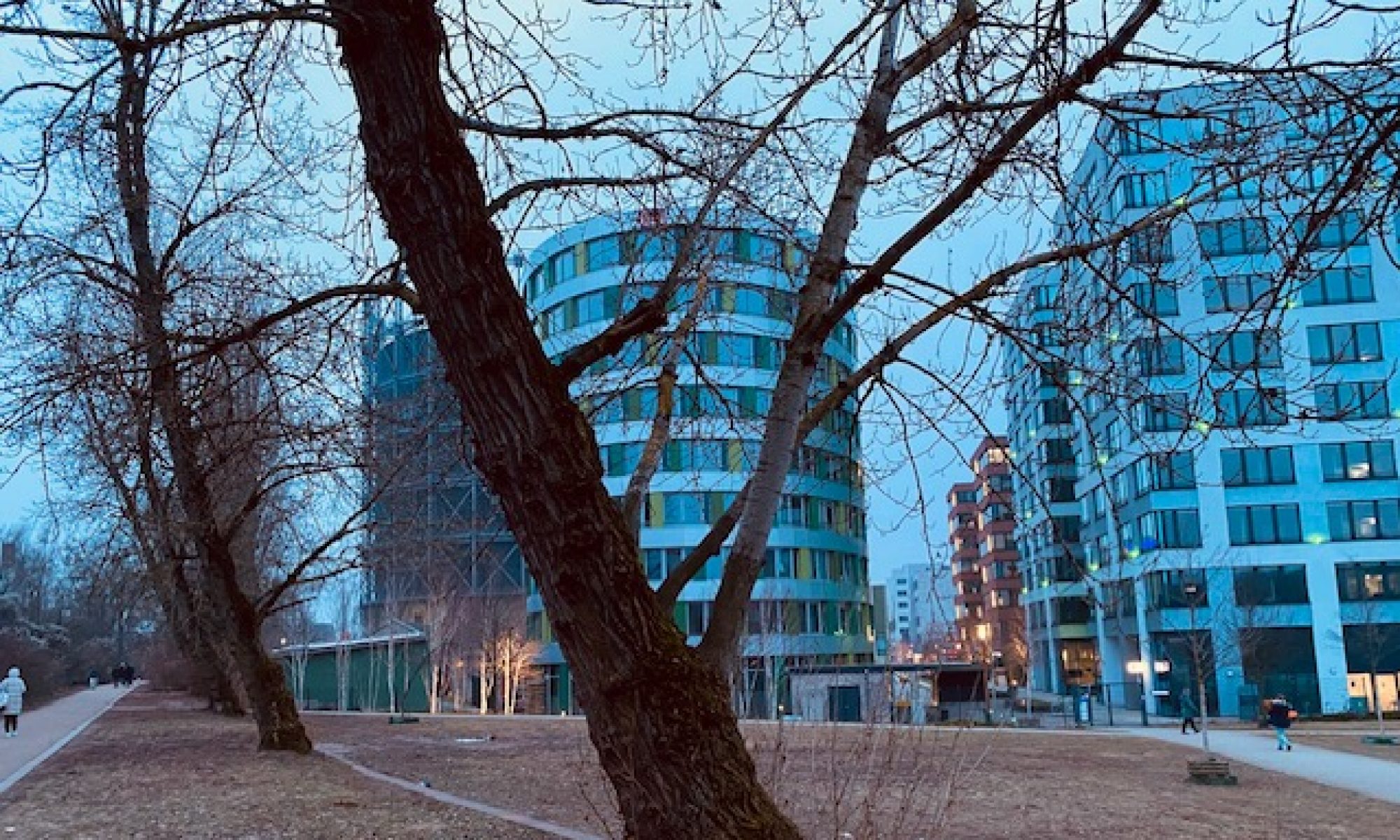

The problem with pollution is, it is killing you softly from inside. It is almost impossible to escape air pollution as it is pervasive in cities, but also in the countryside where you do not expect it that much. This is the result of the study by Kuzma et al. (2024) published in “The Lancet Regional Health Europe”. Based on a data set of 8 million persons from Eastern Poland the effects of air pollution on myocardial infarction incidence was analysed. The use of the “European Union’s Earth Observation Programme” contributed data on air pollutants like PMs, BaP (benzo(a)pyrene), SO2 and NO2 concentrations. The multi-level data of 5 voivodeships, 101 counties, and 709 communities in Poland allows to differentiate the effects of damage to the heart tissue on cardiovascular disease. The other well-known factors are arterial hypertension, diabetes, obesity, chronic kidney disease, hyperlipidaemia, and smoking as most of us know already. The effects of BaP (benzo(a)pyrene) is shown for rural areas despite the lower observed traffic density in these areas. The killing occurs softly from within our bodies by just breathing in and out, and in and out continuously. The disease burden in these regions is observed with “recorded 63,154 hospitalizations and 5921 in-hospital deaths (9.4%) due to STEMI; and 76,543 hospitalizations and 4079 (5%) in-hospital deaths due to NSTEMI”. In short, the need to reduce air pollution further is an urgent demand that saves lives eventually.
(Image from public domain wikipedia or “do-it-yourself” here).

Attune Spheres
In Berlin it is easy to walk through the history of art to up-to-date contemporary art installations. Just walk from the Alte to the Neue and then to the Contemporary Nationalgalerie. With the installation and performance in the monumental Hamburger Bahnhof the artist Alexandra Pirici succeeds in an extraordinary way the combined impression of several art formats. I felt particularly attracted by the sound and resonance that the dancers achieved in the huge historical hall of the former train station. Embedded in a choreography that spans the whole hallway and the top of a sand dune, the ideas of „Attune“ bring in demonstrations of scientific experiments as well. We are reflecting on how structures, biological, physical or geologic processes coexist. It is another example of the intersection of biological, psychological and social phenomena. The links between science and art are more direct than what most people tend to believe. This encompassing experience catches all our senses and our mind. It is very likely that this intense experience in the museum space, which attunes our sensory perception of the artwork, sticks with us for longer than many other pieces of art. The 21st century will reveal an even more powerful language of art as it incorporates even more formats to grab our attention and imagination. The research of how patterns are formed is an important question for social scientists as well. All approaches to the subject are welcome and each one reveals our knowledge gaps despite remarkable progress. (Image: Hamburger Bahnhof, Berlin 2024-5-11, Alexandra Pirici) 
AI Racing
AI has entered the racing of cars after we have been racing horses, dogs and camels for many decades. The fact behind all these races is the huge market for gambling. Anything you can bet on will do for juicy profits in that industry. The recent “Abu Dhabi Autonomous Racing League” is the latest addition to the racing craze. Moving online with 600000 spectators at its peak on video and gaming platforms the investment seems promising. The only problem, AI is not yet ready to really compete with the world of real drivers. The progress, however, is astonishing. Just one lap of 2 minutes on the circuit yields 15 Terrabyte of data from 50 sensors. These are closed circuits so no person can enter or animal can get in their way. The challenge to integrate more data and faster processing as well as algorithms for fast decision making is steep. Great learning opportunities for advances in robotics. The hype has not been able to live up to the expectations as no real racing took place yet. We have replaced the gladiators of the Roman empire with Formula 1 drivers. It is only fair to retire those drivers soon and let AI race cars against each other. It feels like a computer game on screen and it is as we shall most likely watch these races on a screen as well. Hence, what is the point. Watching youth on TWITCH play racing games will probably not change the viewing behavior of the masses. The programmers have nevertheless great learning opportunities and will find their way rapidly into the job market. The other challenges of ASPIRE seem more important for humanity like human rescue and food for the growing world population. In the meantime let the boys play around with cars and learn about potentials as well as failures of AI-programmers and dealing with both.

Science Politics
We tend to believe that science is independent of politics. Even if the individual scientist does research and studies free of immediate political influences, there are many ways in which politics has an impact on science. Sociologists refer to Max Weber as a prominent figure in the “Werturteilsstreit” that claimed the need for science to be conducted beyond political interference. Karl Popper is another reference in this respect who proposed the positive science approach which starts from theory, hypotheses and testing in the sense of identifying false statements, hypotheses and underlying theories. Modern science is also linked to publications of results. This has become an industry of its own and it is sometimes quite surprising to see the lengthy delays that scientific results get published. One example, Jackie G. Schneider and Julia Macdonald (2024) had to wait 3 years until their paper finally appeared in print in a scientific journal. This paper was received by the Journal in February 2021 and published only in 2024 in the 2nd issue of the journal but online in January 2023! Reports in Nature on difficulties of Indian, African and Chinese scientists to get their work done and published are alarming as well. Further regionalization and departmentalization work against the fundamental principles of independent science and scientists. It is a big issue of international cooperation as well.
Hannover Fair
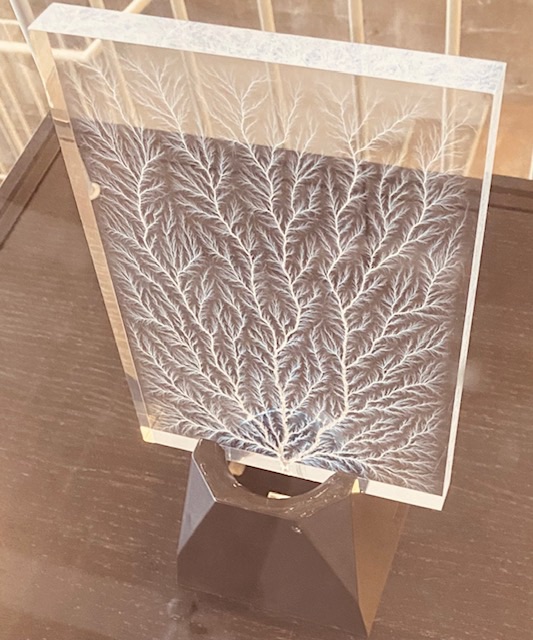
The annual science fair at Hannover is a kind of a show of things to touch and of those things that come to the public market in the near future. Most of the annual hype is about potentials of production. Rationalization, using few resources or innovative solutions of digitization are high on the agenda. Create your digital twin, save energy, make production more safe or cyber secured.
Robotics is another reason to visit the fair. Some 7 years ago I had my Sputnik experience there. The robotics company KUKA had demonstrated live the that assembling a car from pre-manufactured components takes just 10 minutes for the robots. Shortly afterwards the whole company was bought by Chinese investors. Roughly 5 years later we are swamped by cars from China. It was not that difficult to predict this at that time. Okay, we need to focus on more value added production and take our workforces (not only) in Europe along on the way. Reclaiming well-paid, unionized jobs in manufacturing, as Joe Biden does, will not be an easy task. Robots and their programming is expensive, but skilled workers, too. Hence, the solution is likely to be robot-assisted manufacturing as a kind of hybrid solution for cost-effective production systems.
Following the proceedings of the 2024 fair we are astonished to realize that visiting the fair is still a rather “physical exercise” walking through the halls. After the Covid-19 shock we expected a lot more “online content”. Instead we keep referring to webpages and newletters rather than virtual visits and tours. The preparation of the visit in advance remains a laborious adventure. However, the in-person networking activities in the industry are largely advanced by ease of exchanging virtual business cards and the “FEMWORX” activities.
This year’s Sputnik moment at Hannover is probably most likely related to the pervasive applications of AI across all areas of the industry and along the whole supply chain. Repairing and recycling have become mainstream activities (www.festo.com). Robotics for learning purposes can also be found to get you started with automating boring household tasks (www.igus.eu).
Visiting Hannover in person still involves lengthy road travel or expensive public transport (DB with ICE). Autonomous driving and ride sharing solutions might be a worthwhile topic for next year’s fair. Last year I thought we would meet in the “metaverse fair” rather than in Hannover 2024. Be prepared for another Sputnik moment next year, maybe.
(Image: Consumer’s Rest by Stiletto, Frank Schreiner, 1983) 
Digital Estonia
The progress of Estonia in going digital is quite advanced. The electronic identity card which allows data to be linked to health data and accounts or banking gives an impression of how far-reaching digitalization may go. Great steps have been taken to guide the population on the way to move towards the digital (only) world. Learning and coaching of a huge amount need to take place so that people do not abandon or get lost on the path towards “everything digital”. For the so-called digital natives, who have grown up with the sound of their smartphone at the bedside all the time, this move feels “natural”. Some experienced or silver workers got on track, if they were accompanied in suitable forms. The 65+ population might find it harder to adapt to the permanent use of digital devices for not only getting around in your city, but also to do your tax declaration, pay your dues and vote in elections.
Digitalization is not a goal in itself. It has advantages to reach communities in remote places or islands, but it might alienate older persons that have no other person around to assist them in the digital only world. An easy way to get some social science data to inform the debate is to refer to Eurostat and the surveys with information about the “overall life satisfaction” of people (EU-SILC). Checking for some major countries of the EU and neighbours of Estonia with less digitalization the differences are rather small. In terms of overall life satisfaction (16+ years old) Estonia has been catching up to the EU-average mainly between 2013 and 2021. Since then, stagnation at the EU-average is what the data tell. A quick testing of the hypothesis that the older persons (65+) might not see the past evolution as rosy is reflected in the EU-data as well. Good pensions seem to drive the “happiness” of older persons in the EU more than good digitalization. Eventually the two features of a society will have to go hand in hand to improve life satisfaction to higher levels. (Image: Data Eurostat EU-SILC Life satisfaction 65+, selected countries 2013-2023, retrieved on 2024-4-23, comparison with table all ages here, Data source)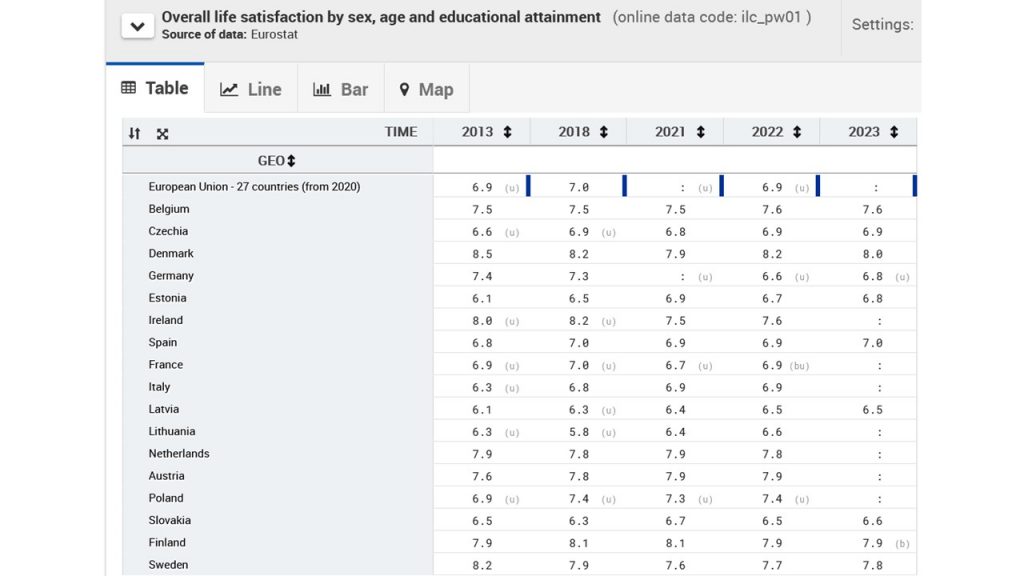
Opera Politics
We know that sports and international politics have ample links. This holds true for Opera performances, either due to the way they are presented or due to the content of the libretto. The opera Jeanne d’Arc (Giovanna de Arco, Jungfrau von Orléans) by Guiseppe Verdi was composed in 1844 and had its Premiere at La Scala in Milano 1845. The libretto is based on the drama written by the playwriter Friedrich Schiller. Later in the 19th century musical pieces followed that dealt with the court judging Jeanne d’Arc. The opera by Verdi creates a strong female voice and character which outperforms men around her. Obviously, she was and remains for many a quasi-mythological heroine. In short, this constitutes great plots for drama and operas. This is centuries old despite the rare occasions of more recent performances of Jeanne d’Arc in form of Verdi’s opera or other forms.
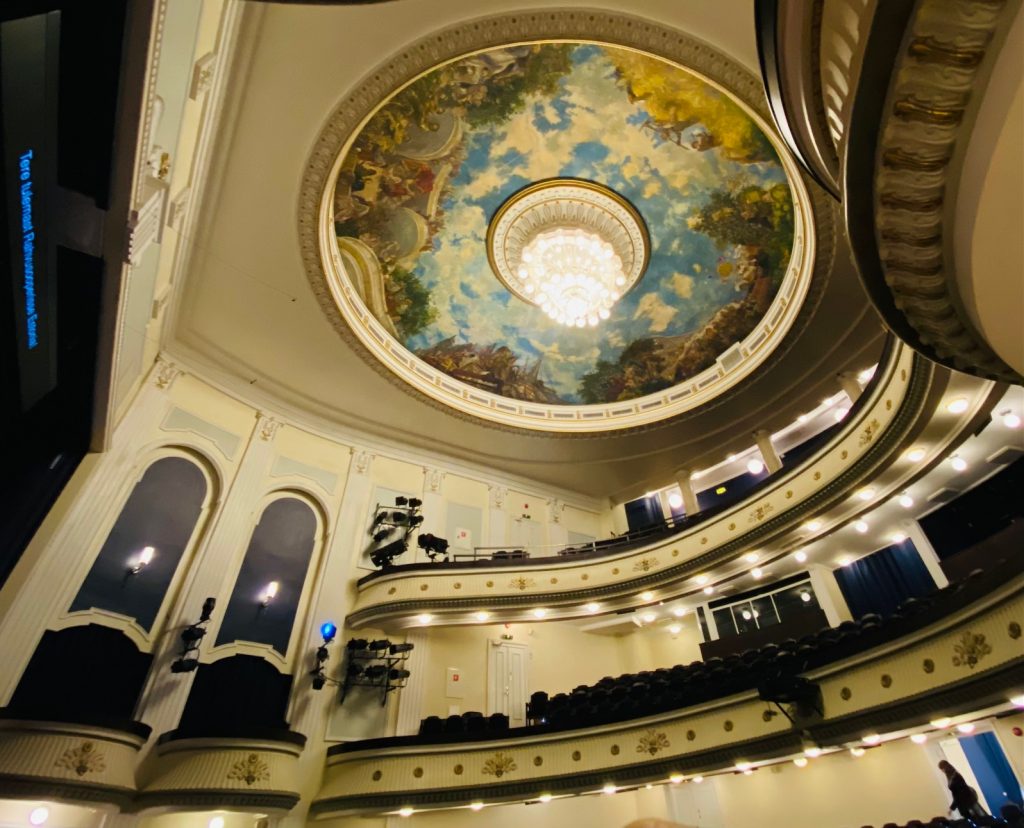
The Opera as arena of politics is currently tested in the Opera at Tallinn Estonia. Due to the aggression and occupation of Ukranian territory by Russia the plot of Jeanne d’Arc regained another European location of potential application. Ukraine pushed back the Russian invasion and struggles to win back its territory from the invaders. The performance of the Opera recreates an impressive Jeanne d’Arc in the person of Elena Brazhnyk who was trained at the National Tchaikovsky Music Academy of Ukraine. The evening inspired hope in many respects. Talents from Ukraine or trained in Ukraine reach out into to the world. Similarly, we have much reason to be inspired by courageous acts. Operas do politics. “Bravi”, as they say in Italian.
(Image: Opera Tallinn-Estonia2024-4-18)
Transparent Publishing
New technology pushes transparency of publishing, journalism and science to new levels. Through the hyperlink structure of texts it is easy to link back to the sources of a text. What used to be long lists of references at the end of a text or in footnotes has become directly accessible through weblinks. Only paywalls may or may not restrict the fast and easy access to original sources. In writing online, this is a major additional feature of publishing in the last few years. Some online journals allow this for quite some time now, but there are lots of printed versions that stick to the read and be stuck approach of publishing.
In teaching I have been an advocate of “read the original sources” as the basic source of inspiration for authors. The transparency of the thought process and the evidence provided in whatever form should be traceable. In publishing this transparency allows to exclude the copying of thoughts or unreflected referencing.
However, the task to check for the validity of weblinks and the updating is an additional task. 500+ blog entries with an average number of 2 weblinks per blog entry makes this a job of its own. Testing of 1000 weblinks is something you need a software or plugin which alerts you to “broken links”. The maintenance of a webpage, therefore, increases substantially as the content increases. Reorganisations of webpages make the follow-up of links sometimes quite hard. Projects like the general archives of the web and webpages are very important to ensure the transparency of publishing in the short, medium and long run. The archives of today look more like machine rooms than the splendid archives or libraries of the past and present. 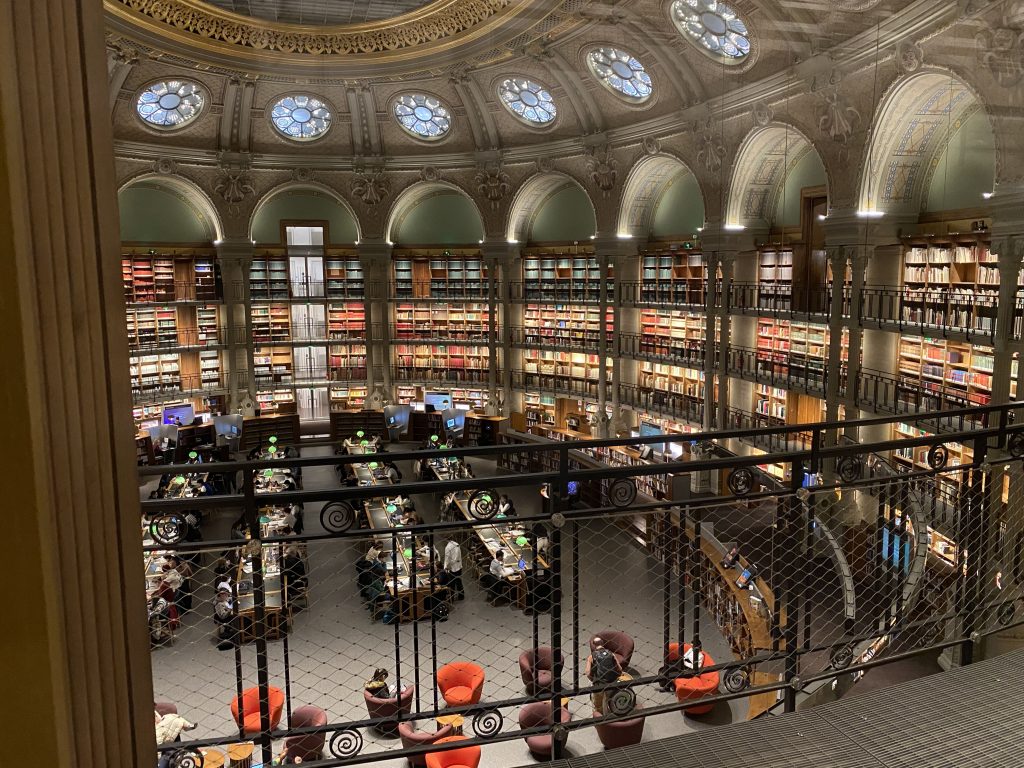
AI Reader
In the middle of the hype around AI it is useful to take stock of the reflection and evolution of AI. In my own analyses and writings on AI it evident that a narrowing of focus has taken place. Whereas before 2022 the writing dealt more with digital technologies in general. The links to the literature on the social construction of technologies was obvious. Algorithms and AI was a part of the broader topic of society and technology.
This has changed. The public debate is focused on “everything AI now”. We look at technological developments largely through the lens of AI now. Hence, my focus of assessments of technology from a societal perspective follows this trend. In a collection of blog entries on AI we try to demonstrate the far reaching changes that have started to have an impact on us. In the last few months the all encompassing concern about AI’s effect on us needs full attention of social scientists, policy makers, companies and the public at large. We can no longer leave this topic to the software engineers alone. By the way, they themselves ask us to get involved and take the latest advances in AI more seriously.
As a “flipbook” the online reading is rather comfortable (Link to flipbook publisher MPL). The pdf or epub files of the blog entries allow to directly follow the links to sources in webpages or other publications (AI and Society 2p 2024-4-18). The cycles of analyses and comments have become faster. Traditional book writing suffers from time lags that risk to make pubications outdated rather quickly. Dynamic ebook writing might bridge the gap between time to reflect and speed to publish or inform the wider public. The first update as .pdf-file is available here: AI and Society(2).

Theory Literature
There still is a lively debate at the margins of literature and the commerce around it about theories of literature. Even if the best of years of theories about literature have passed, in 2024 we see several revivals of theoretical perspectives on literature. Travelling in Europe we celebrate, for example, the 100 years of Belgian and international surrealism in Brussels. The French artist and theorist André Breton was preparing in his thoughts the art and literature of surrealist inspiration. Of course, we think of Magritte as one of the eminent figures of the painted surrealism. Franz Kafka, who died relatively young in 1924, was the author in the spirit of the surrealist movement. The powerful impact of literary theory and theory of art to form communities of practice have had lasting effects, which fascinates large audiences in 2024. Exhibitions across Europe reflect the importance of these art movements to understand European culture, inspirations and aspirations.
Not least through this revival of the surrealist artists in the broadest sense we are returning to a more theory-driven view of literature a bit like 100 years ago. I find it remarkable to read in “Le Monde Livre” of 2024-4-12 the article on “Défense de la théorie” by Tiphaine Smoyault (p.8 see quote below) with a comment on the book by Florent Coste on the usefulness of a theory of literature to understand the world around us. Reworking of language is the contemporary concern of literature: pluri-linguistic experiences, re-discovering oral performances, irony in language and digging into archives are the major strands of contemporary literature. Theory of literature reflects on the past and allows to synthesize the present. For some it also enables to project into the near future of what is going to be published. In any case the theory of literature provides orientation in a huge ocean of published oeuvres. Writing or painting with ideas ahead of your time has been a painful experience for most of these artists. Some artists or authors are lucky to become famous during their lifetime, but lots have struggled for years or never learned that their contributions advanced humanity for more than a hundred years. 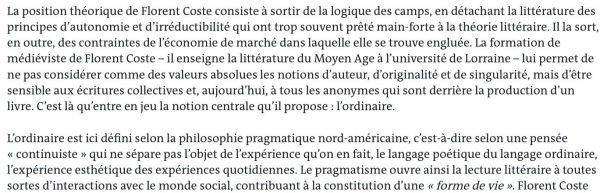
Causal Benefit Model
In the field of medicine we move more and more towards precision medicine. Previously, the term of personalized medicine was used which suggested to a certain degree that a personalization might be feasible. The budget constraints have forced us to change the term to avoid unrealistic, untenable promises. In the field of cardiology scientific advances advocate to shift from a risk-based model of treatment to a causal benefit model. (Kohli-Lynch et al. 2024 Link). Long-term benefits of a treatment are more promising, if the treatment addresses the causal mechanisms at work. It is wide spread practice to deal with general risk profiles as guidelines as the precision medicine based on a causal benefit model is far more laborious since to search the causal mechanism at work requires additional testing of hypotheses. This becomes immediately clear if genetic causes enter into consideration. Nevertheless, medical research advances more and more in this direction. Genetic testing has been shown to be useful in analyzing and treating issues like sudden cardiac arrest (in survivors). We are somehow aware that genetics may play a role here, but we shall need a lot of additional studies to make the causal benefit model a feasible option for widespread applications. Targeting research in this field will offer new avenues for precision medicine in the 2020s.

Wage Minimum
A wage at a minimum level is frequently lower than the minimum wage. Most EU countries have a legal minimum wage that should protect against poverty risks at low levels of wages. Over decades it has not yet been possible to raise all low wages to this level. Le Monde (Béatrice Madeline et Aline Leclerc) has published on April 3rd a comprehensive analysis of sectors and people concerned with this difficulty to make a decent living while earning the minimum wage. In France (La désmicardisation), as in many other countries, it is difficult to earn just a bit more as the minimum wage because both employers and employees may lose social benefits if they just earn some hundred € more than the legal minimum wage. For all those persons who do receive only a wage even below the minimum wage getting stuck in a poverty trap is very likely. The number of working hours is then often is the only option to make ends meet your needs. Put bluntly, you work additional hours and/or take a second job to complement the lack of earning a wage at the minimum level. Public procurement that makes the application of the minimum wage compulsory and controls this application effectively benefits society as a whole. Lots of infrastructure projects, urban and rural development receive public support. The conditionality to pay the minimum wage + X should be a „conditio sine qua non“. The millions of workers at the lower end of the wage distribution have a power at the ballot box, which continues to be underestimated in many European countries. The EP elections on June 9th will probably alert us about the lack of faith in a bettering of living and working conditions of those persons coping with wage minima.
Architecture Berlin
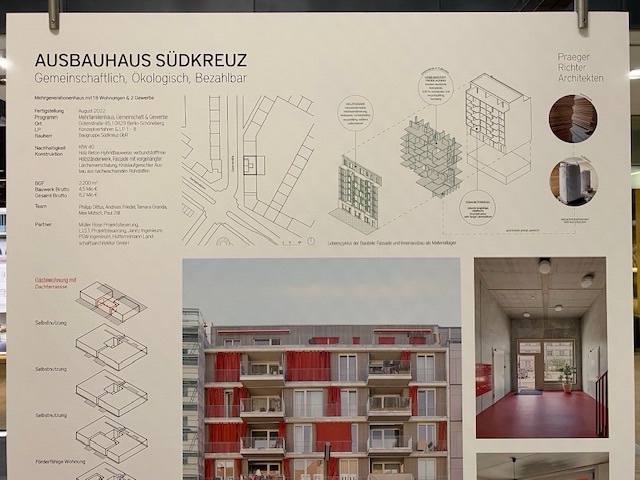
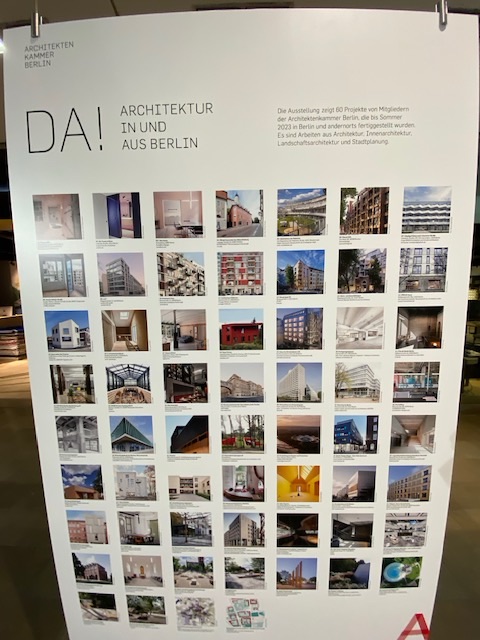
The annual exhibition of completed architecture projects in Berlin attracts people beyond the narrow circles of architects. You may take a walk through Berlin to view the actual realizations in 3D or 4D with people living, working or moving in these buildings. As social scientists we like talking or interviewing these people about their experiences. Urban planning and participation in urban development is important for city development in a democratic fashion. The combination of social, ecological, economic and technological concerns find compromises in urban renewal. The range of activities is remarkable. Living spaces have the most entries in the exhibition followed by offices and trade spaces. Education as well as public open spaces raise a lot of interest and funding currently. Climate change and adaptation to limited ecological resources ask for innovative solutions as well. Most projects in Berlin or by Berlin based architects deliver in this respect. The socio-ecological change needs a lot of actors to implement such changes and meet unprecedented challenges. The 60 projects represented for 2023 are the top of the iceberg but a lot remains to be accomplished in repairing old buildings and infrastructure as well. The DA! exhibition provides a democratic transparency of projects, which allows the public to learn about innovation and to make more informed judgments about what architecture can deliver for society.
Fertility Growth
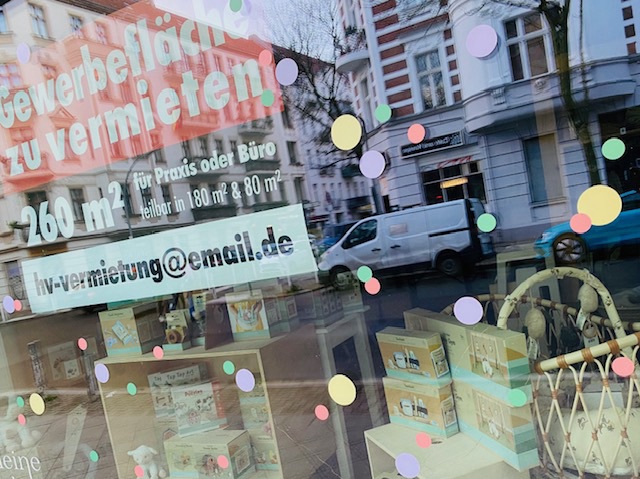
The first association of fertility and growth is likely the growing of fertility rates in a country or region. Only macro economists associate the growth or decline of fertility with the macroeconomic consequences of more or less economic growth. Countries with higher fertility rates in most cases have higher growth rates as parents spend more on food, clothes, mobility and education. Accommodations are changed, adapted and refurbished. Estimates of increased consumption per child by economists range from 500.000 to almost 1 million in the highest developed countries. Children are a country’s wealth, but they also cost a fortune in monetary terms. Good news for the economy if families keep spending independent of economic cycles. More children keeps dedicated shops running or even a whole sector of the economy. In recessions the downward pressure in this sector becomes an additional challenge not only for the families but with ripples-on effects for the whole economy and society. If you see shops closing which has sold furniture for children for the last 15 years then the realization of an economic downturn becomes also more real. Sometimes the parallels in the news of declining fertility and increases in pensions do not square well with the fitness for the future or the future orientation of a society. Democratic voting rights that give families more weight in elections could change this. It is not yet on the political agenda.
Mehr vom Meer
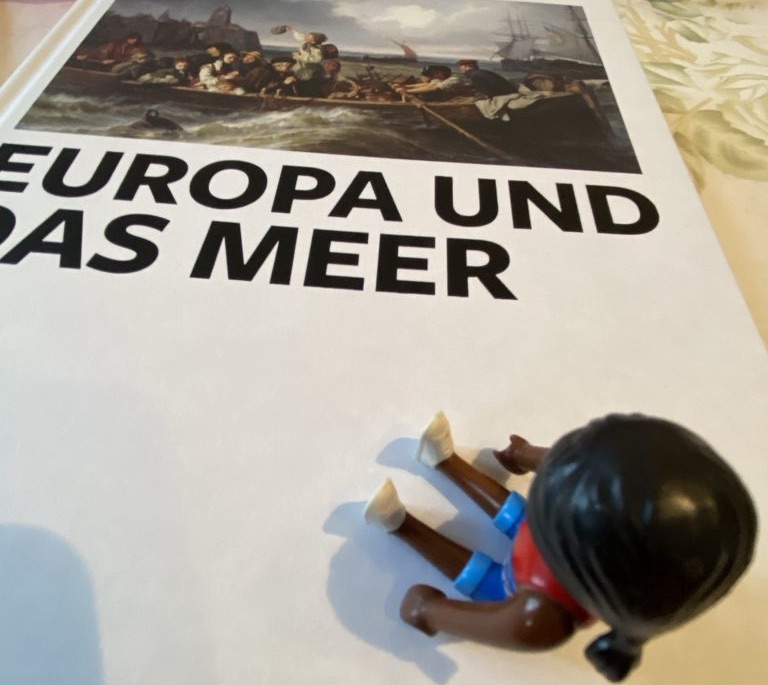
Wir sollten uns mehr um das Meer kümmern. Länder ohne Küsten finden meistens wenig Gründe, warum sie sich um das Meer bemühen sollten. Es ist doch so weit weg. Weit gefehlt. Erderwärmung erhöht die Meerestemperaturen und das wiederum beeinflusst massgeblich die Regenfälle im Inneren der Kontinente. Wir sitzen buchstäblich alle zusammen in einem Boot. Historisch betrachtet war das Meer mindestens seit der Antike Teil des machtpolitischen Kalküls der Beherrschung der Welt und der sie Bewohnenden. Wirtschaftliche Interessen waren ebenfalls Bestandteil der Erkundung und Eroberung des Meeresraums. Die Hansestädte in Europa bieten dazu noch heute gute Beispiele. Nach dem Sklavenhandel sind heute die Überseekabel und Rohstoffe des Meeres die begehrten Schätze des Meeres. Der Artenreichtum der Tiefsee wird erst seit kurzer Zeit intensiver erforscht. Externalisieren von Kosten des Umweltschutzes zu Lasten unserer Meere hat noch wenig Berücksichtigung in Wirtschaft und Gesellschaft gefunden. Tourismus- und Migrationsströme zum Meer, auf dem Meer und über das Meer stellen uns vor große Herausforderungen. Wir werden sicherlich mehr über das Meer reden müssen, und das ist keine Mär. Image aus „Europa und das Meer“ (DHM).
Das Meer
Wir haben vielfältige Beziehungen zum Meer. Diese reichen von romantisch geprägten Gefühlen zum Meer, den Wellen und den Fischen bis zur wissenschaftlichen Befassung mit den Meeren, Mangroven und dem Klimawandel. 71% der Erdoberfläche besteht aus Meeren. Das sollte den Festlandbewohnenden eigentlich klar machen, wie wichtig Meere für unseren Planeten sind. „Ocean Literacy“ nennt die UNESCO das. Neben Lesen, Schreiben und Rechnen sollte die Literalität auf unsere Ozeane ausgedehnt werden bevor es zu spät ist. Verschmutzung der Meere passiert hauptsächlich im Verborgenen. Lediglich Beobachtung aus dem Weltraum kann die weitläufigen Routen der Verschmutzenden zumindest teilweise nachverfolgen. Vielleicht hilft die Rückkehr zu der romantischen Sicht auf die Meere eines „William Turner“ zu einer höheren Wertschätzung der Meere, dem Licht und den Wellen.
Die kleine Sammlung von Gedichten „Das Meer“, erschienen im Reclam Verlag, ist eine gute Reisebegleitung für Begeisterte des Meeres. Darin findet sich eine Vielzahl von renommierten Schreibenden, die ihre Faszination des Meeres zum Ausdruck bringen. Mein momentaner Favorit ist Wolfgang Borchert darin (S.41-42) „Muscheln, Muscheln“.
Muscheln, Muscheln, blank und bunt,
findet man als Kind.
…
Muscheln, Muscheln, bunt und blank,
fand man einst als Kind! 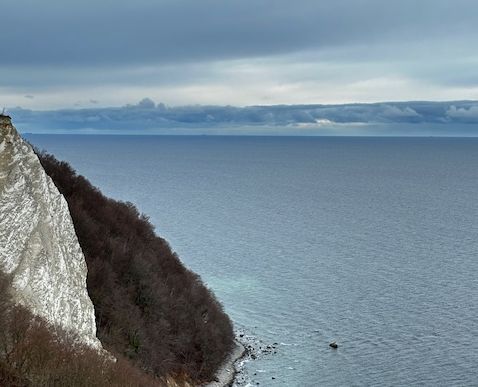
Disappeared
We talk a lot in abstract terms of the loss of biodiversity. In the Museums of Natural History, like the one in Berlin, we can follow the trajectory of extinction of species. The dinosaurs are for most children the greatest attraction. No surprise, they are the biggest ones we have had on our planet. But there is a huge collection of disappeared species represented in the museums which we admire as a lost treasure or species threatened with extinction. Evolution had also created this rather big bird-like creature of the “dodo”. It couldn’t fly anymore and was inhabiting the splendid island of Mauritius. Hungry colonists passing have most likely literally eaten up this rather defenseless animal. Many other extinct species can be admired now only in museums and children feel naturally attached to some species that seem to have human expressions. Panda bears and gorillas rank high on such a list, but also some fish, especially if they smile or look at you straight into your eyes. This should help us take biodiversity and biodegradation more seriously. Children feel intuitively attracted to animals as natural companions. Something we have lost as adults and most of do not even realize this as a deficiency. The Nobel price winning author frm Mauritius has published a collection of short stories „Avers“ which captures the spirit of the island and the loss of species. J.M.G.Le Clézio seems to look at us through the eyes of children or a disappeared species. Magic moments are an escape as well as reason for hope.

Korallenriff
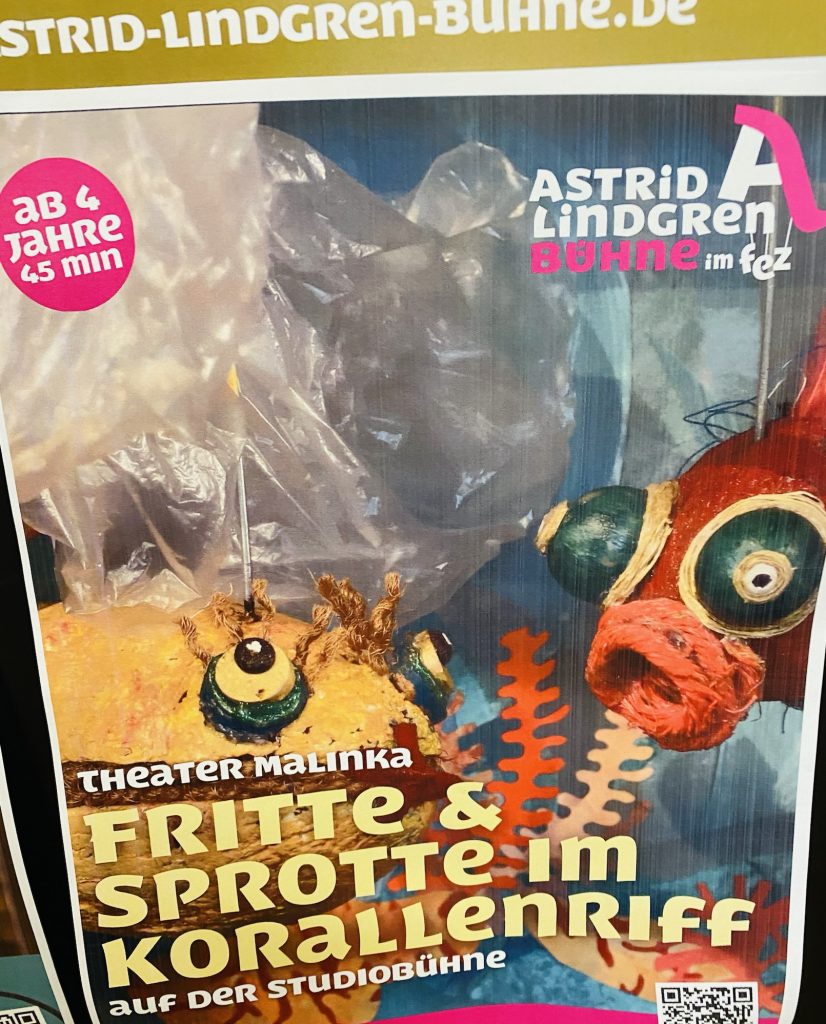
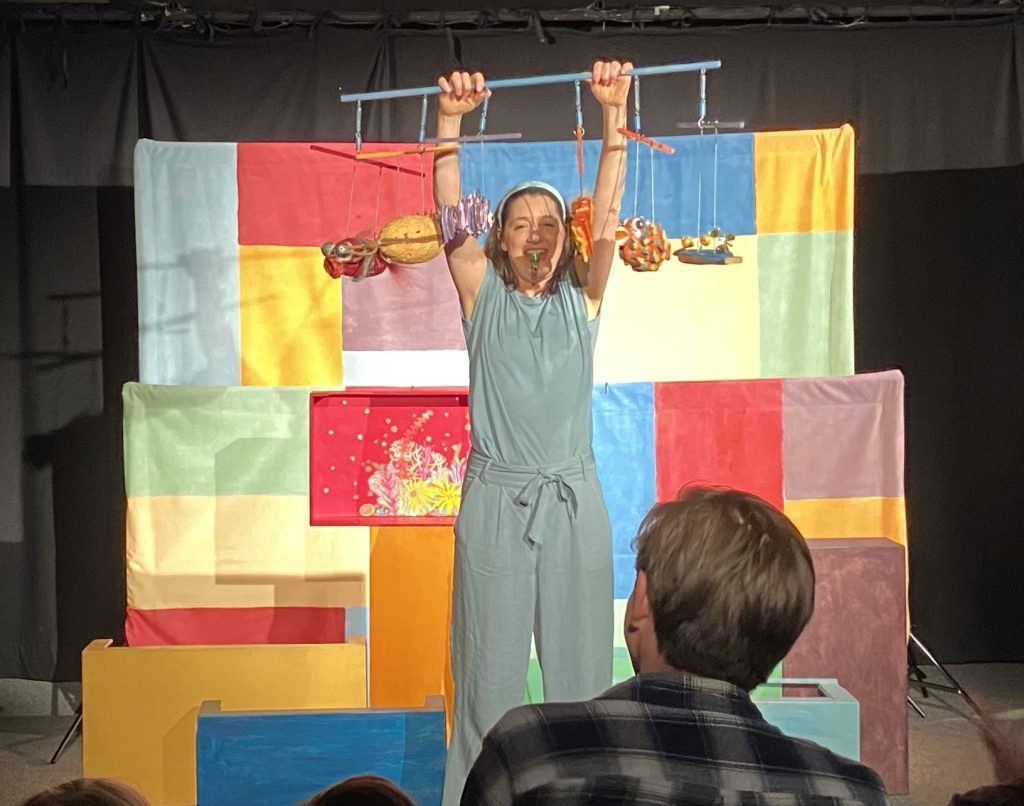
Kinder verstehen direkt, dass es sich lohnt, Korallenriffe zu erhalten. Plastikmüll in den Meeren gefährdet die Korallenriffe und die bunte Vielfalt an Fischen, die darin leben. Ein kleines Theaterstück dazu von Kathrin Brunner begeistert Kinder, weil es sie erleben lässt, wie einfach Lösungen aussehen können. Den großen Leuten zeigen, wie traurig die Welt aussieht ohne die farbenfrohe Pracht der bunten Fische, wird sie schon zu Veränderungen bringen. Das Theaterstück und Buch dazu wurde am 16.3.2024 im FEZ in Berlin aufgeführt. Das Figurenspiel mit überleitendem Refrain, das vom Publikum gleichsam der Promenade in den „Bildern einer Ausstellung“ (Mussorgsky) mitgesungen haben, bildete jeweils eine gelungene emotionale Überleitung und Aufmerksamkeitspause. Wir wünschen uns noch viele kleine und große Besuchende für diese Aufführungen. Die Kinder werden es uns schon lehren, den blauen Planeten noch zu retten.
Need of War
It seems like a horrific idea to talk about the need of war. We might have deemed it outdated to read about the terrible love of war or about the strategy of war. However, the time of war is back in Europe and Eastern Europe feels the real threat and Ukraine the bombs hailing from Russia. Why does Putin love war? The love of war is largely driven by domestic issues. Staying in power for unliked authoritarian leaders is easiest if they indulge in external conflicts. Dictators love war because it makes it easier for them to sustain leadership through brutal force within the country due to a proclaimed external threat or even outright engagement in war. Democratically elected leaders know that they will leave office eventually in a peaceful way (exceptions like Trump are rare). Dictators use any force or terror necessary to stay in power. The love of war is part of this.
Hence, the need of war goes without questioning, if a country in decline or at risk of decline tries to uphold an inefficient, belligerent regime. Beyond rational reasons, such regimes will abuse ideation about national pride, the national interest and anything pertaining to some supposed myths of nationhood to justify its need of war. The dictators have all failed eventually as resistance against this need of useless war is found out by enemies either within or externally. But thousands or millions of victims will suffer. The pressure against the need of war has to rise internally from opposition as well as from alliances of democracies that do not need war to motivate their people to achieve the best they are able to deliver.
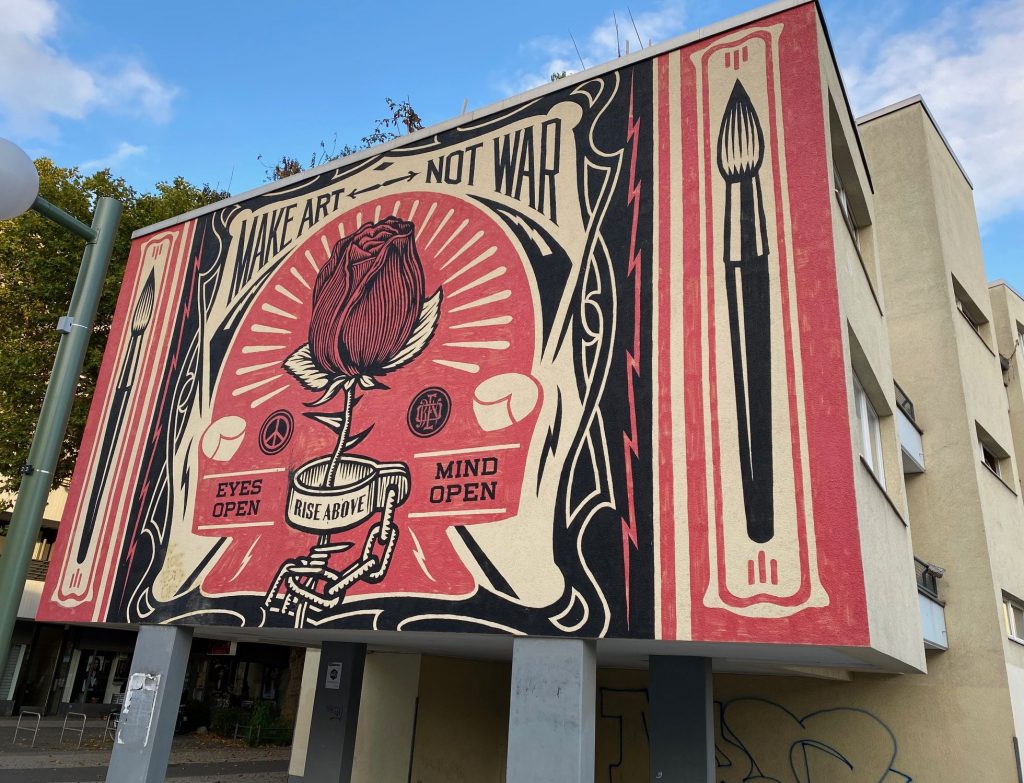
Therefore, the defence of democratic rule is, at the same time, a fight against the need of war by some doomed regimes. After winning the war comes the difficult task of winning peace. This means to create a state of affairs and a state of mind that can do without the need of war. If the external threat diminishes the internal threats might rise and have to be contained as well. Lots of challenges, even for mature democracies. (Image: Berlin 2022-10)
AI and S/he
There was hope that artificial intelligence (AI) would be a better version of us. Well, so far that seems to have failed. Let us take gender bias as a pervasive feature even in modern societies, let alone the societies in medieval or industrial age. AI tends to uphold gender biases and might even reinforce them. Why? A recent paper by Kotek, Dockum, Sun (2023) explains the sources for this bias in straightforward terms. AI is based on Large Language Models. These LLMs are trained using big detailed data sets. Through the training on true observed data like detailed data on occupation by gender as observed in the U.S. in 2023, the models tend to have a status quo bias.
This means they abstract from a dynamic evolution of occupations and the potential evolution of gender stereotypes over years. Even deriving growing or decreasing trends of gender dominance in a specific occupation the models have little ground for reasonable or adequate assessment of these trends. Just like thousands of social scientists before them. Projections into the future or assuming a legal obligation of equal representation of gender might still not be in line with human perception of such trends.
Representing women in equal shares among soldiers, 50% of men as secretaries in offices appears rather utopian in 2024, but any share in-between is probably arbitrary and differs widely between countries. Even bigger data sets may account for this in some future day. For the time being these models based on “true” data sets will have a bias towards the status quo, however unsatisfactory this might be.
Now let us just develop on this research finding. Gender bias is only one source of bias among many other forms of bias or discriminatory practices. Ethnicity, age or various abilities complicate the underlying “ground truth” (term used in paper) represented in occupation data sets. The authors identify 4 major shortcoming concerning gender bias in AI based on LLMs: (1) The pronouns s/he were picked even more often than in Bureau of Labor Statistics occupational gender representations; (2) female stereotypes were more amplified than male ones; (3) ambiguity of gender attribution was not flagged as an issue; (4) when found out to be inaccurate LLMs returned “authoritative” responses, which were “often inaccurate”.
These findings have the merit to provide a testing framework for gender bias of AI. Many other biases or potential biases have to be investigated in a similarly rigorous fashion before AI will give us an authoritarian answer, no I am free of any bias in responding to your request. Full stop. 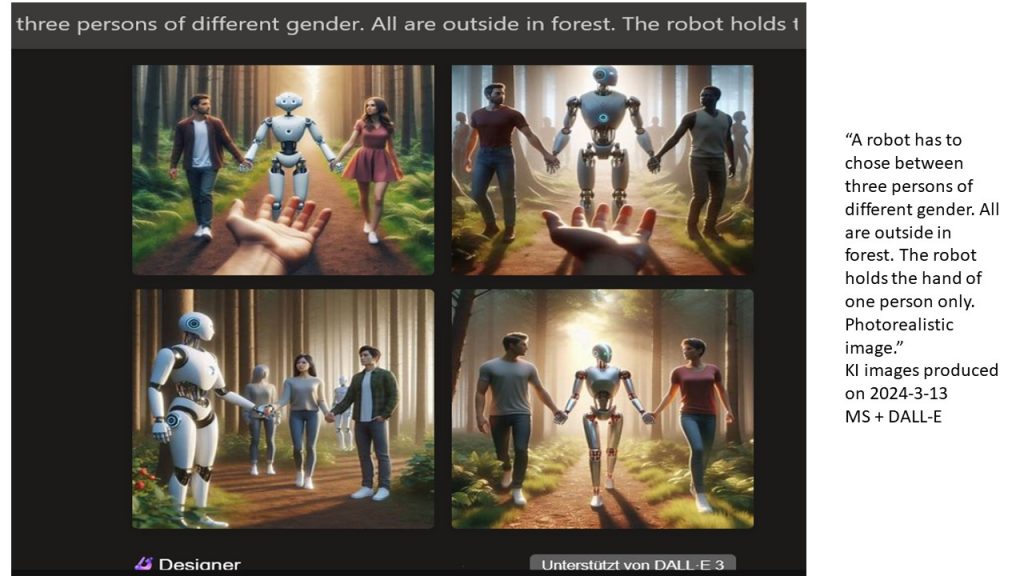
Magritte Symbol
“People always search for symbols in my works. There are none.” For those familiar with the work of Magritte, they know that he means precisely the opposite of what he is stating there. He applies well-known symbols like the white pigeon representing peace in his paintings to represent and make us think about peace. The image becomes surreal in the sense that we go beyond the real world of violence and war to lift our attention to the other surreal version of the world as it currently appears to us.
In times of war, it is more difficult to image a peaceful world and yet, this is the time we need to believe in the possibility of peace beyond the reality of aggression. In 1966 Magritte has painted “L’oiseau de ciel”, the year the peace movements became more than a surreal dream across the world. It remains a challenge to think beyond the cold war at the time and the hot war initiated by Russia in Ukraine. Surrealism helps us to think beyond the real state of affairs.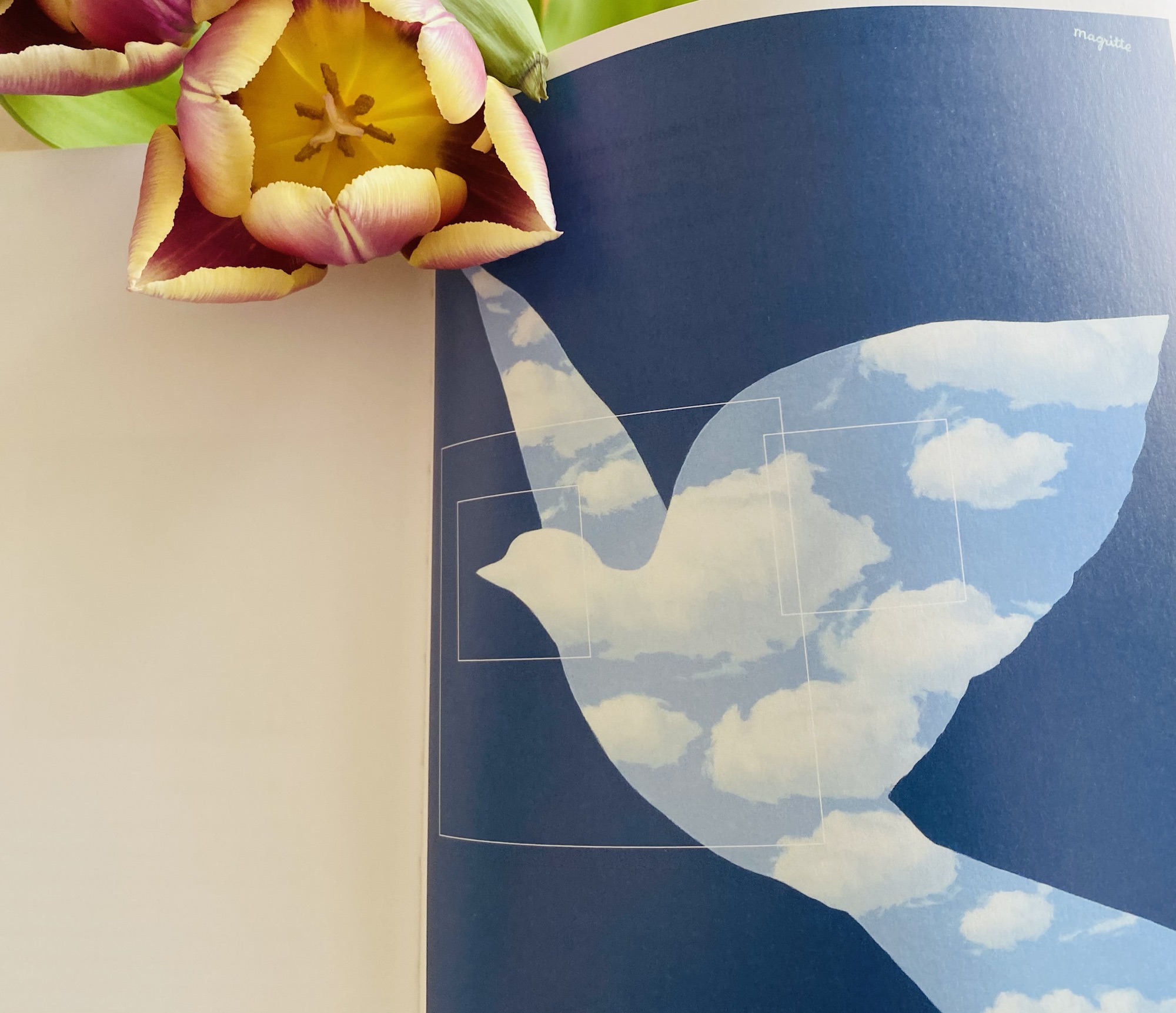
In Magritte’s own biography the “dove of peace” occurs towards the end of his own life. Whereas at the onset of his career as painter he dealt with depression and suicide in his family, towards the end of his career he moves beyond the autobiographical topics. Globally valid symbols gain the upper hand. The life course seems to have come full circle.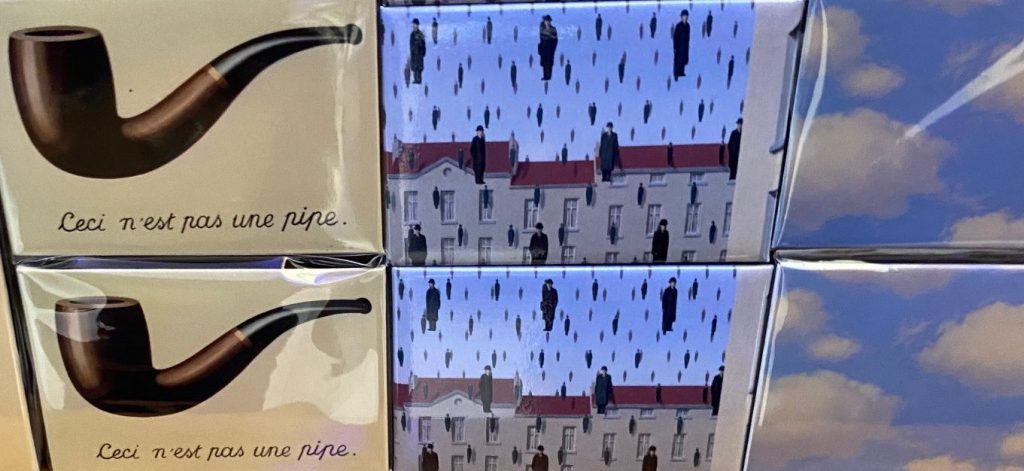
Work Subordination
One of the defining principles besides the job description, working time, working place, remuneration of a work contract is the subordination to a superior. The employment contract entails some more or less strictly executed form of direction, but a right of direction nevertheless. This element of subordination has become a major issue in the definition of whether you are effectively an employee or a self-employed person. The digital revolution had enlarged the kinds of subordination. Platforms and algorithms, that distribute work among several employees (but named platform workers) disguised the subordination to a superior level of management to the platform and its seemingly anonymous algorithm. Many young riders were saying, I don’t like bosses, but I am willing to accept a “technical” platform that distributes work tasks only seemingly in a non-discriminatory way. Due to a failure of labour legislation to regulate early enough a thriving model of fake self-employment developed throughout Europe and beyond. Labour Courts have contributed a lot to correct the disguised subordination. Even Uber is advertising that they only operate as a broker of tasks, but have no subordinated employees. The related issue of subordination remains largely the same. Subordination to an algorithm of the distribution of tasks is the end result.
Many start-up enterprises use Kanban boards to facilitate project and team management. Shifting tasks between employees, introducing new tasks and self-selection of tasks are potentially subordination-free allocation of tasks (example software). Flat hierarchies seem more manageable through the use of such tools. The number of tools that integrate other office functions is impressive. When testing such tools, that become more popular also in the distribution of household tasks, beware of the data-hungry nature of such tools. For example, https://trello.com/ warns correctly in the small print that for its full functionality it would need to have permission to use “your” camera, microphone, contacts, photo library, calendar etc.
This demonstrates that subordination, nowadays, is complemented by the algorithmic use of a lot of privacy, we would never have agreed to a boss in person should even ask for. The new and old subordinators have powerful tools at hand, the subordinated will have to get their act together and limit the amount of subordination they are willing to accept.
Again, this is a generational topic. The low threshold to accept technical subordination in younger generations, your autonomous level-5 car is breaking earlier than you even perceive a risk, is confronted with the higher threshold to accept personal subordination for youth. Interestingly, for older generations the obverse is true. All in all, we have ample reason to rethink and re-define also in legal terms the manifold, disguised and new forms of subordination related to work.
Photovoltaik
Eigentlich ist die Photovoltaik eine alte Technologie. Seit 1954 werden Solarzellen, damals noch mit geringerer Effizienz und teuer, produziert und benutzt. Da hat sich viel verändert und nicht zuletzt durch die sogenannten Balkonkraftwerke sind Solarzellen zu einer weltweit beliebten, rentablen Alternative geworden. Dächer eignen sich wegen ihrer Schräge und oft der Ausrichtung bestens zum Aufstellen von Solarzellen. Renovationen und Neubauten sollten diese Art der Energieerzeugung unbedingt in Betracht ziehen.
Wegen Olympia 2024 in Paris wird dort gerade viel städtische Infrastruktur erneuert. Der “Gare de L’Est” wird beispielsweise von Frankfurt aus mit TGV und ICE angefahren. Da kommen viele Geschäftsreisende und Touristen aus Europa und der ganzen Welt an. Ein Blick auf die Dächer des “Gare de L’Est” von dem Fußweg zum Gare du Nord zeigt viel verpasste Investitionen. Ein Meer von Dächern liegt brach, bestens geeignet zur Installation von Photovoltaik. Das könnte eine Menge an Energie vor Ort produzieren, die die Züge dann direkt benötigen. Mehr Ökostrom statt Atomstrom kann einfach sein. Es fehlt nur oft der Wille. Nachhaltigkeit und Olympische Spiele ist ein ganz eigenes Thema, nicht nur für Paris 2024. 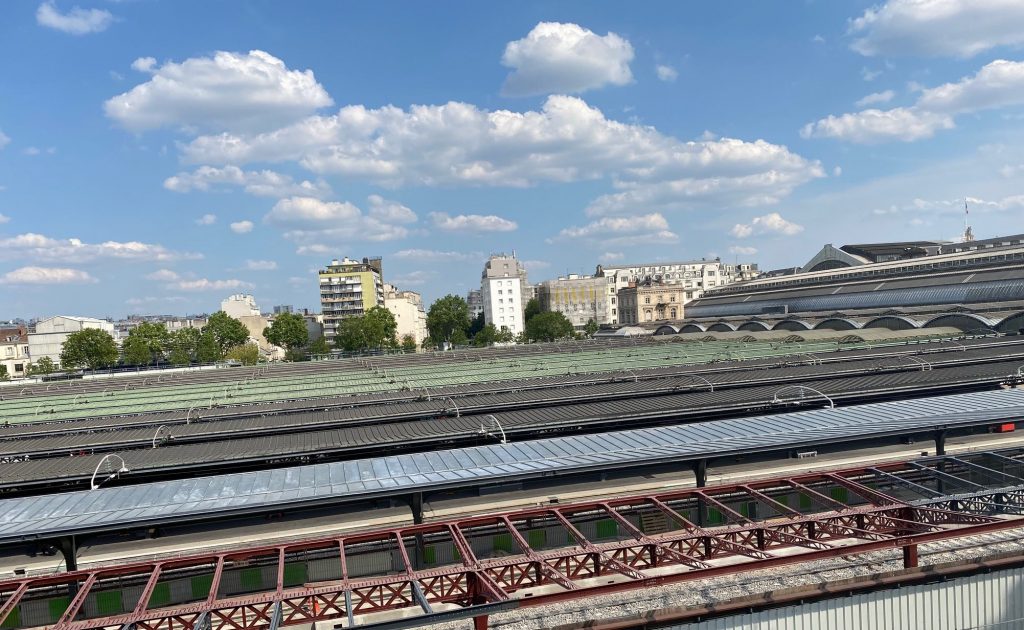
Crises
Crises, yes crises, we have seen a few in recent years. After the first financial crisis, 2009, the COVID-19 crisis and now the energy crisis, , they all have cost us respectively 1.6%, 2.5% and lately a whopping 7.8% of GDP loss according to Tom Krebs (Uni Mannheim and FNE) in his assessment of lessons from these crises. Also Philip Lane (ECB) showed the lower GDP growth rates due to the crises.
We lost out on the wealth of our nations and face mounting difficulties for the distribution of this wealth. As firms cashed in on profit margins lately, workers risk even more to fall behind significantly. At the same time, it is high time to prepare for the next winter season now, to ensure the same risks as the dependency on energy resources from outside Europe, especially Russia, can be maintained. The conference of the Forum New Economy from the 8th of May 2023 discussed several ways forward to learn our lessons from these crises. Strategic independence needs to be properly defined for Europe as a whole, not just in each individual state. Implementation has to be rapid as well. Geopolitical challenges will not wait for us to finish discussions. Germany and minister Robert Habeck has received some acclaim from the economists for a fast and rather successful reaction to safe us from an energy crisis last winter. Massive increases in renewables (+20% solar energy) has helped a lot to ensure sufficent energy supply when France suffered heavy reductions from its nuclear energy power plants. “Let the sun shine … in”, I would sing. However, we have to think even further ahead build our resilience based on improved energy efficiency and may rethink the risks and vulnerabilities of our economic model of production and consumption. Diversifying imports from Russia with imports from other countries and other (green) forms energy is part of the solution. A heavy reliance on China as buyer of our products is good for trade balance, but some sectors (automotive) are nowadays critically dependent on selling in China. Some of our partners are very anxious about this new dependency on Asia for our economic growth model (see figure below from conference). Market based economies suffer more openly from huge economic swings than more secret-based autocratic economies. Our state agencies have to keep that in mind and state intervention seems to become more likely options in future as we have already witnessed in the past crises. We had to rely on running higher state deficits to cover the losses incurred from the crises. The EU, the larger Europe in combination with the transatlantic and pacific alliances has a lot of resources to address these strategic interdependencies. Being prepared, in strategic thinking and potential implementation procedures is a major part of building capacities that ensure resilience and strategic independence. As in a game of chess, you have to think ahead a couple of steps to frighten off some potentially dangerous moves of other players.
In terms of a planetary concern we still have to address the major climate crisis and the last 3 crises have largely contributed to reduce the resources we have available to address climate change. Smart crisis management succeded to ask for emission reductions in return for subsidies from firms and private households. This might be the “best practice examples” worthy to learn from. There are still huge evaluation tasks for analysts of these crises. 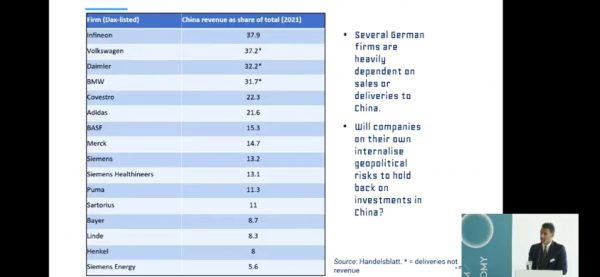
Wasser im Wald
Wasser im Wald hat viele Funktionen. Historisch erleichterten Wasserstellen an denen sich Wildtiere genüsslich im Morgengrauen laben, die Jagd des erschöpften Monarchen. Einfache Ziele, die jeder Jagende sich zu nutzen machen kann. Kleine Seen dienen aber auch als Wasservorrat beim Löschen von Waldbränden und nicht nur den Badenden im Sommer. Viele kleine Seen in Frankreich leiden an erheblicher Wasserknappheit. Wasserstände, die sonst im Spätsommer erreicht wurden, nach Trockenheit und Verdunstung, sind im Frühjahr 2023 berreits erreicht. Ein Waldbrand könnte kaum mit vor Ort vorhandenen Wasserreserven gelöscht werden. So hängen Feuer und Wasser im Wald recht eng zusammen. Austrocknende Seen vernichten zusätzlich die Biodiversität im Wasser, denn weniger Lebensraum im Wasser hat Konsequenzen. Das heizen mit den Motorrädern im Wald, hab ich selbst gemacht vor vielen Jahren, ist heute eh schon verboten. Aber Verbote und Jugend sind ein eigenes Thema. Wir haben der Jugend die Freiräume geraubt, die wir noch hatten und jetzt beschweren wir uns über die stubenhockenden Jugendlichen mit ihren Computerspielen und Social-Media-Aktivitäten!?! Ein völliges Überdenken des Wassermanagements ist von Nöten. Das sind wir den nachfolgenden Generationen schuldig. Welche Arroganz besitzen wir, dass die Jugendlichen von Heute viel klüger und noch schneller erwachsen sein sollen als wir selbst in diesem Alter. Aus Fehlern lernen wir, aber wir scheinen das Lernen, den späteren Generationen überlassen zu wollen. Leider funktioniert das so nicht, wir müssen schon an unser Verhalten ran und von uns verursachte Schäden selbst reparieren. Das Fegefeuer brennt schon, ob wir es noch rechtzeitig löschen können? 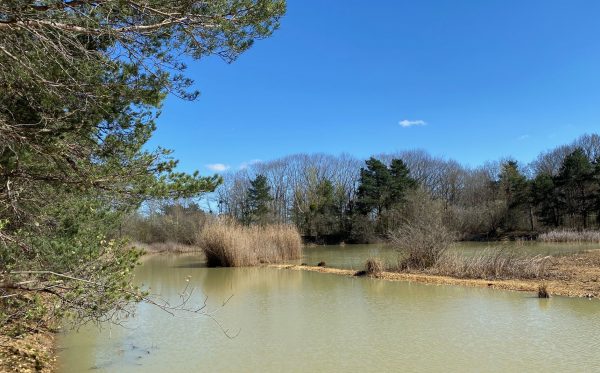
Feuer im Wald
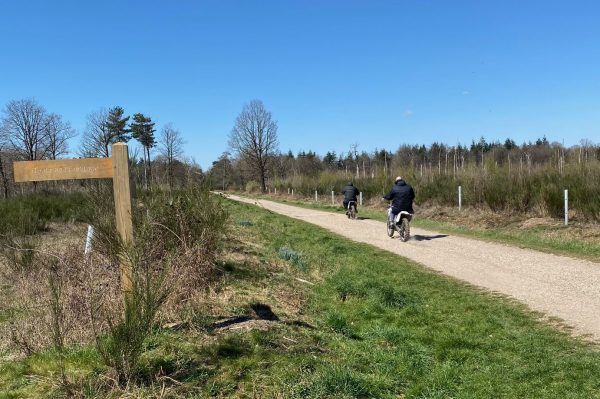
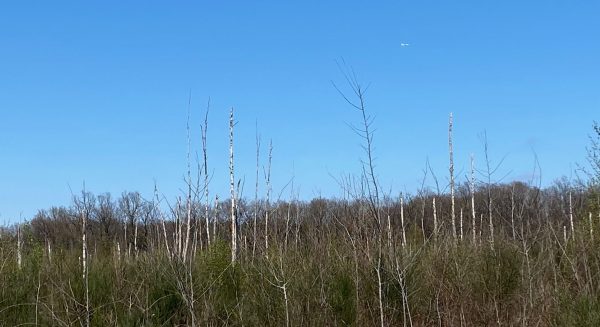
Das sogenannte grüne Lunge kann immer öfter ihre wichtige Funktion der Klimaregulation nicht mehr wahrnehmen. Waldbrände begleiten den Klimawandel. Bereits 2018 gab es ein großes Feuer im Wald bei Paris. Im “forêt de Sénart” in der Nähe der Städte Montgeron, Yerres und Brunoy (nahe Paris) hat sich der Wald seit dem Feuer im Hitzejahr 2018 noch nicht erholt. Geld für Reparatur der Schäden fehlt und so lässt die notwendige Aufforstung auf sich warten. Der Verlust der Biodiversität durch den Brand lässt sich schwer bemessen. Brandrodung, gängige Praxis im Amazonasgebiet, hinterlässt auch bei uns mehrere ungewollte Folgewirkungen. Die Bewirtschaftung des Waldes hat die Schäden abgeschrieben, aber Zukunftsinvestitionen lassen auf sich warten. So heizt sich die Region Ile de France eben weiter auf und Millionen Käufer von Klimaanlagen. Die befördern in naher Zukunft das Wirtschaftswachstum, aber beschleunigen den Klimawandel. Wir wissen, dass es so nicht weitergehen darf. Nur der Wille, wirklich etwas daran zu ändern, fehlt an vielen Orten. Weiterso, wenn es kein Weiterso geben darf, ist die Schizophrenie unseres und des letzten Jahrhunderts. Lernen im und vom Wald ist nötig. Das ist unsere Lebensgrundlage. 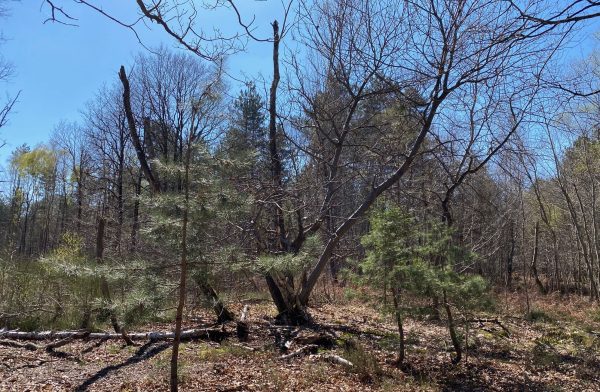
Schaukel
Sagt die Lehrperson zur Schulklasse: Stellen wir uns alle jetzt mal alle eine Schaukel vor. Wie sieht die Schaukel denn so aus? Was gibt da so drumherum? Könntet Ihr nun bitte versuchen, die Schaukel auf ein Blatt Papier zu malen? Jeder hat seinen Bleistift und einige Buntstifte dabei. Einfach mal versuchen, es gibt keine Noten dafür. Es soll Spaß machen und wer möchte kann sein Bild anschließend den anderen zeigen. Schön, sofort wird es ganz laut in der Klasse und alle legen los. Naja, fast alle, das stille Mädchen aus einer der hinteren Bänke stockt und wirkt unruhig. Sie ist erst seit einigen Monaten in der Klasse und spricht noch nicht wirklich wie die anderen die Ortssprache. Da liegt wohl an der langen Reise, die die nicht mehr ganz so Kleine hinter sich hat. Die meisten Jungen und Mädchen erklären zugleich recht lautstark welche Schaukel sie malen werden. Die vom Garten hinterm Haus, vom Spielplatz nebenan oder sogar die Schaukel unterm Baumhaus im angrenzenden Waldstück. Bei den meisten Kindern steht rasch die Schaukel nicht mehr im Mittelpunkt der Kurzgeschichten, sondern die Freunde oder Kinder mit denen sie gemeinsam schaukeln. Nur unser stilles Mädchen erinnert sich mehr an ihren Reiseweg, bis sie dort in dieser schönen bunten Schule angekommen war. Das waren viele Stationen, von denen sie gar nicht erzählen möchte oder gar ein Bild malen möchte. Die meisten Erinnerungen war so, dass sie diese lieber für sich behalten wollte. Zu weit weg waren sie von den aufgeregten Erzählungen und fantastischen Geschichten der anderen MitschülerInnen. Doch dann hatte sie doch ein Bild vor Augen. Ein Spielplatz in einer großen Stadt, Berlin genannt, ist ihr in Erinnerung geblieben. Als sie diese Schaukel grob, ohne Farbe nur mit Bleistift auf das Blatt skizzierte, keiferte der Banknachbar schon: So sieht doch keine Schaukel aus! Die Neue kann noch nicht mal eine Schaukel malen. Das stille Mädchen blieb weiter still, wusste sie doch genau, dass ihre Schaukel eine Überraschungsschaukel war. In der großen fremden Stadt war ihr diese Schaukel aufgefallen, denn sie war fast so schön, wie die Schaukel an dem starken Ast des Baumes, im Garten ihrer Großeltern. Dadurch verknüpften sich ihre vielschichtigen Erinnerungen zu einem Bild.
Technology
Over the 20th century technology has pushed forward in many fields. As there were huge investments needed the public campaigns to support new technology without much further reflection of potential consequences have pulled many western societies into risky technologies. Except the Club of Rome there were very few to question the naïve beliefs that technological change will make societies rich and potentially even more equal. The recent report “Climate Inequality Report 2023: Unequal Contributions to Climate Change” has debunked both of these claims. More flying across the planet, particularly short city hopping, has allowed few persons to reap the benefits of the jet-set world, but contributed to climate change in excessive quantities. This is a fact when we compare major world regions among each other as well as within each country. It has to be the wealthy countries that have to shoulder the biggest share of the costs. It has to be the wealthy that pay higher contributions for their pollution. Society has to reign in technology more than ever before. Moreover, we still have to get the income and pollution distribution organised in a better way. It is not only an implementation challenge, but the major question of the 21st century to repair the damage largely caused throughout the 20th century. 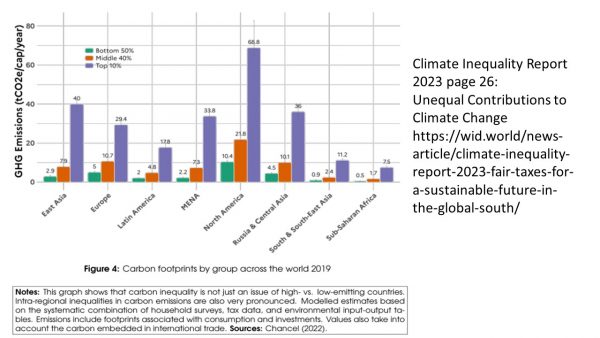
Spring2023
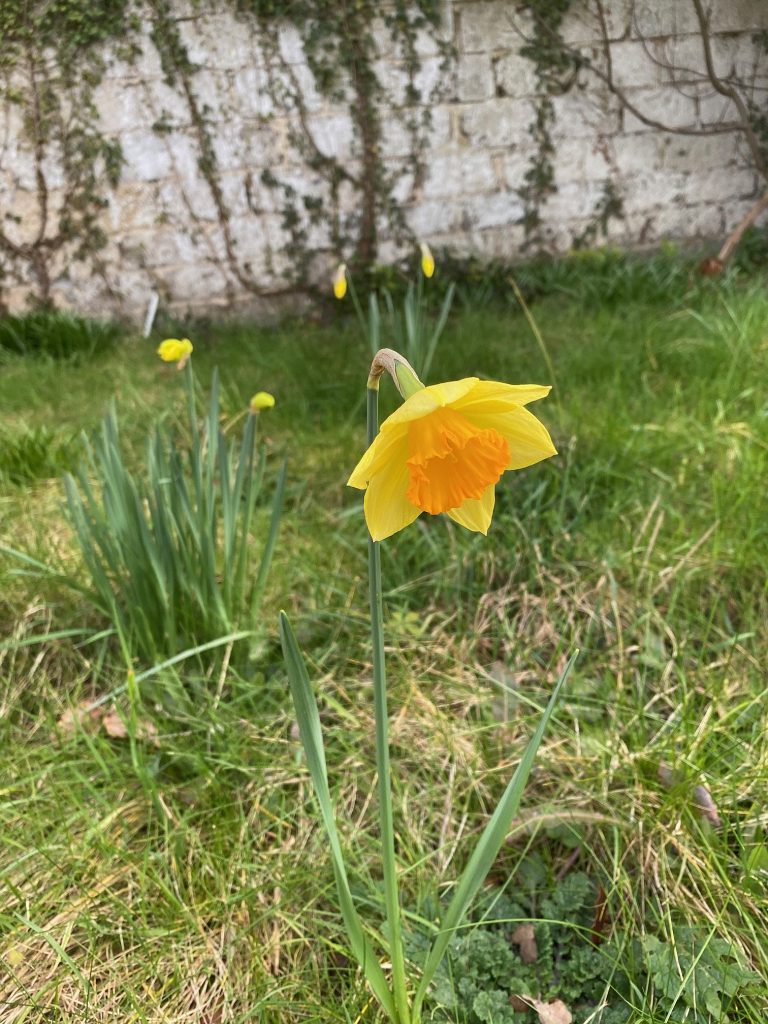
Spring has sprung, a little bit early in 2023. On the 16th of March in the vicinity of Paris, where Caillebotte designed his impressionist garden. It is still 4 weeks until Easter. The spring flowers will hardly survive until then. Hence, we prepare for an early summer, nice because of less heating, but the vegetation is suffering in the region due to the lack of rain. Hay fever for millions of persons will start early this year as well. The damages from a fire in the nearby forest “Sénart” from 2018 have still not really disappeared. It is expensive and needs a lot of workers, equipment and knowhow to avoid the same old mistakes of planting mono-cultures of trees again. When will they ever learn, when will they ever learn.


Time5
The social sciences deal with time either as part of social theory and as part of social measurement in the broadest sense. The entry of time in “The encyclopedia of social theory” (Ritzer, 2006, p.837-41) reminds us that since the age of Augustinus, believing that time is a God-given concept, we have evolved with Kant’s notion of the “Ding an sich” that time exists within our experience, but also beyond our experience of it. It is Durkheim who sees time as a social institution and raises the issue of a social construction of the concept(s) of time. In the process of civilisation, Nobert Elias leads us to think of time as an evolving social process which allows us to reach higher levels of civilisations. Despite wars and other backlashes, the basic premise remains an eventual improvement on previous situations (Time 3). The phenomenological method applied by Husserl points at the “inner time consciousness” of persons, which finds its literary expression for example in Proust’s writings.
In addition to time as the object of social theories, we find frequent implicit use of concepts of time as a component of social theories. Life courses, social change, social mobility, social integration, learning, all these concepts are conceived with “time stamps” attached to the them. Their temporality, i.e. location in time and space, durations, sequential orders and interlinkages form huge fields of research. Whole societies have attempted to define when is the “normal”, “right” or “best” time to do something for the individual or the society as a whole. Social desirability is linked to time and space and varies accordingly. The 1960s probably were a decade where the questioning of social desirability was most obvious.
Social measurement of time and the location of social phenomena in time leads us to the empirical field of studying time or the treatment of time as a basic dimension in and of social processes. “The encyclopedia of social measurement” (Kempf-Leonard, 2005) list the sampling of time as a basic entry to the topic. Frequency of sampling, (yearly, quarterly), level of sampling (person, household, region, country), repeated surveys (prospective, retrospective) of same person or rotating samples of persons have their specific strengths and weaknesses. Analytical methods rely on the concepts of the measurement of time. It seems to be a fair observation that (Clarke and Granato, 2005, p.836) the future of time series analysis lies in the linkages to theory. After all, the 2 worlds of theory and empirical measurement are linked through the concept of time, despite the tendency to abstract from it or assuming a large overlap in the concept of time (and space) referred to. Clocks seems to be ticking differently in different places.
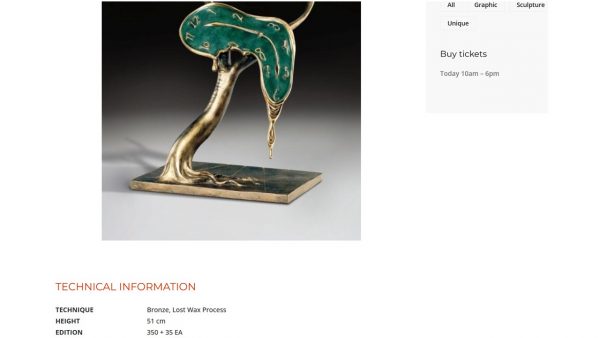
Image: Dali Paris. R. & N. Descharnes Salvador Dali Sculptures & Objects. Eccart. Ref. 615, page 238.