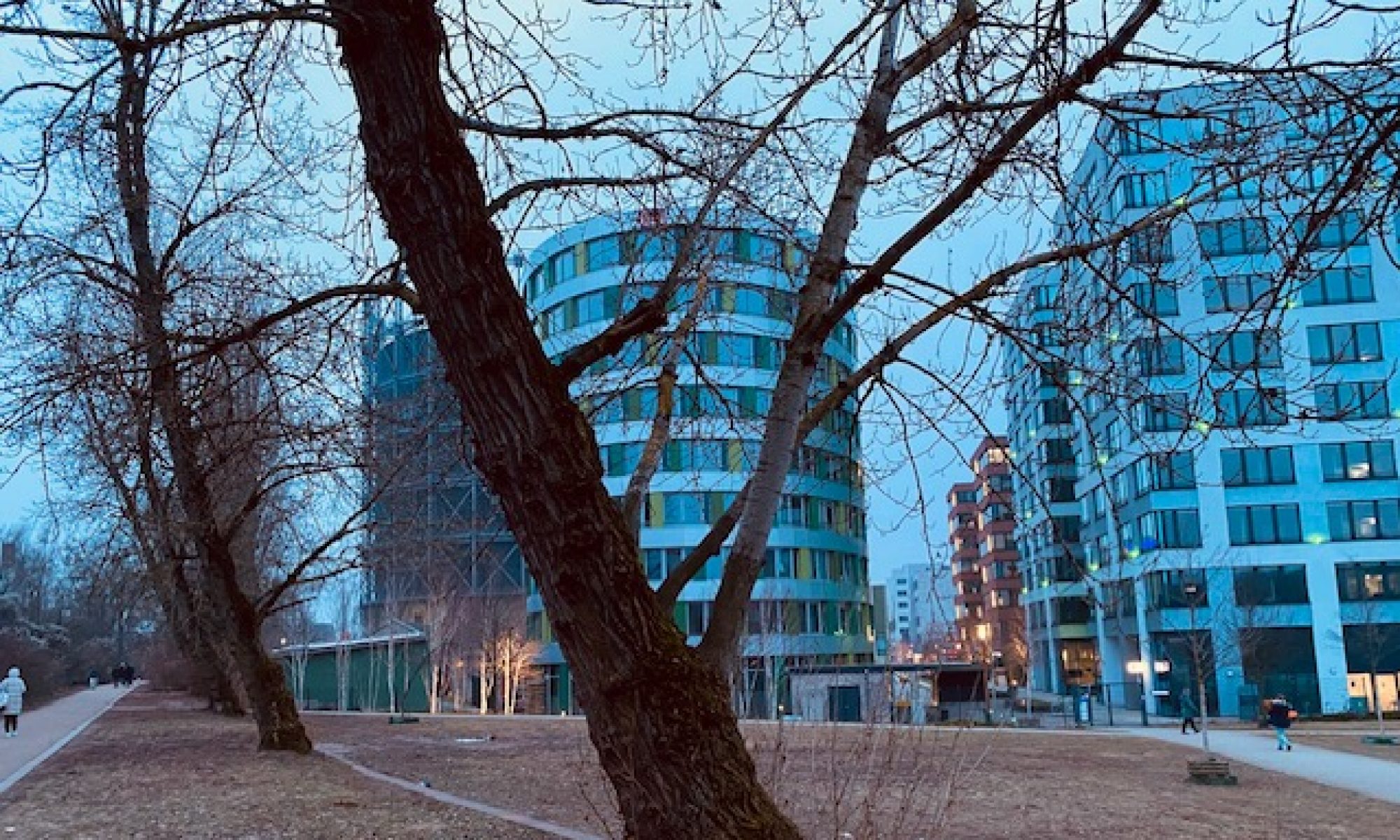

It reads like an entry into a personal diary. The poem “Darmstadt, 4. Januar” by Renate Schmidgall (2025, p. 24) reflects on the obsession with change. The sky shows traces of airplanes, which have passed some time ago. Trees age slowly, a pigeon sets off. “Nichts ist anders als gestern,” (Nothing is different from yesterday, then suddenly a poem finds again its space in me, …). Nothing changed, and yet, suddenly, all is different again. Motivation sets in and time appears rather short.
In “Donnerstag” (Thursday) Schmidgall (2026, p.30) notes a daily routine and the planning of today, even the day after tomorrow. Emptying her paper basket, she finds a quotation from Bruno Schulz she noted previously. “An allem schuld ist der schnelle Zerfall der Zeit.” (The fault of everything is the rapid dissolution of time).
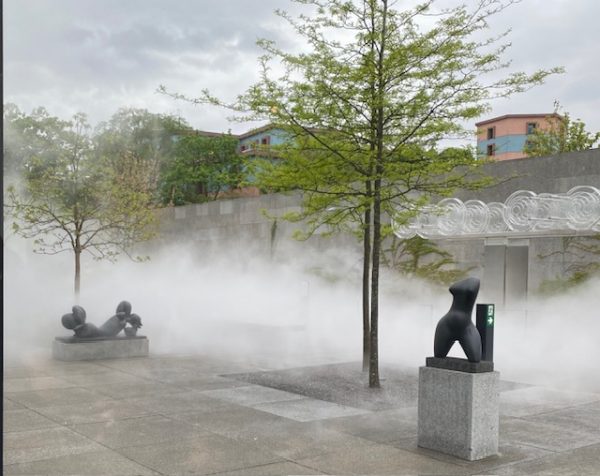
Time is portrait in these two poems as both a moment-specific personal experience as well as the short-cut description of a society-wide trend. Just, as if time was the driving force of change on both levels, even if we know it is not time in itself, but other forces are at work. “O tempora, o mores” as Cicero stated, appears to be still valid summary claim. (Image: Neue Nationalgalerie Front – WZB (Stirling architecture) in background, Fog installation in sculpture garden 2026-5).