Democracy in architecture

Over centuries we have pondered how to bring more democracy into architecture. This very idea is different from designing parliaments or other democratic institutions like courts or the representation of executive power in a democracy. Bottom-up or direct participation, beyond the pseudo open participation in a competition for the chosen best design, could take the form of voting by and/or listening to the people before any realization. Rather than relying on the choice of elected representatives, we may envisage the observation of people’s choices. Such a kind of bottom-up approach has been chosen by Anna Jung and Lea Krueger who let persons chose, where they wanted to take a rest at the Kulturforum in Berlin by moving chairs to a  specific place or a nearby location. Rather than yet another grand design people could freely choose their favorite niche for 1 or 2 chairs. Sometimes just looking for shadow next to a wall or under a tree, sometimes desperate for a little green spot. Democracy in architecture can simply mean to think architecture from the people’s perspective or an observed user’s experience. Democracy in architecture could resemble a bit more the internet revolution and think in terms of user interface, UX-design. With the construction of the “Berlin Modern” well under way, such green niches shall be appreciated by many people passing by and those who would like to rest for a while.  

Archi health

The links between architecture and human health are manifold. There are direct effects of healthy versus unhealthy materials in construction. For the purpose of making buildings fire proof or more resistant to heat asbestos had been used for decades which still causes health hazards nowadays in the removal of this cancerous material. Paint has to be chosen wisely as well as isolation materials. Indirect or second round effects of materials have to be considered additionally. Cement in construction uses a lot of energy in its production and has only been recycled since a few years in significant amounts. Room climate or even psychological effects of architecture have been considered to be important more seriously in recent years. A new discipline entitled “neuro-architecture” may be developed soon. Schools, sports facilities, hospitals or community centers benefit from healthy architecture. Cost benefit analyses which take into account long term effects and even recycling of materials shift the balance much in favor of health considerations also in architecture. “Fast and dirty” will be much more expensive than “slow and healthy”. Future generations will be thankful. (Image: Spreewald Primary school Berlin).

Menschen

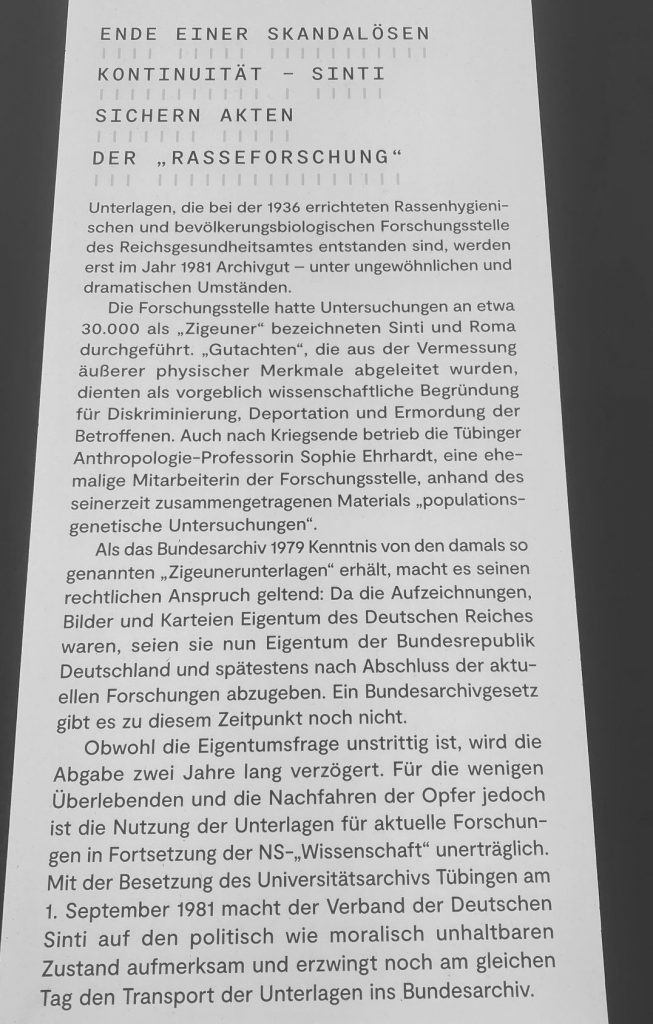
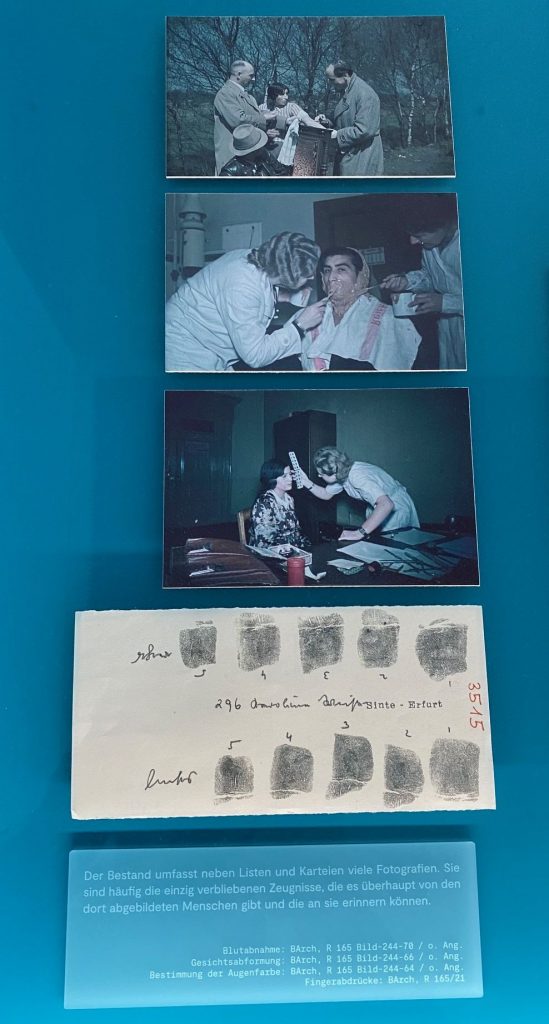
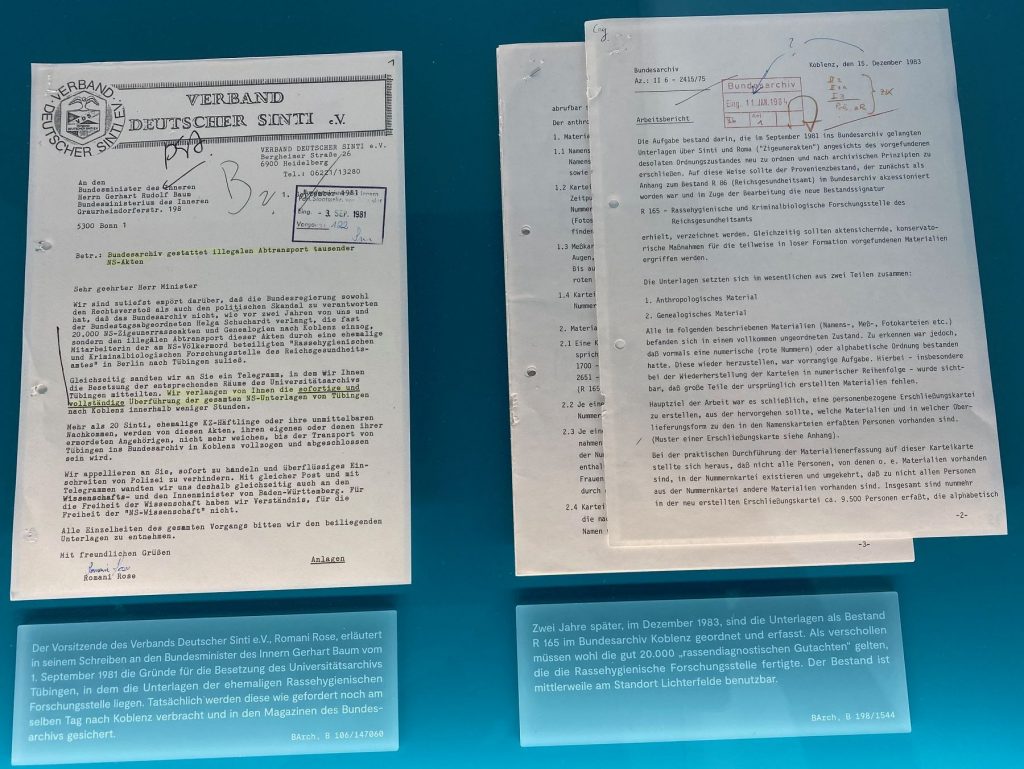
Im Bundesarchiv in Berlin sind einige Fotos zu einer Variante der Vermessung von Menschen ausgestellt. Nicht nur in den Kolonialregionen wurden Menschen zu rassenideologischen Studien vermessen. Die Kurzbeschreibung dazu und die 2 Bilder reichen, um diese scheinbar wissenschaftliche Praxis zu dokumentieren. Zurecht wird auf den Skandal mit der weiteren Verwendung dieser Daten bis 1981 hingewiesen. Es gab Kontinuitäten von Wissenschaft die heute noch erschrecken lassen. Kritischer Umgang mit jeglicher Art von Daten gehört zu dem Curriculum guter wissenschaftlicher Praxis. Diese darf nicht vor ethischen Fragen Halt machen, auch wenn das die weitere Verwendung der Information blockiert. Der Kinofilm “Der vermessene Mensch” hat dafür erneut sensibilisiert. Ethnologen und Ärzte wurden vielfach in den Dienst von Ideologien gestellt oder haben sie willentlich vorangetrieben, oftmals aus persönlichen Beweggründen. Skandale in und um Archive gehören zur Weltgeschichte, wie die geschichtliche Erkenntnis selbst. Mediale Verbreitung und Bestätigung von Klischees werden schon lange verurteilt, aber mit wenig Erfolg, wie der Deutschlandfunk Kultur selbst berichtet (Link Sendung Fazit). Die Kitas und Schulen haben ihre Hausaufgaben ebenfalls schlecht gemacht (Link). Wo ein Wille ist, ist meistens auch ein Weg, aber wenn der Wille fehlt aufgrund von Stereotypen wird sich wenig ändern.