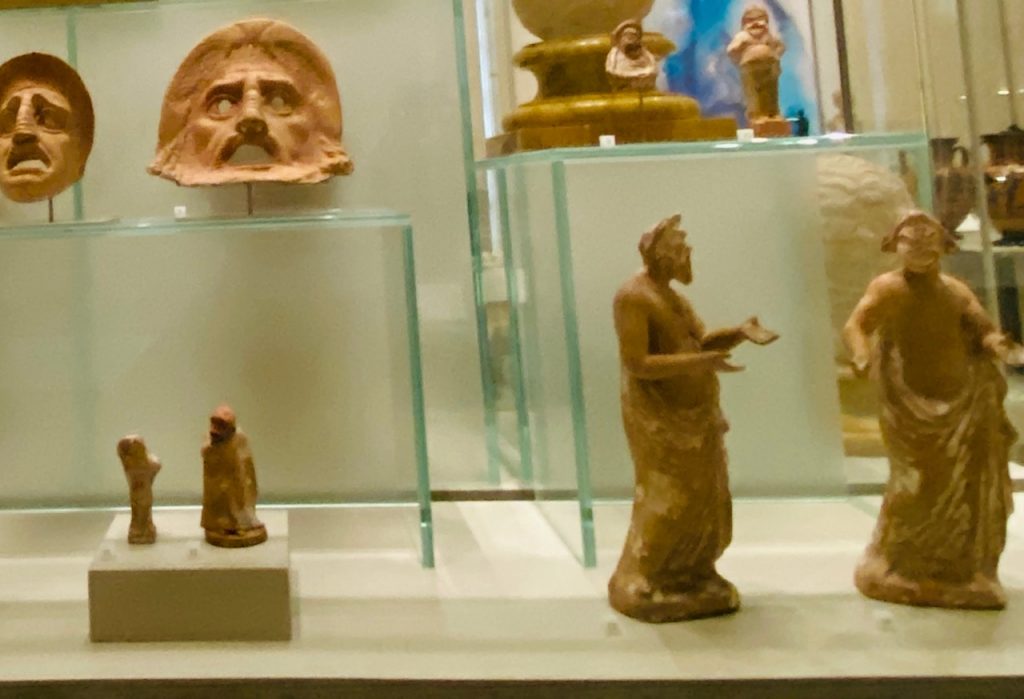

There has been careful research on the use, or not, of color in classical Greek sculpture. More than 40 years of research have documented that what was long believed as monochrome sculptures, have in fact been very colorful specimen. The collection and researchers linked to the “Liebieghaus Sculpture Collection” can be inspected with experimental versions of the colors of the classical Greek time. “Gods in Color”, an exhibition by the Liebieghaus, provides a view of the rich colors of classic statues like the “archer” using the chemicals of the time to produce more or less durable or resistant colors. See also the archaic Greek Sphinks at The Met Museum.
Brinkmann and Koch-Brinkmann have spent close to 50 years on this research and attempts to convince the public of the “monochrome myth” of Greek sculptures. Research alone did not convince people, they seemed to need to see the colorful versions eye to eye to believe. The broader social science interest is to realise how much time it can take to re-establish scientific facts once they have been “eradicated” previously. (Image: Statuettes of classic Greek actors, lower row, BNF Paris)