Languages are simple once you understood the making of them. Take children, they learn the alphabet first, and use notions or images in alphabetical order, which you associate with this list of short words from A to Z in western cultures. From short words like “Cat” and “Dog” the learner moves on to longer ones like “Bird”, just 4 letters now. More advanced learners then use more letter words like “supercalifragilisticexpialidocious” invented for amusement in the Disney-film Mary Poppins. It sounds a bit like one of those never-ending long German words with lots of nouns just added on. This is exactly what we shall do in the following. A bit like in computational linguistics when ChatGPT is predicting the next word, we use algorithmic thining to form new combinations of an alphabetical list of notions. We start in the table below with column 1, then tell our spreadsheet to copy cells A1-01 to Z1-26 list and insert it in the second column just one cell below and insert Z2-27 at the place on the top of the list of column 2, which is A2-01. Then take this column 2 and repeat. Stop after, lets say the repeat counter is N=25.
The first 2 words combination then is “Action Zero”. Take this, enter it into Computer Search and take the top entry. “ActionZero” is an actual company name proposing actions to achieve net-zero emissions. Following this, we produce a whole encyclopedia of pretty up-to-date knowledge from the WWW with hardly any humans involved anymore. We only need to cut out duplicates and nonsense entries. That’s what most editors or teachers are used to do. Knowledge creation might no longer be reserved to the human species. Oh my God – but the machine might eventually sort this word out as nonsense concept, too. The new mantra could be ZeroGod or let us try the reset like in GodZero. In other words we move from HamletMachine to our own KnowledgeMachine. 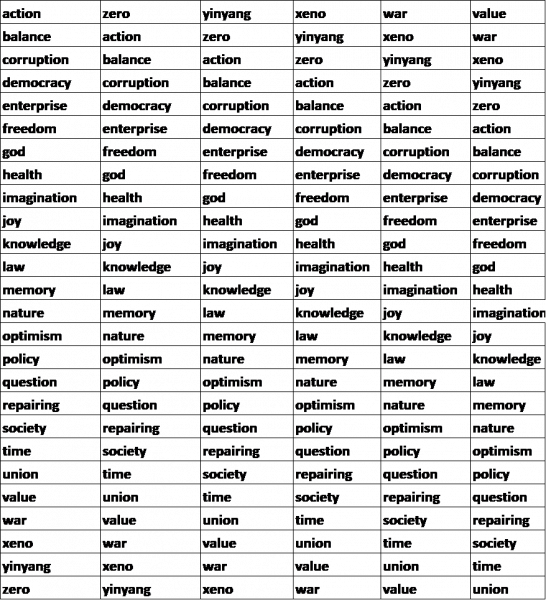
knowledgeable
It is the role of scientists to ask questions. “The New Scientist” asked in one of its recent editions the fundamental question of what are the limits to knowledge? Nice, they provide 5 parts of an answer to the question. (1) According to Karl Popper, the falsification guy, knowledge is only valid as long as it has not yet been falsified. Hence, a limit to knowledge exists where we cannot falsify a hypothesis or theory, i.e. for example when empirical measurement is impossible. (2) Mary Douglas’s messy problems have been claimed as another limit, or as the New Scientist puts it, “when things are outrageously complicated”. Chaos theory, applied in climate modelling leads us to learn about the potentially huge impact of tiny, little things. (3) Our tools to look into the sky have improved since Ticho Brahe‘s time before the telescope was invented. Most of our knowledge about the universe has only be as accurate as the tools to capture radiation or to observe planetary movements. Therefore, the next limit arises from the fact, “when our best tool to describe the universe may be unreliable”. (4) “When we can’t directly experience something”, we might be unable to understand the concept of colour another person or animal is experiencing. Listening to colours is possible for some, but generally we would not accept such experiences without recourse to drugs, maybe. Bats use ultrasound frequencies, especially trained blind persons use “click sounds” for orientation. Dialetheism is another branch of the philosophy of science and knowledge, a bit hard to digest, as empirical evidence may lose its importance. Its all dialectic or what? (5) If “logic itself is fatally flawed”, what are we left with to construct as knowledge, beyond logical sequences or even causality itself is in question. The Condorcet paradoxon or the impossibility theorem shown by Ken Arrow is an example where it is impossible or very tricky to arrive at a logically consistent solution to a social choice issue. Our tree of science and knowledge grows, undeniably, every second even. Where are we located in this forest now? Thinking of a tree up-side-down shows some have roots even bigger than the visible branches.
Does the Panda bear in the Berlin Zoo have a cognitive map of the cage in his mind? Do they care? Only recently they even had a baby Panda bear there. 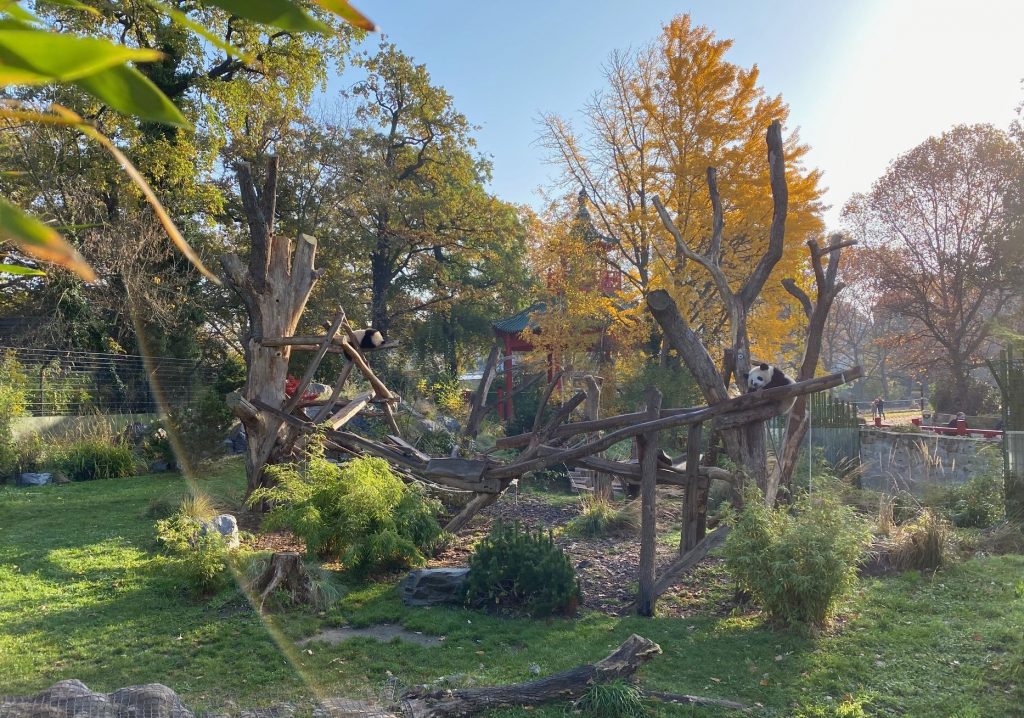
Romanatik2
Zur romantischen Periode gehören die bekannten Lieder von Schumann und Schubert. Meine Auswahl dazu liebäugelt besonders mit den Liedern zum Lindenbaum. Die Linde mit ihrem süßlichen Duft an warmen Tagen hat Malende der Romantik sowie die Dichtenden und Komponierenden betört. “Am Brunnen vor dem Tore da steht ein Lindenbaum …” kannte vor 50 Jahren jedes Kind. Etwas weniger bekannt sind die fabelhaften Rückert-Lieder von Gustav Mahler: “Ich atmet’ einen linden Duft …”. Für mich steht dabei die Atmosphäre in der Nähe der Linde im Vordergrund. “Unter den Linden” assoziieren viele nur noch mit der Verkehr in der Hauptstadt auf dem Weg zum Brandenburger Tor. Zum Reinhören und Reinversetzen in die Romantik sind die Lieder ein idealer Weg. Der Frühlingsglaube (Schubert Op.20.2) besingt die linden Lüfte und das Aufblühen der Natur. Es keimt die Hoffnung auf, dass sich alles zum Besseren wendet. Doch etwas Skepsis ist schon angebracht. Im Lied “Die abgeblühte Linde“, ebenfalls von Schubert vertont, ist dann das Altern und die Treue thematisiert. Der Zyklus der Natur und Jahreszeiten nimmt scheinbar unaufhaltsam seinen Lauf. “Nur der Gärtner bleibt ihr treu, denn er liebt in ihr den Baum”. Das weise Herz will Gärtnern und erhalten, was so viele Emotionen und Optimismus hervorgebracht hat. Wir müssen die Bäume retten, aus Pflicht die Romantik inklusiv und erlebbar zu erhalten. Dazu können wir mit den Linden ja schon einmal anfangen. 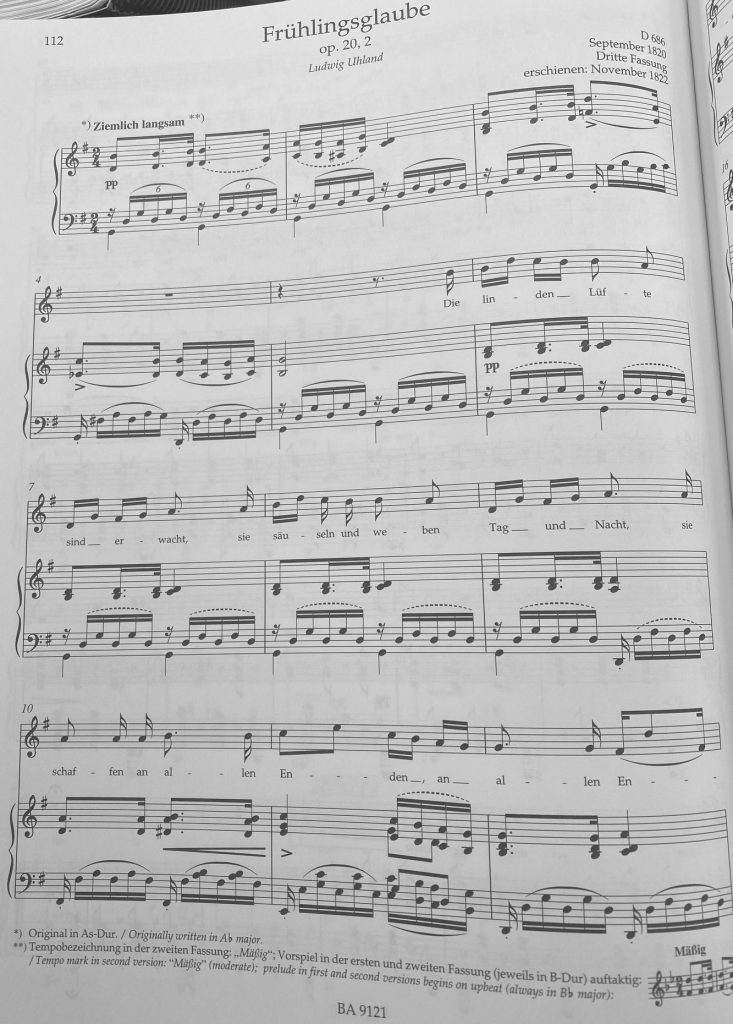
Romantik
Caspar David Friedrich gehört zum kollektiven Gedächtnis als Vertreter der Romantik und das nicht nur in Deutschland (see USA 2025). Seine stimmungsgeladenen Landschaftsgemälde und Zeichnungen sind einprägsam. Auf Rügen lässt sich nach 200 Jahren noch die Stimmung erahnen, die er einfangen wollte. Weiße Kreidefelsen, Königsstuhl und lange Strände können dort noch bewundert werden.
Große Anstrengungen sind nötig und werden bereits unternommen, um dieses Naturspektakel für die zukünftigen Generationen zu erhalten. Die brüchigen Kreidefelsen werden einer Erhöhung des Meeresspiegels und stärkeren Unwettern durch den Klimawandel nur schwer widerstehen können. Unsere kollektiven Schätze der Erinnerungen werden immer öfter mit kollektivem Versagen einhergehen, eventuell auch Denkmäler erhalten zu können.
Wie erklären wir unser kollektives Versagen einmal unseren Kindern und Enkelkindern sowie den zu erwartenden Leidtragenden des raschen Klimawandels? Die überaus erfolgreiche Entertainmentindustrie dröhnt uns schon den Kopf so zu, dass wir Bedenken verdrängen können. Romantik ist eh von gestern und nur was für nostalgisch veranlagte Menschen.
War schön sich einen Caspar-David-Friedrich-Moment gegönnt zu haben im Winterlicht bevor der alljährliche Overtourism wieder zuschlägt.


Link zu Gemälde Überblick bei www.wikiart.com

Photo
Photography has captured our imagination for years already.
It is now a daily activity of many people to “capture their experience”, if not even their existence in some photographed way. Susan Sontag (1977) coined the phrase that photography “feels like knowledge – and, therefore, like power”. You are in a relation to the world. Taking the photograph in my view is the Mephistopheles moment. You are in control of the object taken by the camera. Arranging the scenery, waiting for the perfect moment, expression, light or colours is like mastering a situation, an atmosphere, an emotion. Photographs have the power to work as a document. Editing has become easy and pervasive with digital tools. However, it was always present in the traditional technical parts of shooting and developing subsequently in the dark room.
“to be taken” on a photograph is more like the Faustian moment of realising that you are manipulated, or at risk of being made use of, for some purpose, unknown to you at that moment.
Beware, a photograph is always just an image of an image. The photographer is the intermediate person using a specific technology to transform his perception or vision of (her/his) reality into another image of it, creating some form of virtual reality.
In addition to this twofold transformation, the third transformation is historically the technical development of the negative into the print (see below). Nowadays, this is the compression and editing into a specific format. Despite these transformations, a photograph is admitted in court cases as providing evidence of guilt or to identify an illicit act (excess of speed limit). Infringements on privacy are the rule rather than the exception. Who is that person sitting next to you, and at what time of the day?
I, personally, apply photographs often like note-taking for research to capture spontaneous ideas or associations, which await further interpretation or may serve (served) as inspiration.
Compared to photography, painting has been a more elite artistic practice for many years. Taking photographs has democratised the image-taking art forms. Instead of originals, many of us have collections of photos from museums around the world. We take “photos of photos” to reveal the world around us and reflect on values. The social construction of the world is directly visible through the process of taking, collecting and curating photographs. Construct your own world or the world will construct or deconstruct you instead.
Politicians (e.g. Angela Merkel), John F. Kennedy or historical figures, all had their defining moment condensed into one or several photographs, what have been famous paintings in art history before. Susan Sontag wrote 50 years ago: “… a photograph can be treated as a narrowly selective transparency”. The third transformation of developing and/editing, shown in the images below, explains what we might learn from this citation in a technical sense. Just as courts have to evaluate, whether a proof is admittable and contributing to finding the truth; viewing photographs is a balancing act between art and truth.
“Even when photographers are most concerned with mirroring reality, they are still haunted by tacit imperatives of taste and conscience.” (Sontag, p.6). Photographs document sequences of consumption. We should frame this as CO2 footprints in the 21st century. Restricting print to a few “best of” was and is necessary to reduce the dirty footprint of photography, particularly since photos have become a mass media as much as the preferred media of masses.
With photographs we certify our own certificates, for example in case of job applications or passports. We encounter “cosmopolitans accumulating photograph-trophies” in all instagram-able locations.
Taking photos is like a “friendly imitation of work” (p.9), you do something useful in documenting the images of a world in danger of being lost. We can give importance to otherwise forgotten realities, attach importance even immortality to something or someone of our choice. We make history through it or try to make it at least. “When we are afraid, we shoot. But when we are nostalgic, we take pictures.” (p.9) Sontag defines photographs as part of the repertoire of surrealism (p.77 ff), “to finding beautiful what other people found ugly or without interest and relevance …”). We are at risk to mistake photographs as reality and experience the original as “letdown” (p.147). The return to polaroid instant photography brings us back to a proclaimed authenticity of the orginal, unique moments, with supposed unfiltered not-edited images. The true moment of having had fun or joint experience without use of photoshop to add the missing member.
“I take photos, therefore I am”, has become the mantra of modern societies. We tend to ignore that we are taken on photos a million more times than we take some ourselves (video surveillance). It is a question of power in the end. Edit yourself or you become edited.
(Image: Prix du Tirage photographique BnF 2022 Laurent Lafolie, photo below). 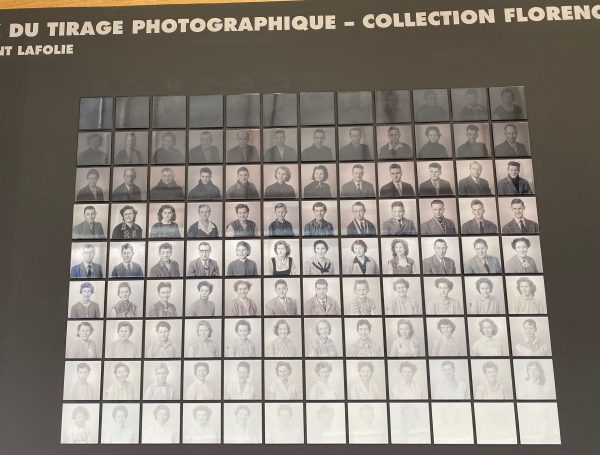
Flotow Analyse
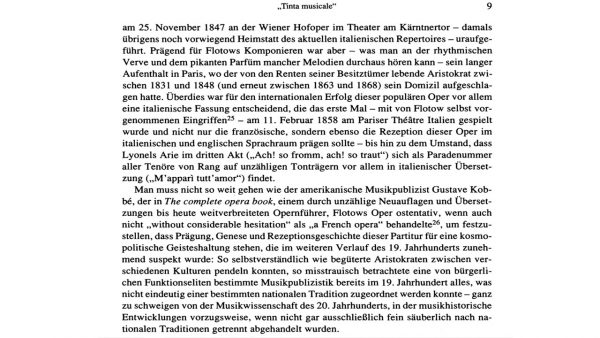
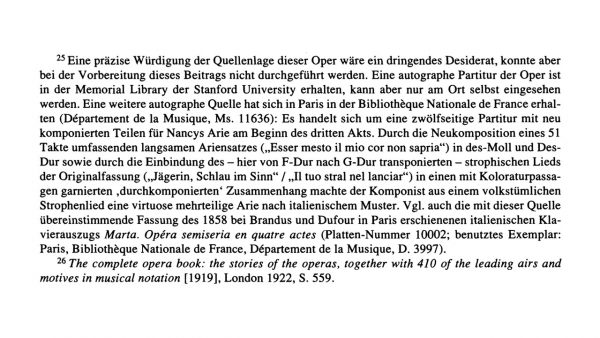
Interessant ist der Aufsatz über Flotows’ Martha, der vor einigen Jahren in einer musikwissenschaftlichen Zeitschrift erschienen ist. Anselm Gerhard ordnet die Oper unter Berücksichtigung des Werdegangs des Aristokraten Flotow dem französischen Stil der Oper zu. Das Schicksal des von Flotow war es wohl, mit seiner aristokratischen Herkunft aus Preußen, Deutschland, ein Uraufführung in Österreich, dann mit Bel Canto assoziert überwiegend auf italienisch aufgeführt zu werden (Metropolitan Opera 1914? mit Caruso), aber ein französisches Opernschema basierend auf einer irischen Volksmusik mit einer Story in England zu verbinden. Kosmopolitisch nennen wir das im 21.-ten Jahrhundert, nicht oder schwer nationalistisch verwertbar im 19. und 20.-ten Jahrhundert. Für die Handschriften ist es wohl am besten, gleich in die Bibliothèque nationale de France (BnF) zu fahren. Im Saal Richelieu ist das dazu passende kunstgeschichtliche Ambiente noch nachvollziehbar. Quelle:
Gerhard, A. (2004). „Tinta musicale“ Flotows „Martha“ und die Frage nach Möglichkeiten und Grenzen Musikalischer Analyse in Opern des 19. Jahrhunderts. Archiv für Musikwissenschaft, 61(1), 1–18. 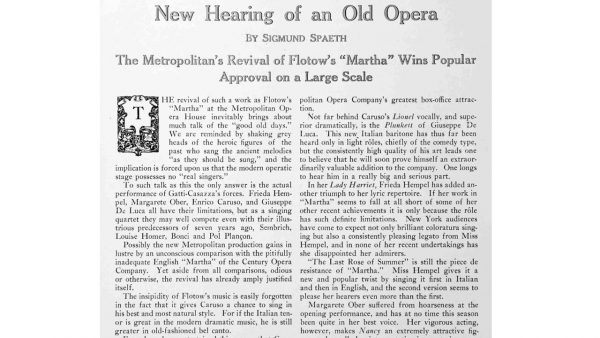
Zigarre
Die Zeiten, in denen Zigarrenrauchen Schlagzeilen machten, sind eigentlich lange vorüber. Heute wundern wir uns lediglich über die Sorglosigkeit der Personen bezüblich ihrer Gesundheit. Friedrich von Flotow hat die Szene im Salon de Marquis de Custine (Paris) in seinen Erinnerungen vorzüglich beschrieben. Die Schriftstellerin George Sand hat die Gemüter mit dieser Rauchszene nachhaltig inspiriert. Frédéric Chopin (1810-1849) hat an diesem Abend seiner (späteren) Mäzenin eine Ovation dargebracht. Flotow hatte sicherlich einen inspirierenden Abend verbracht. Seine unveröffentlicht gebliebenen Memoiren wurden von seiner 3. Frau publiziert. Ein Vorabdruck auf Schwedisch habe ich in der Svensk Musiktidning vom 15-8-1883 gefunden. Datiert ca 6 Monate nach seinem Tod, heute vor 140 Jahren, ist das eine Würdigung des Komponisten in Schweden und eine Anerkennung der Aufarbeitung und Verbreitung seines Werks durch seine Frau. Die Aristokraten und ihre Kreise waren Anregung für viele künstlerische Kreise. Das wohlhabende Bürgertum hat später diese Rolle übernommen. Heute brauchen wir zahlreiche öffentliche und private Stiftungen oder Crowd-Funding für diese Events und Inspirationen.
(Quelle: Flotow, Friedrich von. (1883). F. von Flotows minnen. II. En soaré hos marquis de Custine [Beskrivning av G. Sand (baronesse Dudevant) och Chopin]. Svensk musiktidning, 3(16), 121–122. ) 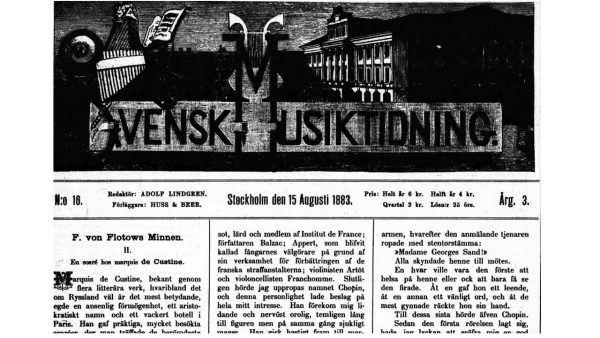
Writing
“Are you writing or what?”
New research on the fabrication of writing allows to debunk some of the received ideas about writers as living and drafting in a solitary space. However, the facts frequently show something different. In the journal of the BnF (images 2022), (Chroniques des la BnF Nr. 95 p.9 pdf-file) the BnF makes transparent the creative cosmos of Marcel Proust (Exhibition closed). From correspondence and other influential images, we learn about the “fabrique de l’oeuvre”. Far from writing his books from front to end in a linear fashion, Proust drafts “isolated sequences which he mounts, demounts and regroups sometimes even years later. These clippings of text are arranged by him like a patchwork, a collage rather than following a linear progression. Just peeping into the writer’s studio, drafting style and “paperoles” is fascinating. What a mess, some would say. What a huge imaginative space he has been living in, despite being reported to draft most of his work while actually being in his bed (Lire Magazine 12-2022). Beds are not always for sleeping, only. Today’s start-up enterprises frequently start from home, a century ago Proust demonstrated a lot can result from a very tiny physical space, but an enormous space in mind. 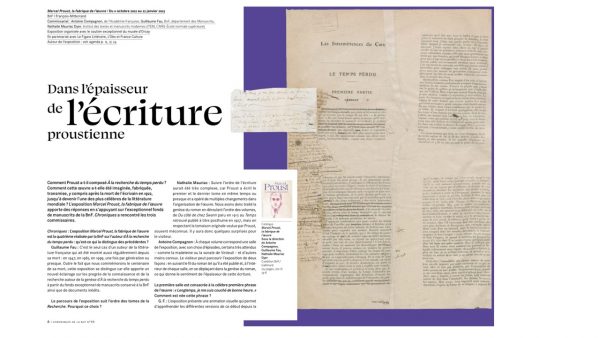
Inspiration
Artists and scientists, all have their sources of inspiration. The most beautiful way of putting this is contained in a poem by Jacques Prévert. “Moi aussi, comme les peintres, j’ai mes modèles…”. The source of inspiration varies from physically present models to imagined ones. Painters and sculptors, we imagine, have their models right in front of them and build on their specific kind of observation, view and vision, seeing more or differently from others, at least since modern times. Poets and authors are believed to draw inspiration from abstraction and imaginative description and narration. Musicians tend to rely on hearing fine-tuned or creative tensions, as much as the resolution in harmonies through sequences of sound. All seem to have a sensitivity beyond the normal and a skill to find a way to transmit to others. Photographers catch representative moments or visualize artifacts and combinations of them in new ways. Scientists are not so different as we might think. Imagination of new hypotheses in established fields is part of their skill set. The transversal skill in all these processes of inspiration is the openness to cross-discipline fertilization. So-called Polymaths reached excellence in more than one field of science, “Polyartists” touch several fields of different arts. Further new innovative combinations of disciplines like they are practices in “centres of advanced studies” are a first step to brings down walls in mindsets and disciplinary ivory tower practices. It will take only a tiny little step forward to come back to the practice of royal courts. The person called “fou du roi” had an important role to play, not only in the game of chess, but in questioning and entertaining leaders. I wish universities, science centres and ministries would allow themselves more of this kind of inspiration. Inspiration is considered here as a source of questioning your own approach from another perspective. Look at your phenomenon of interest with a different model or imagination in mind. New synapses will follow. Let us welcome them to make the world around us a better or more beautiful place. Wait, is more beautiful enough already? Is this a contradiction, better versus more beautiful, or is the latter a subset of the former, or is a tautology anyway? The catalogue of the exposition “Archives des rêves” du Musée d’Orsay gives plenty of insights into images as sources of inspiration for people of all walks of life. 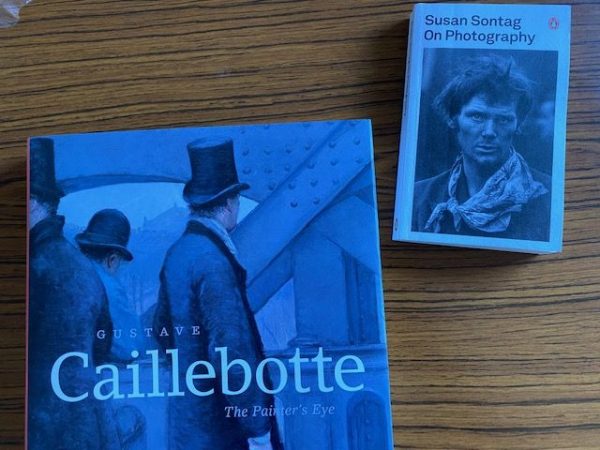
Giselle
Once upon a time, not at the Opera de la Bastille, but next it, in a small theatre called Théâtre de la Bastille, the fairy tale of “Giselle…” was performed. The world-famous ballet Giselle (Karlsruhe Programmheft) is still amongst the most frequently performed magic piece of classical ballet. What is it about? In short: sex and crime. Yes, and it sells well.
Francois Gremaud tells the classic story of excitement, love, deception, death, regret, haunting and memory in a concise and witty fashion. The exemplary dancer is at the same time the narrator of the story as well as the critic and art historian accompanied by a 4 musicians strong orchestra. The educational piece with a “womanxplainer” on stage is great entertainment, full of references, why it is still okay to like the piece in spite of its fantasy-loaded content. Modern dance (Cunningham, De Keersmaeker) has decoupled or emancipated movement from music. In classical ballet, at least, you still know what comes next and this is aesthetically appealing for most people. Besides Wilfried, no he is not part of the “Wilis” (could be an interesting variant), but in the ballet there figures “Hilarion”. He is not hilarious at all. Splendid entries are from Myrtha (close to Martha, but not quite the same) and, of course, Giselle, when she leaves her tomb and turned into a “Wili”. Then there is Albrecht in a pas de deux with Giselle, swirling between earth and space. Aldi dances like mad on impulse from Myrtha, but Giselle vanishes nevertheless. End of story, or is it? Giselle is a Wili and Aldi is the wally. Maybe the story could be retold like in the film “Billy Elliot – I will dance”, which is an emancipatory tale where dance is the liberation rather than part of the dooming fate.
Francois Gremaud with the astonishing performer and choreographer Samantha van Wissen have created a version of Giselle that is musical, aesthetic, funny and critic. For those who enjoy an epic theatre version of Giselle including its “alienation effects”, referring back to Berthold Brecht, will want to read the script as well, kindly distributed as a gift after the show. 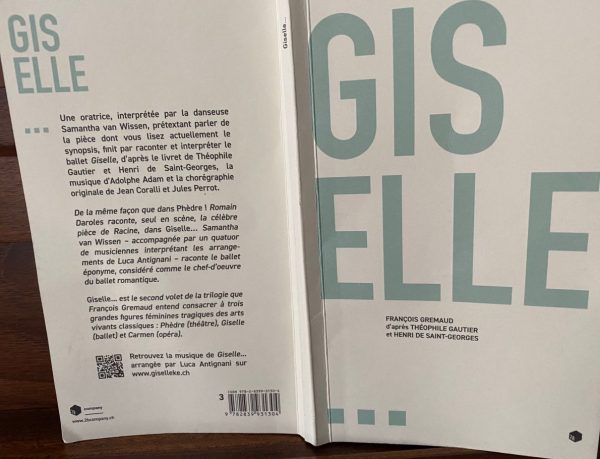
Employment
Employment is back on top of the agenda. Not as we used to think, though. Previously unemployment had dominated societal concerns. Now it is the lack of persons seeking or available for employment. What has happened? The Covid-19 crisis has demonstrated the need of persons qualified to work in the health sector. From health care and urgency care, we are short of personnel in all these fields, everywhere. 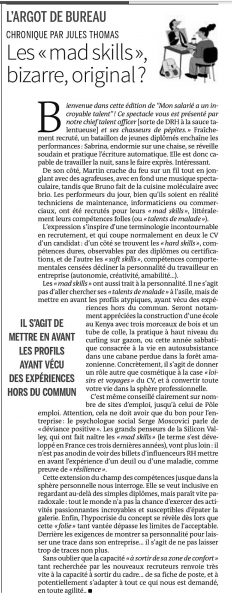 Then we discovered the role of essential services and the need to equip crucial infrastructures like ports, transport, shops, schools and ambulances with service persons resisting despite work overload. Larger cohorts leave employment to retire, some even early due to illness or burn-out. Additionally, war is back in Europe. Military personnel is in high demand again, drawing largely from younger cohorts. The need for conventional weapons. long thought to be oblivious, is forcefully back on the agenda.
Growth potentials are everywhere. However, these pre-modern facts encounter a population in the western democracies that insists on new approaches to employment. Beyond hard and soft skills, recruiters seek atypical skills, competences and trajectories. A parachute jump from an airplane, cooking and dining experiences, caring spells, periods in self-employment, all are directly or indirectly relevant for employment and teamwork. So, what is your specialty? Collecting stamps? Surely you are able to spot tiny differences in images with specific content. Fake news and fake image detection or video surveillance is in high demand, just try an application and discover the employment potential of your MAD skills. Sounds crazy? No joke. Skill needs are everywhere, just give it a start again and again. Read a serious newspaper regularly (here LeMonde 19.1.2023) for inspiration.
Sublime
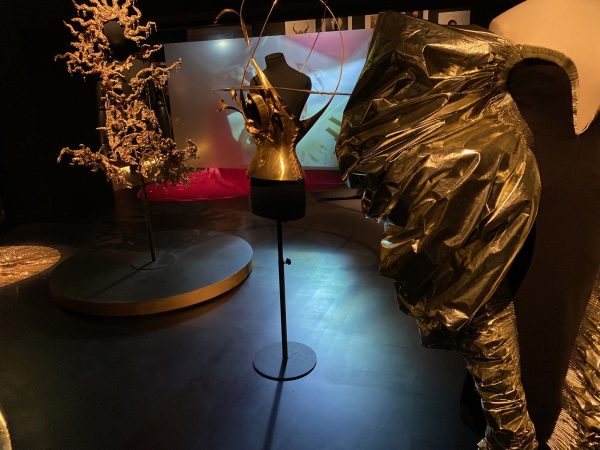
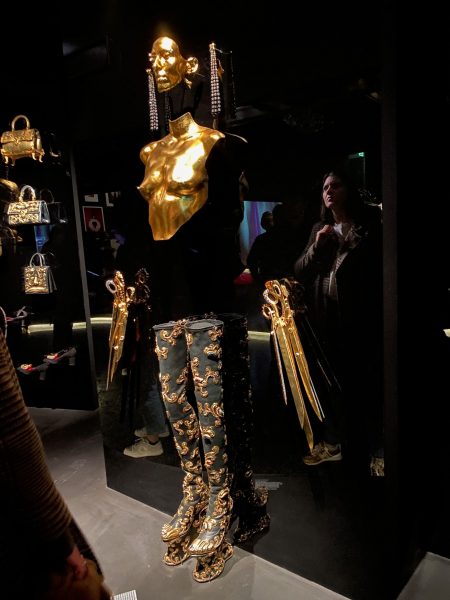
The exposition of art work in the MAD “Musée des Arts Décoratifs” in Paris is sublime. Growing out of fashion design into the work of art can be a process of sublimation: passing from one state of designing one product to producing artwork. The intermediate state of artefacts created for designing a product, like the drawings of fashion designers or scenery and costumes in theatre and operas, are often less visible or subject of exposition. Objects become subjects. A trend in recent expositions is to devote more space to the applied arts like stage design, costumes as well as products of everyday use. “Bauhaus” has a lasting effect.
Elsa Schiaparelli has achieved this sublimation. Starting with extravagant fashion design, her designed fashion objects were adopted by Picasso before she developed into the sublime state of artist with her artefacts herself (see below). Now in this process of subjectivation she is the prime subject of an exposition herself. The combination or arts and crafts (Kunsthandwerk) has been always present in art history. The challenge of concepts combined with arts is more recent or just more explicit since the late 19th and 20th century. Being able to live from your artwork is still a challenge, though due to “Mäzene” and state subsidies it is more feasible to follow artistic trajectories. 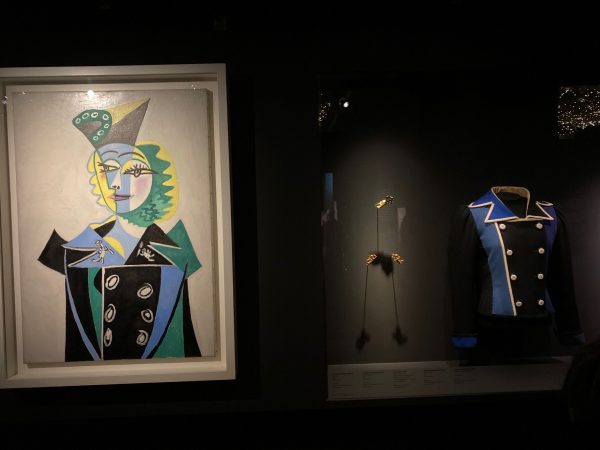
Invent
The nice thing about mathematics is that it asks you to invent new ways of thinking. Numbers, percentages, Venn-Diagramms, infinite series etc. have accompanied us at school. The story is far from finished. Under www.spektrum.de there is a nice introduction to the new theory of numbers, called “condensed mathematics“. Their lecture notes (pdf-file) are a tough read. My take home message simply is, the invention of new approaches to old problems, providing more general answers and/or unifying different fields are particularly rewarding. Maths is a fascinating discipline. You study abstract problems, hardly anybody else has had so far, but you are not considered strange as for example some artists at times. Imagine your new world in music, painting or the arts in more general terms or try to become a mathematician. Finding ways to communicate about your predilection and invention is the next challenge. Many scientist, inventors or artists found very few people to talk to about their new stuff. The internet and social media have changed this. Persons with interests or findings beyond the mainstream find colleagues in other parts of the world. Lighthouses from far away become visible through this. Navigation of other possible worlds turns into reality. These specialisations might turn out to be generalisations. The stretch between indepth knowledge and the polymath approach shall accompany us for a long time. Unified theories in several fields are indeed a step to be able to have an oversight about several, but not all fields. Polymaths probably start with condensed maths to move on to other fields of imagination. There is always a risk to get stuck somewhere on the road in a topological space. 
Sound
Each society has its sound. Each person lives in her/his sound cloud or bubble. Cities are generally noisy places, Lots of traffic, mobility and moves leave sound bytes all over the place. Each city though has its own sound and spectrum of frequencies. Libraries, museums, places of worship, all build their special atmosphere due to specific sound design. The Singing Project by Ayumi Paul (Gropiusbau Berlin) created its own sound environment. Reminding us to consciously design our exposure to and experience of sound is welcome. John Cage started to build his very own language of music, similar to Schoenberg, from scratch. His writings Empty Mind explain his view and techniques a bit. Starting with silence and the time between sounds we recreate our own sound experience. Notation of it comes second in place. only for the potential to repeat the experience notation is useful. But it is only one form of conservation for posterity. Noise canceling is the amazing tool from sound physics which allows you to neutralize noise by adding specific frequencies to noise which cancel out each other. Design your personal sound experience beyond noise if you like. Nature recordings or familiar person voices allow you immersive experiences when and where we want. your home sound can be everywhere nowadays. 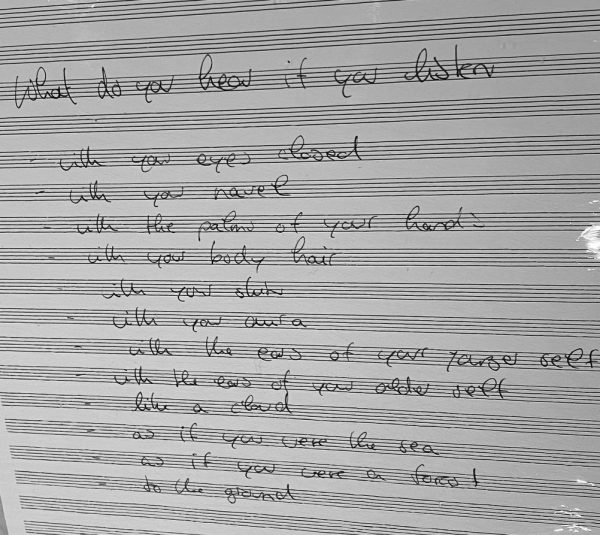
Action Verbs
Action words are in other words called action verbs. Each complete sentence has one. Hence, they are part and parcel of the basic construction of sentences.
“The purpose of an active verb is to create a clear, concise sentence. By using an active verb, you can eliminate unnecessary words and make your writing more direct. In addition to making your writing more concise, active verbs also add punch and clarity. They can make your writing more interesting and persuasive. Additionally, active verbs can create a sense of immediacy which is often useful in persuasive writing. When it comes to writing, there is nothing more important than using strong, active verbs. Not only do they make your writing more interesting and engaging, but they also convey a sense of confidence and authority. In addition to being more descriptive, active verbs also add a sense of movement and action to your writing. Rather than simply stating that something exists, you can use active verbs to show how it exists. For example, rather than saying “there is a chair in the room,” you could say “the chair sits in the corner of the room.” This may seem like a small change, but it can make a big difference in how your writing comes across. Finally, active verbs can also help to set the tone of your writing. If you want to convey a sense of wit and humour, then using playful, lighthearted verbs is a great way to do so. On the other hand, if you’re aiming for a more serious tone, then using powerful, authoritative verbs will help you achieve that.”
After the 3rd sentence this blog entry (Link) has been written by the artificial intelligence app “Neuroflash”. They promise that it is not just copy and paste, but rather written following some instructions I gave like title, table of content, style and then selected among several choices. It makes sense to me, although it is just like many other textbook entries I have found on the web. It may well serve as an introduction. Lazy journalists, priests or lawyers in case they do little research will be replaced soon by AI, who else, who is next? Big brother drafts the brave new world for us already. 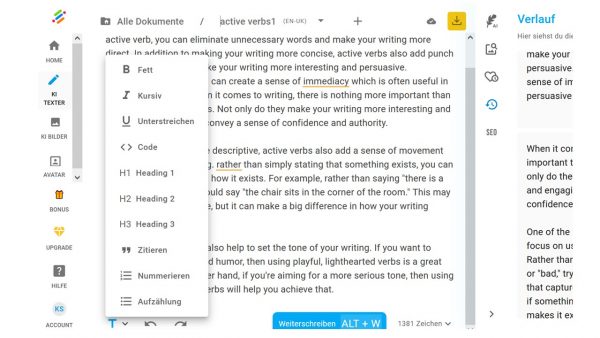
B for Balance
To reach a balance, to keep the balance or one’s balance, this highlights the process nature of balancing. Even the old tool of a balance (scale for weights) very much reflects the evening-out of the balancing process. It seems like a temporary balance most of the time. We might evolve from one level to another one. Especially imagining ourselves on a (body weight) balance in the morning and then throughout the year or years, this appears like a dynamic trajectory. The nature and/or nurture connection is evident. Beware to search for synonyms of “balance” on the internet. You get more than 3000 synonym (Link) meanings and 30 suggestions for definitions (Link) to contemplate on. I like the nice physical experience of balance and the simple (a bit nerdy) explanation of it. Economist get very excited about balance of payments and the ways to achieve equilibrium or equilibria. Balancing personal accounts can be a bit painful at times, but balancing in the arts gets our imagination going. Dancing is about balance most of the time. Playing with your own balance, the balance when 2 or more persons are in action, how not to be absorbed by such experiences. In music, the balance is a primary issue since Bach’s “wohltemperiertes Klavier” and balance and tension are the origin of much jazz. An image or photo might be balanced, certainly architecture is playing with or restricted by balancing acts. Herta Müller’s “Atemschaukel” has thrown us off balance for a while. History we study often with a concern for a balance of power. In peace and war times, the balance of power within and between countries or superpowers are a long-lasting research issue. At times when this balance is at risk or completely out-of-balance we are deeply concerned about the return of a balanced situation. Babies and children draw comfort from being balanced. Adults as well. Let’s try again (chanson). (balance22-venice -video). 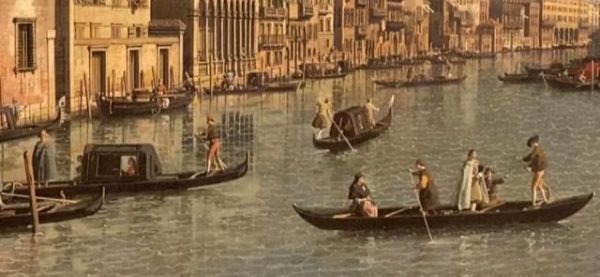
A for Action
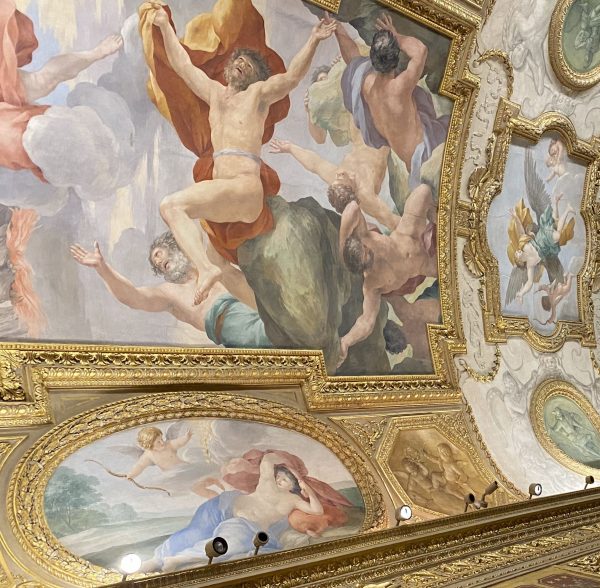
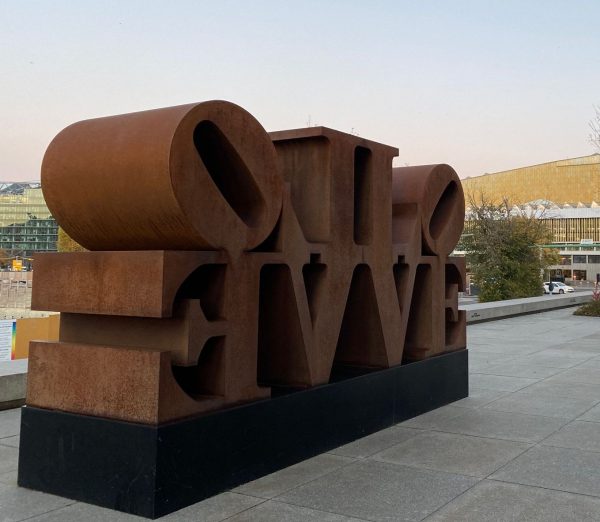
The A is everywhere. A is the beginning of the Alphabet, Google is our new Alphabet, we just have not realised it. A simple A-rating in investment is not good enough, AA or AAA is the goal. All this calls for ACTION. Do not be stopped in your action by reading on “Action theory” by Parsons, Rational action is the basis of most economic reasoning before the behavioural turn of economics. It is commonly acknowledged now, that rational action might not always be as rational as we want to believe it is. “Frame selection” as theory to explain our choice of action is fashionable in the social sciences. Transforming values and intentions into actions is a big challenge. Many jokes turn around this issue, like intentions to get up early in the morning. Find out whether you are an actionable leader. You should have at least a few “actionable items” on your to-do-list. Of course, Microsoft recommends actionable items to improve our productivity while spending hours on emails.
Well, early philosophers already distinguished between “vita contemplativa” and “vita activa“. A lot is about finding the right balance here and Hannah Arendt’s differentiation of active life in labor, work and action. She puts emphasis on action as a way to distinguish ourselves from others. The same thought might lead to very different actions. Hence, acting on one’s belief or values could lead to very different policies for just 2 persons. Action Artists perform even in inaction. We are back to basic questions of democratic procedures as a form to moderate between different opinions or possible actions. Lots of other A-words come up now: ambiguity, anxiety, alienation, affirmation, affect, affection. In Greek, A might be associated with Apollo, In German with the famous “Angst”, but French is overriding all this with “Amour”.
Z for Zero
Zero is more than just a number. Originally the Zero=0 was a simple placeholder for higher order numbers. The concept of 0 is useful in calculus. The digital revolution is based on 0 – 1 systems. Beyond this, there is a philosophical sense to it as well. Think of nothing, black holes, empty space, “ground zero“. Emptiness might not be empty at all, as for those filling your empty space (ets) with an empty—log. In Philosophy the nihilists or nihilism reached a lot of prominence. “God is dead” leaves us with a void that asks for alternative solutions. Beware of simplistic answers. Study the origins of democracy and the need for freedom of expression as a basis for new concepts based on fundamental values.
“Zero”, the group of artists in “Zero foundation” have made a significant contribution to the development of art in post-war Europe. The catalogue of the exhibition in Amsterdam and Berlin 2015 inspires imagination beyond today. Time passes on to achieve zero-emissions. Zut alors, the last Z-word to finish the countdown 3-2-1-0, I guess. (P.99 zero catalogue 2015)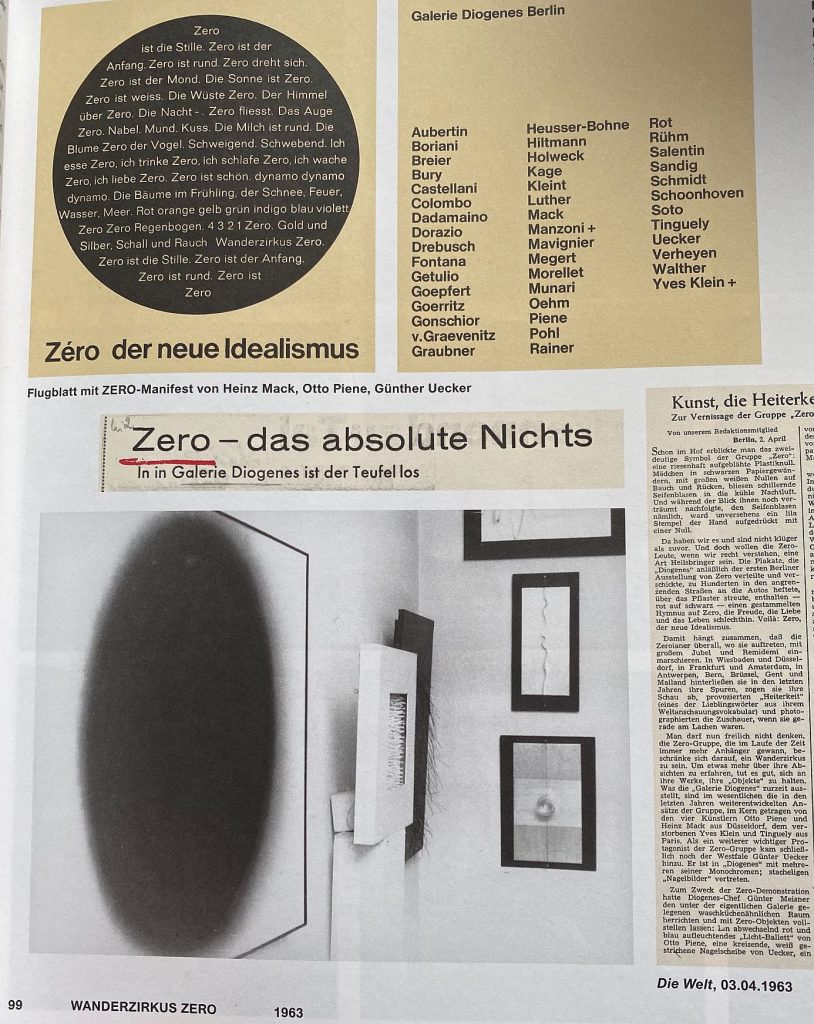
Y for YinYang
Y in maths stands for the phenomenon that is to be explained. If you are lucky, it is just one single Y. To explain this phenomenon, we usually have a multitude of different X-es and some random chance element. To complicate things a bit, we have X running over time. Example: Happiness at retirement age (66) might be explained by your earnings over years and marital unions/separations over time plus health over time and other random, not specified elements.
In my understanding of the YinYang philosophy of balancing the complementary of Yin and Yang, I probably should have thrived for a balance of earnings and health throughout my working life, to arrive at a happy retirement. Balancing not only among the X-es, but also between X and Y might even out the excitement about retirement. Additionally, this reasoning leads us to the more complicated case of multiple Y-s and multiple X-es. We can image the optimisation issue of y for 2 persons rather than just 1. Now, the maths starts to get more complicated without being complex in the mathematical sense. If you can solve such equations in statistics using different forms of random and not- so-random error terms, yr doomed for a Nobel medal in economics. What the heck, man this has to do with Yin and Yang? Beware of your work-life balance, be selective, I suppose. Breathe carefully, repair (YoYi) and read up on Chinese philosophy and maybe TCM, short for Traditional Chinese Medicine. Let’s try to re-balance in a lot of life-domains. We know our Western way of life (CO2) is not sustainable. Imagine 1 billion Europeans driving a diesel car on this planet and you have an idea about what hell might be like. An open mind to the Yin and Yang philosophy could be helpful for us, just as much as it would be for the leading Chinese politicians and their policies. Yes, Y in French is much more common than in other languages “Y avait …” is the beginning of chansons (ex 1 Aufray, ex 2 Kaas, portrait). Drawing YinYang using formulas is a bit like drawing or painting mandalas. It helps your inner balance. I am not quite there yet. 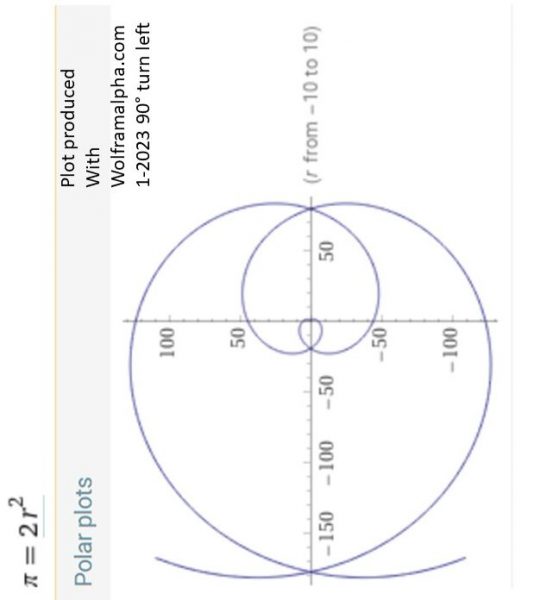
X for Xeno
Xeno is the root of the much more commonly used words of xenophobia or xenophilia. Xenos, in its Greek original, just means guest, strangeness or coming from another place. With the awareness of coming from another place or dreaming of another place we create the link Xeno-link to migration. Everybody knows about migration experiences, be they just from one village to the neighbouring one, rural- urban migration or beyond language or legal boundaries. Interesting new perspectives on the issue are rare. To view migration from an optimism or pessimism angle is a bit like a Picasso-like view on the century-old topic. Beyond out-migration and in-migration there is the population left behind in the villages, regions, countries or nations. Optimism seems to guide the outmigrants. Realizing to become viewed and stigmatised as an immigrant might reduce optimism considerably. Pessimism might spread among the persons who do not succeed locally or to migrate in those sending regions or countries. Migration is a selection process of multiple forms. The western view of in-migration has for most parts focused on labour market related preferences. Skill shortages urge us to accept the “being somehow different” more easily. Learning to cope with this is called “intercultural competence”. In Berlin this is accessible through learning-by-doing or going to cultural events. Even there, 2 further steps are needed:
First step ahead, have more diversity everywhere, including so-called high art or centers of excellence (video xeno video22). Second step, consider it strange, if diversity is not the standard or part of day-to-day or normal life.
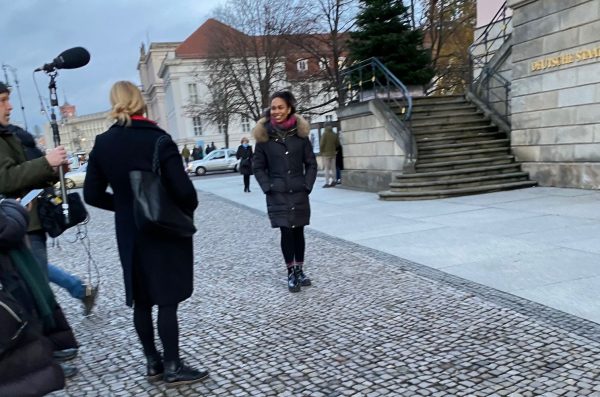
The performance of Mozart’s opera “Mitridate” at the Deutsche Staatsoper with performers and creators (booklet!) from all continents might be a good start to nourish xenophilia instead of xenophobia.
V for Value
Value in its singular form refers for most people to the value of things. Since Karl Marx we have been fighting about the surplus value of a worker’s work. Nowadays, we have to deal with speculation bubbles on the value of property or even basic elements of nutrition (Water, wheat, energy). Max Weber introduced us to the rigorous analysis of value judgements. In political science the plural “values” refers to basic human rights as fundamental values of humanity. Many other associations with the letter V pop up and arouse emotions: victory, video, view(s), vision, visit, voice, vote, vulnerability.
Creating lasting value seems to transform itself into part of our system of values later on. The longitudinal dimension of value is often neglected, particularly in the short-term focus of much of economic reasoning. Value over time, in addition to the distribution question, or as part of distribution over time, excites researchers of inequality and policy design for generations. Approaching the end of the alphabet increases the stakes of the “endgame”, it seems. Value for me, might not be of value for others. I hope you have found a person that values much of the same as you do yourself.
Interpersonal value, value exchange and intertemporal value are own fields of research. Since the Scottish enlightenment and Adam Smith’s work on “The theory of moral sentiments (TMS)”, reciprocity in value exchange has been an issue, well before the utilitarian turn in his own writings on “The wealth of nations”. Even Adam Smith refers to happiness and interest as a kind of value and “very laudable principles of actions” (part VII.ii.3.15 in TMS).
Children learn and experience value as natural part of growing up. Material things which you valued highly as toddler, you are ready to trash or exchange a couple of years later at much lower prices. Above which monetary value are you ready to trade in your humanitarian values? Never? History and bargaining theory is full of experiments and experiences that teach us otherwise. Corruption is the prominent example of exchanging or trading material value against immaterial values. Reading Kwame Anthony Appiah on “Experiments in ethics” is highly instructive. This bring me back to the economist joke I used to tell in lectures: You know that you’re an economist, if you ask your child, whether s/he prefers 20 Euros in cash, a trip to an adventure park later, a basket ball set or a pizza party for the next birthday. Economists do all this to find out about the value of each item, the preferences, the time frame of delayed reward or discounting of value also called the net-present value. Reading up to here is equal to the value of, maybe, an online bachelor in economics or social science. In your very own life review of learnings you then can estimate the value of your readings to you, your community or humanity. Alternatively, enjoy the joy of just living in peace with optimism. 
U for Union
Union, understanding, undo, unknown, uncertainty, universe, urbanization, use, u-turn. All those u-words spark imagination. Additionally, the short forms of u as abbreviation for you, ur = your, youth and smartphone typing are creating for us abbreviations to communicate even faster and shorter via social media. Union is my favourite of this list for several reasons: (1) Marital union, passionate topic not only for family sociologists, (2) trade unions, as collective form to organize solidarity in and across societies, (3) European Union, the formidable tool to create, conserve and ensure peaceful developments in Europe. We have to prolong this list with the union jack, the united states, the united nations and …, please continue the list.
For me, in union I see a whole film running, a process proceeding, or persons uniting. Unionization, just like two persons deciding to pass more time together, has some magic in it. Match making is the modern term for it. No Union without reunion, dissolving a union might be part of the process as well, as painful it can turn out to be. Most of the times we grow throughout the process. Forming a union, in all senses of the word and of all sorts of forms, is a kind of teleological urge of us as a species. We share this with many animals but have also developed strategies and weapons to force others into union. Unfortunately, no u-word without its potential to be used in the sense of abuse. Unite to defend the union of fans of unions. (Evolution of Union of Tweets own Video 12-2022). IMG_4611
T for Time
“The times they are a changing“, end of blog entry T.
We live time forward, but we seem to understand it only backwards or in retrospect. Towards the end of each year, it is common practice to look back and review the last 12 months. Then we imagine what will the future be like. Our concept of time is past, present or future oriented. In classical physics we reflect this with a depiction of time on a linear axis. However, modern concepts of time include Einstein’s relativity theory, whereby in 2 different places time may run with different speed. Similarly, quantum physics allows that the causal relationship between 2 physical states is no longer observable in a logic that follows linear time. A particle may exit in 2 states in parallel. Hard to imagine, maybe, but demonstrations of these effects are found in textbooks for pupils already. Our grasping of the world around us is enhanced through scientific rigour.
Story-telling also plays with time frames. Analepsis and prolepsis are common techniques constructing a story, a film or any form or narrative. We tend to perceive chronological time even as boring. Our memory is also playing tricks with us on time scales. When was …? Additionally, we have multiple clocks ticking away. Time to submit a report, pay taxes, until the next medication or the psychological concept of “time until death”. Strangely enough, depending on which ticking clock we focus most, our behaviour is likely to change. Mobile time management tools have been created for centuries for us to handle all this jazz (call them a watch). They all have not changed our concept of time, only the precision to measure and cramp more activities or the same one faster into our daily life. Happier since? Test your self-efficacy, more general than time management! Try meditation to slow down the pace, use an app!? I started to clone myself with a virtual presence to experience the quantum effect of my life. Podcasts are played with 1,5x the normal speed now. Rhythm and music are the remaining traditional metrics of time. Even there, John Cage’s piece “silence” managed to abandon the time reference, partly at least. Okay, time is up, next letter, please.
S for Society
At least since the “Greek Polis” became a subject of science, the study of society has filled libraries around the world. To catch up with the social sciences view on society, we may start with foundations based on Max Weber, Niklas Luhmann, Jürgen Habermas, Ulrich Beck to then move on to my predilection with micro-level foundation of social theory based on work from James Coleman. The history of sociological ideas runs from the protestant work ethic, autopoiesis in systems theory, ethics of discourse and communicative action, risk management to “1 to 1 relationships” as pillars of theorising about society. 10.000 pages later on, you might still ask yourself the question: what practical knowledge have I gained from this. Well let’s see. Imagine you want to learn about a friend and whether s/he is really a friend. Nowadays we would start with an online-search to find profiles of a person (facebook, Instagram, linked-in, twitter, twitch, mastodon). When the first entries pop-up, we start to learn about interests, looks, friends and preferences of the person. In which social media the person is (or not) participating tells a lot. We start to build an image of the person and her/his networks and communities. Soon we start comparing the person’s world reference framework with our set of values and characteristics. Welcome to thinking about society in small, and interactions within society or between groups of society. Adding some solid knowledge about statistics and you’re ready to start the science of society.
Yet, so many still open questions. When talking about society, we have to think about the trend of individualisation and ways to keep society together despite increasing plurality of life courses. “Solitude versus loneliness” is as much a social as it is an individual based issue. Community-building with inclusion, staying-on and exclusion processes have to be studied in detail. The whole process of civilisation or the study of suicide has been a sociological topic since its inception by Emile Durkheim. Imagineering is an additional tool to speculate in a systematic way about the past and future of society. That’s where all the arts come into the picture as well. The history of art is full of perspectives on society, its splendour, the misery of individuals, communities and societies. An emotional starting point is a very valid starting point, the science of society then moves on to abstraction and generalisations as well. The challenge is, to capture audiences emotionally, with short reflections on society. 
R for Repairing
Without noticing for many people, we have shifted into the repair mode. Our planet needs repair work. Well beyond the less plastic, CO2, less oil, gaz and pollution in general, we have to actively repair what we have damaged, certainly since the industrial revolution. With nuclear waste we have entered into a phase, in which repairing is not really feasible. Areas around Tschernobyl and Fukushima speak for themselves. However, we seem to leave the repairing to future generations. Whereas for us currently it is an option, later on it will be an obligation.
The bionic interest has already turned to the Axolotl and Polycarpa mytiligera. Both species can repair themselves after the loss or a malfunctioning part of their body. Rather than producing externally, growing the spare part is a promising healing device. Nature provides many fabulous insights, if we were able to preserve the biodiversity. Repairing biodiversity is difficult, impossible for lost species which we do not even really know. Start to repair and build awareness that repairing can be fun. Beyond the gender stereotypes, women repair cars, men repair clothes, we have to learn from each other how to use our repair knowledge for many other things and devices. This applies even to our social, legal and economic systems.
In addition to reimagining, we need repairing everywhere. I have lots of stuff to repair at home. When do you start repairing? Welcome to the next trend: the joy to repair, repairs even joy. 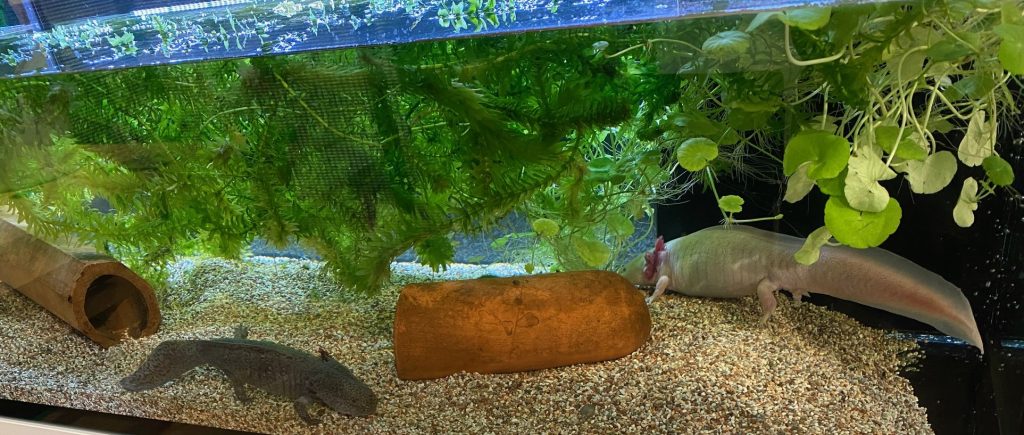
Q for Question
Quality and quantity or queer and query could have made valuable entries here as well. Common to all is the underlying process of questions. Questions put to oneself, to others, society or supra natural or supra national instances. Can quantity turn into quality? Is a queer perspective a new one? Is a query in a programming language the beginning of each algorithm? Questioning is a child’s “natural” approach to understanding the world. This does not stop soon after childhood, but it is occupying, if not haunting, us until the end of our life. When is this exactly happening – the end thing? Are we free to chose this? Just try to answer one of these questions and you’ll find out how one question leads to the next. We are all the same in this behaviour. However, we all find different stopping rules to the query algorithm. Religion is a fast shortcut to stop further questions. Sciences are the never, ever, ending type of questioning. Mathematics solved part of the problem. For a lot of series we are able to calculated the limit value towards which the series evolves circumventing the lack of a stopping rule. Fundamental human rights are such a far-reaching stopping rule. Just like after the French revolution, the question was, how to quickly spread the message of human rights. Didactic and paedagogics evolved in parallel. From “cogito ergo sum” to “rogatio ergo sum”. 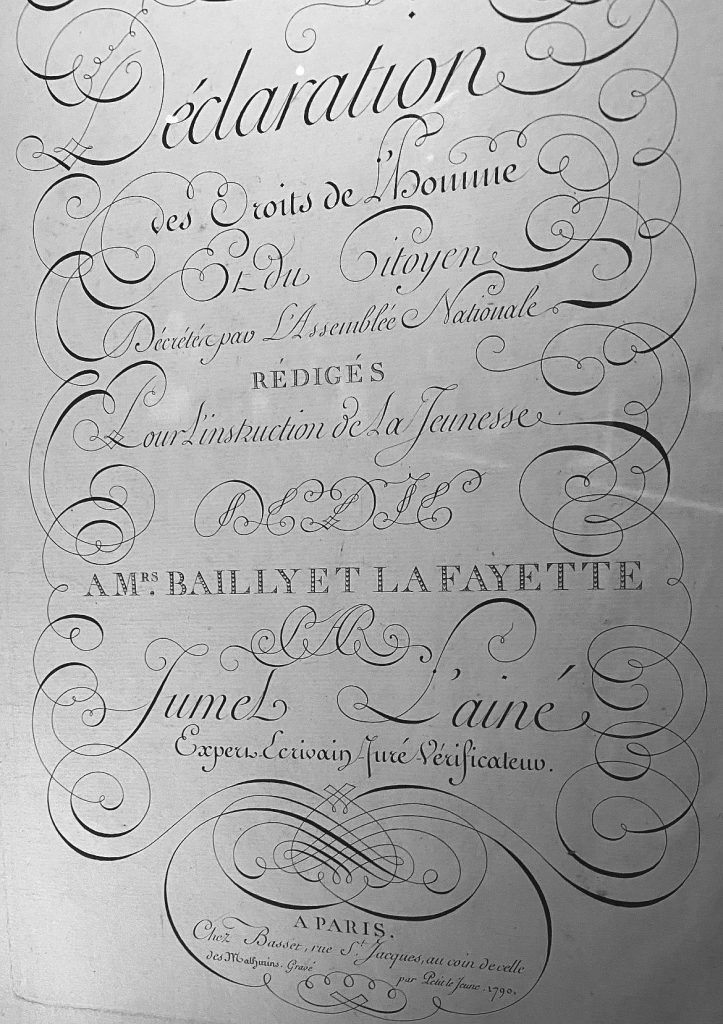
P for Policy
Politics and policy are key elements of democracy. Agreeing that we might strongly disagree, is a virtue of democracy, particularly in order to avoid a confrontation using force. Dialectic thinking builds on the confrontation of opposite opinions originating even of the same factual knowledge. Based on different theories the same evidence will be interpreted differently. Hence, in the field of politics, where disagreement is part and parcel of the game to build majorities, policies will change. This then leads to the belief that we need a policy in each and every subject of the alphabetical list we are about to create. There is a high risk, if you are not having a digital security policy, you will be at high risks that crucial infrastructure might not work in case of a major internal or external conflict. Candide in his small garden might run out of water to water the plants or climate change is threatening the species growing until recently. Young startups, just like ageing enterprises, persons or societies need a policy to take care of survival, not only of the fittest. As the challenges and stakes of humanity rise fast, a revival of the policy sciences is dearly needed before the pervasive skill shortages creap into the fields of social sciences as well. 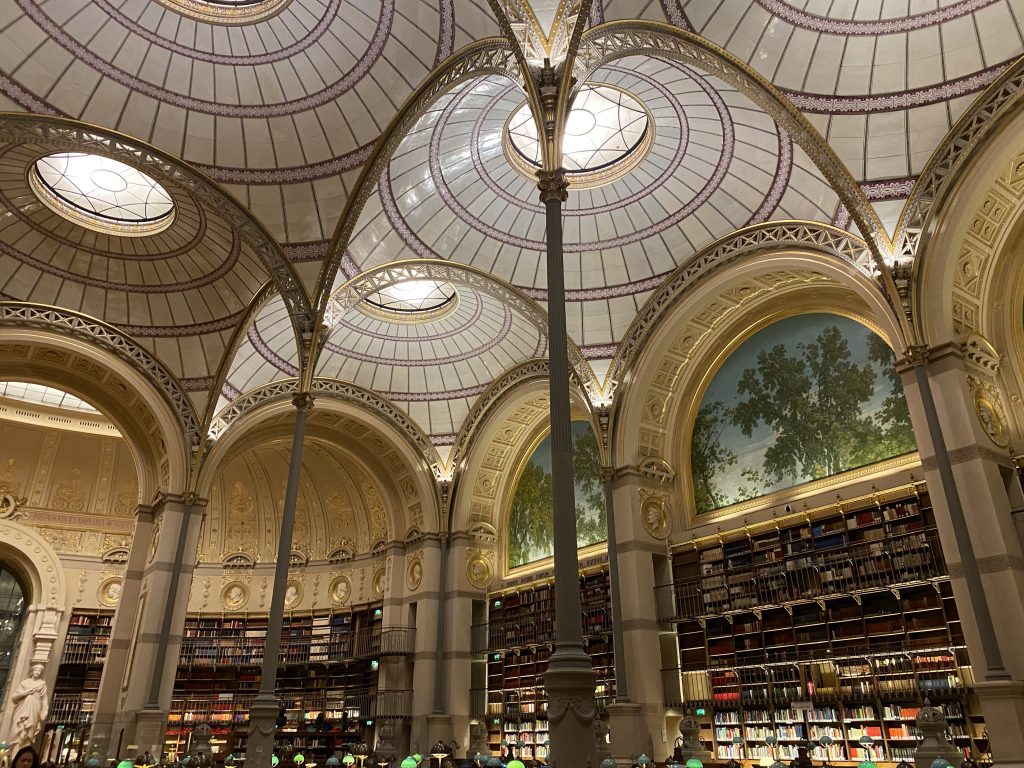
O for Optimism
Looking back at the end of every year to what happened in the last 12 months gives mixed feelings in annual repetition. Developments of nature and biodiversity are sometimes troublesome (variants of viruses like omicron). Despite wars and man-made disasters most people have a capacity to bolster with optimism. To view a glass as half-full rather than half-empty is a common description of two different perspectives on the same fact. Additionally from a longitudinal perspective it matters, whether you started from a full glass beforehand or from the empty glass. In experiments we would need to clarify the role of the starting point and evolution before the statement on the 50-50 state of affairs.
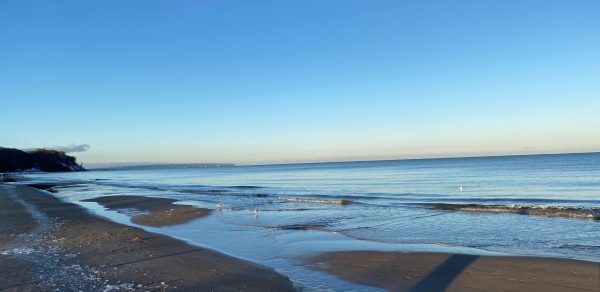
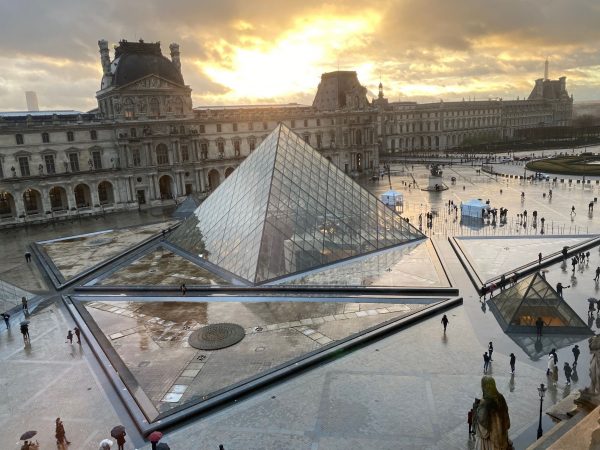
In the French enlightenment, represented by Voltaire‘s “Candide ou l’optimisme“, a critical view on the optimism of Leibniz is expressed. The optimistic claim of Leibniz, “we live in the best of possible worlds” is questioned by Candide who believes taking care of his own little garden is probably the best he can do to preserve nature and the world. These two apparently opposite perspectives and conclusions on the potential of human action we find reflected still nowadays in politics and world affairs. Do we stand up to defend human rights or do we believe the fight is futile? The optimism embedded in Ukranian culture, for example, demonstrates the power that might come out of optimism. It would even go as far as stating that optimism is a precondition for democracy, always striving for the improvement and spread of democratic procedures. Creating opportunities to more freedom to do something is the driving force besides ensuring to curb infringements on one’s freedom. Optimism is a close ally of imagination, imagination of all people living in peace. A nice sunset gives hope for a nice sunrise as well.
N for Nature
The first association with nature for me is the nature surrounding my childhood. Rivers, forests, vineyards, mountains. Maybe a little bit of German romanticism surrounds this. I still enjoy occasionally listening to some nature romantic songs (Lieder) from Schubert, Schumann, Flotow or Mahler. Beginning with adolescence natural sciences took over, but what does natural really mean in the natural sciences. In the “Encyclopedia Britannica” the term natural has already been dropped. What has been referred to as natural sciences is just found under the term sciences. The social sciences or psychology are not included under entry of sciences. One of the high reputation scientific journals is still named “nature”. Only a small fraction of the papers deal with what ordinary people would associate with nature. The nuclear fusion or nuclear energy research and applications in practice figures still prominently in there. Ever since Tschernobyl, Fukushima or Hiroshima, horrific dangers are associated with nuclear energy. The power plant of Saporischschja in Putin’s war, dominates public concerns in 2022. The natural sciences frequently are certainly not researching in the interest of nature. Hence, the social sciences need to deal with the social consequences of (natural) scientific advances. Science and technology have an intrinsic link to each other.
The loss of biodiversity is the most obvious demonstration of how cruel our own species is towards any other form of live. Not only is demography reminding us that with 8 billion of us we might further contribute to our own overpopulation, we might sooner or later destroy the whole planet either slowly with polution or through weapons of mass destruction. Poor nature, instead of pure nature is our destiny. Our western lifestyle is not sustainable and we have no right to impinge on the rights and resources of future generations of us or those who have not poluted the planet like us in other parts of the world. So, when did it all start to go wrong? Probably our creed for more of everything has been nurtured for far too long. Less is more has to replace it somehow. This is also part of our nature. 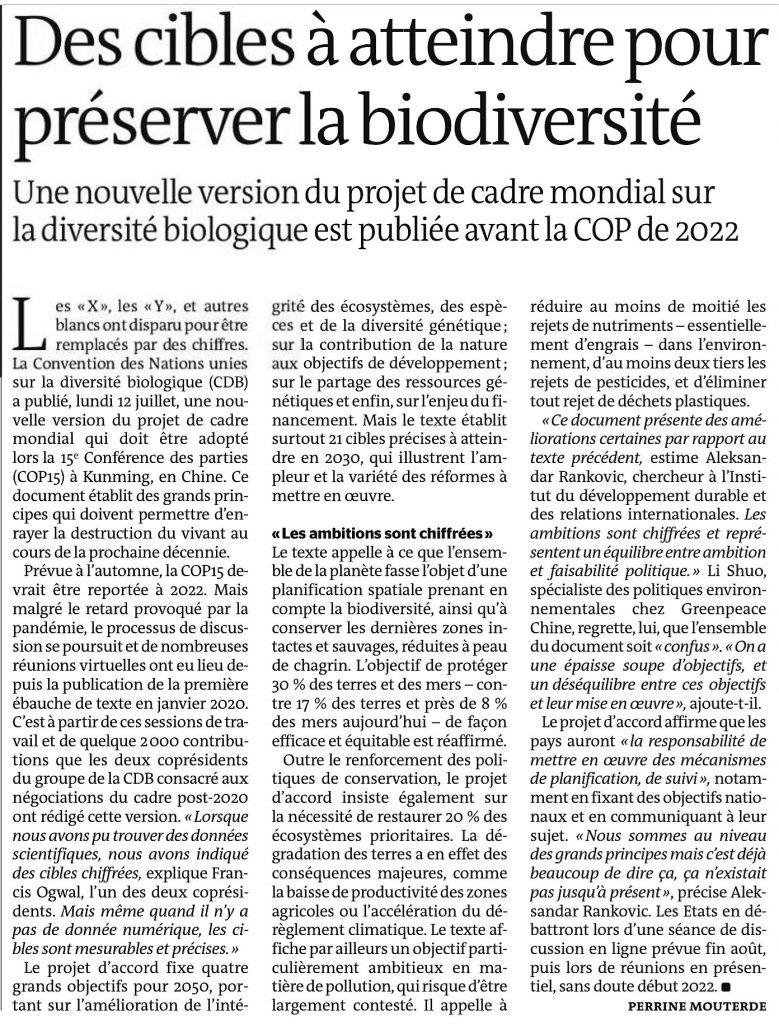
M for Memory
Besides the English term memory, which refers to a huge scientific literature starting with cognitive psychology, I like the French version of “mémoire”, because it is more comprehensive with additional meanings, nicely represented by Wikipedia.org. On the German Wikipedia-page you find first the reference to the children’s game memory, turning around images and memorising where the counterpart is/was (play pairs). This diversity hints towards a cultural element in memory. There is a person’s memory or mental capacity to recall and ways to remember. The latter term refers a lot more to collective memories and becomes a more debated issue. Danny Trom uses the term “split memory” in a chapter on France and the “myths of nations” (p.129-151). In David Brook’s reader on “the social animal” he states that grandmasters in chess (p.88) were long believed to have superior memory. This is actually not true as memory experiments showed, but they rather saw formations and “internal connections forming networked chunks of information”.
“Mémoire”, on the contrary, refers also to the writing of a person’s own biography. Nowadays, book shops contain whole sections of autobiographies, the most sold appears to be the one by Michele Obama recently, if I recall correctly. Among the most scandalous is the publication of the “Journal pour Anne (Pingeot) 1964-1970” by Francois Mitterand. All the autobiographical documents make explicit major parts of what might form collective memory later on.
Memory has found its way into engineering and computing. The memory effect in batteries or being “out of memory” frightens users in computing or programming. In short, I wish you the best of memories reading this page and stimulation by visiting memorials (image: Jewish Museum in Berlin 2022, Ullmann exhibition).