Artist Development

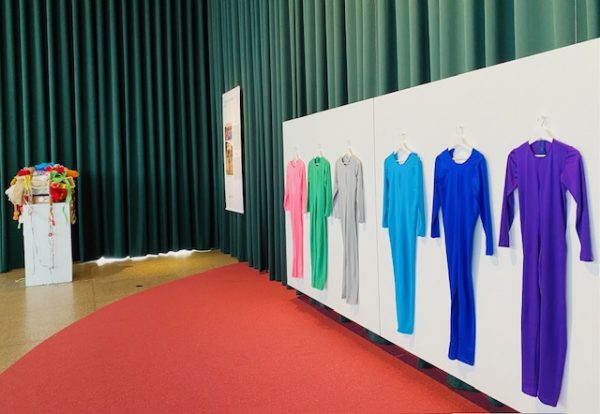
For many artists it takes years before they find their idiosyncratic style. Testing different forms of art before zooming in on a particular style of art is the  common trajectory for most artists. Maybe the art marker and collectors of art are in search of a “defining style” for an artist so the uniqueness becomes more easily identifiable. Being part of a group of artists has been beneficial as well. The “Neue Nationalgalerie” in Berlin makes this development of an artist, in this case Lygia Clark transparent through the organization of a retrospective devoted to her evolution from abstract paintings towards participative and more organic forms of art. Berlin offers to interact with the pieces at the exhibition. You become part of the exhibition and the happening of art instantaneously. The form stays the same, the persons interacting change permanently. The piece of art is never the same. Just the idea of it thrives. In the Corpo Colletivo the performers wear an overall, all of them are linked to each other and movements happen organically as a group rather than individually. This is like a tutorial in sociology as individuals move as part of a collective body and feel the embeddedness and multiple links to other persons (Image: Corpo Collectivo 1970, exhibit in Berlin 2025)

Killing fields

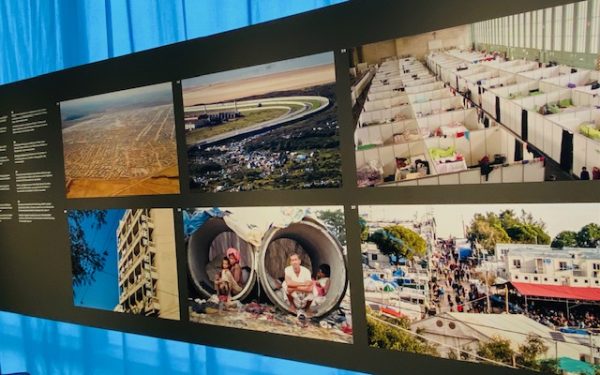
According to “Le Monde” dated 2025-5-26 the persons who died in the war initiated by Putin amount after 3 years to 250.000. The numb of injured soldiers would be 3-4 times as high. The loss of lives and tarnished life expectancy of persons involved in combat adds up to a huge loss for the Russian people. Being misled by political and military leaders, apparently substantial numbers of recruits for all sorts of services face the choice between the combat field or desertation. Tough choices which remind us of the moral conflict raised already during peace times if you were refusing to join the compulsory military service. Western people are better prepared for such moral dilemmas than the glorification of war in the Russian society. Of course, certainly in Germany we are thankful for the hardships the Russian army and people had to endure during the 2WW. Liberation Day would not have happened without the Soviets, Russia and Ukraine plus many other nations fighting until Nazi- Germany surrendered. The positional battles of the Great War seem to be back again enhanced with a war of drones. The killing fields for a generation of Russian troops is completely self inflicted. How many thousands Putin needs to acknowledge this cruelty? (Image exhibition by Yoko Ono Berlin Gropiusbau 2025-5).

Odessa Berlin Odessa

With a sense of partnership, it is possible to travel between Odessa and Berlin in the “Gemäldegalerie” in Berlin 2025. Due to the war of Putin in Ukraine the “Museum of Western and Eastern Art” in Odessa had to relocate its treasures to safe places. The Gemäldegalerie offers a chance to view the splendid collection nevertheless. The curators’ team in a spirit of “art intelligence” propose, in a splendid way, most oeuvres from Odessa next to an example by the same painter from the Berlin collection. The visitor leaves the exhibition enriched by an experience of “jumelage” (engl. sister cities) of partnerships between museums, cities and their people.
In fact, we have shared the same imagery or visual heritage in Europe for centuries . The collections of paintings ranges from the 16th -19th century art  or from Frans Hals to impressionist influences.
We shall cherish the return of the collection to Ukrainian Odessa as soon as possible. The image below shows the places of origin (yellow dots) of the art works of the Odessa collection across centuries (map from the exhibition).

Robot repairs

Robots have been used mostly in industry for assembling, transport or sorting tasks. There is also a role in disassembling to enhance circularity. To repair electric or mechanic devices there is an enhanced version needed which starts with a diagnosis of the problem. Algorithms can sort out promising from dead end routes of repairs. However, the recognition of objects into things that can be repaired and those without repair potential is a worthwhile assistance. Beyond the economic and ecological rationale for repairs, there is an emotional or nostalgic sense to it as well. Maybe, from a life course perspective any object related to the teenager years of a person qualify for nostalgic value. Even simple robots or AI-assisted objects may qualify for this in future. Artificial friends will be like tamagotchis in need of repairs.

Repairs again

Trying to repair electric or mechanic devices is confronted with multiple obstacles. Spare parts are hard to come by and many pieces needed are no longer in stock. Hence, in many instances the remaining option is to use recovery pieces from other broken or discarded devices. Whereas this is still common for repairs of vintage cars, for example, this is rather rare for consumer electronics like stereo music players or television sets. An aging clientele of the repair market is very used to a specific device and is often reluctant to change habits. 

An additional element in the repair process is access. Only in thinking repairs into the engineering and design of the device will make repairs feasible later on. An economy and business model which is based upon a high turnover as the basis for profitability has no interest in engineering for repairs later on. This makes a preservation of resources tricky. Disassembling is a necessary but not sufficient condition for the repair sector to thrive. At least the basic materials enter into a circular economy as a first step. Further steps consist in preserving the skills needed to disassemble and/or repair more. The habit „buy a new one and throw away the old one“ is hard ro change. 

Dépaysé in gallery

The installation ar the Neue Nationalgalerie in Berlin entitled „Fog Sculpture“ takes us from the sculpture garden of the Gallery into a tropical forest atmosphere. Just changing the humidity and visibility through the artificial production of fog transforms the perception of the artworks. A kind of Asian flair surrounds the western sculptures in the garden. The fog installs also a mystification whoch we know in art from the romantic painters like Caspar David Friedrich for example. All long-term followers shall appreciate the new perception of the artworks thanks to Fujiko Nakayo. It’s definitely more than old wine in new bottles. The artwork brings a more global twist to the preexisting sculptures and reminds us in Berlin even of the wrapping and unwrapping of the  Reichstag building by Jeanne-Claude Christo. We see the sculptures or architecture differently after they disappeared temporarily and reappear again.

Humanoid services

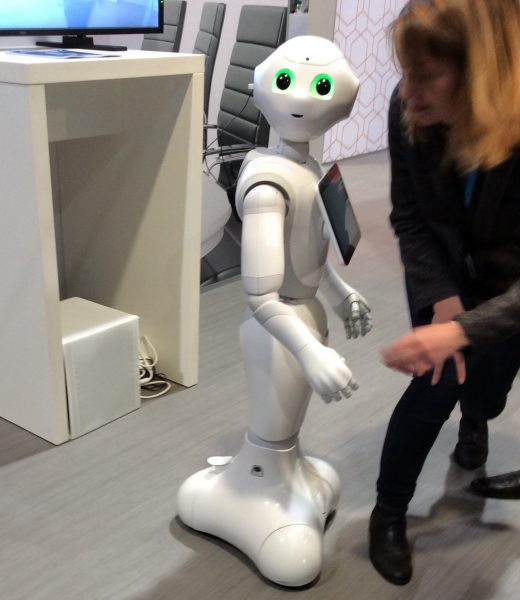
In the shadow of AI enhanced chatbots, agentic AI and generative Ai, the developers make considerable progress in robotics. The humanoid versions like from Persona AI will surround us in months, or maybe a few years from today. Investors believe it is rather sooner than later. There are many use cases for humanoids that may take over dangerous, hazardous or unhealthy tasks from humans. But even simple tasks like carrying home most of our shopping could be done for us by humanoids that follow you around the shopping mall and home. This would be a kind of personal assistant. I even thought of my humanoid robot to walk my dog on some occasions on the usual trail. 

Welcoming visitors at the doorstep could be another function to delegate in offices or even in private homes, although as a sociologist I would recommend to carefully check the sorting algorithm(s) applied to avoid unpleasant situations. The administration of medication might be another option, if only we could trust that the correct dosage would be applied. 

Maison de santé 1861 Berlin

In the middle of the 19th century Berlin was a small city. The area of Schöneberg (pritty hill) was still perceived as the rural outskirts and featured the first botanical garden next to the town center. A little bit more outside of Berlin the “Maison de santé” was founded as early as 1861 to cure mainly respiratory diseases and what later became the first private clinic proposing a new way to treat psychiatric disorders. Dr. Eduard Levinstein was the founder and the clinic had continued its operations for almost 50 years with his wife and sons taking the lead later on. Prof. Wilhelm Griesinger, known for the scientific approach of psychiatry was a proponent of the non-restrained approach to psychiatric disorders, which allowed persons move more freely while being supervised. The documents and the publication (1877) shown in the exhibition at Museum Schōneberg demonstrate the scientific approach to the treatment of addictions, most notably morphine, which had been widely used during the war of 1870 as tranquilizer and pain relief. The wave of addictions needed hospitals and clinics to treat these addictions. The “Maison de santé” had been established as a retreat and cure for other addictions as well. The memory of the early scientific approaches is an inspiring place and reminder to take care of all forms of addiction. Taking care of body and mind is still the state of the art approach today.

The Exhibition catalog is forthcoming, but the visits and material on display of interest beyond the inhabitants of the „Pritty Hill“. Exhibition catalog is forthcoming

Berlin building

Yes, 35 years after re-unification Berlin is still building at lots of places. The boom years of building hotels for tourists, offices for ministries, which were moving from Bonn to Berlin, is now followed by a „surprising“ need to have sufficient vacancies in private housing. Berlin is still growing in terms of population and, of course, this creates additional upward pressure on the housing market with particularly high increases on the rental market. In order to achieve a narrowing of the gap between demand and supply, Berlin is building higher as well as digging deeper into its sandy ground. In such huge open spaces near Südkreuz it is then feasible to explore and later exploit geothermal energy for years to come. Maybe it is not a surprise that apparently a Texas (USA) based investor has bought the ground and builds in Berlin. Drilling in Berlin for energy from underneath is a worthwhile business. Hence, drill baby drill has a new Berlin meaning to it. 

Dream together

Dream together“ is the title of the exhibition of Yoko Ono at the „Neue Nationalgalerie“ in Berlin 2025. The title is an invitation or even an incitement to dream jointly with others. We need to dream of peace on all sides or parties in a war. Start with the dream and then move on to working together on it. The participatory art projects of Yoko Ono are a recurring event in Berlin and at the Neue Nationalgalerie (Cut piece). The installation „Wish Tree for Berlin“ in front of the gallery is popular with visitors who leave hundreds of written wishes to the windy spring days. Origami folding, stone assembling or a simultaneous chessboard playing with all white pieces and fields encourage to imagine a world differently, beyond the treaded belligerent paths. For more inspiration and imagination just continue to the Martin Gropiusbau for more artworks from Ono or just watch the clouds pass by changing the lighting of the olive tree carrying lots of wishes.

Permanently anxious

„There’s a set of forces that want us to be permanently anxious“, is the phrase chosen by Tony Cokes in the exhibit just outside the „Palais Populaire“ in Berlin in 2025-5. International politics and the economic upheaval caused by Trump’s tariffs contribute to the already existing other sources of anxiety like nuclear energy and warfare. Global warming causing more extreme weather events add more man-made reasons for anxiety. The next generations will have to foot the bills we have left to them unpaid. Our current shortsightedness increases anxieties which previous generations have not known of a similar kind or in that combination. 

Community building and solidarity are ways to overcome such overwhelming anxieties. Supranational organizations like the European Union have an even stronger role to play to reassure its people with credible signs of solidarity. We are not alone in the struggle to overcome the anxiety that is creeping up around us. We are certainly stronger together than individually dealing with unspecified fears. „We shall overcome …“

Margot Friedländer memorial

Berlin has been honored by the return of Margot Friedländer who had survived the Shoa in 2010 at the age of 88. Her whole family was murdered in concentration camps by the Nazis. Ever since her return and especially after her biography had been published she was a restless ambassador in the fight against hate, exclusion and the neo-fascist movements. She has been engaged in interreligious dialogue and even through the ceremony after her death, she tried to bring together different Jewish communities in Berlin.
Irrespective of a person’s background she met everybody on an equal level.
A great example to thousands of people, she managed to meet in her life. Each time she met with pupils or students to speak about her horrific experiences she lived through the same traumatic experiences again and again, but turning this into the strength to “vaccinate” people against the deadly virus of fascism.
The day after she had been buried in her family’s grave in Berlin Weißensee people still had to queue to sign the book in her memory in the Berlin town hall. She will be remembered and missed for her unrivalled humanity and generosity. She became engaged to fight for humanity and remained an activist until her very last day at 103 years of age.

Lviv Ukraine

Small galleries can make a real difference. In Berlin the gallery “streulicht” has a selection of photos in an exhibition that portraits artist from Lviv in Ukraine. Hans Hugo Hoffmann manages in his photographs to depict the extraordinary resilience of Ukrainian creative persons who live through a protracted war of their country against the Russian aggressor. The persons embody the strength of resisting through their art work despite the wounds inflicted on their families or the people of Lviv and the whole of Ukraine due to the war. The persons portrayed try to continue their normal day to day work, knowing that nothing is normal anymore in Ukraine. “Bizarre Normality” characterizes our perspective on these artists, who are thrown into a world of events that we no longer thought might be possible in Europe. Bucha and other crimes by Russian soldiers in this Russian aggression leave traces in the faces of Ukrainian people and even beyond. We all wish that the people of Ukraine can return to “normality” as soon as possible, although we know that nothing will be normal as it was before the Russian invasion.

Non-autonomous driving

The more engineers will invest in developing autonomous driving vehicles, the more the value of the few completely non-autonomous cars will rise. A 60 years old car with manual gear changing on the steering wheel like the Peugeot 404 from 1965 (image below) demands a strong effort to steer the car around a city. Apparently, some car producers reintroduce buttons to press or switch on devices since customers seem to prefer some manual activity in addition to the touchscreen technology. Voice guidance and gestures can be helpful for some, but there are also the advantages of manual activities that keep you awake and maybe with better focus. Choice is key to suit diverse user and customer preferences.

AI-assisted

We used to create and use an artificial word to shorten explications in conversations. It is easy to understand for everyone nowadays to describe an online search as “I googled something” without further concerns about the sources used in answering a question. Apple just announced that its search engine Safari was used less than expected recently. The reason might be that more and more people search online by using AI tools or Apps that directly provide answers to their queries. ChatGTP and Perplexity are 2 AI-programs that might replace the other search engines we have gotten used to over the last decades. Particularly “how to …” queries offer reasonable instructions. In Perplexity you get an answer after you specified a little bit your query and, therefore, the answer is more likely to be right to the point offering text, images and sources. In ChatGPT you enter into a dialogue to further specify your query if unsatisfied with the first response. The judgement of an authoritative response is up to you if you want to follow up. The assistance of an AI-system cares less about the source but about the speed of response that it can provide. For sensitive questions or queries with less obvious or clear answers more interactions with the tools is necessary. The pricing and our willingness or ability to pay in cash rather than through the selling of our data for advertising will determine whether we shall “chat-it” or “plex-it” in future.

Leber JA

In Berlin Schoeneberg there is a memorial in preparation for the courageous couple of Julius and Annedore Leber. Julius Leber has been incarcerated several times by the Nazi officials, tortured and finally executed in Berlin. A link to the group of people trying to overthrow the NS regime (1944-7-20) caused his arrest and execution in January 1945. His wife Annedore published several accounts of the resistance movements, which existed during the NS regime. These people were aware of the fact that they were risking their life with such activities, but persisted nevertheless. We owe Julius and Annedore Leber a decent commemoration as we need to remember that such courageous examples existed even until the last few months of the NS dictatorship. The site allows for a building and learning center which could serve as an archive and encouragement to fight for democracy. It is less obvious than we thought it would be.

Local history

In Berlin and many other big cities in Germany like Munich and Hamburg there are local history projects which tell the stories of specific places or a house linked to liberation day or deportation or courageous acts during the Nazi  grip on Germany and terror across Europe. The initiative « Denkmal am Ort » has become a kind of citizen science project which brings people together to raise awareness again for the cruelties committed under the dictatorship of Hitler and the fascist political movements. Remembrance is not a passive form it can take many active forms as well by simply trying to find an answer to the question what happened during the 30s, 40 and 1950s in the house you are currently living in? Access to archives of cities and small towns can tell very surprising stories about local history. It is a great inter generational experience as well and sometimes the unspoken history turns into a great conversation about history and responsibilities. History is everywhere you just need to keep your eyes and mind open.

Technology maturation

Technology has its own time of maturation. The time for wind power generation was quite lengthy compared to some innovation cycles in information technologies. Maybe, due to the fact that large wind turbines had only big enterprises or public monopolies as potential clients who were already heavily invested in even bigger nuclear energy projects caused the slow pace of development of this technology. In Germany just like in Denmark, Sweden and the USA the first larger research projects took off in the mid or late 1970s. The technology is explained by Erich Hau in a comprehensive way including the early days like the « Growian » test wind turbine in Germany (extract of image below). Despite the fact that major engineering difficulties were overcome already in the early 80s, the economic and legal challenges took much longer to resolve. Nowadays, we have an additional case of energy sovereignty to add to the cost-effectiveness of power generation from winds offshore and onshore. In the coming years we are likely to see more and more decentral power generation from wind on roof tops or small poles to complement solar energy during cloudy but windy weather or at night. Just like the sunshine we shall praise the windy days for their power generation potential.

Constitutional Responsibility

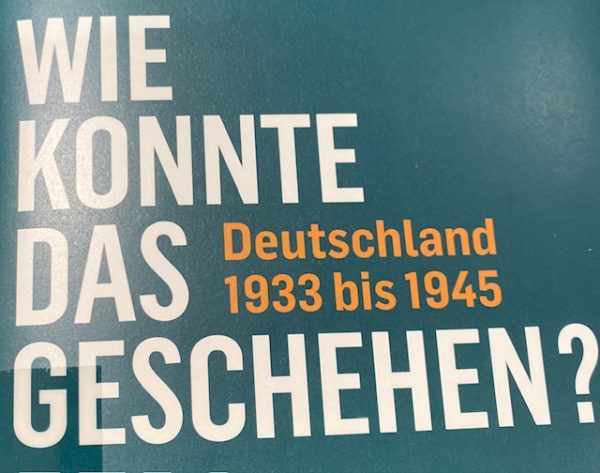
The memory of horrors caused by Nazi-led Germany before and during the 2nd World War is our constitutional obligation in the Federal Republic of Germany since its beginnings in 1948. 80 years after the unconditional surrender this has become a state responsibility. Since the shift of tone introduced by Richard von Weizäcker on 8th of May 1985 framing the end of the 2nd WW as liberation day in Europe and Germany. On the same day, 40 years later, the top 5 political instances of democracy in Germany, president, chancellor, presidents of the parliament (1st chanber), the council of the regions (2nd chamber) as well as the constitutional court. The constitutional and moral responsibility of the crimes is not reserved to a presidential address, but all pilars of democracy in Germany committed to the narrative of a liberation of Germans and Europeans at the end of the 2WW. It is a truly European topic to celebrate the end of war jointly in all countries. This is even more the case as the memories of the last survivors of the Shoa in Europe is less transmitted by the rare survivors until today due to very old age. The impressive unity of the top constitutional powers sets a the path for a far reaching renewal of the acknowledgement of a specific constitutional responsibility to counter extremist tendencies. The speeches by Frank-Walter Steinmeier and Julia Klöckner in the Bundestag (Link in German) were remarkable in explaining in plain language, why we are happy about this liberation also in Germany. The emphasis of the end of pervasive and endless oppression and suffering caused by the Nazi-regime are an essential part of this feeling of liberation. With this commemoration Germany today has become even more a European nation which takes its historical responsibility seriously.

Gedächtniskirche Berlin

The church of commemoration „Gedächtniskirche“ in German has been chosen as the central place of commemoration on Liberation Day in Germany for the ceremony of all religions. All institutions of democracy were represented in addition to the president of the FRG. The church was destroyed, but not completely and the decision to keep the remainders as a permanent warning is visited by thousands of people each year. The public television broadcasts live from the ceremony and some regions of Germany have chosen Liberation Day as a bank holiday following many other European countries. The official end of fighting of the 2nd World War 80 years ago has spurred many events. The need to understand how this could happen and how to guard against extremism to take hold of a country and start a war have preoccupied following generations. The task is not accomplished yet as many people still deny the facts or try to rewrite historical facts with misleading interpretations. The commemoration is well worth a pause to reflect, for example, what were my grandparents doing during these years. Beyond the speeches on this day there are many ways to get involved in carrying the memories to the ones born later.

Liberation Day

In Germany the celebration of the liberation day 2025-5-8 change years of mixed feelings about what happened during the 2nd world war. In Berlin this day is a bank holiday now and more and more people subscribe to the view that the liberation from Nazi-terror was a blessing for German people. The “Neue Wache” is the room of silence in honor of all victims. We shall always remember. Fighting the early tendencies remains the most effective strategy to avoid extremism of fascist groups. It is the task of Germans born also long after the war to keep the memory of the atrocities alive and to care about prevention of new ones.

Ugly duckling revival

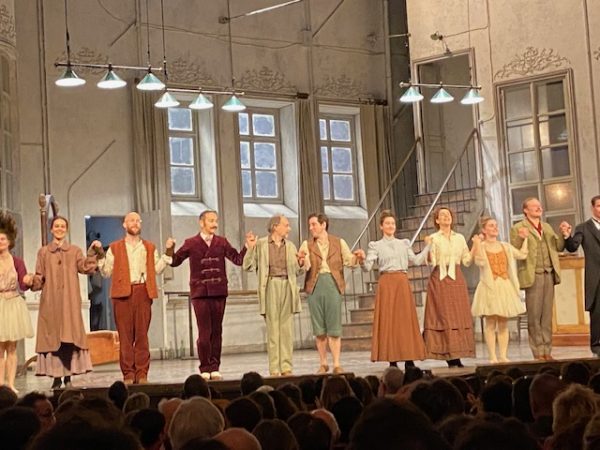
Ever since Hans Christian Andersen created the fairy tale of the “ugly duckling” (1843) the story has been adapted to all forms of theatre. The adaptation of the fairy tale to the stage in 2019 and the revival in 2023 at the “Deutsches Theater” in Berlin keeps inspiring people to surpass their restrictions or inhibitions, whatever they may be. This early 19th century fairy tale is a fine piece of the search of identity of a person. As it deals with the difficulty of individuals to find their own identity, the fairy tale deals already with the fitting of an individual into society. Society exercises pressure on individuals to conform to written and unwritten rules, which tend to hold up rules like “one size fits all”. Differentiation and allowing individuals to be different from an established norm becomes a central theme of modernity and even more so in the post-modern world. It is the essence of democratic societies to practice a tolerance of persons being or just wanting to be different. The performance at the “Deutsches Theater” might be a test of your level of tolerance or acceptance of diversity for some, but at the time of rising intolerance in and beyond the U.S. under Trump, such performances are dearly needed to celebrate the rich cultural heritage and achievements of far reaching tolerance. It becomes more evident what we are about to loose (again), if such performances would no longer be possible in a controlled or financially overly restricted world of theatre.

War of drones

The use of drones in warfare is not new in 2025. However, the news reported in the WSJ 2025-05-05 that sea drones from Ukraine with U.S. adapted missiles downed 2 Russian jet fighters made headlines. Compared to jet fighters such drones carrying missiles are a rather cost-effective alternative in warfare. The speed of jets compared to drones made such successful attempts rather unlikely. The information that infrared technology can achieve such identification of targets and guiding missiles is another innovation of the Ukrainian military technology.
Technology is well known to be a game changer in warfare for centuries or across the whole military history. Adaptations of defense strategies will allow Ukraine to hold against the Russian aggression albeit limited financial resources. The defense of air space is one of the crucial elements for Ukraine to deter Russia from moving further ahead through the continuation to increase the costs of war to Russia.
Following a fast moving object and transforming it into a target is an astonishing accomplishment.

Lasting memory

On the 8th of May 2025 we celebrate 80 days of liberation from the Nazi regime in Germany. It is the liberation of all those who survived the horrors of oppression and war. The Nazi terror intensified  after the power grip in 1933 and reached unprecedented levels throughout the ruling of the NSDAP until the Allied Forces managed to chase down the last fighting cells and Hitler hiding in a bunker before he killed himself. Liberation was the experience of survivors all across Europe. On this day and on many other commemorations it is important to remember the 60 millions of people who died due to the Nazi terror before and during the war. The “Stolperstein” initiative commemorates the millions of Jewish people who were deported or had to flee Germany and even neighboring countries to survive. In Berlin there are yearly activities to clean the “Stolpersteine” so that they are visible enough to remain a lasting memory of the horrors. (Image: Cleaning of Stolperstein in Berlin Schöneberg organised by Michael Biel on 2025-5-4). 

More sensors

The technical games that have largely replaced the traditional electrical train and cars of the boomers and older generations shift towards robotics. This has the touch of more future orientation and fun for the young used to gadgets, automation and the beginnings of AI. Therefore, the robots of our children and the ones they assemble in technical games include more sensors. Infrared emission and reception have been present already for some years, but the capture, use and application of sound in children’s games is a bit more recent. In order to assess and understand the far reaching potential of these additional sensors in our homes and environments it is essential to raise awareness through technical games and own experiences or experiments. Educational games are a useful addition to the repertoire of learning for younger generations. Accompanied learning is more likely to keep young people interested in technology and raise awareness for the potential of intrusion into privacy of technology as well. The robots will be more and more part of our daily lives. A better understanding of limitations and potentials will be necessary for all citizens in the 21st century.

Persistent beauty

The fashion industry is known for its fast turnover of beautiful designs from season to season. Some designs and often just single pieces survive the fast turnaround of the fashion industry. In many cities we find shops that sell so-called vintage cloths and objects. For men and women it is feasible to rediscover pieces of longer lasting beauty or even persistent beauty. The persistence of an image of beauty may follow the classics of designers and specific brands, but it may also have a very personal touch referring more to a person’s own life course (when we were young) or associated with freeing yourself from your family or societal context. The 60s and  70s were such time periods with radically changing images and ideas about beauty. Since then more individualised clothing seems to take hold, although there is an equally strong tendency of social or age groups to identify themselves through specific clothing, showing that you belong to the “in-group”.

Labour Day Berlin 2025

In 2025 Labour Day Parade in Berlin started again on Karl-Marx-Allee to the destination at the “Rotes Rathaus”, the red brick City Hall of Berlin. The slogan: “Mach dich stark mit uns” (engl. empower yourself with us) refers to the building up of force by members of the trade union movement in growing bigger again. Solidarity in crisis is currently tested again in each collective bargaining and negotiations at the local, sectoral, regional, national and European level. However, on the 1st of May the parade obviously has the political part with the speeches, but also the family party atmosphere towards the end at the Neptun fountain at Alexanderplatz. Large crowds come out in Berlin and the organizers of the DGB and the police do a great job to ensure a safe and enjoyable demonstration in the heart of Berlin. More impressions on the mobilizing event here. Images from Berlin Labour Day 2025.

Robot assistant

Adjustment processes on the labour market take their time. This means that care workers are in short supply in most countries of the OECD. Engineers as well. There are so many robots, care robots I mean, still to develop that the shortage of engineers give little hope that we shall have affordable solutions in this area for the next few years. The issue is mainly about integrating and enhancing already existing solutions. If you are a mechanical engineer you can put together motorised mechanical pieces, small motorised electric devices and, for example, small infrared emitting and receiving devises.
All this is child’s play these days (see image below). The assembling of a small Robot assistant that follows movements or can escape from a small labyrinth makes such simple structures transparent for learners and users. There is nothing magical about it, just adding together small pieces and the electronic devices to steer the movements. The learning tool from KOSMOS has been on the market for 5 years. It is a helpful device to explain basics through hands-on experience. The limits of robotics equally become more evident. Our own health and safety is concerned with larger devices cohabiting with us. A robot assistant can take on easy tasks like to follow me through my living space in old age carrying a mobile phone, keys or an emergency device. More sophisticated tasks need more sensors and AI to train the most needed and best routines. For many years this needs our input and our control as well as supervision of such devices. Most robots will operate as assistants with us in the driving seat or the boss.
This is yet another element of the “all electric society“. We are moving towards the use of more electronics assisting us from year to year.

Archi health

The links between architecture and human health are manifold. There are direct effects of healthy versus unhealthy materials in construction. For the purpose of making buildings fire proof or more resistant to heat asbestos had been used for decades which still causes health hazards nowadays in the removal of this cancerous material. Paint has to be chosen wisely as well as isolation materials. Indirect or second round effects of materials have to be considered additionally. Cement in construction uses a lot of energy in its production and has only been recycled since a few years in significant amounts. Room climate or even psychological effects of architecture have been considered to be important more seriously in recent years. A new discipline entitled “neuro-architecture” may be developed soon. Schools, sports facilities, hospitals or community centers benefit from healthy architecture. Cost benefit analyses which take into account long term effects and even recycling of materials shift the balance much in favor of health considerations also in architecture. “Fast and dirty” will be much more expensive than “slow and healthy”. Future generations will be thankful. (Image: Spreewald Primary school Berlin).

Dysprosium 66

Dysprosium figures as Nr. 66 in the periodic table (short: Dy). This metal was given this Greek name, which translates to “hard to get”. Although more common than gold on earth, Dysprosium is part of the so-called rare earths on earth. Since it is very temperature resistant before becoming fluid and at the same time having good isolation properties, for example against radiation in combination with lead, the nuclear energy industry has a definite use case.
Additionally, wind turbines, electric vehicles and some smart phones use these characteristics of the metal only known to us since the late 19th century.
The major exploitation happens in China and, therefore, the recent tariffs have complicated the trading. Prices tend to rise and products that contain Dysprosium are likely to become more expensive. However, there is the other side of the coin, which means recycling and reuse of Dysprosium is also more interesting to companies. Hence, the price increase will likely enhance circularity of the metal from obsolete products into newer ones. In this respect it is good news that smartphones receive longer updates of their operating systems and security as of 2025-6-20 in the EU. This will also reduce the amount of rare earths needed in the production of the rapidly changing technical specifications of smart phones and tablets. Repairing the devices makes more economic sense before “programmed” obsolescence.
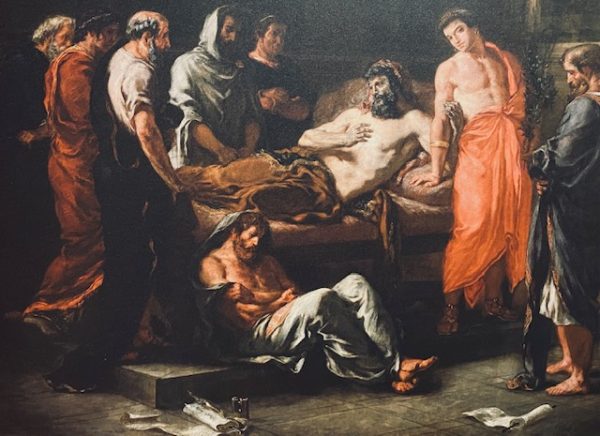
(Image: extract from Willem van der Vliet (attributed), The money counter. early 17th century, Brussels MRBAB).