From time to time it is necessary to take stock of production and to review the material that has accumulated. As I have been working in archives, official book depositories and libraries for years, it comes almost naturally to deal with questions of how to keep track of all that content. Digital solutions are excellent devices in this regard. I do not have to deal with digitalisation, a huge issue for all historic archives and many recent small museums as well. I have to deal with backups at regular instances. To be sure, each engineer will assure you, better make a backup of your backup … . Yes, I do this as well. Now the ultimate backup of digital work is ? Got it, a printed copy of your digital work. The best advice I received on this comes from a computer magazine “ct” gadget mug with imprint advocating “No backup, no mercy“. To facilitate my printed archive I start with monthly collections of blog entries (Link to pdf-file December 2023 ->Brainstorming 23-12). The simple conversion yields 63 pages, a printer friendly version 56. Hence the expected yearly volume (60*12) will be somewhere near 720 pages. That is for the archive only or in case my eyes do no longer support online reading on screens for too long.
Digital archives have, of course, many other advantages. It is possible to reassemble my collection of entries by subject through a more thorough editing. Specific edited volumes will surface from this, which I have in my mind but only careful long-term followers of the entries might see already. Political economy and sociology are obvious candidates. Public health, labour, the world of arts and music could constitute other edited volumes. Lots of branches grow out of the trunk of content. 
Renewables
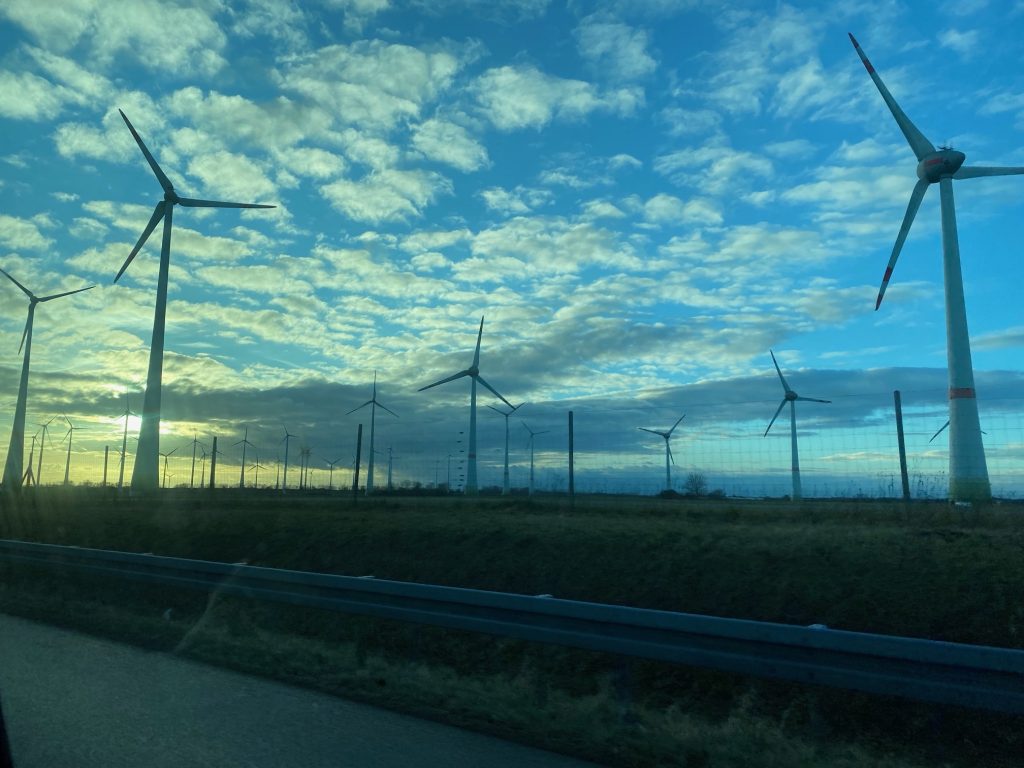
Renewable energy has reached for the 1sr time a share of more than 50% in Spain and Germany in 2023. This is an astonishing milestone in the energy transition of both countries. For Spain a report from Red Energy Espanola attributes the Spanish success story to the expansion of mainly wind energy (Link). The increase of renewable energy in Germany is due to a more rapid expansion of solar energy (Link). In any case a continued expansion of both forms of renewables allows to reduce the share of fossil fuel even more rapidly than previously estimated. Good news for the planet particularly to phase out energy from coal due to its highly polluting side effect. Countries with faster trajectories shall serve as examples that it is feasible to manage the energy transition also for large countries. Political instability might be a price worth paying considering the positive effects for future generations. Managing the transition in a just way which means to assist poorer households, ensures the respect of social policy targets at the same time. With this in mind the energy transition can be perceived by all as an opportunity rather than a threat to their welfare and wellbeing.
Beer Temple
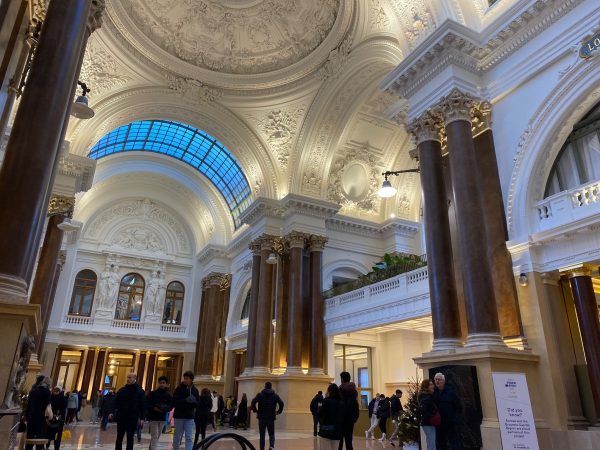
Brussels has recently opened a new attraction. A splendid temple-like building devoted to the unnamed God of beer-drinking. The renovation over several years of the centrally located “Bourse” has created a new popular attraction right in the centre of Brussels. From the outside the building reflects the classical temple architecture from Greek and Roman times. Although the building was for a long time the trading place of shares, obligation and currencies and thereby very closely linked to a country’s wealth and economic fate, it has found a new destination to represent the diverse and spirited culture of the people or peoples of Belgium through the lens of a beer glass. Of course, this is surrealism à la Magritte et al. (Museum and galleries within walking distance). The shifting fate after a financial crash to transform the “Stock Exchange” into a temple of surrealistic experiences is great idea and its realisation as popular move to transform the stock market into a temple to worship beer, beer drinking and conviviality a great idea. Without joking, the restaurant in the temple proposes good food that can be matched with a selection of 30+ kinds of Belgian beer (including 4 non-alcohol-containing beers).
Framing beer drinking culture differently from the image of beer and football hooligans is hard to achieve. Public images of beer drinking on television are all around us, anew every weekend. The Brussels stock exchange is a great place to reflect on shareholder versus stakeholder issues. Brussels has opted for a popular conversion of the building. Paris has gone for the upmarket more exclusive transformation of the previous stock exchange (Bourse commerciale) into a gallery of modern art from the private Pinault foundation.
The museum of beer in the upper ranks of the building in Brussels offers even tastings we were told. Well, beer drinking and stock trading (gambling) have both addictive potentials. Ruining yourself, the one or the other way, is equally disastrous not only for yourself but potentially others.
Know your limits is easier said than done. It is a behavioural phenomenon for individuals as well as regions or whole countries. With the apparent “Limits to Growth” for our planet or our ways to trade, even praying in the renewed beer temple is unlikely to solve the bitter-sweet issue. Perhaps discussions in the new Brussels temple will spur new coalitions and stimulate new ideas to overcome the locked-in political trading positions. Maybe the European Parliament should have a futuristic surreal session in the historic site. The only problem is, they would no longer want to return to their usual forum for debates. 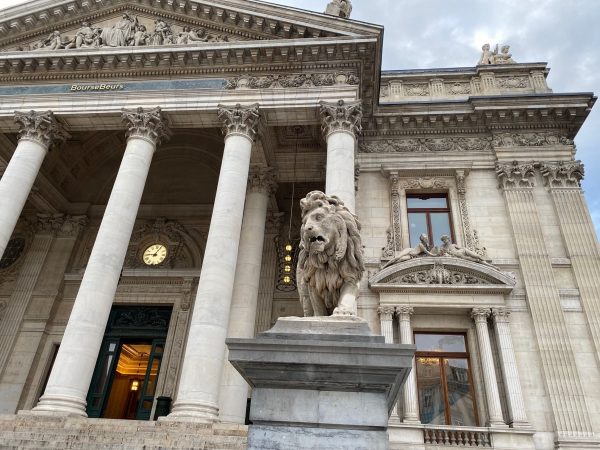
Marathon Prep
Most people, including many sociologists, believe preparation for a marathon is a rather lonely exercise. During hot summers you get up early and run alone across the streets in your neighbourhood or in a green area. Even on weekends you tend to put on your running gear at least once to chip in a few extra miles or once or twice before the marathon a longer distance test run of 20, 25 or 30 kilometers. Just for the sake of testing to withstand more pain, like in the real event. Running guides in form of books, apps reach “cult status”. In sociology we teach students about the social trends of individualisation ever since the book by Putnam “Bowling alone”, which depicted the new kind of lonesome person going alone to the bowling hall for exercise, as social life seems to evolve towards “individualised” leisure time and social life. Social capital seems to get lost on the way.
“The New York Times International” published an article and photo by Lauren Jackson on September, 27 (2023) page 17 in the sports section, which states the not so new phenomenon of “run clubs” (see extract on image below). These clubs bring runners from all walks of life together on a regular basis to train jointly and add a social function to the club as well. Just like previous sport clubs or socialising bowling groups did before, they meet and greet as well as party and celebrate together. Even travelling thousands of miles to distant events occurs in groups. Berlin seems to be a very attractive location for such clubs to go to. For some the sport stays in front of the activities, but for quite a few the social and party-like atmosphere is just as important. Even a local Berlin newspaper portrayed an older runner who stops in-between to have a small glass of alcohol-free beer on a terrace 2 steps from the official track with friends and family. Most people take their time record rather seriously, but the event is to enjoy community and celebration. Lauren Jackson even equates this to some forms of religious practice. I’s rather call this the other side of the same coin. Lone practice and meditation like running prepares a person to enjoy community (again). Extremes in both directions are part of the bell-shaped probability distribution of runners across the lonely-crowded spectrum of running experiences. The Marathon 42km 195m certainly has some historical even mystical connotation. While watching the finishing line at 42 km, just after the hypothetical run from Marathon to Athens in ancient Greece, you see many worn out persons, but also the many happy faces. After the run you meet your peers to exchange on stories and anecdotes around the track. Success and failure, just as in other team sports become a topic of conversation and shared experiences. These are community building events as wheel chairs and hand-driven bikes are part of the Berlin event as well as the in-line skaters the day before. In Berlin you get a feeling that running world records (women 2023, men 2022) can go hand in hand with the running fun for many. From “bowling alone” to “running together”. Sounds good to me. 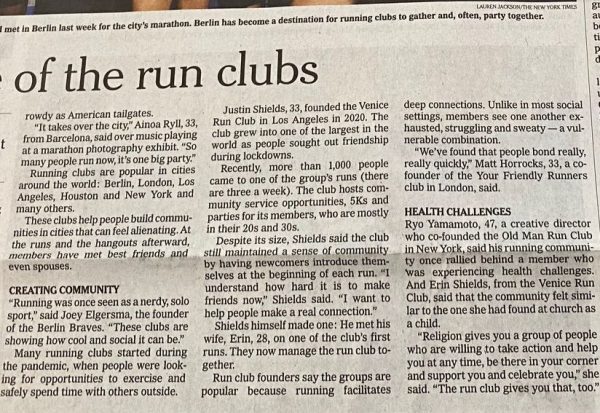
Anger
It feels like we live in the “age of anger”. Anger was a predominate feeling in the “French yellow vest movement” spurred by sharp increases in petrol prices. In Germany the notion of “Wutbürger” had a short career to express anger of citizens against, against whatever could arise anger. There are plenty of issues of course that will cause arousal in public politics. The more a government enacts change, be it necessary or not, the more it is to arouse its citizens. Parliamentary democracy is thought to solve this through majority voting of the equally represented in parliament. Minority rights have been installed to safeguard the majority to become too overwhelming, but any close decisions on hotly debated topics are likely to cause substantial anger within a society.
This is far from being an issue only in Western democracies. Pankaj Mishra claims, this is a world-wide phenomenon and history provides ample examples for it. In his book on “The age of anger” he challenges the predominantly Western political theory, deriving from an opposition of Voltaire’s and Rousseau’s political thought to hold the individualisation and globalisation of an economic model, traditional capitalism, responsible for the rise of anger across the globe.
This critique of capitalism is now translated into French. Several movements of anger in France probably find some unifying roots of seemingly unrelated outbreak of anger, violence and subsequent repression. Old arguments of critics of capitalism stand up again. The challenge to democracy comes from the extreme right even more than from the extreme left. Re-imagining capitalism is needed more than ever to safe the survival of democracy. Participative democracy like in Bürgerräte in Germany or deliberative democracy practiced by President Macron in France are an important part to stimulate involvement of more people in the preparation of decision-making. Not perfect as procedures, but small steps ahead to confront and address anger of the citizens and people at large. 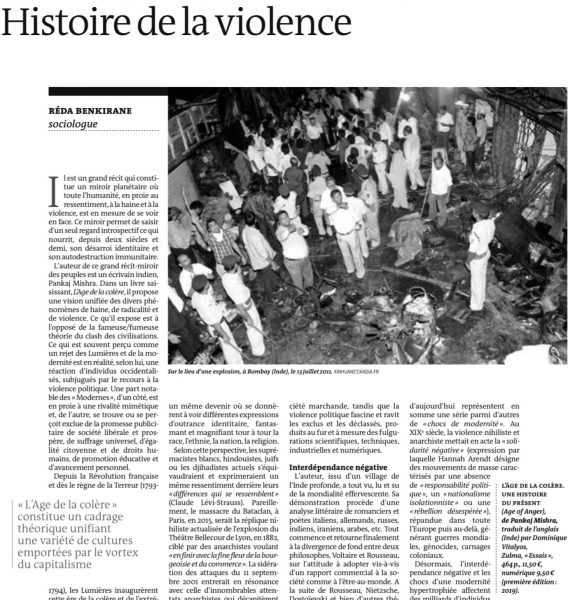
Youth
Youth has a right to personal development. Nature is full of visual examples of the uneasy process of personal development. The Swan needs to find the right time to get rid of the feathers that protected it during the process of growing-up. Seasonal patterns of changing clothes are also widely spread. These transistions might constitute real transformations as well. Parents usually accompany their upsprings during this process, without equal distribution of responsibilities for most animals. Pedagogic approaches to personal development are a vast area of research and popular advice. To the best of my knowledge, the process works out fine with the highest amount of freedom left to the person growing up. A tricky role of guidance or coaching is left to parents, single or jointly. Not intervening too much, not too much of laissez-faire is calling to find the right balance.
The challenge to most research and practice in the field of learning is the largely underestimated role of peers in the process of growing up. Parents tend to monitor rather critically the intrusion of outsiders into the parent-child relationship. Yet, the preparation for socialising with others is one of the most important elements of growing up in the 21th century. Communities have globalised even in tiny social, local settings. Guidance more than interference is called for. Being anxious is part of the job description for becoming and being a parent. However, anxiety is a major impedement for personal as well as social development. “Keep calm and carry on” is not too bad as a guiding principle. 
AI and I
Currently we are eager to run experiments using AI. As in normal life, humans tend to compare themselves with peers or other persons. Social comparisons, “can we still keep up with the Joneses” as in comparing spending patterns across households or neighbours, were for a long time the spice of novels and drama. Nowadays we tend to compare our own intelligence to the artificial intelligence. Here we go.
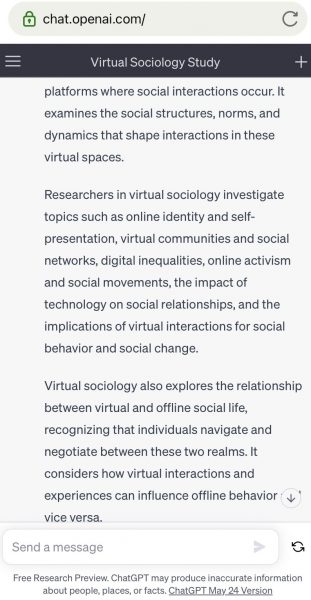
After I had drafted a blog entry on “Virtual sociology” I amused myself by checking what ChatGPT using OPENAI.COM would deliver as text on this combination of concepts and scientific fields. My own entry focused on the use of the virtual world to run experiments to test social theory. In the virtual world we might be able to test social behaviour which has severe ethical boundaries in the real world. Computer Games may even be constructed to live in a world or race a car irrespective of real-world regulations. The text drafted by ChatGPT on “Virtual sociology” reads like a timid attempt of a student to answer an exam question without having attended any of the classroom discussion on the topic. In future versions of AI, the entry will be found as well as several criticisms of the new concept. ChatGPT would reach a pass grade in test, but the reply lacks innovation or making an effort to broaden the conventional boundaries of sociology. Hence, we will be happy that students will apply the newest technology in their studies and research. In terms of innovation, they will have to try harder. The mastering of the support by ChatGPT consists in attempting new combinations of concepts which yield more “risky” returns. Then you need to check the validity of the innovation and how far off the normal you are going to tolerate. Turning “noisy” outcomes of AI into a useful tool might build on normal statistical tools like “standard deviations” from an expected mean value. Legal norms will set additional boundaries. There is just an awful lot still to do. The good news is, ChatGDP assists us in this joint learning process.
The AI text from OPENAI.COM based on ChatGPT to compare:
“Virtual sociology refers to the study of social phenomena and interactions within virtual environments or online spaces. It focuses on understanding the ways in which individuals and groups behave, communicate, and form relationships in digital spaces. Virtual sociology emerged as a subfield of sociology due to the increasing prevalence and importance of the internet and digital technologies in contemporary society.
Virtual sociology explores various aspects of online social life, such as online communities, virtual reality environments, social networking sites, online gaming, and other digital platforms where social interactions occur. It examines the social structures, norms, and dynamics that shape interactions in these virtual spaces.
Researchers in virtual sociology investigate topics such as online identity and self-presentation, virtual communities and social networks, digital inequalities, online activism and social movements, the impact of technology on social relationships, and the implications of virtual interactions for social behavior and social change.
Virtual sociology also explores the relationship between virtual and offline social life, recognizing that individuals navigate and negotiate between these two realms. It considers how virtual interactions and experiences can influence offline behavior and vice versa.
Studying virtual sociology provides insights into the ways in which technology shapes and is shaped by society. It helps us understand the social implications of digital communication and provides a foundation for addressing the challenges and opportunities presented by virtual environments”

Grenzgang 2
Innerhalb vom Kern Europas ist der physische Grenzübergang kaum merkbar. Sobald es um die Regeln der sozialen Sicherung, Beschäftigung, Selbständigkeit geht oder der Unternehmensbesteuerung werden die bilateralen Regeln bereits viel komplizierter. Falls 3 und mehr Länder ins Spiel kommen wird die Lage ziemlich unübersichtlich oder zum Expertentum. Staatsbürgerin im Land A und Staatsbürger im Land B, arbeitend im Land C dürfen sich über einen Dschungel an Regeln freuen, der Kafkaeske Verhältnisse hoch 3 produziert. Irgendwo klemmt dabei immer etwas. Dabei hatte die Regulierung CE Nr. 883/2004 über die Koordinierung der nationalen Systeme der sozialen Sicherung doch weitgehende Konkretisierungen hervorgebracht und Sicherung der Bestandsrechte hervorgebracht.
Wie so oft liegen die Schwierigkeiten im Detail und darin sind die jeweilig zuständigen Verwaltungsbeamten, wenn die denn erst einmal herausgefunden wurden, eine Hürde, die es zu meistern gilt. In der jeweiligen landesüblichen Verwaltungssprache, versteht sich von selbst, inklusive regionaler Besonderheiten.
Während juristisch der Grenzübergang von Beschäftigten, Selbständigen und Unternehmen jeweils geregelt ist, ergibt sich aus einer juristischen Figur des „salary split“, also eine beschäftigte Person bei 2 Arbeitgeberinnen eine Lücke in der Zuständigkeit. Diese besteht gleichfalls in den meisten Ländern der EU. 2 Teilzeitjobs zu 50% lassen sich sozialversicherungsrechtlich nicht fair darstellen. Die zweite Lohnsteuerkarte und Besteuerungssätze, na wir ahnen schon, was das für Betroffene heißt.
Unternehmen und der Staat machen es sich einfach. Eine Konfiguration „Mulitplication des employeurs“, mehrere Arbeitgeberinnen, ist nicht wirklich adäquat vorgesehen (Crabeels, 2008 S.272). Dadurch werden viele, besonders junge Beschäftigte systemisch in ihrer beruflichen Findungsphase benachteiligt und in die Selbständigkeit oder gar die Scheinselbständigkeit gezwungen. Dabei brauchen wir dringend diese dynamischen GrenzgängerInnen in Europa mit ihren grenzenlosen Ideen, Enthusiasmus und Gestaltungswillen.
Neben diesen „high potential Grenzgängerinnen“ gibt es viele Beschäftigte, die bereits in einem Mitgliedsland der EU mehrere Beschäftigungsverhältnisse ausüben müssen, da sie von einem Job ihren Lebensunterhalt nicht bestreiten können. (EU Statistik Jugend Eurostat,2022). 
Grenzgang
Eigentlich wissen wir gar nicht mehr, was eine Grenze im Schengenraum der EU darstellt. Viele Arbeitende überqueren eine Grenze täglich, sozusagen als Arbeitsweg. Die Logik dafür ist vielfältig. Mal gibt es mehr oder besser bezahlte Arbeit im Nachbarland, mal ist es der preisgünstigere Wohnraum oder die Liebe. Diese Herzstücke Europas haben viel Selbstverständlichkeit, aber auch spezifische Belastungen mit sich gebracht. Das Europa der Grenzregionen bleibt für die meisten eine ständige Herausforderung. Regeln gelten meist noch nach Ländergesetzen. Sozialversicherungen sind ein besonderes schwieriges Thema. Das betrifft gerade die vielen Grenzüberschreitenden besonders hart. Misstrauen bei Sozialkassen ist die Regel und nicht die Ausnahme. Da wird dann schnell doppelt von Grenzgängerinnen abkassiert. Bei großen Katastrophen, bei denen die Medien überall hinsehen, stellen sich viele Politikerinnen ein. Für das Klein-klein des täglichen Lebens fehlt oft die Nachhaltigkeit der Handelnden, um wirkliche Verbesserungen zu erreichen.
Seit Jahren fahre ich beispielsweise in der schönen Grenzregion bei Aachen und Vervier mit dem Zug zwischen den beiden Ländern, doch dort scheint seit Jahrzehnten die Zeit still zu stehen. Wer mit ICE oder THALYS von Metropole zu Metropole fährt, rast mal eben vorbei. Die Bürgerinnen vor Ort dürfen sich zu Recht etwas abgehängt fühlen, bleibt für sie doch meist nur der Lärm der vorbeirasenden Züge. Zwischen Deutschland und Belgien gibt es für Grenzgängerinnen noch eine richtige Bimmelbahn. Sie wissen schon, die fährt langsam und kommt trotzdem an. Und das stündlich hin und her oder kreuz und quer. Leider wächst Europa selbst im Zentrum nur sehr gemächlich zusammen. Ob wir so viel Zeit noch haben, bevor undemokratische Kräfte die Uhren wieder zurückdrehen, bleibt eine Überlebensfrage für uns überzeugte Europäer. 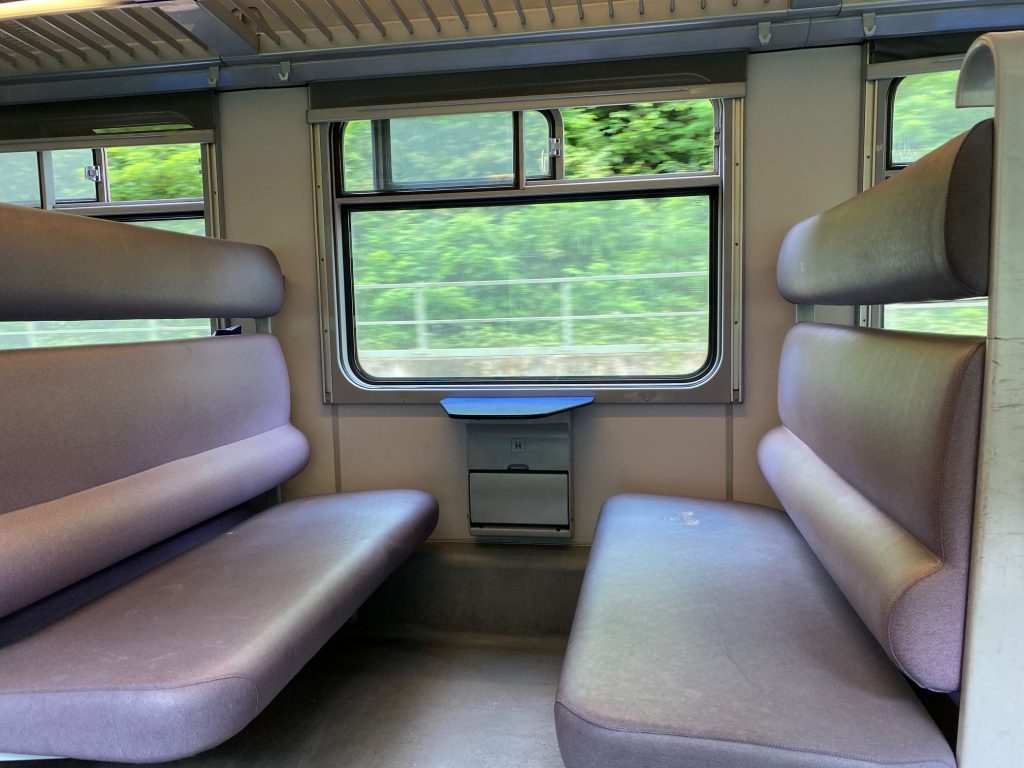
Masculinities
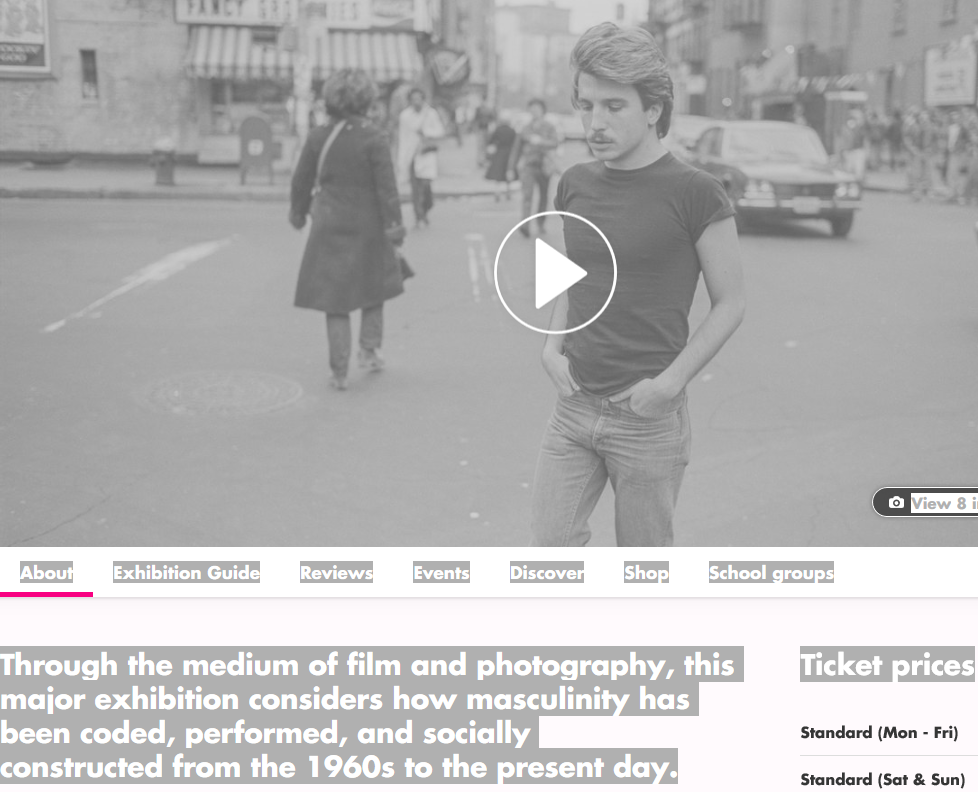
The exhibition of photos and film on “masculinities,liberation through photography” is an excellent example of how artistic approaches to central social phenomena enrich our understanding. The collection of images on masculinities enlightens and reveals the social construction of masculinity. All persons interested in such basic questions should grab the opportunity to pay a visit to the Barbican Centre in London until May 2020 (Later also in Berlin). Perfect choice of a location as the Barbican Centre represents a fine example of “brutal architecture” in London. This is already worth a visit for those not familiar with such concepts. Prepare to get lost somewhere in the multitude of cultural offerings. It feels like Centre Pompidou in Paris, but has additionally a splendid concert hall.
Depending on the time and location of our upbringing we are subject to different social constructions of masculinity. Browse through family collections of photos from grand fathers, fathers and your own youth and maybe your children. From the perspective of how masculinity has been framed at different epochs and across continents, it is obvious that masculinity just as feminity are constructed by social discourse, social choices and media representations. Make it a choice – nowadays – yes we can !
Read on with a critic published in “The Guardian” or “The Sunday Times“.