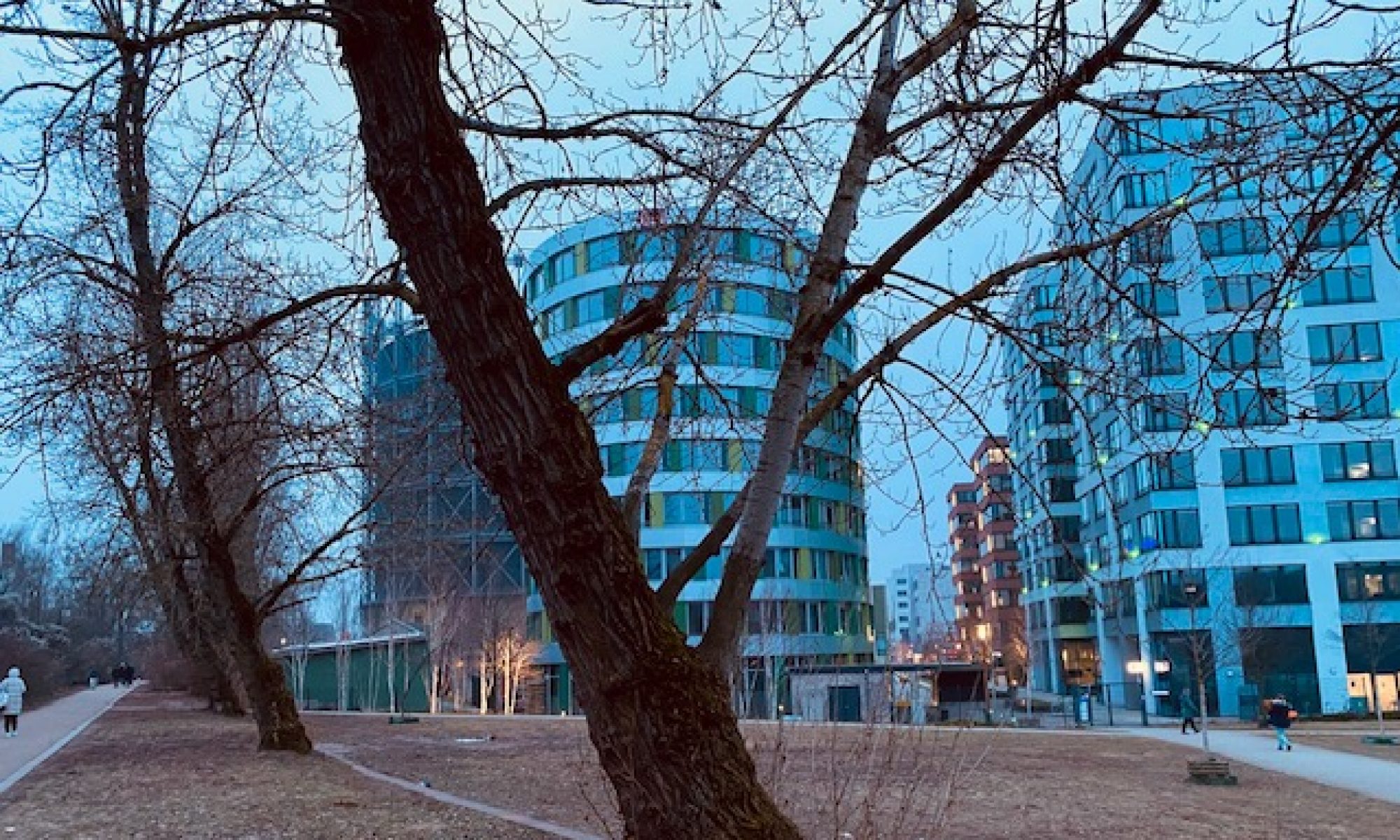

»Tempus fugit» (Latin proverb) time is flying, or time is escaping us. This is a classical quote. Students of Latin come across it in language acquisition. “Carpe diem” make the most of the day, others responded. Some even raise it to a dogma of their existence. Whereas in classical times, time was more likely to be perceived as a linear concept (v = s x t), modern concepts discuss time as “acceleration” a nonlinear concept (a = v x t = s x t²) or higher order non-linearities even (time³). Social time is embedded in such concepts of time. At some moments we perceive time as running very slowly, at other instances as running fast or accelerating. The synchronisation of time for friends, a couple, a family, lives, within a society or between societies is the big challenge. We tend to use calendars to synchronize our time acknowledging that time might be running at different speed for different persons. We have invented rituals of synchronisation like celebrating birthdays, departures at work, retirements or relative to seasons, with corresponding seasonal greetings. In between these events time fluctuates with different speed for different persons. Commonly in a kind of superficial objectivity, time is running in the same second-, minute-, hour-, day-like fashion, but considering activities or experiences, the same time span is widely different across persons. A lot of intergenerational conflicts have their origins in this non-synchronicity of time across generations. Bernard Guy (2018) reminds us of the link of time and space, as in the equations above, common in classical physics, where we could replace s with the change of coordinates of 2 GPS-signals. This space – time relationship complicates our simple reference to time. We have become used to think in time zones across the planet or within continents, however, our imagination is a bit stretched by imagining others sleeping while we are terribly busy on the other side of the globe. Global production and logistic processes have integrated the time and space framework for just-in-time delivery and optimisation of processes. As mankind we are still having a hard time to think about time and spend years “à la recherche du temps perdu” (Proust manuscript image below, BnF Paris2023).
Guy, B. (2018). Parler d’accélération, c’est aussi dire comment nous comprenons le temps. Dans : Nicole Aubert éd., @ la recherche du temps: Individus hyperconnectés, société accélérée : tensions et transformations (pp. 111-123). Toulouse: Érès. 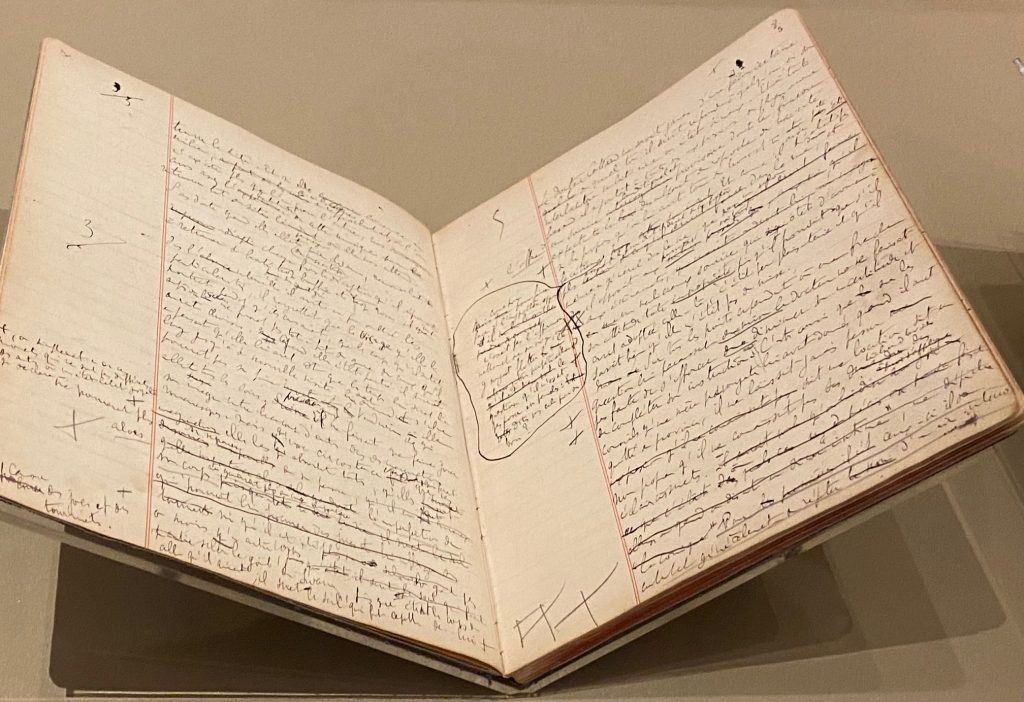
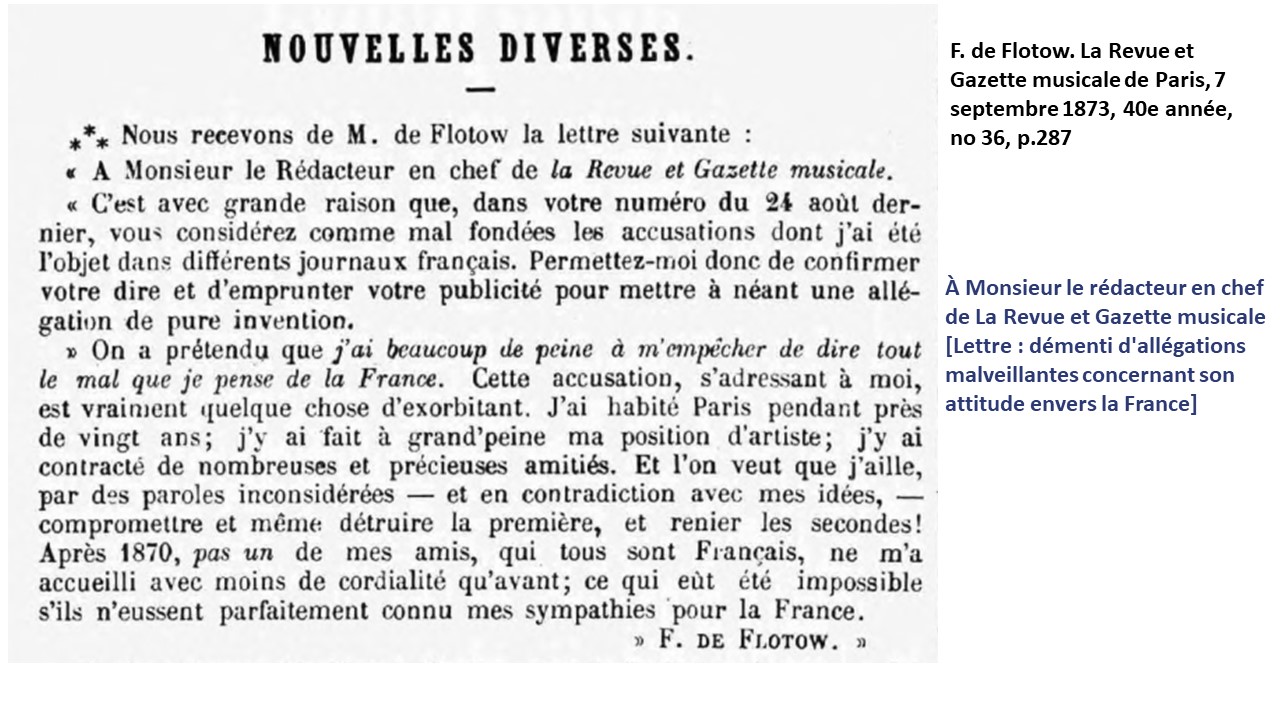
Flotow Kontroversen
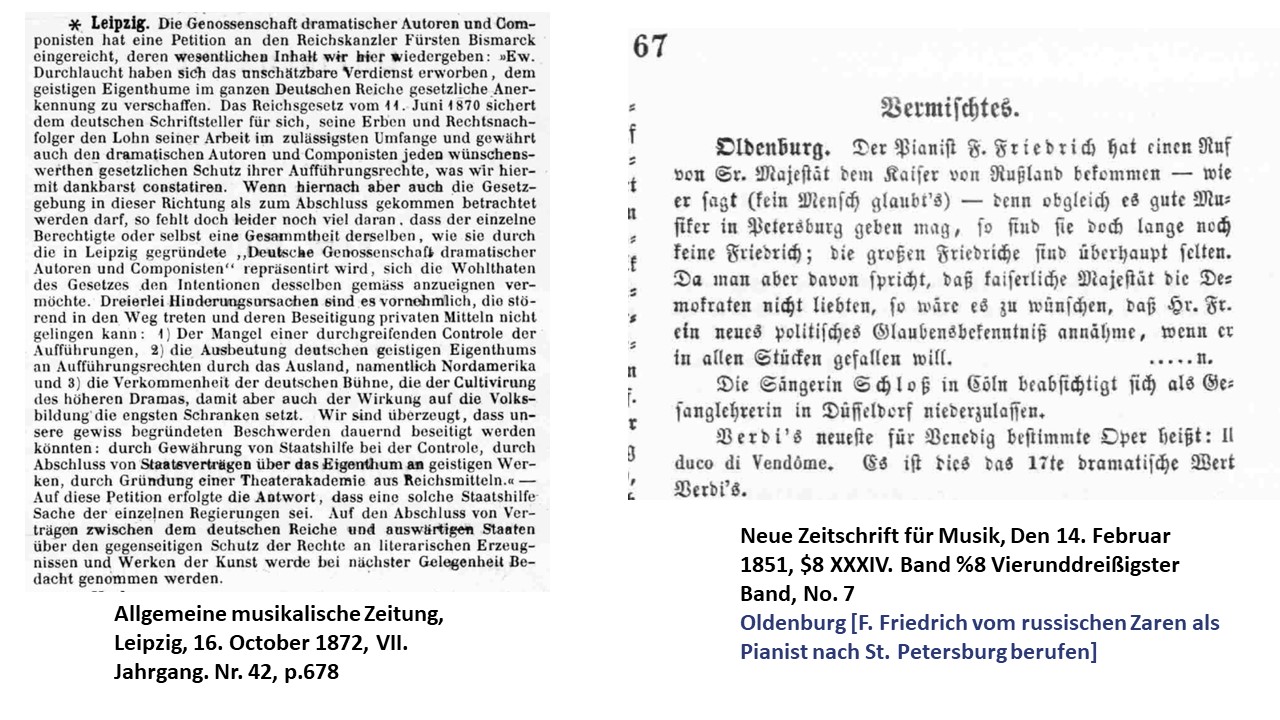
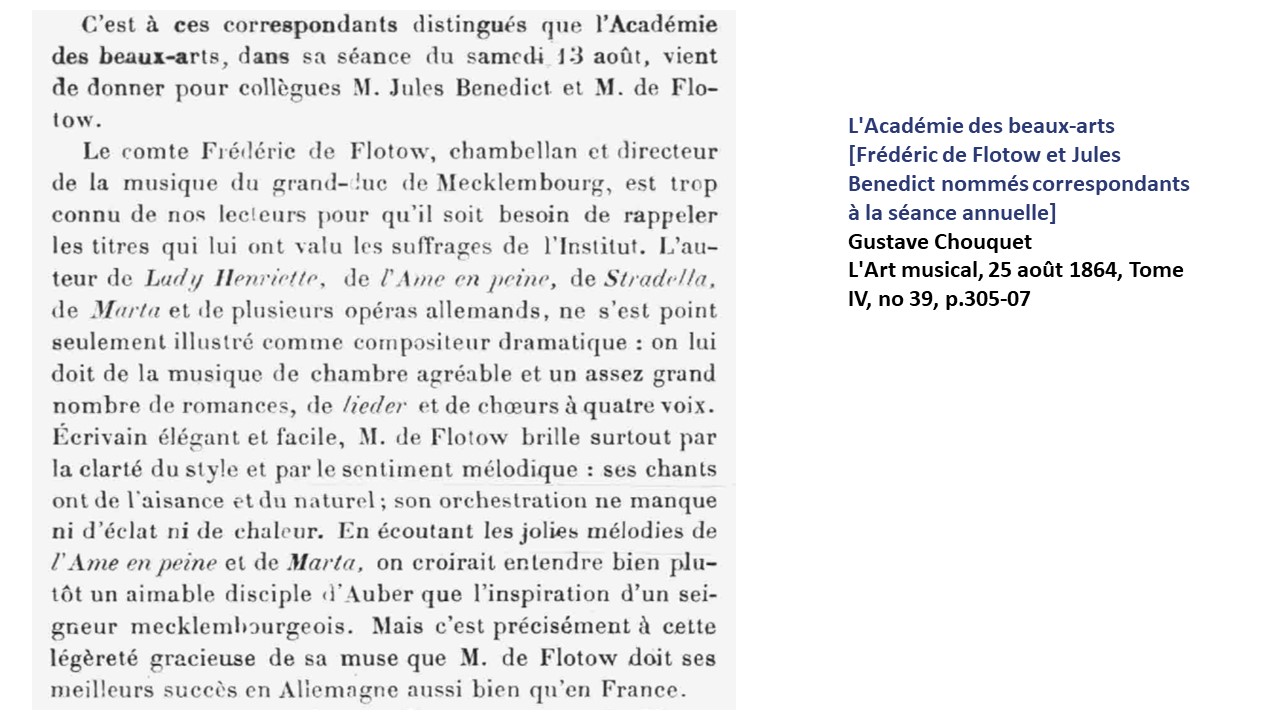
Während Flotows Lehrjahren in Paris ereigneten sich historische Ereignisse, wie zum Beispiel die Pariser Juli-Revolution 1830, Commune oder die 1848er Revolutionen in Paris und Deutschland. Später sollte der dt-frz. Krieg 1870 ein weiters einschneidendes Erlebnis darstellen. Über all diese historischen Verwerfungen hinweg sind Kunstschaffende ständig den nationalen Vereinnahmungen und Verwertungen ausgesetzt. Bei Flotow äußerst sich das in den Intrigen von unterschiedlichen Seiten, die gegen ihn gefahren werden. Von deutscher Seite mal als Demokrat verunglimpft (s.u.), wird er in Frankreich als frankreichfeindlich bezichtigt. Aktiv dagegenhalten, gehörte schon damals zum Geschäft im europäischen Raum. Mit dem Eintreten für Autorenrechte an Werken und deren Aufführungen schaffte er sich sicherlich nicht nur begeisterte Freunde in der Theaterwelt. Vergleichbar dem Disput über Patentrechte zu Hörnern, Trompeten und dem Saxophon, musste die Lebensgrundlage für viele Komponierende erst noch geschaffen werden. Eine Nominierung als Korrespondent der „Akadémie des Beaux-Arts“ ist da eine tolle Anerkennung. Die Probleme von höchst prekären Lebensverhältnissen von Kunstschaffenden im weitesten Sinne bleiben eine ständige Aufgabe und Herausforderung (Mäzene). Der kleine Fritz von Flotow hatte in seiner Kindheit mit genau diesen Einstellungen gegenüber dem oft brotlosen Beruf des Kunst– und/oder Musikschaffenden zu kämpfen. Als streitbarer Aristokrat mit demokratischen Zügen fiel er mitten in die soziale Zerrissenheit und politischen Wechselbäder des 19. Jahrhunderts.
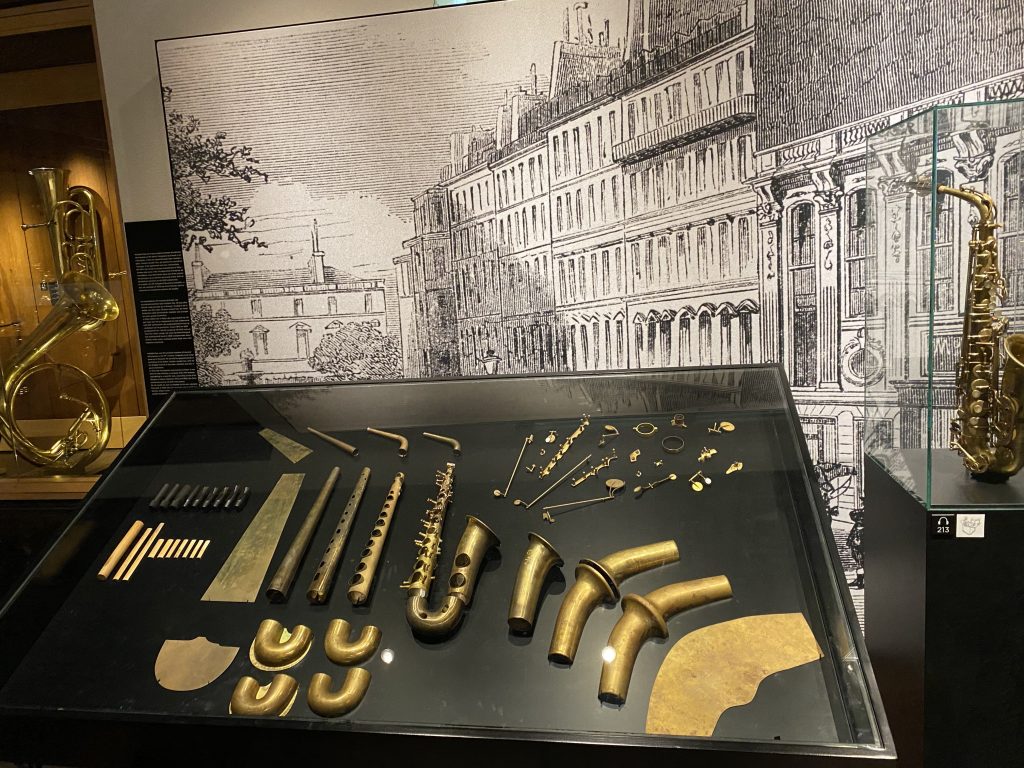
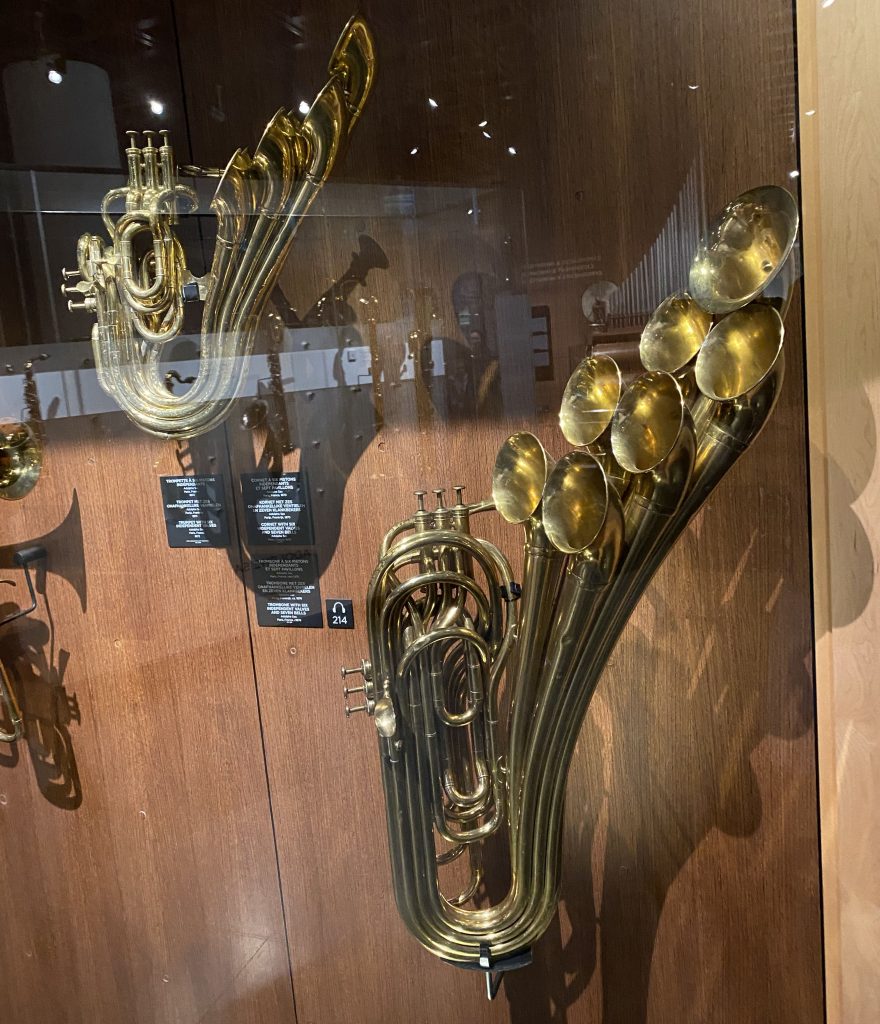
Sax and the Sax
Adolphe Sax is celebrated for his celebrated design of musical instruments in what it known and played as the Sax family of musical instruments. Most museums around the world have an example of an early Sax instrument in their collections. Beyond the many fascinating musical delights and emotions produced with the instrument, there is a century-old debate around the issue of the patent attributed to the various designs claimed by Adolphe Sax for the Saxophone among others. The patent attribution was hugely different across Europe in the 19th century (largely inexistant in other parts of the world at the time). The reason for this were differing laws guiding intellectual property rights. “In France no preliminary examination was necessary before a patent could be granted; in Germany examination was obligatory; and … British patent laws, which allowed makers to register designs or apply for patents for developments that had been copied from abroad (imported inventions), as long as they had not been published in Britain.” (Mitroulia and Myers, 2008 p.93). There is a well-documented controversy about the “Berlin valves” and the contested patent in France of it. Design of instruments, particularly popular ones, guarantee sizable earnings for producers of instruments. After 20 years of the 1846 patent in France 1866 the patent expired and the copies could become even cheaper. Some ugly disputes in the middle of Europe were fought around this issue. Remember that military music was still accompanying troops for better or worse. “Visionary or plagiarist? The authors are unable to give a simple verdict. … The fact that Sax claimed originality for some borrowed ideas seems in retrospect less important than the true vision shown.” (Mitroulia and Myers, 2008 p.135). We might not agree with this statement. The visit to the MIM in Brussels gives a good overview of the evolution of musical instruments over thousands of years and across continents, which pushes us to rethink the link of society and technology through the lens of music and technology. Welcome to techno music beyond patent laws. Pushing the boundaries of copyrights on sound sequences to new limits.
(Sources: MIM Brussels, Rice A. R. (2009). Making and improving the nineteenth-century saxophone. Journal of the American Musical Instrument Society. 35:81-122. Mitroulia, E., A. Myers. (2008). Adolphe Sax: Visionary or plagiarist? Historic Brass Society journal, 20, 93-141).
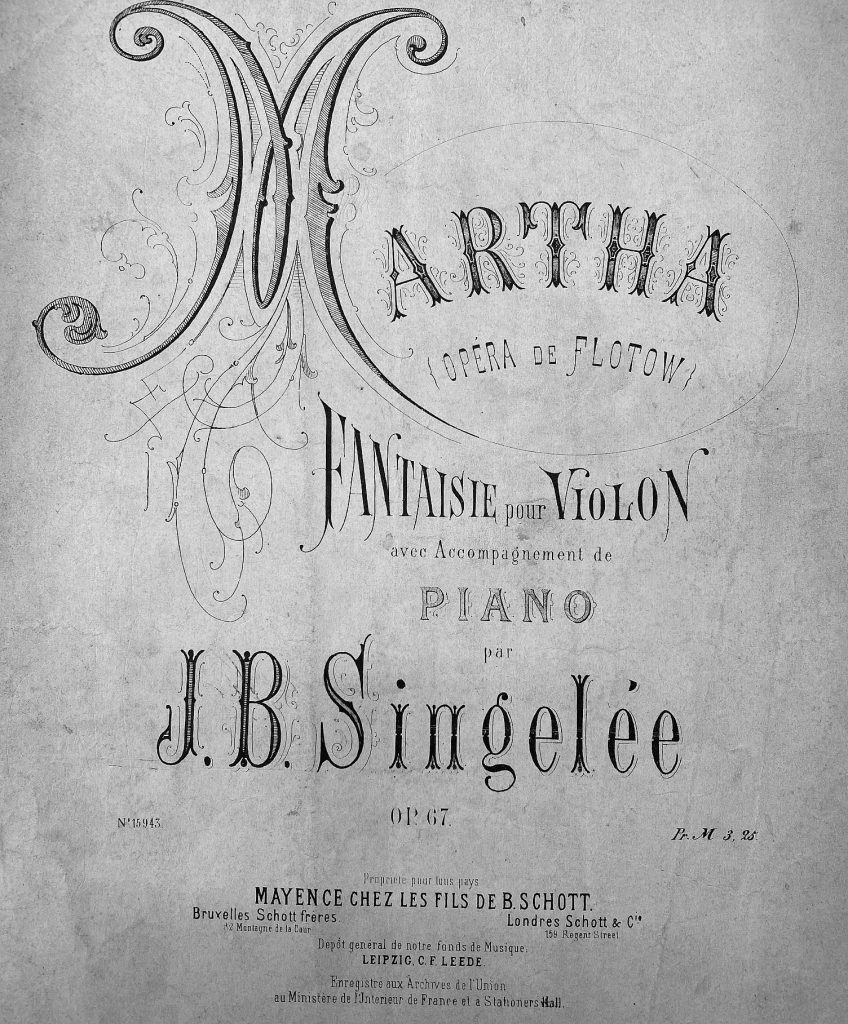
Flotow Singelée
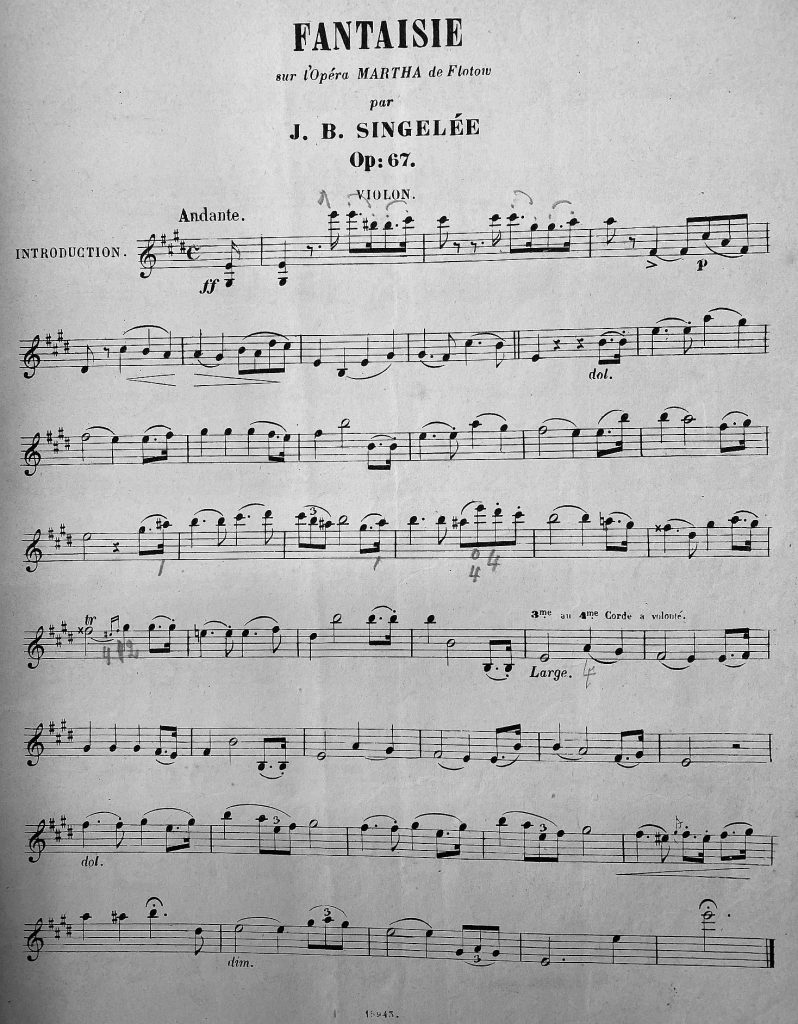
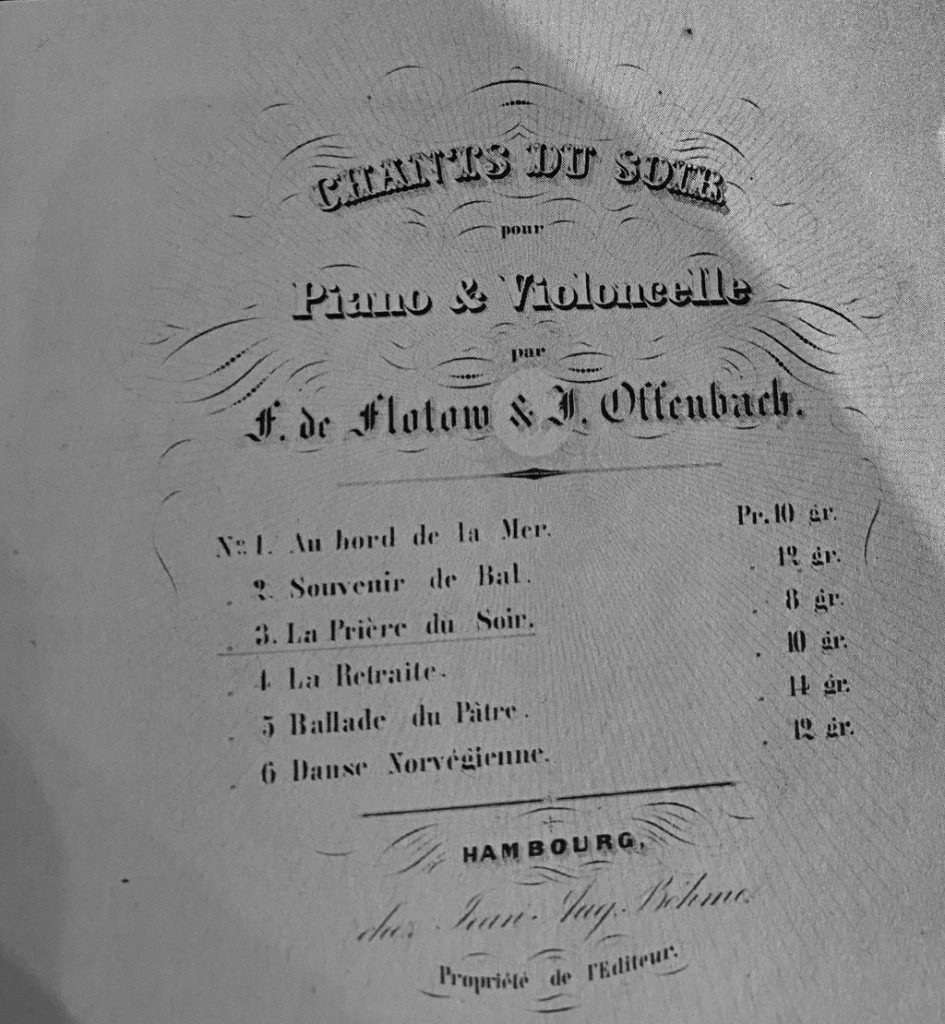
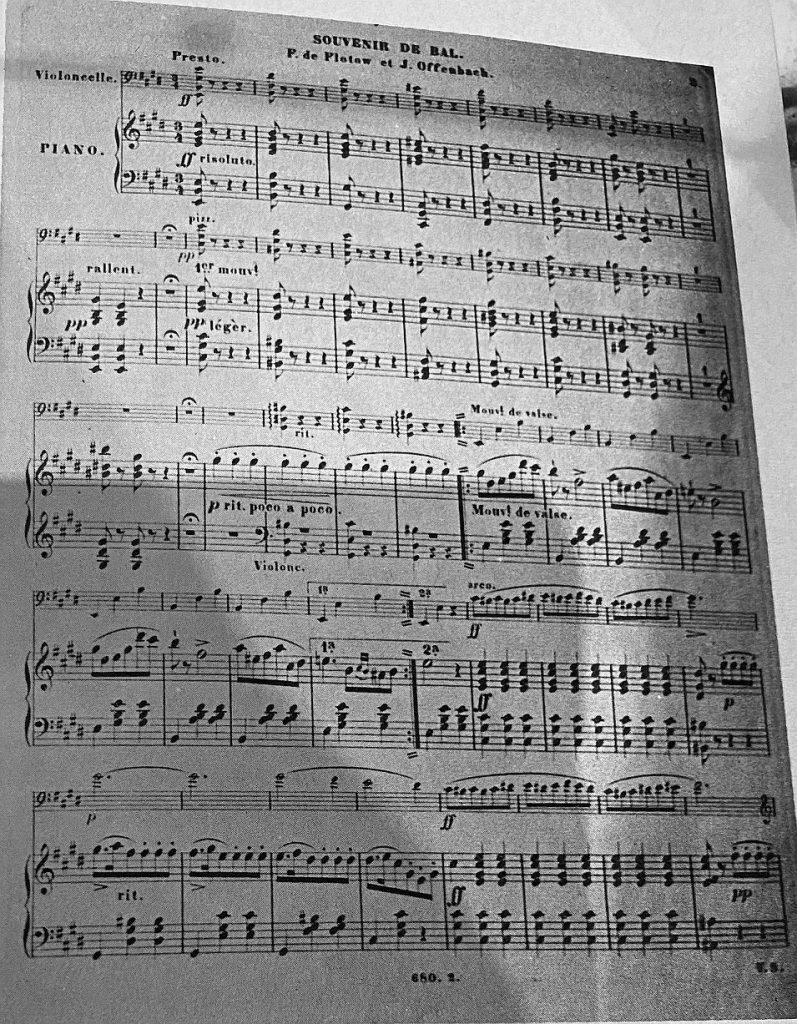
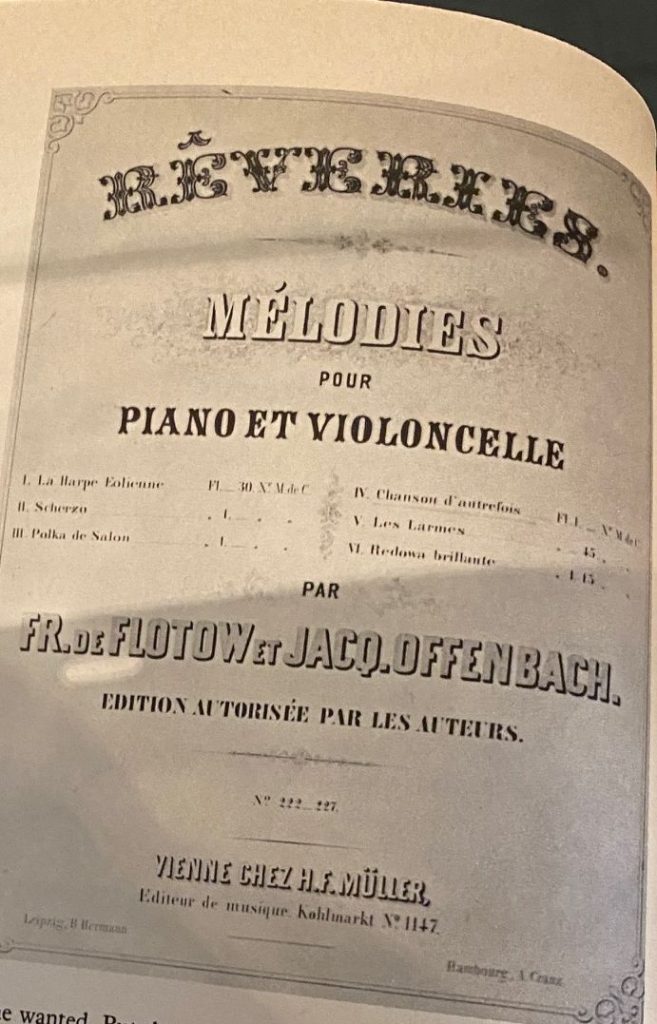
Frédéric de Flotow hatte sicherlich in Jean-Baptiste Singelée einen Fan. 2 seiner frühen Opern, Stradella und Martha, wurden mit Fantasien für Violine und Klavier von Singelée neu arrangiert. Der Geiger, Dirigent und Komponist Jean-Baptiste Singelée, geboren 1812 in Brüssel (damals noch zugehörig zu Frankreich) ist in Ostende 1875 verstorben. Eine spätere Würdigung im Kursaal in Ostende mit einem Konzert verdeutlicht die Wertschätzung über sein Wirken als Konzertmeister und Dirigent hinaus u.a. in Brüssel. Sein kompositorisches Werk ist beachtlich, auch wenn seine einzige Oper vielleicht nicht so viel Nachhaltigkeit erreicht hat, trotz des einprägsamen Titels: „Les dentelles de Bruxelles“. Uns interessieren hier seine Fantasien basierend auf Themen von Flotow, die als Drucke erhalten geblieben sind und in der „public domain“ einsehbar sind. Interessant ist auch die gemeinsame Zeit am „Conservatoire Royale de Musique à Bruxelles“ mit Alphonse Sax, der später die Patente auf die Instrumentenfamilie der Saxophone erlangte. Klassische Musik populär machen, war schon ein frühes Bestreben vieler Komponierenden und Musikschaffenden. Ganz nach dem Motto: „Ich mag keine Klassik, aber das gefällt mir“ werden so Personen erreicht, die sich ansonsten für ganz andere Musik und Rhythmen interessieren. Da hat der Fritz oder Frédéric de Flotow vielleicht noch mehr Chancen in der Unterhaltungsmusik. Mit Jacques Offenbach verband ihn eine Freundschaft, die “Co-creation” hervorgebracht hat. Beide verdienten sich wohl etwas Geld für den Lebensunterhalt in Paris in jungen Jahren.
Thucydides on War
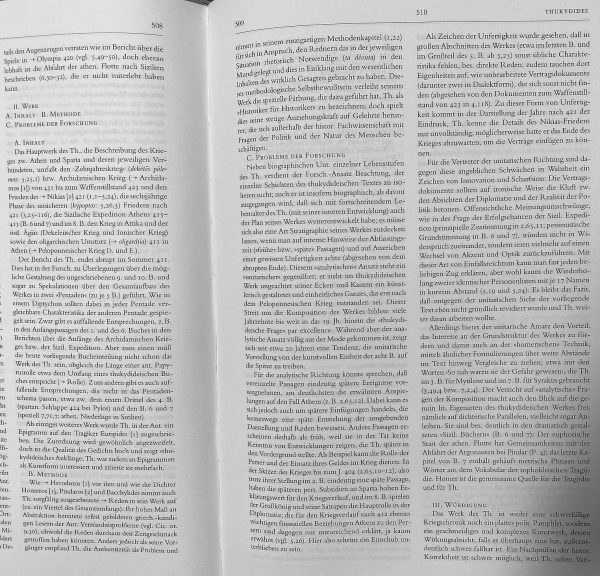
Thucydides (born around -460) has received a lot of fame for his “thick description” of the Peloponnesian War. He deserves continued praise even for inspiring statisticians. The account of events without emotions, but with lots of details, is often perceived as the beginning of historiography and history as science as well as empirical political science. The entry of “Thucydides” in the Encyclopedia of Social Measurement (2005, p.805) by P.A. Furia and A. Kohen cites the derivation of a causal or explanatory effect based on his historical account as a foundation of scientific approaches based on empirical data. “The growth of the power of Athens, and the alarm which this inspired in Lacedaemon (i.e. Sparta), made war inevitable” (Thucydides, I 23). The empirical assessment of the growth of power is subject to controversial accounts. Power may derive from population, wealth, industry, weapons, munition or general military capabilities or skills. The assessment would also need to consider relative rather than absolute strength of just a one-sided approach. Here we are in the middle of the Russian war on Ukraine from 24.2.2022 onwards. Statisticians discuss, whether it is just a single variable that has the overall explanatory power for the beginning of the war and what other intervening variables might be important to take into account to avoid a selection bias. Beyond this materialist explanation we might stress the importance of the sociological concept of “collective fear” (links to approximation through trust, xenophobia) of the strength of Athens as the underlying causation of the beginning of war. The ideation of perceived strength gives rise to the construction of many intervening processes (Coleman’s macro-micro-macro linkages), which make a simple causal attribution just to material strength an illusion or risky shortcut explanation. The Thucydidean Method (p.806) exemplifies much of the dilemma and spice of social science analyses. Scholars of diplomacy challenge the empiricist perspective in arguing that the breakdown of diplomatic discourse several decades before was at the beginning of the causal chain. Here again we can make links to the preparation of war by Russia through strategic diplomacy as well as the risks taken through a break-up of diplomatic channels of communication. The perceived strength of the opponent in war might play a decisive role at the beginning and at the end of war. The charisma of leaders, democratic decision-making and political alliances with neighbouring states, Sicily at the time of the Peloponnesian War, were further intervening processes. This is perhaps not all too different from today, if we consider the role of Belarus in the aggression of Russia against the Ukraine. In fact, Thucydides seemed to be convinced that under similar circumstances human behaviour would reproduce itself. Therefore, thick description of historical facts might still inform political leaders today and tomorrow.
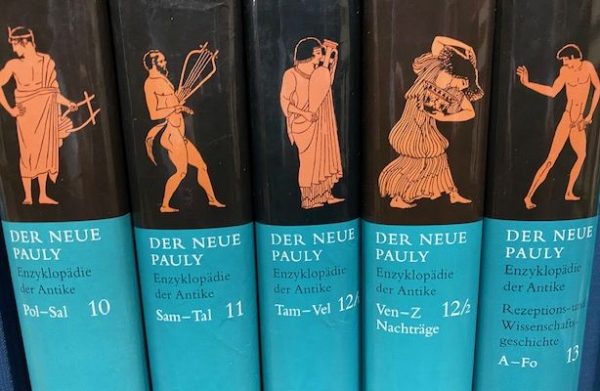
(Reallexikon für Antike und Christentum, XV pp. 752,
Der neue Pauly, Enzyklopädie der Antike 12, pp.505 image below).
Ukraine Reynders
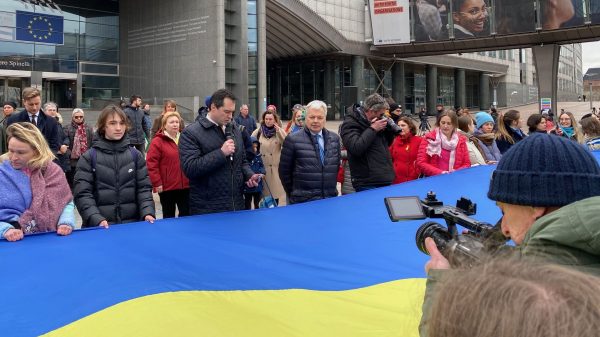
Short Video on extract of speech by Commissioner Reynders at the opening of the exhibition on Ukraine Resilience despite the atrocities of Russian Agression commited in Bucha. www.RememberBucha.eu
Click on the this Link: Ukraine Reynders 24-2-2023
Ukraine Resilience
The opening of the exhibition on war crimes committed by Russian soldiers took place in front of the European Parliament today. The images frighten us as they reveal human atrocities. Destruction on a large scale with so many lifes lost will take a long time to overcome the grief. The images of the commemoration and the minute of silence show the solidarity of the whole of Europe with the Ukrainian people. The European Parliament has the patronage of the exhibition which is curated by Justyna Napiórkowskiej. Commissioner Reynders expressed the commitment of the EU to support the Ukraine 🇺🇦 in their capacity to fight back and the rebuilding of the country. Stand with Ukraine. 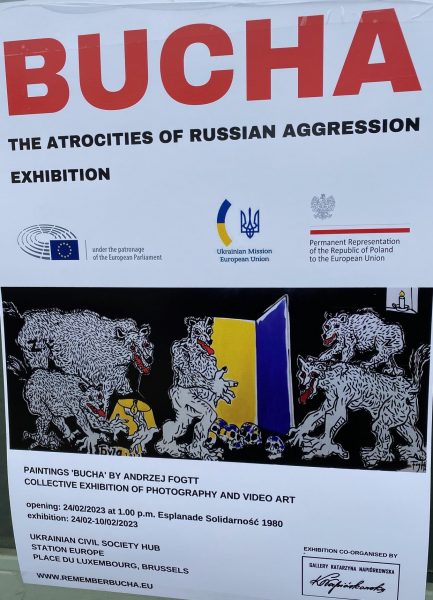
Dumky
In cultural performances it is always interesting to refer back to titles given or attributed for example to music pieces. Dumky is the title of Antonin Dvořák’s 4. Klavier-Trio opus 90. In the late 19th century Antonin Dvořák found inspiration in the notion of Dumky. Rather than just composing a “Trauergesang with few joyful intermezzi” he creates a new form for this Trio containing, quite unusual, 6 parts. Dvořák plays around with structure and sharp swings from “piano to forte” parts, “moll to dur” intonations reflecting sorrow and joy in frequent and refreshing short sequences. It feels sometimes like fireworks, but at times the sorrow of soldiers and their families becomes evident as well. However, the music proves resilient. Knowing that Dumky is a Ukrainian word and notion, the choice of one of the masterpieces of Antonin Dvořák close to the 24.2.2023, the day of the anniversary of the Russian attack on Ukraine is a commemoration of the sorrow caused by war and ways to overcome it. The “Concerts de Midi” of the Musée des Instruments de Musique” allowed us to travel through Ukraine a bit and experience the longing for better times. Joy will eventually prevail there again just listen to Dvořák’s version of the Dumky. Superb and effectful presentation of the work by the “Trio Impression” made for a memorable lunch break in the city centre of Brussels. The (virtual) visit of the Museum should be one of the attractions of visitors to Brussels as well, not just for the Art Nouveau architecture, but for the inclusive “global music” collection. 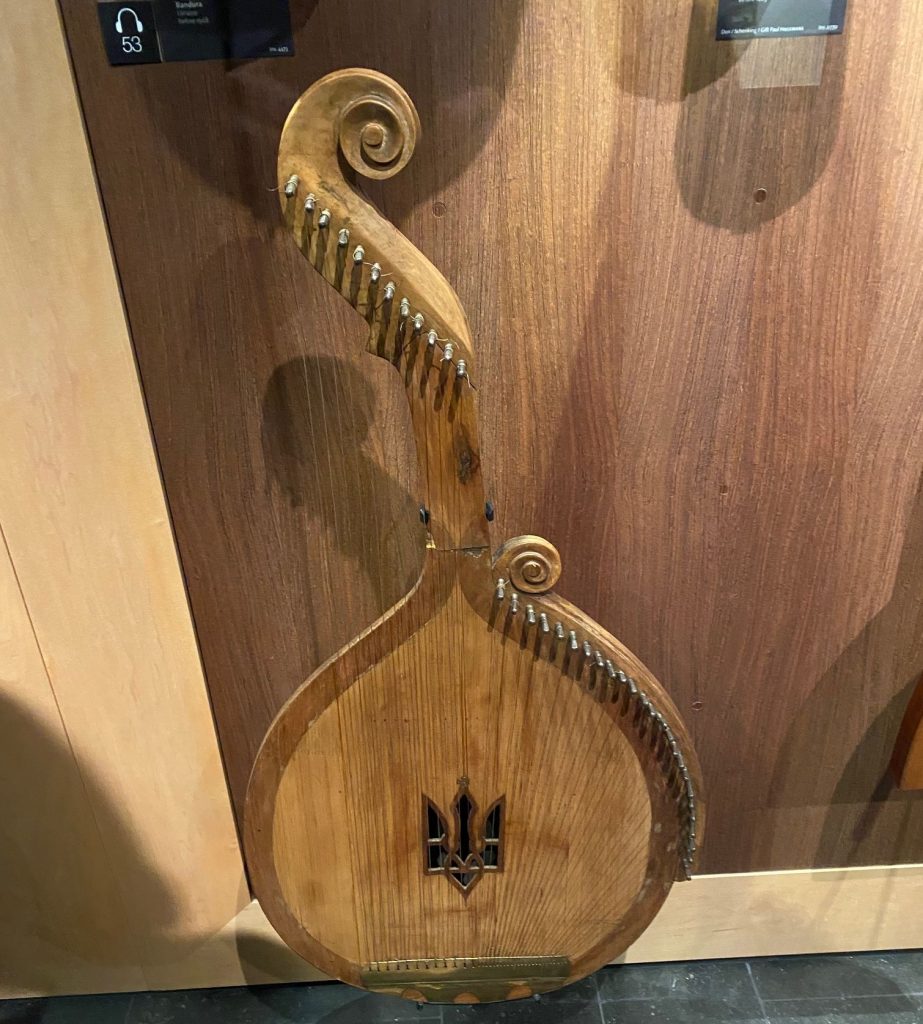
Aphorismen L
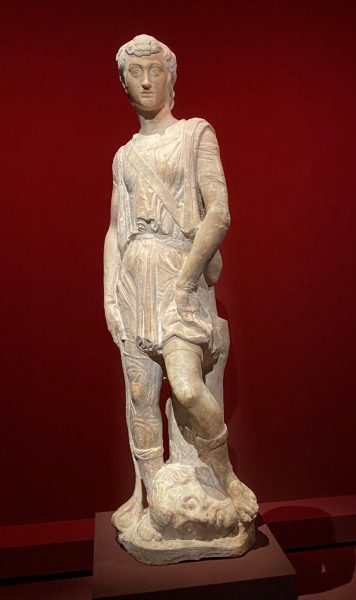
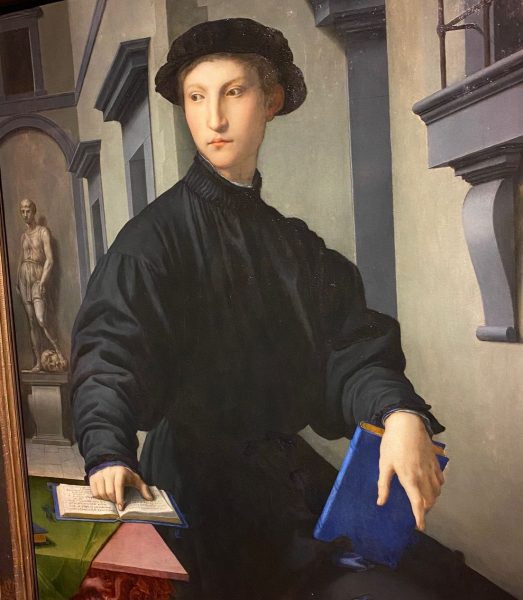
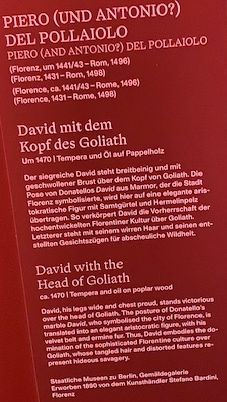
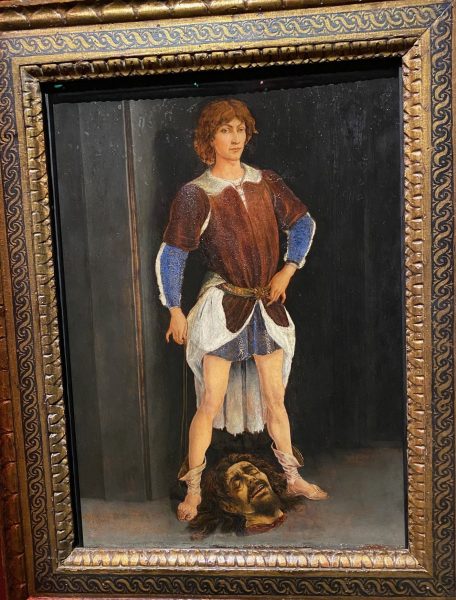
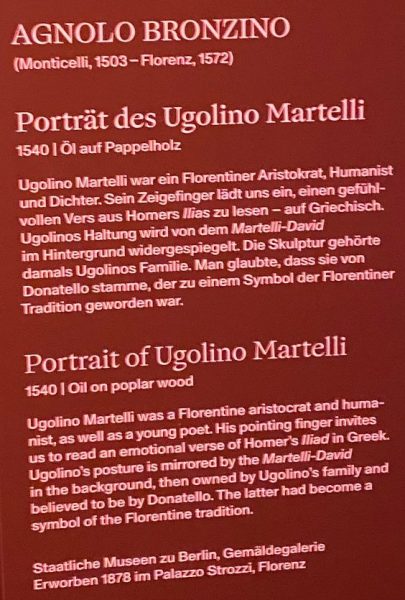
Lichtenberg hatte den späteren ausufernden Individualismus spekulativ in seinen Aphorismen vorweggenommen. Im ersten Band der Sudelbücher schrieb er bereits: „Je länger man Gesichter beobachtet, desto mehr wird man an den sogenannten nichtsbedeutenden Gesichtern Dinge wahrnehmen, die sie individuell machen.“ (1976, S.25). Unsere Fototechnik und soziale Medien haben eine wahre Revolution durch die Flut der allgegenwärtigen Fotos geschaffen. Was früher der Spiegel war, ist längst der schnelle morgendliche Blick in die Kamera des Handys geworden. Intelligente Spiegel wären also die durch Kamera aufgenommenen und direkt auf einen größeren Bildschirm übertragenen Bilder. Das Hautscannen auf Melanome oder checken von depressiven Phasen könnten eine frühzeitige Erkennung ermöglichen. Sollten wir das wollen? Aus derartigen Hinweisen lässt sich sozial invasiv Gefahren für den Einzelnen, die Einzelne ableiten, aber eben durch Bezug des Einzelfalls auf verallgemeinerungsfähige Vergleichsfotos. Gesichter länger anzusehen, das hat seine sozialen Grenzen. Mit Breughel durften wir das dann. Kindern wird früh erklärt Personen nicht anzustarren, dabei trainieren sie so, was das einzelne Gesicht so singulär macht, die Augen, Ohren, Mund, Zähne, Nase oder Schattierungen. Donatello, gepriesen als der Erfinder der Renaissance, spielte schon mit den Details der Gesichter. Mehr Mut zum längeren Hinsehen sollten wir aufbringen, auch beim Hinsehen auf einfache Charaktere, auf Armut statt Wegsehen. Oft ist David interessanter als Goliath. Die Rahmung des Bronzolino verstärkt geschickt eine zeitgenössische Analogie zum 24.2.2023.

Berlin Wahl 2023
Wähle Wähler, sonst hast du die Wahl verloren. Die wiederholte Wahl geht sicherlich in die deutsche Wahlforschung ein. Murks bei der Durchführung einer Senats- oder Landtagswahl dürfte in etablierten Demokratien nicht in diesem Ausmaß vorkommen. Solche Versuche, demokratische Systeme zu delegitimieren, kennen wir aus demokratiefeindlichen Umgebungen. Die angeordnete Neuwahl hat eine um ca. 150.000 Stimmen geringere Wahlbeteiligung ergeben, bei einer Anzahl von ca. 1.500.000 abgegebenen Zweitstimmen von ca 2.500.000 Wahlberechtigten. Neuwahlen bringen also nicht unbedingt ein faireres Ergebnis im Sinne der Beteiligung an Demokratie mit sich. Im Gegenteil, Frustrationen äußern sich an Wahlurnen in Form von Denkzetteln statt Wahlzetteln. Die Summe der entschieden für Demokratie eintretenden Wählerstimmen, die im Senat vertreten sein werden liegt nur bei 1.170.905 Stimmen. Das ist keine absolute Mehrheit der Wahlberechtigten mehr. Damit sollten die demokratischen Alarmglocken klingeln. Während sich Rot-Grün-Rot im Zentrum behauptet ist der Speckgürtel deutlich schwärzer geworden. Die Neuwahl hat ca 1 von 10 Wählenden abgeschreckt. Sogar die Protestwählenden und ungültigen Stimmen sind rückläufig. Meinungsäußerung über das Parlament wird dadurch weniger repräsentativ und das kann auch gefährlich werden. Interessenvertretung findet dann mehr auf der Straße statt als im Parlament. Partikularinteressen, die Tierschutzpartei hat 36.233 Zweitstimmen gewinnen können, die FDP nicht einmal das doppelte davon, können Parlamente bereichern, in dem sie kleine Gruppenmeinungen ermöglichen. Das fordert die Koalitionsfähigkeit und den Koalitionswillen aller demokratischer Parteien heraus. Allzu knappe Wahlergebnisse von 105 Stimmen, wie zwischen den Grünen und der SPD in Berlin bei den Zweitstimmen schüren kontraproduktive Glaubwürdigkeitsdebatten. Der Gerichtsbeschluss zur Neuwahl 2-2023 ist gültig, verloren hat aber eher die Demokratie als Ganzes, die das Gericht zu schützen glaubte. Vielleicht am Überraschendsten von allem ist, dass die Skandalpresse nicht wirklich von diesem Ereignis profitieren konnte. Die noch Lesenden sind wohl auch von der belehrenden Berichterstattung dazu eher angewidert gewesen. So schreitet das Auseinanderleben der Stadt und der Gesellschaft weiter voran. Solche sozialen Prozesse sind lange bekannt. Sie heißen „Schelling’s process of segregation“. (genauer Gentrification) Eine fortschreitende Entmischung einer städtischen Bevölkerung ist die Konsequenz. Schelling’s Modell ist ein gutes Beispiel. Der Markt alleine, auch mit häufigen Wahlen, wird die Gesellschaft nicht zusammenbringen oder zusammenhalten. Bund gegen Stadtverwaltung gegen Bezirksverwaltung bringt noch mehr Unzufriedenheit in die Stadt. Es ist Karneval und die Berliner Bären tanzen noch gemeinsam, hoffen wir mal. (Datenquelle: Wahlleiter Berlin)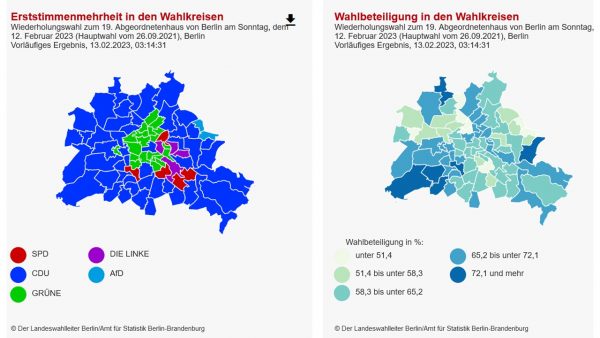
Double bind
Knowledge and knowhow are a pair of notions that have strong links between each other. It is a challenge to see 2 knowledge systems, knowledges, to co-exist sometimes for a very long time. Medicine is a good example. The traditional Chinese medicine continues to exist in parallel to the western style science based medicine. It remains a challenge to analyse the effectiveness, efficiency and equality each system can provide. In terms of public health the border between knowledge and knowhow becomes more blurred. The knowledge about diseases needs to be transferred into knowhow of how to prevent the disease to the population at large. This is a steep challenge as the persistence of alcohol abuse, smoking habits and other drugs abuses show on a global scale. Knowledge alone on the negative consequences is far from enough to prevent abuse. The thin and blurred line between use and abuse of pharmaceutical products equally challenges our traditional views on knowledge and knowhow. In a knowledge graph knowledge would figure, for example, in the core and knowhow as a satellite on the periphery. However, despite the strong link between these 2 notions, knowhow has a lot of additional links to topics like health or yin and yang. Knowhow has a basic link also to notions like memory (techniques) or even war (equipment). The more abstract notion of knowledge, “le savoir”, has been seen for a long time superior to the less abstract notion of knowhow, “savoir faire”. Polymaths have been identified for touching on several fields of knowledge with little concern for the practical side of things, despite the fact that Leonardo da Vinci combined many fields of science of his time to improve technology of his time including visions for the future. The double bind link exists in the recursive element of a link between 2 notions. Rather than denying its existence we have a lot to do to incorporate the more complicated links into our scientific knowledge and the more practical knowhow. 
Know how
The construction of a knowledge graph is like an exercise in visual thinking or image thinking. A common method in design, visual thinking uses graphical tools to visualize ideas and develop the ideas on the basis of these visuals. So, let’s take our ABC of notions running from action … over nature … to zero. We place these notions in the core of the knowledge space and develop the satellite combined notions around the core. Visually this is easily reflected in the figure below. Content-wise a lot of thinking has to fill the combinations and check empirically this mind map of the knowledge space. Abundant complexity will let us search for digital tools to accomplish such tasks. On this webpage we find already a cloud of words that is empirically showing biggest the words with the most entries of the same key word. This shows us visually what this blog is mainly about. Europe and democracy appear fairly big. Additional analytical tools will clarify what are major or minor links to this pair of notions. “There’s something on my mind”, something which I might not even be aware of. Just an empirical question, should be easy to solve, eventually. 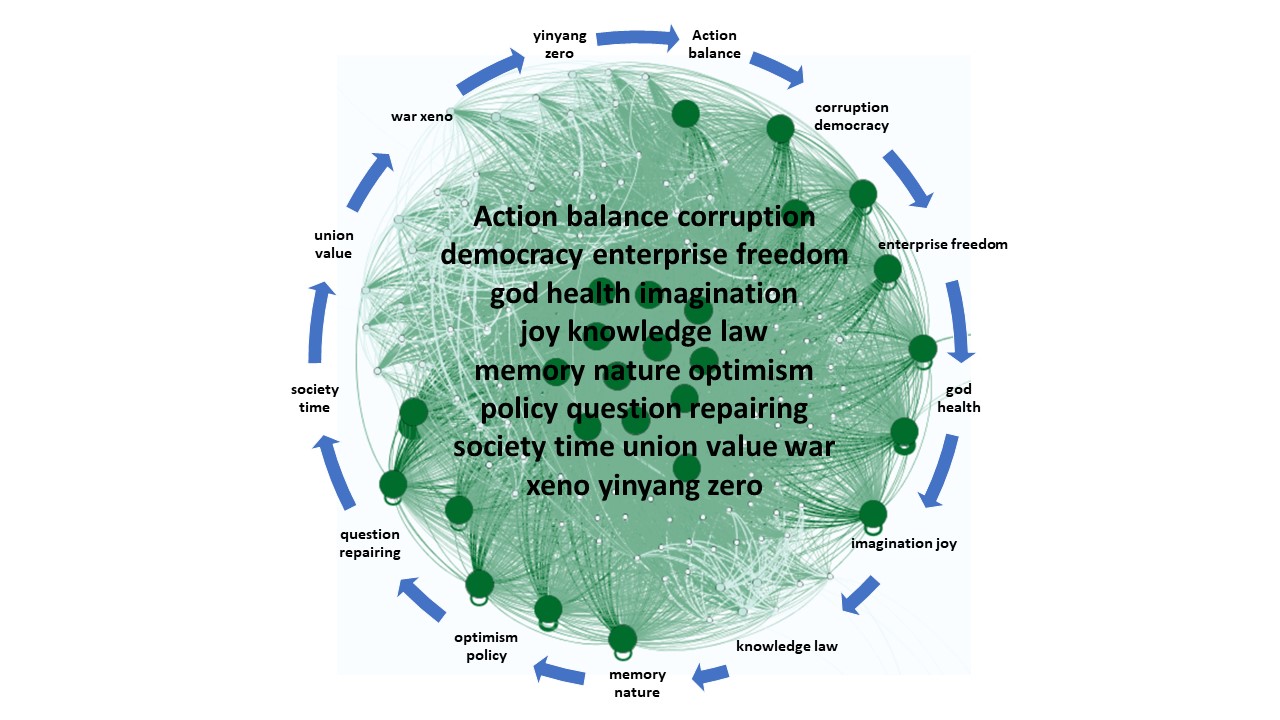
Bio-medical-sociology
In family histories we like to look on tree-like linking structures. Most frequently the choice is the descendant perspective (Top down). X, Y, Z have been the children of A and B and so on for a couple of generations. Bottom-up perspectives are equally feasible and modern patchwork families have more widespread representations of their families. Those representations were easy to do as families were lifelong bonds. Shorter family bonds, previously mainly caused by pre-mature deaths, are more common as people might have different partners and off-springs at different periods of their life course. Drawing family trees then looks more like a network structure of several families. History and literature is full of stories of how families aimed to keep their genealogy simple to the outside world. Modern days are no exception to this. Law had to adapt to these societal facts and changes thereof. Comparing decades over the last century there is, in my view, the remarkable trend to allow for more complexity in family histories, even after the 60s leading to many complete ruptures of family ties and links throughout the 70s and 80s.
With reducing fertility rates in most, not only western regions of the world, medical demography is back on the agenda. Similar to family trees, new forms of identifying promising pharmaceutical products have moved to more data-driven disease insights. Historically the local medical doctor had an overview about the likelihood of diseases following family’s medical histories over generations. Data-driven analyses, supported by data analytics and/or AI support, can learn permanently about potential and actual risks. New links of diseases are discovered this way extending the family doctor’s view of risks to watch out for in patients. Additional remedy and marketing potentials of existing drugs are also detected this way, beyond anecdotal evidence. Research published in the “Journal of biomedical semantics” by Vlietstra et al. (2020) classifies disease trajectories to construct knowledge graphs of biomolecular interactions. What previously a medical doctor in region could infer from his medical records in a less systematic way, can now be analysed on big data sets of countries, continents or even the global scale. Data is knowledge, and some already know, that this data-driven knowledge is worth a lot of money. Linking previously and seemingly unrelated facts or events, just like becoming aware of more complex family trees through DNA-analyses is the medical part of history. How we deal with this as families or societies as a whole, is the trickier part. Structural changes of societies are marked by decades-like changes, but specific events like “Fukushima”, Tschernobyl or other man-made rather than natural disasters have created new forms of contamination and the spreading of it. In addition to family trees we need broader consideration for knowledge bases to demonstrate, for example, the spread of cancer in the networked society. Additionally this evidence should have a stronger recognition in courts as prove of contamination lines. Statistical reasoning is more likely to become court-relevant. Hence, train the legal profession beyond what “statistical discrimination” is like. Causal mechanisms are manifold. Some are more likely than others. Semantic knowledge graphs remind us of the presence of reverse causality many relationships. Scientists need an optimistic state of mind to abstract from many intervening processes on health, be they tiny micro- or bigger macro-level societal effects. 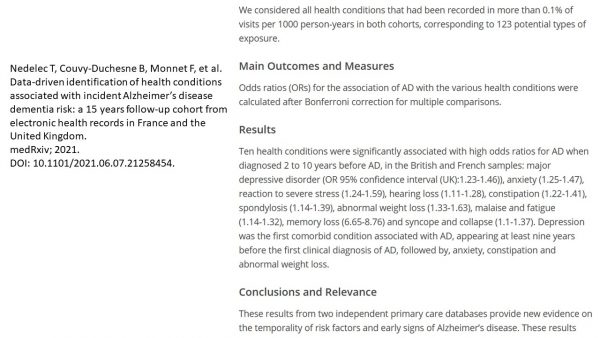
Flotow Potpourri
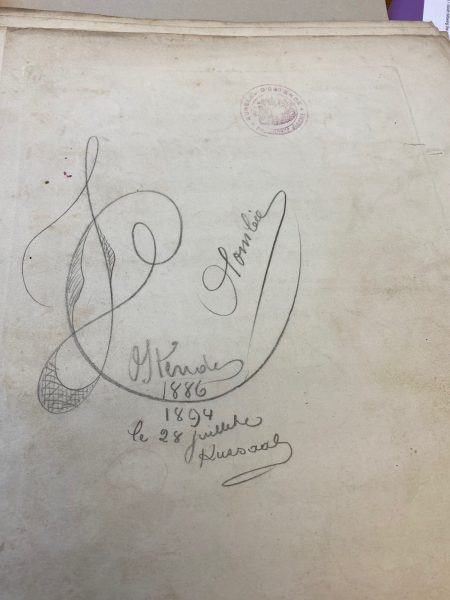
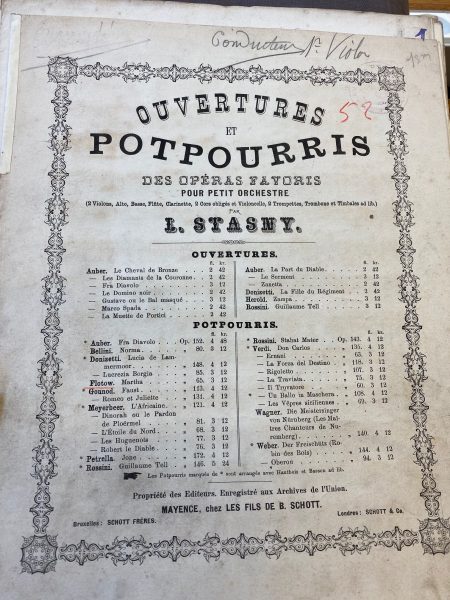
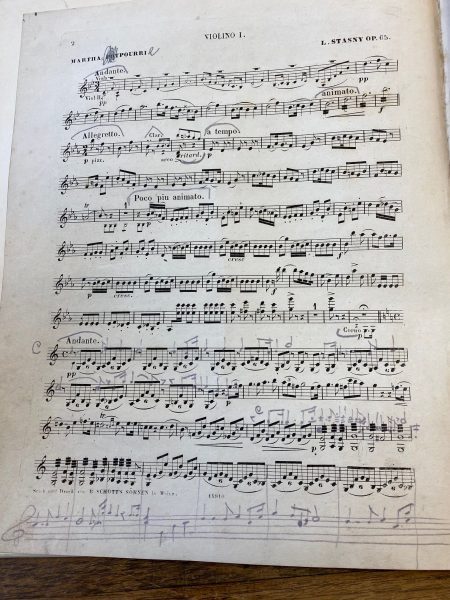
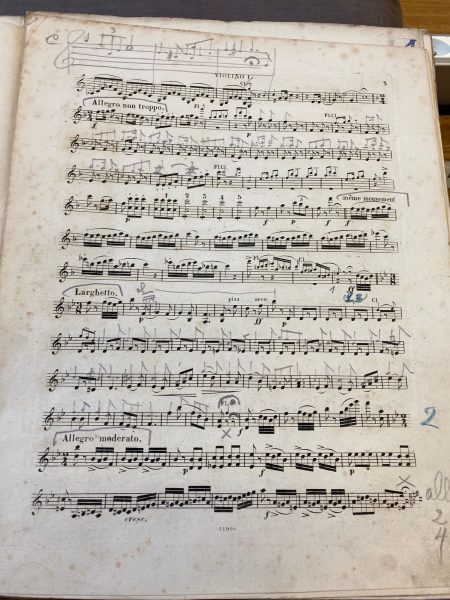
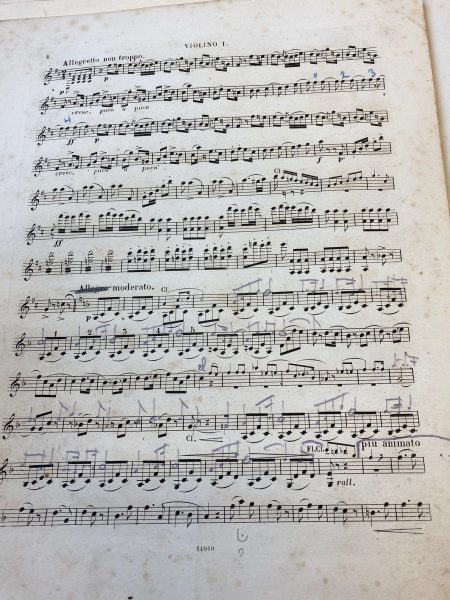
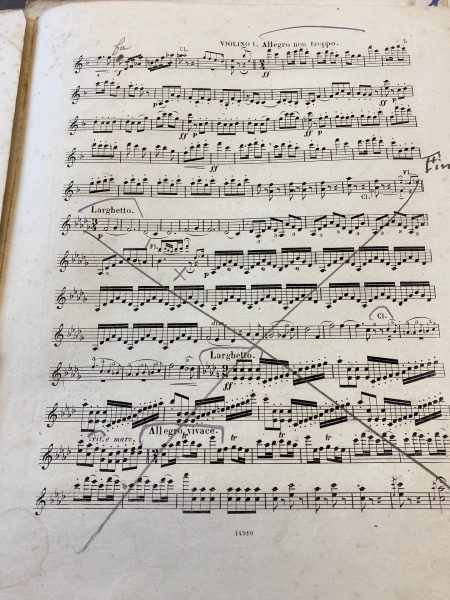
Über das musikalische Thema der Flotow Oper „Martha“ gibt es der heutigen Popmusik vergleichbar spätere verkürzte Versionen. Zu einiger Beliebtheit ist das Potpourri zu den Motiven von Martha gekommen. Kleineres Orchester und ein melodisches vereinfachtes Arrangement konnten für kurze Konzertabende verwandt werden. Der Komponist und Arrangeur Spasny Op. 65 hat Flotows Melodien aus „Martha“ publiziert (desgleichen von Wagner und Verdi). Die Kopie in der KBR Bruxelles ist ein kompletter Orchestersatz datiert von 1886 und 28.7.1894. Aufgeführt wurde das Potpourri im Kursaal von Ostende, wahrscheinlich für die Sommergäste in der Hafenstadt mit naheliegenden Erholungsgebieten und Küstenorten. Neben einigen schönen handschriftlichen Kopien für Violine (5 Seiten) oder Pauken (1 Seite, viele Pausentakte) ist die Partitur für die 1. Violino als „Conducteur“ (assisté?) ausgewiesen und sehr abgegriffen. Interessant sind die Anmerkungen und Einfügungen, wahrscheinlich zu wichtigen Parallelstimmen. Die komplette Streichung ab dem Larghetto am Ende der Partitur, anfänglich in Des-Dur, war vielleicht zu anspruchsvoll, für das zu erwartende Publikum. Ein F-Dur Abschlussakkord vorher klingt erholsamer, zumal im Urlaub nicht wahr. Der an einem Gag interessierte Musikfreund amüsiert sich an der Kritzelei am Anfang. Aus MARTHA; POTPOURRI ist Martha, Potpourrie geworden, was so viel heißt, wie „Martha verdorben“. Der Dirigent (Assistent? Es gibt noch ein sauberes Conducteurexemplar in der Mappe) hatte wohl einen schwierigen befristeten Sommerjob angenommen. Alternativ könnten wir das aber auch interpretieren als Kommentar zu der vereinfachten, aber verdorbenen Version der Flotowschen Martha als Originalstück. Genauer wollen wir das gar nicht wissen, oder?
Flotow Europa
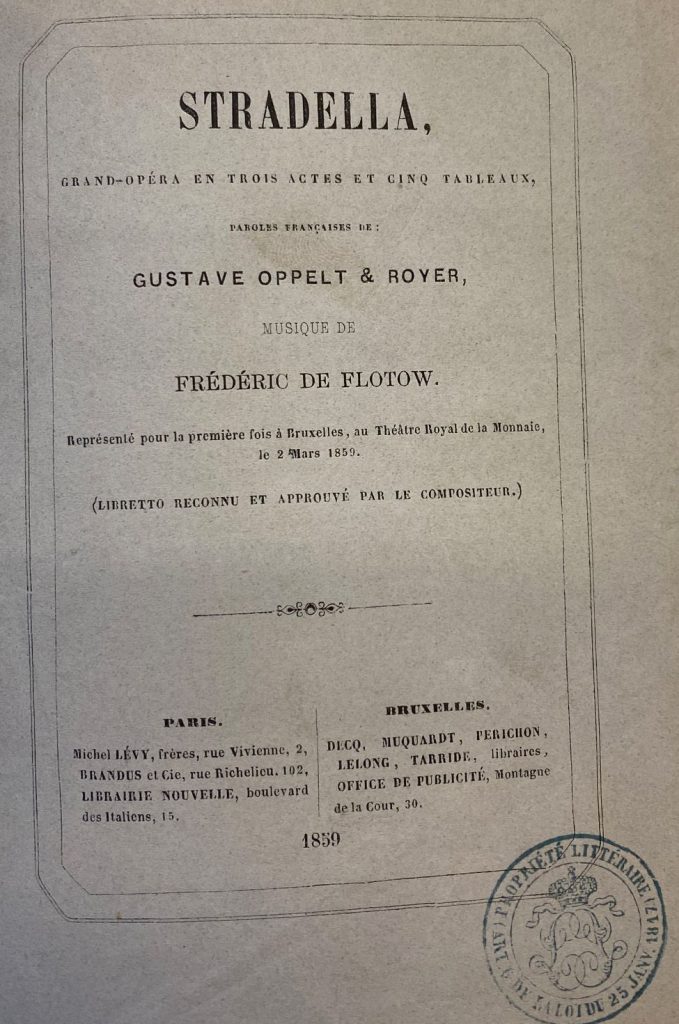
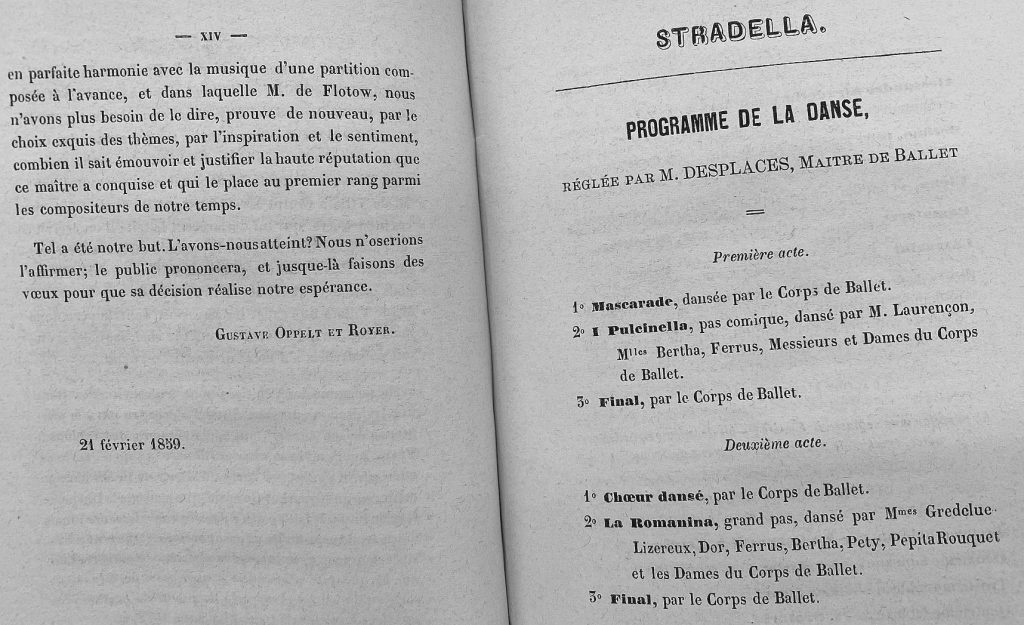
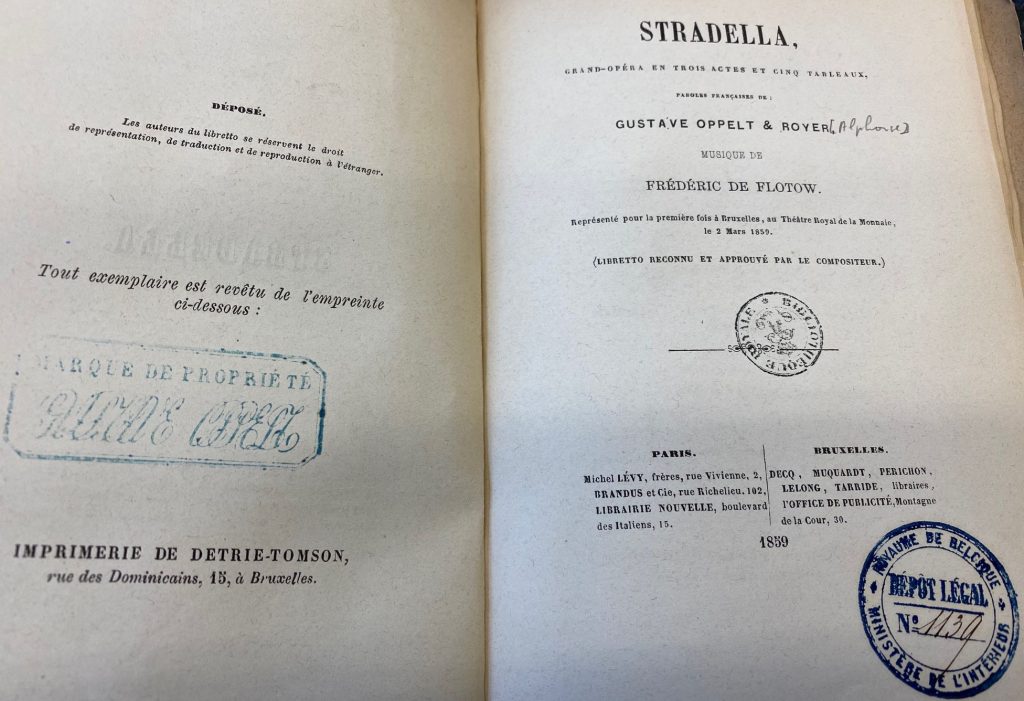
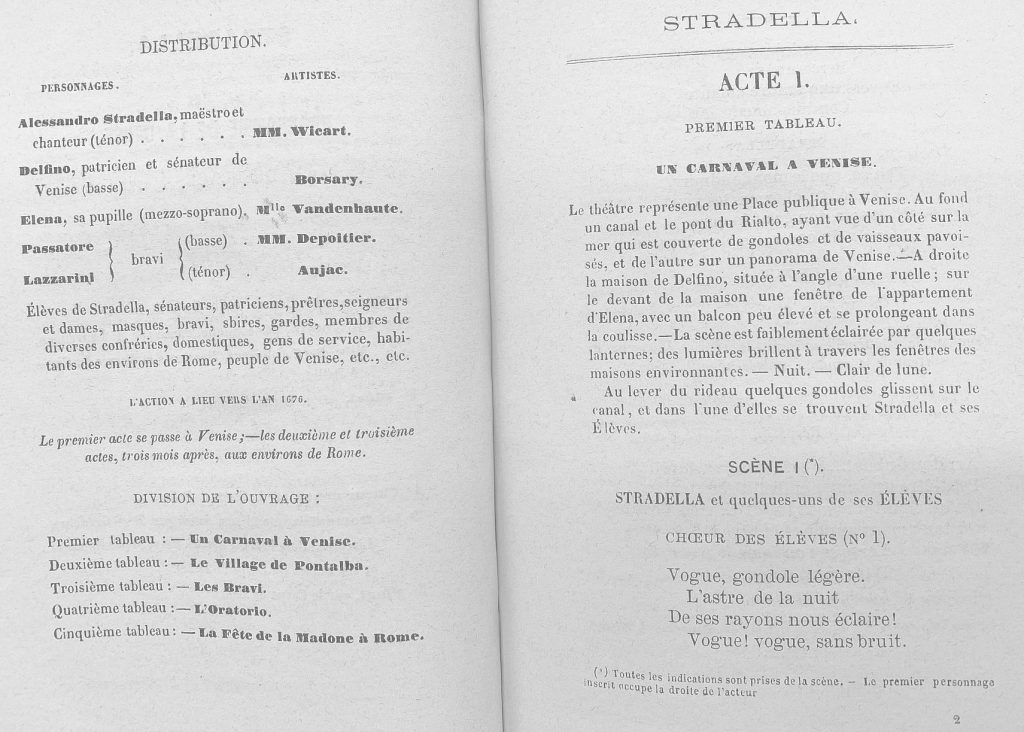
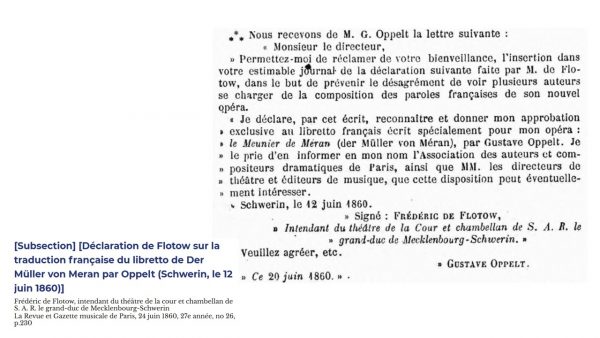
In der späteren Aufführungspraxis des Werks von „Fritz“ von Flotow, wie ihn seine Mutter in MeckPom nannte, sollte es für den in Frankreich ausgebildeten Jugendlichen einige Fallstricke zu überwinden geben. Bereits seine erste Oper „Alessandro Stradella“ hatte mit Produktpiraterie zu kämpfen. Der Übersetzer Gustave Oppelt (1844 Autor zu Stradella genannt BNF), mit Erwähnung auch von Alphonse Royer, hatten die Rechte des Librettos inne (Stempel des Dépôt Légal 1859 Nr 1139). Anlässlich der Erstaufführung in Brüssel am 2-3-1859 au Théâtre Royal de la Monnaie erschien das gedruckte Libretto versehen mit einem Echtheitsstempel. Bereits 1860 gab es dann Anlass, dass Gustave Oppelt mit der Unterstützung von „Frédéric de Flotow“ für seine Übersetzungsrechte kämpfen musste und dazu eine Notiz in der „La revue et gazette musicale de Paris“ veröffentlichen mussten. Autorenrechte waren und sind keine Selbstverständlichkeit. Die Lebensgrundlagen vieler Künstler, besonders der KünstlerInnen, auch heute, bleiben meistens prekär. Flotow war bereits beteiligt an Vereinen, die die Kompensation von AutorInnenrechten vertraten. Die „Dédicace“ an die königliche Hoheit Madame la grande Duchesse Douairière Alexandrine de Mecklembourg-Schwerin, née princesse de Prusse (Link Stammbaum), versteht sich dabei wohl auch als Dank für die Berufung von Flotow als Intendant an das Theater von Schwerin, gleich neben dem schönen Schloss. Mäzene konnten wohl über Stellenbesetzungen KünstlerInnen ihr künstlerisches Arbeiten weiterhin ermöglichen. Flotow brauchte auch die Unterstützung, die ihn zu seinem Lebensende nach Darmstadt umziehen ließ.
Ukraine 360
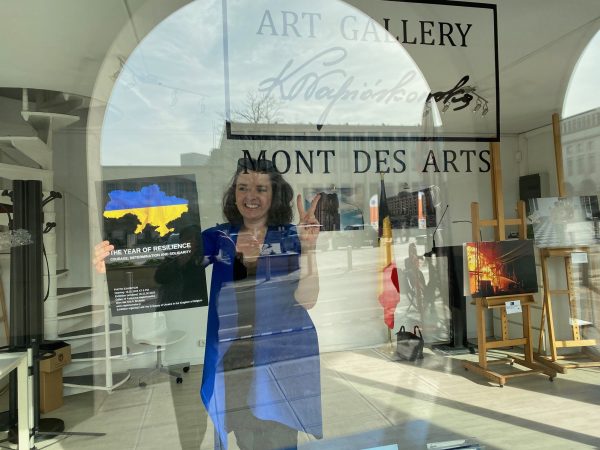
360 days of traumatising war of Russia in Ukraine. Yet, Ukrainians manage to stem the invasion this time for a year. My generation of baby boomers in Western Europe no longer knows the day to day horrors of war. A photo-realistic exhibition organised by Dr. Justyna Napiórkowsak together with the Ukrainian Embassy in Brussels brings to us more than images of destruction. The Exhibition builds on a transparent organisation. All day and night long you can feel and reflect in front of the gallery windows of what war means to people affected. Rather than passing over the daily horrific news, it is important to take in images that will last within you. Since the exhibitions excels in linking to strong own emotions, the images tell lasting stories. Communicating about war is difficult. This exposition at the “Mont des Arts 8” in Brussels, not far from the “Place des Martyres” is symbolic. Ukrainian artists are going to stay with us, showing us what “The year of resilience. courage, determination and solidarity” mean in the Europe of today. Ukrainian youth, like the whole population, demonstrates all of this in posing for their 2022 graduation photo (Stanyslav Senyk, 2022) actually within the ruins of their city. They seem to sing: “We shall build this city on rock and roll” again. Ukrainian culture is unique. Putin’s Russia is still living in the 50s state of mind. The Russian soldiers might soon have their 60s moment “make love, not war”. For persons with Russian roots in Eastern Europe it feels like what you believed or were told was a friend before is now turning around and you shooting at you including committing war crimes (Geneva convention) on you. The exposition is a “homage to Ukraine”, Ukraine’s resistance and resilience. Teaching us lessons, lessons we should like to learn fast for the survival of democracy and our way of life based on freedom not coercion. The sociology of war informs what the term “Zeitenwende” means. Look at it, rather than look away. As previous College Master at Jacobs University Bremen graduation ceremonies were very personal and emotional events meeting students, many with their families. Ukraine 3.0 will prevail eventually. Thanks, Justyna for putting images 360° and 360 days next to this optimistic message. 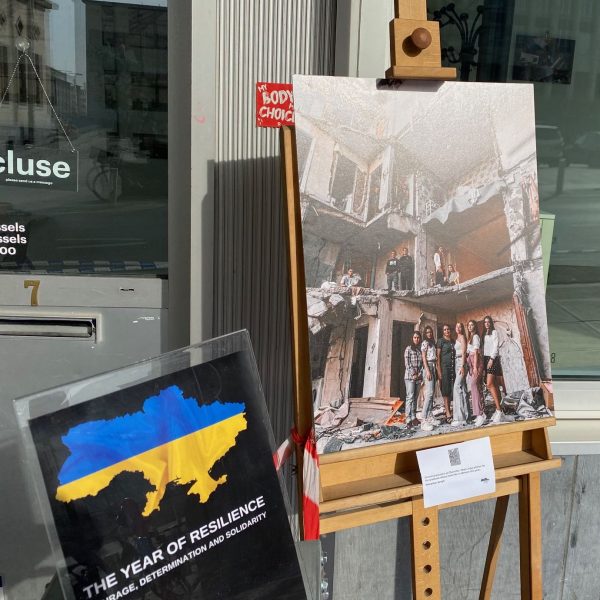
40s
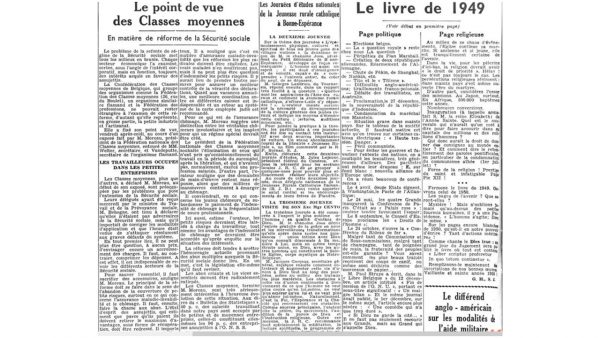
The years spanning from January 1940 to December 1949 are probably the worst to cramp into one decade. However, there are a few historians that use this approach to throw new light on a distant series of historical events in the 40s. The European perspective is dominated by war years and still has to deal with the unimaginable atrocities committed by Nazi-Germany until the end of the Second World War. From a more global historical perspective the war in the pacific also leaves lasting political changes, which are important to understand international politics and affairs of today. After a disastrous beginning with war for the USA for the decade, on the 10-12-1948 the United Nations (Charter Ratification 24-10-1945) General Assembly adopted the Universal Declaration of Human Rights. On the timeline at the end of the 40s we find the founding of NATO (4.4.1949) and (12-8-1949) the Geneva Convention which specifies internationally accepted laws of warfare. The beginning of the Cold War (Yalta and Potsdam Conferences in 1945) with strategies of containment and confrontation (Thomas Tandy Lewis, 2011 p.220), Berlin blockade determined a long-lasting concern for a balance of power across the world. The 40s were a market period of de-colonisation as well. The U.S. enabled struggles for independence to succeed with a sticks and carrots politics towards their wartime allies. The Marshall Plan for European Recovery is the most prominent example of this period. Ronald Goldberg (2012) includes a chapter on the home front in his summary of the forties in the U.S.A. After the 2nd World War all countries had to re-establish their societies and economies that had suffered due to lack of sometimes even caring for the most basic needs. Important lessons have to be learnt from the 1940s (Dave Renton, 2000 p.144) concerning how Fascists could rise and why, for example Britain, could resist the fascist movement. Anti-fascism in Britain during the 1940s and the importance to stop beginnings of an undemocratic political movement early and with the help of the police are 2 elements of the lessons learnt. Goldberg argues that it is less the Fascist ideology that conquered the minds of people, but the organisation as a political and para-military movement that is the more important threat to democracy. 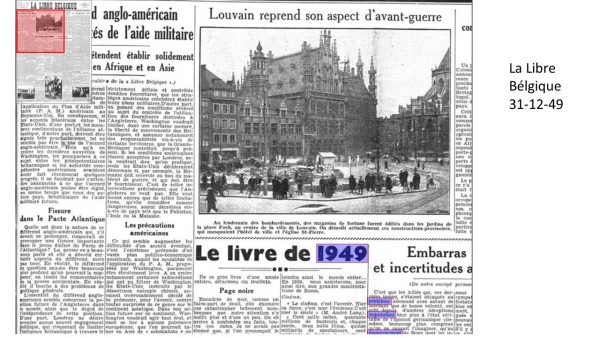
From AI with Love
Love is action. Love is balance. Love is corruption.
Love is democracy. Love is enterprise. Love is freedom.
Love is god. Love is health. Love is imagination. Love is joy.
Love is knowledge. Love is law. Love is memory.
Love is nature. Love is optimism. Love is policy.
Love is question. Love is repairing. Love is society. Love is time.
Love is union. Love is value. Love is war.
Love is xeno. Love is yinyang.
Love is zero.
All you need is laugh. Love is all you need. 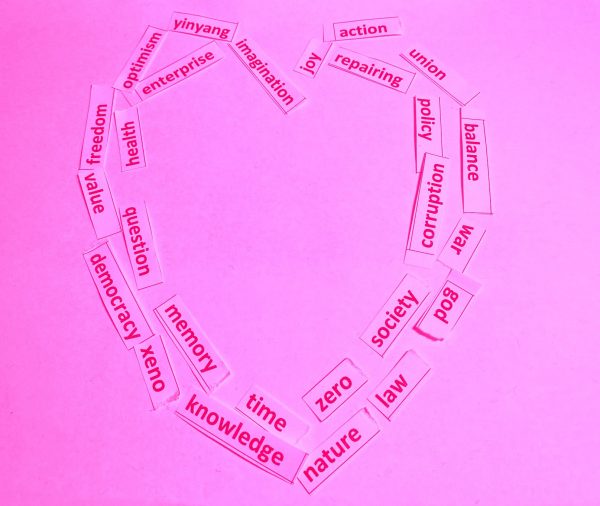
Aphorismen
Eine Sammlung von Aphorismen, wie sie Georg Christoph Lichtenberg hinterlassen hatte, regten viele Denkende an, sich mit seinem Gedankengebäude zu befassen. Die prägnante Form der Zusammenfassungen, Hypothesen oder Vermutungen zu jeweils einem großen Thema hat ihn unsterblich werden lassen. In Form von Gedankenblitzen, Neudeutsch Tweets, vor mehr als 222 Jahren, gestorben ist er im Jahr 1799, zeugen von großem Weitblick, Tiefe und Breite seines Wissens (Polymath). Jede Person, die sich heute in der Schule mit der Infinitesimalrechnung befasst, der mathematischen Annäherung an einen GrenzwertS (Mathe Vorlesungsnotizen pdf), findet bei Lichtenberg zum Beispiel die Anwendung dieser Methode auf soziale Phänomene. Einer Wahrheit werden wir uns auch nur annähern können, selbst wenn wir sie auf unsere Weise, zumindest temporär, als solche definieren. Vor mehr als 250 Jahren hat Lichtenberg bereits in seinem ersten „Sudelbuch“ interessante Gedanken niedergeschrieben, die uns heute noch Nachdenken lassen. „Unser Leben hängt so genau in der Mitte zwischen Vergnügen und Schmerz, dass uns schon zuweilen Dinge schädlich werden können, die uns zu unserm Unterhalt dienen, wie ganz natürlich veränderte Luft, da wir doch in die Luft geschaffen sind.“
Dem modernen Menschen ist das Bewusstsein, in die Luft geschaffen zu sein, fast vollständig abhandengekommen. Unsere Eingriffe, wider besseren Wissens, lassen weltweit jährlich Millionen Menschen vorzeitig sterben am Smog der Moderne. Innovation ist enervierend, wenn sie nicht vornehmlich den Menschen im Blick hat. Es sollte noch einige Jahre nach Lichtenberg brauchen bis Goethe Faust den Satz sagen ließ: Die Geister, die ich rief, ich werd’ sie nicht mehr los. Lichtenberg setzte das obige Zitat so fort: „Allein wer weiß, ob nicht vieles von unserem Vergnügen von diesem Balancement abhängt; diese Empfindlichkeit ist vielleicht ein wichtiges Stück von dem, was unsern Vorzug vor den Tieren ausmacht.“ Aus dem Akt der Balance den jede/r Einzelne zwischen Schmerz und Vergnügen im Lebensverlauf beschreibt ist längst ein gesellschaftlicher und politischer Balanceakt geworden, zwischen gesellschaftlichen Gruppen sowie zwischen Generationen. Die Abweichungen von einem Grenzwert oder von einem ausbalancierten Zustand sind ebenfalls größer geworden, so dass der ganze Akt ins Wanken gerät. Mit dem beschriebenen, unserem Vorzug vor den Tieren, könnte jedoch ebenfalls ein Teil des Problems sein, denn die Vernichtung der Biodiversität ist nun mal noch die Lebensgrundlage des homo sapiens. Seien es Schwankungen um einen Mittelwert oder immer kleinere Annäherungen an einen Grenzwert, wir wanken auf Pfaden, die Lichtenberg angerissen hat. Blogposts sind wohl vergleichbar den Einträgen in Sudelbüchern. Aus vielen Puzzleteilen kann ein Gesamtbild entstehen, muss aber nicht. Die Begriffe „Random Walk“ oder „Brownsche Bewegung“ sind erst lange nach Lichtenberg entwickelt worden. Heute sind wir von dem „Random Walker Algorithmus“ begeistert oder erschreckt, wenn letzterer für „fake news“ statt Wahrheitsfindung missbraucht wird. 
Photo K
The self portrait is a timely topic for an exhibition of photography. As part of the European month of photography (EMOP), the PhotoBrusselsFestival offers a good overview of what photography deals with in the 21 century. The Korean cultural centre (KCC) in Brussels has a long tradition to serve as an exposition in the centre of Brussels (Sablon) and is joining this year’s photo festival. The 2023 photography festival has the “Self-Portrait” as a guiding theme. Rather than entering the debate about “portrait chosen or portrait endured” (Photographica 5,2022) the self-portrait has more degrees of freedom in it. Even if it is apparently a choice to portrait oneself, there are ample examples, where the urge to produce a self-portrait is part of a wider concern for fundamental issues.
The exhibition of 5 artists from Korea at the KCC invites us to reflect on the pervasive self-portrait practice all around us. The self-portrait is not only a tool of self-reflection, which has a long tradition in art (just think of a famous drawing by Albrecht Dürer of himself), but self-portraits are also pervasive on media and social media today. Additionally, the self-portrait is a powerful tool of thinking and imagining yourself at various stages of the life-course. For centuries it had been a social or political privilege to have your portrait taken. It still is to some extent, but only if the person taking the photograph, has a special reputation. In a market difference to the selfie, the exhibition of artists in the KCC highlights the process of self-reflection that is part of creating the portrait as well as the ensuing reflection by the spectator. In looking at the self-portrait of the photographer, we might involuntarily deal first with our own perception of the image. Danger, dreams, fantasy, sorrow, pain, self-assertion and reconstruction of the self, all these themes come to mind when confronted with the self-portraits of the 5 artists (Bae Chan-hyo, Jeong Yun-soon, Lee Jee-young, Ahn Jun, Choi Young-kwi).
KCC director Kim Jae-hwan names this collection, curated by Seok Jae-hyun, “An odyssey of images leading to self-re-flection”. In referring back to the protagonists in novels from Hermann Hesse, he points our attention to the “unique journey through images as they find themselves”. To embark on the journey visit KCC in Brussels, ask for a copy of the catalogue or start by reading the title of the exposition: “Who Am I” – it is apparently no longer a question after the journey. Is it for you? More reflection on images and photos here. 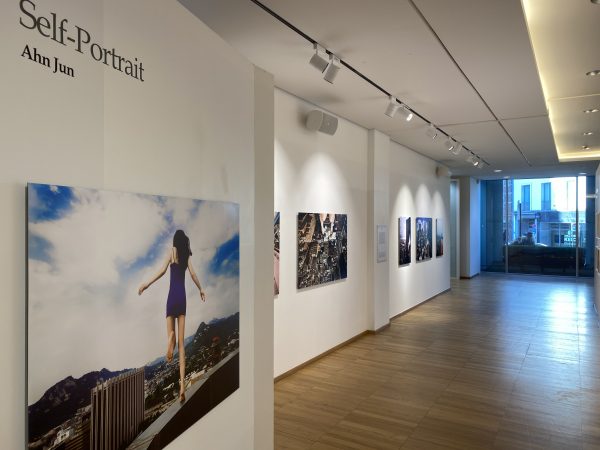
Affordable Art
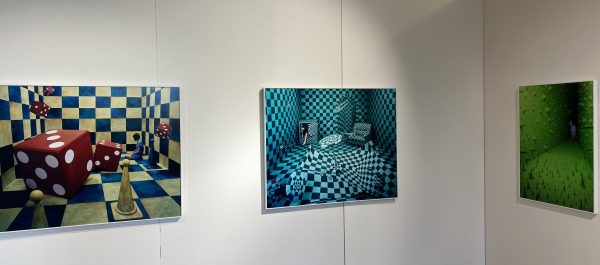
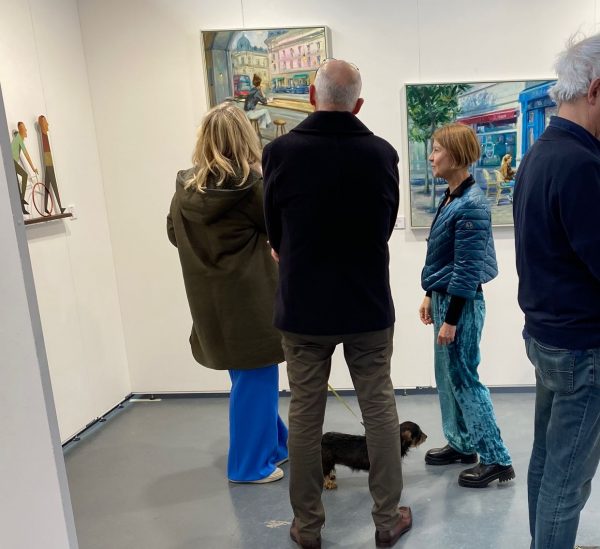
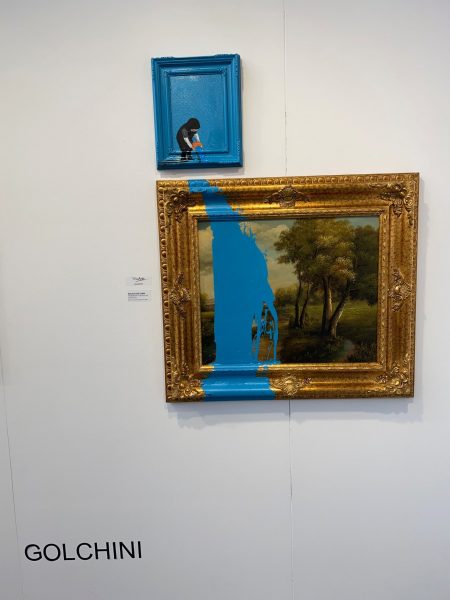
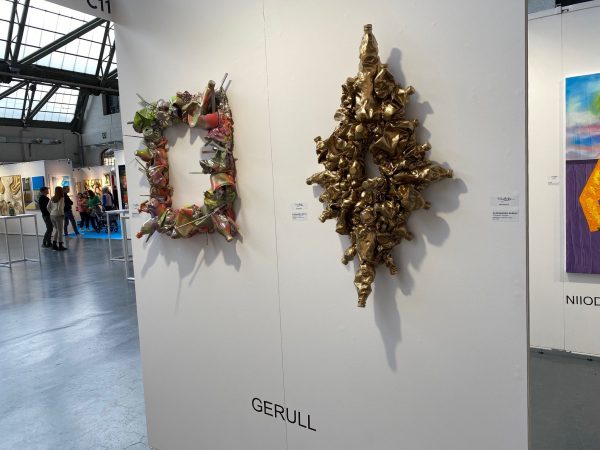
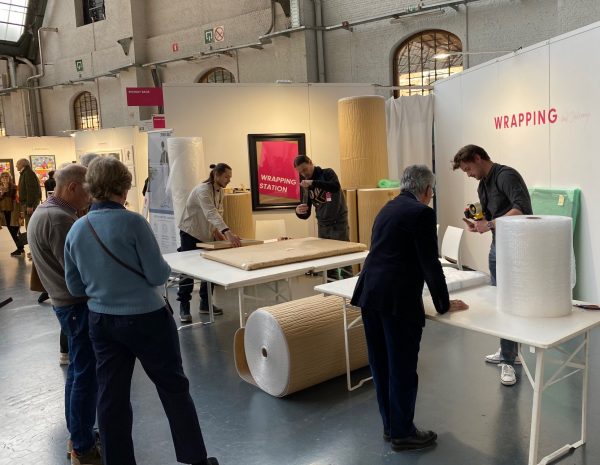
The affordable art fair in Brussels 2023 has different rules than other art fairs. First of all, well behaved dogs are allowed to visit. Underdogs might have a problem. The entry fee is an astonishing 20€, only 5€ less than “Brafa”. Inflation hits affordable art apparently more than the prestigious fair, at least at first impression. It remains questionable, whether artists represented as affordable art can actually afford to make a decent living from their art, now and at retirement. Taking into account the cost of rent, material and working time of artist, gallerist and transportation, art is frequently the art of minimalist approaches. The “garbage cycle N18” by Alessandro Gerull presented by WinArts challenges our habits of endless production of garbage by use of recycled material for making art. Not an entirely new idea, but still intriguing at affordable prices. Similarly, from the same gallery the work from Golsa Golchini invites us to “Remember to water the plants” as we might have asked somebody to help us out.
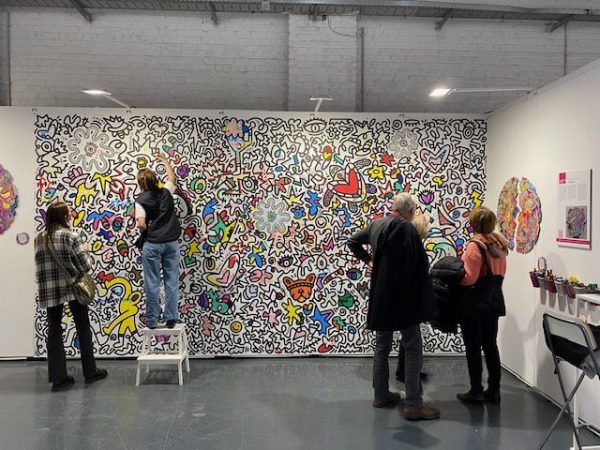
Re-use of material or innovation in photography are present at many places. Discovering new talents at affordable prices is a feasible feature of affordable art around the globe. The thresholds of entry are considerably lower than at Brafa. The surroundings of the old Tour & Taxis Logistics Centre in Brussels are an interesting excursion in modern renovation of old industrial sites as well. Not many skill-shortages in arts, except the more critical and provocative artists probably have still a hard time to find their way into galleries and art fairs. Other cities dare more daring art, be it affordable or not. The concept is a bit like coffee or “art to go”, quite many people walk away with a nice, little parcel in their hands. Even participatory art is represented, a kind of do-it-yourself, or finish it yourself drawing. It is fun to experience and to be part of affordable art of that kind to leave with some positive vibes (Roxehga). Enjoy!
Art Un-Fair
The Brussels Art Fair (Brafa 2023) with its long tradition is certainly a major highlight in the world of art in Brussels. In view of the languages spoken at the fair, mainly French and Dutch, some English with here and there a word in Spanish or German, the international reach is probably still not at the level of before the corona crisis.
The availability of established, internationally recognized art over many centuries on the art market is remarkable. Whereas before the crisis speculators bought art to shield their fortunes from a high inflation and/or politically instable period, nowadays it seems to me, that some art is returning to the market due to the need for liquidity of speculators or risks of confiscation in case of dubious previous acquisitions or ownerships. Renowned galleries, of course, provide impeccable certificates or information on them, a tricky business in itself. Anyway, the tour on the fair is a “parcour” through the history of art, mainly through the Western or European arts across centuries rather than decades. Most persons will find splendid examples according to their preferences of art ranging from paintings, sculpture, prints or other artefacts. Beyond the impressive individual art work, the arrangements and “mise en scene” of art is another learning experience at the fair. Whereas most public museums are happy to make accessible as much as they can of their collections and archives, the private art market has another objective. Effective and convincing presentation of the artefact is likely to “enrich” the value of art work as well as the seller and the dealer. Technology allows great lighting and some otherwise “sombre” artwork becomes a shiny little piece catching eyes, hearts and wallets. For some visitors it works probably the other way round.
For persons overly stimulated by art, I recommend to close the actual or virtual visit with a look at the little bit cheeky artwork presenting Belgian chocolate next to royalty (Gallery Delaive, showing Peter Anton’s “Paradise Variety” next to Andy Warhal’s depiction of a Queen, see below or their Instagram presentation). A sublime moment to repeat the experience at home at moderate prices with your very own box of chocolates. At a price of 10€ each box you can enjoy roughly 2000 of them for the price of the art work. The question is: What is more healthy? Think about mental health as well. Alternative question: Art on a Fair is fair, unfair or fair traide? 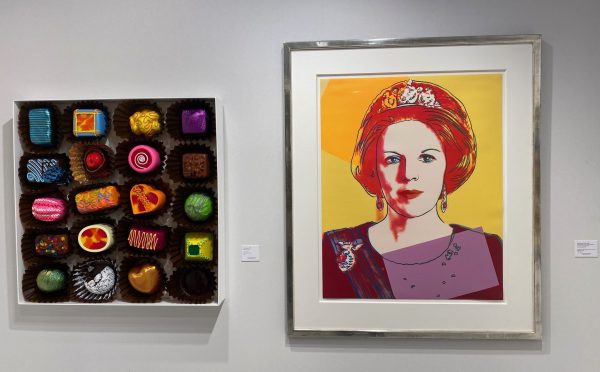
50s
The fifties are remembered as the prosperous and booming years in the 20th century, worthy of nostalgy for some. Indeed, after the 2nd world war and its destruction the time of re-construction had come already some way, thanks to the Marshall plan of the late 1940s. Most countries had to turn huge military equipment industries into civil uses. After the Schumann Declaration, the European Coal and Steel Community was a first successful and lasting institution building in Central Europe. A mass production boom of cars, civil aircrafts, radio and the beginning of public television were landmark changes in the relationship of technology and society. The U.S. became a leading force in this evolution pushing for free trade between countries and consumerism. The deprived generations of the war period in the 40s welcomed the “fabulous fifties” (Arleen Kelin, 1978) as a dynamic and prosperous decade, despite dramatic speed to innovate new more deadly weapons. The atomic bombs were tested from superpowers and nuclear energy started to surface. Solar cells and optic fibres were also inventions of the mid-50s. Strange that we had to wait for another 70 years and multiple crises before these resource-efficient technologies achieved popular success. Integrated circuits, micro-chips, the laser, Tupperware, Coke, Lego, Mickey Mouse and global cinema came upon us during the 50s. The Sputnik effect re-opened an arms race as part of the cold war including outer space beyond airplane reach.
Families longed for and indulged in an as normal as possible family life. Unfortunately, this meant for many women, who had worked outside home during wartimes, to return to a role of housekeeping. Rock n Roll and increasing consumption of mass produced products could compensate for some of this deprivation. Higher divorce rates in the 60s and/or lack of own pensions were the dire consequences for many women. Showtime, and showing-off were the mantra of the 50s. Glamour (Magazine) rose to cult status and prepared popular culture and art. Following fashion and awareness of design spread across societies enabled by the easier access to “sewing machines” allowing more home production for the middle-class persons. The “people of plenty” (Andrew Dunar, 2006 p.167-8, referring to David Potter, 1954) were effectively sold a car culture with the automobile as an agent of change.
The atomic era was believed to continue prosperity for more decades (Expo 58 in Brussels) and a delicate, but relatively stable balance of power restricted open wars. “The End of Ideologies” during the fifties (Daniel Bell, 1960) lead to focus on Realpolitik and a race for prosperity, oblivious of the ecological consequences for many decades to come. 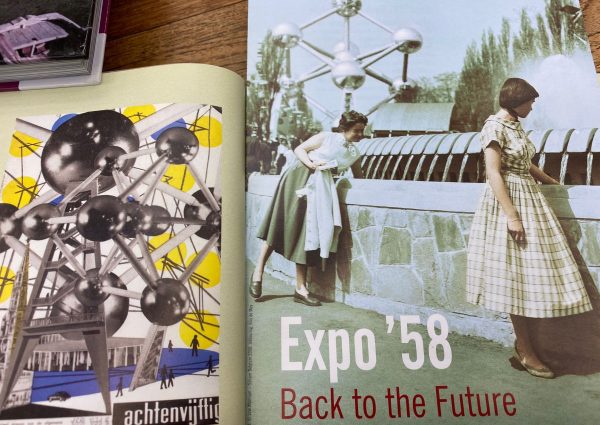
Protest
In studying the 60s we still come up with a number of remarkable ideas. Not only concerts moved the masses but also new ideas flourished. Many subcultures developed specific forms of protest. To implement new ideas, new forms of protest were applied to advance civil rights, to overcome established routines and to raise awareness for inequalities and injustices. New forms of participatory democracy were tested and some reached public attention and/or approval. Burner (1996, p.162) even goes as far as defining freedom as “continuing exercise in decision-making” which hinges on the taking-in of all voices across society. The coming together of freedom and community constitutes the cross-roads of politics. Besides terrible effects of violent abuses, peaceful forms originated in Gandhi’s peaceful resistance in 1930. Martin Luther King and later Nelson Mandela reached historical milestones through peaceful forms of protest. In 1967 in Oakland, California, the form of “action protest” took place. The basis of protest was civil disobedience going beyond sit-ins as the civil rights movement had applied. “They involved blocking roads and entrances to buildings, peacefully inasmuch as the demonstrators used no force beyond the presence of their own bodies or other obstacles to passage.” (p.163). The new feature was, that protesting persons take the risk of being a victim of violence without a violent response from themselves. The intention is to “convert temporary antagonists into permanent friends”. Through the repercussions in mass media protesting persons can reach larger audiences and touch “uninvolved or possibly sympathetic bystanders” (p.163). Such new forms of participatory democracy, acting in the public arena, are stretching the idea of peaceful protest to its limit, where the freedom of others might be impinged. Participatory democracy, therefore, is a balancing act. Some recent forms of protest, in fact, have their origins in the 1960s or the year 1968 a focal point. They continue to be influential 55 years later in many countries and at all instances where basic freedoms or minority rights are violated or threatened.
Protest has also moved online. Internet sites are not only used for simple communication, but they serve as port of entry to prepare and organise protest. High-jacking of company or political adverts in the public arena can be taken online as well. Challenges to conventional politics and media representation is enacted through webpages like www.adbusters.org or www.indymedia.org the latter page comprises a whole network of local activist groups. Brian D. Loader (2003, p.1320) has added activist approaches against particular corporations to the list of online protest forms. Through public shaming of brands these activists attempt to raise awareness of the public for abusive employment practices, cruelty towards animals, environmental disasters or fake information using online channels like social media, email-lists or chatgroups via mobile phone numbers. The funding of protesting persons is another relatively new form which ranges from crowd-funding initiatives through platforms as well as forms of corruptive practices applied by states or corporate interests. Protest against protest is online and offline the next round of activist forms of protest. Democracy, law and the police have to balance out these new forms of protest. Learning about the way democracy functions is a continuous task, some would say a continuous struggle. Evaluations of the short-term or long-term effectiveness of protests yields important insights about the functioning of democracies and autocratic regimes. New forms of protest need new forms of measuring impact as well. 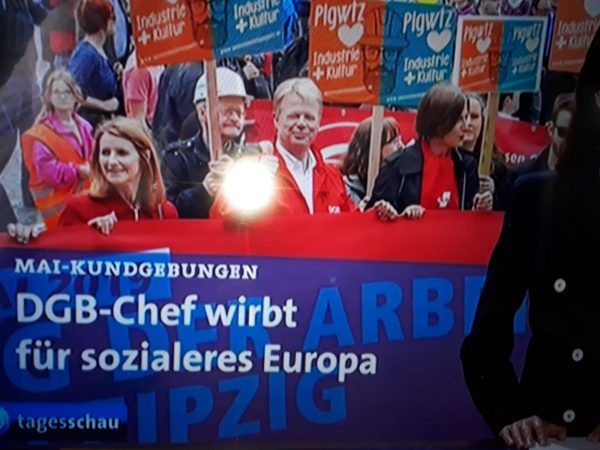
60s
“Make love, not war”, is a summary slogan of all sorts of protests that have moved the sixties. With the spread of television impressive images caught attention no longer just locally, but almost across the whole world. With the inauguration of political debates on TV between Kennedy and Nixon, reaching millions of persons at once and images travelling borders faster than to translate text, spreading of new ideas and political actions was more rapid and more emotional. Commonly the 60s are described as the sex, drug and rock-n-roll period. But there is much more to it. Yes, the sex revolution got started and access to, as well as experimenting with, drugs became more widely spread. Music became a defining moment for young people from teenage years onwards. After Rock n Roll from the 50s, came the rock music and pop culture, which were able to bring together huge crowds of several hundred thousand party-goers. The Woodstock festival and hippie gatherings became a defining moment mainly for the young. Older generations still battled for affordable housing and the “Great society”, as a large-scale anti-poverty program was called.
The phenomenon of the Beatles co-defined the 60s. The Beatles captured more than just one generation with their popular songs and iconic style. Mary Quant, attributed to have designed the mini-skirt, equally co-defined a period with a visual provocation to conservative life-styles. In parallel, the sixties saw the civil rights movement grow, Black Power succeeding with peaceful actions more widespread attention, leading to the abolition of openly racist practices. The peaceful movements and happenings, however, had to face the deadly attacks on J.F. Kennedy and Martin Luther King during the 60s. The whole decade was influential in the field of education as well. Based on a new spirit of altruism and happiness combined with, but also beyond religious feelings, new forms of living together, sharing and the common good were tried out. Anti-authoritarian educational practices were influential beyond the 60s.
Books covering the 60s are manifold. In addition to Arthur Marwick’s impressive, multi-faceted volume “The sixities”, I enjoyed the book by David Burner “Making peace with the 60s”, especially his approach to burn some received wisdoms about the 60s, namely the restriction of it to those 10 years. “The withering away of philosophy”, the beginnings of postmodernism and a theory-driven or conceptual approach to the decade, amongst other topics, is the merit of Fredric Jameson (1984, p.192). “The 60s without apology” is a programmatic title well worth thinking about seriously as the editors and authors did.
Besides the ecological disasters of the 60s already, (nuclear, oil and wars), Mini Cooper cars, Lava Lamps as well as Blow or Ball Chairs, Barbies, Frisbees, Brigitte Bardot and Pippi Longstocking (Patricia Massó, 2010), all were dressed to impress. “The 60s without apology” by a group of editors nicely summarises the review of the 60s and their lasting effects on us, for better and/or worse. 2 generations later in 2023 youth is again threatening mass mobilisation in France as depicted in LeMonde 4.2.2023. It is a kind of “déjà vu experience”. 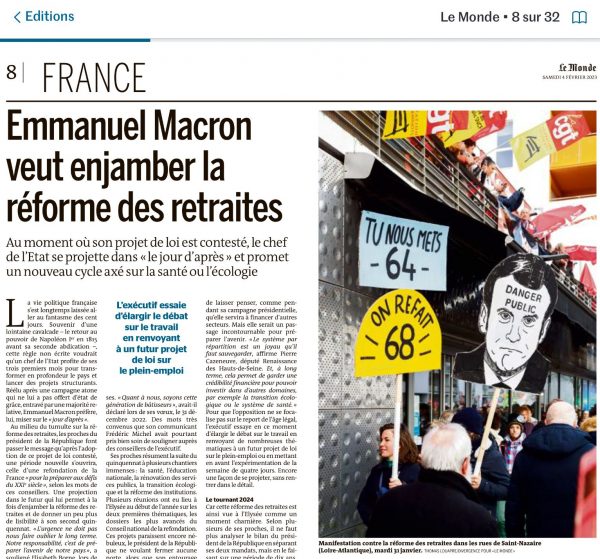
Time3
The evolution of time is fascinating as research topic. Both in theoretical as well as empirical approaches. Beyond the precise measurement of time and the use of time in measuring working time, which intensified during the industrial revolution, we witness continued struggles over the length and the organisation of working time. The 30+X hours week working time could be reorganised into a 4-days week to improve work-life balances for millions of people. The effects are not only on employees directly concerned, but also on their families and/or households involved.
The changing perception of time (as being short of time) and its evolution over time needs huge surveys collected over time (known as “Time use studies”). Inequality over the life course remains an issue with a persistent gender bias. Unhealthy and excessive overtime work is still a problem, usually negated by upper ranks in hierarchies.
Let us start to imagine different concepts of time to maybe one day overcome the shortcomings of our current understanding and use of time. Usually, time is considered a linear concept, one day follows another day and so on. Time, depicted as an arrow or a horizontal axis in graphical representations, is helpful for most processes we observe. If our aim is to explain a social process which evolves over time, we could perceive time as running with different speed in, for example, urban and rural areas of the same country. The liberalisation of women or peace movements evolved or spread with different speed in different regions. The 60s became known for many women as the decade when the control of reproduction allowed different life styles. Concerning reproductive behaviour and divorce rates a break in series compared to previous periods is observable, reduction of reproduction and diffusion of divorce throughout societies. Instead of continuous time we might speak of discrete time, in for example decades like the 60s, 70s, 80s. In retrospect “social time” seems to have passed faster in one decade than the other. We might also imagine time as growing exponentially as time². Taking into account the slowing down and successive rise again of evolution over time, the time trend might look like a rising wave (time² + time³). In econometric models testing of such hypotheses is feasible, although it is more difficult to convince reviewers of an alternative theoretical model of time.
An investigation of trends of democratic behaviour over time would need to adjust for the potential and sometime measurable return of undemocratic practices for periods. A depiction of such “social time” of democracies as an upward rising line with periodic relapses is a plausible theoretical framework. Trajectories of inwards or outwards spiralling processes are already fairly complex trends for the process of democratisation as the phenomenon to explain or the modelling of a time trend to explain the level of democratisation reached so far. Challenges of time frames for independent and dependent variables in social processes might be questioned altogether to claim that time is a spurious occurrence of events much like a process of a so-called “Brownian motion” also named white noise. In fact, not being explicit about the concept of time applied in social analyses amounts to a severe neglect. Examples of such neglect are certainly all those cross-section studies, still pervasive practice, in social sciences or opinion polls. The linear concept of time, as a chronologically processing arrow of time, is a convention useful for synchronisation of action. However, this synchronisation is already debated more forcefully with more persons being unsatisfied with the use of synchronisation as a tool to regulate our “social time” and social processes. Time zones, summer and winter times challenge our day-to-day perception of everybody living at the same time, speed or intensity. Bedtime for me, wake-up call for others, or vice versa. 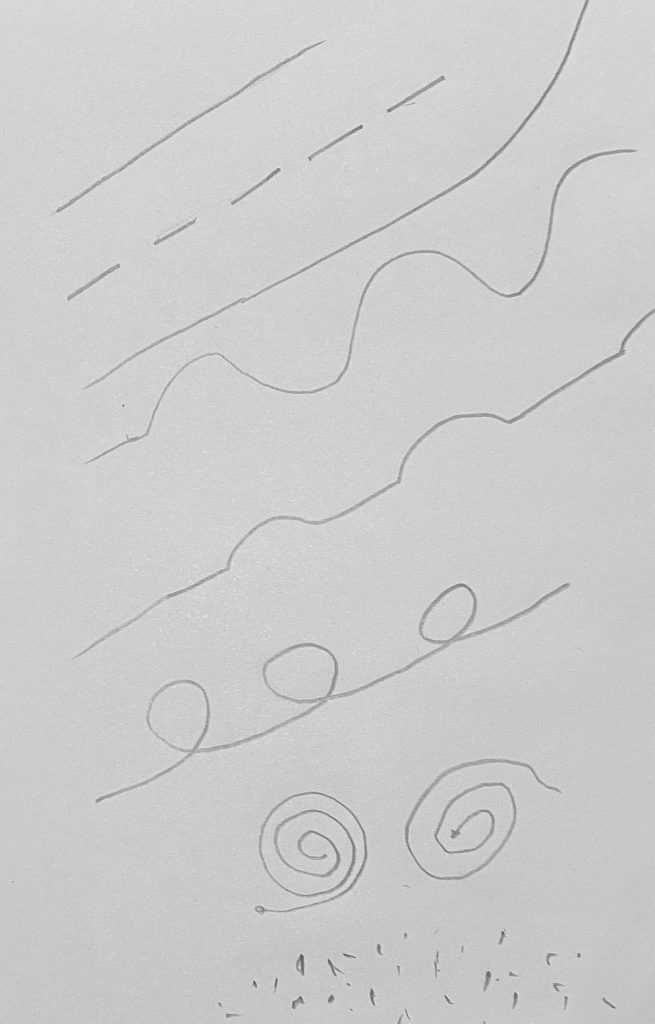
70s
In autumn 2019 the Cosmopolitan featured a headline “Stop fighting it: the ´70s are back”. At least in fashion the 70s are still with us. Platform soles, moon boots, hot pants, all had their first appearance in the 70s. We keep seeing them in fashion shows even 50 years later. In politics, the retreat of the U.S. from Vietnam in 1972, with more than 50.000 killed soldiers from the U.S. and many more Vietnamese persons, is certainly a success of the sizable activists’ peace movement of the 60s. Willy Brandt’s kneeling in Warsaw in front of the heroes monument in honour of the Warsaw ghetto marked the beginning of a reconciliation with Eastern parts of Europe.
The oil crises 1973 and 1979 caused mass unemployment and from the beginning of the 70s “Greenpeace” started its on-site activist approach against nuclear weapons, killing of whales and dumping of toxic waste. The network of independent organisations is contemporaneous to the invention of e-mail between large so-called mainframe computers using the now common address format x@y.z. The feminist movement achieved major successes with a UN resolution to ban discrimination against women. The male dominated aggressive and excessive punk movement occurred almost in parallel. New products like the Polaroid camera for instant photos and prints, video cassette recorder, the chopper bike “Bonanza” as well as the collapsible Maclaren Buggy for children defined a lifestyle around a more mobile society. Plastic furniture, bright colours with uncommon combinations brought with it a more diverse culture. Societies exploded into different lifestyles. Some taking the new Concorde, so-called supersonic speed delta airplane between Paris and New York, whereas others walked around in “wooden clogs” as a kind of folk fashion, watched Kojak the bold police inspector, listened or sang to ABBA tunes, danced like in “Saturday night fever”. In December 1979 Pink Floyd released “The Wall” which became with 23 million sales the top seller of all 70s productions (Champ Hamish p.120). Some of these artists we can still enjoy jumping up and down on stages across the world or being honoured with a Nobel prize in literature like Bruce Springsteen.
The wild 70s are remembered for the sexual revolution, the philosophy of love and peace as well as the continued spirit of the civil rights movements (Particia Massó, 2010). The sexual revolution spurred women’s liberation just as additional exploitation by thriving borderless consumption industry. Sex sells and it sold well. The cinema and print industry cashed in on the new trends and the spreading the new trends. Social relationships became much more unstable, divorce rates increased sharply in the 70s. In response, “surviving the 70s” (DeMott, 1971) a kind of survival guide tried to give advice of how to stem the tide, largely unsuccess for some decades.
Societies continued to explore new forms of life, while some niches of conservative life styles started to shield themselves from these outrageous trends. Vasarely imitating tapestry and design invited new forms of facing your own walls. Where to go on from this liberalisation? More equal rights for all, was a claim, but it took several additional decades to achieve some of the claims. Intersectionality, viewing for example violence as an across gender, social class and ethnicity as an overall mankind issue, became a claim much later only. “All in all, it was just bricks in the wall”, a huge wall it still is. We haven’t climbed it yet. 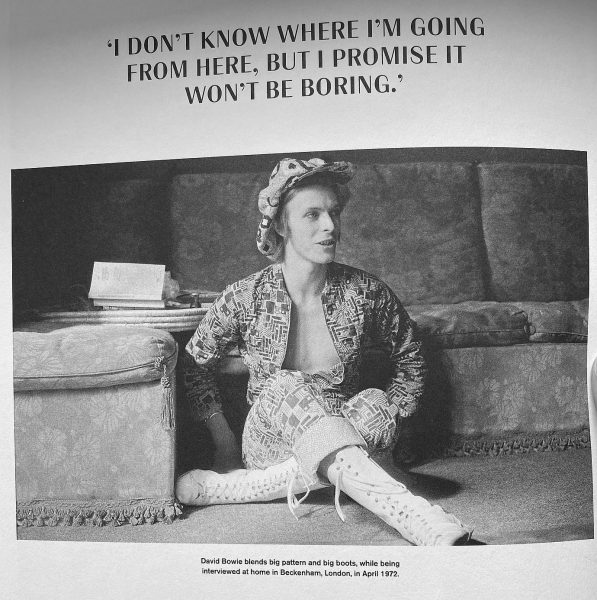
80s
The colourful 80s. That could be a summary of the years from 1980 to 1989. Certainly in fashion and design a multitude of colours dominated the 80s. Mariel Marohn (2010, Ed.) published 20 years later a visual summary of the 80s. Often thought as less spectacular than other decades, the 80s had seen some defeats to start with. John Lennon shot dead in New York December 1980. The NASA space shuttle Challenger explodes 2 minutes after the launch in 1986. Nuclear accidents (after three mile island 1979, Tschernobyl 1986,or the finding of the Titanic demonstrated not only the “limits to growth” (1972), but reminded us of deadly consequences of technological ambitions wanting to move too fast in time. Ghettoblaster, Walkman, first cell phones, facilitated a more mobile life style to more people. Overcoming the oil crises of the 70s, mobility roared ahead again. Cars, bikes, planes, CDs, windsurfing and aerobics become part of the lifestyle in these years.
Mass culture in music reached all levels of society. Music was no longer perceived as a protest movement, but a normal part of the freedom of expression. Fusion of music and dance, but also music and street art like in hip-hop music and graffiti art become part of day-to-day experiences of commuters. In the anthology of poems of the 80s we find on page 141 “Commuters” by Edward Hirsch 1983 who singles out the commuting practice as the way of life, he does not want to identify with. “Malgré lui”, in spite of himself, he finds himself in cars, trains travelling distances every day. More, faster and with more colours, time moved on. The fall of the Berlin wall 1989 was thought of as a “Zeitenwende” already. Royalty in the press with the marriage of Diana & Charles, was replaced by Madonna as the Queen of Pop and Michael Jackson as the King of Pop. The digital age entered into a new era with the Apple Macintosh desktop computer with an accessible visual interface to computing. Reaganomics and Thatcherism pushed for a revival of liberal market economies ploughing the fields for digital multinationals (GAFAM) to thrive ever since. These lasting technological changes define this period as colourful, grabbing all our senses and attention. Want to breathe a bit of the air of the 80s – visit MAD Paris. 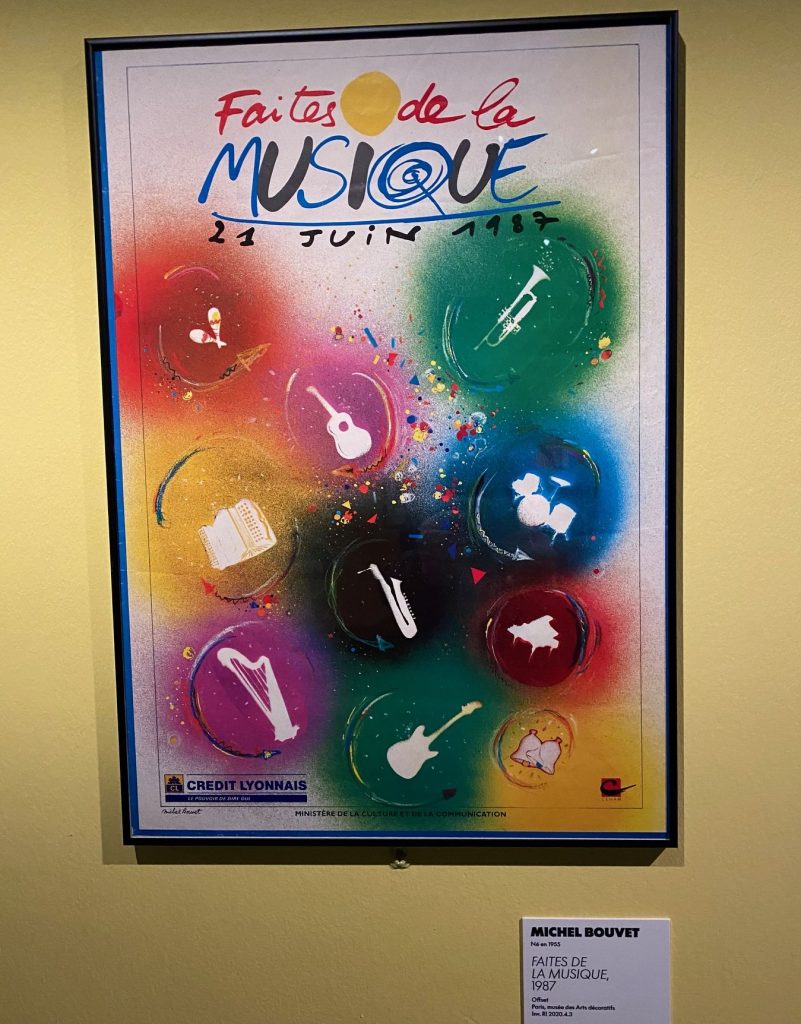
Time2
The concept of time has been dominated by “chronometry”. We used to take a look at our more or less reliable wrist watch for orientation in time. This is a cultural practice in all societies where such devices are readily available as consumer products. Before this time, even in the Europe, church bells or the sun played the role to locate people in time (Norbert Elias on civilization). Nowadays, even in remote areas of our planet the mobile phone has taken over to assist us to organize time. In the sociology of time, we observe multiple clocks. The personal time, social time – organized through laws, collective agreements, conventions or as behavioural features of us. So-called early birds have a specific awakening response of their cortisol level in their blood. For others this is delayed. We might conclude from this that different clocks are ticking within us. The societal challenge is to synchronize them. Starting time of schooling is another phenomenon of societal construction of life courses. Starting or ending time of a school day, week, month, year, adulthood, all are determined collectively and changed from time to time. Beyond points in time, there are durations in time to consider. Life spans are socially determined. Life expectancy varies a lot by social class and education levels. Therefore, at least in retrospect and keeping the duration constant across persons, life time clocks are ticking with different speeds for us as individual persons.
In the digital age and powerful search engines based on “web crawlers” we live more than ever in a global state of mind. Awareness of “global history of history” (Woolf, 2011) allows us to add perspectives from several parts of the world to our own version of history, historiographies and histories. Collective memories are continuously shaped and recreated. Due to easy reference to chronological time a perspective following decades has become a sort of collective mind map. This influences directly or indirectly through peer behaviour and preferences our own mindsets (Blanning, 2008 p.307). From a sociological point of view decades are at the crossroads of time, period and cohort effects, potentially mixing up all 3 effects. However, statistically speaking we might apply a spline function -´ to our otherwise / linear running of time. Thick description of decades like the 60s, 70s, 80s, is common practice in our communicative practices, preferences as well as behavioural features. A dialectic co-evolution of decades, one negating the other or one decade being a synthesis of 2 other decades are part of the critical assessment of lasting contributions to history through histories (Paul Ricoeur). 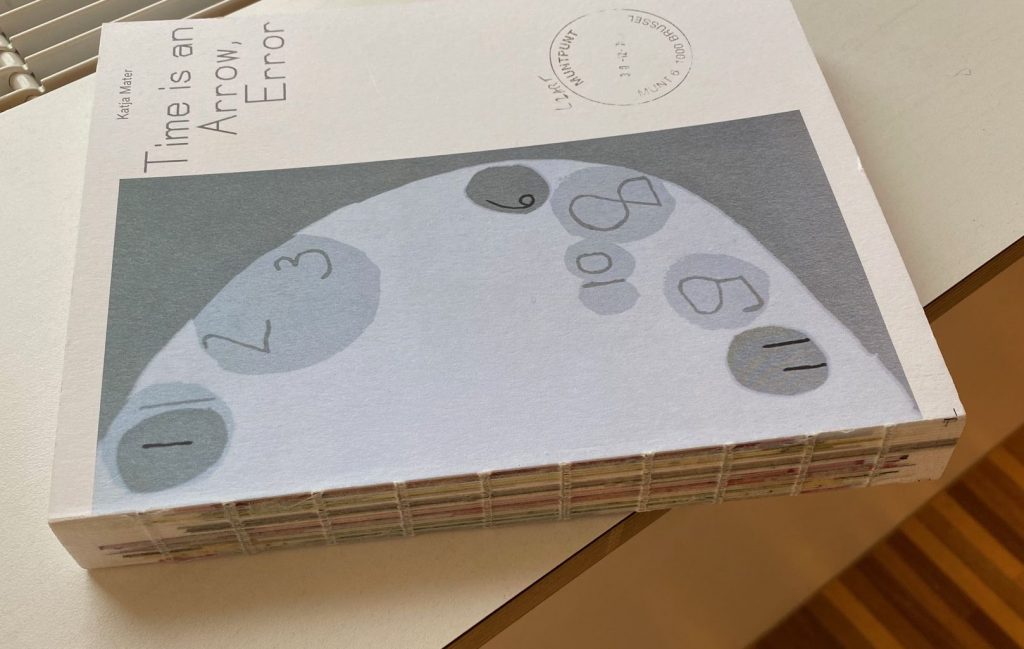
Linguistics2
Languages are simple once you understood the making of them. Take children, they learn the alphabet first, and use notions or images in alphabetical order, which you associate with this list of short words from A to Z in western cultures. From short words like “Cat” and “Dog” the learner moves on to longer ones like “Bird”, just 4 letters now. More advanced learners then use more letter words like “supercalifragilisticexpialidocious” invented for amusement in the Disney-film Mary Poppins. It sounds a bit like one of those never-ending long German words with lots of nouns just added on. This is exactly what we shall do in the following. A bit like in computational linguistics when ChatGPT is predicting the next word, we use algorithmic thining to form new combinations of an alphabetical list of notions. We start in the table below with column 1, then tell our spreadsheet to copy cells A1-01 to Z1-26 list and insert it in the second column just one cell below and insert Z2-27 at the place on the top of the list of column 2, which is A2-01. Then take this column 2 and repeat. Stop after, lets say the repeat counter is N=25.
The first 2 words combination then is “Action Zero”. Take this, enter it into Computer Search and take the top entry. “ActionZero” is an actual company name proposing actions to achieve net-zero emissions. Following this, we produce a whole encyclopedia of pretty up-to-date knowledge from the WWW with hardly any humans involved anymore. We only need to cut out duplicates and nonsense entries. That’s what most editors or teachers are used to do. Knowledge creation might no longer be reserved to the human species. Oh my God – but the machine might eventually sort this word out as nonsense concept, too. The new mantra could be ZeroGod or let us try the reset like in GodZero. In other words we move from HamletMachine to our own KnowledgeMachine.