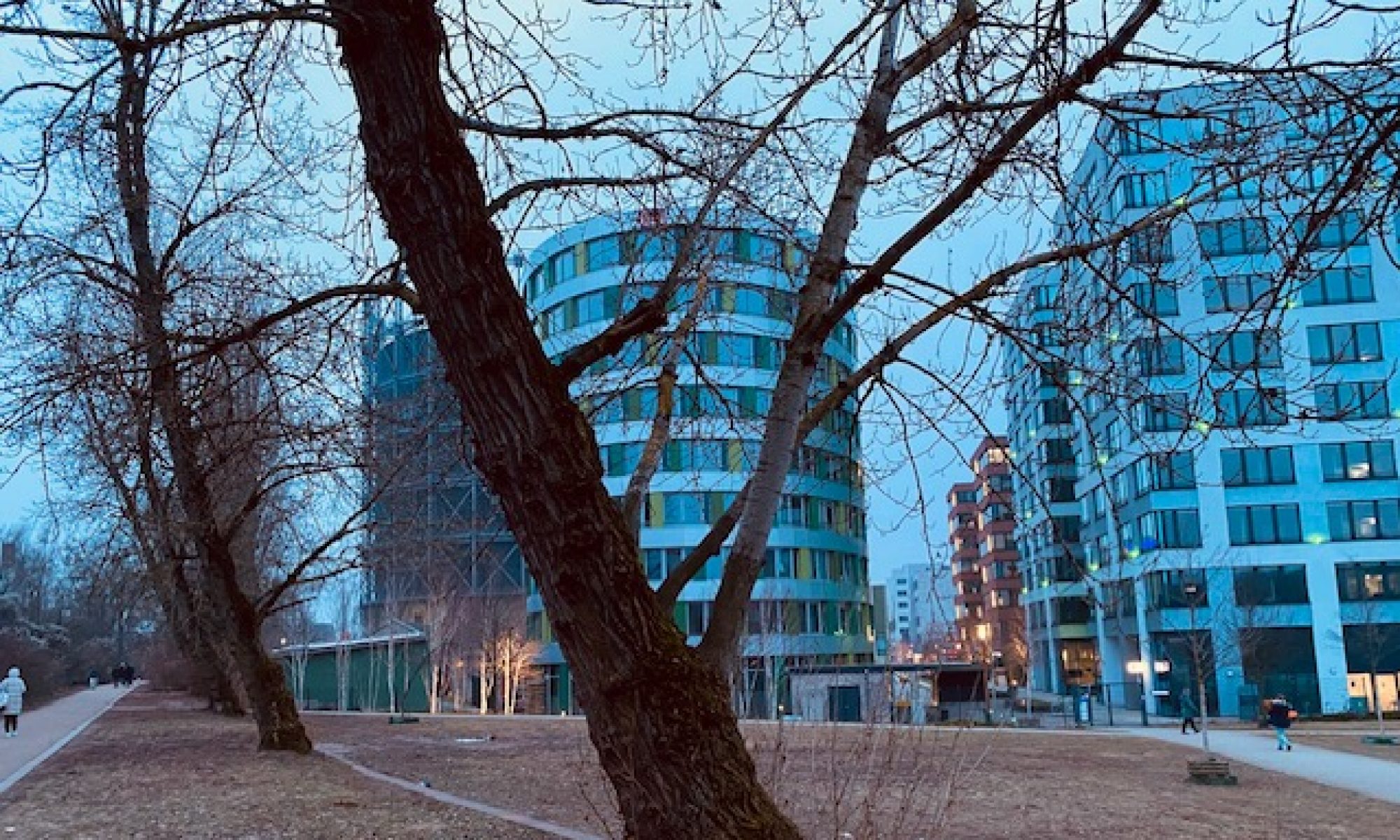

Statistics of hours of sunshine in Germany and many European countries show an extraordinary amount of sunny days in March 2025 compared to previous years. This opens up a window of opportunity to produce electricity already in a month previously less likely to yield a lot of energy. With more likely 8 months of decent electricity production the efficiency of investments in solar energy reach break even points earlier. Time to think of expanding the share of renewable energy even further. The cost effectiveness is improving in rather unpredictable ways. Economists, of course, consider opportunity costs in this case the alternative to use oil or gas despite the higher levels of CO2 emissions. As the prices are currently lower as well, without an easily predictable trend, solar alternatives are a valid option. 
Augmented Cognition
With everybody talking about artificial intelligence we tend to overlook recent advances in augmented cognition. Just 2 examples of studies presenting new findings published in 2025 suffice to make that point. Automated versus manual driving have different effects on our brains. Automation makes us sleepy and inattentive with potentially dangerous consequences. Using EEG measures of neuromarkers the drop in attention shows up earlier than through measures of keeping one’s lane while driving. For jobs or duties that involve extended hours of attention the wearing of a mobile EEG-device could avoid lots of accidents. Drugs, alcohol or medication abuse would also show up before it is too late, I suppose (Scanion et al. 2025).
The 2nd study involved a robotic assistance to piano playing which achieved surprising training effects for learners of the music instrument. Objective measurement of speed and finger coordination might even allow overall accuracy to improve significantly. The technology around us and the one in direct contact with us, our behavior and performances shall have an impact on all of us sooner or later. We have to pose the question of how far we want to go along with these evolutions. Augmented cognition will not only be of interest for civil purposes, but military applications or dual use is evidently another option.

Beyond ART
Is there anything beyond art? Well, maybe there is. ART in German language is an abbreviation of “Allgemeine RelativitätsTheorie”. In other words the General theory of relativity developed by Albert Einstein is in its shortest form a one line mathematical expression, but with lots of equations included in the general statement, which grew out of his much earlier special theory of relativity. The textbook by Michael Ruhrländer provides a step by step approach to get to grips with the mathematics involved to reach a better understanding of what “ART” is about. Take your time to digest it and brush up a lot of maths beyond your A-level maths.
The abbreviation ART suggests a lint to art in popular understanding. Indeed, it needs able artists to show insights of ART to more people than the restricted scientific circles. An understanding of a 4-dimensional system of time-space has some more accessible features than waves of gravitation and the many puzzles that can be solved through ART.
Decades later quantification has build upon ART and takes us further into fabulous world of mathematical and physical imagination as well as real world applications. 
Berlin Mind
For a long time now, I have been asking myself the question: What is like to be in a „Berlin state of mind“. The exhibition of the 2 photographers of the Berlin Landesarchiv as part of the Berlin activities of the EMOP contributed to understanding and more precise description of the „Berlin state of mind“. As we shall celebrate in 2025 the 80th anniversary of the liberation of Europe, Germany and Berlin from Nazi rule and terror, we have seen endless reconstruction and reshaping of the city. The ever growing need for housing and space-grabbing office buildings bring about a permanent feeling of change, of becoming, of under construction. The years of the separated city as well as the building and taking down of the Berlin wall created many new opportunities for developers of the city and its structure of quarters, arrondisements or „Bezirke“ and „Kieze“ within the districts.
Due to the continuous urban renewal also of basic infrastructure Berliners have the impression that there is construction work all around us all the time. With the abundant construction works come the construction fences. They too have changed. Some fences show digital prints of virtual worlds of the Berlin living in some future time. However, the promises often mask the reality that fences will be replaced by concrete walls and inaccessible buildings for most people of the neighborhood as gated business space or city blocks grab the space to form and reform the metropolitan landscape. The construction fences themselves become the contested areas where different strata of society interact or intersect. The „Berlin state of mind“ is one of becoming. Longing to become something else, something aware of the overwhelming historical duties, but still rising from the ashes. The experience to see a wall come down between cold war enemies liberates a belief that we can overcome frontiers. However, this in-between state of mind has brought us multiple fences of all sorts. Construction fences are only the most visible ones that surround the many spaces under construction. In the imagery of Berliners and visitors beyond the wall, fences are continuously on our minds in the „Berlin state of mind“. 
Digital Visions
Urban planning has been digitalized for a long time. 3D modeling of places and buildings including their interiors are state of the art. As urbanization is also about investment, speculation and anticipation, digital imaging has entered the public spheres in form of cover up of building sites behind fences and in form of large digital prints for information, curiosity and advertising purposes. The inner cities are frequently an avantgarde and microcosm of societal developments. Some dream of full or total flexibility for office spaces (see image below), others experience the inner cities as the spotlight of inequality in society. The best paid executives are catered for by the worst paid delivery personnel. The photographers of the Landesarchiv Berlin, Grönboldt and Wunstorf, brought together a documentary exhibition entitled „Pixel aus Beton“, pixel made of concrete. 
With a bird‘s eye view they reveal past, present and future details of how Berlin is experienced and envisioned by investors, architects and people living through the seemingly endless construction going on in the city. The keywords list as part of the exhibition creates a link to scientific literature and to the TU Center for Metropolitan Studies. Photography and even more so digital photography offers a social science perspective to the digital images exhibited. Cities are data spinning areas and a formidable place for digital visuals and visions. 
Top 5 Things T5T
Dealing with Elon Musk is a must these days (WSJ 2025-2-26 A4).
So it happened that on his way to Mars, Musk met God the almighty on his way back to heaven. Musk asked, whether he could join the ride.
God, not amused, asked Musk about his T5T (top 5 things) he accomplished in his life. Musk questioned God‘s right to ask this question and said he would tell the other T about this. God gave him just another day to come up with a response.
So here we are: the T5T Elon Musk might put forward:
(1) I created a million fancy electric cars.
God: Well, but there were already too many tin boxes on 4 wheels on earth.
(2) I created rockets that propelled billionaires into space and back again.
God: Your carbon footprint has exceeded a million people of the poorest countries on earth.
(3) I created a network of satellites that facilitated communication.
God: Nobody spoke to me yet using it.
(4) I bought Twitter and transformed the platform to spread evangelism of various sorts.
God: This has become a hoax spreading more lies than truth.
(5) I reformed the public sector employees to share my beliefs or leave.
God: This will ruin a lot of services like USAID, which have assisted me for many years in my caring and charitable service.
With all these T5T of yours in mind I am not sure I should let you return to that planet earth. Maybe I‘ll find another assignment for you where you can cause less harm Elon. Maybe, try “Waiting for Godot“.
(Image: instead of T5T try T4T (tea for two)) 
Negative time
In 2025 an experimental setting has come up with a demonstration of negative time. This is a mind-blowing mental exercise to imagine the science fiction like framework to allow time to be negative as well.
This invites several epistemological questions as well. Can we imagine or live with a reversible concept of time? Maybe music has given us clues. In composition of music, we can easily play the notes of a basic theme just in reverse or mirrored order. Modern rhythms like in beat music as accompaniment by a drum use for example a rhythm like (use your hands or drum sticks!)
“left left right left /
right right left right”, (redo faster if you internalized the rhythm).
A reversal of the beat (its inversion) like replays of rhythms in reverse order seem to return the energy. This beat pattern is perceived as forward moving and is advancing in chronological time. It has fascinated a whole generation and spurred crazy movements to accompany the rhythm.
A simple tune might be played in reverse order as well. Just take a piano scale and play 1 2 3 1 fingers, and then 1 3 2 1 in a mirrored fashion (1231 1321). Even 1 2 3 1 as 3 2 1 3 gives an impression of inversion. Through this composition technique you get a bit of a feeling for the potential of a reversal of time or what negative time might feel like.
The innovation through quantification challenges our concepts of time more and more. The direction of time is subject of a fundamental revision. Theoretical concepts have predicted this for a long time.
(Image: Muséum national d’Histoire naturelle, Paris)

Mindmap Me
Tools like artificial intelligence allow all sorts of transformations and depictions. The photo editing tools are widespread and particularly popular among the young users. My own transformative exercises, latest with www.bairbe.me, have yielded interesting insights, well worth an intergenerational playmate. For the guys there is the www.yobrick.com version for brick gamers. 
The App “Canvas” allowed me to delve deeper into my own mind by giving instructions of how to create an image of the structure of the blog entries on this webpage. Of course, it is not (yet) a real AI-generated content map, but it is only a matter of time until such tools will exist. After all, this would be just an arranged and rearranged list of contents using the hyperlink structure of the texts as well.
For the time being, I derive my own structure of the blog entries by topics, categories and tags including the hyperlinks or internal referrals. Interlinkages are mostly stated explicitly. However, there are many implicit links, which are obvious to some, but not others. AI-systems could use occurrences of words, synonyms and antonyms . Colors in addition to bubble sizes and (in)direct lines may complement such mindmaps. This can help to reveal another, additional layer to connections between categories or tags. The Ai-generated image shown below was created with the APP Canvas as a first approximation and AI-augmented test version in form of abstract images).
Next steps on the way to understand human intelligence and, maybe, augment it with a next generation AI-system would use a colored-3D version of such a mindmap and use the chronological evolution of the blog posts in a kind of evolutionary animation. This should allow us to go beyond the usual psychological classification of fluid and crystallized intelligence. We might come to grips what it means to be “in a Paris state of mind” or when hallucinations become overwhelming.

Apocalyptic Collection
As long as humanity exists we had to deal with the experience of apocalyptic horrors. First, mankind could not make sense of natural disasters. Second, after we understood many of the disastrous events on earth and even most cosmological events, we proceeded to create our own apocalyptic disasters.
One thousand years of unimaginable suffering and destruction are the subject of a unique exhibition at the BNF entitled Apocalypse. The documents start with biblical representations of it and continues throughout the centuries. The artists‘ attempts to depict and characterize the Shoa is part of the exhibition. The atomic bomb is another issue of the 20th century. In the 21st century artists try to move beyond the different forms of the apocalypse. The collection of various kinds of dealing with apocalypses constitutes itself an apocalyptic experience. We still have to go a long way to come close to understanding what drives disasters and what the role of mankind is on this way to seemingly endless destruction. The apocalyptic experiences remind us to keep asking some fundamental questions. (Image: Exhibition Apocalypse at BNF Paris, Center Piece by Otobong Nkanga, Unearthed) 
January Spring
The early signs of spring in Europe usually show up in March. The monthly data from the Copernicus Climate Change Service (C3S) show that „average temperature over European land for January 2025 was 1.80°C, 2.51°C above the 1991-2020 average for January,“ (Link). The warming throughout January has several consequences. Vegetation starts into spring earlier. This means that people with allergies of early flowering suffer earlier during a year. Winter rest in animal lives will be shorter. The risks of droughts in some regions combined with floods in other regions is increased as well. Rockslides in the Alps and flooding in Italy and the Baltic states add to the costs of climate change.
Western Europe, witnessed a relatively „dry January“, even for those who kept drinking alcohol throughout the month. Heating and heating costs came down a bit and friends of gardening were surprised by some early showings of flowers of spring even in Paris neighborhoods (image below) as early as the first few days in February 2025! Strange new world. It all seems to happen a bit faster than most scientists expected. Time for adaptive behavior is shortened as well. 
Sustainable Food
Climate change has a severe impact on sustainable food production. The OECD reports annually on the evolution of volumes of production and monitors the resources and subsidies allocated to the agricultural sector of the economy. The sector and the whole nutrition chain are frequently perceived as a major driver of shrinkflation, greedflation and cheatflation.
Changes need to be introduced with a medium and long-term perspective in order to allow for smooth adaptations of the sectors involved and to avoid so-called hog cycles.
Most economic debate is focused on the quantity of production. The loss of production due to climate change and Russia’s war in Ukraine has been and continues to be substantial causing starvation and premature deaths. Another issue is the lower quality of food due to droughts. Repeated events call for adaptations. Certainly the adaptation of more resistant crops is part of the answer. However, the other side of the same coin consists in the consumer’s readiness to buy products that suffered during a drought. Just as the reduction of fertilizers and less water in the production of droughts reduces the size of fruit, for example, we, the consumers will be systematically challenged in our purchasing habits of fresh food.
Price-sensitive consumers will have to choose the products that have reduced prices due to drought quality loss. Other consumers may choose the drought affected product if a “resilience message” is attached to such products. Solidarity with climate affected farmers, just like bio-farmers’ products in ecological production, opens up another perspective to more sustainable consumption and farming. 
Hallucinations
In the 21st century hallucinations have become a daily experience. The origins of the word can be followed back at least to the Latin verb “alucinor”, best translated with “to hallucinate”. As a verb to can conjugate it, meaning that I can do it, you can do it, s/he can do it, and we may do it in groups. Roman emperors did it, American presidents do it and, of course, AI does it. Hence, it is a great subject to study.
In “Nature” 2025 we find ways to limit hallucinations of AI systems. The strategy consists mainly in repeated queries of the same type, but from different angles. It is a bit like cubism applied to informatics. On “github.com” we can follow the rankings of AI-models using LLMs based on the “hallucination-leaderboard” developed by Vectara. On “huggingface.com” you can test the Hughes Hallucination Evaluation Model. For example it is possible to run a test of your own small text documents (just like any blog entry on this webpage) and what the AI systems will do them in an attempt to summarize your ideas. According to the “hallucination-leaderboard” we are confronted with a 1.3%-4% hallucination rate of the top 25 LLMs as AI-systems. In text based systems the quantity of “errors” is a first indicator only. The seriousness of the omission, addition of wrong information or an erroneous judgment will be left to the reader or analyst to uncover.
There is now a lot to do to test various AI-systems on their “trustworthiness” in summarizing my own work. My very own daily hallucinations have become a large data base as a test case for the capacity of LLMs to make sense of them.
Based on the series of passed blog entries I shall test the capacity of AI to predict the n+1 blog entry. It would be great to know today what I am going to write about tomorrow etc. Thanks to AI I shall have (finally) a sort of intellectual life after death (not sure whether I should want this). Enough of hallucinations and on hallucinations for now, back to serious readings or fictionalized science. (Image: extract from Delphine Diallo, Kush, 2024 at Hangar Gallery Brussels). 
Ukraine Poets
Difficult times have a long history in Ukraine. However, literature and poetry have flourished since the Ukrainian independence from the Soviet domination in 1991. Periods of hunger under Stalin, Nazi crimes in the 2nd World War, Tschernobyl radiation, Annexation of Crimea and now Russian war on Ukrainian territories, the endurance of hardship is part of Ukrainian culture and society. This has created a strength of resistance and resilience which is exemplary for all countries. The democratic countries stand firmly on Ukraine‘s side and support not only military defense efforts, but also artists and poets in such difficult times.
A collection of translated poems from Ukrainian into English has been published in 2027/2018, showing the horrors of the large scale war that was to come a few years later. In fact from the Ukrainian perspective the annexation of Crimea was the first war initiated by Russia although the Western world did not want to see this as a brutal aggression, which it was. The poems in the anthology are available online for everyone to read and understand that war changes personalities. Suddenly, dying of old age becomes a blessing as many young soldiers and people die on the battlefields (Died of Old Age, by Lyuba Yakimchuk translation by Anatoly Kudryavitsky) .
7 years after the translations where published the poems have kept their sorrow and the reminder for us to continue our support for Ukraine‘s fight for democracy, independence and freedom of speech and the arts. (Image: Front: from War Diaries, Brussels 2025, shown in Gallery of Katarzyna Napiorkowska).

Science and Fiction
We associate with science and fiction the extrapolation of scientific trends into some futuristic settings. The most striking examples of science fiction in novels or video use some scientific findings (dinosaurs, genetic engineering) and project this knowledge into another fictional setting. The usual personal relationships follow rather predictable plots of romance, deception, violence or war.
The novel “Wellness” (Hill 2024) is also a kind of science fiction as it is based on social science evidence and builds its fictional plot firmly embedded into the social and psychological research. The attachment of references (and defending the print of those in translation) underlines the commitment to write a new type of “social science fiction”.
In this innovative style the scientific basis of psychology and sociology is then extrapolated into a fictional arrangement. Research on subjective well-being with the U-shaped form over the life course and the extrapolation of the placebo effect, which is instrumentalized for a business, derive from key topics in the social sciences. In fact, the novel and the background scientific literature in the bibliography could well figure in a social science course at university entry level. These readings constitute a 360-degree-view on personal development and social structures. Of course, social sciences move on and add new evidence on an almost daily basis, but the selection and arrangement of the characters create an innovative social science fiction, without some unrealistic technological extrapolation.
It strangely feels like we are already part of this social science fiction (compare “Klara and the sun” by Ishiguro) as politicians advocate and campaign with placebo topics in elections and project us into some more happy past or future.
The social science fiction of Nathan Hill resembles for me the great utopian novel by George Orwell “1984” published in 1948. A title “2032” instead of “Wellness” could have worked quite well, as the first edition of Nathan Hill’s social science fiction was published already in 2023. (Image: Extract of: Lo Spagnolo, 1665-1747, Hecuba makes Polymnestor blind, MRBAB).

Question Tomorrow
« Tomorrow is the question ». This is the imprint on the 8 table tennis tables in the Martin Gropius Bau 2024. As part of the Contemporary art exhibition by the artist Rirkrit Tiravanija, the tables are very busy throughout the day and invite people to meet, play and greet. If tomorrow is the question, today is the answer. Is it? Maybe the answer is the day after tomorrow? Time appears to be the answer and the question. Such questions touch on basic philosophical questions about our relationship to and concept of time. Future orientation or even the belief in life after death touch upon basic religious beliefs. Intergenerational transmission is useless if there is no tomorrow or concept of tomorrow. Sustainability is most relevant if we are convinced there will be a tomorrow. Fatalists or warmongers rate today so much more than tomorrow that everything is subordinated to the urgency of now. Not easy to strike the right balance between „for now“ and „for tomorrow“. Simple financial discounting of benefits which accrue only tomorrow do not solve the urgency issue of behavioral concerns. My personal discounted value of ice cream tomorrow might be superior to ice cream now, but it is based on the tacit assumption that the shop still exists tomorrow or any other time in the future. The exhibition invites people not only to play table tennis but also to discuss the question of tomorrow across language barriers and across tables and cultures. 
Air Concept
Well yes, this is the latest fart in design and architecture. The Berlin International University of Applied Sciences composed an exhibition on “Air Architectures” which takes air seriously. The international group of 7th semester students took Air Architecture seriously and developed their ideas in the context of a curated exhibition. Nice semester project.
Air is a fundamental precondition for humans to (co-)exist. The biology of air (breathing) or the chemistry of air (fine particle matter) have been studied extensively. The physics of air flows in cities receive more attention as well in architecture. Interior design has yet a lot to contribute in the age of heat pumps and air conditioning.
Let’s think architecture from the perspective of air and air flow. Depending on our cultural background we might have very different associations with air. Indian or Chinese practices like yoga or Tai Chi teach us to take air more seriously than Western practices. Most architecture in cold countries of the northern hemisphere aim to keep air to the outside of buildings. Yet, the percentage of humidity of air is a serious concern of architecture as well. Air flow and quality then becomes a key issue of construction and architecture, somehow through the back door.
Maybe in approaching architecture we might think first of what is or has been the architect’s concept of air or aerodynamics. 100 years after the death of Gustave Eiffel and the Olympic Games in Paris, we still gain from thinking about air (not only air pollution) and its dynamics. Looking forward to the next generation of air architects.
(Image: Exhibition, Air architectures, at Berlin International, University of Applied Sciences 2024-12) 
Socioeconomic Circularity
Some sectors of the economy receive a lot of attention, for example sectors selling fancy cars. Other sectors, like the ones regrouped under the name of circular economy, receive much less attention and show up little in headlines. In fact, the circular economy is a great example of this. There are thousands of waste and rubbish collection, sorting and recycling centers, several hundreds of waste-to-energy plants, composting sites across the European Union. Of course, there is also a European Federation of the sector (FEAD). On the last FEAD conference in Brussels 2024 it became clear that Europe is finally waking up to the challenge of recycling costly raw materials.
The narrative concerning the sector needs to change further: what used to be subsumed as costly nuisance is in fact a potential profit center for companies and society at large. We do no longer want to import lots of raw materials from countries with dubious social and environmental records as part of our supply chains for raw materials. Time to act. This, however, is a rather complex socioeconomic challenge of circularity. The price mechanisms are not fully functional in most Member States, let alone across the EU. Additionally, the social practice to recycle varies greatly between countries. Distributional issues matter as well. It is rather obvious that dumping waste from one region/country in another one has huge implications (nuclear waste), but if one country values waste more than another one, due to innovative recycling techniques, the matter takes a marketable turn. Regulation should carefully distinguish categories of materials as we do for hazardous materials in production, consumption and for health and safety purposes of employees.
Metal, battery, cement, plastic and wood recycling pose challenges, but also opportunities to improve the European material import/export balance sheets. However, first in the circle of circularity is the use of materials. There we are clear that “less is better”. Less input of raw materials, most of which we import in the EU, reduces our dependence on other countries. This is the tricky social question of circularity. Mainstreaming of more conscious use and reuse of resources is a huge social issue, which we tend to relegate to a task for the education system. The awareness that supposed waste is also a valuable resource is spreading and the growth of the sector a business and employment opportunity for many. Circularity is the new sexy sector of the 21st century.
What have you recycled today? and myself? Well, scientific online publications. Now think of ChatGPT and the AI gold mines of 2024. There is lots of value in recycling.
(Image FEAD conference Brussels, 2024) 
Virtual author
« La Mort de l’auteur « . In a radical sense Roland Barthes was the first to proclaim the death of author as the sole master or mastermind of a text or speech. In fact there are many more on whose direct or indirect contributions a text is based on. However, biographical accounts of an author can only enlighten some (minor) aspects of the influences on the author and the final version of a text, (l’écriture), and the reader (lecteur). In « Le degre zero » the analysis of the different styles of Flaubert and Proust are extolled ( p. 131-139). Flaubert is characterized as the author with infinite corrections on the same texts and sources. It appears today as an endless loop of an algorithm where the stopping rule is not properly defined or implemented. Much in line with the « tabula gratulatoria » of Barthes (p. 279 of Fragments…, see image below) some AI systems return fake versions of a bibliography some readers will rely on.
In the 21st century l’écriture has become almost inexistant without the technical support of machines, but most of all artificial intelligence. The author is dead, long live the virtual author. The assistance of spelling, grammar and style editing from software programs has widened the spectrum of coauthoring. Editors take more influence through pushing marketing potentials of authors and their writings. Based on previous manuscripts and publications it is possible to produce hallucinations of an author whereby only the author might be able to identify the virtual authorship. At best AI generates first drafts, but similar to the linguist of Barthes, AI is likely to become another brother or sister of l’ecrivain (p. 139).
The thrust of Barthes is to highlight that there is more to a text than just the version at hand. In fact there are texts in a text or multiple versions or layers of a text. « L’enjeu de l’analyse structurale n’est pas la vérité du texte mais son pluriel » (1972, par ou commencer p.148). In conclusion, almost 50 years after the death of the author we currently witness the miraculous rebirth of the virtual author as the original deus ex machina which we always feared. Don’t worry it’s just another sibling of the original authors. 
Mind Paris
I have been asking myself what it may mean “to be in a Paris state of mind”. After a creative sabbatical spent around and about Paris I am happy to present the flipbook of entries on Paris in 2024 and the Olympic Games. My perspective is a social scientist’s view of public affairs. It builds on the many brillant minds and organizers who managed to make Paris a very special experience in 2024. Beyond the fabulous distraction of the sports events, which received sufficient attention, there were and there are so many exciting experiences that it is well worth speaking of a “Paris state of mind”. It happens in the quiet places of Paris, the museums, libraries, churches, parks and in the pedestrian areas. The 21st century has begun and Paris wants to remain in the top locations for modern experiences.
My flipbook for you to enjoy: Paris and Olympics 2024.
also as versions: size 16 MB Pdf-Version, best to read in even spread format over two pages on one larger screen (text left side, image right side), just as a suggestion.
Some prefer already the epub3 format (EPUB3) to jump from topic to topic and follow links in a comfortable way, but please do not print to save paper. THANKS, feedback welcome. 
On Organics
Organics are the new hype. Organics are everywhere. It is true in organic chemistry, biochemistry or pharmaceutical biochemistry we start from organic compounds as the basis for various forms of classification systems, structures and reaction chains. A search for organics brings you to Organic Farming and to lots of other applications of organic production as well as organic design.
The extended definitions highlight the foundation in biology and chemistry to then include any processes which integrate cyclical reproduction or resources and conservation of biodiversity. Based on the plurality of forms and connectivity of organic compounds this leads to a vast and diversified basis of carbon- and hydrogen-based life on earth. The ensuing complexity (variety of species) has been the basis for mankind to come into being. It is likely to determine also our survival in the long run. Organics is based on open as well as closed forms and therefore has an encompassing nature. Depending on time and space constellations (temporality) evolution has taken one or the other path. We are certainly not at the end of this evolution, although we through the loss of biodiversity we narrow down new potentials in an unprecedented way. Rethinking life on earth from a cell-based perspective of plastics and chloroplasts is a challenge, but it will lead us on towards the “organic turn” in the 21st century. 
On Uncertainty
Uncertainty is a catchword for all sorts of undetermined occurrences, which we might have to confront. We associate economic uncertainty with the difficulty to forecast or predict the economic evolution of key indicators like inflation, GDP, CO2-emissions, energy and raw materials’ prices and availability. Even factors like increases in greed of CEOs, psychological factors like insecurity about external or internal conflicts drive these macroeconomic indicators. Micro-level features of your own stage or evolution of the life course have an impact on and will be affected by uncertainty. Employment, housing, family, or household composition are subject to high levels of uncertainty. These micro- and macro- level factors are, of course, not limited to the domain of economic phenomena. Most recently, political uncertainty has reentered the international and national sphere with the re-election of Donald Trump as president of the United States. This election outcome of the U.S. is perceived by many as increasing the overall uncertainty due to the unpredictability of political decisions and even previous treaties with the U.S. or where the U.S. is a major partner in the agreement. These economic and political uncertainties are accompanied with a perception of growing legal uncertainty even in very personal spheres of life. Last, but not least uncertainty about climate changes like heating up of the planet and more devastating flooding and droughts contribute to increased uncertainty about future developments and the need to initiate adjustment processes and the financing of those.
The individual and societal ways to cope with increased uncertainty are one of the major economic, political, legal and social issues for the coming years. The answers are likely to be found in mutual, cooperative and risk sharing arrangements. The social in society will be a major part of dealing with increased uncertainty.  (Image: Extrait of Paul Klee, Seiltänzer 1923)
Commemoration
In The month of November we commemorate those who died and particularly all those who died in the combat for freedom and democracy. The Russian aggression does not show many signs of ending the killing of soldiers and civilians on both sides. Ukrainian forces struggle to resist the Russian occupation of its territory as Russia is sacrificing thousands of lives for small gains of territory it is unlikely to defend in the coming months if Ukraine possesses longer reach weapons. A new spiral of an apocalypse is most probably the result of the Russian insistence on external aggression to cover up more internal problems. A lost generation of young soldiers who died in combat or suffered mutilation will be the outcome of these atrocities. The inflationary effects of wheat and energy prices globally have caused additional casualties in countries that had absolutely no stakes in this war. Russia is to blame for those additional casualties as well as the adverse effects on the world‘s climate due to the fighting and destroyed materials that need replacing later on. The young Russian generation will have to stand up against Putin‘s call to war and put down their weapons. This is one way to end the spiral toward yet another apocalyptic experience in Europe and the silent killing through hunger beyond Europe. (Image: BNF Paris, Apocalypses 2024)

Comprehensive Conflict
In a recent paper Mara Karlin (2024 Foreign Affairs LINK) has stated the need for the Western World to understand and even prepare for comprehensive conflict. Particularly in response to Putin‘s war on Ukraine’s territory and the threats and potential use of the full range of weapons including cyber warfare, destruction of energy resources and military production sites the current war comes close to total war. Several European countries have made significant steps to increase budgets for the new forms of comprehensive conflict management. This starts with adequate discussion in public on the dramatically changed security situation after the „Zeitenwende“ caused by Putin. The forceful Ukrainian response with much financial assistance from the West has pioneered drone counter strikes and by this put an end to the Russian progression into its territory. In order to match the total war ideology Putin is implementing in Russian society the Western world will have to rethink production models and strategic defense capabilities in all areas to match the rather real threats by Russia. The prevention of the spreading of comprehensive conflict is of utmost importance since the risk of an expansion of Russian influence and suppression of any internal resistance in Russia has devastating consequences. The 2024 book by Tatjana Tönsmeyer „Under German Occupation, Europe 1939-1945“ (own translation of German title) demonstrates what it meant to live under the domination of an inhuman dictatorship which is ready to use all out war and violence at any occasion. We have to confront this, even if we don’t want to face it. Nevertheless, the Russian aggression is also strongly targeted on its own people not to take risks of separation from Russia as this would mean devastating destruction to those regions and people who dare to do so. External explosions are therefore for Putin a prevention of implosion of the Russian Federation similar to the Soviet Union previously. Comprehensive Conflict extinguishes any remaining internal opposition as intended collateral damage. In Western countries, however, we shall have to argue with opponents and build majorities through understanding the issues at stake not through silencing opponents and opposition. The debate about comprehensive conflict is only about to start, but it is likely to last for several election cycles. (own image, Contemplation on infinite landscapes, Berlin 2024)

History’s Weight
The artist Damien Deroubaix is currently exposed at the BNF.fr in its historic site Richelieu. Together with and next to some of the historic treasures of the BNF collections the unique exhibition allows to experience history’s weight on our current existence. The work of Deroubaix is following and pursuing historic art trajectories with a special historical and ethical consciousness. Techniques of art are insensitive to the moral compass of the painter in history. The collections of the BNF like all major European collections have to handle their colonial past and immoral depictions throughout history. Deroubaix accomplished to liberate techniques of art of their colonial linkages and imagination of emperors focusing on humanitarian values. War is horror, in the past and in the present. Genocide in Rwanda is war crime and dealing with the memories of people an honorable way to look forward conscious of the past. Hybrid forms of art allow multiple contextualizations of his work. In the Galerie Mansart and Pigott of the BNF the historical embedding enriches the art and vice versa. Art allows us to rise beyond the ashes mankind has and continues to inflict on us. (Images: extracts of Damien Deroubaix at BNF, Paris 2024)


All Electric Society
Moving away from fossil fuels will shift power generation to electricity. Wind, water and solar energy will eventually generate enough power for home appliances and even electricity-based mobility. Lighting and computing or smart phones use direct current (DC) as power supply. This form of electricity is usually transformed from an alternating current (AC). Producing DC with a solar panel or a battery supply is transformed into AC for our home power lines and locally transformed back again into DC to change our smartphone or LED lighting. There is energy lost in the 2-fold transformation. Hence, it is possible to use a simple DC wire network to bring your self-generated power directly to the appliances that function with DC anyway. Whole factories are making this shift already, some as prototypes. The all electric society is in the making. There still huge potentials to reduce electricity consumption and improve security through low voltage electricity circuits and networks. Almost 200 years after the publication of Ohm’s law it will become the foundation of the all electric society. 
Paris Vision
You got to have a vision in urban planning. Long term visions are best to then realize them step by step. The center of Paris has been restructured since the time of Haussmann at several places. The previous commercial center of Paris with « Les Halles » and the building of the commodities exchange « La Bourse de Commerce « have been turned into a pedestrian area long ago. This axis runs nowadays from the home of the Pinault Collection to Les Halles almost to the Centre Pompidou (in the background of the image below). Whereas Les Halles is usually very popular and crowded with people the art museums are a bit less busy. Walking around in the area is offering amenities for people of all walks of life. It is an area, better called a pedestrian boulevard, where the wealthy and the poor may meet or at least pass by. Social urban planning is in high need to be considered as a vision not only for Paris, but many places and cities again. Inclusive societies also begin with a rather simple vision of togetherness putting people first.

Game Tech
Gaming has moved digital and online for a long time. Networked gaming and following the best gamers online on video-platforms like twitch has captured a lot of attention from younger generations. With a real trend of gamification for industry and even public services, the digital gaming sector is moving from backstage to front end of companies and services. Public administration as a game. Enjoy the use of a public service through a game-like experience. Walk around in the metaverse world and get your admin work done. I would love to have such an experience. There are so many applications for gamification that the bottleneck is in the human resources to program all these applications. Coding the digital and virtual worlds to get real stuff done is just around the corner. The SCCON 2024 in Berlin showed these technologies next to each other. 2025 we might see integrated prototypes. I have a digital dream, others call it a vision for public services in the 21st century. 
Ener Tech
The future energy lab in Berlin proposes valuable advice and guidlines for the „prosumer“ revolution in energy technology. From the own or home production of energy, the sharing of investments and infrastructure to the distribution network and finally consumption, the whole life cycle of energy is treated with a concern for environmental and financial sustainability Sharing is the way forward and many solutions build on this basic idea to move beyond the individualistic approach and fossil fuels cheap in the short term, but more expensive to society in the medium to long term. As most solutions make use of digital tools the issue of cyber security has to be a concern right from the beginning or even the planning phase. Joint production and consumption rely on people and communities reaching compromises. However, wholesale resourcing and averaging over households allows cost savings. The technology is available already, the skilled people to implement these solutions are currently the bottleneck. DIY will have to bridge the gap as neighbors learn from neighbors as yet another form of community building and engagement. (Image gamification of community decision making, SCCON Berlin 2024)

Mobi Tech
There is much more to mobility and technology than new cars and bicycles. Innovative infrastructure provided by new public services allows new forms of mobility technology to strive. Charging points across a country are crucial to ensure smooth and smart mobility for example with e-cars and e-bikes. Software guides us to next or cheapest charging point in the surroundings. Public services provide the basic data on this and need trustworthy updating and repair of the infrastructure to avoid frustrations. Navigation systems need up-to-date info on areas with restricted mobility due to high emissions (diesel) or illegal parking of shared bikes and rollers to avoid a banning of share options in inner cities. Data allow the guidance of traffic and combinations of different modes of transport. Mobility tech is nowadays a largely data driven process and public services provide important basic services and information for innovation and reduction of emissions in the field of multimodal mobility.

Digital Zebra
It is a difficult task in all countries to bridge the digital divide in a society. On the one hand, there are so-called digital natives, those who have grown up with smartphones and notebooks all around them all the time. On the other hand, there are many persons who have not kept track of the digital turn and feel rather lost or are afraid of making mistakes using digital tools. As public services are also moving online, the need for a society-wide comprehensive mastering of digital information and tools have become a sheer necessity. It is much more than just nice to have.
As public services move online like registrations, payments or tax declarations, the need for training and/or assistance of millions of people in a country become a real challenge. This is where the innovative project “digital zebra” in Berlin comes into play. Through the network of public libraries you can get support in person to master your digital challenges.
The name of the project refers to the “zebra crossing” of a road, which assists persons to move from one side to the other side, just like crossing the digital divide. We shall need a lot of those guides and other multiplyers who can assist people to move safely online. Only through this form of taking people with you on the move towards online public services we shall close the gap of the digital divide. It is probably going to widen before we can narrow it again, unless we breeding digital zebras in a rapid way.
(Image: SCCON 2024-10, Berlin) 