
Guidelines Follow-up

The are many professional organisations which agree after thorough discussions on guidelines how to conduct professional services. As long as we have such guidelines, the adherence to the guidelines is an issue as well. This is part of a research program of organisational sociology, but there is a rather strange paradox in this field of compliance with guidelines. In the most highly educated professions like medical doctors, the rate of compliance to guidelines is below average. A study of 20+ years ago published in the JAMA Journal: Cabana et al. (1999) “Why Don’t Physicians Follow Clinical Practice Guidelines?” highlighted this paradox among medical doctors. The lack of awareness of existing or changed guidelines is one of the major reasons mentioned in this respect. Self-efficacy is also an issue, but mentioned less frequently for not following guidelines.
Besides a professional bias, related to the above average educational attainment of physicians, (believed) superior coping mechanisms compared to the average population might be at work. Mastering advanced technology might lead to a behavior that assumes to be able to handle higher risks as well.
For a profession that is used to confront issues of life and death on a regular basis some adherence to a very specific medical guideline might appear a negligible risk. However, maybe comparable to some cases among politicians or priests a logic: “rules or guidelines are for others to follow” rather than the physicians bear obvious risks to these persons themselves, but even to others in specific circumstances like the spreading of infectious diseases.
Drug or substance abuse has been evidenced before in relationship with specific professions or in historical time periods. We should take care to repeat similar studies (Cabana et al. (1999) every now and again.

Augmented Cognition

With everybody talking about artificial intelligence we tend to overlook recent advances in augmented cognition. Just 2 examples of studies presenting new findings published in 2025 suffice to make that point. Automated versus manual driving have different effects on our brains. Automation makes us sleepy and inattentive with potentially dangerous consequences. Using EEG measures of neuromarkers the drop in attention shows up earlier than through measures of keeping one’s lane while driving. For jobs or duties that involve extended hours of attention the wearing of a mobile EEG-device could avoid lots of accidents. Drugs, alcohol or medication abuse would also show up before it is too late, I suppose (Scanion et al. 2025).
The 2nd study involved a robotic assistance to piano playing which achieved surprising training effects for learners of the music instrument. Objective measurement of speed and finger coordination might even allow overall accuracy to improve significantly. The technology around us and the one in direct contact with us, our behavior and performances shall have an impact on all of us sooner or later. We have to pose the question of how far we want to go along with these evolutions. Augmented cognition will not only be of interest for civil purposes, but military applications or dual use is evidently another option.

Aufklärung Enlightenment

The period of the enlightenment is a historically defined time period of the late 17th and the whole 18th century. Although often associated only with Europe as its origin, the American contributions and influences have been far-reaching as well, just thinking of the “Declaration of Independence“. This historical period is, however, most interesting through the unrivalled contribution and pivotal point to the history of ideas. The exhibition and catalogue on the “Aufklärung – Enlightenment” by the German Historical Museum in Berlin exposes many of the historical editions of books that “made the enlightenment”. Philosophical writings and readings (Immanuel Kant: Kritik der …) of the period (especially in German) are tough even for native speakers of German, unlike reading of French (e.g. Jean-Jacques Rousseau) or English (e.g. John Locke) contributions to the enlightenment. Maybe this is already one of the reasons why in France the revolutionary ideas were put into practice through population-wide political movements.
The historical period of the enlightenment came to a close in the early 19th century (1806 another pivotal year). The English or French terms of enlightenment or lumière maybe be interpreted in a way that other historical periods like the medieval ages were periods of darkness, even later periods again did not live up to the idealist prerogatives of the evolution of humanity. The German term “Aufkärung” has its etymological roots more in the action associated with “to enlighten”. This hints at the continuing process of the ideas of the enlightenment in modern terms the process of individualisation, tolerance and autonomy.
There many valuable short interviews shown in the exhibition and Jürgen Habermas contributed a short closing statement to the catalogue of the exhibition on the unfinished project of the “Aufklärung” inviting us to continue also with the “Kritik der Aufklärung”. After all the enlightenment did not save us from repeated events like “Apokalyses“.
(Image: Émilie du Châtelet, below book on Newton Physics in DHM Enlightenment exhibition 2025).

Apocalypse Depicted

At the beginning of the 21st century we have a renewed interest in depictions of the Apocalypse. “L’Apocalisse di Giovanni” has been illustrated in various Christian monasteries and some traveled quite a bit. The version of the Apocalypse (Link) which was attributed to Cambrai is a copy of the older original version found in the City library of Trèves, which dates back to the year of about 825. A flemish version of the 16th century is to be found at the BNF in Paris. Throughout the centuries the “Apocalypsis”has been reworked. The version of Trèves has the “carolingish” depiction characteristized by a presentation of image on one page and text on another page. Nowadays we are used to futuristic images and have known even worse experiences of apocalyptic events (Nazi terror). Earth quakes or man-made climate change with heating of the planet, storms, draughts and floods testify for the renewed interest in the Apocalypse. Other man-made technological innovations like rockets. atomic bombs, chemical and biological weapons overshadow even the “natural” ones. The potential of AI to cause destruction is not fully assessed until today. Swarms of drones guided by AI might reach apocalyptic levels as well. We just remind ourselves of the bombing of walls of a water reservoir by Russia in Ukraine. The Apocalypse will remain the original example of a horror story and our strange fascination for such texts, images or movies is likely to stay. (Image: extract of anonymous 1st quarter of 9th century. Trier Stadtbibliothek, Schatzkammer. Wikipedia public domain).

Apocalypse
Screenshot

Law and Witches

Medical and chemical authorities have been questioned for many centuries. As far back as Friedrich Spee (1591-1635) in the early 17th century there were even among the clergy men with enlightened views on what might be helpful ways to assist people on their journey to better health or simply pain relief. This did include many unhelpful or detrimental methods as well. Scientific rigor was not well established at that time, which opened up many doors for alternative diagnosis and treatment. From a historical and sociological perspective the closing procedures of professional organizations are interesting as well as opposition to them. Early moderators between hardliner positions are rare at the times of forceful and fierce competition between opinions and doctrines that characterized medieval history. In the absence of an independent judiciary earlier moderation could be influential in specific instances. A testimony for can be found in a documentation of the biography of Friedrich Spee and the society that promotes the memory of such exemplary behavior.

Wall Membrane

Walls are meant to separate persons. In certain circumstances, however, they work more like a membrane, which allows for example sound to pass walls. We are sometimes surprised to find out that we might hear almost every word that is spoken in a neighboring apartment or home. Listening without seeing is in fact a perfect set up for a comedy to evolve around this theme. Unintentional listening might turn into noisy listening and 2 lives start to intermingle. This is predestined for a comedy to evolve as does the theatre play by Lilou Fogli “mur mure”. The turning tripartite scenario by Jérémie Lippmann makes the 2 rooms arrangement visible where listening and seeing both separated actors a delightful experience. Understanding without seeing is better than seeing without understanding. Misunderstandings are frequent with the focus on appearances of persons. It is somehow the opposite of what our social media platforms suggest with their focus on stylized images and AI-enhanced photo editing. Hearing maybe the better seeing. In that sense the theatre play is in the emancipating tradition of authors like Ibsen or Chekhov, emancipating us from the dominant and overwhelming presence of selfies and self promotion.

Law and Legality

Some persons consider themselves to stand above the law or push all interpretations of regulations beyond usual understanding of it. Even after a person has been dealing with pharmaceuticals or drugs used also for doping purposes, the conviction of such a person may take several years if not decades. In France, Mr Bernard Sainz seems to be a good example of such a relentless case of practicing para-medical consultations to assist mainly cyclists in endeavors to win championships or professional status. Le Monde  and Cash investigation have raised awareness of the public for such dubious practices. The “French Federation du cyclisme” and medical doctors association fight a continued legal battle against this persons exercising illegally such doping assistance. 

With apparently 56 legal procedures in connection with this person, the legal system has to bear the majority of costs of such illegal practices.

The reach of such dubious practices might be extended if the systems beyond doping, but for assisted euthanasia cannot be controlled effectively. Hence, the precursor cases of positive stimuli like doping pose similar challenges to the legal system as “negative stimuli” weakening persons as assistance to die. The end of a life course is not only a medical issue. Society-wide debates need to take place in order to organize a large consensus on the implications more liberal practices shall entail. 

(Image: Palais de Justice, Paris 2025)

Art from India

Indian music, art and performances have had a difficult time in traditional western cultures. Based on the historical collections and donations in the BNF, this WEIRD bias is challenged a bit. The focus on performances and art from India of centuries old traditions of high standards could have been a major source of inspiration to wider audiences already. The narrative language of for example dance as Bharatanatyam is a sophisticated ritual of expression. It appears to us like a spiritual performance which reaches our emotions much like our modern ways of expressing and performing. It seems amazing how the western world has omitted looking and listening to other continents. 

Of course, archers have played an important role in Indian culture as well. Such depictions have been common across cultures in previous times. These images can reflect the shared human heritage and this with a global perspective on art history. Flora Willson (2024 in Die Musikforschung) refers to this Indian cultural heritage in her book review and why Italian Opera never really became popular in India. 

(Image BNF, Paris Richelieu in Rotonde 2025).

Great Petit Palais

The Petit Palais in Paris was built together with the Grand Palais for the World Exhibition in 1900. The great architecture of both buildings is complemented by great interiors. The Petit Palais has also been the home of donations to, as well as commissions by, the city of Paris since 1870. This means that a sizable collection of sculptures and paintings has accumulated since then. In spring 2025 the visit of these collections is free of charge and gives honor to the donors and artists exhibited. Over time the collections spread more than 2500 years of art history similar to the exhibition at the BNF gallery Mansard. In the 21st century the exhibition of a piece of art, which stems from the North of Syria reminds us that art is a treasure that can last even if the civilization has been lost or at interrupted for many centuries. This is an important aspect of taking a long term perspective on international politics and history. The breadth of the collection allows a stroll through art history in a splendid setting. Romanticism and impressionism receive a little bit of attention, but the architecture of the Petit Palais invites you to delve into lesser known territory. This, probably is the specific merit of the joint presentation of otherwise necessarily eclectic collections of donors across centuries.

(Image: Anse de chaudron Syrie du Nord 700 years before our time, Petit Palais Paris).

La défense Végétale

Greening a metal and concrete block and buildings is a big challenge. The logic of unrealistic growth and big business has left liabilities for future generations. More vegetation in inner cities is part of our responsibility towards future generations. Therefore, urban planning has started in Paris to get rid of concrete walls and floors.

Eventually the district might have a more human touch which attracts citizens and new businesses and services. The adaptation of the infrastructure to facilitate mobility with bicycles and secured pedestrian paths has started but will take a lot of time before people adopt again these more healthy modes of transport. The big boulevards reserved for polluting transport is no longer adequate in combination with residential living spaces.

It will take a change of a whole generation to accomplish such a fundamental change. The reduced demand for office space due to more employees choosing to work from home contributes to such a change as well. Many other cities go ahead with similar changes (Copenhagen, Berlin). In combination with the „All electric society“ there are fundamental changes at work which will make inner cities more attractive again. Ease of clean transportation and other infrastructure for urban lifestyles ensures that cities remain strong points of attraction. They keep pulling people from nearby and far away towards them, if we like it or not.

La Défense reframed

  1. The whole new business area „La Défense“ was a huge investment project with international speculators highly motivated to reap the benefits of a business location just next to Paris, which at best would even feel a little bit like being „intra muros“. However, being at La Défense you see „L’Arc de triomphe“ only quite far away and you don’t really get the impression that you are in Paris. The high rising buildings around there originally gave god reasons for expensive office space. Few residents spaces made the area uncomfortable in the evenings after office hours. After 2025 most office spaces no longer are attractive for businesses and lack behind environmental standards of the 2020s.  Many projects attempt to renovate the former office space into residential buildings with a considerable loss in the value of previous office space. For people working in the multiple shopping centers there this might be a feasible option if the rent is not excessively high. Students in transit through Paris might find this attractive as well. Families, however lack an adequate infrastructure as this area was built for an outdated business center and business model where families were believed to obstruct business efficiency. As the project developers have written off their investments over 25 years society can clean up the remaining space and repair. It will be another medium term project to re-create a convivial environment and community there as before the overriding device was make money there and run to a more human and diverse space.

Louvre empty

The Louvre in Paris is never empty. The paintings and splendid statues are there 24/24 and 7/7. If you want a quiet moment in front of the sculptures you have to choose a time beyond the normal visiting hours. In fact even a view from outside without queues is a pleasure and gives the impression of a huge empty space with just a few pieces of art. The lights add a nice touch to this special evening atmosphere. It is worth trying to catch a glimpse of the size of the building and the sculptures. Well, we should keep this a secret rather than spread the knowledge about such “Paris moments” in otherwise busy times and crowded places.

Expo Disco

The combination of music and dance is a powerful, captivating experience. From folk dance traditions across the globe to ceremonial performances. In the past this combination has often related ro religious practices. Later manifestations include classical ballet, modern dance and disco music and dancing. History is full of examples that have been turned into mass culture. 

Rock on festivals and rap in clubs or hip hop outside have complemented this experience over the last few years. Each time the combination made the popular difference. Therefore the Disco exhibition in Paris just next to the Conservatoire de musique et de dance de Paris and in the building of the Paris Philharmonic is an appreciation and respect to the disco culture, popular mostly during the 70s and 80s. From a sociological perspective the throve by minorities for recognition of their cultural practices and diversity has been a driving force. Andrew Diamond has coined the expression of „disco at the intersection of minorities struggles“ (p.70 exhibition catalog). At the origin of the disco movement, there was the aftermath of the 60s power struggles. Black, women, gay and student protests asked for „all power to the people“. Music and dance were forming identities. Posing and showing off became part of disco. People created and lived their own utopia in glamorous lighting.

Image: Exhibition shop Paris Philharmonic 2025.

Präludium Prélude

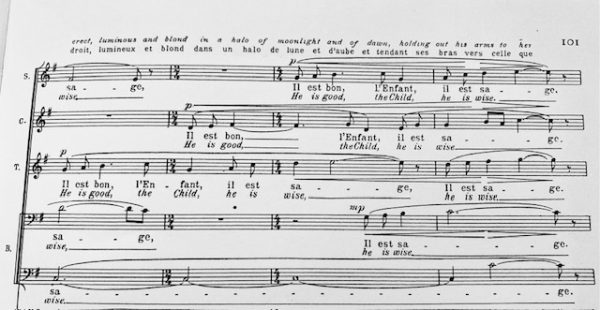
Learners of how to play the piano are likely to pass the composition of J. S. Bach entitled Präludium in German and Prélude in French. Maybe that influences the approach to the piece of music. The title sounds different in each language. It is interesting to follow the Präludium Prélude throughout the history of composition. The pianist Jan Lisiecki has just recorded and released a disc with Deutsche Grammophon following the historic evolution of this genre. The rather easy-going beginnings by Bach (see below for extract of first motive) have turned out to become rather complex preludes with subsequent composers. We may ask ourselves at this occasion: a prelude to what? Your own associations are welcome. In international politics we can observe strategic movements of countries and their military equipment as a prelude of war, but also of peace. Small aggressions may turn into wars. In philosophy Nietzsche praised the dawn (Morgenröte) and focused a lot on new beginnings. Composers might be the best forecasters of what is to come in the following years. Certainly the preludes have foreshadowed some of their later work. Nowadays, many LLMS in AI build on algorithms that predict what is the next word to write or task to do. Even in composition AI is moving ahead fast. Hence, we e are likely to study preludes much more for several reasons now.  

(Image: extract of first motive from J. S. Bach Präludium Nr 1)

Hands-on AI

The use of AI in translation and to streamline texts and preparation of communication has become a common experience. The applications in medical fields are less well known. Scans and checking of skin cancer could be a game changer for many who live far away from the next medical doctor. AI assisted brain surgery is another issue, but a very specialized application. The interface of AI and robotics might be another game changer as such applications where you train the robot with for example weight lifting and transportation charges can contribute to alleviate human skeletons. Handheld devices can guide the robot and data from sensors will complement the learning of the tasks through assistance from AI. Applications are manifold and we have not even seen the most promising ones. The application potential in warfare are particularly troublesome as humans do not necessarily enter into the concern of AI-assisted weaponry. In the social sphere trust is a crucial behavioral and ethical concern. These issues AI can only learn from us. Any attempts to do without human input and control is doomed to fail. We are not indispensable yet, we are simply turning more and more into responsible, supervisory roles. 

(Image: Acatech exhibition with hands-on AI applications, Berlin in collaboration with IQZ and DTM, German museum of technology.)

ravel up Ravel

To ravel up is a contranym. It can take a specific meaning and the opposite at the same time. Therefore, it is a perfect term to describe the composer, pianist and conductor Maurice Ravel. Born in 1875, he lived through great deceptions as aspiring pianist at the Conservatoire de Paris, but achieved glory through his famous compositions like the “Boléro” created for a ballet performance at the Paris Opera.
Previously, he had written several remarkable piano pieces, which were recently honored by the piano music magazine “Pianostreet”.  In an article with links to 5 performances of Ravel’s piano compositions you can ravel up in the emotional world or cosmos of Ravel. You may also unravel his compositional style marked in some of his most famous pieces with the variations of a single theme or motive. The “Sonatine” completed in 1907 might be considered as a precursor of later work (Boléro) as he refined his composition techniques to build, for example, on a single motive and develop a whole piece reworking and with reappearing incidences of the same motive.
Ravel himself appears as contranym, as he combined modern musical influences, like from jazz or innovative structures of musical compositions with the classical forms of composition. Listening to Maurice Ravel allows to better understand the transition from classical music to modern worlds of music. Thanks to “Pianostreet” we can follow these paths. For a biographical account the splendid movie “Boléro” takes you on an unraveling musical journey of Ravel.
(Image: Repainted piano in Berlin shopping center 2024)

More eCooking

Cooking powered by electricity rather than fossil fuels like gas is an efficient and smart solution. Through the daily cooking activities over the course of a year the savings due to eCooking add up quite a bit. Even compared to an ordinary electric stove the eCooking by induction technology saves almost an additional 10+ percentage of energy as you heat the pot or pan directly rather than an in-between metallic element, which stores heat even after you have switched it off already for a while. In private kitchens the induction option is straightforward. In professional settings the change to induction eCooking needs careful planning. The health aspect of no burnt gas emissions in the kitchen is, however, a strong argument in favor of eCooking as well.
If we apply this logic to low-income countries and cooking in schools or other institutions as well as companies, the environmental and economic benefits add up quickly. In rural areas where no electricity grid is available or stable enough, the decentralized provision of electricity through for example solar energy creates a cost-effective alternative. In urban areas with high levels of various kinds of pollution the “clean” alternative could make a considerable difference as well.
The eCooking evidence is another pillar of the “all electric society” of the 21st century.
(Image: Rirkrit Tiravanija, untitled (Café Deutschland) and extract from “Freiheit kann man nicht simulieren“, Berlin Martin Gropius Bau, 2024-2025)

Biography Memorial

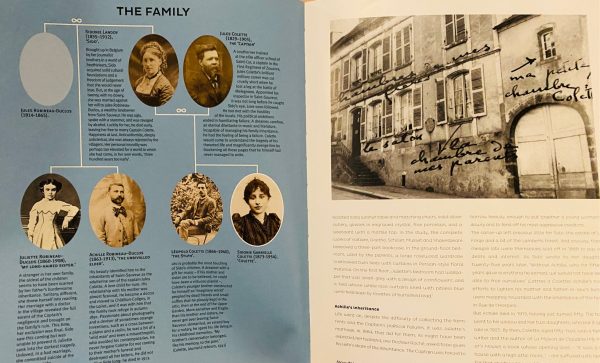
Some biographies take the form of a memorial. Marie-Luise Conen and Zdravko Kucinar have erected a memorial for the researcher, author and Social Demokrat “Milian Schömann” from the “Moselle” region near Traben-Trarbach and Lösnich. The biography reads like a narrative of crimes, which goes without punishment, before and during the Nazi-terror and the power grip in rural areas in the late 1920s and early 1930s. Milian Schömann achieved his university entry qualification A-levels in Traben-Trarbach before he moved on to study German literature and philosophy in Heidelberg, Bonn and Berlin.
His studies and political engagement were driven by a humanist approach and his letters and publications as literary critic as well as his contributions to philosophy are partly reproduced in this biographical account. This allows to follow in the footsteps of the curious and open-minded person of Jewish descent. As a contributor and speaker at meetings of SPD-members and associated political movements, he risked and eventually lost his life for his humanitarian convictions in 1942 near Belgrade.
It is the merit of Marie-Luise Conen and Zdravko Kucinar to let Milian Schömann live on in our time through the reprinting of some of his work, which is embedded in a  well-written historical account of the political and family setting at that time. The professional psychological training of Marie-Luise Conen helps to reproduce the anxious atmosphere Milian Schömann has lived through, albeit he remained a productive writer despite the economic hardship and living in exile.
This biography accomplishes in a rather unique way to enter into the mind and thinking of the author Milian following his very personal perspective on the “history of ideas” and inner call to action. Similar to the appreciation of Viktor Ullmann in the Jewish Museum in Berlin, where the music of the composer lives on after his death, the writings of Milian Schömann survived extinction, despite that he was murdered. After more than 80 years we still feel the loss of potential other contributions to philosophy and literary studies. The recognition extends to Milian’s academic and personal mentors Oskar Walzel and Arthur Liebert, important sources to understand the reasoning and motivation of Milian.
(Image: Extract from Marie-Luise Conen and Zdravko Kucinar (2024) Milian Schömann, Paulinus Verlag, Trier, p. 139)

Known Unknown

Many musicians and poets remain unknown to larger audiences. “A complete unknown“, young singer, musician and songwriter Bob Dylan has reached fame and fortune with his poetry and popular songs that marked a whole generation. He became the best known unknown of country music in the USA who found sympathy for his expression of protest across the world. „How many times must the canonballs fly, before …“. At the time of renewed militarization of the Western states to defend our way of life, the protest song is oriented towards Russia to stop its war in Ukraine.
The poster in Berlin to advertise the biographical movie on a „Litfaßsäule“ (round sign posting column) dating back to the 1920s in Berlin brings us back into the historical state of mind of crucial crossroads in history. Retreat from war, preventing war and aggression remain topics for us today as well. Peace might be the happy time in between wars marking history.
Berlin is a great place to walk through more than a century of war and aftermath. Rebuilding takes decades and is part of the Berlin state of mind. as well as a sign „to overcome“ conflicts.

Beyond ART

Is there anything beyond art? Well, maybe there is. ART in German language is an abbreviation of “Allgemeine RelativitätsTheorie”. In other words the General theory of relativity developed by Albert Einstein is in its shortest form a one line mathematical expression, but with lots of equations included in the general statement, which grew out of his much earlier special theory of relativity. The textbook by Michael Ruhrländer provides a step by step approach to get to grips with the mathematics involved to reach a better understanding of what “ART” is about. Take your time to digest it and brush up a lot of maths beyond your A-level maths.
The abbreviation ART suggests a lint to art in popular understanding. Indeed, it needs able artists to show insights of ART to more people than the restricted scientific circles. An understanding of a 4-dimensional system of time-space has some more accessible features than waves of gravitation and the many puzzles that can be solved through ART.
Decades later quantification has build upon ART and takes us further into fabulous world of mathematical and physical imagination as well as real world applications.

Democracy ART

The European Parliament co-sponsored a remarkable art exhibition in 2023 entitled „Art in Democracy“ The catalogue of the exhibition offers insights into the many preconditions of art. A democratic environment constitutes a non-negligible precondition for most of the works of art. Artists thrive within democracies. Many artists flee authoritarian regimes as their work environments rely on a real freedom of expression irrespective of the will and belief of ruling politicians.
Artists who do not flee in time for whatever reasons have suffered tremendously under Nazi terror in Germany. Authoritarian leaders don’t respect the various forms of expression by artists. Europe and the European Union provide safe havens for many artists to continue their careers in art. This has become a real value of our way of life. Many countries envy us in this respect. We take this for granted in the EU, but 70% of the world population endures authoritarian control. A reminder of this, from time to time, justifies a lot of expenses to support art and artists even beyond our borders.

The romantic setting of the image below is set against the surrealist open window (of opportunities) in an almost Magritte-style dreamland.
(Image: Rafal Olbinski, La Pologne dans l’UE, created for the occasion of adhesion to the EU)

Minority Politicians

We have regulations in favor of minorities in many countries. Most people immediately jump to their opinions about specific minorities they most strongly feel about. Favoritism through targeted policies versus discrimination are key issues here. Evaluation of effective policies to support minorities needs solid science before jumping to premature conclusions.
A recent study on the largest minority group of extraordinary people, often denoted as persons with disabilities, has focused on political representation. The results confirmed the hypothesis of an under-represention of the group in parliaments. Reher & Evans (2024) show ample evidence that despite the large and increasing shares of persons with disabilities (about 20-25% across Europe) under-represention is likely to lead to lack of concern of society as whole to topics of relevance to them. By-the-way, most of such policies would equally benefit an aging society and young families for example with regard to mobility. Perhaps another striking example is the tendency of extraordinary persons to not report their kind of disability out of fear of stigmatization and potential discrimination.
Policy makers need to take a long-term perspective to reorient public spending in favor of extraordinary persons. Infrastructure investments are needed here as well. More persons with disabilities across all political parties can bring about such changes. Extraordinary persons deserve equal representation. It is up to us to make it happen.
(Image: German Bundestag 2025-2).

Bilingual Plus not WEIRD

The scientific literature on bilingual learning and living experience is abundant. Positive cognitive and social inclusion effects dominate the results. The scientific research has moved on to more tricky questions of bilingualism which shifts gear to multilingual learning. Many people and children are bilingual plus additional contacts to another or several other languages. Multilinguism has been of interest for several scientific disciplines. The effects on cognitive development have received a lot of attention. In order to achieve further progress in the study of multilingual development, it is instructive to move beyond bilingualism and the WEIRD particiants in most psychological studies (WEIRD = Western, Educated, Industrialized, Rich and Democratic). The paper by Omane, Benders & Boll-Avetisyan (DOI) takes this as a starting point and investigates the experience of infants with 2-6 languages.
They establish a protocol how to record the surrounding languages in a structured way. A major distinction into direct and indirect exposure to languages is a major finding. The example from Ghana provides a useful basis for other studies of multilingual experiences. A correct recording of different language inputs in time and of the sources is at the basis for later measurements of effects of different kinds of exposure and intensity of exposure.
(Image: Children’s room in Berlin Museum Martin Gropius Bau 2025)

Unwinding USA

Stock markets move largely due to expectations. Therefore, the mixing of economics and politics can create lots of signals, which are likely to raise price expectations. Inflationary pressures will call for central banks to increase interest rates which will reduce economic activities that are largely financed through the credit market.
The unwinding of the economy reduces turnover and most likely also profits of companies. The fate of Tesla cars in the last 2 months (Link) and the stock market value of Tesla shares (Link) have plummeted. The unwinding of shareholder value and inflation on the rise as well are a the effects of the MAGA narrative and Musk‘s appointment in politics as chief of GOPE.
The „home made recession“ in the US and the choice to prioritize own products might work in the long run, but the costs of the short-term induced inflation will affect vulnerable consumers more than the people who buy many products that show few price increases. The unwinding of the economy of the USA is likely to cause shock waves rippling through the global economy.
Image: Prices to charge e-cars with solar energy in Germany according to sunshine.

Screenshot


Corruption Caught

In fraud or corruption it is primordial that the probability to be caught is very high to deter potential fraudulent activity. The new Trump administration has enacted as one of the first executive orders that the FCPA stops to take on new cases of suspected corruption as well as reconsider some of the running procedures. In the same vein, the Corporate Transparency Act (CTA) has been silenced so that American companies to not have to disclose ownership information that fall under the CTA until 2025-3-21 until a major reform will be published.
These policy shifts concern more than just US citizens. The competition between countries will be effected because as companies trading with the US which used US bank accounts were also liable under this legislation and subject to prosecution. The FCPA has been an important example for other countries to follow at least within the Member countries of the OECD. The shift in priorities of the Trump administration might open doors again to corruption which we believed were shut with lasting effect.
In conjunction with the rapid increase in military spending when the capacity for the production of military equipment is slow to increase might increase the risks of corruption talking hold again. Market economies build on fair competition, but less prosecution of corruption introduces a bias into negotiations which works against innovation and competitiveness. We have a hard time to understand any kind of logic in such economic and legal strategies.
Image: Bridge collapsed due ro material defects. Archive Berlin Tempelhof Schöneberg.

Berlin Mind

For a long time now, I have been asking myself the question: What is like to be in a „Berlin state of mind“. The exhibition of the 2 photographers of the Berlin Landesarchiv as part of the Berlin activities of the EMOP contributed to understanding and more precise description of the „Berlin state of mind“. As we shall celebrate in 2025 the 80th anniversary of the liberation of Europe, Germany and Berlin from Nazi rule and terror, we have seen endless reconstruction and reshaping of the city. The ever growing need for housing and space-grabbing office buildings bring about a permanent feeling of change, of becoming, of under construction. The years of the separated city as well as the building and taking down of the Berlin wall created many new opportunities for developers of the city and its structure of quarters, arrondisements or „Bezirke“ and „Kieze“ within the districts. 

Due to the continuous urban renewal also of basic infrastructure Berliners have the impression that there is construction work all around us all the time. With the abundant construction works come the construction fences. They too have changed. Some fences show digital prints of virtual worlds of the Berlin living in some future time. However, the promises often mask the reality that fences will be replaced by concrete walls and inaccessible buildings for most people of the neighborhood as gated business space or city blocks grab the space to form and reform the metropolitan landscape. The construction fences themselves become the contested areas where different strata of society interact or intersect. The „Berlin state of mind“ is one of becoming. Longing to become something else, something aware of the overwhelming historical duties, but still rising from the ashes. The experience to see a wall come down between cold war enemies liberates a belief that we can overcome frontiers. However, this in-between state of mind has brought us multiple fences of all sorts. Construction fences are only the most visible ones that surround the many spaces under construction. In the imagery of Berliners and visitors beyond the wall, fences are continuously on our minds in the „Berlin state of mind“.

Digital Visions

Urban planning has been digitalized for a long time. 3D modeling of places and buildings including their interiors are state of the art. As urbanization is also about investment, speculation and anticipation, digital imaging has entered the public spheres in form of cover up of building sites behind fences and in form of large digital prints for information, curiosity and advertising purposes. The inner cities are frequently an avantgarde and microcosm of societal developments. Some dream of full or total flexibility for office spaces (see image below), others experience the inner cities as the spotlight of inequality in society. The best paid executives are catered for by the worst paid delivery personnel. The photographers of the Landesarchiv Berlin, Grönboldt and Wunstorf, brought together a documentary exhibition entitled „Pixel aus Beton“, pixel made of concrete.

With a bird‘s eye view they reveal past, present and future details of how Berlin is experienced and envisioned by investors, architects and people living through the seemingly endless construction going on in the city. The keywords list as part of the exhibition creates a link to scientific literature and to the TU Center for Metropolitan Studies. Photography and even more so digital photography offers a social science perspective to the digital images exhibited. Cities are data spinning areas and a formidable place for digital visuals and visions.

Suicide Prevention

The annual mortality statistics and special reports on suicidal tendencies are a tough reading. OECD Statistics give a at least an approximate, comparative perspective. Reporting routines and medical confirmation of a suicide or suicidal behavior still vary quite a bit between countries. Nevertheless, the usually reported incidents per 100.000 persons remain rather abstract.
Absolute numbers speak a clear language. For example in Germany there were about 10.300 recorded suicides in 2023, France had to mourn about 9200 in 2022. To put the size of the problem in perspective it is helpful to know that in Germany all other not aging related causes of death like traffic accidents, drugs or murder make up for around 7.000 deaths per year. The targeting of resources and prevention efforts on these vulnerable people seems inevitable. However, we see only limited additional efforts to curb the problem.
A more detailed analysis of the frequencies reveals the gender and age differences. More men commit suicides and older (very old) people have higher risks. The oldest age group of men is most at risk.
Since the Covid-19 pandemic young women show rising trends in many countries again of suicidal attempts and self-inflicted wounds. Despite a continuing effort of research (Links) there is no single cause to explain the occurrences.
As a working hypothesis, which awaits empirical tests, I would look into societal factors that stigmatize persons who are made to believe or feel like they are beyond the normal spectrum of society. The lack of acceptance of diversity concerning gender, age, ethnicity, body shapes or mental states like anxiety. Poverty might cause immense distress and suffering. Large shifts in wealth in both directions cause additional risks.
It seems as if our minds and society are constantly in a kind of „regression towards the mean“ posing challenges to those furthest away from the average or perceived norms. Percentile ranks or percentile scores are commonly used to express a person’s position in a frequency distribution. For example you are better/lower than 90% of persons of your age group. Such statements might cause further distress for persons. However, summarising across several (psychological) measurements, they may yield encouraging indications as well. Actual and perceived positions in such percentile ranks add another “social risk” as perceived positions may govern behavior.

Betrayal Politics

Most economists would hold that in free market economics there is no room for moral statements. Betrayal, therefore, is left out of most standard text book economics courses. However, more advanced courses that include strategies based on so-called “game theory”, where actors may breach prior commitments, betrayal has entered economic science. A “tit-for-tat” strategy is frequently the best “game-theoretic” solution to such strategic behavior to deter also repetition of defecting on agreed rules or bargaining outcomes. For real world applications beyond the simple strategic advice, the maths involved are quite challenging. We’ll check soon, how AI is changing that game.
Another popular economic theory is one of “gift exchange”. You gift a sum of money (or weapons for self-defense to a country) with no explicit consent that the money should be repaid (through rare earths) in peace time. A betrayal occurs, if a country suddenly asks things in return for the previous gifts. For politicians that understand themselves as “market marker” and “deal maker”, there will be a tendency to claim back a gift in order to come to some kind of gift exchange rather than an altruistic donation.
William A. Galston wrote in the WSJ (2025-2-26) naming the US political action of the 2nd Trump administration a “betrayal of Ukraine and American values”.
If free markets mean making ruthless use of “tit for no possible tat” and “gifts are always a gift exchange”, we move back to mercantile and medieval practices, where settles could claim land at gun point.
What way out of this? Adam Smith, champion of classical economics, wrote before his famous book on “The Wealth of Nations” a lesser known, precursor book on “The Theory of Moral Sentiments”. Actually, he was convinced that the one would not work without the other.
Maybe, going back to classical economics is much better than a Trump administration version of neo-classical economics in a new era of political economy 3.0.

Top 5 Things T5T

Dealing with Elon Musk is a must these days (WSJ 2025-2-26 A4).
So it happened that on his way to Mars, Musk met God the almighty on his way back to heaven. Musk asked, whether he could join the ride.
God, not amused, asked Musk about his T5T (top 5 things) he accomplished in his life. Musk questioned God‘s right to ask this question and said he would tell the other T about this. God gave him just another day to come up with a response.
So here we are: the T5T Elon Musk might put forward:
(1) I created a million fancy electric cars.
God: Well, but there were already too many tin boxes on 4 wheels on earth.
(2) I created rockets that propelled billionaires into space and back again.
God: Your carbon footprint has exceeded a million people of the poorest countries on earth.
(3) I created a network of satellites that facilitated communication.
God: Nobody spoke to me yet using it.
(4) I bought Twitter and transformed the platform to spread evangelism of various sorts.
God: This has become a hoax spreading more lies than truth.
(5) I reformed the public sector employees to share my beliefs or leave.
God: This will ruin a lot of services like USAID, which have assisted me for many years in my caring and charitable service.
With all these T5T of yours in mind I am not sure I should let you return to that planet earth. Maybe I‘ll find another assignment for you where you can cause less harm Elon. Maybe, try “Waiting for Godot“.
(Image: instead of T5T try T4T (tea for two))