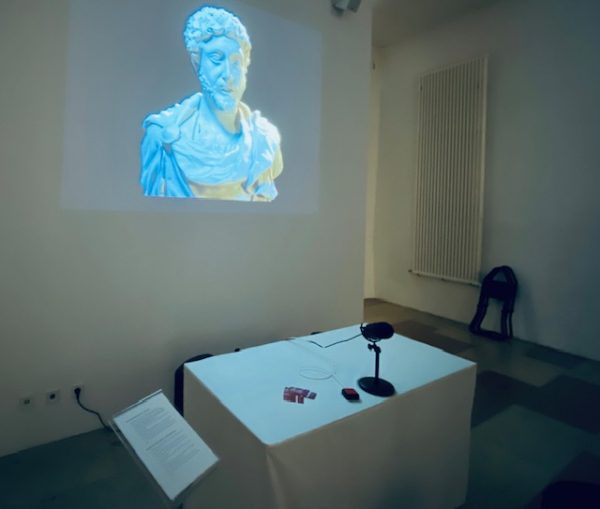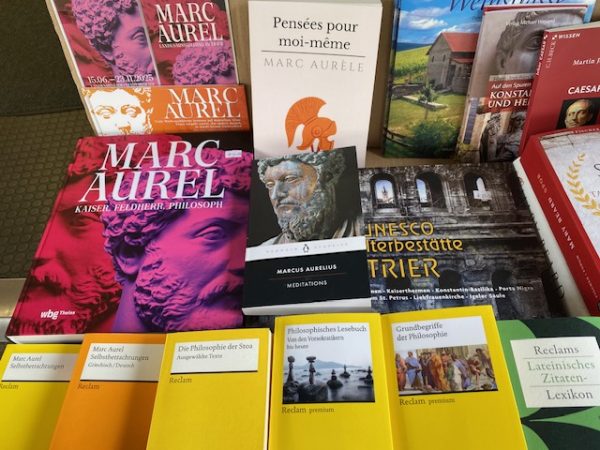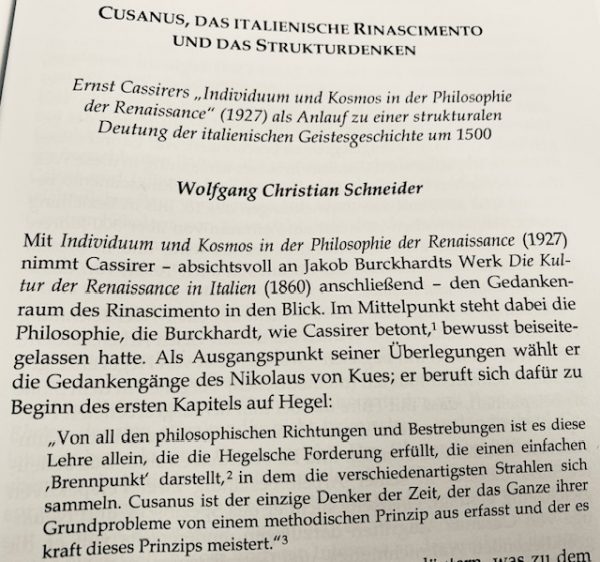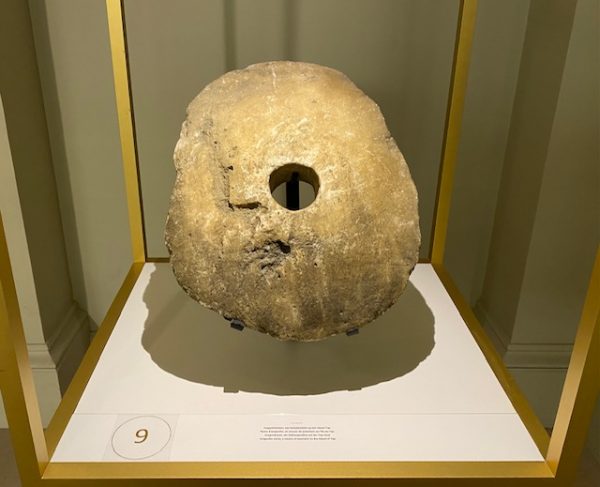

The UN Security Council has been turned into the Insecurity Council. The UN Plenary Session voted with a 2/3 majority on 2025-2-24 the draft Resolution L.10 stating: “Three years after the Russian Federation’s full-scale invasion of Ukraine, the General Assembly today adopted two resolutions reaffirming Ukraine’s sovereignty and territorial integrity …”. As part of this resolution the UN General Assembly claims “accountability for the most serious crimes under international law committed on the territory of Ukraine …”.
The UN Insecurity Council (15 Members, China, USA Russia, F, UK as permanent Members) adopted almost in parallel with 10 votes in favor and 5 abstentions (Denmark, France, Greece, Slovenia, United Kingdom) resolution 2774 (2025) calling for a swift end to conflict. The most notable change in international politics is the changed voting behavior of the USA, which has retreated from an outspoken condemnation of Russia as aggressor and occupant of foreign territory.
The “revealing of masks” in what appears to be a neo-imperialist period of time has come. The set-up of the post 1945 UN institution of the Security Council has lost a major function to prevent armed conflicts and early reaction potential. The force to aim for and guarantee international peace lies much more in the hand of the plenary of the UN rather than the small select Security Council dominated by previous superpowers largely due to their possession of nuclear weapons of mass destruction.
The voting of a resolution by the Insecurity Council, which is in contradiction with a resolution of the UN General Assembly concerning the spirit, if not the words, is a source of insecurity itself. A reform of the UN system, which risks to become a “shopping system” of lenient organizations, where you join and leave the organization (UNESCO, WHO, WTO …) will loose impact.
For many people and countries, the only hope for a guarantee of human rights lies with the United Nations Human Rights Charter, peace keeping missions and International Courts. The UN Security Council as an Insecurity Council is likely to let down many people truly seeking a peaceful life.
(Image: The Fall of Icarus, Pablo Picasso, at HQ UNESCO, Paris)

Election Participation Bundestag
The election of the German Bundestag 2025-2-23 has brought about many changes to the 1st chamber, the national parliament. First the voting system had changed to limit the newly elected parliament to 630 seats for a total of about 60 million people entitled to vote. 50 million voted in the election. The national average of participation in the election reached a very high 82.5%, with a range from 73.5% to 88%. Overall, it has been the highest participation rate since reunification. Political parties have to pass a barrier of 5% to be eligible for seats in the Bundestag. This regulation had been installed to avoid too many small parties to enter the Parliament as coalition building could be rather difficult and lengthy.
2 political parties missed this barrier closely, one with 4,3 % and another one with 4,97% of votes in the so-called 2nd vote, which is the vote for proportional representation in parliament after which the seats are allocated. Adding those ballots casts together, this means that for these 2 parties about 4.5 million votes do not get any representation at the national level. Several other smaller parties add more than 1 million votes, which are finally without any national representation. However, the only regionally campaigning conservative party from Bavaria reached 3 million votes (6% of votes) on the national level, which gives them a representation of 44 seats in the Bundestag.
Participation across age groups follows a relatively constant pattern. Older votes 60+ have relatively high voter turnout, whereas the younger age groups do not use the chance to vote as much as other age groups. This remains a challenge for democratic representation. The youngest have the longest time spell to live with the consequences of democratic representation and resulting policies. There are useful debates to lower the current legal age (18) to 16 years of age for voting to soften the effects of aging societies voting. Children, or currently anybody under 18, have no impact on political representation. An overweighting of families with children might fix such deficits. If the number of children drops further, we might eventually be willing to give our future a stronger voice in political elections. (Image: empty Berlin playground 2025)

More BRICS
The move towards a multipolar world order is in full swing. With the USA retreating from a primordial international role discarding UN institutions and the defense of major elements in the fight for individual freedom, the diplomatic order of the last 80 years has changed. The liberation of the concentration camps in Germany and the 80 years of the end of the 2nd World War on 1945-5-9 had forged an alliance in which the common enemy was defeated and the the next major confrontation in Europe or on the globe had to be warded against.
The evolution of peace in Europe has been marked by the Cold War and a bipolar world order which confronted the USA and Russia at various places. The rollback of Russia has seen its high time with the Northern and Eastern extension of the EU and NATO. This goal of US strategic interests has been largely accomplished.
In the shadow of this bipolar relationship the BRICS have moved towards greater economic power and therefore influence in the international arena. Economic data on the biggest economies in the world over the last years show the rise of the BRICS, bit mainly China and India. Their population sizes create enormous and largely shut off internal markets. All these developments create new challenges to the previously relatively stable world order. Technological advances have been narrowing more rapidly than before since the access to the best available knowledge spreads fast and more equally across the globe through the internet.
The ugly face pf imperialism is returning front stage and attempts to change the previous versions of imperialism into a new hegemonic world oder. Updated views of economic power and influence zones let us look with a rational perspective on the new power play. Due to the containment of Russian influence, the USA has China as the major power to confront, a major shift as of the 2020s. The China-driven Silk road project with strategic landing points across the globe has „trumped“ American efforts to align BRICS to human rights values over the last decades. European diplomacy will have to recognize that we entered another phase of „Realpolitik“ due to major economic shifts over several decades. (Image: extract from Max Klinger, The walkers, ambush, 1878 in Berlin SPK). 
Revealing masks
Masks can have multiple functions. During the Covid-19 pandemic from 2020 onwards we developed a hate-love relationship to wearing masks. Carnival traditions give wearing masks yet another touch. The painter James Ensor added other meanings to a mask. They do not disguise the person wearing them, but might make otherwise difficult to see features of a personality more visible. In a donation initiative and auction to raise funds to fight cancer Yves Delplace made the biggest contribution through his donation of the painting „Intrigue année 2024. Le preneur de selfie” of which we represent only a partial extract below. In 2025 this depiction of 3 leaders of big countries has gained unexpected relevance. The US and Russia partying jointly while people still die on the battlefield die to Russia‘s invasion of Ukraine has been turned into a cynic depiction. James Ensor and the surrealists in general would have appreciated this application of their way to deal with or foreshadow coming events. For some people you think it is about time to take off their masks or somebody to take it off. For others like Putin, the friendly looking mask has become apparently a frozen expression despite of the underlying ruthlessness.
Image taken at KBR Brussels 2024 exhibition of donations for auction and jury awards, by YvesDelplace.
Wave and Particle
The history of ideas in physics has been evolving or revolving a lot around the wave-particle-duality. Even if the basic debate by now is about a century old, we still need to come to grips with this challenging notion that light is not just a beam and nice colors through a prism yielding a spectrum of frequencies, but it can emit material matter called photons that have a non-zero value(s) of energy.
Max Planck came up with the formula E = h × f, where h is the Planck constant, E the energy and f the frequency of the photon. The synthesis of Einstein’s light quanta and De Broglie’s matter waves became the foundation of quantum mechanics.
The exciting evolution of physical ideas results in the state of the “art” view that, for example, light can take both forms, wave and particle, at the same time. Quantum mechanics has become a thriving field in physics and is currently transforming the world of computing in the 21st century. The amounts of funds invested in the race of applications of quantum computing across the globe are “astronomic” and have become part of dual-use spending of research funding. Encryption of information or access codes are of growing importance for civil (banking, mobility, health info) or military purposes. The speed of quantum processors will allow cracking of codes much faster and therefore new dangers are looming in many fields. It is a rather competitive field, which has evolved a lot from the original wave and/or particle vision of the world (of physics).
For social scientists there are several examples of applications of the concepts of quantum mechanics to social and behavioral sciences (Link 1, Link 2). Hard to predict, whether the wave and/or particle view will dominate the social applications of elements of the history of ideas in physics. New concepts in science challenge our traditional science-based thinking about time, space and space-time with implications even for our understanding of causality and covariance.
(Image of Dice icoshahedron (animated 3D image) from Egypt, dated to 2nd century before our time, BNF, Paris) 
Negative time
In 2025 an experimental setting has come up with a demonstration of negative time. This is a mind-blowing mental exercise to imagine the science fiction like framework to allow time to be negative as well.
This invites several epistemological questions as well. Can we imagine or live with a reversible concept of time? Maybe music has given us clues. In composition of music, we can easily play the notes of a basic theme just in reverse or mirrored order. Modern rhythms like in beat music as accompaniment by a drum use for example a rhythm like (use your hands or drum sticks!)
“left left right left /
right right left right”, (redo faster if you internalized the rhythm).
A reversal of the beat (its inversion) like replays of rhythms in reverse order seem to return the energy. This beat pattern is perceived as forward moving and is advancing in chronological time. It has fascinated a whole generation and spurred crazy movements to accompany the rhythm.
A simple tune might be played in reverse order as well. Just take a piano scale and play 1 2 3 1 fingers, and then 1 3 2 1 in a mirrored fashion (1231 1321). Even 1 2 3 1 as 3 2 1 3 gives an impression of inversion. Through this composition technique you get a bit of a feeling for the potential of a reversal of time or what negative time might feel like.
The innovation through quantification challenges our concepts of time more and more. The direction of time is subject of a fundamental revision. Theoretical concepts have predicted this for a long time.
(Image: Muséum national d’Histoire naturelle, Paris)

Quantification
The most obvious association with quantification is the attempt to quantify in the sense of measurement of situations, locations or social phenomena. This has taken considerable steps with the availability of smartphones that measure and thereby quantify all sorts of wanted and unwanted information about us. The distances walked are among the easiest to quantify. There have been many accounts and discussions about this kind of quantification. The results have been a further push towards self-optimization assisted by a quantification of almost all aspects of life. That is daily business of social sciences.
Quantification has another well-defined meaning to it, which is in physics. The revolution of the early 20th century has been to deviate from classical physics which assumed continuous processes in time and continuous measurements to the new world of quantum physics, another kind of quantification. This allusion is due to the Alain Aspect’s inspiring book “Si Einstein avait su” (2025) and his efforts to make quantum physics understood to a broader public. For me one of the merits of the book is the reminder that experimental physics can contribute and resolve many epistemological questions.
(Image: my popularized approximation of Schrödinger’s cat in Berlin Zoo)

Time Concepts
Tell me about your concept of time. How do you define time? Answers to this question are likely to depend on your upbringing, affinity to a specific scientific discipline or epistemological belief(s). Aristotle defines time to be subordinate to the more basic principle of change. To understand change we need the concept of time. Two points in time define time, intermediate points are possible, which might be interpreted as a precursor of infinitesimally short spells of time. To explain change, Aristotle refers to his concept of time. Other concepts of time build on the notion of succession of events or sequences of events.
Clocks going round in circles have been used to show the progression of time independent of events. Beams of atoms later allowed for more precision of time keeping. The prevalent concept of time still is dominated by the idea of time as an arrow, usually depicted in some diagram resemblance based on the Cartesian coordinate system, but usually starting at 0 or a particular point in time as diagrams in economics.
Following on from the old concept of change and time, we still claim for causality in most day-to-day experiences or for social processes the link to a chronological progression of time. In statistical analyses building on time-stamped occurrences we may use event history analyses or stochastic differential equations to analyze (social) change depending on one or several (earlier) factors. Even the theory of deterministic chaos, which is applied in weather forecasts for example, arises from the sequence of point of measurements.
Mainly since Isaac Newton we cherish the notion of a universal time, which helps us to coordinate different locations on our planet with reference to the Greenwich mean time. Other concepts of time make use of infinity of time and how to deal with this. Life before, or life after death, are human constructs trying to make time understandable or at least manageable for us beyond our own living time. Depictions of time in the arts, paintings or music opens up yet another vast space of thinking about, as well as, experiencing time. We did have and still do have a great time thinking about time. 
Blue Sky
In the period of romanticism the associations with a blue sky were very different from today. Getting out into the sun was a kind of privilege for the “leisure class”, of people who could afford to enjoy time outside for boating, walking or other pleasures. In our technology-driven 21st century the associations with Blue Sky are more like a technically enhanced view through for example “Windows” at the news and opinion platform or “Bluesky”.
Several scientific websites that report data on blue skies and air quality more generally across the world report indicators like ozone values O3, sun intensity, micro particles 2.5µm and 10µm, Nitrogen Dioxid NO2 to name the mostly quoted indicators. Hence, just enjoying the blue sky outside isn’t the same as it was before. People working outside in the sun or at times of a blue sky but with high air pollution levels are incurring severe medium-term health risks. The Ozon layers at very high altitudes protect our skin and eyes against high UV-radiation, but O3 on the ground is tough for eyes and lungs.
Technology has come with many blessings, but the negative effects on a global scale become also more evident. Getting used to a particular lifestyle, which produces lots of emissions of aggressive fine particles will make it more difficult to just simply enjoy a blue sky.
In consideration of all these background data with regional variations, we surely need an AI-system which we can ask for advice, whether we should go outside and enjoy the blue sky with or without respiratory mask.
Romanticism has led us all the way to Californication and dangerous enshittification of the air that surrounds us. Youth and the next generations will have very different associations with Blue Sky than we have the chance to, at least, have had. 
Greening Interiors
The greening of facades of houses is an old tradition in many western countries. The outside of a home then changes colors with seasons. The home for insects and birds feeding on them makes a small contribution to biodiversity as well. Greening interiors is a more rare instance. Of course flowers and plants can contribute a lot, but there is yet more scope to green entire walls inside your home or office.
Moss has advantages to add humidity to the air. You might like the acoustic effect as well in busy environments. Taking care of moss is not easy. Professional assistance (Link) or renting options might be a good option for office buildings. The wellness enhancing effects are also interesting for some people who susceptible to the calming effects of a more natural environment. It is a matter of care and respect for air quality that is reflected in the design using green interiors.
Circularity is another advantage of the materials. We can so a lot for biodiversity if we really wanted to even in urban spaces. Global warming will force us to think more and more, and sooner than later to make use of such innovative solutions. For the time being they remain a luxury option. For the wealthy, greening interiors is easy, it much less an option for restricted budgets and people who are obliged to focus on short-term survival. However, we have to get started with the greening of our planet again, any way. 
Antique Drama
Modern drama and performances have their roots in antique drama. This is evident in literature from the time and some rare artefacts that have survived until today. Masks and statues give an amazing impression of the high standards already attained more than 2.000 years ago.
Many performances have been linked to mystical rituals and religious ceremonies, but beyond those instances there has also been a depiction and interpretation of for example the Greek mythology. Dionysos inspired many artists and people of that time and philosophers equally found inspiration in performances and the representations in temples, arenas and market places. The treasures of the BNF in Paris, galerie Mazarin and rooms next to it like “la salle des colonnes” (Image below), allow to travel back in time into an antique setting in the room of columns.
Taking the world as horizon is the title of the rotating exhibition from the treasures of the BNF. The beginnings of philosophy and major milestones in arts and mysticism across the world figure in this exhibition. In the spacious setting it feels like travelling back in time for a while, just to build on these foundations.

Mindmap Me
Tools like artificial intelligence allow all sorts of transformations and depictions. The photo editing tools are widespread and particularly popular among the young users. My own transformative exercises, latest with www.bairbe.me, have yielded interesting insights, well worth an intergenerational playmate. For the guys there is the www.yobrick.com version for brick gamers. 
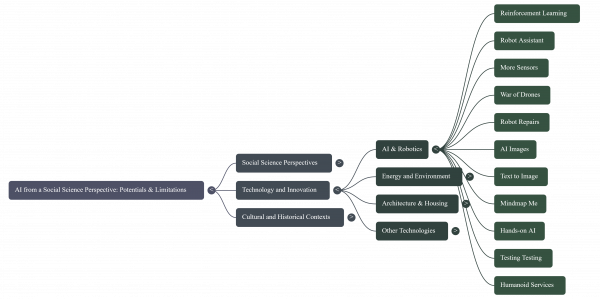
The App “Canvas” allowed me to delve deeper into my own mind by giving instructions of how to create an image of the structure of the blog entries on this webpage. Of course, it is not (yet) a real AI-generated content map, but it is only a matter of time until such tools will exist. After all, this would be just an arranged and rearranged list of contents using the hyperlink structure of the texts as well.
For the time being, I derive my own structure of the blog entries by topics, categories and tags including the hyperlinks or internal referrals. Interlinkages are mostly stated explicitly. However, there are many implicit links, which are obvious to some, but not others. AI-systems could use occurrences of words, synonyms and antonyms . Colors in addition to bubble sizes and (in)direct lines may complement such mindmaps. This can help to reveal another, additional layer to connections between categories or tags. The Ai-generated image shown below was created with the APP Canvas as a first approximation and AI-augmented test version in form of abstract images).
Next steps on the way to understand human intelligence and, maybe, augment it with a next generation AI-system would use a colored-3D version of such a mindmap and use the chronological evolution of the blog posts in a kind of evolutionary animation. This should allow us to go beyond the usual psychological classification of fluid and crystallized intelligence. We might come to grips what it means to be “in a Paris state of mind” or when hallucinations become overwhelming.

Endless Questions
The winner of the Niépce prize 2024 has been awarded to Anne-Lise Broyer and features prominently at the BNF in Paris. The exhibition of the professional photographer reflects by way of photographic “still images” on the historic fate of the mediterranean basin. Each and every image has no answers, but keeps posing questions. In the long alley of the BNF in honor of Julien Cain, we walk through history of more than 2 thousand years in photographs up until today and even beyond. Let’s keep asking the most fundamental questions again and again. The exhibition entitled “Est-ce-là que l’on habitait ?” invites us to ask ourselves about the historic origins of so-called Western culture in the mediterranean basin. Ancient philosophy and arts are the foundations even of our current ideas of democracy and freedom.
However, what has become of this in the 21st century? The original statue of freedom has suffered badly. What has become of the freedom of mobility at a time of barbed wire fences rising between countries that influences each other over thousands of years? How about nature? How about religion and freedom of expression? Where is progress? Where is regression?
For centuries we have sought answers in libraries starting from the Library of Alexandria to the treasures of art and knowledge of today across the world. Let’s make more intensive use of these treasures where we shall find answers to most of our questions of the past, to the past and of future interest.

Hugo intergenerational
Well, this entry is not about Hugo Boss, whose name is probably known to more people worldwide nowadays than the French poet and writer Victor Hugo. The latter Hugo, however, is likely to be known to more generations to come than the former one. In his 19 years of exile with his family he had the unique chance to get to know his grand children a bit closer, which was rather unusual for the late 19th century. The romantic poet was charmed to an extent that he could help it, but to express himself in a longer poem. „L‘art d’être grand-père“ (The art of being grandfather)“. Victor Hugo experienced the death of own children and his wife before and his grandchildren surely gave him reason to believe in a more joyful tomorrow. Comments on this poem mention the idealised vision of the romantic regard on children and even more so on his own grandchildren. « Leur front tourné vers nous nous éclaire… … Ils trébuchent, encore ivre du paradis. »
We forget all earthly quarrels just listening to the soothing sound like children’s rhymes. Hugo is a master of all literary classes and he ensured that his intergenerational legacy would be part of this. (Image: Maison Victor Hugo, Paris, writing desk ro stand in front of) 
Nazis bipolar
Thanks to the exhibition « How Nazis photographed their crimes in Auschwitz 1944 » in the Mémorial(Link) of the Shoa in Paris, the biased photographer’s view of what happened in Auschwitz is evident. The inhuman, factory-like organization of these concentration camps were constructed and managed with the primary aim of humiliation of Jewish people and other inmates. Careful reading and interpretation of these images is necessary to spot the sometimes small signs of resistance to be taken on photo by a Nazi photographer.
The revelation of a kind of bipolar disorder of the Nazi murderers shows up in the seemingly normal family meal of officers in their nearby homes. You might be surprised that many of these family members even decades later report on normal and comfortable lives despite their pitiless exercise of mass killings by the Nazi officials and their hired staff. Bipolar disorder is maybe the result of such split personalities, although we already have ample evidence that doing drugs was quite common at the time as well. 
Shoa Memorial
In the neighborhood of the Paris City Town Hall you find the Mémorial de la Shoa. There is a constant flux of visitors and pupils with their teachers passing through the rooms. They all continue to be really moved by the shocking images and their efforts to try to understand the full extent of the Shoa and the terrible effects it had even on survivors of the concentration camps. The continuation of the memory of the memories of those survivors by young people is one of the strong points of this exhibition. The transmission of memories finds many new ambassadors against the tendency to forget or downplay the horrors committed by the Nazis.
Of course it is overwhelming as an experience, but it all the more necessary to keep memories alive and guard against each tendency of denial. In the age of fake news and historical deep fakes, it will be all the more important to immunize people against any attempts of manipulation of historic truths. The availability of the information online and through youtube-videos is an indispensable next step in the preservation and dissemination of the documentaries. The Mémorial of the Shoa in Paris is an essential part of this commemoration as 76.000 Jewish persons were deported to concentration camps from France as well.(Image: Mémorial de la Shoa, Paris 2025)
Text to Image
Long before everybody started to discuss Artificial Intelligence, which in many applications takes the form of transformation of a textual prompt into an Image, Photographers have had literature or quotations in their mind that shaped their images. This was a kind of poetic imagery not always easy to recognize. The exhibition in the „Institut de France“, Bibliothèques Mazarine (LINK), with photographs by Nicolas Fève (LINK) offfers a great insight into this way to conceive of an image and its realization through photography. Exposing the sources of inspiration as well as the photo is like adding textual citations to an image in a much more inspirational and transforming manner than AI is doing these days in 2025.
Text to image is only one out of the many ways texts might guide imagination, but it is a powerful and gripping one. The history of literature is full of other forms like videos based on novels, comic strips to make classic texts in Latin more accessible. As we shall ask AI products like texts and images to cite their sources and honor authorship, photography as art and science might enhance the literary experience by adding citations to an image. This has the additional advantage that more people will follow up on the sources of inspiration. 
Apocalyptic Collection
As long as humanity exists we had to deal with the experience of apocalyptic horrors. First, mankind could not make sense of natural disasters. Second, after we understood many of the disastrous events on earth and even most cosmological events, we proceeded to create our own apocalyptic disasters.
One thousand years of unimaginable suffering and destruction are the subject of a unique exhibition at the BNF entitled Apocalypse. The documents start with biblical representations of it and continues throughout the centuries. The artists‘ attempts to depict and characterize the Shoa is part of the exhibition. The atomic bomb is another issue of the 20th century. In the 21st century artists try to move beyond the different forms of the apocalypse. The collection of various kinds of dealing with apocalypses constitutes itself an apocalyptic experience. We still have to go a long way to come close to understanding what drives disasters and what the role of mankind is on this way to seemingly endless destruction. The apocalyptic experiences remind us to keep asking some fundamental questions. (Image: Exhibition Apocalypse at BNF Paris, Center Piece by Otobong Nkanga, Unearthed) 
January Spring
The early signs of spring in Europe usually show up in March. The monthly data from the Copernicus Climate Change Service (C3S) show that „average temperature over European land for January 2025 was 1.80°C, 2.51°C above the 1991-2020 average for January,“ (Link). The warming throughout January has several consequences. Vegetation starts into spring earlier. This means that people with allergies of early flowering suffer earlier during a year. Winter rest in animal lives will be shorter. The risks of droughts in some regions combined with floods in other regions is increased as well. Rockslides in the Alps and flooding in Italy and the Baltic states add to the costs of climate change.
Western Europe, witnessed a relatively „dry January“, even for those who kept drinking alcohol throughout the month. Heating and heating costs came down a bit and friends of gardening were surprised by some early showings of flowers of spring even in Paris neighborhoods (image below) as early as the first few days in February 2025! Strange new world. It all seems to happen a bit faster than most scientists expected. Time for adaptive behavior is shortened as well. 
United by travel
The economic rationale of profit maximization privileges the construction and management of profitable connections. For train transportation this has spurred over decades the construction of new train lines between metropolitan cities or regions. Whereas connections between Paris and Brussels are abundant and expensive from central stations those living somewhere in between the 2 cities, for example in Mons, have had little chance of access to reasonably priced and fast train connections. This neglect of the in between cities is slowly changing. Sufficiently fast and reasonably priced connections allow Europe to grow together also at the margins. Public transport as alternative to car traffic across borders for „in-between cities“ will bridge the gap between the ease of travel between metropolitan an more remote areas. There is economic growth to be reaped as connected infrastructures allow for economic as well as social mobility and joint development. This is the real European challenge ahead of us and not the numerous summits without tangible results for rural and urban populations beyond metropolitan regions. For regions spanning countries, some will be finally reunited by better public transport a kind of ecological unification. 
HTML Mindset
The hypertext markup language (HTML) allows us to navigate on the internet. No matter which Browser you use on your device, it interprets the HTML-text for you in a specific way. This means: HTML defines headings, normal text, placeholders for images, actionable buttons and referrals to more text, images, or videos. A good HTML enabled textbook for pupils, students or any lifelong learner, for example, will embed easily images, sound recordings or video demonstrations in the e-book. This additionally embedded content asks for a different mindset for content creators: the HTML mindset.
Just like in most learning environments, learners proceed with different speed and interests. HTML allows for additional options to dig deeper into a subject, return to a previous stage, lead on from where you left off before, jump to some other content or listen to a translated paragraph.
Due to the bringing together of content from different technical formats, the HTML mindset has an interdisciplinary touch to it. Blending text and image is our usual way to process information at most exhibitions. In Hypertexts we are “walking” along our own chosen track through the knowledge space or content archive. For web creators, therefore, it is common to use so-called “content management systems” to arrange structure and present content.
The learning of HTML is enhanced through many learning tools (w3schools.com). This helps you to get into the HTML mindset of content creation and a better grip on the interlinked world. (Image: extract of HTML code of this blog post on www.schoemann.org).

Artists Intergenerational
Generations influence each other. That’s a very simple general statement. Biographies, auto-biographies and life course research have all established sometimes more, sometimes less direct influences between the generations. The exhibition “A partir d’elle. Artists and their Mother“, curated by Julie Héraut, combines literature, photo and video that speak to the rather complex psychological or sociological issue. Visits in 2025 available at Stichting A, Brussels.
The starting point of the inquiry into the nature of photography by Roland Barth is chosen like an investigation into a crime. Sophie Létourneau had written an essay which proposes to read the original text by Barthes from this perspective. The artists in the exhibition seem to follow this process of asking themselves what their relationship to their mother is like and how to represent this in an artistic form.
A life course perspective, which takes images or videos with 10 or about 20 years difference, offers a kind of analytical as well as artificialized vision of the evolution of the artists’ relationships with their mother. Realistic images with a morphing backwards from old to young is presented next to images confronting young and old next to each other. “Words don’t come easy to me” could be the title of one of the videos where a young artist has a particularly hard time to talk to his/her mother.
Just after the celebrating Franz Kafka last year and his famous “Letter to my father”, the inquiry into artists and their mothers complements the analytical and artistic vision and interpretations of the child and parent intergenerational relationship. 
Sustainable Food
Climate change has a severe impact on sustainable food production. The OECD reports annually on the evolution of volumes of production and monitors the resources and subsidies allocated to the agricultural sector of the economy. The sector and the whole nutrition chain are frequently perceived as a major driver of shrinkflation, greedflation and cheatflation.
Changes need to be introduced with a medium and long-term perspective in order to allow for smooth adaptations of the sectors involved and to avoid so-called hog cycles.
Most economic debate is focused on the quantity of production. The loss of production due to climate change and Russia’s war in Ukraine has been and continues to be substantial causing starvation and premature deaths. Another issue is the lower quality of food due to droughts. Repeated events call for adaptations. Certainly the adaptation of more resistant crops is part of the answer. However, the other side of the same coin consists in the consumer’s readiness to buy products that suffered during a drought. Just as the reduction of fertilizers and less water in the production of droughts reduces the size of fruit, for example, we, the consumers will be systematically challenged in our purchasing habits of fresh food.
Price-sensitive consumers will have to choose the products that have reduced prices due to drought quality loss. Other consumers may choose the drought affected product if a “resilience message” is attached to such products. Solidarity with climate affected farmers, just like bio-farmers’ products in ecological production, opens up another perspective to more sustainable consumption and farming. 
AI Images
The creation of images using any AI system is fast and easy. Many people have tested the systems and experimented with the more or less explicit prompting needed for LLMs to come up with several suggestions. Through the use of AI in the creation of images you are indirectly become your own curator of these creations as you choose among many suggestions of AI for the same prompt. The next step in the process of these artifacts it to assemble several ones and submit your selection of images to a gallery for an exhibition. If you have a coherent approach or a specifically interesting creative idea you might get selected in a competition to show your AI assisted images in a gallery with a reputation to exhibit photography. The Brussels Photo Festival (2025) presented the submissions to a call for AI images with a broad range of AI assisted imagery. The focus of this project was on „historical events and figures“. In situations where images are absent such a newly created imagery might be helpful in re-creating narratives about undocumented wars or conflicts. Speculative fiction about other historical options or „roads not taken “ have found their way into museums of history even. Decolonizing imagery is an interesting aspect to get a grip on another way to view historical evolutions. Projecting biological growth processes into the future with pervasive bio-engineering allows is to imagine potential future scenarios. As AI in biology, pharmacy and nutrition is only about to rake off, the AI artists play an interesting role of new avantgarde in the 21st century before we shall be submerged by AI images on all social media platforms. (Image taken at Hangar.art 2025) 
Hallucinations
In the 21st century hallucinations have become a daily experience. The origins of the word can be followed back at least to the Latin verb “alucinor”, best translated with “to hallucinate”. As a verb to can conjugate it, meaning that I can do it, you can do it, s/he can do it, and we may do it in groups. Roman emperors did it, American presidents do it and, of course, AI does it. Hence, it is a great subject to study.
In “Nature” 2025 we find ways to limit hallucinations of AI systems. The strategy consists mainly in repeated queries of the same type, but from different angles. It is a bit like cubism applied to informatics. On “github.com” we can follow the rankings of AI-models using LLMs based on the “hallucination-leaderboard” developed by Vectara. On “huggingface.com” you can test the Hughes Hallucination Evaluation Model. For example it is possible to run a test of your own small text documents (just like any blog entry on this webpage) and what the AI systems will do them in an attempt to summarize your ideas. According to the “hallucination-leaderboard” we are confronted with a 1.3%-4% hallucination rate of the top 25 LLMs as AI-systems. In text based systems the quantity of “errors” is a first indicator only. The seriousness of the omission, addition of wrong information or an erroneous judgment will be left to the reader or analyst to uncover.
There is now a lot to do to test various AI-systems on their “trustworthiness” in summarizing my own work. My very own daily hallucinations have become a large data base as a test case for the capacity of LLMs to make sense of them.
Based on the series of passed blog entries I shall test the capacity of AI to predict the n+1 blog entry. It would be great to know today what I am going to write about tomorrow etc. Thanks to AI I shall have (finally) a sort of intellectual life after death (not sure whether I should want this). Enough of hallucinations and on hallucinations for now, back to serious readings or fictionalized science. (Image: extract from Delphine Diallo, Kush, 2024 at Hangar Gallery Brussels). 
Korean Uprisings
With the recent Korean uprising against the imposition of martial law the world has witnessed a successful defense of democratic rule in South Korea. International politics has quickly moved on to other areas of the world where people’s struggle to obtain or sustain the freedom to vote and the freedom of expression.
However, the Korean history of uprisings goes back a least as far as the beginning of the Cold War period with the separation in 2 Koreas. The 1980 uprising of student protests in South Korea was extinguished with brutal force and mass killings. Can literature heal the wounds of uprisings? Only the best of literature can. The Korean female author and poet Han Kang (Nobel laureate 2024) has accomplished this. In the novel 소년이 온다 “Human acts” (English title), “Celui qui revient” (French), ”Menschenwerk” (German) the Gwangju Uprising 1980 is the historic backdrop against which the loss of human dignity during dictatorships is narrated. Han Kang manages to depict the empathy of family members who are confronted with the brutality of the military forces. It is tough on readers as they become the witnesses of the violence described as such and the sorrow of the whole social environment of the victims.
The Nobel Prize for literature 2024 honors the “world literature” aspect of Han Kang’s writings over many years. Many prizes have been allocated for representative writers (80+ % were men) of a country. The different titles of professional translators chosen for this novel reveal the potential to link to very different national narratives and connections to national memory of uprisings. Translating literature from different cultures can be challenging as readers frequently want the narratives somehow to relate to their own “endured” experiences. World literature, just like world history, goes beyond this and takes the reader by the hand and broadens emotional and human horizons.
(Image: Gallery Lee Bouwens, Brussels, exposed Jungjin Lee Voice #02, Voice #26 in 2025, inkjet pigment prints, Jungjin Lee) 
Existence as Eggsistence
Artists have their own ways of hallucinating. They don’t need an AI to generate ideas beyond the normal, even allowing for 2 standard deviations off the usual. As a result of the thorny question about your existence, Ram Katzir came up with the impressive statement about his „eggsistence“ being subjected to a squeezed experience. Ever increasing shares of the labor force would subscribe to this statement about the modern workplace. Each turn of the screw risks to crack up the egg‘s shell. Rather focus on the egg, try to get a grip on the screw. There are thousands if not millions who crack up under the excessive pressure of economic and political circumstances. The new platforms of food, grocery and parcel delivery at home have become the latest example of AI-assisted and algorithmicly managed screws. What is driving your eggsistence. It is about time to ask fundamental questions again. (Image: Eggsistence, by Ram Katzir 2021 in Brussels, Galilas Collection Belgium) 
Victims and Perpetrators
In addition to the annually proclaimed “We shall never forget the concentration camps and the murder of 6.000.000 Jews”, we should add: “We shall not be silent”. Silence about a crime can be interpreted as the “latent” continuation of hatred. Silence might just be a pretended ignorance of the genocide and the holocaust. We have to keep very alert amidst the spreading falsification and numerous falsification attempts of historical facts surrounding the ideation about the Nazi-time and Nazi-terror from the 1930s onwards culminating in the Shoa and systematic mass killings of civilians and any actual and deemed opposition.
Particularly in Germany there is a renewed need to go beyond the “Stolperstein-Initiative” and continue also sometimes own personal research of family histories in order to understand the logic and power of perpetrators. Some spectacular legal cases like “Klaus Barbie” or “Rudolf Eichmann” or the Nuremberg trials became historic events, but the crimes of many Nazis during these times remained below the radar of wider public attention.
In view of many disrespectful utterances of some politicians and even some business men the old and new perpetrators of antisemitic propaganda and acts should have to face more fierce opposition. This needs the commitment of the silent and sometimes shamefully indifferent people across the world. (Image: list of concentration camps, sign in Berlin Schöneberg, Richard von Weizäcker Platz).

Holocaust Remembrance
The 80th anniversary of the liberation of the concentration camp Auschwitz-Birkenau marks a very special kind of remembrance. As the number of survivors of Nazi-terror and genocide is shrinking the testimony of survivors is becoming more rare and more precious. According to the “Jerusalem Post” on 2025-1-28 (p. 9) the number of survivors that came back to the site of horrific crime has shrunk from 300 ten years ago to 50 in 2025. The strength and courage to continue to testify amidst having reached 90+ or even 100+ years of age is a “living memorial” of its own kind.
Many television stations across Europe have followed the example set by this special Holocaust remembrance day and focused equally on recorded testimonies or additional live interviews of survivors. Please keep repeating these testimonies to confront people with the outcome of Nazi-terror in Europe. The choice this year was a courageous one. Instead of speeches of sorrow and lip service to fight antisemitism by acting politicians, the focus on the testimony of survivors in public, on TV and to large audiences will encourage others to continue to give testimonial of these horrors.
(Image: extract of Pressreader newspaper titles 2025-1-27)

Electronics repaired
The all electric society will have a number of consequences. We need to think about durable electronics. Many electronic appliances get broken rather quickly even by normal usage. The task to repair the beloved electronic gadgets of your children or simple electronic household devices reveals the fallacy of the consumerist societies. “Use it and throw it away, if it is not working any more”. This is the standard mantra of our societies. In order to save resources, we have to reuse, repair and re-engineer a lot of electronic devices. So far, the engineering process consisted largely in finding ways to assemble fast and with inputs as cheap as possible. The task of designing products that are repair-friendly, circular and allow to disassemble the product easily is a bit counter-intuitive to the consumerist society. If your juicer lasts for years, you will be unlikely to buy another more fancy one or even a connected one very soon.
Repair-friendly design and assembling will be the next generation products of the all electric society. Plugs, interrupters, relays and electric engines of older devices will be valuable after the original use in a household product, which has seized to function. Many parts can be put to other use. Re-engineering with sustainability in mind has an important function also in the move towards gaining autonomy again. For the repair of electronic devices we shall focus more on fine motor skills of our hands again. The shortages of electronic components to build cars after the Covid-19 crises and the disruption of supply chains for other reasons provide a good lesson to advance faster in the direction of electronics repaired.